What Is a Duffel Bag Used For? Essential Uses Explained
This post contains affiliate links. As an Amazon Associate, we earn from qualifying purchases.
A duffel bag is a soft-sided, flexible carry bag used primarily for transporting gear where easy packing, casual access, and simple storage matter more than rigid organization. Its core uses are gym and sports (a 71.2% market share), short-trip travel, moving loose items, beach outings, and general home storage. The right duffel for the job depends on three things: capacity in litres, fabric denier (like 600D polyester), and the presence of specific features like a wet pocket or trolley sleeve.
That 71.2% gym bag figure isn’t a guess. It’s from Grand View Research data cited by a manufacturer. It tells you the duffel’s shape and softness solve a specific problem: carrying bulky, irregular items like shoes, towels, and water bottles from your car to the locker room. The bag’s entire design philosophy flows from that.
What follows is a breakdown of the ten standard uses, matched to the exact size and material specs that make each work. We’ll also cover where a duffel fails compared to a backpack or suitcase, and how to avoid the single most common sizing mistake that gets bags gate-checked at the airport.
Key Takeaways
- Duffel bags hold a 71.2% share of the gym bag market because their single large compartment easily fits shoes, clothes, and gear.
- For airline travel, a 40L to 45L capacity is the typical carry-on sweet spot, but you must verify the bag’s external dimensions against your airline’s policy, a 45L bag can be smaller than a 40L bag.
- The best material for daily gym use is 600D polyester; for checked luggage or rough travel, step up to 1000D nylon or ballistic fabric.
- A duffel’s main weakness is carrying comfort over distance; a backpack’s two straps distribute weight better than a duffel’s single strap or handles.
- Use a duffel for moving or storage because it can be folded flat when empty, unlike a hard-shell suitcase.
The 10 Most Common Duffel Bag Uses (And The #1 Mistake)
The duffel bag is the most versatile bag category in the luggage industry. Its flexible, soft-sided design is a blank canvas. The use case dictates the specs.
The Ethiopian Standards authority defines a duffle bag as “a large cylindrical bag that is used to transport a large amount of items from one place to another.” This official definition captures the bag’s core purpose: volume and portability.
Here are the standard applications, ordered by prevalence, with the specific features that make each work.
| Primary Use | Ideal Capacity | Key Features & Materials | Why a Duffel Works |
|---|---|---|---|
| Gym & Sports | 30L – 40L | 600D polyester, ventilated shoe compartment, separate wet pocket | Fits bulky shoes, wet clothes, water bottles in one grab-and-go space. |
| Carry-On Travel | 40L – 45L | 1000D nylon, trolley sleeve, lockable zippers | Soft sides squeeze into overhead bins; lighter than hard-shell suitcases. |
| Checked Luggage / Moving | 70L – 100L+ | 1680D ballistic nylon, skate wheels, telescoping handle | Massive capacity for non-fragile items; wheels save your back. |
| Beach & Pool | 30L – 50L | PVC tarpaulin or TPU coating, roll-top closure, welded seams | Sand shakes out easily; waterproof lining protects towels and electronics. |
| Weekend Trips | 40L – 50L | Leather or waxed canvas, laptop sleeve, premium hardware | Stylish, durable, and fits enough for 2-3 days without checking a bag. |
| Tactical / Field Use | 40L – 60L | 1000D Cordura®, MOLLE webbing, heavy-duty YKK zippers | Extremely abrasion-resistant; webbing allows modular attachment of gear. |
| Hockey / Equipment Bag | 90L – 120L | 600D polyester, 36″+ length, vented panels | Fits pads, skates, helmet, and stick; vents reduce odor. |
| “Go-Bag” / Emergency Kit | 30L – 40L | Bright color, clear organization pockets, hydration bladder sleeve | Stores essentials in one grab-ready place; soft shape fits in car trunks. |
| Home Storage | 60L+ | Non-woven fabric or canvas, foldable, stackable design | Compresses when empty; holds seasonal clothes or bedding out of sight. |
| Corporate Gift / Promotional | 25L – 35L | RPET recycled polyester, full-color printability | Useful everyday item that acts as a mobile billboard. |
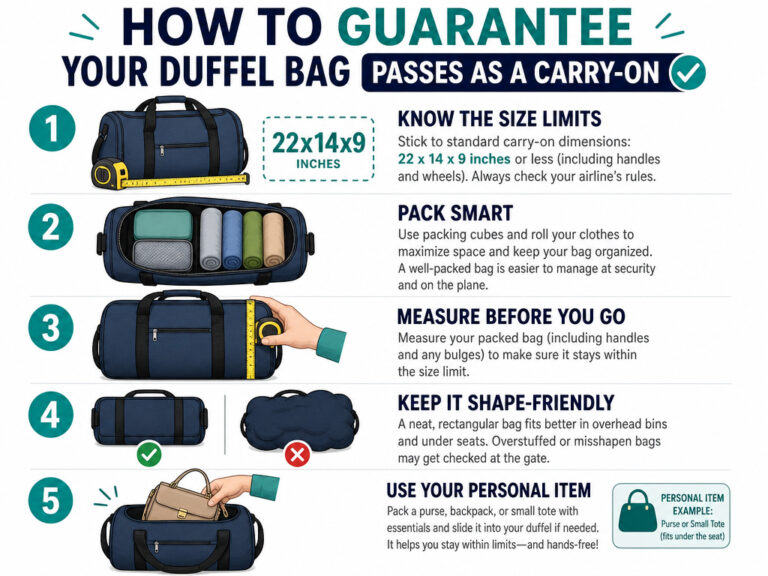
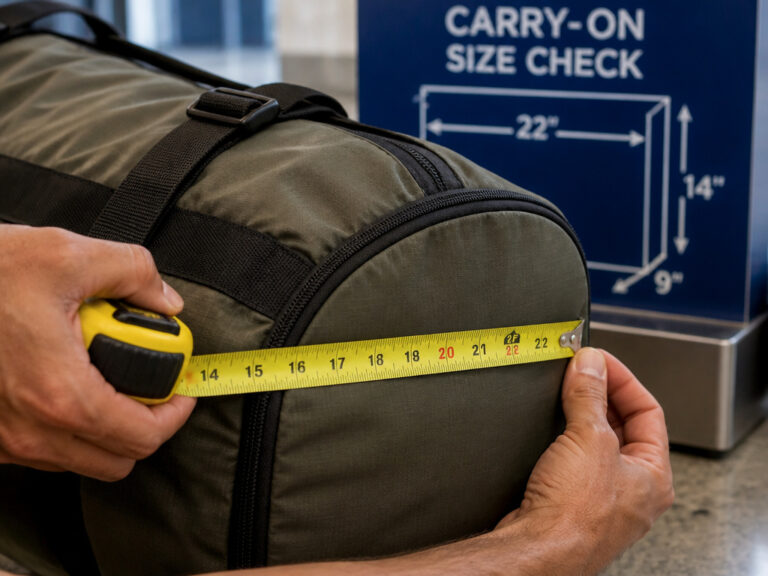
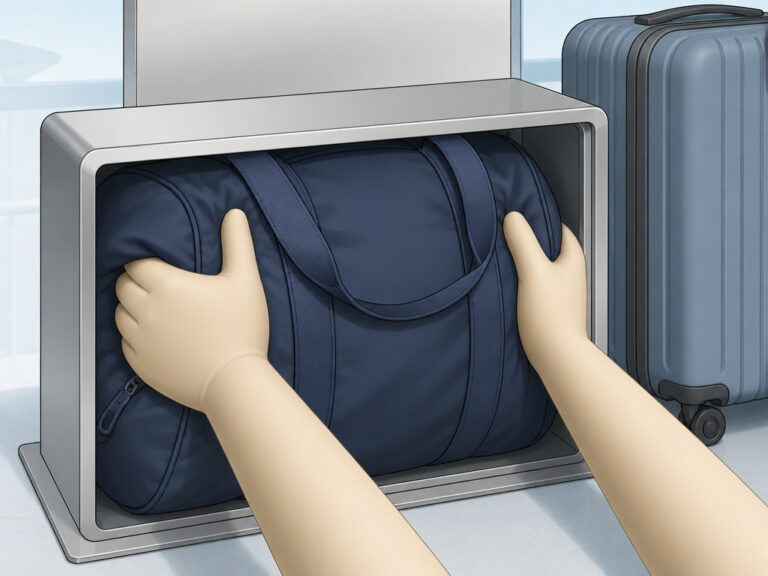
The number one mistake is confusing capacity with external dimensions. A 40L duffel and a 45L duffel can have identical outside measurements if one uses thinner insulation or a more efficient shape. For airline travel, the dimensions printed on your ticket are the only thing that matters. Always check your specific carry-on size limits before you fly.
Duffel Bag vs. Backpack vs. Suitcase: Which Wins When?
This isn’t about which bag is best. It’s about which bag disappears while doing its job. Each has a home terrain where the others feel clumsy.
A duffel bag wins on short trips, gym visits, and moving loose household items. Its wide opening lets you see and grab everything at once. You can stuff a jacket in at the last second. It folds flat in a closet when not in use. For a weekend at a friend’s place or a daily trip to the rec center, the duffel is the default.
A backpack wins when you need to walk more than 10 minutes with the bag loaded. Two shoulder straps distribute weight across your back and free your hands. It’s the choice for commuting, hiking, or any situation where you’re navigating crowds, stairs, or uneven ground. A duffel with a single strap will dig into your shoulder on a long airport trek.
A hard-shell suitcase wins for long trips where you’re checking luggage. The rigid walls protect fragile items and make efficient use of checked space. Wheels make it effortless in airports. But it’s terrible for stuffing under a bus seat or carrying up a narrow staircase.
Where this goes sideways: Choosing a duffel for a multi-city backpacking trip. By day three, the single-strap carry will bruise your shoulder, and the lack of internal organization means you’re dumping the entire bag to find your charger.
The Patagonia Black Hole Wheeled Duffel is a hybrid that acknowledges this weakness. It’s a 40L duffel with built-in compression straps and sturdy wheels. You get the packable space of a duffel with the rollable convenience of a suitcase for airport corridors. It’s a specific solution for a specific gap.
How to Choose the Right Duffel Bag: Capacity, Material, Features
Your duffel should feel like a tool, not a compromise. This choice hinges on three tangible specs.
Capacity (Liters): Match the Liters to the Trip
Capacity is the most honest number on the tag. Ignore vague terms like “weekender” and look for the liter (L) volume.
- 20L: Personal item size (~16″ x 10″ x 8″). Fits a change of clothes, toiletries, a tablet. This is your under-the-seat bag.
- 30L-40L: Standard gym or overnight bag. Holds shoes, workout gear, a towel, and a water bottle. The North Face Base Camp Duffel Extra Small is 31L, pitched as a one-to-two-night bag.
- 40L-45L: Maximum carry-on for most airlines (~22″ x 14″ x 9″). Fits enough for a 4-5 day trip with careful packing a duffel bag.
- 50L+: Checked baggage territory. For a week-long trip, moving bulky gear, or sports equipment.
Pro tip: If you’re between sizes, go smaller. A half-empty duffel is sloppy and awkward to carry. A full one holds its shape.
Material (Denier): The Abrasion Rating
The fabric’s denier (D) indicates thread thickness and durability. A higher number is generally tougher.
- 300D – 600D Polyester: The standard for affordable gym bags and casual use. It’s lightweight and resistant to stains and moisture. Good for daily use that isn’t abusive.
- 1000D Nylon / Ballistic Nylon: The upgrade for travel and checked bags. Far more resistant to tearing and scuffing. This is what you’ll find on most recommended travel duffel bags meant for airports and cargo holds.
- PVC Tarpaulin / TPU: Used for waterproof bags for boating, kayaking, or beach use. It’s heavy and stiff but completely impervious to water.
- Leather / Waxed Canvas: For style and heritage durability. Leather requires maintenance but develops a patina; waxed canvas is water-resistant and ages well. Common in weekender designs.
Non-Negotiable Features
Some features transform a sack into a purpose-built tool.
- Ventilated Shoe Compartment: A must for any gym bag. It isolates dirty shoes from clean clothes.
- Wet Pocket: A separate, lined compartment for soggy swimsuits or sweaty gear. Prevents mildew from spreading.
- Trolley Sleeve: A pass-through sleeve on the back that slides over a rolling suitcase handle. This is the secret to effortless airport travel with a duffel as your carry-on.
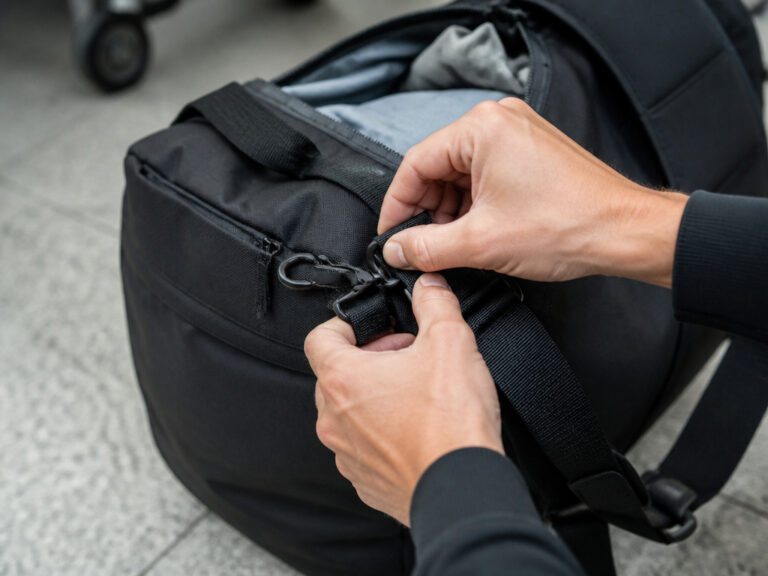
- Backpack Straps: Some duffels, like those compatible with the Eagle Creek Piggy Back Strap, offer the carrying comfort of a backpack when you need it. They often stow away when not in use.
- Lockable Zippers: For travel, small zipper tabs that accept a TSA-approved lock add a layer of security.
The Sizing Trap: Why Your 45L Duffel Might Not Be a Carry-On
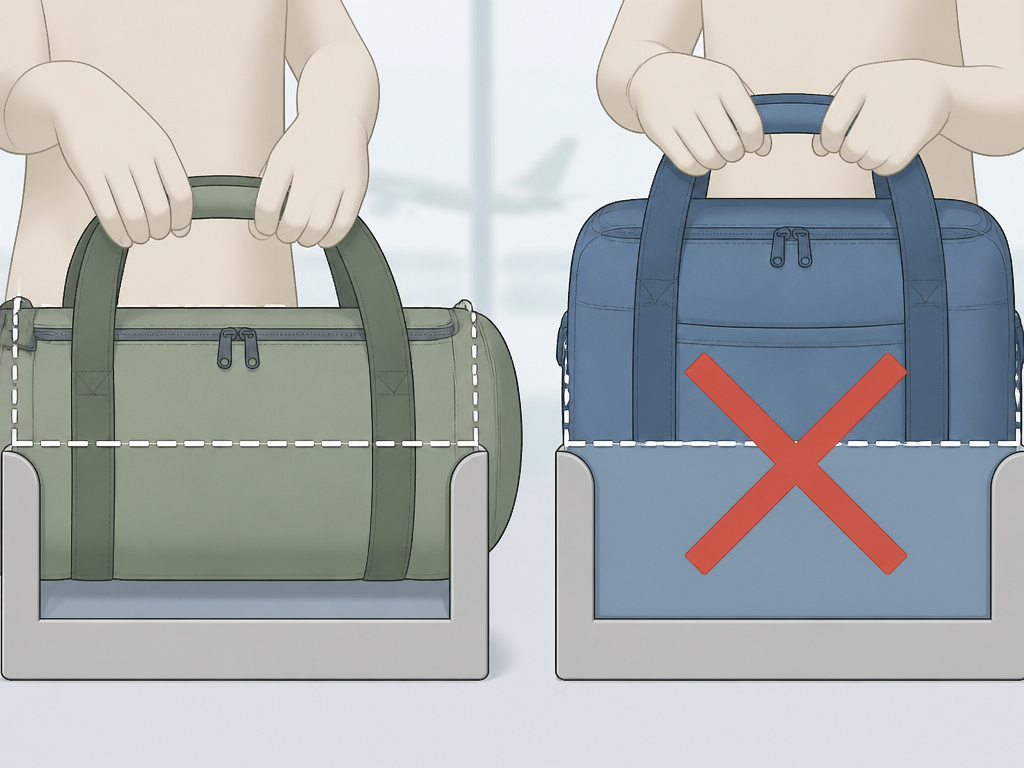
Airlines do not measure your bag in liters. They measure it in linear inches (length + width + height). This is the trap.
Two different 45L duffels can have wildly different external dimensions. One might be long and cylindrical, another short and boxy. The boxy one might exceed the airline’s height limit even though it holds the same volume. You must check your bag’s exact dimensions against your airline’s exact policy.
Common mistake: Assuming “carry-on duffel bags” are universally compliant. A bag marketed as 45L carry-on might fit Delta’s bin but be too tall for Spirit’s stricter sizer. You get gate-checked and pay a fee.
The safe play is to buy a bag listed at or below your airline’s maximum dimensions. Many carry-on duffel bag models are designed to this spec. When in doubt, a 40L bag is almost always safe. Confirm its duffel bag dimensions before you buy.
Creative and Practical Alternative Uses
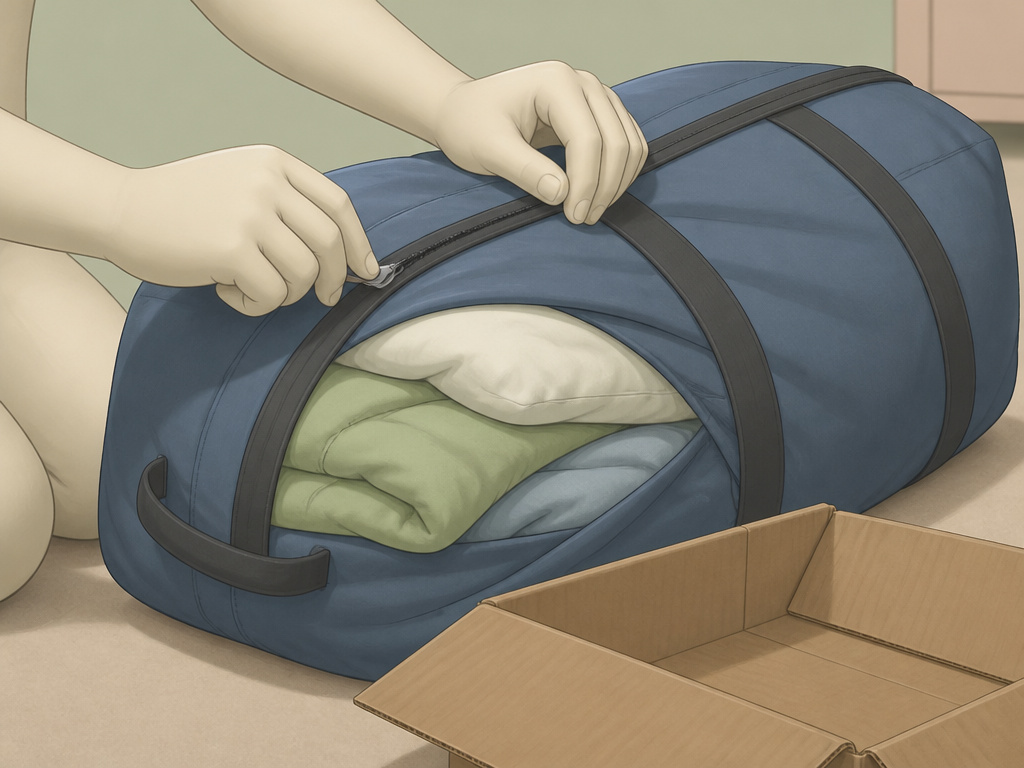
Beyond the standard list, a duffel’s simplicity makes it a solution for odd jobs.
Moving Helper: Use it for soft, non-breakable items like pillows, blankets, and clothing. It’s easier to carry than a floppy cardboard box. A rolling duffel bag is perfect for this.
Camping Gear Storage: Keep your tent, sleeping bag, and camp kitchen in separate duffels. They stack in the garage and protect gear from dust. Reddit campers debate folding vs. Stuffing tents, but a duffel accommodates either method.
Beach Day Superiority: Shake the sand out when you get home. A backpack’s seams and pockets will harbor sand granules for months.
Car Trunk Organizer: A small duffel can hold emergency supplies, jumper cables, a blanket, basic tools, keeping your trunk neat and your kit portable.
The through-line is containment of bulk. If the items are irregular, soft, or need to be moved as a single batch, a duffel is likely the right tool.
Frequently Asked Questions
Is a duffel bag good for everyday use?
It depends on what you carry. For a gym-goer, yes, it’s perfect. For a student or commuter who needs a laptop, books, and organization, a backpack with dedicated compartments is usually better. A duffel forces you to dig.
Can I use a duffel bag for a week-long trip?
You can, but you’ll probably need to check it. A 50L-70L duffel can hold a week’s worth of clothing. For a carry-on week-long trip, you’ll need to pack very minimally into a 40L-45L bag, which is an advanced skill in efficient packing your duffel.
How do I clean my duffel bag?
Check the manufacturer’s tag. For most polyester or nylon bags, wipe the interior with a damp cloth and mild soap. Air dry completely to prevent mildew. For deeper cleaning a duffel bag, some are machine washable on gentle cycle, but always remove straps and air dry.
What’s the difference between a duffel bag and a holdall?
Nothing functional. “Holdall” is the common British term for the same soft-sided, large-capacity bag. “Duffel” is more common in the US. The words are interchangeable.
Are duffel bags allowed as personal items on flights?
Yes, if they fit under the seat in front of you. This typically means a bag no larger than 18″ x 14″ x 8″, which is usually an 20L-30L duffel. You must adhere to the specific airline personal item policy.
The Bottom Line
A duffel bag is a transport container for bulk. Its value is in its lack of structure, it conforms to your gear, your car trunk, your airline’s overhead bin. For gym gear and short trips, it’s often the best tool you can own.
If you want one answer: start with a 40L duffel in 1000D nylon from a brand like Patagonia or The North Face. That size bridges gym, weekend travel, and carry-on use. The material will survive being checked. Add a packing cube for organization, and use the trolley sleeve when you have a roller suitcase. That combination handles about 80% of what most people throw at a bag.
For everything else, match the capacity and features to the job. The duffel’s job is to hold things, carry them a short distance, and get out of the way. It does that one job very well.