How to Clean a Suitcase the Right Way (Without Ruining It)
This post contains affiliate links. As an Amazon Associate, we earn from qualifying purchases.
To clean a suitcase, you need to match your cleaning method to its shell material and tackle three high-germ zones: handles, wheels, and the interior lining. Use mild soap and water for most shells, rubbing alcohol on plastic components, and baking soda to pull odors from the fabric lining.
Most people hose down the outside and call it clean. They ignore the telescoping handle tube, the grit packed into the wheel bearings, and the stale smell locked in the lining from last season’s beach towel. That grit grinds down plastic parts, and that smell means mold spores are waiting for your next pair of jeans.
This guide walks through a full clean for polycarbonate hardshells, ballistic nylon softsides, and everything in between. You’ll learn how to strip sunscreen off a handle, get sand out of a zipper, and store your bag so it doesn’t smell like a basement when you unzip it in six months.
Key Takeaways
- Clean your suitcase after every trip, without exception. The high-touch zones (handles, wheels) transfer airport-floor germs directly to your hands.
- Never use chlorine bleach, abrasive powders, or undiluted vinegar on any luggage material. They degrade fabrics, haze plastic, and corrode metal zippers.
- Air drying is non-negotiable. Close a damp suitcase and you’ll find speckled mold on the lining within two weeks, guaranteed.
- For hard-sided scuff marks, a damp Mr. Clean Magic Eraser works better than any specialty polish. Test on a hidden spot first.
- Baking soda is your odor weapon. Leave a full cup of it inside a closed suitcase for 48 hours to absorb mustiness before long-term storage.
The 5-Step Suitcase Cleaning Sequence
Follow this order. Cleaning the interior before the exterior just redirties everything.
Step 1: Empty and Stage
Unzip every compartment, including the hidden ones behind the lining. Pull out all old boarding passes, receipts, and forgotten socks. Extend the telescoping handle to its full length. This exposes the grimy inner tube that never gets wiped down. Do this outside or over a hard floor you can easily sweep.
Step 2: Dry Debris Removal
Take the suitcase outside and shake it upside down and sideways. You’ll be surprised by the sand and crumbs that fall out. Then, use your vacuum’s upholstery attachment. Run it over the entire interior, pressing into corners and seams. Vacuum the exterior shell too, especially around zipper tracks and wheel housings. This prevents making muddy paste when you add water later.
Step 3: Exterior Shell Wash
Mix a gallon of warm water with a teaspoon of clear, mild dish soap like Dawn. Dampen a clean microfiber cloth in the solution, wring it until it’s just barely wet, and wipe the shell in sections.
For polycarbonate or ABS hard-shell luggage, a simple soap-and-water solution is sufficient. Avoid abrasive cleaners or scrubbing pads, which can permanently scratch the glossy finish and create micro-fractures that collect dirt.
Dry each section immediately with a second, dry microfiber cloth to prevent water spotting. For textured fabric shells, use a soft-bristled brush (an old toothbrush works) to gently work the soapy solution into the weave, then wipe with the damp cloth.
Step 4: Component Detailing
This is the hygiene step. Dampen a cloth with a 70% isopropyl rubbing alcohol solution. Wipe down the entire handle, including the telescoping tube. Scrub zipper pulls and the zipper tape itself. For the wheels, pick out hair and thread wrapped around the axles with a pair of tweezers or a small flat-head screwdriver. Then, scrub the wheel and housing with your soapy toothbrush.
Step 5: Interior Refresh and Dry
Vacuum the interior one more time to catch any loosened dirt. For odors, sprinkle a thin, even layer of baking soda over the entire lining. Let it sit for at least two hours, overnight for strong smells, then vacuum it up. For stains, dab (don’t rub) with a cloth dampened with your diluted soap solution. Then, the most critical part: dry it wide open in a well-ventilated area, out of direct sunlight, for a full 24 hours.
TL;DR: Work from the inside out: vacuum, wash shell, disinfect components, deodorize lining, and air dry completely before even thinking about storage.
Hard-Sided vs. Soft-Sided: The Cleaning Split
Your shell material dictates your tool choice and aggression level. Getting this wrong costs you a finish.
Hard-Sided (Polycarbonate, ABS, Aluminum)
These shells wipe clean easily but scratch and scuff. Never use a Scotch-Brite pad or powdered cleaner. For light scuffs, a damp Mr. Clean Magic Eraser (or generic melamine foam) works miracles. Glide it lightly over the mark with zero pressure, let the foam do the work. For stubborn black marks from conveyor belts, make a paste of baking soda and water, apply with a soft cloth, and buff gently. Rinse and dry immediately. Deep scratches are there for good; polishing compounds rarely work and often haze the surrounding area.
Soft-Sided (Nylon, Polyester, Canvas)
Fabric shells hide stains in the weave and hold onto odors. Your goal is to lift dirt without saturating the fabric. The soapy brush technique is key. For an oil-based stain like sunscreen or lip balm, sprinkle cornstarch or baking soda on it to absorb the oil before brushing. For general grime, a dedicated fabric cleaner like Resolve Upholstery Spray works well. Spray, let sit for 10 minutes, then agitate with your soft brush and wipe with a damp cloth.
Common mistake: Soaking a fabric suitcase to clean it, the inner cardboard or plastic stiffeners warp, and the lining glue fails, causing the interior pockets to sag and detach within a few drying cycles.
The Leather Exception
Real leather suitcases are a different beast. Use a product made for leather, like Lexol Leather Cleaner or a simple saddle soap. Apply with a soft cloth, following the grain. Condition afterward with a leather cream to prevent drying and cracking. Never get the leather soaking wet.
| Shell Material | Best Cleaner | Tool | What to Avoid |
|---|---|---|---|
| Polycarbonate/ABS | Mild dish soap + water | Microfiber cloth | Abrasive sponges, acetone, bleach |
| Ballistic Nylon | Diluted upholstery cleaner | Soft-bristle brush | Soaking, bleach, stiff-bristle brushes |
| Canvas | Mild soap + water, vinegar spot treatment | Soft cloth, toothbrush | Power washers, machine washing |
| Leather | pH-neutral leather cleaner | Soft applicator cloth | Water saturation, silicone-based polishes |
How to Clean Suitcase Wheels and Handles
These are the germ hubs. A 2024 study cited by The Washington Post found that suitcase handles can harbor more bacteria than a public restroom flush handle.
Telescoping Handles
Extend the handle fully. You’ll see the grimy inner pole. Wipe the entire mechanism with a rubbing alcohol cloth. For the handle grip, use a cotton swab dipped in alcohol to get into the crevices. If the handle is sticky, a drop of dish soap on a damp cloth will cut through the residue. Rinse the cloth and wipe clean. Let it dry completely before retracting.
Fixed and Side Handles
Scrub the entire handle, including the stitching or plastic where it attaches to the shell. Dirt and skin oils build up here. Use your soapy toothbrush. For leather handles, follow the leather care steps above.
Spinner Wheels
The goal is to remove debris and restore smooth rotation. Tip the suitcase on its back. Spin each wheel and look for hair, thread, or carpet fibers wound around the axle. Pick these out with tweezers. If a wheel is stiff, you can often pop off the plastic cap covering the axle. Spray a little WD-40 Specialist Dry Lube (not regular WD-40) onto the axle, spin the wheel, and wipe away excess. For a deep clean, some wheels are removable with a screwdriver, consult your suitcase’s manual.
I ignored a squeaky wheel on my favorite Travelpro for one season too many. By the next trip, it was grinding, and the plastic housing had cracked from the unbalanced stress. A $15 replacement wheel kit turned into a $90 repair because the cracked baseplate wasn’t sold separately. Now I clean and lube wheels the day I return from a trip.
Inline Wheels (Two-Wheeled Suitcases)
These are simpler. Check the wheel for large debris and scrub the housing with your brush. Ensure the wheel axle pin is intact and not bent.
Removing Stains and Odors from the Interior
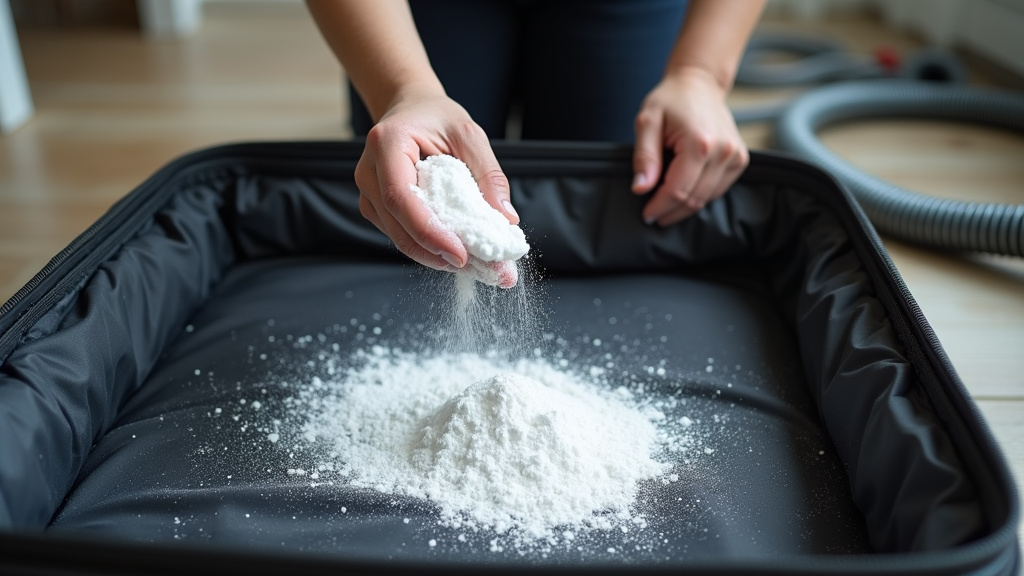
The interior lining absorbs spills and smells from dirty clothes and shoes. A musty suitcase ruins the first day of any trip.
Odor Elimination Protocol
Baking soda is the first line of defense. Vacuum the interior, then sprinkle baking soda generously over every surface. Close the suitcase and let it sit for 24-48 hours. The baking soda absorbs odor molecules. Vacuum thoroughly. For persistent musty or mildew smells, use an ozone generator if you have one, or place an activated charcoal odor absorber bag inside the closed suitcase for a week.
Stain-Specific Removal
Act fast. Blot, don’t rub.
* Coffee/Red Wine: Mix one part white vinegar with two parts cold water. Dab on the stain, then blot with a cloth soaked in cold water. The vinegar helps break down the tannins.
* Ink: Dab with rubbing alcohol using a cotton swab. It will likely spread before it lifts, so work from the outside of the stain inward.
* Makeup/Sunscreen: Use a drop of dish soap on a damp cloth to pretreat. The oils in these stains need a degreaser.
* Mold/Mildew: This is serious. Mix one cup of bleach with one gallon of water only if your lining is white and colorfast. For colored linings, use a commercial mold remover like RMR-86. Apply in a well-ventilated area, scrub lightly, then rinse with a barely damp cloth and dry immediately. The suitcase must dry completely to prevent recurrence.
When to Consider Professional Cleaning
If the interior lining is detachable (like in some Briggs & Riley models), check the tag. Some are machine washable. If the mold or stain covers more than 25% of the interior, or if odors persist after baking soda and charcoal, a professional upholstery cleaner with an extractor is your best bet. The cost is usually less than replacing the suitcase.
The Right Way to Dry and Store Your Luggage
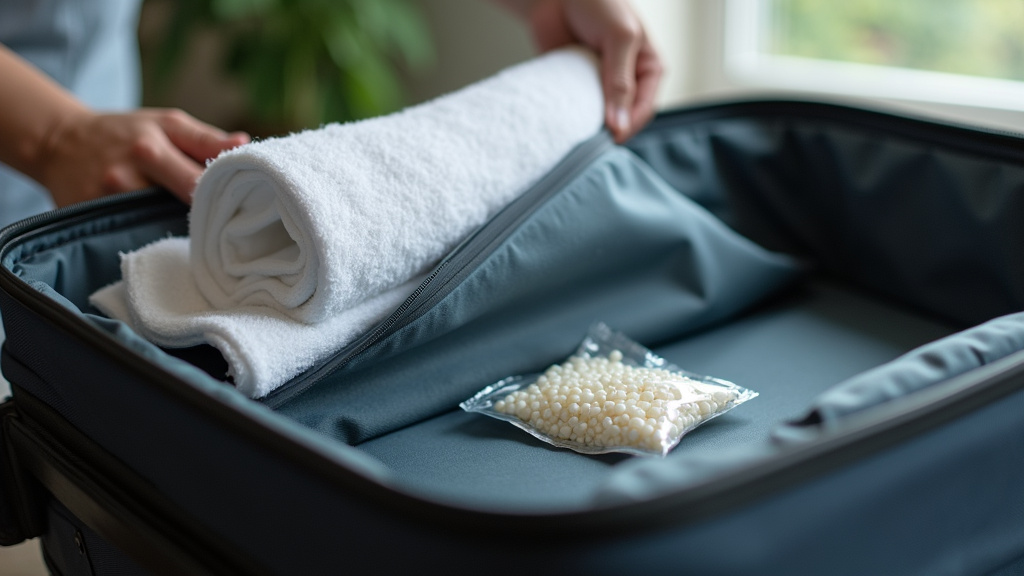
Storage is part of the cleaning process. A poorly stored clean bag will still get musty.
Drying: No Shortcuts
After cleaning, open every compartment, pocket, and zipper. Prop the suitcase open with a rolled towel or let it lie on its side with the lid wide open. Place it in a room with good airflow, a fan helps. Avoid direct sunlight, which can fade fabrics and weaken plastics over time. Drying can take 24-48 hours depending on humidity. Feel the lining in the deepest corners; it must be completely dry to the touch.
Long-Term Storage Prep
Before storing, ensure the suitcase is bone-dry. Place a moisture absorber like silica gel packets or an activated charcoal bag inside. Leave the zippers slightly unzipped to allow air circulation. If you have a suitcase cover, use it to keep off dust. Store the suitcase in a cool, dry place, not a damp basement or hot attic.
Common mistake: Storing a suitcase in its travel cover while slightly damp, this creates a sealed, humid environment perfect for mold, which will stain the exterior fabric with dark, speckled spots that rarely come out.
Storage Location Options
A closet shelf is ideal. If you must use a basement, place the suitcase on a pallet or shelf off the concrete floor. Never store it in a plastic garbage bag; trapped moisture condenses inside. A breathable cotton storage bag is a better alternative.
| Storage Factor | Good Practice | Risk of Ignoring |
|---|---|---|
| Moisture | Use silica gel packs inside, store off basement floors | Mold growth on lining and exterior within 3-4 months |
| Airflow | Leave zippers slightly open, use breathable cover | Musty odor becomes permanent in fabric shells |
| Pressure | Store empty, don’t stack heavy items on top | Warped shell structure, cracked hard-side panels |
| Pests | Ensure area is clean, consider cedar blocks | Moths or carpet beetles can damage natural fiber linings |
Frequently Asked Questions
Can I machine wash a fabric suitcase?
Almost never. Even if the fabric is nylon or polyester, the internal structure contains cardboard, plastic frames, and glued seams. Machine agitation will destroy it. Stick to spot cleaning fabric luggage with a brush and mild cleaner.
How often should I clean my suitcase?
Clean the exterior handles, wheels, and shell after every trip. Do a full interior and exterior deep clean at least once a year, or immediately after a trip where something spilled inside.
What’s the best way to clean white luggage?
Use the same mild soap and water method. For yellowing or dinginess on hard-sided white luggage, a paste of baking soda and water applied with a soft cloth can help brighten it. Avoid bleach-based cleaners as they can weaken plastics over time.
How do I clean leather suitcase handles?
Use a dedicated leather cleaner or saddle soap. Apply a small amount to a soft cloth, work into the leather in a circular motion, then wipe off any excess. Follow with a leather conditioner to keep the material supple. This is part of basic leather suitcase maintenance.
Can I use a pressure washer on my suitcase?
No. The force of the water will drive moisture past zippers and seals, soaking the interior lining and framework. It can also peel off decorative decals and damage spinner wheel bearings. The YouTube trend of power-washing suitcases is a fast track to a ruined bag.
How do I get sand out of the zipper?
Use a dry, soft-bristled toothbrush to brush the sand out of the zipper teeth. Then, run the zipper back and forth a few times. For stubborn grit, a can of compressed air (like for keyboards) can blow it out. After cleaning, a tiny amount of zipper lubricant or a rub with a bar of soap on the teeth will keep it running smoothly.
The Bottom Line
Cleaning a suitcase isn’t about making it look new for Instagram. It’s a functional maintenance task that kills germs, prevents mechanical failures, and stops your clothes from smelling like last year’s vacation. The sequence is simple: dry clean, wet wash, disinfect components, and air dry completely.
Invest ten minutes post-trip on the handles and wheels. Commit to one hour per year for a full deep clean. That routine will double the functional life of your luggage by keeping grit out of the wheels and mold out of the lining. When you master efficient packing strategies for your next trip, you’ll unzip a bag that smells clean and works smoothly, the way travel should start.
{
“@context”: “https://schema.org”,
“@type”: “HowTo”,
“name”: “How to Clean a Suitcase Inside and Out”,
“totalTime”: “PT60M”,
“tool”: [
{
“@type”: “HowToTool”,
“name”: “Soft microfiber cloths”
},
{
“@type”: “HowToTool”,
“name”: “Soft-bristled brush or old toothbrush”
},
{
“@type”: “HowToTool”,
“name”: “Vacuum cleaner with upholstery attachment”
},
{
“@type”: “HowToTool”,
“name”: “Spray bottle”
}
],
“supply”: [
{
“@type”: “HowToSupply”,
“name”: “Mild dish soap”
},
{
“@type”: “HowToSupply”,
“name”: “Distilled white vinegar”
},
{
“@type”: “HowToSupply”,
“name”: “Baking soda”
},
{
“@type”: “HowToSupply”,
“name”: “Rubbing alcohol (70% isopropyl)”
}
],
“step”: [
{
“@type”: “HowToStep”,
“name”: “Empty and Prep”,
“text”: “Remove all items, tags, and papers. Extend telescoping handles fully and open all zippers and pockets.”
},
{
“@type”: “HowToStep”,
“name”: “Remove Surface Debris”,
“text”: “Take the suitcase outside and shake it vigorously. Use a vacuum with a brush attachment on the interior and exterior to remove loose dirt, sand, and hair.”
},
{
“@type”: “HowToStep”,
“name”: “Clean the Exterior Shell”,
“text”: “Mix a solution of warm water and a few drops of mild dish soap. Dampen a microfiber cloth, wring it out well, and wipe down the shell. For hard-sided cases, use a damp Magic Eraser on scuffs. For fabrics, use a soft brush.”
},
{
“@type”: “HowToStep”,
“name”: “Detail Handles, Wheels, and Zippers”,
“text”: “Clean handles and zipper pulls with a cloth dampened with rubbing alcohol. Use an old toothbrush dipped in soapy water to scrub wheel wells and axles, removing wrapped hair and grit.”
},
{
“@type”: “HowToStep”,
“name”: “Sanitize and Deodorize the Interior”,
“text”: “Vacuum the interior thoroughly. For odors, sprinkle baking soda liberally inside, let sit for several hours, then vacuum. Spot-clean stains with a diluted soap solution, then air dry completely with the suitcase open.”
}
]
}
{
“@context”: “https://schema.org”,
“@type”: “FAQPage”,
“mainEntity”: [
{
“@type”: “Question”,
“name”: “Can I machine wash a fabric suitcase?”,
“acceptedAnswer”: {
“@type”: “Answer”,
“text”: “Almost never. Even if the fabric is nylon or polyester, the internal structure contains cardboard, plastic frames, and glued seams. Machine agitation will destroy it. Stick to spot cleaning fabric luggage with a brush and mild cleaner.”
}
},
{
“@type”: “Question”,
“name”: “How often should I clean my suitcase?”,
“acceptedAnswer”: {
“@type”: “Answer”,
“text”: “Clean the exterior handles, wheels, and shell after every trip. Do a full interior and exterior deep clean at least once a year, or immediately after a trip where something spilled inside.”
}
},
{
“@type”: “Question”,
“name”: “What’s the best way to clean white luggage?”,
“acceptedAnswer”: {
“@type”: “Answer”,
“text”: “Use the same mild soap and water method. For yellowing or dinginess on hard-sided white luggage, a paste of baking soda and water applied with a soft cloth can help brighten it. Avoid bleach-based cleaners as they can weaken plastics over time.”
}
},
{
“@type”: “Question”,
“name”: “How do I clean leather suitcase handles?”,
“acceptedAnswer”: {
“@type”: “Answer”,
“text”: “Use a dedicated leather cleaner or saddle soap. Apply a small amount to a soft cloth, work into the leather in a circular motion, then wipe off any excess. Follow with a leather conditioner to keep the material supple. This is part of basic leather suitcase maintenance.”
}
},
{
“@type”: “Question”,
“name”: “Can I use a pressure washer on my suitcase?”,
“acceptedAnswer”: {
“@type”: “Answer”,
“text”: “No. The force of the water will drive moisture past zippers and seals, soaking the interior lining and framework. It can also peel off decorative decals and damage spinner wheel bearings. The YouTube trend of power-washing suitcases is a fast track to a ruined bag.”
}
},
{
“@type”: “Question”,
“name”: “How do I get sand out of the zipper?”,
“acceptedAnswer”: {
“@type”: “Answer”,
“text”: “Use a dry, soft-bristled toothbrush to brush the sand out of the zipper teeth. Then, run the zipper back and forth a few times. For stubborn grit, a can of compressed air (like for keyboards) can blow it out. After cleaning, a tiny amount of zipper lubricant or a rub with a bar of soap on the teeth will keep it running smoothly.”
}
}
]
}