TSA Rules: Are Razor Blades Allowed in Carry-On Luggage?
This post contains affiliate links. As an Amazon Associate, we earn from qualifying purchases.
Yes, you can bring most razors in your carry-on luggage. The TSA allows electric razors, disposable razors, and cartridge razors (like Gillette Mach3) in cabin bags. Only safety razor blades and straight razors with exposed blades must be placed in your checked baggage.
You can pack electric razors, disposable razors, and cartridge razors in your carry-on luggage. Safety razor blades and straight razors must go in your checked bag. The Transportation Security Administration (TSA) draws a bright line between enclosed, protected blades and exposed ones. The rule is simple: if the blade is loose, removable, or exposed, it flies in your checked luggage. If it’s sealed inside a plastic cartridge or a disposable housing, it flies in your cabin bag.
Most people get this wrong because they hear “razor” and think “sharp metal object.” They assume all of them are banned. That assumption sends a lot of perfectly legal Gillette Mach3 handles and electric shavers into the checked bag pile unnecessarily. Or worse, it convinces someone to sneak a safety razor blade into their carry-on, which guarantees a conversation with a TSA officer and a potential fine.
This guide walks through the five razor categories, the exact TSA rules for each, and the physical logic behind them. You’ll learn how to pack each type, what happens if you get it wrong, and how to handle the gray area of TSA officer discretion without losing your gear or your temper.
Key Takeaways
- Electric, disposable (like BIC), and cartridge razors (like Gillette Fusion) are always carry-on safe.
- Safety razor blades are never carry-on safe; the handle alone can go in your cabin bag.
- Straight razors are always prohibited in carry-on luggage and must be checked.
- The final call rests with the TSA officer at the checkpoint, pack defensively.
- International rules often mirror the TSA, but always verify your destination’s specific regulations.
The Electric, Disposable, and Cartridge Rule
These three types share one physical characteristic: the cutting edge is permanently enclosed or housed within a protective plastic guard. An electric razor’s blades spin behind a metal or plastic foil. A disposable razor, like a BIC Twin Select or a Gillette Good News, has its blade fixed inside a molded plastic head. A cartridge razor, like a Gillette Fusion5 ProGlide or a Wilkinson Sword Quattro Titanium, uses replaceable cartridges that click onto a handle, the blade inside is sealed behind multiple guard wires.
That enclosure is the entire game. The TSA’s official carry-on razor blade policy states cartridge razors are permitted because the blade is not accessible without disassembling the cartridge itself. The same logic applies to disposables. For electric razors, the TSA electric razor policy is explicit: they are allowed in both carry-on and checked bags.
Common mistake: Packing a cartridge razor in checked luggage “to be safe”, you’ve just made it more likely your $30 handle gets lost or crushed, and you’ve wasted valuable checked bag space on an item that poses zero security risk.
You don’t need to disassemble anything. Drop the whole electric shaver, disposable, or cartridge razor into your toiletry kit. That’s it. The only special instruction is for electric razors with removable battery packs or charging cords. Pack the cord separately to avoid a tangled mess that looks suspicious on the X-ray. A nest of wires can prompt a bag search.
TL;DR: Electric, disposable, and cartridge razors are carry-on safe because their blades are enclosed. No disassembly needed.
The Safety Razor & Straight Razor Exception
This is where the rules flip. Safety razors (like a Merkur 34C or an Edwin Jagger DE89) and straight razors (the classic barber’s tool) have exposed, removable blades. The TSA’s sharp objects policy is clear: “straight razors” are prohibited in carry-on bags. For safety razors, the handle is allowed, but the blades are not.
The reasoning is mechanical, not arbitrary. A loose double-edge safety blade or a straight razor’s open edge can be used as a weapon with minimal effort. A cartridge razor’s blade requires you to break the plastic housing, something you can’t do quietly in an airplane lavatory.
Here’s the critical, often-missed procedure for safety razors:
1. Remove the blade from the razor head.
2. Securely wrap the blade(s) in their original paper sleeve, then place them inside a hard-sided container like a pill bottle or the razor’s travel case.
3. Put that container in your checked luggage.
4. Pack the empty razor handle in your carry-on or checked bag.
Common mistake: Leaving the blade in a safety razor “because it’s sheathed in the head”, the TSA officer sees a metal blade inside a metal holder on the X-ray. It’s getting flagged, and they will not remove it for you.
TSA officers are not authorized to disassemble your property. If you present a safety razor with a blade installed, they will ask you to exit the line, remove the blade yourself, and either surrender it or go back to the ticket counter to check your bag. At Chicago O’Hare at 6 a.m., that’s a 45-minute setback.
TL;DR: Safety razor blades and straight razors are prohibited in carry-on bags due to their exposed, weaponizable edges. Pack the blades in checked luggage.
What About Multi-Tools and Box Cutters?
This is a direct extension of the exposed-blade rule. Any device with a removable, exposed razor blade or utility knife blade falls under the same restriction as a safety razor blade. A multi-tool like a Leatherman that includes a blade must be checked. A standalone box cutter or utility knife with a retractable blade is also prohibited in carry-on luggage.
The TSA’s “What Can I Bring?” tool lists “Multi-tool (without blades)” as carry-on allowed. The moment a blade is attached, it’s out. This is a frequent point of confusion for tradespeople or hobbyists traveling with tools. The blade is the deciding factor, not the tool it’s attached to.
| Item | Carry-On Allowed? | Checked Bag Allowed? | Key Reason |
|---|---|---|---|
| Multi-tool WITH blade | No | Yes | Exposed, removable blade |
| Box Cutter / Utility Knife | No | Yes | Exposed, retractable blade |
| Razor Blades (loose) | No | Yes | Exposed, weaponizable edge |
| Multi-tool WITHOUT blade | Yes | Yes | No cutting edge present |
If your travel toolkit includes a multi-tool, remove the blade module if possible and check it. Otherwise, the entire tool goes in checked luggage.
International Travel and Razor Rules
The TSA governs U.S. airports. When flying from or through other countries, you must check that nation’s aviation security authority. Most align closely with TSA guidelines, the UK’s Department for Transport and the EU’s aviation security rules generally permit electric, disposable, and cartridge razors in hand luggage while prohibiting straight razors and safety razor blades.
However, nuances exist. Some European airports may ask you to remove electric razors from your bag at security, just like a laptop. The YouTube transcript from a UK airport explicitly states this. The core principle, exposed blade bad, enclosed blade good, is global. The screening procedures might vary.
Always verify the rules for your specific destination. A quick search for “[Country Name] airport security prohibited items” usually brings up the official government page. Don’t assume.
Packing for the Checkpoint: A Defensive Strategy
TSA officers have final discretion. Their mandate is to stop threats, not to debate the technical definition of a “cartridge.” I’ve seen a officer at Denver International confiscate a brand-new Gillette cartridge razor because the individual blade was visible between the guard wires. Was it legal? Technically, yes. Did he allow it? No. Arguing only makes things slower.
Your goal is to pass through security without drama. A few defensive packing moves make that likely:
* Keep razors accessible. Don’t bury your toiletry kit at the bottom of a packed bag. If it gets flagged, you can easily show the officer.
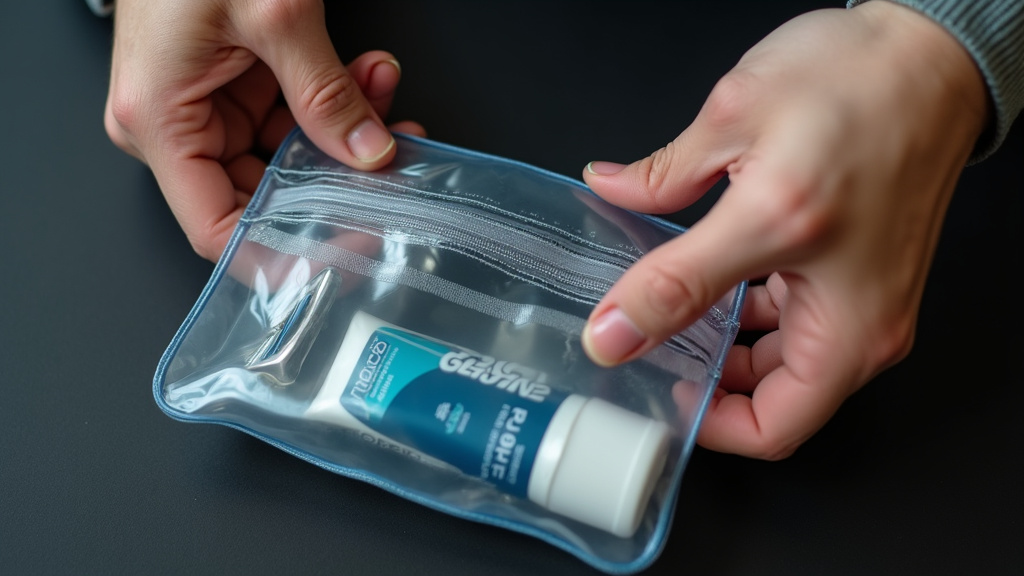
* Use clear toiletry bags. A transparent bag lets the X-ray operator see the razor’s shape clearly, reducing the chance of a search.
* Consider a cheap disposable. If you’re attached to a high-end safety razor, packing the blade feels risky. For a short trip, a BIC disposable solves the problem entirely.
* Sheath everything for checked bags. If you’re checking a straight razor or loose blades, use the original case or a leather sheath. Baggage handlers thank you.
I once traveled with a Merkur 34C safety razor. I knew the rule, so I packed the handle in my carry-on and the blades, wrapped in paper, in my checked toiletry kit. My checked bag got lost for two days. I had a beautiful chrome handle and no way to shave. Now I either travel with a cartridge razor or I pack a second set of blades in my carry-on partner’s checked bag.
The physical experience of a bag search is mundane but stressful. An officer puts on gloves, opens your bag, and rummages through your personal items in front of a line of strangers. It takes three to five minutes. It’s not worth it for a $2 blade.
Frequently Asked Questions
Can I bring a razor in my carry-on bag?
Yes, but the type matters. Electric razors, disposable razors (like BIC), and cartridge razors (like Gillette Fusion) are allowed. Safety razor blades and straight razors are not allowed in carry-on bags and must be placed in checked luggage.
Are safety razors allowed on planes?
The handle of a safety razor is allowed in your carry-on bag. The double-edge blades are not. You must remove the blades and pack them securely in your checked luggage.
What happens if I accidentally leave a razor blade in my carry-on?
If a TSA officer finds a prohibited blade during screening, they will stop you. You’ll be given a choice: exit the security line to dispose of the item or place it in your checked luggage (if you have one). In some cases, you may receive a civil penalty.
Do other countries have the same rules for razors?
Most developed countries follow similar principles, banning exposed blades in cabin luggage. Always check the official website of your destination country’s aviation security agency before you fly, as procedures can differ.
Can I pack an electric razor in my checked luggage instead?
Absolutely. Electric razors are permitted in both carry-on and checked bags. If you’re concerned about TSA discretion or want to save space in your carry-on, placing it in your checked luggage is fine.
Are razor cartridges allowed in carry-on luggage?
Yes. Replacement cartridges for razors like Gillette Mach3 or Schick Hydro are permitted in carry-on bags. They are considered sealed units, even outside the handle.
Before You Go
Packing razors comes down to one question: is the blade exposed? If it’s sealed in plastic or behind a foil guard, toss it in your carry-on. If you can see the sharp edge, it belongs in your checked bag. Memorize that rule and you’ll never face a last-minute scramble at security. Double-check the TSA website before you pack if you’re unsure, and when in doubt, opt for a simple disposable razor. It’s not worth the delay, the confiscation, or the fine.
{
“@context”: “https://schema.org”,
“@type”: “HowTo”,
“name”: “How to Pack Razors for Air Travel According to TSA Rules”,
“totalTime”: “PT5M”,
“tool”: [
{
“@type”: “HowToTool”,
“name”: “Your razor (electric, disposable, cartridge, or safety)”
},
{
“@type”: “HowToTool”,
“name”: “Checked luggage (for safety/straight razor blades)”
},
{
“@type”: “HowToTool”,
“name”: “Secure sheath or original packaging (for checked blades)”
}
],
“step”: [
{
“@type”: “HowToStep”,
“name”: “Identify your razor type”,
“text”: “Determine if your razor is electric, disposable (e.g., BIC), cartridge (e.g., Gillette Fusion), safety, or straight.”
},
{
“@type”: “HowToStep”,
“name”: “Pack electric, disposable, and cartridge razors in carry-on”,
“text”: “Place electric razors, disposable razors, and cartridge razors (like Gillette Mach3 or Wilkinson Sword Quattro) directly in your carry-on bag. No disassembly required.”
},
{
“@type”: “HowToStep”,
“name”: “Separate safety razor blades for checked luggage”,
“text”: “Remove the blade from a safety razor. Pack the blade securely in your checked luggage. The empty handle can go in your carry-on.”
},
{
“@type”: “HowToStep”,
“name”: “Pack straight razors only in checked luggage”,
“text”: “Place a straight razor, securely sheathed or in its case, exclusively in your checked luggage. It is prohibited in carry-on bags.”
},
{
“@type”: “HowToStep”,
“name”: “Prepare for security screening”,
“text”: “Remove your electric razor from your bag at the checkpoint, similar to a laptop, for separate screening if requested.”
}
]
}
{
“@context”: “https://schema.org”,
“@type”: “FAQPage”,
“mainEntity”: [
{
“@type”: “Question”,
“name”: “Can I bring a razor in my carry-on bag?”,
“acceptedAnswer”: {
“@type”: “Answer”,
“text”: “Yes, but the type matters. Electric razors, disposable razors (like BIC), and cartridge razors (like Gillette Fusion) are allowed. Safety razor blades and straight razors are not allowed in carry-on bags and must be placed in checked luggage.”
}
},
{
“@type”: “Question”,
“name”: “Are safety razors allowed on planes?”,
“acceptedAnswer”: {
“@type”: “Answer”,
“text”: “The handle of a safety razor is allowed in your carry-on bag. The double-edge blades are not. You must remove the blades and pack them securely in your checked luggage.”
}
},
{
“@type”: “Question”,
“name”: “What happens if I accidentally leave a razor blade in my carry-on?”,
“acceptedAnswer”: {
“@type”: “Answer”,
“text”: “If a TSA officer finds a prohibited blade during screening, they will stop you. You’ll be given a choice: exit the security line to dispose of the item or place it in your checked luggage (if you have one). In some cases, you may receive a civil penalty.”
}
},
{
“@type”: “Question”,
“name”: “Do other countries have the same rules for razors?”,
“acceptedAnswer”: {
“@type”: “Answer”,
“text”: “Most developed countries follow similar principles, banning exposed blades in cabin luggage. Always check the official website of your destination country’s aviation security agency before you fly, as procedures can differ.”
}
},
{
“@type”: “Question”,
“name”: “Can I pack an electric razor in my checked luggage instead?”,
“acceptedAnswer”: {
“@type”: “Answer”,
“text”: “Absolutely. Electric razors are permitted in both carry-on and checked bags. If you’re concerned about TSA discretion or want to save space in your carry-on, placing it in your checked luggage is fine.”
}
},
{
“@type”: “Question”,
“name”: “Are razor cartridges allowed in carry-on luggage?”,
“acceptedAnswer”: {
“@type”: “Answer”,
“text”: “Yes. Replacement cartridges for razors like Gillette Mach3 or Schick Hydro are permitted in carry-on bags. They are considered sealed units, even outside the handle.”
}
}
]
}