22L Backpack Dimensions: How Big Is It & What Fits Inside?
This post contains affiliate links. As an Amazon Associate, we earn from qualifying purchases.
A 22-liter backpack is a medium-sized daypack with internal dimensions around 18 inches tall, 12 inches wide, and 8 inches deep. It holds the essentials for a full day out: a 15-inch laptop, a jacket, a large water bottle, lunch, and personal items. For most people, it’s the sweet spot between a small satchel and a bulky travel pack.
Most people get this wrong by focusing only on the “22L” number. They forget that a backpack’s shape, pocket layout, and material stiffness change what you can actually carry. A boxy hiking pack uses its 22 liters differently than a sleek commuter bag.
This guide breaks down the real-world size of a 22L backpack. You’ll get the exact dimensions, see what fits inside with photos, and learn whether it’s the right size for your commute, hike, or next flight.
Key Takeaways
- Dimensions trump the liter label. A 22L pack is typically 18″ H x 12″ W x 8″ D, but always check the manufacturer’s specs, design can add or subtract inches.
- It’s a true daypack. It perfectly holds a full work/ school commute kit or a summer day-hike loadout. It is not designed for overnight gear or bulky winter layers.
- It’s the ultimate personal item. A standard 22L backpack will fit under the seat on every major U.S. airline, beating the restrictive airline personal item dimensions.
- Comfort has a weight limit. Even with great straps, aim to keep the total load under 20 pounds. Over that, you’ll want the weight distribution of a 30-liter backpack with a proper hip belt.
- Your torso length decides the fit. A bag that’s too long will bang on your lower back; one that’s too short will strain your shoulders. Measure from your C7 vertebra to your hip crest.
What Are the Actual Dimensions of a 22L Backpack?
Volume tells you capacity. Dimensions tell you if it will fit. A 22-liter volume can be shaped like a tall cylinder or a short box, the outside measurements are what matter for storage and airline bins.
The typical 22L backpack has external dimensions of 18 to 19 inches in height, 12 to 13 inches in width, and 7 to 8 inches in depth. Think of a standard paper ream box, but a bit taller and not as deep. These proportions are no accident. They align with the maximum under-seat space on a plane and the average human torso length.
A 22-liter backpack, when constructed for urban commuting, typically measures 18.1″ x 12.2″ x 7.9″. This rectangular form factor maximizes packing efficiency for books and laptops while complying with common airline personal-item sizer limits.
Manufacturers play games with these numbers. Some include every external pocket in the liter count. Others measure the internal cavity alone. A bag with a rigid frame will hold its shape and its promised volume. A soft shell made of floppy nylon might collapse and lose two liters of usable space when not fully packed.
I learned this the hard way with a popular “22L” sling bag from a direct-to-consumer brand. The marketing photos showed it stuffed with a camera and lens. In reality, the thin material meant my standard 13-inch laptop pressed against the back panel, and the main compartment puckered shut. It technically had the volume, but the design made it unusable for my needs. I returned it and went back to my Osprey Daylite Plus.
TL;DR: Trust the HxWxD numbers on the spec sheet more than the “22L” badge. For under-seat travel, ensure the depth is under 9 inches.
What Can You Fit in a 22L Backpack? (Real-World Examples)
This is where the rubber meets the road. A 22L pack isn’t about liters, it’s about your stuff. Let’s break it down by activity.
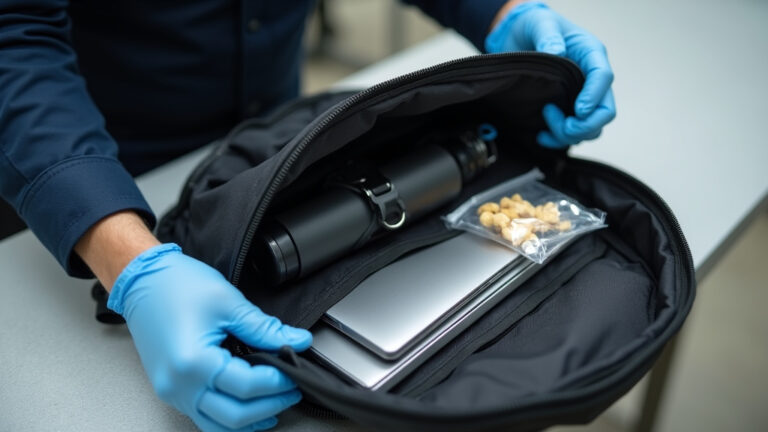
For the urban commuter or student, a 22L bag is the workhorse. You can reliably fit:
* A 15-inch laptop in a padded sleeve.
* A standard 1L hard-sided water bottle.
* A medium-sized lunch container or tupperware.
* A light packable jacket or sweater.
* A small tech pouch with cables, a portable battery, and headphones.
* A notebook, a paperback book, and a pencil case.
For a summer day hike, the loadout shifts:
* A 2L hydration bladder or two 1L water bottles.
* A first-aid kit, headlamp, and lightweight rain shell.
* Lunch, snacks, and a small stove if you’re making coffee.
* A compact camera, binoculars, and a field guide.
* An extra base layer and a beanie.
The limit appears when you try to add bulky items. A pair of size 10 running shoes will consume half the main compartment. A full-sized DSLR camera with a 70-200mm lens needs its own cube, leaving little room for anything else.
Common mistake: Assuming a 22L pack can handle a winter day hike, a puffy jacket, extra layers, and larger food supplies will overflow the bag, forcing you to strap gear awkwardly to the outside.
The table below shows how capacity gets allocated for different primary uses.
| Primary Use | What Fits (The “Big Three”) | Remaining Space For |
|---|---|---|
| Work Commute | 15″ Laptop, Lunch, Water Bottle | Jacket, Notebook, Tech Pouch |
| Day Hike | 2L Water, Rain Shell, Food | First-Aid Kit, Camera, Extra Layer |
| Gym & Errands | Size 10 Shoes, Gym Clothes, Towel | Toiletries, Water Bottle, Lock |
TL;DR: A 22L pack fits one bulky activity-specific item (laptop, shoes, hydration bladder) plus your daily essentials. It won’t fit two.
Is a 22L Backpack the Right Size for You?
Choosing a backpack is a match between its volume and your skeleton. The 22L size is a standard, but “standard” doesn’t mean “one-size-fits-all.”
First, measure your torso. Find the bony vertebra at the base of your neck that sticks out when you look down. That’s your C7. Measure straight down your spine to the top of your hip bones (the iliac crest). That number is your torso length. A properly fitting 22L pack’s back panel should be within an inch of this measurement. If the bag is too long, the hip belt will sit on your stomach, not your hips. That defeats its purpose.
Your body type matters. A 22L pack looks and carries differently on a 5’2″ frame versus a 6’2″ frame. The bag’s width should not extend beyond the curve of your shoulders. If the straps attach too far apart, they’ll slip off. Too close together, and they’ll pinch your neck.
I prefer a 22L pack with a slightly shorter, wider profile for my 18-inch torso. The boxier shape distributes weight from my shoulders to my upper back more evenly than a tall, narrow pack. That’s why I recommend the Patagonia Refugio 26L (which actually packs like a 22L) over a taller 22L model for broader-shouldered users.
Now, match it to your activity.
* For daily commuting and school: A 22L backpack is ideal. It’s large enough for books and a laptop but compact enough not to feel like you’re hauling luggage.
* For day hiking: It’s perfect for fair-weather, 3-6 hour hikes. If you need to carry a bear canister, extra layers for variable weather, or gear for scrambling, you’ve entered 35-liter backpack territory.
* For one-bag travel: It’s a stellar personal item paired with a carry-on roller. As your only bag, it’s strictly for minimalist, warm-weather travel. You’ll be doing laundry every other day.
When a 22L backpack is the wrong choice:
- You need to carry a change of clothes plus shoes regularly.
- Your daily carry includes specialized, bulky equipment (e.g., a full-frame camera with multiple lenses).
- You hike in climates where weather demands a puffy jacket, gloves, and a shell at all times.
TL;DR: If your torso is between 16 and 20 inches and your daily load is under 20 pounds, a 22L pack will fit you and your life. If you exceed either, size up.
22L vs. Other Common Backpack Sizes
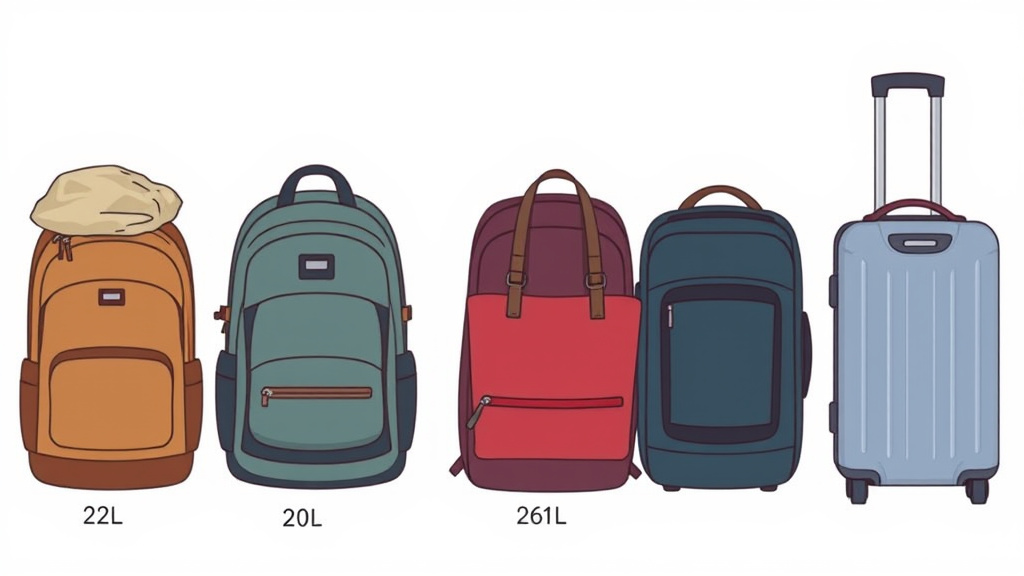
Seeing a 22L pack next to other sizes is the fastest way to understand its place in the lineup. Let’s compare it to the sizes you’re most likely to consider.
| Backpack Size | Best For | Key Limitation | Visual Comparison |
|---|---|---|---|
| 18-20L | Ultra-minimalist daily carry, quick errands. | Struggles with a laptop and a jacket. | A large handbag or messenger bag. |
| 22L (This Guide) | The full-featured daypack: work, school, summer hikes. | Cannot hold a second bulky item (e.g., shoes + laptop). | A stuffed grocery bag. |
| 25-26L | Weekend overnights, winter day hikes, heavy academic loads. | Often too deep for strict airline personal item sizers. | A small duffel bag. |
| 30-35L | Travel as a sole carry-on, multi-day hiking with lightweight gear. | Becomes cumbersome for daily use; feels like luggage. | A standard carry-on roller bag. |
The jump from a 20-liter backpack to a 22L is about utility. That extra two liters is the difference between squeezing your lunch in and having a dedicated, padded laptop compartment. The jump from 22L to a 26-liter backpack is about flexibility. The 26L bag can usually swallow the 22L’s load plus a pair of shoes or a thicker sweater.
The most common misstep is buying a 22L pack for travel because it’s “carry-on compliant,” then realizing you have no room for souvenirs. For true one-bag travel, even for a weekend, most people are happier with the breathing room of a 30L backpack. The 22L shines as the personal item you pair with that larger bag.
TL;DR: A 22L pack is the Goldilocks daypack. Smaller packs (18-20L) force compromises; larger packs (25L+) encourage overpacking for daily use.
Critical Features to Look For in a 22L Backpack
Not all 22L bags are created equal. The features determine whether the bag works for you or against you.
Shoulder Straps and Back Panel: This is non-negotiable. Look for straps that are wide, contoured, and padded with a dense foam. The back panel should have channels for airflow, mesh is good, but a structured foam with ridges is better. If the straps are thin and sewn flat to the bag, they will cut into your shoulders with 15 pounds of weight.
Hip Belt: On a 22L pack, this is often a thin, removable strap. Don’t dismiss it. For loads over 15 pounds, that strap transfers meaningful weight from your shoulders to your hips. On a long walk or hike, it’s the difference between feeling fresh and having sore shoulders. For pure urban use, you can remove it.
Organization: This is personal preference. Do you want a dedicated, padded laptop sleeve? A quick-access top pocket for your phone and keys? A front panel organizer for pens and notebooks? More pockets mean more places to put things, but they also eat into the main compartment’s flexible space. I lean toward a simple design: one large main compartment, one padded laptop sleeve against the back, and one quick-access top pocket.
Material and Durability: 300-denier polyester is the workhorse. It’s abrasion-resistant and water-resistant. 500-denier cordura is burlier but heavier. Ballistic nylon is top-tier for durability. For the love of all that is good, avoid packs with a shiny, thin polyester lining. It feels cheap, snags easily, and the waterproof coating will peel off in a year.
The One Feature Everyone Forgets: The haul handle. That’s the handle on the top of the pack. A good one is wide, padded, and securely bar-tacked into the bag’s frame. You’ll use it a hundred times more than you think, pulling the bag out from under an airplane seat, lifting it off the floor, hanging it on a hook. A flimsy handle is a sign of corner-cutting.
Common mistake: Choosing a bag for its number of pockets over its carry comfort. An uncomfortable bag with perfect organization will stay in your closet. A comfortable bag with mediocre organization will get used every day.
TL;DR: Prioritize strap and back panel comfort first, then look for the organizational layout that matches your brain. The material should feel substantial, not like a grocery sack.
Frequently Asked Questions
Is a 22L backpack a personal item or a carry-on?
22L backpack is almost always a personal item. Its standard dimensions (approx. 18″x12″x8″) are designed to fit under the seat in front of you on any major airline. Always double-check the specific airline backpack size limits, but a properly proportioned 22L pack is the most reliable personal item you can buy.
Can a 22L backpack fit a 17-inch laptop?
It’s a very tight squeeze and not guaranteed. Most 22L packs are designed for laptops up to 15.6 inches. A 17-inch laptop may fit in the main compartment but will likely press against the sides, and you may not be able to use a protective sleeve. If you carry a 17-inch laptop, look at a 25-liter backpack or larger for a dedicated, padded sleeve.
Is 22L enough for a 3-day trip?
Only if you are an extreme minimalist and traveling in warm weather. You would need to wear your bulkiest items (shoes, jacket) on the plane and plan to do laundry. For most people, a three-day trip with any change of clothes or toiletries requires at least a 35L to 40L backpack.
How much weight can a 22L backpack hold?
The pack itself can hold 30+ pounds, but your shoulders shouldn’t. A reasonable comfort limit is 15-20 pounds. Beyond that, the lack of a substantial load-transferring hip belt and frame means all the weight hangs from your shoulders, leading to fatigue and strain.
What’s the difference between a 22L and 24L backpack?
The practical difference is minimal, about the space of a small sweatshirt. The real difference is often in the design. A manufacturer might label a bag as 24L to signal a slightly boxier shape or a more generous laptop compartment. When comparing, look at the external dimensions, not just the liter claim.
Can you bring a 22L backpack into Disney World?
Yes, absolutely. A 22L backpack is an ideal size for a theme park. It meets the common theme park backpack policy for size and is large enough to carry water, snacks, sunscreen, and a light layer for everyone in your group without being cumbersome on rides.
The Bottom Line
A 22L backpack isn’t just a size; it’s a tool for a specific job. That job is carrying everything you need for a full day away from home, and nothing more. Its genius is in its constraints.
Remember the dimensions: 18 inches tall, 12 inches wide, 8 inches deep. That’s the box your day needs to fit into. It will hold your work commute kit or your summer hike gear with discipline. It will slide under an airplane seat while a rolling bag goes overhead. Its comfort ceiling is about 20 pounds, the weight of a loaded toolbox you wouldn’t want to carry for miles.
If your daily load is a laptop, a layer, and lunch, this is your bag. If you need to carry shoes, a camera kit, or gear for variable weather every day, look at a 26L or 30L pack. The right size is the one that fits your stuff and your back, not the one with the cleverest marketing. Choose for the reality of your load, not the fantasy of a minimalist lifestyle.