How to Pack a Suitcase to Avoid Airline Fees & Overpacking
This post contains affiliate links. As an Amazon Associate, we earn from qualifying purchases.
To pack a suitcase efficiently, you follow a structured formula like 5-4-3-2-1 to limit items, match your folding technique to the fabric, and organize with packing cubes filled to 75% capacity before compression. This system saves up to 30% space versus haphazard packing and reliably fits a week’s trip into a standard carry-on.
The formula gives you a hard ceiling on items, but the real space gains come from how you treat each item inside that limit. Rolling soft knits and folding stiff wovens isn’t just advice; it’s a volume calculation. Dead air between folded sweaters costs more real suitcase inches than most people realize.
What follows: a breakdown of the 5-4-3-2-1 formula, the exact load order that prevents tip-overs, specific weight limits for your suitcase type, and the one compression rule that stops lumps.
Key Takeaways
- Use the 5-4-3-2-1 formula (5 tops, 4 bottoms, 3 shoes, 2 layers, 1 set of accessories) as a non-negotiable item ceiling.
- Roll soft, fold stiff. Rolling soft knits fits 30% more into a packing cube than folding.
- Fill compression cubes to 75% capacity before zipping the compression layer to avoid lumps.
- Weigh checked bags at 48 lbs, not 50, to buffer against airport scale variations.
- Place heavy items at the bottom near the wheels to anchor the suitcase’s center of gravity.
The 5-4-3-2-1 Packing Formula
A packing list is a suggestion. A formula is a rule. The 5-4-3-2-1 method structures your packing clothes around physical limits, not whims. It’s 5 tops, 4 bottoms, 3 pairs of shoes, 2 layers (like a jacket and a sweater), and 1 set of accessories (belts, jewelry, scarf). This isn’t a gentle guideline. It’s a scaffold that prevents overpacking by design.
For travelers who chronically overpack, this acts as a hard ceiling. That alone cuts wasted space. The formula forces prioritization. You choose the sweater that pairs with three bottoms, not the one that only works with one outfit. The goal is a system you can replicate trip after trip.
Common mistake: Treating the 3-shoe limit as a minimum to fill. Most trips need a walking shoe, a casual shoe, and maybe a dress shoe. Packing a fourth “just in case” pair is how you blow the formula and start forcing zippers.
The cubes, the formula, the load order—they become automatic. That’s how you go from forcing the zipper shut to having room to spare for souvenirs. For specifics on integrating items like dress shirts or jeans into this system, the method stays the same: contain, compress, and place according to weight.
Rolling vs. Folding: The Fabric Decides
Most packing guides just say “roll your clothes.” They miss the why-layer. Rolling works because it eliminates dead air between soft, compressible fabrics like t-shirts, knits, and pajamas. A study cited in our research found rolling these items can fit 30 percent more into a packing cube compared to folding. That’s a quantifiable space save.
Structured items are a different story. A dress shirt, a blazer, a pair of trousers with a sharp crease—these need to be folded. Rolling them introduces hard, curved wrinkles that a hotel iron won’t fix. The rule is simple: if it’s soft and doesn’t crease, roll it. If it’s structured and holds a shape, fold it flat.
This is where a medium Eagle Creek Pack-It Cube shines. Designed to hold one complete outfit, it gives you a clean compartment for either your rolled tees or your folded button-downs. Mixing techniques in the same cube leads to a mess.
How to Use Packing Cubes (It’s a System, Not a Product)
Most people try packing cubes once, shove clothes in randomly, and decide they’re overrated. The cubes aren’t the product. The system is. Their primary job is organization, turning a suitcase into a set of drawers. A 3-5 piece packing cube set covers most two-week trips.
Load cubes into your suitcase with their zippers facing the main opening. This sounds minor until you need a charger in a crowded overhead bin and can’t open a cube without turning the whole bag upside down.
There are two main methods: category packing and destination packing. Category packing means one cube for tops, one for bottoms, one for underwear. Destination packing means one cube holds everything for City A, another for City B. The smarter move is the arrival cube: designate one cube for your first night’s outfit and immediate toiletries. After a long travel day, you pull that one cube and leave the rest closed until morning.
The 75% Compression Rule
Compression cubes have a second zipper to squeeze air out. The mistake is filling the main compartment completely before compressing. This creates uneven pressure.
Where this goes sideways: Filling a compression cube beyond 75% capacity before using the compression zipper. The result is weird lumps and bumps that make the cube impossible to stack flat in your suitcase.
The correct sequence: fill the main chamber about three-quarters full. Then zip the compression layer. This pulls the contents evenly inward, creating a flat, stackable brick. A cube packed this way slides neatly against a hard-shell suitcase wall or lays flat in a soft-shell’s curved interior.
| Cube Type | Best For | Critical Rule |
|---|---|---|
| Standard Packing Cube | Organization, category sorting | Don’t overstuff; keep zippers accessible. |
| Compression Cube | Maximizing space in fixed volumes | Fill main chamber to 75% before compressing. |
| Small Toiletry Cube | Liquids, gels, TSA 3-1-1 compliance | Use for leak-prone items only. |
The Correct Load Order (Why Heavy Goes Low)
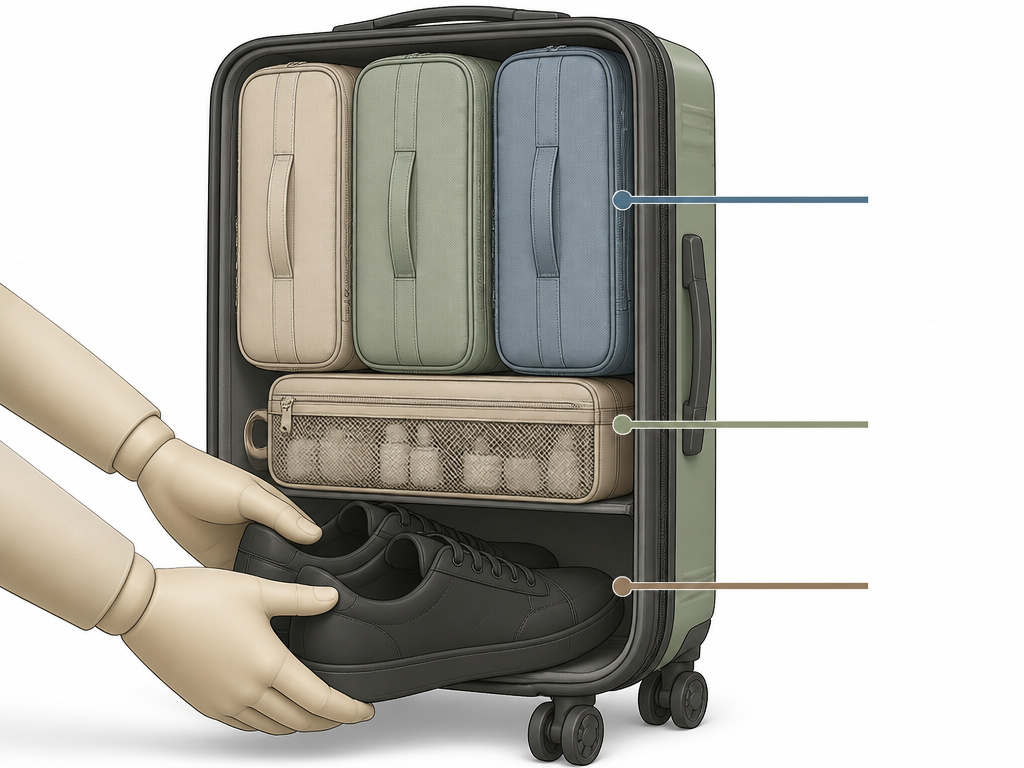
Where an item sits is as important as how it’s folded. Heavy items go at the bottom, near the wheels. This keeps the suitcase balanced when you wheel it, preventing it from tipping over backwards. It also stops dense objects from shifting onto and crushing lighter clothing mid-flight.
Follow this sequence for stability and access:
- Shoes. Place them in shoe bags or plastic grocery bags at the very bottom, soles against the suitcase wall. They are your heaviest items and provide a flat base. A rolled-up belt or tie fits neatly inside a shoe.
- Toiletry Kit. Set it upright in the middle-bottom layer. This minimizes leak risk and makes it fast to pull out at security.
- Packing Cubes. Stand compressed cubes vertically around the toiletries. Place cubes holding heavier items (like jeans) lower down.
- Folded Structured Items. Lay these flat on the very top. They experience the least pressure here, keeping creases to a minimum.
- Last-Minute Essentials & Outer Layer. Your travel documents, a change of clothes, and a packable jacket get stuffed into any remaining gaps or in a dedicated top lid pocket.
This load order is the backbone of packing a carry-on suitcase efficiently. It ensures balance, protects delicate items, and keeps what you need first within easy reach.
Suitcase Weight Limits and Scale Buffer
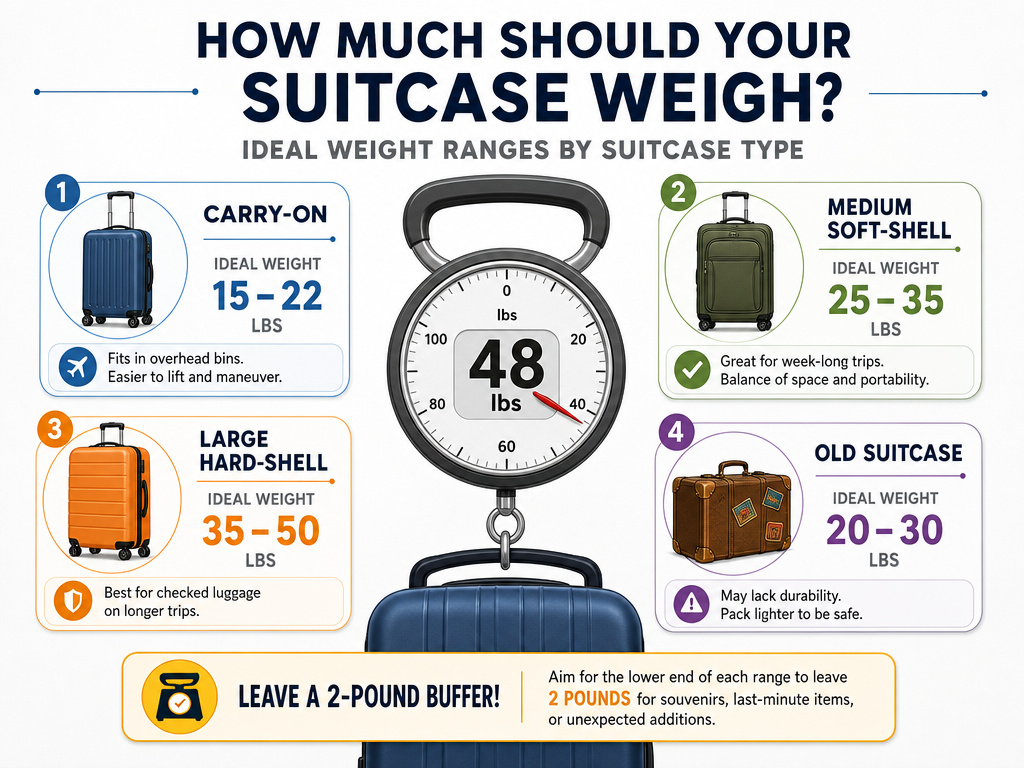
Airline weight rules are not universal. You must check your specific carrier’s policy before packing. More importantly, the suitcase itself has a weight tolerance. Overloading a soft-shell past its limit stretches the fabric and strains zippers. A Samsonite zipper, when strained past its designed tolerance due to overpacking, is estimated to fail within 3–5 trips.
Here are the realistic weight ceilings for different suitcase types and sizes:
| Suitcase Type & Size | Ideal Packed Weight | Risk If Exceeded |
|---|---|---|
| Carry-on (20-22 inches) | 15 to 25 lbs | Bag may not fit overhead; budget airline fees. |
| Medium Soft-shell (24-26 in) | 25 to 40 lbs | Fabric stretches, zipper tape fatigues. |
| Large Hard-shell (28-32 in) | 40 to 50 lbs | Handle mechanism or wheel axles bear excess stress. |
| Old or Weak Suitcase (Any size) | Under 25 lbs | Zipper failure or handle breakage likely mid-trip. |
Easy to miss: Airport scale calibration. It is recommended to weigh your checked luggage at 48 pounds, not 50. This provides a 2-pound buffer against scale variations and prevents an unexpected overweight fee at the counter.
For a hard-shell suitcase like the Travelpro Pagosa, the lid will tell you when you’re over. If the lid doesn’t close smoothly and has a visible gap, it is overpacked. Remove an item. Forcing it shut stresses the polycarbonate shell at the hinge points.
Packing for Moving vs. Packing for Travel
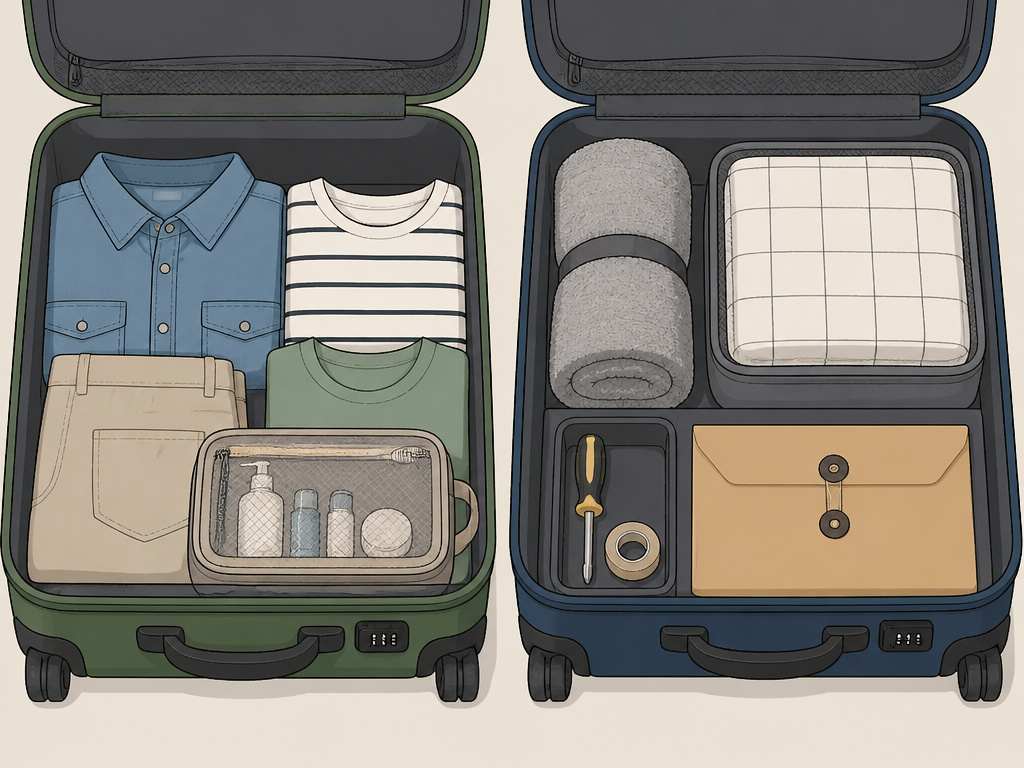
Packing a suitcase for a weekend trip and packing one for a move use different logic. Travel packing is about outfits and access over a short period. Moving packing is about protection, organization, and long-term storage during a transition.
When moving, your suitcase often becomes a “first access” box. Pack it with the items you’ll need immediately in the new place: a set of sheets, a towel, basic toiletries, a change of clothes, essential tools, and important documents. Use packing cubes to separate categories—one for bedding, one for tools. The weight limits still apply, but the priority shifts from outfit planning to logical grouping.
For packing a lot of clothing during a move, compression cubes are essential. They minimize the volume of soft goods like sweaters and towels, freeing up space for heavier, denser items like books or small kitchenware. Just remember the 75% rule.
Frequently Asked Questions
Does TSA make you unpack packing cubes?
Yes. A manual inspection means TSA will open cubes if they need to. Packing cubes don’t shield contents from inspection. What they do is make repacking fast: when TSA goes through a categorized cube, you reload one cube, not an entire scrambled suitcase. It turns a five-minute repack into a one-minute task.
Can I pack liquids in my suitcase?
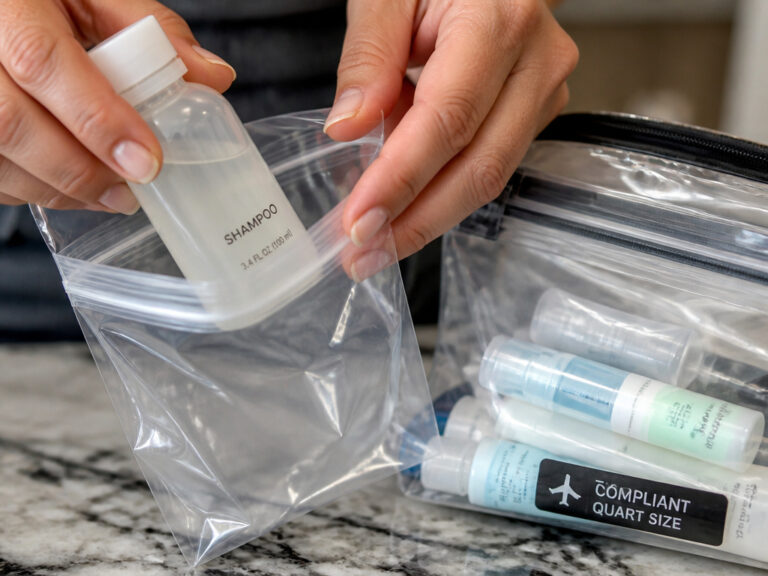
The TSA 3-1-1 rule applies to carry-on bags only: liquids, gels, and aerosols must be in containers ≤ 3.4 ounces (100ml), all fitting inside one quart-sized bag. For checked luggage, you can pack larger bottles, but seal them in a leak-proof bag and cushion them with clothing. Never pack liquids beside electronics or paper documents.
How do I prevent wrinkles when packing?
Use the right technique for the fabric (roll soft, fold stiff). For dress shirts, use tissue paper or a dry cleaner bag between folds to reduce friction. Place folded structured items on the very top of your load order, where pressure is lowest. Upon arrival, hang items immediately and let creases fall out.
Are packing cubes worth the weight?
5-piece cube set adds 0.5–1.5 lbs to your bag. On a strict 15-lb carry-on limit for some budget international airlines, that’s a material difference. Weigh your full cube set on a bathroom scale before you commit. For most domestic travel where weight is loosely enforced, the organization benefit far outweighs the penalty.
What’s the one thing most people forget to pack?
Portable luggage scale. Guessing your bag’s weight is a recipe for fee disaster. A $10 scale lets you weigh your bag before leaving for the airport, ensuring you hit that 48-pound buffer for checked bags or stay under your carry-on limit.
Before You Go
Packing isn’t about brute force. It’s about a system. Start with the 5-4-3-2-1 formula to set your item limit. Sort those items using packing cubes, applying the roll-or-fold rule based on fabric. Load your suitcase in the correct order, heavy at the bottom. Finally, know your suitcase’s real weight limit and always buffer for airport scales.
The goal is to stop thinking about packing. Make the system automatic. Your suitcase should close easily, roll smoothly, and open to reveal exactly what you need without a dig. That’s how you pack efficiently every single time.