Hospital Bag Checklist for Mom: What to Pack & What to Skip
This post contains affiliate links. As an Amazon Associate, we earn from qualifying purchases.
Pack your hospital bag with the clothes you wore at six months pregnant, a 10-foot phone charger, and a folder for paperwork. Leave jewelry and large sums of cash at home. The hospital provides mesh underwear, pads, diapers, and basic toiletries, but your own nipple cream and a personal breast pump are worth the space.
The six-month maternity size rule isn’t a guess. Your uterus and abdominal muscles don’t snap back the day you deliver. Going-home clothes that fit at six months will fit when you leave, because that’s roughly where your body will be. Pack anything tighter and you’ll be wrestling with a waistband over a tender, swollen abdomen while a nurse waits to wheel you out.
What follows is the field-tested list, sorted by what you control, what the hospital handles, and the specific items that bridge the gap between a standard delivery and a C-section. We’ll also cover the one piece of gear every parent forgets until they’re holding a newborn and a dozen forms.
Key Takeaways
- Pack your bag by week 35, or week 32 if you’re high-risk or expecting multiples. A sudden trip to triage is not the time to hunt for hair ties.
- Your going-home outfit should be the loose clothes you wore during your second trimester. Your body won’t fit into pre-pregnancy jeans for weeks.
- Bring your own nipple cream even if the hospital provides some. Latching issues and soreness are common, and having your trusted brand on hand matters.
- The American Academy of Pediatrics advises against pacifiers for breastfeeding newborns until nursing is well-established, usually 3-4 weeks. If you want one at the hospital, you must bring it.
- Leave a third of your bag empty. You will go home with more than you arrived with: extra diapers, pads, peri bottles, and sometimes a sitz bath.
The Must-Have Items You Actually Control
This concerns documents, power, and comfort items the hospital won’t have. Get these wrong and your stay becomes administrative chaos.
Photo ID, insurance card, and a folder for paperwork. You will hand these to at least three different people. The folder holds your birth plan, pediatrician contact info, and the stack of forms you’ll sign. A nurse manager from the Cleveland Clinic confirms that even if you pre-register, you’ll be showing these cards “to a lot of people.”
Start with your identification and health information. Your driver’s license and insurance card are non-negotiable. Pre-registration might digitize some of this, but physical copies bypass any system glitches. Next, a simple folder or binder. This isn’t for organization; it’s for survival. It holds your printed birth plan, your pediatrician’s contact information, and every handout they give you. When you’re sleep-deprived and asked for the fifth time, you can point instead of search.
Your phone is your camera, clock, and connection. The charger is more important than the phone. Bring a cable that’s at least 10 feet long. Hospital outlets are often behind beds or furniture. A short cable tethers you to the wall; a long one lets you use the device while it charges. This is the single most-forgotten essential in every Reddit and YouTube packing thread.
For toiletries, pack a kit you can grab with one hand. Lip balm is critical—hospital air is dry and you’ll be breathing heavily. A hairbrush, hair ties, travel-sized shampoo, deodorant, toothbrush, and toothpaste go in a zippered pouch. Don’t rely on hospital-provided toiletries unless you’re okay with generic soap that smells like a public restroom.
Comfort clothes mean a robe or a front-opening nightgown. You’ll be up walking the halls, meeting with lactation consultants, and having nurses check you constantly. A robe is quicker than a full outfit. For your feet, pack shower shoes with tread and a pair of non-skid socks. The hospital floor is not clean.
| Category | What to Pack | Why It’s Non-Negotiable |
|---|---|---|
| Documents | Photo ID, Insurance Card, Folder/Binder | Required for admission and holds your birth plan. Lose this and you stall check-in. |
| Electronics | Phone & 10+ ft Charger | Your camera, clock, and lifeline. Short chargers leave you stuck. |
| Toiletries | Lip Balm, Hair Ties, Travel-Size Basics | Hospital air is dehydrating. Their supplies are minimal. Your own stuff feels human. |
| Comfort | Robe/Front-Opening Nightgown, Shower Shoes | Easy access for checks and skin-to-skin. Shoes protect your feet from shared showers. |
What the Hospital Gives You (And What It Doesn’t)
Hospitals are medical facilities with standard-issue supplies. Knowing what they stock lets you pack lighter and smarter.The goal is to use their free stuff so you can save bag space for what they don’t have.
Most hospitals provide a gown, mesh underwear, giant maternity pads, diapers, wipes, a peri bottle, and basic toiletries. The mesh underwear is ugly and brilliant. It stretches over everything and you won’t care if it gets ruined. The pads are enormous. Use them. The peri bottle is your best friend for the first few days postpartum. They’ll also give you a plastic water jug with a straw—keep it.
The hospital-provided mesh underwear and pads are designed for the postpartum body. Regular underwear “probably won’t be comfortable” due to sensitivity, and the hospital-grade supplies are made for the job.
They have diapers and wipes for the baby’s entire stay. You do not need to pack a single diaper for the hospital unless you’re committed to a specific eco-brand. They also provide receiving blankets and tiny t-shirts. The one baby item you must bring is the infant car seat, already installed in your vehicle. The nurses will not let you leave without checking it.
So what’s missing? Nipple cream is the big one. While many hospitals provide a sample tube, a Cleveland Clinic nurse manager advises, “it’s better not to gamble on something this important.” Bring the brand you trust. Your own breast pump and sanitized parts are also worth bringing. Hospitals have pumps, but using your own model means the lactation consultant can teach you on the machine you’ll use at home.
Leave a third of your bag empty. This is the “empty space” rule. You will accumulate extras: more mesh underwear, extra pads, a new peri bottle, sample creams, and often a sitz bath kit. The Kaiser Permanente maternity PDF and the Inova Health System checklist both assume you’ll be taking hospital supplies home. If your bag is full when you arrive, you’ll be carrying loose supplies in your arms.
The 37-Week Deadline That Isn’t a Suggestion

The standard advice is to pack by 37 weeks. For a typical 40-week pregnancy, that gives you a three-week buffer. That buffer disappears fast.
Where this goes sideways: Waiting until you feel contractions to pack. You will forget your charger, your folder, your going-home pants. You’ll be scrambling while timing contractions, which is a recipe for leaving your entire toiletry bag on the bathroom counter.
The timeline shifts if your pregnancy is high-risk or you’re expecting multiples. In those cases, the recommendation from obstetricians moves up to 35 weeks. The goal is to have the bag physically in your car by 36 weeks. Why the car? If your water breaks at home or you get rushed to triage, your partner can grab the bag from the trunk. You aren’t digging through the closet.
Here is the week-by-week breakdown that matches actual obstetric guidance:
| Week of Pregnancy | Action Item | Reason |
|---|---|---|
| 28-32 Weeks | Buy any missing essentials (long charger, robe, nursing bras). | Avoid last-minute store runs. Gives time for online orders. |
| 32-35 Weeks | Pack the non-perishable items: clothes, toiletries, documents folder. | The bag is functionally ready. You’re ahead of schedule. |
| 35 Weeks | High-Risk/Multiples Deadline. Bag goes in the car. | Early labor is more likely. The bag is now mobile. |
| 37 Weeks | Standard Pregnancy Deadline. Finalize bag, add snacks, place by door or in car. | Full-term baby can come any time. You are now on standby. |
Put a sticky note on the bag listing the last-minute items: phone, glasses, wallet. When the moment comes, you grab those three things and the bag itself.
For Your Support Person: The Second-Bag Strategy
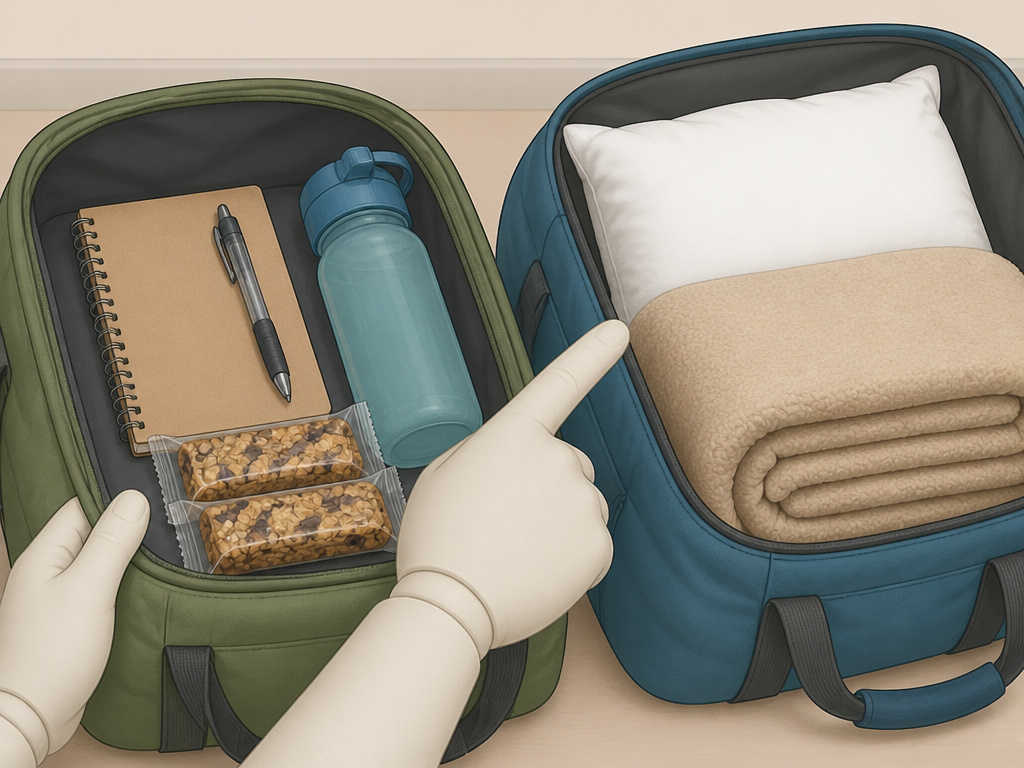
Your partner or support person is on-duty for 24-48 hours minimum, often in a room with one uncomfortable chair. Packing for them is packing for your own sanity.
Their bag needs a change of clothes, basic toiletries, phone charger, and most importantly, snacks. Hospital cafeterias close, and vending machine food is expensive and grim. Pack granola bars, nuts, dried fruit, and a refillable water bottle. If they drink coffee, include instant coffee packets—hospital coffee is notoriously bad.
A fresh shirt is crucial, especially for skin-to-skin contact. If they plan to help you in the shower, pack a swimsuit. Include their own pillow and a blanket; the hospital room will be cold for them, not for you. Cash and change are still useful for vending machines or parking.
The Inova Health System checklist explicitly suggests a separate “Labor and Delivery Bag” and a “Postpartum Stay Bag” that your support person can fetch from the car after birth. This keeps the delivery room uncluttered but ensures comfort items are available for the longer stay.
Their job is to be your advocate and memory. A notepad and pen let them write down doctor’s instructions, medication schedules, and questions you think of at 3 a.m. They are your second brain when yours is focused on labor and recovery.
C-Section vs. Vaginal Delivery: The Packing Differences
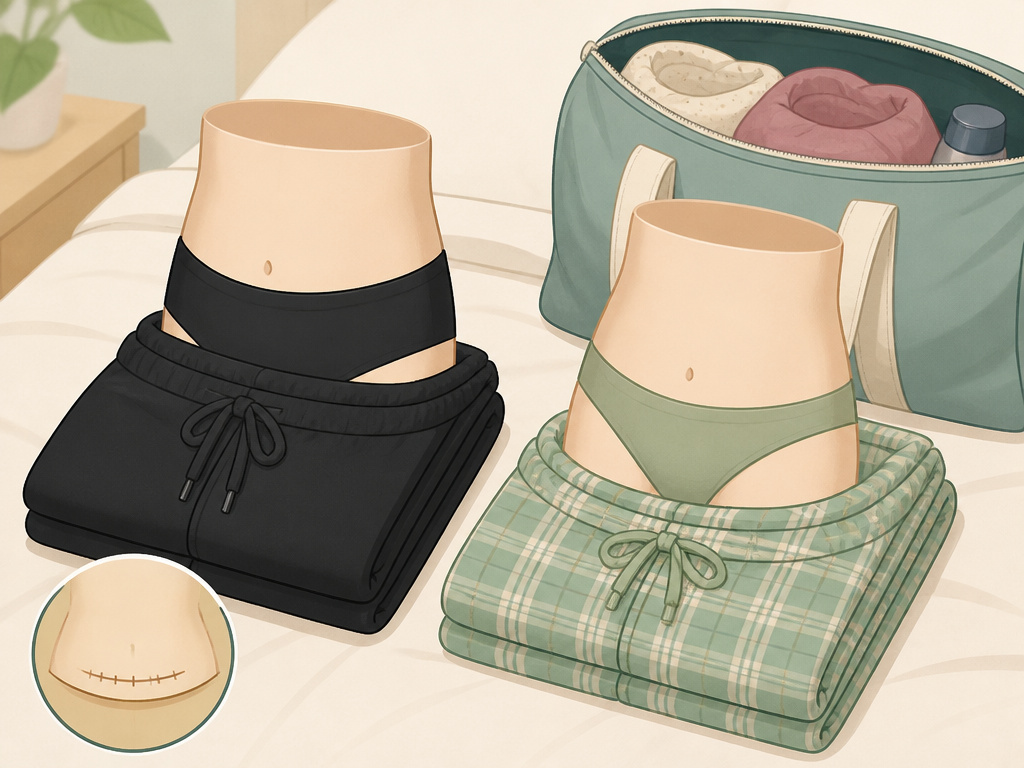
A planned or unexpected C-section changes your recovery gear. The incision changes what feels comfortable and what you can wear.
For a C-section, your going-home pants must be high-waisted and soft. Think loose joggers or pajama pants with a wide, soft waistband that sits above the incision. Anything with a seam or elastic that hits across the belly will be agony. The same goes for underwear—the hospital mesh ones are usually fine, but if you bring your own, they must be high-cut.
Skip this if: you’re planning a vaginal birth. High-waisted pants are still comfortable, but the specific concern is an incision rubbing against a seam. For vaginal delivery, the pressure point is lower.
You will move slower. A C-section is major abdominal surgery. Pack slip-on shoes. Bending over to tie laces won’t happen for a few days. A firm pillow for the ride home is not a luxury; holding it against your belly during car bumps or coughs provides crucial counter-pressure.
The hospital stay is longer—typically 2 to 4 days versus 1 to 2 for a vaginal delivery. This means more changes of clothes for you. Plan for at least three comfortable outfits. You’ll also want more entertainment: books, a tablet loaded with shows, or podcasts. The extra day feels long when you’re stuck in bed.
Your breastfeeding position may need to adjust to avoid pressure on the incision. A nursing pillow like a Boppy or My Brest Friend is more than a nice-to-have; it’s a tool to keep the baby’s weight off your stomach. Many parents in online communities cite the nursing pillow as the one item they deeply regretted forgetting.
The “Don’t Bother” and “Absolutely Bring” List
Most packing lists are additive. This one subtracts. You have limited space and energy. Here’s what to leave behind and the one item everyone forgets.
Don’t Bother Packing:
- Diapers & Wipes (for hospital stay): The hospital provides these. Save your stash for home.
- Valuables/Jewelry: You’ll be taking it off for procedures anyway. It can get lost.
- Large Sums of Cash: A credit card and some small bills for parking or vending are enough.
- Your Own Medications: The hospital pharmacy will provide what you need. Bring a list, not the bottles.
- Fancy Nightgowns: Labor is messy. Stick to the hospital gown or a very cheap, dark-colored robe you don’t mind ruining.
Absolutely Bring (The Forgotten Essentials):
- A 10-foot phone charger. This is the most-mentioned item in every real-world account.
- Your own pillow with a colored case. Hospital pillows are thin. Yours is comfort, and the colored case ensures it doesn’t get taken with the linens.
- Nipple cream. Even if the hospital has some, you want your trusted brand immediately.
- Snacks for after delivery. Hospital food service stops. You will be ravenous at 2 a.m.
- A hands-free pumping bra if you plan to pump. Holding pump flanges to your chest for 15 minutes is exhausting.
The nursing pillow appears on the “absolutely bring” list for a reason. As one parent noted, “getting the knack of lactation was hard enough without having my arm go sore while trying to maneuver the hospital pillows into the right position.” It’s a tool, not just a comfort item.
Frequently Asked Questions
What size clothes should I pack to go home in?
Pack the loose-fitting clothes you wore around six months pregnant. Your uterus takes weeks to shrink, and you’ll likely still look several months pregnant when you leave. Stretchy maternity leggings, a loose dress, or oversized sweats are the standard. Avoid anything with a tight waistband.
Can I bring my breast pump?
Yes, and many hospitals encourage it. Bring your personal pump and sanitized parts so the lactation consultant can help you learn to use your specific model. The hospital will have pumps for in-hospital use, but familiarity with your own machine is worth the bag space.
What about a pacifier?
The American Academy of Pediatrics recommends avoiding pacifiers for breastfeeding newborns until nursing is well established, usually around three to four weeks. If you want to use one in the hospital, you must bring it from home, as hospitals following these guidelines won’t provide them.
How many outfits should I pack for the baby?
Just one going-home outfit, plus a backup in a different size. The hospital provides diapers, wipes, and shirts for the entire stay. Pack a newborn size and a 0-3 month size, because you won’t know which will fit. Include socks and a hat, even in summer, for the trip to the car.
When is it too early to pack my bag?
It’s never too early. Start gathering items by 28-32 weeks. Having it fully packed and ready to go by 35-37 weeks means you’re prepared for early labor. The peace of mind is worth the small effort of putting a bag in your closet a few weeks early.
Before You Go
Pack for reality, not for the photo op. Your six-month maternity clothes, a charger that reaches, and a folder for the paperwork will do more for you than a new outfit. Use the hospital’s diapers and mesh underwear—they’re designed for this. Remember the empty space in your bag for the supplies they’ll send home with you. Finally, put the bag in your car at 36 weeks. When the moment comes, the last thing you should be doing is searching for hair ties.