What to Pack in Your Hospital Bag: The Essential Checklist
This post contains affiliate links. As an Amazon Associate, we earn from qualifying purchases.
Pack your hospital bag with the stuff you’ll actually use: ID and insurance, a long phone charger, loose going-home clothes for you and the baby, basic toiletries, and a car seat installed in your car. Everything else is comfort or contingency. The hospital provides the medical essentials like pads, mesh underwear, diapers, and peri bottles, so you can skip packing those.
Forget the matching silk pajamas and the ten-step skincare routine. You aren’t heading to a spa. You’re going to a medical event where you’ll be tired, possibly in pain, and focused on a newborn. The gap between the serene influencer checklist and the messy, bright-lit reality of a postpartum ward is where most packing mistakes happen.
What follows is a field-stripped list. It’s built from official hospital PDFs, the stuff nurses say people actually use, and the hard-won lessons from parents who showed up with a suitcase and used only the top layer. We’ll cover what the hospital gives you for free, the non-negotiable items for any birth plan, and how to pack smart if your partner can’t stay the night.
Key Takeaways
- Your phone charger with a 10-foot cable is more valuable than any “labor affirmation candle.” Hospital outlets are never where you need them.
- The hospital provides all medical-grade postpartum supplies (maxi pads, mesh underwear, peri bottles, diapers). Bringing your own is optional, not essential.
- Pack two separate bags: a small one for labor you bring on admission, and a larger recovery bag your partner can fetch from the car after birth. This keeps the delivery room uncluttered.
- Your going-home outfit should be loose pants and a top you wore around 6 months pregnant. You will not fit into pre-pregnancy jeans.
- A properly installed infant car seat is a legal requirement for discharge. The hospital will not let you leave without it.
The Hospital-Provided Reality Check
Most anxiety about forgetting something stems from not knowing what the hospital already has for you. They are not sending you into battle unarmed. Their supply closets are stocked with the utilitarian, effective gear for postpartum recovery and newborn care.
What most people get wrong: Overpacking giant packs of diapers and pads. A major health system like Inova states directly in its official hospital admission document that they provide diapers, wipes, pads, mesh panties, peri-care spray, and nipple cream. Your bag should complement these supplies, not duplicate them.
The table below breaks down the typical hospital-provided staples versus what you genuinely need to supply yourself.
| Provided by Hospital (Usually) | You Need to Bring |
|---|---|
| Maternity pads & mesh underwear | Your own comfortable, high-waisted underwear (especially for C-section) |
| Peri bottle & witch hazel pads | Your preferred brand if you’re sensitive (e.g., Frida Mom peri bottle) |
| Newborn diapers & wipes | Going-home outfit & blanket for baby |
| Hospital gown & nonslip socks | Your own robe, nightgown, or pajamas for comfort |
| Basic postpartum pain relief spray | Any specific, doctor-approved personal medications |
| Pump and breastfeeding supplies | Your own nursing bra and nipple cream |
This shifts your packing list for mom from a giant haul to a focused mission. Your goal is personal comfort and normalcy, not medical supply.
The Non-Negotiable Essentials
These are the items every single list from the NHS to the NIH agrees on. If you only pack these, you’ll be fundamentally okay.
- Photo ID & Insurance Card. You’ll hand these over a dozen times. Keep them in an easy-access pocket.
- Phone & Extra-Long Charger. A 10-foot cable lets you use the phone while it’s plugged in across the room. This is the most-used item after the baby.
- Basic Toiletries. Toothbrush, toothpaste, lip balm, deodorant, hair ties. The hospital might have travel-sized stuff, but your own feels human.
- Going-Home Clothes. For you: think loose, soft pants and a roomy top. For the baby: a simple footed sleepsuit in newborn and 0-3 month sizes, plus a hat and blanket for the car seat.
- Installed Infant Car Seat. This is not a suggestion. Nurses will perform a “car seat test” to check you know how to buckle the baby in. They cannot install it for you.
The National Library of Medicine resource on childbirth preparation calls out the car seat as a legal requirement. Install and practice with it weeks before your due date.
The Labor & Delivery Bag vs. The Recovery Bag
A smart packing strategy here is to split your load. Pack a small, focused bag for the intensity of labor and delivery. Your partner or support person can then retrieve a second, larger bag from the car once you’re moved to a postpartum room. This keeps the delivery room from becoming a chaotic locker room.
Your Labor Bag should be tiny and tactical:
- Hair ties or headband
- Lip balm and a water bottle with a straw
- Portable fan or spray bottle
- Phone, charger, battery pack
- Snacks that require no prep (granola bars, crackers)
- If using one, your TENS machine with fresh batteries
Your Recovery Bag can hold the rest:
- Comfortable pajamas or a nightgown (front-opening for breastfeeding)
- A lightweight robe
- Slippers with grip soles
- Several pairs of high-waisted, dark-colored underwear
- Your full toiletries kit
- A change of clothes for your partner
- The baby’s going-home outfit and blanket
This two-bag system is recommended in the Inova hospital checklist PDF and it solves the problem of limited space in a delivery room.
What to Actually Pack for Mom: Comfort vs. Cruft
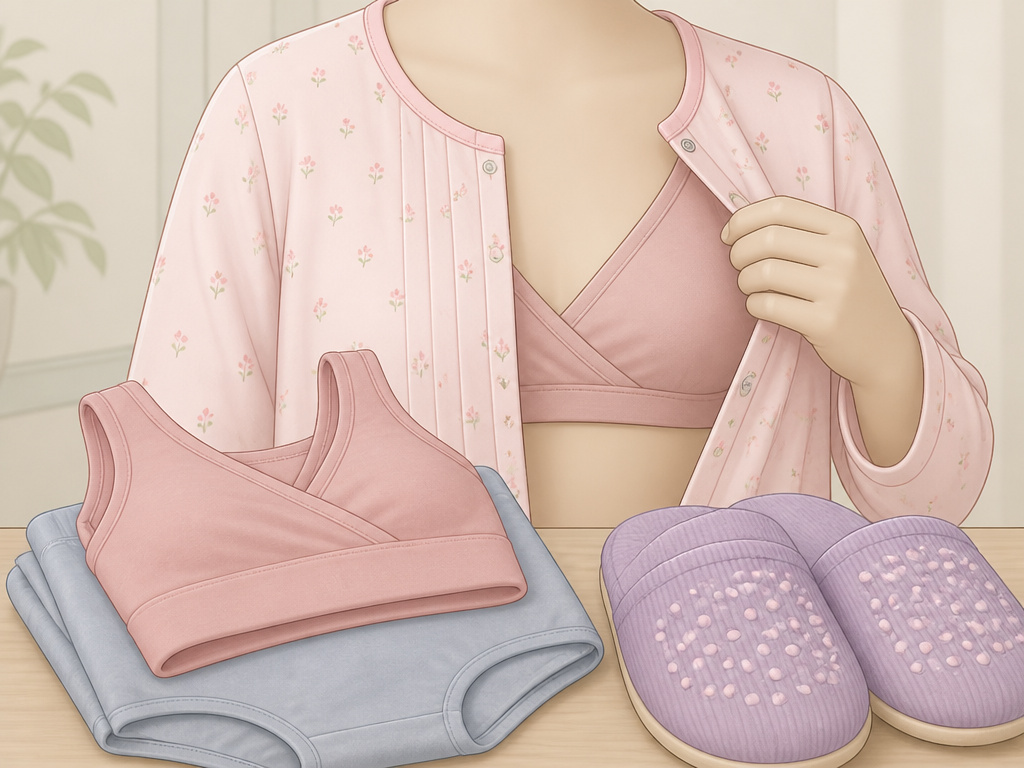 This is where influencer lists go off the rails. You don’t need an outfit for a photoshoot. You need clothing that accommodates a tender, bleeding body and possibly a C-section incision.
Skip this if: you’re packing “cute” underwear or tight leggings. You’ll live in the hospital’s mesh underwear or your own high-waisted, soft cotton briefs for days. A C-section scar will reject anything with a waistband below the navel.
Your clothing strategy has one job: easy access and zero pressure. * Nursing Bras or Soft Sports Bras. Bring 2-3. Wireless is mandatory. Even if you’re formula feeding, your milk will come in and you’ll want the support. * Front-Opening Nightgown or Robe. This allows for skin-to-skin contact, nursing, and easy monitoring by nurses without you having to fully undress. * Grippy Slippers or Non-Slip Socks. The floors can be slick, and you’ll be walking to the bathroom sooner than you think.
The Kaiser Permanente maternity PDF emphasizes a “front-opening shirt for nursing and skin-to-skin contact” as a key item. That’s the kind of specific, functional advice that matters.
Partner & Support Person Packing List
 Your partner isn’t just a spectator. They are your lifeline to the outside world, your advocate, and the person who will remember to eat. Their bag needs to sustain them through a marathon that has no set end time.
- Phone charger and battery pack. Their phone will die from updating family.
- Snacks and a refillable water bottle. Hospital cafeteria hours are limited, and they shouldn’t leave you for long.
- A change of clothes and basic toiletries. They’ll feel better after brushing their teeth.
- Swimsuit (if allowed). If you plan to use a labor tub, they might need to get in to support you.
- Cash/change for parking and vending machines. Not all garages take cards.
- A pillow and light blanket. The “partner bed” is often a reclining chair.
If your partner cannot stay overnight due to childcare, their list gets even more critical. They are your sole courier. Pack their bag with the understanding they’ll be making trips to the car and home.
The “Don’t Bother” List: What to Leave at Home
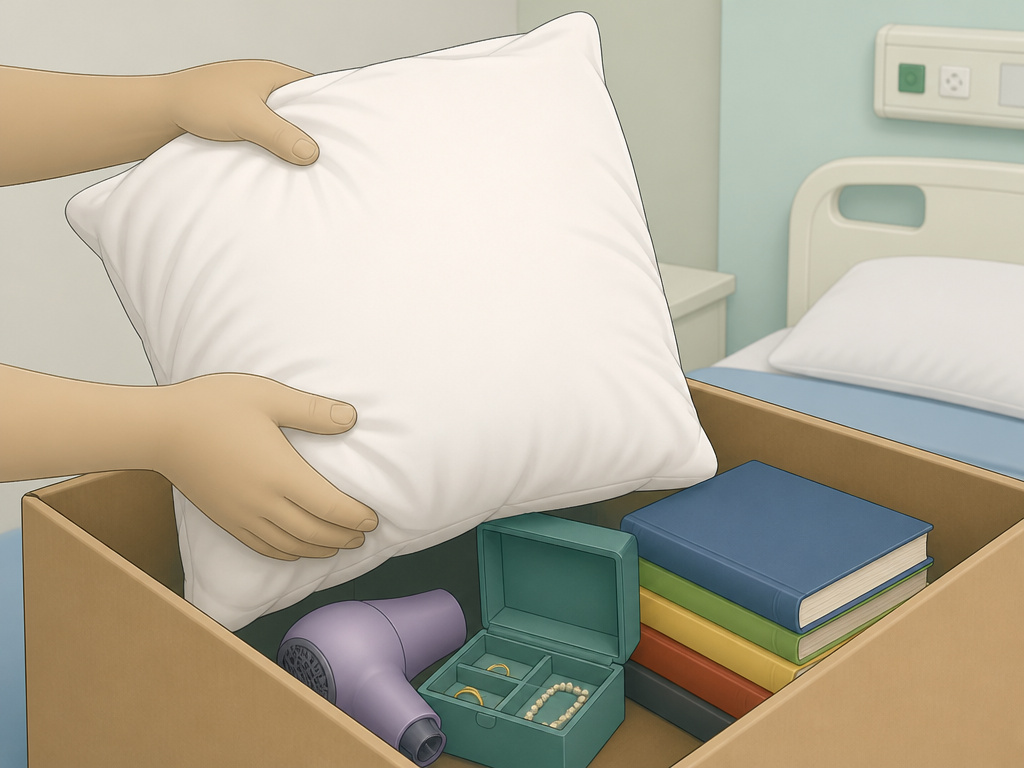 Space in a hospital room is premium real estate. Every item you bring must earn its spot.
Common mistake: Packing a blow dryer, full makeup kit, or multiple books. You will be too exhausted, busy with the baby, or interrupted by nurses every few hours for any elaborate routines. The lighting is harsh, and you will not care.
Leave These Behind:
- Valuables. Jewelry can get lost or interfere with medical equipment.
- Large amounts of cash.
- Your own medications (unless pre-approved). The hospital must dispense all meds.
- Diapers and wipes (unless you’re committed to a specific eco-brand). The hospital provides plenty, and they’ll send extra home.
- A giant pillow with a white case. Bring a colorful one so it doesn’t get taken with hospital linens.
Packing light isn’t about deprivation. It’s about reducing the clutter you have to manage while learning to care for a newborn on two hours of sleep.
When Should You Actually Pack the Bag?
The official advice is to have your bag ready by 36 weeks, or about a month before your due date. For a first-time parent, that’s a good, stress-reducing goal. But the real answer depends on your life.
If you have a toddler at home, pack earlier. Kids are germ factories, and coming down with a cold at 38 weeks while scrambling to pack is a special kind of hell. Aim for 34-35 weeks. Lay out your essential checklist for your labor hospital bag and start filling a designated bag that’s out of the toddler’s reach.
Check your hospital bag timing against your final prenatal appointments. Use that last month to wash the baby’s going-home clothes, install the car seat, and do a final bag check. Then put the bag by the door and try to forget about it.
Frequently Asked Questions
Can I pack too much in my hospital bag?
Absolutely. Overpacking creates clutter in a small room, makes it harder to find what you need, and means more stuff to haul home. You are not moving in. The average vaginal birth stay is 24-48 hours; a C-section is 3-4 days. Pack for a very short, very messy trip.
What is the single most important thing to pack?
Your phone charger with a long cable. After that, a car seat. Everything else you can likely improvise or buy at the hospital gift shop in a pinch. But a dead phone cuts you off from support, and no car seat means you’re not leaving.
What should I pack specifically for a C-section?
Recovery is different. Focus on high-waisted underwear or disposable C-section panties that sit above the incision. Loose, flowy dresses or pants with a soft, adjustable waistband are better than anything that puts pressure on your abdomen. Pack slip-on shoes so you don’t have to bend over.
How many outfits should I pack for the baby?
Just one going-home outfit, in two sizes (newborn and 0-3 months). The hospital will keep the baby in a simple shirt and swaddle blanket while you’re there. They provide all the basics. The outfit is for the trip from the hospital to the car seat to home.
What if my partner can’t stay the night?
This makes your packing more strategic, not less. Your partner’s bag should include a cooler with snacks and drinks. They should have a list of where everything is in your recovery bag at home. Your own labor bag essentials need to be absolutely complete, as they may not be able to fetch forgotten items quickly.
The Bottom Line
Ignore the Pinterest-perfect checklists. Your hospital bag is a practical kit for a major physical event, not a vacation suitcase. Anchor it with the true essentials: documents, charger, toiletries, loose clothes, and a car seat. Lean hard on the fact that the hospital will supply the pads, mesh underwear, and diapers.
Your best packing tips here are about editing, not adding. If an item doesn’t serve a clear comfort or logistical purpose in a bright, noisy room where you’ll be checked on every few hours, leave it out. When in doubt, pack less. You can always send your partner home for one more thing, but you can’t magic away a suitcase of unused junk at 3 a.m. While holding a newborn.