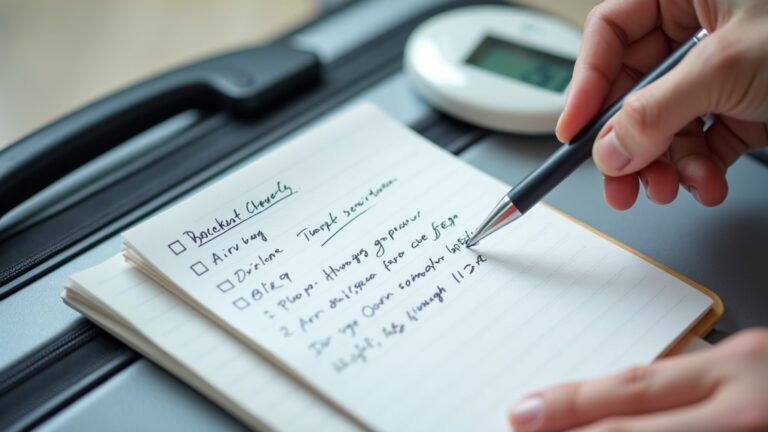
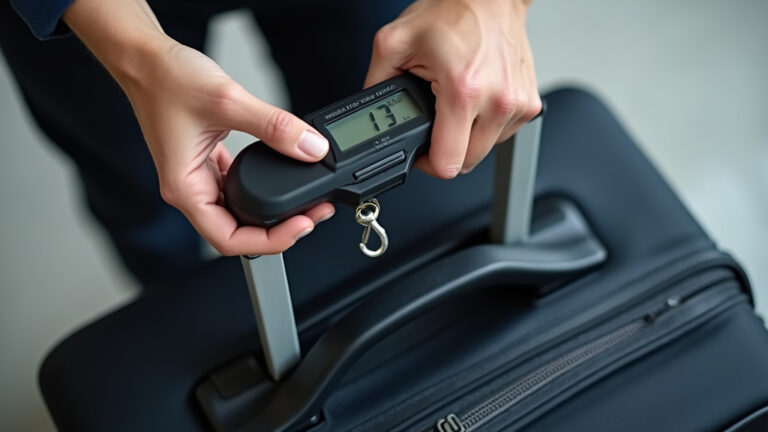
Packing Deodorant in Carry-On Luggage: TSA Rules Explained
This post contains affiliate links. As an Amazon Associate, we earn from qualifying purchases.
You can pack deodorant in a carry-on, but the rules pivot on one thing: its physical form. Solid stick deodorant has no size limits. Liquid, gel, cream, roll-on, and spray deodorants must follow the TSA’s 3-1-1 rule, containers 3.4 ounces (100ml) or less, all fitting inside one clear, quart-sized plastic bag.
Most travelers get tripped up at security because they treat all deodorant the same. They shove a full-size gel into their toiletry kit or forget that a spray is a liquid. The TSA officer pulls the bag, the line backs up, and you’re digging through your packed luggage while everyone watches. It’s an avoidable hassle.
This guide breaks down the TSA’s official rules, the sneaky exceptions, and the packing strategy that gets you through the checkpoint without a second glance. We’ll cover sticks, sprays, gels, medical necessities, and what you can safely stash in checked luggage.
Key Takeaways
- Solid stick deodorant is the only type with zero restrictions for carry-on luggage. Pack any size.
- The 3-1-1 rule governs liquids, gels, creams, roll-ons, and sprays. Container size must be 3.4 oz/100ml or less, and it must fit in your single quart-sized bag.
- Aerosol limits exist for checked bags. The FAA caps total aerosols at 2 kg (70 oz) per person, with no single can over 18 oz.
- For medically necessary liquids like prescription antiperspirant, you can bring “reasonable quantities” exceeding 3.4 oz, but you must declare them for separate screening.
- TSA PreCheck doesn’t exempt you from the 3-1-1 rule for carry-ons. You still need the quart-sized bag, though you might not have to remove it.
The Solid vs. Liquid Divide: Why Form Matters
The TSA’s entire screening logic hinges on a substance’s physical state. Solids don’t flow, can’t be easily concealed as a threat, and are generally inert. Liquids, gels, and aerosols are another story. This is why your carry-on restrictions change completely based on what’s in the tube.
A solid stick deodorant is just that, a firm, waxy solid. You could try to mold it, but it won’t pour. The TSA officially classifies it as a non-liquid, non-gel, non-aerosol item. That means it gets a free pass. You can pack a brand-new, full-sized stick in your carry-on, your personal item, or even your pocket. No baggie required.
Everything else is treated as a liquid. This includes clear gels, opaque creams, roll-ons (where the ball distributes a liquid formula), and pressurized spray cans. The common ingredient is flow. These substances can be transferred, injected, or aerosolized, which places them under the TSA liquid rules established after 2006. The rule isn’t arbitrary; it’s a security protocol.
Solid stick deodorants, by TSA definition, are not liquids or gels. They are exempt from the 3-1-1 liquids rule and may be packed in carry-on luggage without size restrictions or placement in a quart-sized bag.
TL;DR: If it’s hard like a crayon, pack it freely. If it pours, spreads, or sprays, it follows the liquid rules.
The 3-1-1 Rule: Your Liquid Deodorant Passport
For liquid-type deodorants, the 3-1-1 rule is non-negotiable. It’s the cornerstone of security-compliant packing. Remember it as: 3.4 ounces, 1 quart-sized bag, 1 bag per passenger.
The first “3” stands for 3.4 ounces (100 milliliters). This is a container size limit, not a content limit. A half-empty 5-ounce gel tube is prohibited because the container exceeds 3.4 oz. You must transfer the formula to a smaller, travel-sized container. Many brands sell 3-4 oz versions specifically for this.
The “1” quart-sized bag must be clear, plastic, and resealable. The TSA officer needs to see the contents without opening it. All your liquid items, deodorant, shampoo, toothpaste, must fit inside this single bag. Overstuff it, and you’ll be asked to remove something or check a bag.
Here’s the breakdown for each liquid deodorant type:
| Deodorant Type | Carry-On Rule | Common Pitfall |
|---|---|---|
| Roll-On | Container ≤ 3.4 oz, in quart bag. | Assuming the roller ball makes it a “solid.” It’s liquid inside. |
| Gel/Cream | Container ≤ 3.4 oz, in quart bag. | The thick texture fools people. If it spreads, it’s a gel. |
| Spray (Aerosol) | Container ≤ 3.4 oz, in quart bag. Must have a cap to prevent accidental release. | Forgetting the pressure can is a hazard. Also subject to checked-bag limits. |
| Spray (Non-Aerosol/Pump) | Container ≤ 3.4 oz, in quart bag. | Same rule as aerosols for carry-on, but different checked-bag rules apply. |
Common mistake: Putting a 4-ounce liquid deodorant in your quart bag because “it’s mostly empty.” The officer sees the container size printed on the label. That container is prohibited. You’ll surrender it or miss your flight.
The final “1” means one bag per passenger. You can’t split your liquids between two quart bags. This forces you to prioritize. A full-size liquid deodorant often loses out to toothpaste or medication. That’s why savvy travelers switch to a solid stick or buy a travel-sized deodorant at their destination.
TL;DR: 3.4-ounce containers, one clear quart bag, one per person. No exceptions for “just a little left.”
The Checked Bag Loophole and Its Limits
Checked luggage is the escape hatch for your favorite full-sized products. You can generally toss in any deodorant, stick, gel, or jumbo spray, without worrying about the 3-1-1 rule. But “generally” isn’t “always.” There are hidden ceilings.
For aerosols, the Federal Aviation Administration (FAA) sets the real limits. They restrict the total amount of certain hazardous materials in checked bags, including medicinal and toiletry aerosols like deodorant. The rules are generous but finite:
* No single aerosol can may exceed 18 ounces (500 ml).
* The total net quantity of all aerosols in your checked bag cannot exceed 70 ounces (2 kilograms) per person.
You’d need a dozen cans to hit that 70-ounce limit. The more practical risk is a leak. Cabin pressure changes can cause seams to weep or caps to pop.
Pack aerosol cans in checked luggage with the safety cap secured. Place them inside a sealed plastic bag (a Ziploc freezer bag works) to contain any accidental discharge. A leaked aerosol can saturate your clothes with a scent no laundry detergent can remove.
For non-aerosol liquids and gels in checked bags, there are no TSA quantity limits. You could pack five full-size bottles of liquid antiperspirant if you wanted. The risk is purely practical: weight and potential mess. A shattered bottle of gel deodorant is a sticky, frustrating disaster. I learned this the hard way on a trip to Phoenix. A pressurized cabin caused a cheap plastic roll-on bottle to crack along the seam. It coated two pairs of khakis and a leather toiletry bag. The smell was aggressively “alpine fresh” for the entire week. Now I use small bottles or solid sticks in checked bags, too.
TL;DR: Checked bags allow most sizes, but aerosols have FAA quantity limits. Always bag aerosols to contain leaks.
Medical Exceptions and “Reasonable Quantities”
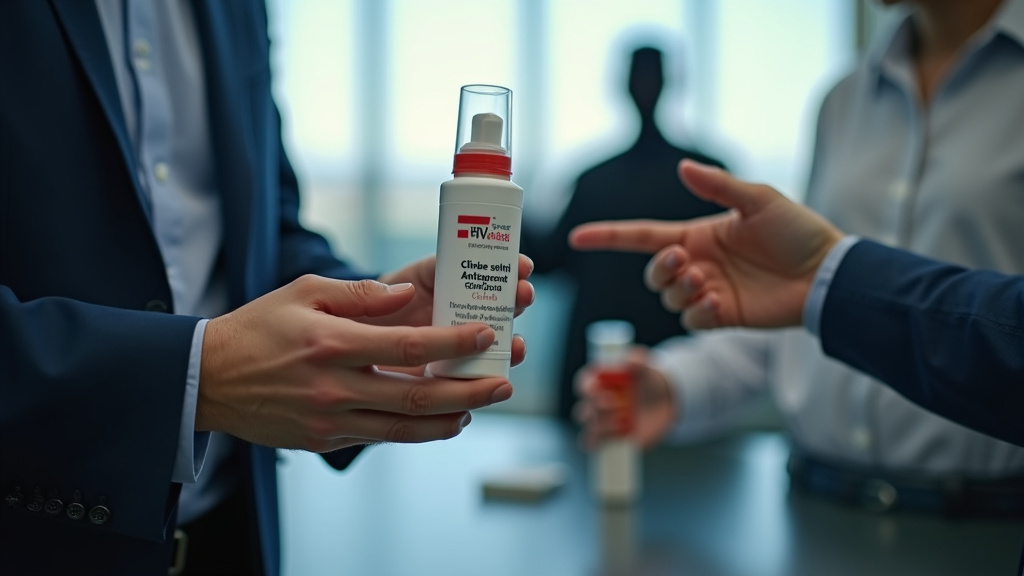
The TSA makes allowances for medically necessary liquids, including prescription-strength antiperspirants for conditions like hyperhidrosis. The term they use is “reasonable quantities.”
What’s “reasonable”? It’s not defined by a specific ounce count. It’s judged by the duration of your trip and the dosage prescribed. A 6-ounce bottle of clinical-strength liquid antiperspirant for a two-week trip is likely reasonable. A gallon jug for a weekend is not.
The procedure is critical:
1. Separate the item from your carry-on liquids.
2. Declare it to the TSA officer at the security checkpoint.
3. Be prepared for additional screening. The officer may ask you to open it, or they may test it for explosives trace detection.
Before you start: If you require medically necessary liquids, arrive at the airport with extra time. The separate screening adds minutes, not seconds. Have your prescription or a doctor’s note readily available, it’s not required, but it smooths the process.
Do not try to sneak a large medical liquid through in your quart bag. The officer will find it, and you’ll face the same screening anyway, but with more scrutiny and delay. Being upfront is faster. This policy exists for a reason, and officers see these items daily.
TL;DR: For prescription antiperspirants, declare large liquids for separate screening. “Reasonable” means enough for your trip, not an unlimited supply.
TSA PreCheck, Global Rules, and Pro Tips
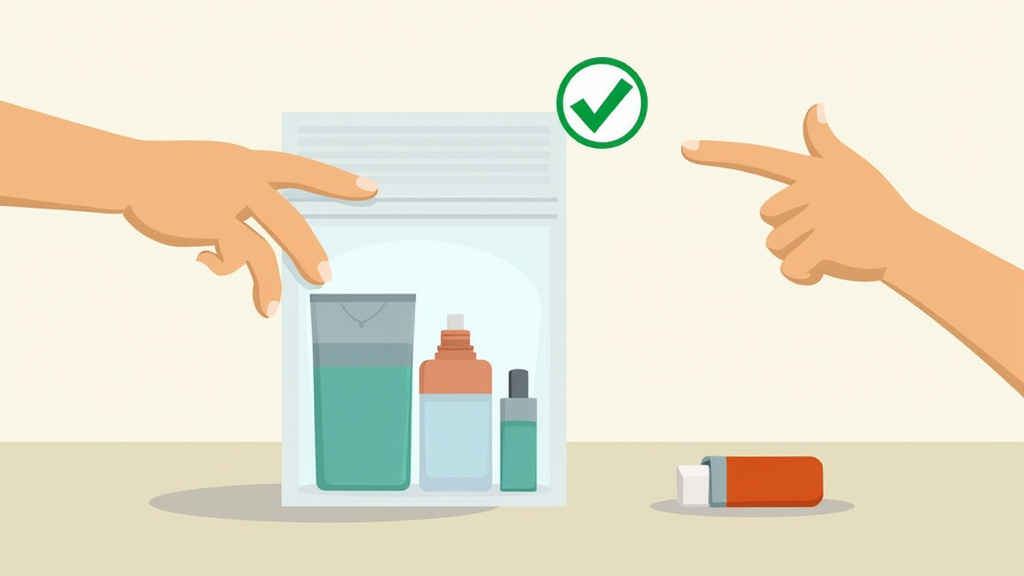
Does TSA PreCheck let you skip the liquids bag? No. The 3-1-1 rule is a security regulation, not a convenience perk. PreCheck members can usually leave their quart-sized bag inside their carry-on and their laptops in their cases. But the bag and its size limits still exist. Officers can still ask to see it.
International travel introduces variability. The European Union and the UK follow a similar 100ml liquid limit. However, some countries may have different rules or enforcement styles. Always check your destination’s aviation security website. Relying solely on U.S. TSA prohibited items lists is a gamble.
Here are the tactics that save time and sanity:
- Go Solid for Carry-On. This is the single easiest move. A solid stick eliminates all liquid rule stress.
- Buy Upon Arrival. For longer trips, plan to purchase your preferred brand at a local store after you land. It’s often cheaper than the airport anyway.
- Use Dedicated Travel Containers. For liquids, don’t guess. Use a set of TSA-approved bottles and label them. A 3-ounce bottle of gel deodorant lasts over a week.
- Master Your Quart Bag. Pack it last, on top of your carry-on. You’ll need to pull it out at standard checkpoints. Knowing its exact location prevents the frantic dig.
- Check Your Airline’s Policies. While the TSA sets security rules, your airline sets carry-on size dimensions and weight policies. A compliant deodorant is useless if your bag is oversize and gate-checked.
Following these carry-on packing tips ensures your deodorant, and the rest of your kit, makes it through security without becoming a public spectacle.
Frequently Asked Questions
Can I bring aerosol deodorant on a plane?
Yes, but with strict rules. In your carry-on, the aerosol can must be 3.4 ounces (100ml) or less and placed in your quart-sized liquids bag. In checked luggage, it must be 18 ounces or less, and your total aerosols cannot exceed 70 ounces.
Is roll-on deodorant considered a liquid?
Yes. The TSA classifies roll-on deodorant as a liquid because the formula is liquid, regardless of the roller ball applicator. It must follow the 3-1-1 rule for carry-ons.
What happens if my deodorant is over 3.4 oz at security?
The TSA officer will spot it. You’ll be given a choice: surrender the item to be discarded, exit security to place it in a checked bag (if time allows), or have someone outside security take it. You cannot proceed with it in your carry-on.
Does deodorant count as a liquid for TSA PreCheck?
Yes. TSA PreCheck does not exempt any items from the 3-1-1 liquids rule. You must still comply with the container size and quart-bag requirement, though you may not have to remove the bag from your suitcase.
Can I bring clinical strength or prescription deodorant on a plane?
Yes. For carry-ons, if it’s a liquid/gel over 3.4 oz, you must declare it to the TSA officer as a medically necessary liquid for separate screening. Solid clinical sticks have no restrictions.
Are there any deodorants completely banned from planes?
No common personal deodorant is banned. However, any item containing a flammable warning label (like some older aerosol formulas) may be prohibited. Always check the canister for hazard warnings.
The Bottom Line
Packing deodorant for a flight is simple once you apply the right filter. Is it a solid stick? If yes, pack it anywhere. If it’s anything else, gel, cream, roll-on, spray, it must be in a container of 3.4 ounces or less and live in your clear quart-sized bag.
The real trouble starts when travelers guess. They guess a gel isn’t a liquid. They guess a half-full tube is okay. They guess the rules don’t apply to them. Security lines are built on those guesses. Your move is to know. Choose a solid, downsize your liquids, and pack that quart bag smartly. You’ll clear security faster, keep your favorite products, and never have to explain your deodorant to a stranger in line again.
{
“@context”: “https://schema.org”,
“@type”: “HowTo”,
“name”: “How to Pack Deodorant in Your Carry-On Luggage”,
“totalTime”: “PT5M”,
“tool”: [
{
“@type”: “HowToTool”,
“name”: “Clear, quart-sized, resealable plastic bag”
},
{
“@type”: “HowToTool”,
“name”: “Travel-sized containers (3.4 oz / 100 ml or less)”
},
{
“@type”: “HowToTool”,
“name”: “Solid stick deodorant (any size)”
}
],
“step”: [
{
“@type”: “HowToStep”,
“name”: “Identify your deodorant type”,
“text”: “Determine if your deodorant is a solid stick (no restrictions) or a liquid, gel, cream, roll-on, or spray (subject to 3-1-1 rule).”
},
{
“@type”: “HowToStep”,
“name”: “Measure liquid containers”,
“text”: “For liquid-type deodorants, check that the container is 3.4 ounces (100 milliliters) or less. The amount inside doesn’t matter; the container size does.”
},
{
“@type”: “HowToStep”,
“name”: “Pack liquids in your quart-sized bag”,
“text”: “Place your travel-sized liquid, gel, or spray deodorant into your single, clear, quart-sized plastic bag with your other liquids.”
},
{
“@type”: “HowToStep”,
“name”: “Separate solids for easy access”,
“text”: “Pack solid stick deodorants anywhere in your carry-on—they don’t need the liquids bag.”
},
{
“@type”: “HowToStep”,
“name”: “Declare medical exceptions”,
“text”: “If carrying larger medically necessary liquid deodorant, inform the TSA officer at the checkpoint for separate screening.”
}
]
}
{
“@context”: “https://schema.org”,
“@type”: “FAQPage”,
“mainEntity”: [
{
“@type”: “Question”,
“name”: “Can I bring aerosol deodorant on a plane?”,
“acceptedAnswer”: {
“@type”: “Answer”,
“text”: “Yes, but with strict rules. In your carry-on, the aerosol can must be 3.4 ounces (100ml) or less and placed in your quart-sized liquids bag. In checked luggage, it must be 18 ounces or less, and your total aerosols cannot exceed 70 ounces.”
}
},
{
“@type”: “Question”,
“name”: “Is roll-on deodorant considered a liquid?”,
“acceptedAnswer”: {
“@type”: “Answer”,
“text”: “Yes. The TSA classifies roll-on deodorant as a liquid because the formula is liquid, regardless of the roller ball applicator. It must follow the 3-1-1 rule for carry-ons.”
}
},
{
“@type”: “Question”,
“name”: “What happens if my deodorant is over 3.4 oz at security?”,
“acceptedAnswer”: {
“@type”: “Answer”,
“text”: “The TSA officer will spot it. You’ll be given a choice: surrender the item to be discarded, exit security to place it in a checked bag (if time allows), or have someone outside security take it. You cannot proceed with it in your carry-on.”
}
},
{
“@type”: “Question”,
“name”: “Does deodorant count as a liquid for TSA PreCheck?”,
“acceptedAnswer”: {
“@type”: “Answer”,
“text”: “Yes. TSA PreCheck does not exempt any items from the 3-1-1 liquids rule. You must still comply with the container size and quart-bag requirement, though you may not have to remove the bag from your suitcase.”
}
},
{
“@type”: “Question”,
“name”: “Can I bring clinical strength or prescription deodorant on a plane?”,
“acceptedAnswer”: {
“@type”: “Answer”,
“text”: “Yes. For carry-ons, if it’s a liquid/gel over 3.4 oz, you must declare it to the TSA officer as a medically necessary liquid for separate screening. Solid clinical sticks have no restrictions.”
}
},
{
“@type”: “Question”,
“name”: “Are there any deodorants completely banned from planes?”,
“acceptedAnswer”: {
“@type”: “Answer”,
“text”: “No common personal deodorant is banned. However, any item containing a flammable warning label (like some older aerosol formulas) may be prohibited. Always check the canister for hazard warnings.”
}
}
]
}