Carry-On Size: The Largest Luggage That Fits Airline Rules
This post contains affiliate links. As an Amazon Associate, we earn from qualifying purchases.
The largest carry-on luggage size that works for most major airlines is 22 inches long, 14 inches wide, and 9 inches deep (56 x 35 x 23 cm). This size fits standard overhead bins. However, the real limit is your specific airline’s policy, which can be stricter, vary by fare class, or include a weight limit and a 45-linear-inch total dimension rule.
Most people grab any bag labeled “carry-on” and hope for the best. That’s how you end up at the gate with a flight attendant holding a sizing box, a line of impatient travelers behind you, and a surprise $75 gate-check fee. The label on the bag means nothing if the airline’s rules are different.
This guide breaks down the actual size limits, explains the critical differences between airlines and aircraft, and shows you how to pack a bag that gets on the plane with you every time.
Key Takeaways
- The common 22″x14″x9″ dimension is a guideline, not a guarantee. Always verify your specific airline’s published carry-on size limits before you pack.
- International and budget airlines often enforce strict weight limits (sometimes under 18 lbs) that U.S. carriers don’t. Your bag can be the right size but still be forced into the hold.
- “Linear inches” is height + width + depth. A 45-linear-inch maximum is a common standard used by many carriers alongside or instead of individual dimension limits.
- Basic economy fares on major airlines frequently have the most restrictive carry-on policies, sometimes allowing only a personal item. Assuming your ticket includes a full-size carry-on is a costly mistake.
- Regional jets (like CRJ-200s or Embraer 145s) have significantly smaller overhead bins. Your compliant-sized bag might not fit physically, forcing a mandatory gate-check regardless of the airline’s printed policy.
The 45-Linear-Inch Standard
Airlines measure bags in two ways: by individual dimensions (H x W x D) and by total linear inches. The linear-inch method is simple: you add the bag’s height, width, and depth. The industry-standard maximum is 45 linear inches.
For a bag to meet the 45-linear-inch standard, the sum of its height, width, and depth must not exceed 45 inches. This measurement includes all external components: wheels, handles, and protruding pockets. A bag measuring 22″ x 14″ x 9″ equals exactly 45 linear inches.
This standard exists because it’s a reliable proxy for overhead bin fit. It also gives you some flexibility. A bag that’s 20″ x 15″ x 10″ also hits 45 inches. A bag that’s 24″ x 12″ x 8″ does not work, it’s 44 linear inches, but the 24-inch length will not fit sideways in most bins.
TL;DR: Your bag must pass both the individual dimension test and the 45-linear-inch test. Failing either one means it’s too big.
How to Measure Your Bag Correctly
You need a soft tape measure. A ruler won’t work on a curved suitcase.
- Extend the handle fully. Measure the height from the floor to the very top of the extended handle. This is the number one mistake, people measure the bag body and forget the handle adds 2-3 inches.
- Include the wheels. Measure the width and depth at their absolute widest points. For a spinner, that’s usually the wheel housings. For a soft-sided bag, make sure it’s packed to its normal capacity.
- Measure every bag. Your “trusty” carry-on might have been subtly crushed over time, or a new expansion zipper might add an inch when full.
Skipping this step means guessing. And guessing at the airport with a queue behind you is a special kind of stress.
Airline Carry-On Size Limits Are Not Universal
The 22″x14″x9″ rule is a useful average, but it is not law. Each airline sets its own airline carry-on policies, and they diverge sharply, especially between full-service, budget, domestic, and international carriers.
| Airline | Max Dimensions (H x W x D) | Linear Inches | Weight Limit | Key Restriction |
|---|---|---|---|---|
| Delta Air Lines | 22″ x 14″ x 9″ | 45″ | None (must be liftable) | Basic Economy fare allows only a personal item. |
| Southwest Airlines | 24″ x 16″ x 10″ | 50″ | None | One of the most generous domestic policies. |
| Frontier Airlines | 24″ x 16″ x 10″ | 50″ | 35 lbs | Strictly enforced at gate; fees for oversize. |
| British Airways | 22″ x 18″ x 10″ | 50″ | 51 lbs (23 kg) | Uses a different dimension order (H x W x D). |
| Lufthansa | 21.6″ x 15.7″ x 7.8″ | 45″ | 17.6 lbs (8 kg) | Strict weight limit common on European carriers. |
This table reveals the traps. Southwest and Frontier allow a larger physical box but Frontier adds a 35-pound scale check. Lufthansa’s bag is slightly smaller but the 8 kg weight limit is the real barrier, that’s about the weight of a loaded laptop bag and a change of clothes.
Common mistake: Assuming a “carry-on sized” bag bought online is approved for all airlines, the retailer’s “size guide” is often wrong. I used a popular 22-inch spinner for years until a Lufthansa agent in Frankfurt placed it on a scale. It was 11.2 kg. I paid 60 Euros to check it and had to remove my camera and laptop at the counter while people stared. Now I travel with a lighter hybrid backpack for European flights.
The Federal Aviation Administration advises travelers to check specific airline rules, but they don’t set the dimensions. The official FAA carry-on policy page is about safety, not size. For the actual numbers, you must go to your airline’s website.
The Hidden Limits: Fare Class and Aircraft Type
Your ticket price directly controls your baggage rights. And the plane’s physical shape can override the airline’s written policy.
Fare Class Matters
Basic economy tickets are not just cheaper seats; they are a different product. On Delta, United, and American Airlines, a basic economy ticket typically allows only one personal item that fits under the seat. A full-size carry-on requires an additional fee, often checked at the gate. If you show up with a roller bag expecting to stash it overhead, you’ll be charged.
Aircraft Type is the Great Override
An airline’s policy might say “22-inch carry-on,” but the Bombardier CRJ-200 regional jet’s overhead bins only fit bags up to about 20 inches tall. If your flight is on a regional jet, your bag will be gate-checked, no discussion, no fee, but also no access to your things in flight.
- Regional Jets (CRJ, Embraer): Assume gate-check. Pack medications, electronics, and valuables in your personal item.
- Small Mainline (Boeing 737, Airbus A320): Standard bins. A compliant 22-inch spinner fits but space is competitive.
- Wide-body (Boeing 777, Airbus A350): Larger bins. More space, but flights are often long-haul with stricter international weight limits.
You can usually find your aircraft type when you select your seat on the airline’s app or on a site like SeatGuru. It’s worth the 30-second check.
What Happens If Your Bag Is Too Big?
The consequences are financial and logistical. Airlines are not in the business of giving warnings.
At the Gate: This is the most common point of enforcement. If the gate agent or a flight attendant believes your bag is too large, they will ask you to place it in the sizing box. If it doesn’t fit, you have two options:
1. Pay a gate-check fee, which is usually more expensive than checking the bag at the ticket counter. We’re talking $75 to $100.
2. If the flight is full, they may gate-check it for free due to lack of bin space. This is not a win, you’re separated from your bag and risk delays at baggage claim.
At the Ticket Counter: An agent might catch it and charge you the standard checked-bag fee. At least it’s cheaper than the gate fee.
On the Plane: If you somehow get it on board but it clearly doesn’t fit in the bin or under the seat, a flight attendant will tag it and have it placed in the hold. You must remove any items with lithium batteries (laptops, power banks) before they take it. This process delays the entire departure.
The TSA carry-on size restrictions FAQ is about security checkpoints, not airline rules. TSA might not stop your oversized bag, but the airline definitely will. Their priorities are different.
Navigating Weight Limits and the 3-1-1 Rule
Dimensions are only half the battle. Weight and content restrictions are equally binding.
The Weight Limit Wild Card
Most U.S. domestic airlines (Delta, Southwest, American) have no weight limit for carry-ons, provided you can lift it into the overhead bin yourself. International and budget carriers are a different story.
– Hawaiian Airlines: 25 lbs
– Frontier Airlines: 35 lbs
– Lufthansa, KLM, Air France: Approximately 17-18 lbs (8 kg)
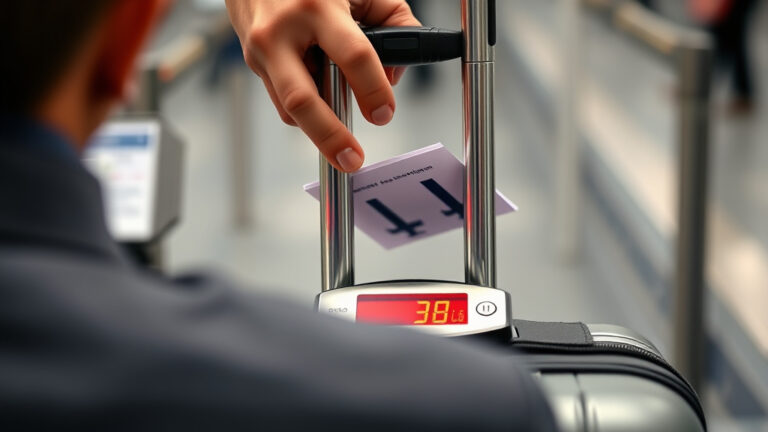
A 22-inch hard-side spinner empty weighs 9-11 pounds. Add a pair of shoes, jeans, a laptop, and a dopp kit, and you’re already pushing 25 pounds. For European carriers, you’ll likely exceed the limit before the bag is half full. This is why experienced travelers for those airlines use lightweight soft-sided bags or travel packs.
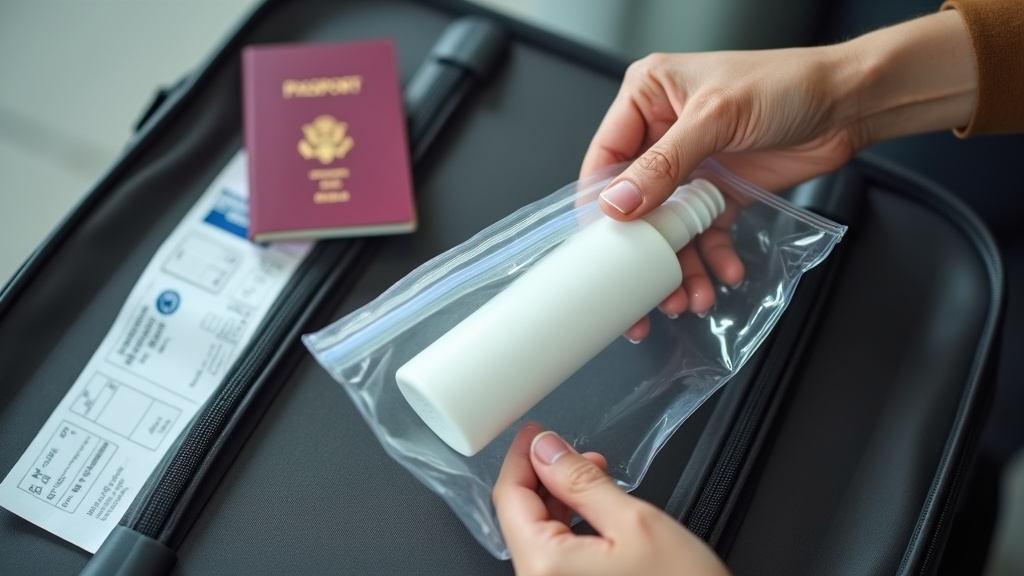
The TSA 3-1-1 Liquids Rule
This is a security regulation, not an airline one, but it directly limits what you can pack in your largest compliant carry-on.
– 3: Containers must be 3.4 ounces (100 milliliters) or less.
– 1: All containers must fit in one clear, quart-sized, resealable bag.
– 1: One bag per passenger.
Before you start: The 3-1-1 rule is enforced at the security checkpoint. Exceptions exist for medically necessary liquids, breast milk, and infant formula, but they must be declared for separate screening. Trying to sneak a full-size shampoo bottle through will get it confiscated and may slow you down for additional screening.
Forget travel-sized toiletries? You’ll be throwing away brand-new products at security. I’ve done it with a $28 bottle of sunscreen because I was in a hurry. Now I have a dedicated quart bag that stays packed in my suitcase.
How to Choose and Pack a Guaranteed Compliant Bag
Your goal is a bag that meets the strictest rules you’ll encounter on your itinerary. If you’re flying domestically on Southwest, you have wiggle room. If you’re flying internationally on a mix of carriers, plan for the most restrictive.
Bag Type Recommendations
- For Strict Weight Limits (Europe/Asia): A lightweight travel backpack (like an Osprey Farpoint 40) or a soft-sided duffel with backpack straps. They’re easier to squeeze into a sizer and weigh less empty than a hard-shell spinner.
- For U.S. Domestic (No Weight Limit): A standard 22-inch hardside spinner is fine. Look for one with a recessed handle to save an inch of height.
- For Budget Airlines (Frontier, Spirit): Adhere precisely to their maximum carry-on dimensions and weight limit. They are the most likely to have a sizer at the gate and charge fees.
Packing Strategy
- Start with an empty bag. Weigh it. Know your starting point.
- Pack heavy items at the bottom (against the wheels) so the bag stands upright and is easier to roll.
- Wear your heaviest shoes and jacket on the plane.
- Put critical items (medication, a change of clothes, chargers) in your personal item. If your carry-on gets gate-checked, you’re not stranded.
- Do a test fit. Pack the bag, measure it, and weigh it. If it’s close to any limit, remove one or two items.
Following the FAA carry-on baggage tips for safe packing, like stowing heavy items low to prevent them from falling, also makes your bag more manageable and stable.
Frequently Asked Questions
What if my carry-on is slightly over the size limit?
Airlines use rigid sizing boxes. If your bag doesn’t fit, it’s too big. “Slightly” doesn’t matter. The only exception is a soft-sided bag you can compress, but if the agent makes you put it in the box, you can’t argue with the result.
Do I need to measure my personal item too?
Yes. Personal item dimensions are also specified (commonly around 18″ x 14″ x 8″). If it’s obviously oversized, like a stuffed backpack, an agent can require you to check your carry-on instead. Your personal item must fit completely under the seat in front of you.
Is a 24-inch suitcase a carry-on?
Almost never. A 24-inch suitcase typically exceeds 45 linear inches and is designed as a checked bag. Some airlines, like Southwest, have a 50-linear-inch limit, but the 24-inch length is often still too tall for the bin’s orientation. Don’t risk it.
How strict are airlines about carry-on size?
Budget airlines (Frontier, Spirit, Ryanair) are extremely strict; it’s a major revenue source. Traditional U.S. carriers are moderately strict, especially on full flights. International carriers are very strict on weight. Assume strict.
Can I bring a carry-on and a backpack?
Yes, that’s the standard allowance: one carry-on for the overhead bin and one personal item (backpack, laptop bag, purse) for under the seat. Ensure your backpack meets your airline’s personal item size guidelines.
The Bottom Line
The largest carry-on luggage size isn’t a single number. It’s a variable that depends on your airline, your fare, your plane, and even the agent at your gate. The 22″x14″x9″, 45-linear-inch benchmark is your safest starting point for a maximum size carry-on.
Your single most important task is to look up your airline’s specific policy before you pack. Then measure and weigh your bag at home. That five minutes of diligence is the difference between a smooth boarding process and an expensive, frustrating scramble at the gate. Pack assuming your bag might be gate-checked, keep your essentials with you, and you’ll travel smarter every time.