How to Start a Tote Bag Business (5 Steps to $5K/Month)
This post contains affiliate links. As an Amazon Associate, we earn from qualifying purchases.
To start a tote bag business, validate a profitable niche, establish an LLC, select a production method like Print-on-Demand, build a simple online store, and drive initial sales with targeted social media ads. This five-step process can realistically generate your first $5,000 per month by solving a specific problem for a defined audience.
Most new sellers get this wrong. They order 200 plain canvas bags with a vague logo, then wonder why they’re stuck with 195 of them six months later. The failure isn’t a lack of effort. It’s a lack of specificity.
This guide walks through the exact sequence that works, from the first niche idea to scaling past your first thousand orders. We’ll cover the legal must-dos most blogs skip, the hybrid production model that de-risks inventory, and the marketing tactic that converts browsers into buyers.
Key Takeaways
- Pick a niche so specific you can describe your ideal customer’s daily routine. “Eco-conscious new moms” beats “people who like bags.”
- Start with Print-on-Demand (POD) to validate designs with zero inventory risk. Move top sellers to a private-label bulk order later for 40-50% better margins.
- Get product liability insurance before you sell a single bag. A defective strap or faulty dye can lead to a lawsuit that personal assets won’t cover.
- Price for profit. Your retail price needs to be 2.5 to 4 times your true landed cost, which includes packaging, transaction fees, and shipping supplies.
- Direct all ad traffic straight to a product page, never your homepage. Each extra click between the ad and the “Add to Cart” button cuts conversions in half.
Why a Tote Bag Business Makes Sense Now
The global tote bag market is worth over $2.6 billion and climbing steadily every year. That’s not just fashion. It’s a fundamental shift toward reusable, multipurpose carryalls. The real opportunity isn’t in selling another bag. It’s in selling a specific identity or solution.
A tote bag has one of the lowest production costs for the perceived value it delivers. The blank canvas is cheap. The customization, through print, embroidery, or material, is where you build margin and brand. This creates a high ceiling for profitability if you control costs.
The tote bag market grows about 4.6% annually, driven by sustainability trends and the demand for personalized, functional accessories. This consistent growth provides a stable foundation for new entrants who can identify and serve a defined niche.
I watched a friend sink $3,000 into 500 embroidered totes for a local sports team. The design was dated, the colors were off-brand, and he was stuck with 480 bags in his garage after the season. He missed the validation step. He assumed he knew the market because he was in it. Now he uses them as drop cloths.
TL;DR: The market is large and growing, but it rewards specificity over volume. Low production cost meets high perceived value, creating a profitable niche for those who do the homework first.
The 5-Step Launch Sequence (From Niche to First Sale)
This isn’t a loose collection of tips. It’s a sequential path where each step unlocks the next. Skipping one, especially step two, creates operational and legal headaches that take months to untangle.
Step 1: Niche Validation and Design Testing
Your first task is not to design a bag. It’s to find a group of people with a common problem a bag can solve. “Carrying stuff” is not a problem. “Needing a stylish, wipeable bag for toddler snacks and diapers that doesn’t look like a diaper bag” is.
Use Pinterest’s search bar. Type “tote bag for…” and see what autofills. Check Etsy’s bestseller lists in the “Totes” category. Look for clusters of similar designs with high review counts, that’s a validated niche. Tools like Google Trends and Jungle Scout can show search volume for related terms.
Common mistake: Designing for yourself instead of a market, you’ll end up with a garage full of bags you love but no one else buys. Validate with POD sales data before committing to bulk.
Once you have a niche, create 3-5 design concepts. Use a free tool like Canva or invest in Adobe Illustrator for more control. Then, test them with a Print-on-Demand service like Printify or Gelato. List them on an Etsy shop. The goal is to get real sales data, not just compliments from friends. The POD model means no upfront inventory cost. Your first five sales tell you more than any survey.
Step 2: Legal and Financial Foundation
This is the boring, critical part everyone wants to skip. Don’t. Forming an LLC separates your personal assets (your house, your car) from your business liabilities. If a bag strap fails and someone gets hurt, they sue the LLC, not you personally. It costs between $50 and $200 depending on your state.
Next, get an Employer Identification Number (EIN) from the IRS website, it’s free and takes ten minutes. You’ll need this to open a business bank account. Never use your personal checking account for business transactions. Mixing funds makes tax preparation a nightmare and weakens your liability protection.
You also need a seller’s permit or sales tax license from your state. This allows you to collect sales tax. Requirements vary, but most states require it if you have a physical presence or meet a sales threshold. Finally, get insurance. A general liability policy with product liability coverage runs about $400-$700 a year for a $1 million policy.
| Legal Requirement | What It Is | Why You Need It |
|---|---|---|
| LLC Formation | Legal business structure | Protects personal assets from business lawsuits and debts |
| EIN | Federal tax ID number | Opens business bank accounts; required for hiring |
| Seller’s Permit | State sales tax license | Legally collect and remit sales tax |
| Product Liability Insurance | Insurance for product-related injuries | Covers legal costs if a defective product causes harm |
Step 3: Choosing Your Production Model
You have three main paths, each with different risk profiles and control levels. Your choice here dictates your startup cost, profit margin, and daily workflow.
- Print-on-Demand (POD): You provide the design, a partner handles printing, packing, and shipping. You never touch inventory. Startup cost: $100-$500. Best for: Validating designs, testing niches, and low-volume starters.
- Direct Printing (DTF/Vinyl): You buy blank bags and print designs yourself using a heat press and transfer paper (like Direct-to-Film). Startup cost: $300-$1000. Best for: Hands-on creators, small batches, and custom orders.
- Bulk Ordering (Private Label): You order hundreds of blank or custom-manufactured bags from a supplier, then handle storage and fulfillment. Startup cost: $1,500-$5,000+. Best for: Scaling proven designs, achieving the lowest per-unit cost, and full brand control.
I recommend a hybrid approach. Start with POD to find your top 2-3 selling designs. Once a design consistently sells 10-20 units a month, order a batch of 50-100 blank bags from a supplier like ToteBagFactory.com and use a local print shop or your own DTF setup. This cuts your cost per bag by 40-50% and boosts your margin significantly.
I tried to cut corners by ordering 200 bags from an overseas supplier I found on Alibaba before testing the design. The sample was perfect. The production run had misaligned stitching and the canvas weight was 20% lighter than agreed. I spent six months negotiating partial refunds and selling them at a loss. Now I order test batches from domestic suppliers with clear QC checklists.
Step 4: Setting Up Your Online Store
Your store is your digital sales floor. Keep it simple, focused, and trustworthy. For beginners, Etsy is the fastest path to an existing audience. For more control and branding, Shopify is the standard.
Your product page is your most important asset. It must have:
* High-quality photos on a model and flat-laid.
* A clear list of features and dimensions (use the specifications of tote bags as a guide).
* A compelling description that speaks to your niche’s pain points.
* A competitive price.
Pricing is not guesswork. Calculate your True Cost of Goods Sold (COGS):
* Cost of blank bag + printing
* Packaging (poly mailer, thank-you card)
* Shipping label cost
* Platform transaction fee (Etsy: 6.5% + payment processing; Shopify: ~2.9% + $0.30)
* Sales tax (if not included)
Multiply your total COGS by 2.5 to 4. That’s your retail price. A bag that costs you $8 all-in should sell for $20 to $32.
Step 5: Driving Sales with Targeted Marketing
Forget billboards and radio ads. Tote bags are visual and niche-driven. Your marketing should be equally visual and precise.
Instagram and Pinterest are your primary channels. Create a business account and post consistently, not just product shots, but lifestyle content that shows your bag in use by your ideal customer. Use all relevant hashtags.
Run Meta (Facebook/Instagram) ads. The key is audience targeting. Don’t target “women 25-45.” Target “people interested in minimalist parenting, Montessori at home, and Stokke Tripp Trapp.” Link the ad directly to the product page for that specific bag. Sending traffic to your homepage is a conversion killer.
Consider micro-influencer collaborations. Find Instagram accounts with 5,000-50,000 engaged followers in your niche. Offer them a free bag in exchange for a post or story. Their endorsement builds trust faster than any ad.
TL;DR: Follow the sequence: validate, legalize, produce, list, market. Each step de-risks the next. POD is your validation engine, and hyper-targeted Instagram ads are your sales engine.
Sourcing and Production: From POD to Private Label
Where you get your bags and how you decorate them determines your quality, margin, and scalability. This is where a manufacturer-friendly brand system saves you money and defects.
Print-on-Demand Suppliers
POD is your risk-free entry. You upload a design, connect your store, and they handle the rest. Quality varies.
* Printify: Large network of print providers. Good for testing which provider gives the best print quality for your design style.
* Gelato: Global network focused on faster, local delivery.
* Printful: Known for higher quality control but slightly higher prices.
Order a sample from your chosen provider before launching. Check the print vibrancy, alignment, and fabric hand-feel.
Blank Bag Suppliers for Bulk Orders
When a design proves itself, order blanks in bulk. Key suppliers include:
* ToteBagFactory.com: Low minimum order quantities (MOQs), often as low as 25 units. Good for small batches.
* BagzDepot: Wide variety of styles and materials.
* Alibaba/Global Sources: For orders of 500+, but vet suppliers rigorously. Always request a “golden sample” you approve before production.
| Supplier | Best For | MOQ | Risk If You Skip This Step |
|---|---|---|---|
| Printify/Gelato | Design validation; first 50 sales | 1 unit | None—this is the low-risk starting point. |
| ToteBagFactory.com | Scaling a proven design | ~25 units | Paying 300% more per unit than necessary, killing your margin. |
| Alibaba Manufacturer | Large-scale production; custom fabric | 500+ units | Getting 500 bags with the wrong dye lot or stitch density because you didn’t define tolerances. |
The “Golden Sample” and Tolerance Setting
This is the expert-level move most guides miss. When you order bulk, you must approve a “golden sample”, the perfect example of exactly what you want. Then, you set written tolerances.
* Dimensions: Bag height: 16″ ± 0.25″.
* Print Placement: Center logo, no more than 0.125″ offset.
* Defect Standard: No more than 2% of units may have loose threads or stitching errors.
Email these tolerances to the supplier and get written confirmation. This turns subjective “quality” into an objective standard they must meet. Without it, the factory decides what’s acceptable, and you’ll get the bags they can’t sell to stricter clients.
Common mistake: Approving a sample but not setting tolerances, the production run will drift toward the factory’s convenience, not your standard. You’ll get bags that are “close enough” but not saleable at your premium price.
Marketing That Actually Sells Bags
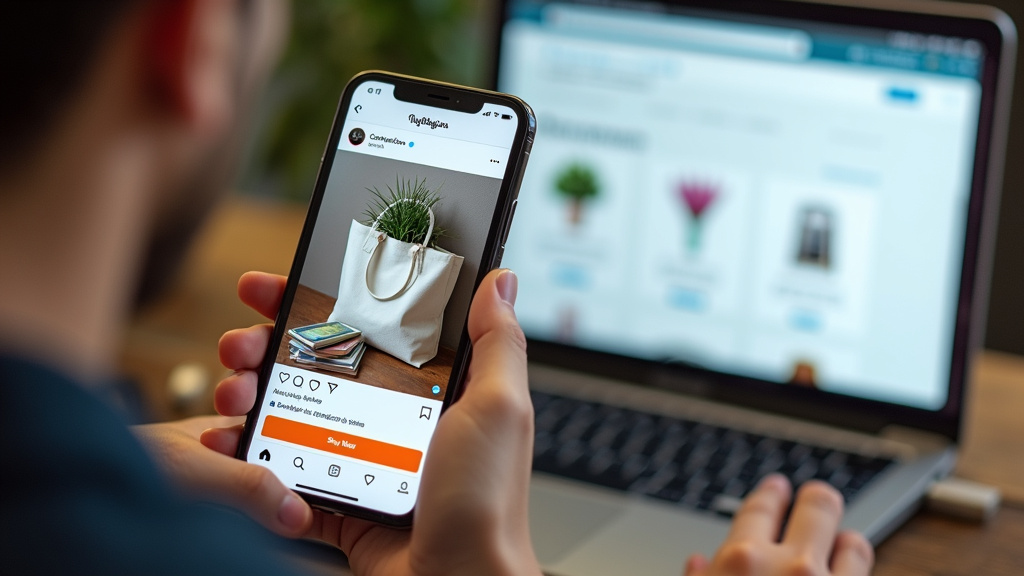
You can have the perfect bag, but without visibility, you have a hobby. Marketing is the engine. These are the tactics that work right now.
Mastering Instagram and Pinterest
These platforms are visual search engines for your niche. Your profile should be cohesive. Use a consistent color palette and voice. Post a mix of:
* Product photos (flat lays, modeled)
* Lifestyle shots (bag at the farmer’s market, in a work setting)
* User-generated content (repost customer photos)
* Short videos showing the bag’s features
On Pinterest, create pins with clear text overlay describing the benefit. Link every pin directly to the product page.
Effective Paid Advertising on a Budget
Start with a small budget, $5-$10 a day. Create a conversion campaign in Meta Ads Manager. The objective is “Conversions” (purchases). For audiences, use detailed interest targeting. If your bag is for plant lovers, target interests like “The Sill,” “Monstera Deliciosa,” and “urban jungle blog.”
Your ad creative needs to stop the scroll. Use a bright, clear image or a short video. The ad copy should lead with the benefit, not the feature. “Carry your seedlings and pruning shears in style” beats “Durable canvas tote bag.”
I once ran an ad for a workshop tote bag targeting “woodworking.” The click-through rate was high, but conversions were zero. The audience was right, but the ad sent them to a collection page of all my bags. I changed the link to go directly to the specific workshop tote product page. Conversions jumped 400% on the same spend. The path of least resistance wins.
Always, always link your ad to the specific product page. Not the homepage, not a collection page. The product page.
Building Authority with Content and Influencers
Start a simple blog on your Shopify store or write posts on LinkedIn. Share content related to your niche, not just your bags. For a “book lover tote,” write about organizing a home library or summer reading lists. This builds organic search traffic over time.
For influencer marketing, nano-influencers (1,000-10,000 followers) often have higher engagement rates than mega-influencers. Offer a trade: a free bag for a post. Provide them with a few photo options and suggested caption copy to make it easy. Their authentic endorsement can drive a surprising number of sales.
TL;DR: Market where your customers already are. Use hyper-specific Instagram ads linked directly to product pages. Support ads with organic content and micro-influencer partnerships for a sustainable growth loop.
Financial Realities: Pricing, Costs, and Profit
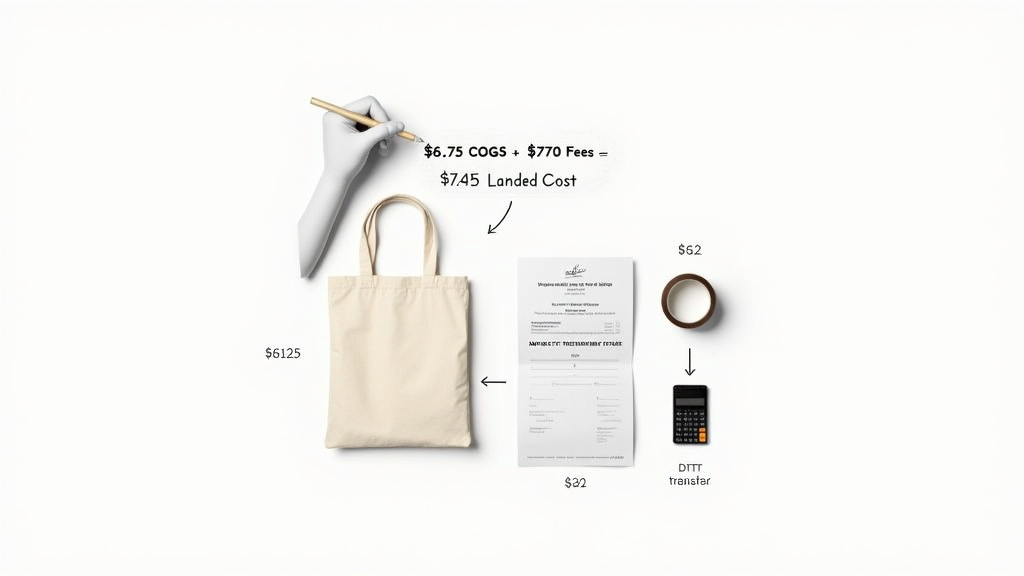
This business can be profitable, but only if you run the numbers with ruthless honesty. Emotion has no place in your spreadsheet.
Startup and Ongoing Costs
Your initial investment varies by model:
* POD Model: $100-$500 (covers sample orders, business registration, initial ad spend).
* DTF/DIY Model: $300-$1,000 (adds heat press, transfer paper, blank bag inventory).
* Bulk Private Label: $1,500-$5,000+ (inventory, higher marketing budget, storage).
Plan for working capital of $3,000-$6,000 to cover your first six months. This floats inventory, marketing, and platform fees before cash flow turns positive.
Pricing Formula for Healthy Margins
Let’s price a bag you plan to sell yourself (not POD). Assume:
* Blank Bag: $4.50
* DTF Print Cost: $1.50
* Packaging & Shipping Supplies: $0.75
* Total COGS: $6.75
Now add your selling costs (estimated):
* Platform/Transaction Fee (3%): $0.20
* Payment Processing (2.9% + $0.30): ~$0.50
* Total Selling Cost: $0.70
Total Landed Cost: $7.45
To achieve a healthy margin, apply a 3x markup: Retail Price = $7.45 x 3 = $22.35
Round to $22 or $24. This gives you a gross profit of about $15 per bag before accounting for your time, marketing spend, and taxes. On a POD model, your margin will be lower (often 30-50%), but your risk is near zero.
When Will You Become Profitable?
With the right niche and marketing, you can reach profitability within 3-6 months. The benchmark is simple: your monthly revenue must exceed your total monthly expenses (COGS + marketing + software + overhead). For a solo operation, aiming for $2,000-$5,000 in monthly revenue is a realistic and profitable goal within the first year. Scaling beyond that often requires outsourcing production or hiring part-time help.
Frequently Asked Questions
How much money do I need to start a tote bag business?
You can start a Print-on-Demand tote business with about $100. This covers a sample order, basic business registration, and a small ad budget. For a DIY printing model with a heat press, budget $300-$1,000. A bulk inventory model requires $1,500-$5,000 upfront.
Is a tote bag business profitable?
Yes, tote bag businesses can be highly profitable due to low production costs and high perceived value. Profit margins often range from 50% to 300% on custom or handmade bags. Success depends on niche selection, cost control, and effective marketing.
Do I need a business license to sell tote bags?
Yes, in most cases. You should form an LLC for liability protection, obtain an EIN from the IRS, and get a seller’s permit from your state to collect sales tax. Local business licenses may also be required. Operating without these exposes you to legal and financial risks.
What is the best platform to sell tote bags on?
For beginners, Etsy is best for its built-in audience searching for handmade and unique items. For full brand control and scaling, Shopify is the industry standard. Many sellers use both, directing traffic from social media to their Shopify store while maintaining an Etsy shop for discovery.
How do I find a good supplier for blank tote bags?
Start with domestic suppliers like ToteBagFactory.com or BagzDepot for low minimum orders. Always order a sample first. For larger orders, vet overseas suppliers on Alibaba by checking their transaction history, requesting a golden sample, and defining clear quality tolerances in writing before production.
What’s the difference between DTF and screen printing for totes?
DTF (Direct-to-Film) transfer is a digital method ideal for complex, multi-color designs and small batches. It uses a heat press. Screen printing is better for large runs of simple, bold designs, as the per-unit cost drops with volume. DTF offers more flexibility for starting out.
The Bottom Line
Starting a tote bag business is a proven path to building a brand and generating income. The blueprint is clear: find a hungry niche, protect yourself legally, use POD to test, and double down on what sells with targeted ads. The hardest part isn’t the sewing or the printing. It’s the discipline to validate before you invest and to market with precision instead of hope.
Your first goal isn’t a million dollars. It’s ten sales to ten strangers. That proves your concept works. From there, you optimize, scale, and build. The market is waiting for a bag that speaks directly to someone. Make sure that someone knows you made it just for them.