Can a Duffel Bag Be a Checked Bag? Airline Policy Guide
This post contains affiliate links. As an Amazon Associate, we earn from qualifying purchases.
Yes, a duffel bag can be a checked bag on virtually every major airline, provided it meets their standard size and weight limits for checked luggage. The universal rules are a maximum of 62 linear inches (length + width + height) and 50 pounds. You must also secure loose straps, use TSA-approved locks, and pack knowing the soft sides offer less impact protection than a hard-shell suitcase.
The mistake isn’t asking if it’s allowed. The mistake is assuming your stuffed, bulging duffel automatically fits the 62-inch rule, or that its flexible fabric will protect your camera as well as a Pelican case. Airlines treat it as checked luggage, which means it gets tossed, stacked, and conveyor-belted with everything else.
This guide walks through the exact size math, the real risk of overpacking, and how to pack a duffel so your stuff survives the baggage system. We’ll cover airline-specific quirks, the best bag materials, and what you should never check in a duffel.
Key Takeaways
- The 62 linear inch and 50-pound limit is standard, but always verify your specific airline’s checked duffel bag guidelines before you pack.
- A duffel’s flexible sides mean you measure it packed, not empty. A half-empty 70L duffel might pass, but the same bag fully stuffed will fail the linear inch test.
- Use a luggage scale. Guessing weight at home is free; a $100+ overweight fee at the airport is not.
- Ballistic nylon or heavy-duty polyester with double-stitched seams is non-negotiable for checked luggage. A cheap gym bag will split at a seam.
- Pack your duffel with the assumption it will be placed upside down. Your liquids and fragile items go in the center, wrapped in clothes.
Why Airlines Don’t Care About Bag Shape (Within Reason)
Airlines categorize luggage by its dimensions and weight, not its form factor. The system sees a “checked bag,” not a “duffel.” This is why understanding the duffel bag definition, a soft-sided, typically cylindrical bag, matters less than understanding the dimensional box it needs to fit within.
The baggage handling machinery is designed for a range of shapes, but it has limits. Long, floppy straps are a genuine hazard.
Common mistake: Leaving carry handles or shoulder straps dangling loose. These get caught in conveyor belts or sorting machinery, which can rip the strap clean off or jam the system. Tuck them in or use the bag’s own compression straps to secure them. I’ve seen a detached strap cause a 20-minute baggage delay at a regional airport.
The real scrutiny happens at the check-in counter. An agent looks for three things: obvious over-size, probable over-weight, and secure closures. A duffel bursting at the zippers signals “overweight” before it even touches the scale.
TL;DR: Your duffel is just another piece of luggage to the airline. Make it easy for them to handle by securing its profile and closures.
The 62 Linear Inch and 50-Pound Rule (And How to Measure)
This is the core arithmetic of checking a duffel bag. The standard checked-bag limit for most U.S. domestic airlines is 62 linear inches and 50 pounds. International and budget carriers can vary, which is why you must check.
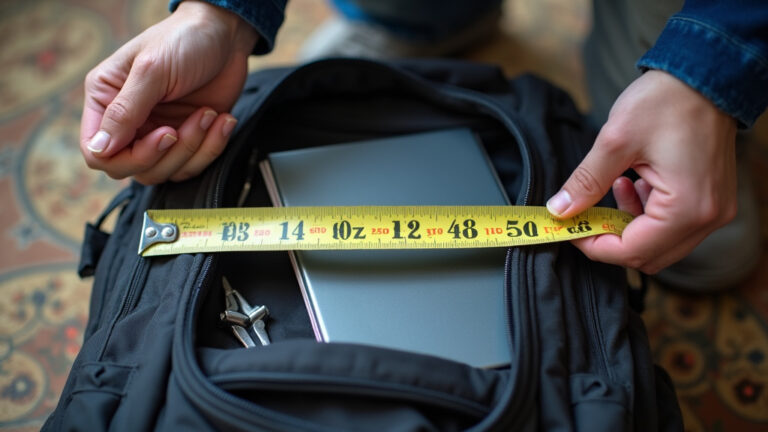
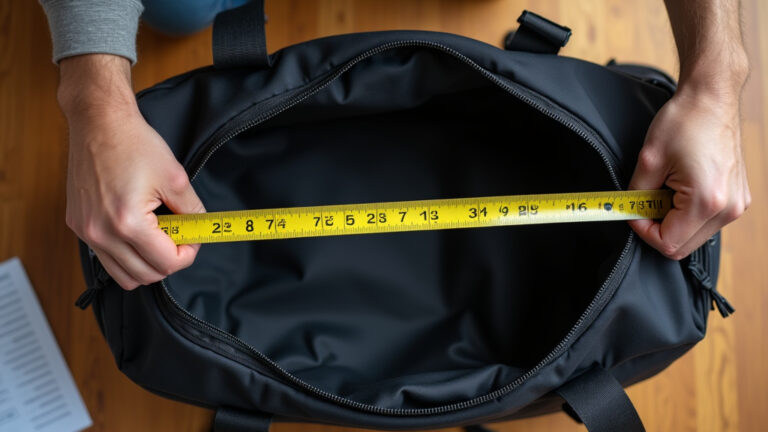
Linear inches are the sum of the bag’s length, width, and height at their maximum points. For a hard-shell suitcase, this is easy. For a duffel, it’s trickier.
You must measure the bag when it’s fully packed as you intend to travel. A soft duffel expands. If the spec sheet says your bag is 30″L x 15″W x 15″H (60 linear inches), that’s when it’s empty. Pack it tight and the width might balloon to 18 inches, pushing you to 63 linear inches, and into oversized fee territory.
| Airline | Standard Checked Bag Size Limit | Standard Weight Limit | Oversize Fee Trigger |
|---|---|---|---|
| Delta | 62 linear inches | 50 lbs | >62 linear inches |
| American | 62 linear inches | 50 lbs | >62 linear inches |
| United | 62 linear inches | 50 lbs | >62 linear inches |
| Southwest | 62 linear inches | 50 lbs | >62 linear inches |
| Spirit | 62 linear inches | 40 lbs | >62 linear inches |
Weighing your bag is the single most effective step to avoid fees. A basic digital luggage scale costs less than one typical overweight penalty. The moment that scale tips from 49.9 to 50.1 pounds, you’re looking at a charge that can be $100 or more, especially on international flights.
The weight limit is the great equalizer. A duffel’s lightweight fabric lets you pack more stuff before hitting 50 pounds compared to a hard-shell suitcase. But that’s also the trap. You can easily overpack with dense items like books or tools.
TL;DR: Measure your packed duffel at its bulgiest points. Never trust the empty bag’s dimensions. Use a scale, every time.
Choosing a Duffel That Can Survive the Hold
Not all duffels are built for the cargo hold. The bag you take to the gym will fail. The right travel duffel bags for checking have specific construction features.
Look for:
1. Material: 1000D ballistic nylon or high-denier polyester. Cordura is a good brand name. This fabric resists abrasion from conveyor belts and other bags.
2. Seams: Double- or triple-stitched, preferably with bonded nylon thread. Seams are the first point of failure under stress.
3. Zippers: Large, #10 YKK zippers with double sliders. The zipper tape should be welded to the fabric, not just sewn.
4. Straps: Removable or fully stowable shoulder straps. Robust, padded carry handles attached at multiple stress points.
5. Base: A reinforced, padded, or even semi-rigid bottom panel. This protects items when the bag is dropped flat on the carousel.
I learned the material lesson on a ski trip. I checked a mid-grade polyester duffel. It came off the carousel with a 4-inch gash along the side, likely from a sharp ski boot edge in another bag. The repair tape held for the trip home, but the bag was done. My replacement was a ballistic nylon model with a tarpaulin-like base, it’s survived a dozen trips since.
A duffel bag’s military origin explains its potential durability. Modern replicas use the same reinforced canvas or synthetic principles to withstand rough handling, but you must choose a model designed for travel, not just sport.
TL;DR: Buy a duffel built like a tool, not a accessory. Ballistic nylon, double-stitched seams, and burly zippers are your checklist.
The Step-by-Step Packing System for a Checked Duffel
Packing a duffel for checking is a structural engineering problem. You’re building a soft-sided module that will be inverted, compressed, and tossed. The goal isn’t just organization, it’s damage mitigation.
Here’s the sequence that works for a week-long trip:
Step 1: Bottom Layer – Heavy & Flat.
Start with shoes, jeans, hardcover books, or other dense, flat items. Place them sole-to-spine along the bottom. This creates a stable base and keeps weight low. Skipping this lets heavy items shift and crush lighter stuff above.
Step 2: Middle Core – Fragile & Valuable.
This is your protected zone. Wrap cameras, tablets, or glass containers in sweaters or pants. Place this bundle in the dead center of the bag. Use packing cubes for clothes to create further cushioning walls around this core. This is critical for maximizing duffel bag space safely.
Step 3: Top Layer – Light & Compressible.
Fill the remaining space with soft, lightweight items: t-shirts, underwear, socks, puffy jackets. These act as final shock absorbers.
Step 4: Liquids & Toiletries – Contained and Central.
All liquids go in a sealed, hard-sided toiletry case. Place this case upright in the middle layer, surrounded by clothing. Never pack liquids in an outside pocket or at the top of the bag, pressure changes and rough handling will cause leaks.
Step 5: Final Compression & Lock-Up.
Compress the contents by sitting on the bag to close the zipper. This eliminates air pockets that allow items to shift violently. Lock every zipper with a TSA-approved lock.
Common mistake: Stuffing a fragile item like a bottle of wine into a side pocket. Side pockets offer zero protection and are the first point of impact if the bag is thrown. That wine will be a stain by baggage claim.
TL;DR: Pack a duffel in layers: heavy base, fragile core, soft top. Always assume it will travel upside-down.
Duffel vs. Suitcase: When to Choose Which
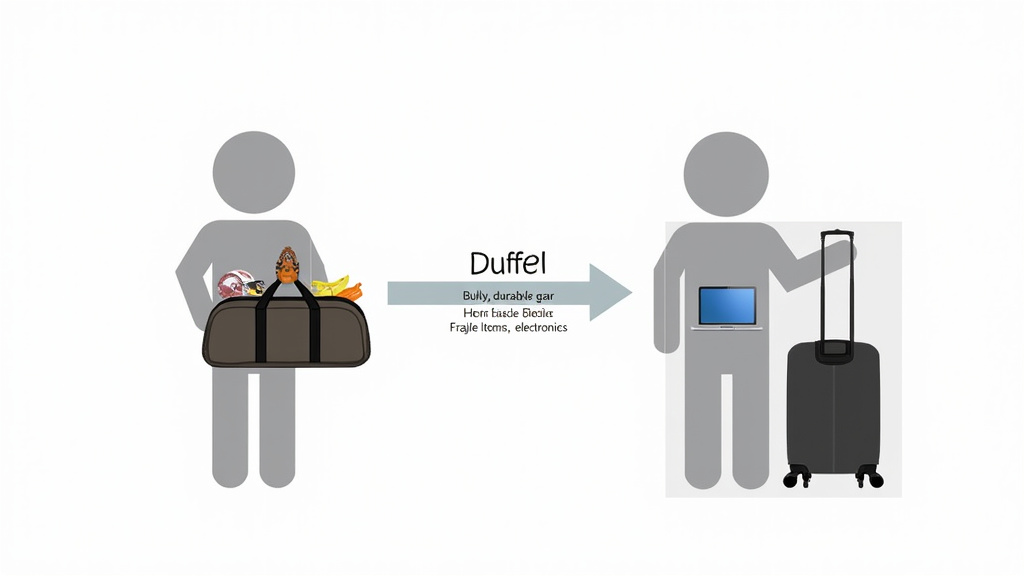
The choice between a checked duffel and a checked hard-shell suitcase isn’t about airline rules, both are allowed. It’s about what you’re packing and what you prioritize.
| Consideration | Duffel Bag (Soft-Sided) | Hard-Shell Suitcase |
|---|---|---|
| Weight Allowance | Lighter bag = more weight for contents. | Heavier shell = less weight for contents. |
| Packing Flexibility | Excellent for odd-shaped gear (helmets, boots). | Poor for irregular items; fixed interior space. |
| Impact Protection | Poor. Contents absorb all shock and crushing forces. | Excellent. Rigid shell distributes impact. |
| Weather/Spill Resistance | Moderate (requires treated fabric). Water can seep through zippers. | High. Fully sealed against rain and spills. |
| Overpacking Risk | High. Can always squeeze more in, risking size/weight limits. | Low. Physical limit when the shell won’t close. |
I prefer a duffel for trips where I’m carrying bulky, durable gear like camping equipment or sports padding. The flexibility is the point. For a trip with a laptop, a camera, and nice clothes, the hard shell wins every time. The crushing force of a 70-pound bag stacked on top of yours is real, a duffel offers no defense.
The duffel’s main advantage is its empty weight and packability. You can often fit a duffel bag as carry-on on the way out, then check it on the way home if you bought souvenirs. A hard shell doesn’t have that versatility.
TL;DR: Use a duffel for bulky, durable gear where weight is tight. Use a hard shell for fragile items, electronics, or bad weather.
Airline Fees and the Oversize Duffel Trap
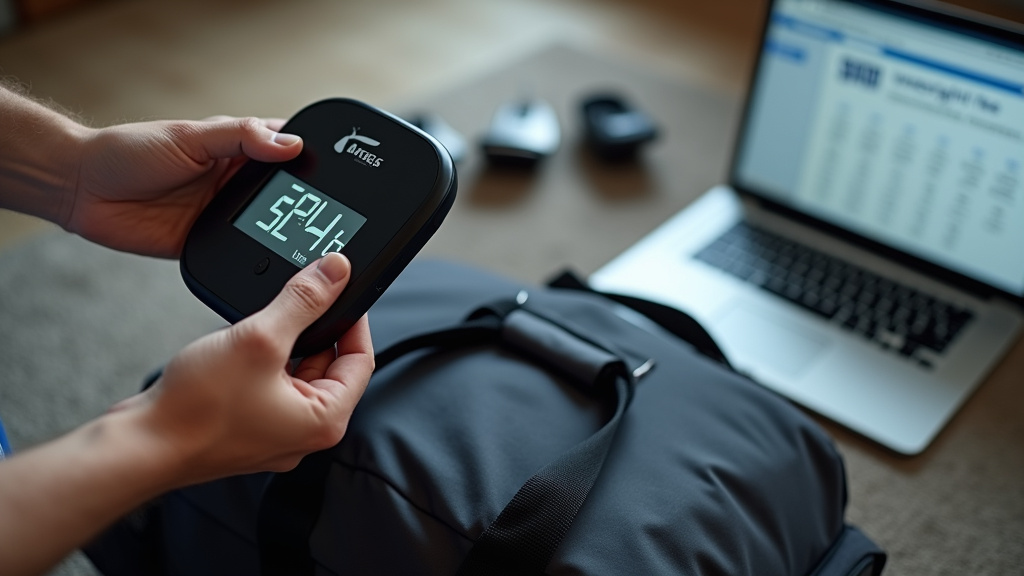
Airlines make money from bags that break the rules. With a duffel, the oversize fee is a sneaky threat. As discussed, a bag that looks fine can exceed 62 linear inches when packed.
The fee structure is punitive and layered. For a major U.S. carrier, a bag that’s 51-70 pounds might be a $100 overweight fee. A bag that’s 63-80 linear inches could be a $200 oversized fee. A bag that is both overweight and oversized? They charge you both fees. That’s $300 for one bag.
Budget airlines like Spirit or Frontier have lower weight limits (often 40 pounds) and are stricter about enforcement. Their entire business model relies on these ancillary fees.
The financial logic is simple. The cost of a high-quality, right-sized duffel is around $150. One round-trip with overweight fees can surpass that. Investing in a proper bag and a $20 luggage scale pays for itself on the first trip you don’t get fined.
Always check your airline’s website the week before travel. Policies change. The “50-pound standard” is common, but not universal, especially for international travel on foreign carriers where the limit might be 23kg (50.7 lbs), that extra 0.7 lbs matters.
TL;DR: Know your airline’s exact fee schedule. The cost of overpacking a duffel isn’t just inconvenience; it’s a deliberate revenue stream for the airline.
Frequently Asked Questions
Can a duffel bag be a carry-on and a checked bag?
Yes, the same bag can serve either purpose, but it must meet the different size rules for each. A bag small enough to be a carry-on compliant duffel (typically around 22″ x 14″ x 9″) is often too small to be practical as a sole checked bag for a long trip. Many travelers use a small duffel as a carry-on and a larger one as checked luggage.
What should I never pack in a checked duffel?
Never pack true valuables (jewelry, cash, important documents), critical medication, or fragile electronics with delicate screens. The lack of rigid protection and the risk of loss or theft is too high. Also, due to pressure changes, avoid packing completely full, sealed containers of liquids like shampoo bottles, they can burst.
Are there locks specifically for duffel bags?
Use standard TSA-approved combination locks or cable locks. The type isn’t specific to duffels. The key is to loop them through the zipper pulls in a way that prevents the zipper from opening more than an inch or two. For duffels with dual zippers, a single lock can often join both pulls together.
How do I make my duffel bag more visible on the carousel?
Use a brightly colored luggage strap wrapped around the length of the bag, or tie a distinctive ribbon or scarf to the carry handles. Avoid just a standard luggage tag, as it can flip over and hide. A unique visual marker is the fastest way to spot your black nylon duffel among a dozen others.
Is a backpack or a duffel better for checking?
hiking backpack with an internal frame can be damaged if checked, as the frame can snap under rough handling. A checked backpack policies often recommend removing the frame if possible. A simple travel duffel is often more robust for checking because it has no rigid parts to break. For pure durability in the hold, a well-made duffel usually beats a complex backpack.
Before You Go
Checking a duffel bag is absolutely standard practice, but it requires a shift from casual to tactical thinking. Your bag is entering an industrial handling system. Success means respecting the 62-inch and 50-pound rules with a packed measurement, choosing a bag built with abrasion-resistant fabric and strong seams, and packing it like a shock-absorbing module.
Verify your airline’s specific policy, strap down every loose end, and lock it up. Place your fragile items in the center, wrapped in clothing, and assume the bag will be inverted at least once. A duffel won’t protect your belongings like a hard case, but with the right preparation, it’s a versatile and reliable workhorse for getting your gear from A to B.