How to Authenticate a Louis Vuitton Bag: Spot Real vs Fake
This post contains affiliate links. As an Amazon Associate, we earn from qualifying purchases.
To know if a Louis Vuitton bag is real, you must conduct a multi-point inspection of materials, craftsmanship, and brand-specific hallmarks. Authentic bags feature embossed monograms, flawless saddle stitching, specific hardware screws, and a date code that matches the “Made in” stamp. No single detail is definitive; the entire picture must align with Louis Vuitton’s exacting standards.
Most people get this wrong because they focus on one thing, like the date code or the logo alignment. They find a code that looks right or a pattern that seems centered and assume they’re safe. Counterfeiters know this. They replicate the easy tells and hope you miss the dozen subtle, expensive details that separate a real bag from a scam.
This guide walks you through the 12 specific checks experts use. We’ll cover the monogram you can feel, the stitch count you can count, the hardware most people ignore, and the critical shift from date codes to RFID chips. You’ll learn what to look for and, more importantly, what mistakes to avoid.
Key Takeaways
- The monogram is embossed, not printed. Run your finger over it. You should feel a distinct, recessed texture. If it’s smooth and flat, it’s fake.
- Stitching is a dead giveaway. Authentic Louis Vuitton uses a saddle stitch, visible as slightly slanted, perfectly even threads. Look for exactly five stitches across the leather tabs on handles of classic bags like the Speedy, Neverfull, and Alma.
- Hardware screws are always slotted. Every screw on a real LV bag, on the feet, strap attachments, lock plates, is a flat-head (minus) slotted screw. Phillips (plus) head screws mean it’s counterfeit.
- Date codes are not proof. A correct-looking date code is the easiest thing for a counterfeiter to fake. It must be cross-referenced with the “Made in” stamp and overall craftsmanship.
- Louis Vuitton never provides authenticity cards. If a seller includes a card or certificate, walk away. It’s a common trick used to legitimize fakes.
The 12-Point Authenticity Checklist
Follow this sequence. Don’t jump around. Start with the big-picture items you can see and feel, then move to the finer details. Getting one step wrong doesn’t automatically mean a fake, but three or four failures mean you should walk away.
Authentic Louis Vuitton authentication is a holistic evaluation of material quality, construction precision, and brand-specific identifiers. The process weighs the cumulative evidence from canvas texture and monogram embossing to stitching technique and hardware engraving, as no single feature is conclusive on its own.
1. Feel the Monogram Canvas.
Run your fingertips across the surface. Authentic LV monogram canvas has a slight, pebbled texture. The colored LV logos and quatrefoil flowers are not just printed on top, they are embossed into the canvas. You should feel a clear, recessed edge. Fake bags often use a cheap screen-printing process that leaves the surface smooth, shiny, and plasticky.
2. Check the Monogram Pattern Alignment.
The iconic LV pattern should be symmetrical and continuous. On larger bags, the pattern is often centered, with a complete LV logo at the top and bottom. It’s a myth that the pattern is never cut off. On smaller pieces and at seams, it will be. However, the LV logo itself is almost always kept whole. A telltale sign of a good fake is a pattern that looks “too perfect” or is aligned in a way LV never uses.
3. Count the Stitches.
This is where most replicas fail spectacularly. Louis Vuitton uses a saddle stitch, a strong, durable hand-stitching technique that’s difficult for machines to replicate perfectly. The stitches will be perfectly even, consistent in length, and slanted at a uniform angle.
Common mistake: Assuming neat stitching is enough, the stitch count on specific components is a fixed specification. On the leather tabs where handles attach to bags like the Speedy, there are exactly five stitches across. Not four, not six. Five.
4. Inspect the Vachetta Leather Trim.
New, authentic Vachetta leather is a pale, creamy beige. It is untreated and will develop a rich, golden honey patina over time due to oxidation and skin oils. If you’re looking at a bag that’s supposedly several years old but the Vachetta is still stark white and pale, it’s likely fake. Also, feel the edge glazing, the colored edge on the leather. It should be a neat, deep reddish-burgundy, applied smoothly. Fakes often have glazing that is too bright, thick, or lumpy, like nail polish.
5. Examine the Hardware.
Zippers should be substantial, usually by brands like Lampo or YKK, and operate smoothly. The engravings on zipper pulls, locks, and D-rings should be crisp, deep, and perfectly centered. But here’s the niche detail: look at the screws.
| Hardware Component | Authentic Sign | Counterfeit Red Flag |
|---|---|---|
| All Screws | Flat-head, slotted (minus sign) | Phillips, cross-head (plus sign) |
| Zipper Pull | Heavy, solid metal; crisp engraving | Light, hollow feel; shallow or blurred text |
| Lock & Keys | Keys turn smoothly; lock engraving is sharp | Keys stick or feel cheap; engraving is fuzzy |
Authentic Louis Vuitton uses only slotted screws. If you see a Phillips head screw anywhere on the bag, it’s an immediate fake.
6. Smell the Bag.
This sounds odd, but it works. A new authentic Louis Vuitton bag has a specific, pleasant smell, a mix of treated canvas and leather. It’s not overpowering. Fake bags often reek of strong chemicals, cheap plastic, or potent glue. That “new car smell” on a luxury bag is a bad sign.
7. Find the “Made In” Stamp.
This heat-stamped imprint will be inside the bag, often on a leather tab. It should be clean, even, and not too deep. Authentic bags are made in France, Spain, Italy, Germany, Switzerland, or the United States. The font is consistent. If the stamp is crooked, too faint, too deep (burning the leather), or says “Made in China” or “Made in Romania,” it’s counterfeit.
TL;DR: Authenticity is cumulative. Check the feel of the embossed monogram, count the stitches on handle tabs (five), verify all screws are slotted, and ensure the “Made In” location is legitimate.
The Date Code & RFID Chip Puzzle
For decades, the date code was the go-to authenticity check. That changed in March 2021. You need to know which system applies to your bag, and more importantly, the limits of both.
Bags Made BEFORE March 2021: The Date Code
This is a series of letters and numbers stamped on a leather tab inside a pocket or along a seam. It indicates the factory location and the week/year of manufacture. The code must logically correspond with the “Made in” stamp. For example, a code starting with “FL” means made in France, which should match a “Made in France” stamp.
I bought a pre-loved Neverfull where the date code location and format were perfect. But the “Made in” stamp was in the wrong font, slightly too thin. I almost missed it because the code checked out. That bag was a super fake. The code is just data; it’s the easiest thing to copy.
The problem is, counterfeiters have had date code databases for years. A correct-looking code proves nothing on its own. It’s a supporting detail, not a standalone authenticator.
Bags Made AFTER March 2021: The RFID Chip
Louis Vuitton phased out date codes in favor of embedded RFID microchips. You cannot see or feel this chip. It’s inside the lining. You cannot scan it with your phone, it requires a proprietary LV scanner, available only in boutiques or to their authorized repair centers.
This is critical: The presence of an RFID chip does not guarantee authenticity. High-tier counterfeiters now sew fake RFID chips into their bags to fool buyers. The only way to verify a real chip is for Louis Vuitton to scan it and confirm the encrypted data matches their production records.
| Authentication Marker | What It Is | Can It Be Faked? | Is It Proof? |
|---|---|---|---|
| Date Code (Pre-2021) | Leather stamp with factory/date info | Yes, easily | No. Supporting evidence only. |
| RFID Chip (Post-2021) | Invisible microchip in lining | Yes, fake chips exist | No. Only LV can verify the data. |
| “Made In” Stamp | Heat-stamped location | Yes, but often gets font/spacing wrong | Strong indicator when combined with other checks. |
TL;DR: Date codes and RFID chips are the most overrated authentication tools. They are frequently faked. Use them to rule a bag in only if every other physical detail is perfect; never use them alone to rule a bag out.
Why Stitching and Hardware Are Your Best Bets
Counterfeit operations optimize for visual impact at a distance. They spend their budget on making the monogram look right. The expensive, time-consuming details, the ones you need to be inches away to see, are where they cut corners. That’s your opportunity.
The Saddle Stitch Advantage.
A machine stitch goes straight through the material. A saddle stitch, used by Louis Vuitton and other high-end leather goods makers, is done with two needles and creates a distinctive, slightly slanted line that is incredibly durable. If one stitch breaks, the rest won’t unravel. Look for that slant and perfect consistency. Machine stitches are often too straight, too uniform in a way that looks sterile, or slightly uneven.
The Slotted Screw Rule.
Using Phillips head screws is cheaper and faster for assembly. Louis Vuitton’s commitment to slotted screws is a holdover from traditional craftsmanship and a now-unintentional authenticity hallmark. I have never seen a real LV bag with a Phillips head screw. Check the feet, the padlock plate, and the hardware attaching the straps. It’s a binary check: slotted is possible, Phillips is fake.
Common mistake: Oiling a squeaky zipper on Vachetta leather, the oil will darken the leather in an ugly, uneven blotch that never patinas correctly. The zipper is meant to be stiff when new; it loosens with use.
Red Flags That Scream “Fake”
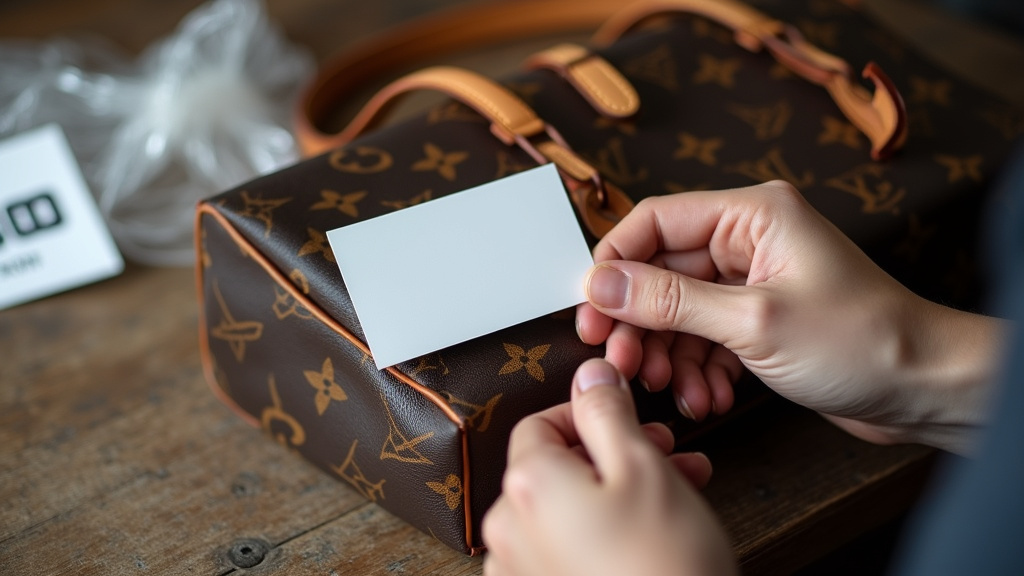
Some warnings don’t require a magnifying glass. They are broad, glaring signs that the seller either doesn’t know what they have or is hoping you don’t.
- An authenticity card is included. Louis Vuitton does not issue them. Full stop.
- The bag arrives wrapped in plastic. Handles and hardware are never covered in protective plastic film. They come with a dust bag, sometimes a box, but no plastic.
- The price is unbelievably low. If a $2,500 bag is listed for $400, it’s a $400 fake.
- The seller’s story is overly complex. “My aunt worked at LV and got a discount,” “It’s a floor model,” “It has a small defect.” These are scripts.
- You feel rushed. A legitimate seller of a real bag will give you time and encourage your due diligence.
TL;DR: The easiest red flags are non-physical. No cards, no plastic, no too-good-to-be-true deals, and no pressure. If the seller’s story feels off, the bag probably is too.
Where to Buy (and Authenticate) With Confidence
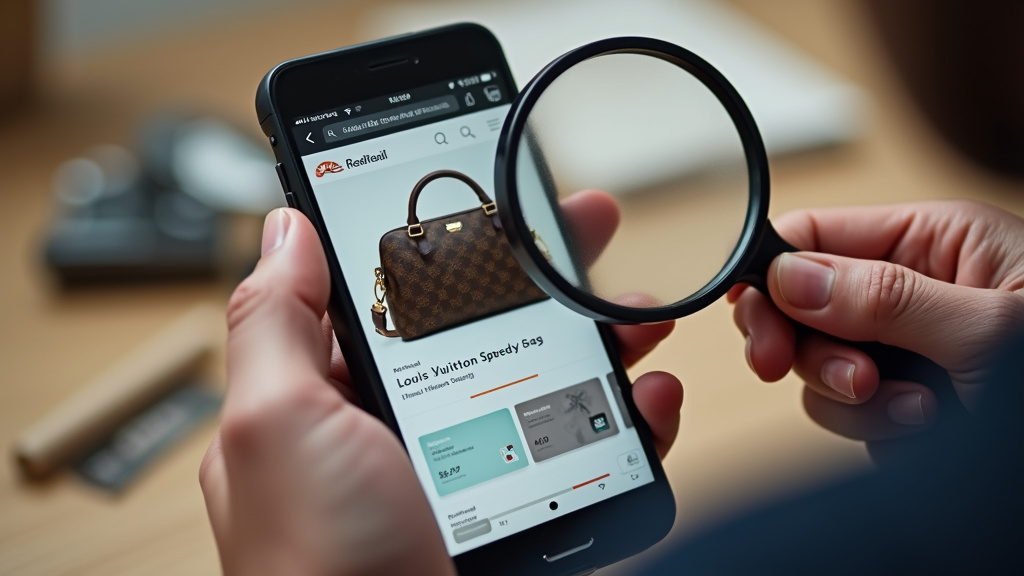
Your best defense is to buy from a source that assumes the authentication risk for you.
First Choice: Buy New from Louis Vuitton.
This is the only 100% guaranteed path. Purchase directly from a Louis Vuitton boutique or their official website. You pay retail, but you get peace of mind and a full warranty.
For Pre-Owned Bags: Use Vetted Resellers.
The secondary market requires trust in a middleman. These platforms employ experts who inspect every bag before sale and offer authenticity guarantees. They are not infallible, but their error rate is far lower than the untrained eye’s.
- The RealReal: Extensive checks and a strong guarantee. Good for a wide selection.
- Vestiaire Collective: Items are shipped to their authentication centers for inspection before reaching you.
- Rebag: Specializes in luxury handbags and has a rigorous authentication process.
If you’re buying from a private seller on eBay, Facebook Marketplace, or Poshmark, you must be your own authenticator. Treat the transaction accordingly. A good practice is to pay with a method that offers buyer protection, like a credit card or PayPal Goods & Services.
When in Doubt, Get a Second Opinion.
For a high-value purchase from a private seller, consider a third-party authentication service. You send them photos (and sometimes the bag), and they provide a professional assessment for a fee. It’s cheap insurance.
TL;DR: Eliminate risk by buying from Louis Vuitton directly or a reputable, guaranteed reseller. For private sales, you are the quality control, so factor in the cost and time of a professional authentication.
Frequently Asked Questions
Does Louis Vuitton have a serial number?
No. Louis Vuitton does not use serial numbers. They used date codes (pre-2021) and now use RFID chips (post-2021), but these are for internal production tracking, not unique customer-facing serials.
Can the LV store authenticate my bag?
Louis Vuitton boutiques have a strict policy of not providing authentication services to the public. Their staff will not examine a bag you bring in and give you a verdict. They can only verify bags they sell directly.
Do all real Louis Vuitton bags have a date code?
Only bags manufactured before approximately March 2021 have a date code. Bags made after that have an RFID chip instead. The absence of a date code on a modern bag is not a red flag.
What if the monogram is upside down on one side?
This is correct for some styles, particularly classic shapes like the Speedy or Keepall made from a single piece of canvas. The pattern is continuous, so it naturally appears upside down on one side. This is a sign of authentic construction, not a flaw.
Is it true nail polish remover can test a real LV?
This is a destructive and unreliable myth. While acetone might strip cheap paint from a fake, it can also damage the protective coating on real canvas. Do not do this. Proper authentication is non-destructive.
The Bottom Line
Knowing if a Louis Vuitton bag is real is a skill built on observation, not hope. Forget the magic tricks and the single “silver bullet” test. Trust the tangible evidence: the embossed texture under your thumb, the five precise stitches on a handle tab, the cold weight of solid brass hardware with slotted screws.
The market is flooded with convincing fakes. They win when you get excited and stop looking. Slow down. Use this checklist. When the price tempts you to skip a step, that’s the moment you need to double-check. Your best tool isn’t a magnifying glass, it’s patience. Buy the seller first, then the bag. And when a deal feels too good to be true, it’s always, always a fake.
{
“@context”: “https://schema.org”,
“@type”: “HowTo”,
“name”: “How to Authenticate a Louis Vuitton Bag”,
“totalTime”: “PT15M”,
“tool”: [
{
“@type”: “HowToTool”,
“name”: “A bright light or magnifying glass”
},
{
“@type”: “HowToTool”,
“name”: “Your sense of touch”
}
],
“step”: [
{
“@type”: “HowToStep”,
“name”: “Inspect the Monogram Pattern”,
“text”: “Run your fingers over the LV logos and flowers. They should be embossed, not just printed. The pattern should be symmetrical and continuous, with the LV logo kept whole wherever possible.”
},
{
“@type”: “HowToStep”,
“name”: “Check the Stitching”,
“text”: “Look for perfect, even saddle stitching. On key models like the Speedy or Neverfull, count exactly five stitches across the leather handle tabs. Any deviation is a red flag.”
},
{
“@type”: “HowToStep”,
“name”: “Examine the Hardware”,
“text”: “All screws should be flat-head (minus) slotted screws, never Phillips (plus) head. Zipper pulls should feel substantial, not hollow, and bear crisp, deep engravings.”
},
{
“@type”: “HowToStep”,
“name”: “Locate and Decode the Date Code”,
“text”: “For bags made before March 2021, find the leather date code inside a pocket or seam. The code’s format must match the ‘Made in’ stamp location. A mismatch is a sure sign of a fake.”
},
{
“@type”: “HowToStep”,
“name”: “Feel the Materials”,
“text”: “Authentic monogram canvas has a slight, rigid texture and a distinct smell of treated canvas and leather. Fake canvas often feels plasticky, shiny, or smells strongly of chemicals.”
}
]
}
{
“@context”: “https://schema.org”,
“@type”: “FAQPage”,
“mainEntity”: [
{
“@type”: “Question”,
“name”: “Does Louis Vuitton have a serial number?”,
“acceptedAnswer”: {
“@type”: “Answer”,
“text”: “No. Louis Vuitton does not use serial numbers. They used date codes (pre-2021) and now use RFID chips (post-2021), but these are for internal production tracking, not unique customer-facing serials.”
}
},
{
“@type”: “Question”,
“name”: “Can the LV store authenticate my bag?”,
“acceptedAnswer”: {
“@type”: “Answer”,
“text”: “Louis Vuitton boutiques have a strict policy of not providing authentication services to the public. Their staff will not examine a bag you bring in and give you a verdict. They can only verify bags they sell directly.”
}
},
{
“@type”: “Question”,
“name”: “Do all real Louis Vuitton bags have a date code?”,
“acceptedAnswer”: {
“@type”: “Answer”,
“text”: “Only bags manufactured before approximately March 2021 have a date code. Bags made after that have an RFID chip instead. The absence of a date code on a modern bag is not a red flag.”
}
},
{
“@type”: “Question”,
“name”: “What if the monogram is upside down on one side?”,
“acceptedAnswer”: {
“@type”: “Answer”,
“text”: “This is correct for some styles, particularly classic shapes like the Speedy or Keepall made from a single piece of canvas. The pattern is continuous, so it naturally appears upside down on one side. This is a sign of authentic construction, not a flaw.”
}
},
{
“@type”: “Question”,
“name”: “Is it true nail polish remover can test a real LV?”,
“acceptedAnswer”: {
“@type”: “Answer”,
“text”: “This is a destructive and unreliable myth. While acetone might strip cheap paint from a fake, it can also damage the protective coating on real canvas. Do not do this. Proper authentication is non-destructive.”
}
}
]
}