Packing Guide: How to Fold a Jacket in a Suitcase Perfectly
This post contains affiliate links. As an Amazon Associate, we earn from qualifying purchases.
To fold a jacket in a suitcase, use the inside-out shoulder fold: lay the jacket face down, turn one shoulder lining inside out, tuck the opposite shoulder into it, fold the jacket in half lengthwise, then fold it horizontally. This method protects the outer fabric and prevents sharp creases along the lapels and collar. For delicate materials like leather or down, use a modified rolling technique and never fold a jacket that is even slightly damp.
That sequence isn’t just about making the jacket smaller. It’s about locking the structure. The inside-out shoulder creates a soft, rounded bundle where the jacket’s most rigid parts, the shoulder pads and collar, cushion each other instead of pressing into the fabric. Skip that step, and you’re folding rigid shapes against flat panels, which is how deep, stubborn creases get set.
What follows is a breakdown of the three proven folds, the suitcase that actually makes them work, and the specific warnings for materials that break the standard rules.
Key Takeaways
- The inside-out shoulder fold is the default for structured jackets because it uses the jacket’s own padding to prevent sharp creases.
- Never fold a leather, faux leather, or damp jacket using a standard method; leather creases permanently, and moisture sets wrinkles.
- A structured hard-shell suitcase is non-negotiable for protecting a folded jacket; a soft duffel will crush it regardless of your folding skill.
- Down and puffy jackets must be rolled loosely before compression to preserve insulation loft; shake them out and hang them in a steamy bathroom upon arrival.
- Placing the folded jacket at the very top of your packed suitcase, above other soft items, is the final guard against pressure wrinkles.
The Inside-Out Shoulder Fold (Step-by-Step)
This is the method you’ll use for 80% of travel jackets, wool blazers, suit jackets, structured sports coats. Its power is in how it reconfigures the jacket’s architecture.
The goal is to turn the jacket’s stiffest points into protective buffers. By inverting one shoulder, you wrap the hard shoulder pad around the collar of the other side. The lapels then sit inside this padded cocoon, shielded from direct pressure.
The Inside-Out Shoulder Fold: Lay the jacket face down on a flat surface. Reach inside the left shoulder and pull the lining through, turning the shoulder inside out. Take the right shoulder and tuck it neatly into the inverted left shoulder, aligning the seams. Fold the jacket in half vertically by bringing the sleeves together, then fold it in half horizontally from the bottom hem up to the collar.
Here is the full sequence with the consequences of skipping each step.
- Lay the jacket flat, face down. Smooth out the back, sleeves, and lapels. If you start with the jacket bunched or inside-out, you’ll trap wrinkles from the first move.
- Turn one shoulder inside out. Push your hand into the shoulder’s lining and pull it through until the suit’s outer fabric is tucked inside. This creates a padded shell.
- Tuck the other shoulder inside. Nest the non-inverted shoulder into the cavity of the inverted one. The two shoulders should fit together like stacked bowls. Messy tucking leaves the lapels exposed.
- Fold vertically. Bring the sleeve sides together, creating a long, narrow bundle. Straighten the sleeves so they lie flat. Crooked vertical folds cause diagonal creases across the back.
- Fold horizontally. Bring the bottom hem up to meet the collar. For a shorter suitcase, you might fold into thirds. Each extra horizontal fold adds a crease line, so use the minimum number your bag allows.
| Step | Action | Why It Works | Risk If Skipped |
|---|---|---|---|
| 1. Inside-Out Shoulder | Invert one shoulder’s lining. | Creates a padded cavity for the opposite shoulder. | Shoulder pads press directly into the jacket’s front, creating a hard dent. |
| 2. Nest & Tuck | Fit the second shoulder into the first. | Locks the collar and lapels inside a protective bundle. | Lapels get bent at a sharp angle, causing a permanent fold line. |
| 3. Vertical Fold | Fold sleeves together lengthwise. | Aligns the jacket’s natural vertical seams. | The jacket twists, resulting in diagonal wrinkles across the back panel. |
| 4. Horizontal Fold | Fold bottom up toward collar. | Minimizes the jacket’s footprint in the suitcase. | Adding a third fold introduces an unnecessary crease line across the jacket’s midsection. |
After folding, slide the jacket into a plastic dry-cleaning bag if you have one. The bag’s slick surface allows other items in your suitcase to slide over the jacket instead of grinding against it. Don’t seal it tight, a little air inside acts as a buffer.
Two Other Folding Methods and When to Use Them
The inside-out fold isn’t a universal law. Some jacket materials and suitcase shapes demand a different approach.
The Rolling Method for Delicate and Non-Structured Jackets
Use this for knit blazers, soft-shell travel jackets, or any jacket without internal padding. It’s also the only safe way to prep a leather jacket for packing.
Rolling distributes stress along a continuous curve instead of concentrating it at a fold line. For leather, this is critical because a sharp fold can leave a permanent crease that no steamer can remove.
How to do it: Lay the jacket face down and smooth it out. Fold the sleeves in towards the back. Starting from the bottom hem, roll the jacket tightly and evenly toward the collar. The tighter and more even the roll, the less it will shift and wrinkle in your bag. Before rolling a leather or faux leather jacket, apply a conditioner like Bickmore Bick 4 to keep the material supple. Then, wrap the rolled jacket in a soft cotton pillowcase, never plastic, to protect the surface.
The Savile Row Fold for Maximum Flatness
This is a more complex, multi-step fold used for very structured suit jackets when you need the flattest possible package. It involves several precise folds and is best for hard-shell suitcases with ample, rigid space.
It’s overkill for most trips and introduces more fold lines. If your jacket has a delicate lining, like vintage silk, the multiple hinge points of the Savile Row fold can stress and tear the lining fabric. Use it only for robust, modern suit jackets in a dedicated suit compartment.
Where this goes sideways: Using the Savile Row fold on a jacket with a delicate silk lining. The stress at the multiple fold points can cause the lining to pull or tear at the seams, a repair that costs more than the trip.
The Jacket and Suitcase Pairing That Actually Works
 Your folding technique is only half of the equation. The suitcase you use is the other half.
A soft-sided duffel bag or unstructured backpack will conform and crush whatever’s inside. The pressure from other items will create wrinkles no fold can prevent. A structured hard-shell suitcase offers a fighting chance. Its rigid walls maintain an internal cavity, protecting the shape of your folded bundle.
Packing order is your final tool. Always place your folded jacket at the very top of your packed suitcase, above other soft items like sweaters or t-shirts. Never place shoes, toiletries, or other hard objects directly on top of it. If your suitcase has compression straps, use them loosely over the jacket. A tight strap will dig a crease across the fabric.
For a short business trip, consider a carry-on suitcase with a dedicated suit compartment. This keeps the jacket isolated and flat. Our general packing a suitcase guide covers the optimal layout to protect all your garments.
Special Cases: Leather, Down, and Damp Jackets
 Standard advice fails here. These materials have specific physical requirements that change the process.
Leather and Faux Leather: These materials have memory. A sharp fold can become a permanent crease. Always condition before travel with a product like Bickmore Bick 4, roll instead of fold, and store in a breathable cloth bag. Never store leather long-term in plastic, as trapped moisture promotes mildew.
Down-Filled & Puffy Jackets: The enemy is compressed insulation. Loosely roll the jacket first to preserve its loft, then place it in a vacuum compression sack. Upon arrival, remove it from the sack immediately and shake it vigorously. Hang it in a steamy bathroom; the moisture will help the down clusters re-expand.
Damp Jackets: This is a hard rule. Folding a wet or damp jacket will set creases dramatically and can cause mildew or water spots. The jacket must be completely, bone-dry before it goes into any suitcase. If you’re in a pinch, roll it in a towel and use a hair dryer on a cool setting, never pack it slightly damp.
What to Do With Your Jacket on Arrival
 Unpack immediately. Reverse the folding process and hang the jacket on a proper hanger. Give it at least an hour in a well-ventilated room; most travel wrinkles will fall out.
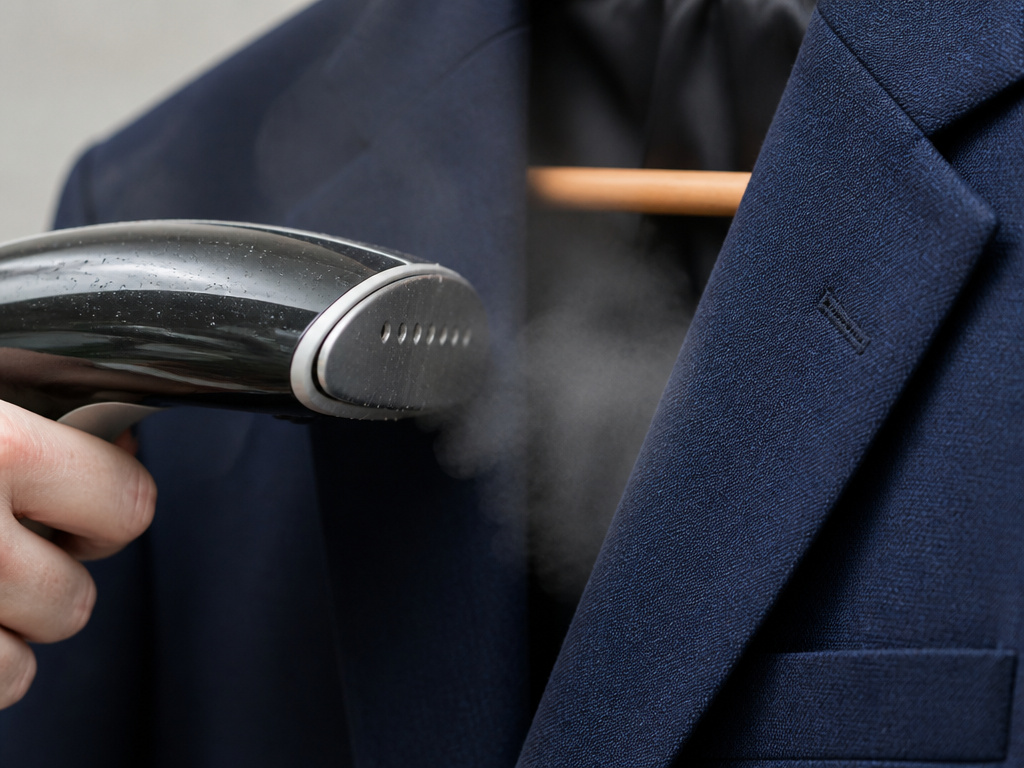
For persistent wrinkles, hang the jacket in the bathroom while you take a hot shower. The steam relaxes the fabric’s fibers. Don’t let the jacket get wet from direct spray. For a more targeted approach, a handheld steamer like the Jiffy J-2000 Steamer is ideal. Hold it about an inch from the fabric and keep it moving to avoid water spots.
If you’re dealing with a full suit, hang both the jacket and trousers together. The weight of the pants can help pull out minor creases. For a standalone blazer or sports coat, the same steam principle applies.
Frequently Asked Questions
Can you fold a suit jacket without wrinkling it?
You can significantly minimize wrinkles, but eliminating them entirely is unlikely. The inside-out shoulder fold is the most effective method because it uses the jacket’s own structure to protect itself from pressure points. The final result also depends on your suitcase type, packing order, and the jacket’s fabric. Wool and synthetic blends tend to resist wrinkles better than linen or cotton.
Is it better to roll or fold a jacket?
It depends on the jacket. Roll knit, leather, or non-structured jackets to avoid sharp crease lines. Fold structured jackets like suit jackets and blazers using the inside-out shoulder method to maintain their shape. Rolling a structured jacket can distort the shoulders and collar over time.
How do you pack a jacket in a suitcase last minute?
Use the quick version of the inside-out fold: turn one shoulder inside out, tuck the other in, fold in half, and place it at the very top of your bag. Smooth it as best you can. Skip the plastic bag if you’re in a rush, but understand that wrinkles are more likely. Never skip the shoulder-tucking step, that’s what prevents the worst creases.
How long does it take for wrinkles to fall out of a jacket?
Most travel wrinkles will release within 1-2 hours of being hung in a room with decent humidity. For deeper creases, steam from a shower or steamer is necessary and works within 15-20 minutes. Jackets folded while damp may have set wrinkles that require professional pressing.
Can I put my jacket in a compression sack?
Only if it’s a down or synthetic puffy jacket designed for compression. For a structured suit jacket, wool blazer, or leather jacket, a compression sack will crush the fabric and cause severe, hard-to-remove wrinkles. The tight, even pressure damages the internal canvas and padding.
The Bottom Line
Fold with the inside-out shoulder method, pack in a hard-shell case, and place the bundle on top. That’s the core sequence. Deviate for leather, down, or damp jackets, those materials have their own rules that override the standard. Your goal isn’t to achieve a perfectly unwrinkled jacket straight from the bag. It’s to arrive with a jacket that looks presentable after a quick hang in the steam. A little planning on the front end saves a lot of ironing at the destination.