What Items Are Prohibited in Carry-On Luggage? Full Guide
This post contains affiliate links. As an Amazon Associate, we earn from qualifying purchases.
What items are prohibited in carry-on luggage? The list includes explosives, flammables, most sharp objects, tools that could be weapons, and liquids over 3.4 ounces. The final decision always rests with the TSA officer at the security checkpoint.
Items prohibited in carry-on luggage include explosives, flammables, most sharp objects over 4 inches, tools that can be used as bludgeons, and any liquid, gel, or aerosol over 3.4 ounces that isn’t medically necessary. The final decision on any item rests with the TSA officer at the checkpoint, regardless of general rules.
Most people think the list is just about knives and liquids. They pack a multi-tool from their workshop or a can of spray sunscreen and assume it’s fine. The real headache starts when you’re standing at the bin table, holding up the line while an officer decides if your cordless drill battery is a hazard.
This guide walks through every major category, explains why the rules exist, and shows you how to pack so you don’t lose your gear or miss your flight.
Key Takeaways
- The TSA officer has final, unquestionable discretion. An item listed as “generally permitted” can still be confiscated if it looks altered, triggers an alarm, or just makes the officer uneasy.
- Lithium batteries, including power banks and spare drill batteries, are strictly carry-on only. A battery in checked luggage is a fire risk in the cargo hold and will get your bag pulled.
- The 3-1-1 rule for liquids is absolute for non-essentials. One quart-sized bag, containers 3.4 ounces or less each. Medically necessary liquids like insulin or baby formula are exempt but must be declared.
- Sharpness is measured from the pivot point. Scissors with blades under 4 inches are okay. Anything longer, or any knife with a fixed blade, goes in checked baggage.
- “Checked only” doesn’t mean “pack it loosely.” Firearms must be unloaded, locked in a hard-sided case, and declared at the airline counter. Ammunition has its own packaging rules.
The Final Decision Belongs to the Officer
You can memorize every item on the TSA’s list. You can pack perfectly. It doesn’t matter. The officer working the X-ray that day has the final say. Their judgment overrides any printed guideline.
If an item looks tampered with, a power bank with a bulging case, a toiletry bottle with a mismatched cap, a tool with modified grips, it’s coming out for inspection. If it triggers the explosive trace detector, you’re having a conversation. If it just looks suspicious in the context of that day’s security directives, it can be denied. This isn’t a theoretical power. I’ve seen brand-new, factory-sealed cordless tool batteries get pulled because the X-ray image was unfamiliar to the officer. You argue, you miss your flight. You comply, you might get the item back if you can exit security and check it. Often, you just lose it.
Common mistake: Assuming a “generally permitted” item is guaranteed passage, the officer can deny anything that appears altered, poses an unseen risk, or simply doesn’t pass the common-sense test. You’ll be left at the checkpoint deciding whether to abandon it or run back to the check-in counter.
TL;DR: The TSA officer’s discretion is absolute. Pack with the assumption that anything unusual or modified will be scrutinized and possibly taken.
The 3-1-1 Liquids Rule (and What It Really Means)
This is the rule everyone knows and half of everyone gets wrong. It’s not a suggestion. It’s the baseline for every non-essential liquid, gel, cream, paste, and aerosol.
Containers must be 3.4 ounces (100 milliliters) or less. All containers must fit comfortably inside one single, clear, quart-sized, zip-top plastic bag. One bag per passenger. Comfortably means you can seal it without forcing it. If you’re mashing the zipper shut, you have too much.
The rule exists because larger volumes could, in theory, be combined to create a threat. The limit is small enough to prevent that. The bag is clear so the officer doesn’t have to open it. They can see the contents in a second.
| Item Type | Carry-On Status | Key Restriction / Note |
|---|---|---|
| Shampoo, Conditioner, Lotion | Allowed | Must follow 3-1-1 rule. |
| Toothpaste, Hair Gel, Sunscreen | Allowed | Must follow 3-1-1 rule. |
| Spray Deodorant / Antiperspirant | Allowed | Aerosol can must be 3.4 oz or less and fit in quart bag. |
| Contact Lens Solution | Allowed | Must follow 3-1-1 rule. |
| Medically Necessary Liquids (Formula, Insulin) | Allowed | Exempt from 3-1-1 rule. Declare for separate screening. |
| Alcohol over 140 proof (70% alcohol) | Prohibited | Too flammable. Check it or leave it. |
The exemption for medically necessary liquids is critical. Formula, breast milk, toddler juice, liquid medications, these don’t need to be 3.4 ounces or fit in the quart bag. You do need to tell the officer you have them. Take them out of your carry-on and place them in a bin for separate screening. A note from a doctor helps, but isn’t always required.
I once watched a traveler try to argue that his 8-ounce bottle of expensive hair conditioner was “medically necessary” for his scalp. The officer wasn’t having it. He had to throw it away. The lesson is simple. If it’s not prescription or for an infant, it follows the 3-1-1 rule. No exceptions.
TL;DR: One quart bag, containers 3.4 oz or less. Medical liquids are exempt but must be declared. Everything else gets tossed.
Sharp Objects and Tools: The 4-Inch Line
The rule here is about what could be used as a weapon in the cabin. It’s a bright line, but people blur it with workshop habits.
Any sharp object with a blade longer than 4 inches from the pivot point is prohibited in carry-on. This includes:
– Fixed-blade knives of any kind.
– Folding knives with blades over 4 inches.
– Box cutters, razor blades (unless in a safety cartridge).
– Ice axes, ice picks.
– Sabers, swords, martial arts weapons.
Scissors are the exception. If the blade is less than 4 inches from the pivot point, they’re allowed. Most household scissors qualify. Your fabric shears from the craft room probably do not.
Tools are a gray area. A screwdriver under 7 inches is generally okay. A wrench or pliers under 7 inches is usually fine. But anything that could be used as a bludgeon, a hammer, a crowbar, a drill motor (not the battery), is prohibited. The TSA’s official prohibited items guide uses the term “club-like” for a reason. If you could swing it to hurt someone, it’s checked baggage only.
Common mistake: Packing a multi-tool with a knife blade over 4 inches in your carry-on. Even if the tool itself is small, the blade length is what counts. That Leatherman Wave stays in your checked bag.
TL;DR: Blade over 4 inches? Check it. Tool looks like you could hit someone with it? Check it. Small scissors and screwdrivers are usually fine.
Lithium Batteries and Power Banks: Carry-On Only, No Debate
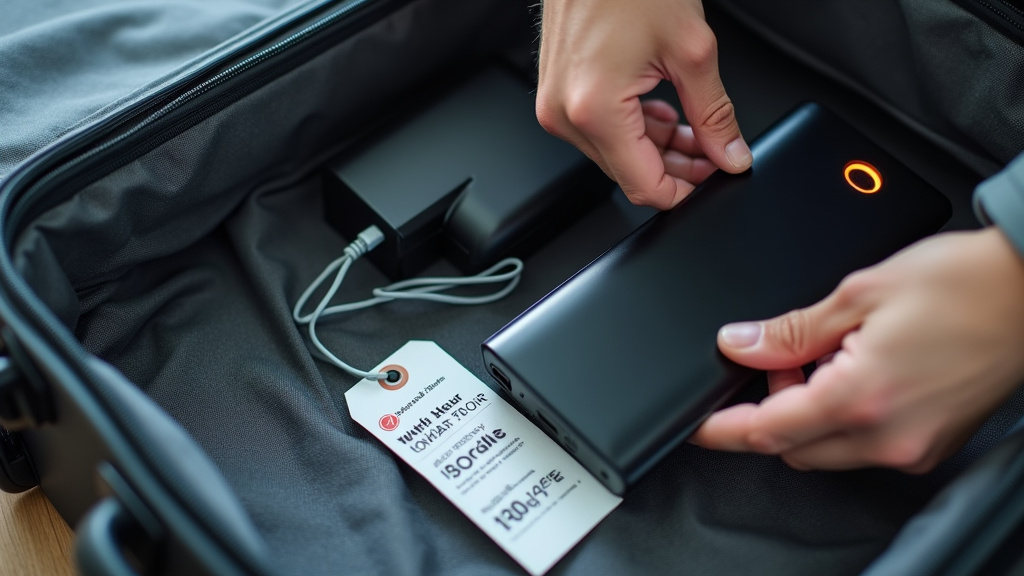
This is the most non-negotiable rule in modern air travel, and for good reason. Lithium-ion batteries can enter a condition called thermal runaway, they overheat and can’t stop, leading to fire. In the cabin, that fire can be seen and fought. In the cargo hold, it’s catastrophic.
The Federal Aviation Administration (FAA) mandates that all spare lithium metal and lithium-ion batteries, along with power banks, must be in your carry-on baggage. This includes the battery for your cordless drill, your camera, your laptop, and your phone charger. The battery inside a device (like a laptop) can stay in the device, but spares must be carried on.
| Battery Type | Carry-On | Checked Baggage | Watt-hour (Wh) Limit |
|---|---|---|---|
| Lithium-ion (spare / loose) | Required | Prohibited | Up to 100 Wh per battery |
| Lithium-ion (installed in device) | Allowed | Allowed | N/A |
| Power Bank / Portable Charger | Required | Prohibited | Up to 100 Wh |
| Lithium-metal (spare, non-rechargeable) | Required | Prohibited | Up to 2 grams of lithium |
The watt-hour rating is usually printed on the battery. Most consumer power tools and laptops are under 100 Wh. Some professional camera batteries or high-capacity power banks exceed this. For those between 100 and 160 Wh, you need airline approval. Anything over 160 Wh is prohibited on passenger aircraft. You protect the aircraft, and you protect your expensive battery from being confiscated.
Flammables and Explosives: The Absolute No-Go List
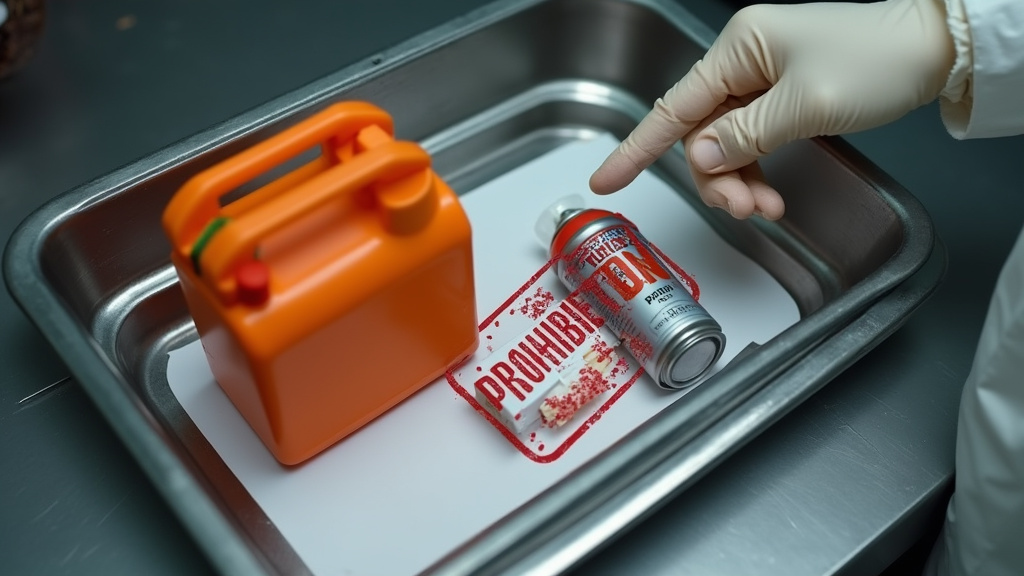
Some things are banned because they’re inconvenient. These are banned because they can bring down a plane. There is no discretion, no gray area, and no “maybe if you pack it right.”
Explosives, flammable liquids, and gases are completely prohibited in both carry-on and checked baggage. This includes:
– Lighter fluid, strike-anywhere matches, fireworks, flares.
– Aerosols not for personal care (like spray paint, WD-40).
– Engine-powered equipment (like a chainsaw or leaf blower) with any fuel or vapors left in the tank.
Camping stoves must be completely purged of fuel. That means the fuel line is dry and the tank is empty. Even a faint odor of gasoline is enough for the item to be rejected. I learned this the hard way trying to fly with a supposedly “cleaned” camp stove. The sniff test at baggage check failed. I had to leave it behind.
Aerosol insecticides are a special case. They are prohibited in carry-on. They may be allowed in checked baggage if they are not labeled as hazardous material (HAZMAT). If the can has a flame symbol or a “danger” warning, it’s staying on the ground.
Firearms and Ammunition: Checked, Declared, and Locked
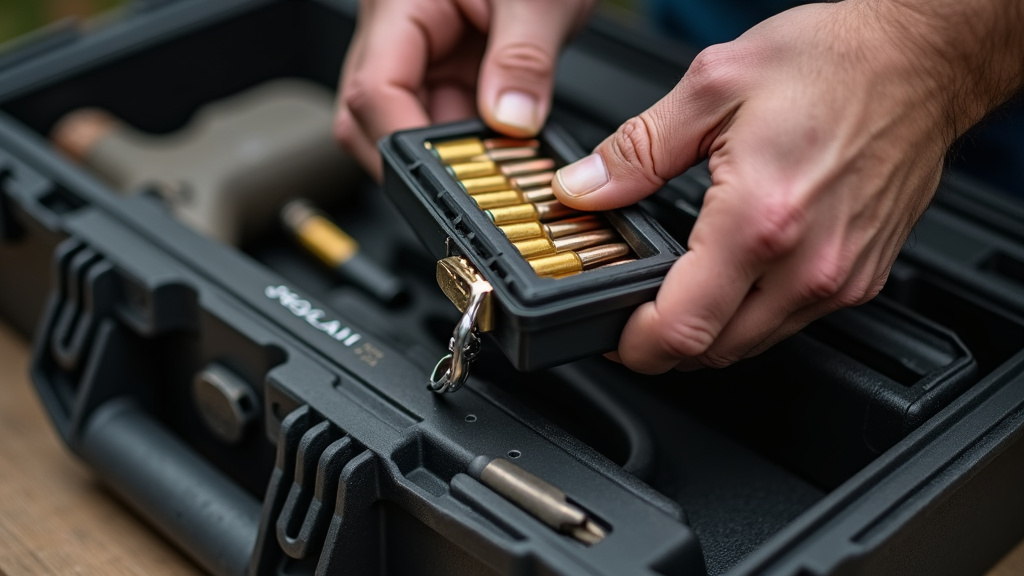
Firearms are the most regulated item you can travel with. The rules are precise, and violating them isn’t just about missing your flight, it’s a federal offense with serious penalties.
The firearm must be unloaded. The ammunition must be packed in a fiber, wood, or metal box, or in the original packaging. They can be in the same hard-sided case as the firearm, but not loaded in it. The case must have a lock that only you have the key or combination to. TSA-approved locks are recommended, but any sturdy lock works.
You must declare the firearm and ammunition to your airline at the ticket counter. You fill out a card, they verify the case is locked, and it goes into the baggage system. Do not, under any circumstance, bring a firearm to the security checkpoint. That’s how you get arrested.
I helped a friend ship his hunting rifle for an out-of-state trip. We followed the rules to the letter: unloaded, locked Pelican case, ammo in its original box inside the same case, declared at the counter. It took an extra 20 minutes. The alternative, trying to sneak it through, would have cost him thousands in fines and his right to own firearms.
Powders and Granular Materials
For flights entering the United States, powder-like substances over 350 milliliters (about 12 ounces) are subject to additional screening. This includes things like protein powder, powdered milk, spices, sand, and some cosmetics.
If you’re carrying a large container of powder, be prepared to have it opened and tested. If the officer can’t determine what it is (or if it tests positive for certain substances), it will not be allowed through. The best practice is to keep powders under the 12-ounce limit or pack them in checked luggage where the rules are more lenient.
Sports Equipment and Blunt Objects
This category is about intent. A baseball bat is sports equipment. It’s also a club. The TSA rules on the side of caution.
Items like baseball bats, golf clubs, pool cues, hockey sticks, and ski poles are prohibited in carry-on baggage. They must be checked. Sometimes, you can get away with a collapsible trekking pole if the tip is blunt, but it’s a gamble. Rollerblades and ice skates are generally allowed in carry-on, but the airlines might have their own size restrictions.
Check with your specific carrier. A Delta carry-on policy might be more restrictive than TSA guidelines on oversized sports items.
What Happens to a Prohibited Item?
You have three options if an item is prohibited at the checkpoint:
1. Surrender it to TSA for destruction. This is the most common outcome for small, inexpensive items like pocket knives or oversized shampoo bottles.
2. Return it to your car. If you have time and your vehicle is close, you can exit security, return the item, and go back through. This only works if you have a lot of time before your flight.
3. Mail it to yourself. Some airports have postal centers or shipping stores past security. It’s expensive and slow.
Some airports offer a “mail-back” program right at the checkpoint. You pay a fee, and they ship the item to your home. It’s not cheap, but it beats losing a $150 multi-tool. The key is to know your airline’s specific TSA rules for pins on bags and other accessories before you pack, not after they’re confiscated.
International Variations: Canada and Beyond
The TSA rules apply to flights within, into, or out of the United States. Other countries have their own agencies with similar, but not identical, rules.
For example, the Canadian Air Transport Security Authority (CATSA) generally follows the 3-1-1 rule. However, for flights that are pre-cleared for the U.S. while still in Canada, you are subject to TSA rules once you pass through pre-clearance. This can be confusing. A knife might be allowed by CATSA for a domestic Canadian flight, but the moment you’re in the pre-clearance area for a U.S.-bound flight, TSA rules apply, and that knife could be confiscated.
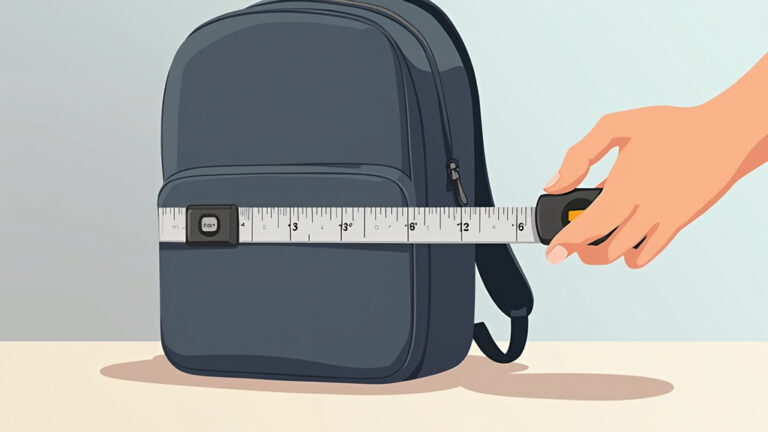
Always check the rules of your departure country and your destination. A backpack as carry-on luggage might be fine on a short hop, but its contents must comply with the strictest set of regulations you’ll encounter on your journey.
Packing to Avoid Problems
A smooth security experience is about preparation, not luck. Use the TSA’s own complete carry-on guide as your final checklist.
Layer items in your bag. Don’t stack everything on top of each other. Wrap cords neatly. The X-ray operator needs a clear, uncluttered image. A jumbled mess of wires and tools looks suspicious and guarantees a hand search.
Put your quart bag of liquids and your large electronics (laptops, tablets) in an easy-to-reach outer pocket. You’ll need to pull them out and place them in a bin. Medically necessary liquids go in their own separate, easy-to-grab pouch.
If you’re checking a bag with tools or sports equipment, review your airline checked baggage policies for weight and size limits. An overweight bag with a prohibited item inside is a double problem.
Finally, give yourself time. Rushing leads to mistakes. You forget about the water bottle in your side pocket or the spare battery buried in your backpack. A calm walk to security beats a frantic sprint to your gate any day.
Frequently Asked Questions
Can I bring a multi-tool on a plane?
It depends entirely on the blade length. If the knife blade is 4 inches or less from the pivot point, and the tool is less than 7 inches long overall, it is generally permitted in carry-on. Any tool with a blade over 4 inches must go in checked baggage. When in doubt, check it.
Are nail clippers allowed in carry-on?
Yes. Nail clippers, nail files, and emery boards are permitted. Even the small attached nail cleaner on some clippers is allowed. The rule focuses on blades that could be used as weapons.
What about electronic cigarettes or vapes?
E-cigarettes, vapes, and spare lithium batteries for them must be in your carry-on. They are prohibited in checked baggage due to the fire risk. You cannot use them on the plane, and you should take precautions to prevent accidental activation.
Can I pack food in my carry-on?
Solid food like sandwiches, fruit, and baked goods is allowed. Spreads like peanut butter, yogurt, or jelly are considered gels/liquids and must comply with the 3-1-1 rule if over 3.4 ounces. Ice packs must be completely frozen solid when going through screening.
Is a power bank a “portable electronic device” for the battery rule?
Yes. A power bank (portable charger) is considered a spare lithium-ion battery. It must be in your carry-on baggage. There is no exception. The same goes for the spare battery for your cordless drill or camera.
What happens if I accidentally bring a prohibited item?
If you accidentally bring a prohibited item to the checkpoint, the TSA officer will find it. You will be given the options to surrender it, return it to your car, or mail it to yourself. You will not be fined for an honest mistake, but deliberately trying to conceal a prohibited item can result in penalties and law enforcement involvement.
The Bottom Line
Knowing what’s prohibited in your carry-on is more than a list. It’s understanding the intent behind the rules: preventing threats in the cabin where they can’t be managed. Liquids are limited, batteries are kept accessible, and weapons are eliminated.
The most powerful tool you have is the TSA’s own website. Before you pack something from your workshop, your camping gear, or even your toiletry bag, look it up. A two-minute search beats a twenty-minute argument at the checkpoint. Pack smart, declare what you must, and assume the officer’s judgment is final. That’s how you keep your gear and your travel plans intact.
{
“@context”: “https://schema.org”,
“@type”: “HowTo”,
“name”: “How to Identify Items Prohibited in Carry-On Luggage”,
“totalTime”: “PT15M”,
“tool”: [
{
“@type”: “HowToTool”,
“name”: “Quart-sized clear plastic zip-top bag”
},
{
“@type”: “HowToTool”,
“name”: “Travel-sized containers (3.4 oz / 100ml or less)”
},
{
“@type”: “HowToTool”,
“name”: “TSA-approved lock for checked firearm case”
}
],
“step”: [
{
“@type”: “HowToStep”,
“name”: “Separate and bag all liquids, gels, and aerosols”,
“text”: “Place all liquids, gels, and aerosols in containers of 3.4 ounces (100ml) or less inside one quart-sized, clear, zip-top bag. This is the TSA’s 3-1-1 rule.”
},
{
“@type”: “HowToStep”,
“name”: “Remove lithium batteries from checked bags”,
“text”: “Take all spare lithium-ion batteries, power banks, and devices containing these batteries out of your checked luggage. They must travel in your carry-on.”
},
{
“@type”: “HowToStep”,
“name”: “Identify and pack sharp objects in checked luggage”,
“text”: “Move all sharp objects longer than 4 inches, including knives, box cutters, and most multi-tools, into your checked bag. Scissors under 4 inches from the pivot point are allowed in carry-on.”
},
{
“@type”: “HowToStep”,
“name”: “Declare firearms and ammunition at check-in”,
“text”: “If traveling with a firearm, ensure it is unloaded, locked in a hard-sided case, and declared to your airline at the ticket counter. It is strictly prohibited in carry-on baggage.”
},
{
“@type”: “HowToStep”,
“name”: “Present medically necessary liquids separately”,
“text”: “Remove formula, breast milk, juice, and medications exceeding 3.4 ounces from your quart bag. Inform the TSA officer for separate screening.”
}
]
}
{
“@context”: “https://schema.org”,
“@type”: “FAQPage”,
“mainEntity”: [
{
“@type”: “Question”,
“name”: “Can I bring a multi-tool on a plane?”,
“acceptedAnswer”: {
“@type”: “Answer”,
“text”: “It depends entirely on the blade length. If the knife blade is 4 inches or less from the pivot point, and the tool is less than 7 inches long overall, it is generally permitted in carry-on. Any tool with a blade over 4 inches must go in checked baggage. When in doubt, check it.”
}
},
{
“@type”: “Question”,
“name”: “Are nail clippers allowed in carry-on?”,
“acceptedAnswer”: {
“@type”: “Answer”,
“text”: “Yes. Nail clippers, nail files, and emery boards are permitted. Even the small attached nail cleaner on some clippers is allowed. The rule focuses on blades that could be used as weapons.”
}
},
{
“@type”: “Question”,
“name”: “What about electronic cigarettes or vapes?”,
“acceptedAnswer”: {
“@type”: “Answer”,
“text”: “E-cigarettes, vapes, and spare lithium batteries for them must be in your carry-on. They are prohibited in checked baggage due to the fire risk. You cannot use them on the plane, and you should take precautions to prevent accidental activation.”
}
},
{
“@type”: “Question”,
“name”: “Can I pack food in my carry-on?”,
“acceptedAnswer”: {
“@type”: “Answer”,
“text”: “Solid food like sandwiches, fruit, and baked goods is allowed. Spreads like peanut butter, yogurt, or jelly are considered gels/liquids and must comply with the 3-1-1 rule if over 3.4 ounces. Ice packs must be completely frozen solid when going through screening.”
}
},
{
“@type”: “Question”,
“name”: “Is a power bank a “portable electronic device” for the battery rule?”,
“acceptedAnswer”: {
“@type”: “Answer”,
“text”: “Yes. A power bank (portable charger) is considered a spare lithium-ion battery. It must be in your carry-on baggage. There is no exception. The same goes for the spare battery for your cordless drill or camera.”
}
},
{
“@type”: “Question”,
“name”: “What happens if I accidentally bring a prohibited item?”,
“acceptedAnswer”: {
“@type”: “Answer”,
“text”: “If you accidentally bring a prohibited item to the checkpoint, the TSA officer will find it. You will be given the options to surrender it, return it to your car, or mail it to yourself. You will not be fined for an honest mistake, but deliberately trying to conceal a prohibited item can result in penalties and law enforcement involvement.”
}
}
]
}