How Big Can a Carry-On Duffel Bag Be? | Official Size Guide
This post contains affiliate links. As an Amazon Associate, we earn from qualifying purchases.
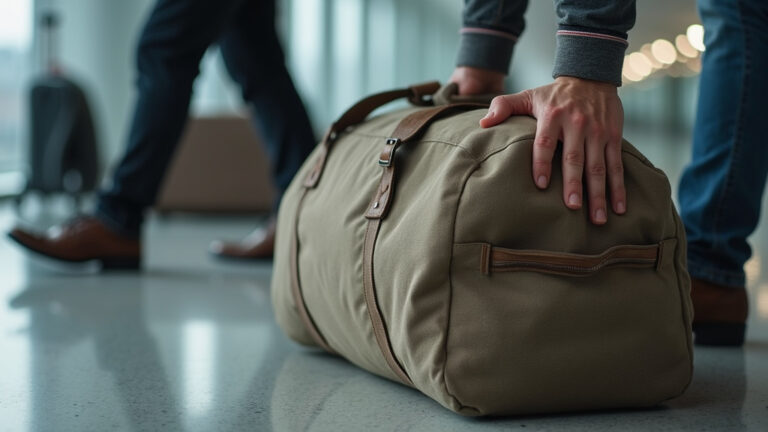
A carry-on duffel bag can be up to 22 x 14 x 9 inches for most US domestic airlines, aligning with standard overhead bin dimensions. International and budget carriers often enforce stricter limits, typically 21.5 x 15.5 x 9 inches. Always verify your specific airline’s size rules, as these are the maximum allowable dimensions.
A carry-on duffel bag can typically be up to 22 x 14 x 9 inches for most US domestic flights, but the real answer depends entirely on your airline and how you pack it. International rules differ, budget carriers tighten the screws. This guide gives you the hard numbers and stops the guesswork.
Key Takeaways
- There is NO single ‘TSA size limit’ for carry-ons. The TSA handles security, not baggage size. Your airline sets the rules.
- The standard US carry-on size is 22″ x 14″ x 9″. This includes handles and wheels. Most major US airlines use this or a close variation.
- International carry-on sizes are often smaller. Think 21.5″ x 15.5″ x 9 inches or a ‘linear inch’ limit around 45 inches total.
- Duffel bags have a secret weapon: flexibility. A soft-sided 35L duffel packed right often fits where a rigid 22″ suitcase won’t.
- Always check your specific airline’s policy before you fly. This is the one rule that matters above all others.
The Real Carry-On Size Limits (By Airline)
The idea of one universal carry-on size is a travel myth. Here’s what you’re actually working with.
Domestic US Airline Policies (Major Carriers)
Most large US airlines have converged on a similar standard, but the devil is in the details.
- American, Delta, United, Alaska, JetBlue: 22″ x 14″ x 9″ (56 x 36 x 23 cm). This is the standard. Weight limits usually don’t exist for these airlines as long as you can lift the bag into the overhead bin.
- Southwest Airlines: 24″ x 16″ x 10″ (61 x 41 x 25 cm). Southwest’s allowance is famously generous. Still, no weight limit for carry-ons.
- Frontier & Spirit: Check your fare class! These budget airlines often restrict Basic Economy fares to one personal item only. If you pay for a carry-on, their size limit is usually 24″ x 16″ x 10″.
- Hawaiian Airlines: 22″ x 14″ x 9″, but with a 25-pound weight limit for carry-ons.
TL;DR: For most domestic US travel, target a bag under 22″ x 14″ x 9″. If flying Southwest, you get a couple extra inches. Budget airline passengers must read the fine print.
International Carry-On Sizes (A Different Ball Game)
Travel abroad? The rules change, often getting stricter.
-
Many international and European airlines use linear inch limits. You add the bag’s height, width, and depth. If the sum is under their limit, you’re good.
-
British Airways, Virgin Atlantic, Air France: 22″ x 18″ x 10″ or approximately 45 linear inches.
- Lufthansa, Swiss, Austrian: 21.7 x 15.7 x 9 inches (55 x 40 x 23 cm) / Max. 8 kg** (17.6 lbs) weight.
- Qatar Airways, Emirates, Ethiad: Around 22″ x 15″ x 8 inches with a strict 15 lbs (7 kg) weight limit.
- Asian Airlines (ANA, JAL, Singapore Air): Often smaller, like 21.5″ x 15.5″ x 7.5 inches with tight weight limits (15-22 lbs).**
Common mistake: Assuming your US-sized bag will fly in Europe or Asia. It often won’t. Always verify.
The Personal Item vs. Carry-On Distinction
This is crucial for duffel bags. Airlines allow one carry-on and one personal item.
- Carry-On: Goes in the overhead bin. Subject to the size limits above.
- Personal Item: Must fit under the seat in front of you. Typical limits: 18″ x 14″ x 8 inches. Think laptop bag, large purse, or very small duffel.
A packed 30-liter duffel might qualify as a personal item if it’s soft enough to squash under the seat. A 40-liter duffel almost certainly counts as a carry-on.
Why Duffel Bags Are Great Carry-Ons (The Soft-Sided Advantage)
A hard-shell spinner suitcase is rigid. A duffel bag is malleable. This flexibility is its superpower for carry-on compliance.
- Compression is Key: You can press out air and reshape a soft duffel to fit an overhead bin sizer or a stuffed under-seat space. A suitcase won’t give.
- Forgiving on Bulges: Sizers measure at the widest points. A protruding handle on a suitcase fails. A duffel’s fabric bulges can often be pushed in.
- Lighter Weight: Less structure means less empty weight, leaving more room for your stuff under weight limits.
The trade-off? Less protection for fragile items and no built-in organization. For most travelers, the trade is worth it.
How To Accurately Measure Your Duffel Bag
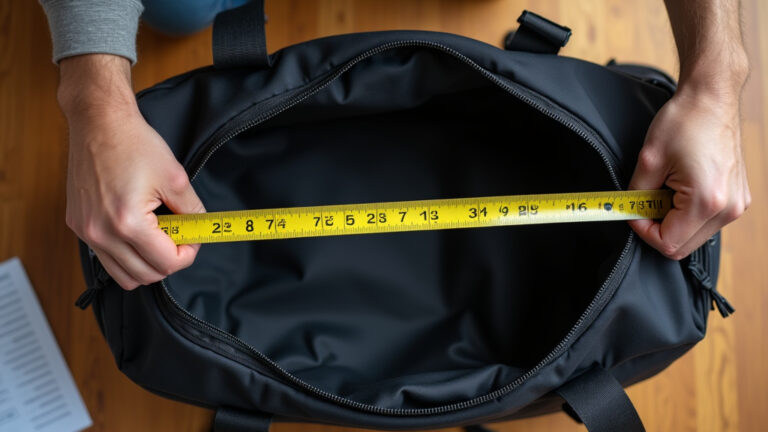
You can’t measure an empty duffel. You must measure it packed as you intend to fly.
Step-by-Step Measuring Guide
Tools You’ll Need: A tape measure, a packed bag, and a flat surface.
- Pack Your Bag with what you’ll actually travel with. Don’t skimp.
- Place it on a Flat Surface like the floor. Let it settle into its natural packed shape.
- Measure Length: Find the longest point, tip to tail. Include any end caps.
- Measure Width: Measure across the bag at its widest part. Include side pockets if they protrude.
- Measure Height/Depth: Measure from the bottom to the highest point. Include the handles. This is where most people fail.
> Common mistake: Forgetting to include handles and wheels. If your bag has them, they count toward the total dimensions. Period.
What About Weight Limits?
While US majors are often lenient, international and budget airlines are not. Weight limits are real.
- No-Limit Airlines (Domestic): American, Delta, United, Alaska, Southwest.
- Strict Airlines (International/Budget): Many cap carry-ons at 15–22 lbs (7–10 kg). Hawaiian (25 lbs),Frontier/Spirit (35 lbs for paid carry-ons).
If you have a weight limit, every ounce on the bag itself is one less for your gear. Duffels win here again.
Expert Packing Tips To Ensure Compliance
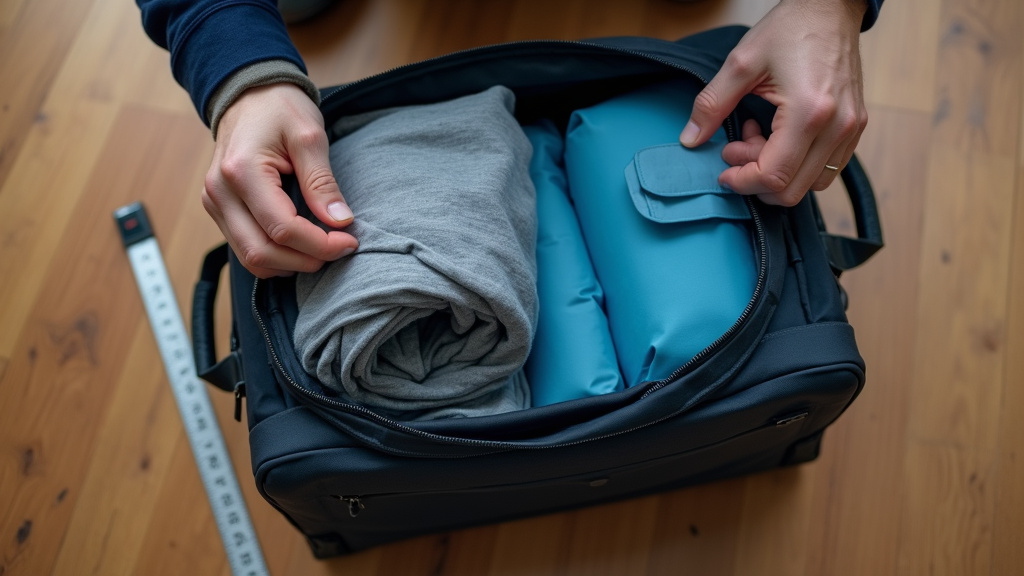
The right bag is half the battle. Packing it correctly wins the war.
- Start with a Compliant-Sized Bag: Buy a duffel designed for carry-on use. Look for tags like “22-inch carry-on compliant.”
- Use Packing Cubes: They compress clothes and create a more rectangular, sizer-friendly shape inside your soft bag.
- Heavy Items in the Bottom: This keeps the bag’s center of gravity low and prevents top-heaviness that makes it fall over in the bin.
- Wear Your Bulkiest Items: If you’re close on space, wear your jacket and boots on the plane.
- Do the ‘Sizer Test’ at Home: Make a box with your bag’s maximum dimensions. If it fits easily, you’re golden.
A note from experience: I’ve seen a 38-liter hiking backpack fit as a carry-on because it was packed solid and shaped well. I’ve also seen a 32-liter duffel get gate checked because it was loosely packed and bulged like a overstuffed pillow. Packing discipline matters more than the liter tag.
Frequently Asked Questions
Can a 40-liter duffel bag be a carry-on?
Yes, but it’s at the top end. A 40L duffel must be packed very efficiently to stay within 22″ x 14″ x 9″. It will not work as a personal item.
Do airlines weigh carry-on bags?
They can, and often do on international routes or with budget airlines at the gate. US domestic flights rarely weigh them unless the bag looks obviously massive.
What if my bag is slightly too big?
If it’s soft-sided, you have room in the overhead bin, it will likely slide through. If the gate agent is strict or uses a sizer, they may gate-check it for a fee. Don’t risk it with budget airlines.
Is a duffel bag a personal item or a carry-on?
It can be either, depending entirely on its size when packed. A small 25-liter duffel squished under a seat is a personal item. A full 40-liter duffel is a carry-on.
The Bottom Line
So, how big can a carry-on duffel bag be? The official answer is check your airline’s website. The practical answer is that a well-packed, 35-40 liter soft-sided duffel will comply with most US carry-on policies. Your margin for error shrinks on international and budget flights.
The duffel’s flexibility is its greatest asset. Use it. Pack smart, measure accurately, and always verify the rules for your specific ticket. This way, your duffel walks on the plane with you, every time.