Can a Teacher Search Your Backpack? Your Rights Explained
This post contains affiliate links. As an Amazon Associate, we earn from qualifying purchases.
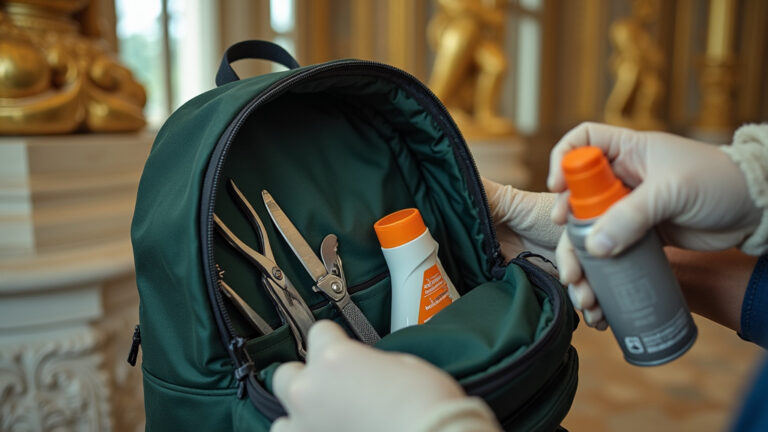
Yes, a teacher or school administrator can search your backpack, but only under specific legal conditions. The Fourth Amendment protects you from unreasonable searches, but in public schools, officials need only “reasonable suspicion”, a lower standard than the “probable cause” police require, that you’ve violated a school rule or law. This suspicion must be based on specific facts, not a rumor or a hunch, and the search’s scope must relate directly to that suspicion.
Most people think their backpack is a private fortress at school. They’re wrong. The legal ground shifts the moment you walk through the school doors, and confusing that shift is how students get into trouble.
This guide walks through exactly when a search is legal, what “reasonable suspicion” really means on a Tuesday morning, and the concrete steps you take if a teacher reaches for your bag.
Key Takeaways
- School officials need reasonable suspicion, not probable cause, to search your backpack. A specific fact, like smelling smoke or a reliable tip, is required.
- Lockers are school property and often have different, looser rules than your personal backpack. Assume they are not private.
- If a police officer or School Resource Officer (SRO) conducts the search, the stricter “probable cause” standard typically applies.
- Never physically resist a search. Verbally state you do not consent, ask for another adult witness, and document everything immediately after.
- Strip searches or highly intrusive searches require a much higher level of suspicion and are almost never justified for minor infractions.
The Legal Standard: Reasonable Suspicion vs. Probable Cause
Your rights at school are not the same as your rights on the street. The 1985 Supreme Court case New Jersey v. T.L.O. set the precedent that defines school searches today. It created a balancing act between a student’s privacy and a school’s need to maintain safety and order.
The result is the reasonable suspicion standard. It’s lower than the probable cause standard police need for a search warrant.
A school official must have specific, articulable facts that would lead a reasonable person to believe a student has violated or is violating either the law or a school rule. The search must be justified at its inception and reasonable in scope.
Think of it this way. Probable cause means it’s more likely than not that a crime occurred. Reasonable suspicion is a reasonable guess based on observable facts. A teacher seeing you pass a small plastic bag to another student in the hallway is a specific fact. A rumor from another student that you might have something is not.
TL;DR: School officials can search based on a reasonable guess backed by facts, not a full police-level investigation.
What Does “Reasonable in Scope” Mean?
The search must match the suspicion. If a teacher hears your bag beep and suspects a phone, they can search for the phone. They cannot then empty every pocket to look for a vape pen unless they have a separate, specific reason to suspect you have one.
Searching a small, zippered pouch inside your backpack for a missing calculator is reasonable. Dumping your entire backpack and shaking out every notebook and pencil case over a rumor about a missing pen is not.
| Suspicion | Reasonable Scope | Unreasonable Overreach |
|---|---|---|
| Smell of marijuana | Searching backpack compartments, outer pockets | Strip search, cavity search |
| Report of a stolen phone | Looking in main compartment, checking your phone’s serial number | Reading text messages, searching cloud storage |
| Loud metallic clang from bag | Inspecting for weapons, checking heavy objects | Removing and inspecting individual sheets of paper |
The line is physical. It’s about the item and the place it could logically be. A search that starts reasonable can become unreasonable if it expands without new facts.
What is the “Reasonable Suspicion” Standard?
This is the core of the issue. Reasonable suspicion is not a feeling. It’s a factual basis.
Let’s break it down with real examples from school hallways.
- Specific Observable Fact: A teacher sees you pull a vape from your jacket pocket and put it in your backpack before class. That’s a direct observation.
- Reliable Report: Another student, who has never given false information, tells a principal they saw you with a knife in your bag earlier that day.
- Sensory Evidence: A teacher or administrator smells cigarette smoke or marijuana coming from your general area, and your bag is the closest likely source.
What does not constitute reasonable suspicion?
- A general hunch or “gut feeling” from a staff member.
- An anonymous tip with no way to verify its credibility.
- Your reputation or past disciplinary history, by itself.
- Refusing to consent to a search. Saying “no” is not grounds for a search.
The ACLU of Massachusetts provides a clear, state-specific breakdown of these standards in their student search legal rights guide, which aligns with the federal framework.
Common mistake: Assuming a rumor is enough, a teacher needs a specific fact tied to you, not hallway gossip. Acting on a rumor alone can invalidate the search and any evidence found.
Lockers vs. Backpacks: The Privacy Difference
This trips up a lot of students. Your locker is usually considered school property. The school owns it, lends it to you, and retains a master combination or key. Your backpack is your personal property.
Most school handbooks state this explicitly. They reserve the right to inspect lockers at any time, with or without you present, and with or without individualized suspicion. Random locker checks are common and generally legal.
Your backpack is different. It travels with you and holds your most personal items. Courts have consistently granted it a higher expectation of privacy. A school official needs individualized reasonable suspicion to search your specific backpack.
The practical takeaway? Don’t store anything in your locker you wouldn’t want a vice principal to see during a random sweep. Treat your backpack as your private space, but know it’s not immune.
When Police or SROs Are Involved
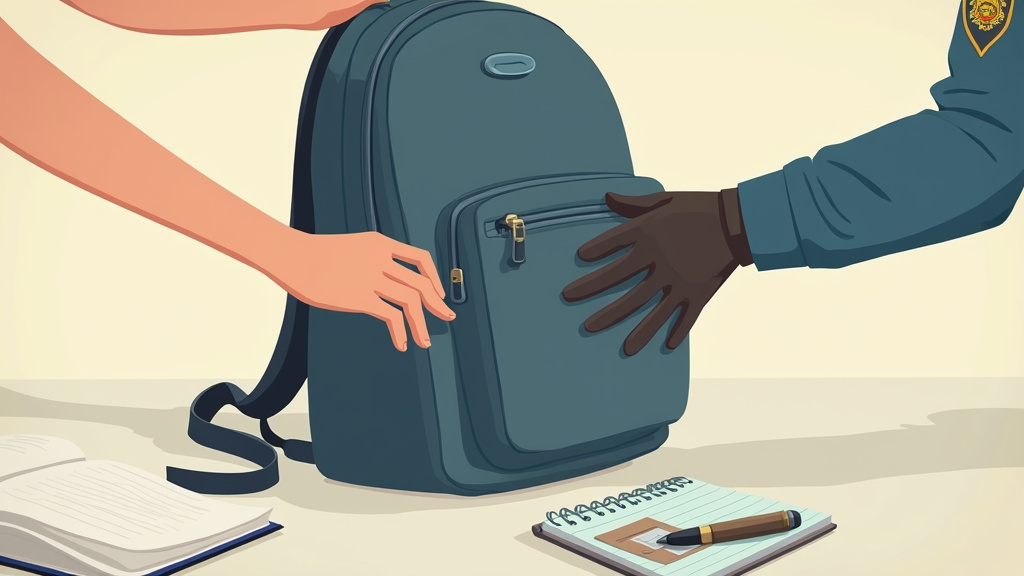
The rules change when the person searching is a sworn police officer or a School Resource Officer acting in a law enforcement capacity. They are not held to the lower “reasonable suspicion” standard that applies to teachers and principals.
A police officer typically needs probable cause to search you or your belongings, the same standard required on the street. There are exceptions, like if the school official finds something during a reasonable suspicion search and then calls the officer, but the starting line is higher.
If an SRO is acting as an agent of the school, for example, helping maintain order under the principal’s direction, the reasonable suspicion standard might still apply. If they are conducting a criminal investigation, probable cause is needed. It’s a grey area, but erring on the side of the higher standard protects you.
Always ask, “Are you a police officer?” If the answer is yes, your rights have shifted. You have the right to remain silent and the right to an attorney. Use them.
What to Do During a Backpack Search

Your actions in the moment matter. They can protect you legally later.
- Stay Calm and Do Not Resist. Physically blocking a search or grabbing your bag back is a surefire way to face additional disciplinary action for defiance or obstruction. Keep your hands at your sides.
- Verbally Refuse Consent. Say clearly, “I do not consent to this search.” This statement is crucial. It creates a record that you objected, which can be important if the search’s legality is later challenged.
- Ask for a Witness. Request that another adult be present for the search. Say, “I would like another teacher or administrator to be here as a witness.” This isn’t always granted, but asking creates a paper trail.
- Ask for a Parent or Guardian. You can request that a parent or guardian be called before the search proceeds. The school may not wait, but making the request is still important.
- Invoke Your Right to Remain Silent. If questions start moving beyond “what is this?” into “where did you get this?” or “who else is involved?”, you can say, “I choose not to answer any more questions without a parent or lawyer present.”
- Observe and Remember. Mentally note who is conducting the search, the time, what they say their reason is, and exactly what they search and remove.
I once watched a shop teacher empty a student’s entire backpack over a missing screwdriver. He shook out individual sheets of paper from binders. The “suspicion” was that the student was the last one at the tool bench. The search found nothing, but the student was suspended for “defiance” because he argued. The lesson? State your objection clearly, then let them proceed. Fight it after the fact with documentation, not in the moment with your hands.
TL;DR: Your words are your shield. Say you don’t consent, ask for a witness, and stay silent. Your physical cooperation is mandatory; your verbal consent is not.
Documenting the Search Afterward
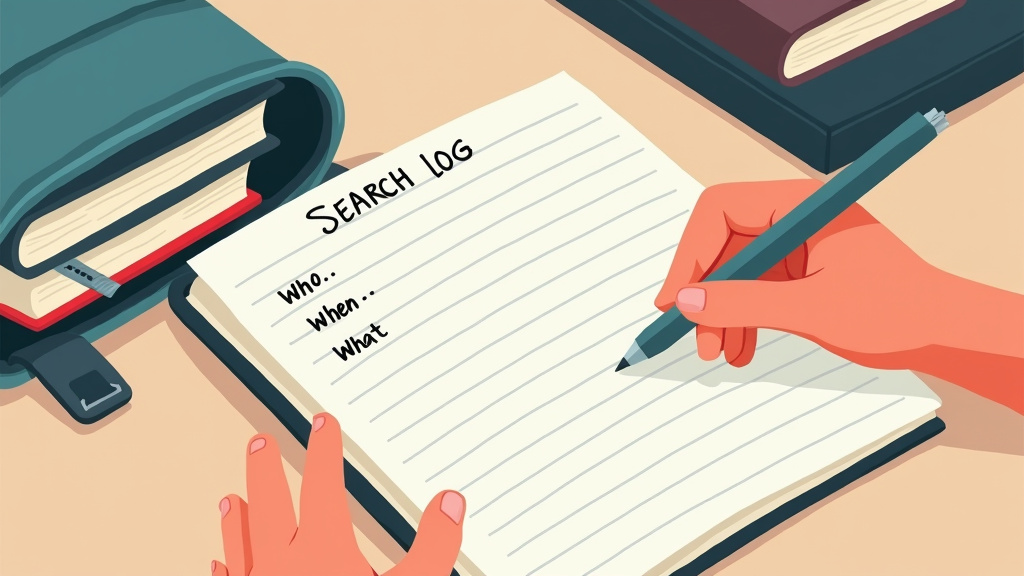
As soon as you are able, in your next free period or immediately after school, write everything down. Memory fades fast.
- Who: Names and titles of all staff involved.
- When: Date and exact time.
- What was said: The reason given for the search, verbatim if possible.
- What was searched: Which pockets, compartments, and items were examined.
- What was found: Did they take anything? What was it?
- Witnesses: Were other students or staff present? Get their names.
Email this record to yourself and a parent. This creates a time-stamped document. This log is your best evidence if you need to challenge the search’s legality or the school’s subsequent actions.
Special Cases: Strip Searches, Phones, and Dogs
Some scenarios raise the stakes considerably.
Strip searches are considered highly intrusive. The Supreme Court has ruled they require a much higher level of justification, a compelling need, like immediate danger, and must be conducted in the least intrusive manner possible. For anything less than a weapon or immediate physical threat, a strip search is almost certainly unconstitutional.
Cell phones and digital devices live in a newer legal gray area. A school may have the authority to physically take your phone if it’s disrupting class. Searching its digital contents, texts, photos, cloud storage, is a separate and more complex issue. They likely need a warrant to access locked data, even if they have reasonable suspicion about the physical device itself. The California student backpack search resource from CLRN delves into these technology-specific nuances.
Drug-sniffing dogs and metal detectors used for general, random screenings of common areas or entire student populations are usually legal. However, using a dog to sniff your specific backpack still requires individualized reasonable suspicion. A dog alerting on a locker bank doesn’t give them cause to search every student’s personal bag in the hallway.
Frequently Asked Questions
Can a teacher search my backpack without telling me why?
No. They must be able to articulate a reason based on specific facts, reasonable suspicion. You have the right to ask, “What is your reason for searching me?” If they cannot provide one, the search is likely invalid.
What if they find something illegal during an illegal search?
Evidence found during an unconstitutional search may be suppressed in a school disciplinary hearing and is very likely inadmissible in juvenile or criminal court. The “fruit of the poisonous tree” doctrine often applies.
Can I be searched because my friend was caught with something?
Not unless there is a specific, factual connection linking you to the item. Guilt by association is not reasonable suspicion.
Does the school’s policy override my constitutional rights?
No. A school policy cannot grant more search authority than the Constitution allows. However, it can clarify procedures and often explains the distinction between locker and backpack searches. You should review your school’s official search and seizure laws as outlined in its handbook.
What about at a private school?
The Fourth Amendment applies to public schools because they are government entities. Private schools are not directly bound by it, but they are usually bound by their own stated policies and state laws. Their authority can be broader, but it’s not unlimited.
The Bottom Line
Your backpack isn’t a black hole of privacy at school, but it’s also not an open book. The law requires a factual reason, not a fishing expedition. Know the difference between a hunch and reasonable suspicion. Your playbook is simple: stay calm, refuse consent verbally, ask for a witness, and document everything. Fighting happens after the fact, with a written record, not in the moment with a tug-of-war over your bag. Understanding these rules, as detailed in official resources like the New Jersey school search guidelines, is the first step in protecting your space.