Backpack Policy at SeaWorld Orlando: Can You Bring One In?
This post contains affiliate links. As an Amazon Associate, we earn from qualifying purchases.
Yes, you can bring a backpack into SeaWorld Orlando. Every bag, backpack, and package is subject to a security inspection before entry. The official policy prohibits outside food and beverages except for one bottle of water or a refillable bottle, and small baby food jars. Glass containers, weapons, large coolers, and straws are not allowed.
That “subject to inspection” clause is the entire game. It gives security the final say on what crosses the turnstile, which means your experience hinges on the guard’s judgment that day and how your bag is packed. Get it wrong, and you’re walking back to your car or renting a locker you didn’t plan on.
What follows is a breakdown of the official rules, the unwritten ones, and the practical choices that get you through the line without a hitch. We’ll cover what security is actually looking for, the real size limits, what you can genuinely sneak in the snack department, and how to handle special situations like dietary needs.
Key Takeaways
- All bags are inspected via visual search and metal detection. Have it open and ready.
- The unofficial size limit is a daypack under 24 liters. Anything bulkier risks a locker mandate.
- Outside food is officially banned, but single-serving, non-messy snacks often pass if discreet.
- Glass is a hard no, except for small, sealed baby food jars.
- Lockers near the entrance range from 13”x7.5” to 22”x13.5” and cost between $7 and $10 to rent for the day.
What Happens During the Security Check?
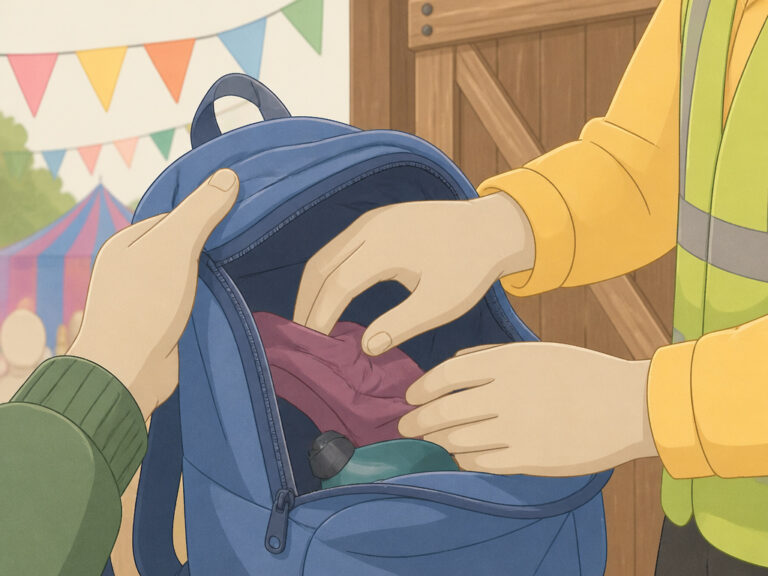
You will wait in line. When it’s your turn, you’ll place your backpack on a table. A security guard will ask you to open all main compartments. They will perform a visual search, often using a wand for metal detection as well.
The goal is speed and safety. They are looking for the short list of absolute prohibitions: weapons, glass, large coolers. They are also gauging whether your bag is too large or too full to be manageable inside the park. A guard won’t dig through a neatly packed bag, but a messy, overstuffed one signals a longer inspection.
Common mistake: Zipping everything shut and wearing the backpack. Have it off your shoulders, unzipped, and ready before you reach the table. That shaves 30 seconds off your wait and makes you look prepared.
What if you have a prohibited item? The guard will ask you to return it to your car. If that’s not possible, you can rent a locker outside the gates. Throwing it away is the last resort. Arguing is the one move that guarantees a slower, more thorough inspection for everyone behind you.
The Unofficial Backpack Sweet Spot
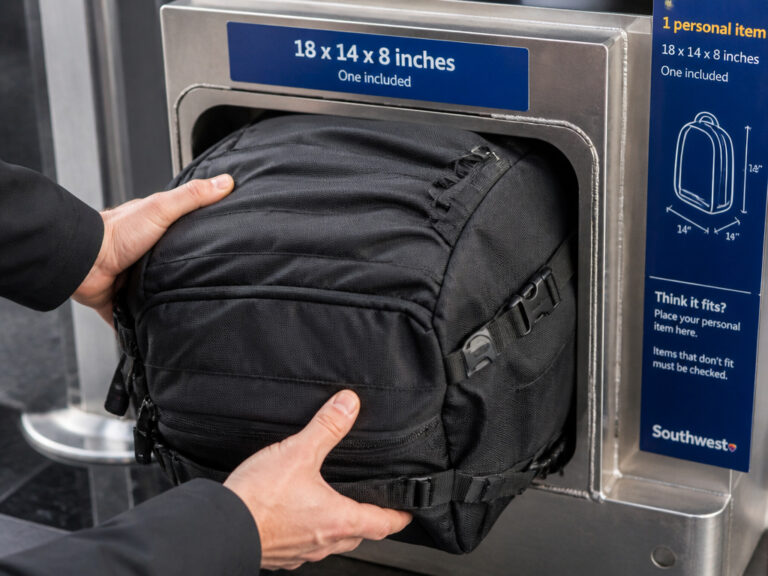
SeaWorld doesn’t publish a maximum backpack dimension. They don’t need to. The policy states bags are “subject to inspection,” and a guard can refuse anything deemed “too large or a potential hindrance.”
The working limit, confirmed by years of visitor reports, is a standard daypack or school-style backpack with a capacity of roughly 20 to 24 liters. Think of a JanSport or a similar pack. This size fits under seats on rides, doesn’t block pathways, and looks innocuous to security.
A hiking pack with a frame, multiple external straps, or a capacity over 30 liters is a red flag. It screams “I’m carrying a lot of stuff,” which often translates to “I might be trying to bring in a picnic.” Security will likely suggest you rent a locker.
| Backpack Type | Likely Security Outcome | Best For |
|---|---|---|
| Small Daypack (< 20L) | Quick visual, wave-through. | Solo adults, minimalists. |
| Standard School Backpack (20-24L) | Standard inspection. Smooth entry. | Families, all-day visitors. |
| Large Hiking Pack (> 30L) | Extended inspection. High chance of locker referral. | Overnight travelers (use before/after park). |
| Bulky Camera Bag | Subject to search of all compartments. | Photographers willing to manage bulk. |
The material matters too. A plain, soft-sided bag is less scrutinized than a rigid, hard-shell case. The guard needs to see inside it quickly.
What You Can and Cannot Bring Inside
The official SeaWorld Orlando FAQ is your primary source. It draws a clear line, but visitors have found a few cracks in it over the years.
You CAN Bring:
- One bottle of water or a refillable water bottle per person. Metal bottles like Yeti are fine as long as they aren’t glass.
- Small, single-serving snacks. The policy says no outside food, but the enforcement gray area is “single-serving.” Granola bars, small bags of crackers, or a piece of fruit often pass if they’re not spilling out of your bag.
- Baby food and formula. This is an explicit exception. Small, sealed glass baby food jars are also allowed—the only glass permitted.
- Special dietary foods. If you have allergies or medical dietary needs, contact Park Security or Guest Relations at the entrance. They can approve your items.
- Sunscreen, hats, portable phone chargers, cameras. Standard day-trip essentials are fine.
You CANNOT Bring:
- Large hard or soft coolers. This is non-negotiable. Any cooler designed for a picnic is staying outside.
- Glass containers. Except for those baby food jars.
- Alcohol, marijuana, or drug paraphernalia.
- Weapons or any item that could be considered one. This includes pocket knives.
- Straws and plastic lids. SeaWorld has a broader environmental policy against these.
- Drones, skateboards, rollerblades.
- Selfie sticks on rides. They are generally allowed in walkways but prohibited on attractions for safety.
Where this goes sideways: Assuming “small snack” means a full sandwich or a family-sized bag of chips. Security sees that as a violation of the outside food policy. You’ll be asked to take it back to your car.
The YouTube anecdote from a grandparent noted they brought snacks in discreetly and weren’t searched for them. That’s the reality for many. Enforcement leans on discretion. A sealed bag of goldfish at the bottom of a diaper bag might not be noticed. A whole lunchbox on top of your clothes will be.
Navigating the Food and Drink Rules

The rule is simple on paper: no outside food or beverages except water. The motivation is also simple: they want you to buy their food. A bottle of soda inside the park costs about five times what it does at a grocery store.
But people get hungry between meals, kids have specific snack times, and dietary restrictions are real. Here’s how the rule bends in practice.
The “Single-Serving” Loophole
The term isn’t defined by SeaWorld. In security guard parlance, it usually means a packaged item meant for one person, around 2 ounces or less. A fun-sized bag of chips, a granola bar, a small pouch of applesauce. These items, when packed discreetly, often pass through without comment. They aren’t seen as replacing a park meal.
Special Dietary Needs Protocol
This is your official out. If you have a food allergy, medical condition, or infant requiring specific food, you don’t need to hide it. 1. Contact Park Security or Guest Relations at the entrance before you go through the main security line. 2. Explain your need. They may ask for documentation (though this is rare). 3. They will grant an exception and often provide a pass or tell the inspection team to allow your items.
Doing this upfront is faster than having your bag flagged and then explaining. It turns a potential conflict into a smooth accommodation.
Water is Your Best Friend
You can bring one water bottle per person. Refillable bottles are encouraged, and water fountains are located throughout the park. This is the biggest money-saver of the day. A family of four bringing their own bottles avoids spending $30+ on water alone.
Lockers: Your Plan B for Oversized or Prohibited Items
You brought a big backpack. Or you forgot and have a glass container. Or you bought a souvenir that’s too bulky to carry. SeaWorld’s lockers are your solution.
They are located near the main entrance, behind Shamu’s Emporium. You rent them daily, and prices vary by size.
| Locker Size | Dimensions | Daily Rental Fee | Best For |
|---|---|---|---|
| Small | 13” x 7.5” | ~$7 | Phones, wallets, small purchases. |
| Medium | Not specified | ~$8-$9 | Standard backpacks, light jackets. |
| Large | 22” x 13.5” | ~$10 | Large backpacks, bulky souvenirs, prohibited items you can’t take to the car. |
The process is first-come, first-served. On peak days, the large lockers sell out by midday. If you know you have a bag that might not pass inspection, go straight to the locker area before getting in the security line. It’s cheaper than being turned away and having to do it anyway.
Lockers are also available inside the park at major rides like Mako and Ice Breaker. These are typically small, single-use lockers meant for items you don’t want to carry on the coaster, like bags or hats. They cost a few dollars for a couple of hours.
How SeaWorld Orlando Compares to Other Parks
Every major theme park has a bag policy. Knowing how SeaWorld’s stacks up helps you calibrate your expectations, especially if you’re visiting multiple parks on one trip.
SeaWorld vs. Disney World
Disney World is more permissive with food. You can bring in whole meals, sandwiches, and snacks openly. Their security is focused on weapons. SeaWorld’s policy is stricter on paper regarding food, but the inspection lines are often shorter and faster than Disney’s massive security checkpoints.
SeaWorld vs. Universal Studios Orlando
Universal’s policy is closer to SeaWorld’s: no large coolers, no glass, outside food discouraged but not explicitly banned for small snacks. Both use similar visual and metal detection inspections. Universal may be slightly stricter on bag size for their intense coasters like VelociCoaster.
SeaWorld vs. Six Flags
Six Flags policies vary by location, but they are generally the most restrictive of the bunch, often implementing clear-bag policies for major events. SeaWorld’s policy feels more traditional and less rigid by comparison.
The through-line for all parks is that security’s primary concern is safety. Food rules are about revenue, but weapon and glass prohibitions are absolute everywhere.
Frequently Asked Questions
Can I bring a stroller and a backpack?
Yes. Strollers are welcome and even rentable inside the park. Your backpack can go in the stroller basket, but you’ll still need to remove it for the security inspection. The stroller itself will be checked as well.
What about diaper bags?
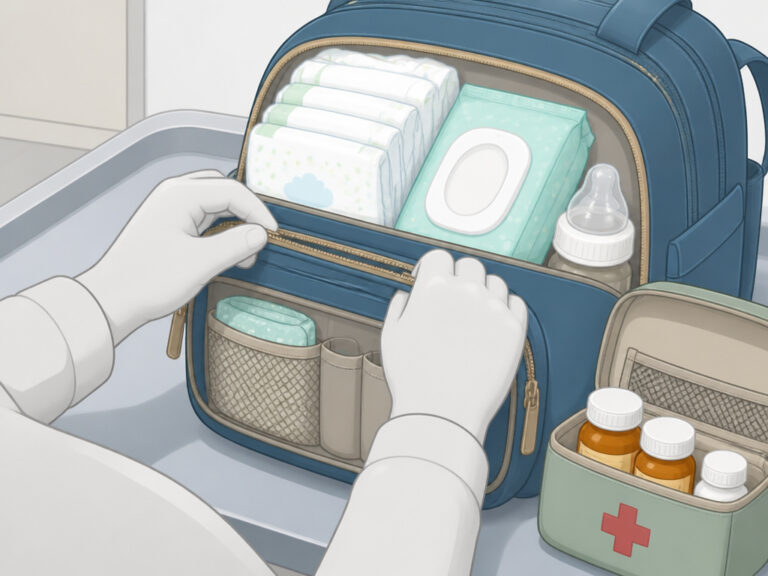
Diaper bags are permitted and subject to the same inspection. This is where the “small snack” exception is most commonly applied. Pack your baby essentials openly, and if you have a few toddler snacks tucked in, it’s rarely an issue.
Can I leave and come back with my backpack?
Yes, with a hand stamp. Before you leave the park for the day, get your hand stamped at the exit. When you return, you’ll go through security again, but you won’t need a new ticket. Your backpack will be inspected a second time.
Are there any clothing restrictions?
Yes. Shirts, shoes, and shorts or pants must be worn at all times. Swim attire is only permitted at the Aquatica water park. Clothing with offensive language or images is prohibited.
What if my bag is rejected?
You have two options: rent a locker outside the gates and transfer your essentials into a smaller bag or your pockets, or return the bag to your car. The locker is the most common choice.
The Bottom Line
Bring your backpack. Keep it under 24 liters, soft-sided, and neatly packed. Expect a visual and metal detection search. Officially, only water and baby food get a free pass, but discreet, single-serving snacks have a high success rate. Your best move is to know the rules, be cooperative with security, and use the locker system if you’re in doubt.
The goal is to get to the orcas and roller coasters, not debate policy at the front gate. Pack light, pack smart, and you’ll walk right through.