Renaissance Festival Backpack Rules: Can You Bring One In?
This post contains affiliate links. As an Amazon Associate, we earn from qualifying purchases.
Yes, you can bring a backpack to the Renaissance Festival. Every major festival’s official policy explicitly allows them, and none require clear bags or enforce strict size limits. Your pack will be searched at the gate, and you cannot bring in outside food or drinks—with narrow, well-defined exceptions for medical needs, infants, and usually one sealed water bottle.
That’s the universal rule. The devil, as always, lives in the festival-specific details. What kind of water bottle? Can you bring a cooler? What proof do you need for a food allergy? The answers change depending on which castle gates you’re walking through.
This guide walks you through the official policies from six major festivals. You’ll know exactly what to pack, what to leave in the car, and how to navigate the gate checks without a hiccup.
Key Takeaways
- Every festival allows backpacks and searches all bags at the gate. No clear-bag mandates exist.
- Outside food and drink are almost universally banned, but single sealed water bottles are often permitted. Policies on refillable bottles vary wildly.
- Medical and infant dietary needs are the only consistent exceptions. You often need a doctor’s note.
- Re-entry is usually allowed with a hand stamp, letting you return to your car for snacks or supplies.
- Coolers are almost never allowed inside the grounds, but strollers and wagons almost always are.
The Simple Answer: Yes, With a Few Caveats
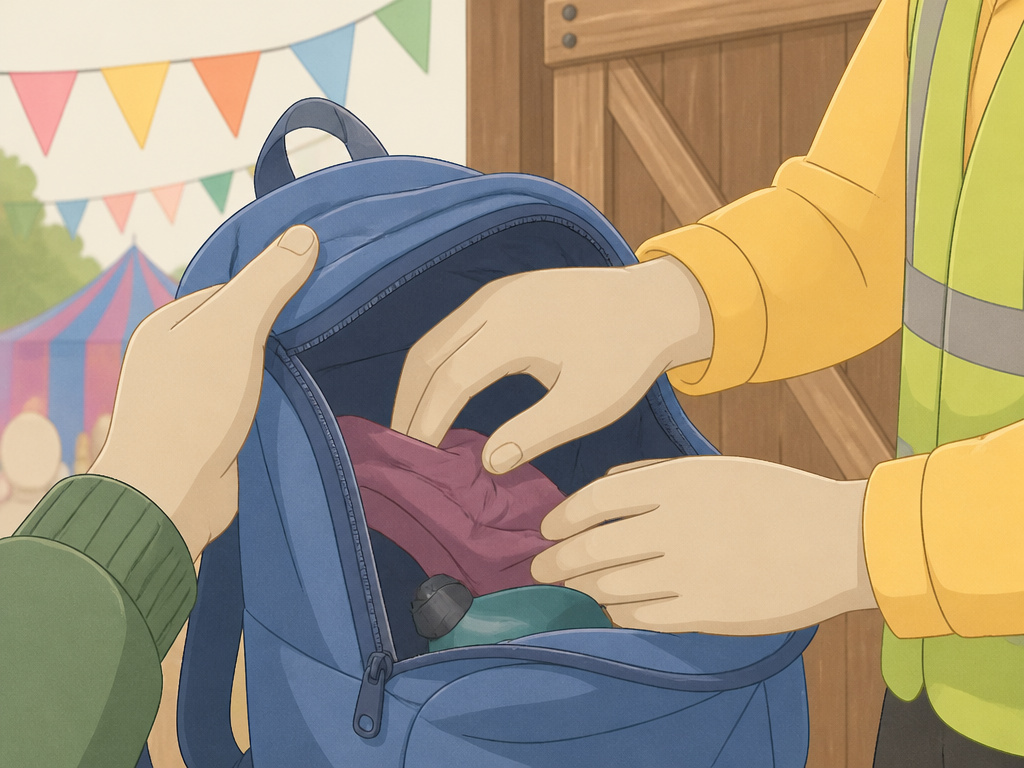
Look at any official festival FAQ. The Kansas City Renaissance Festival states it plainly: “Backpacks, strollers and wagons are allowed.” The Michigan Renaissance Festival includes “backpacks (which may also be subject to search)” on its list of permitted items. The Bristol Renaissance Faire’s policy is a simple “Yes. Backpacks are permitted.”
No festival in our research imposes a clear bag rule like some modern stadiums. None specify a maximum cubic inch or liter capacity. The only common size guidance is a request to avoid enormous camping packs. The Kansas City FAQ puts it politely: “We do ask that you do not bring in large backpacking backpacks.”
All bags, purses, pouches, backpacks, waist packs, etc. Are subject to inspection prior to entering. This is a universal security measure for the safety of employees and patrons.
The gate search is non-negotiable. It’s quick, but it happens. This leads directly to the most important rule tied to your backpack: what’s inside it.
What You Can (and Absolutely Cannot) Put in Your Backpack
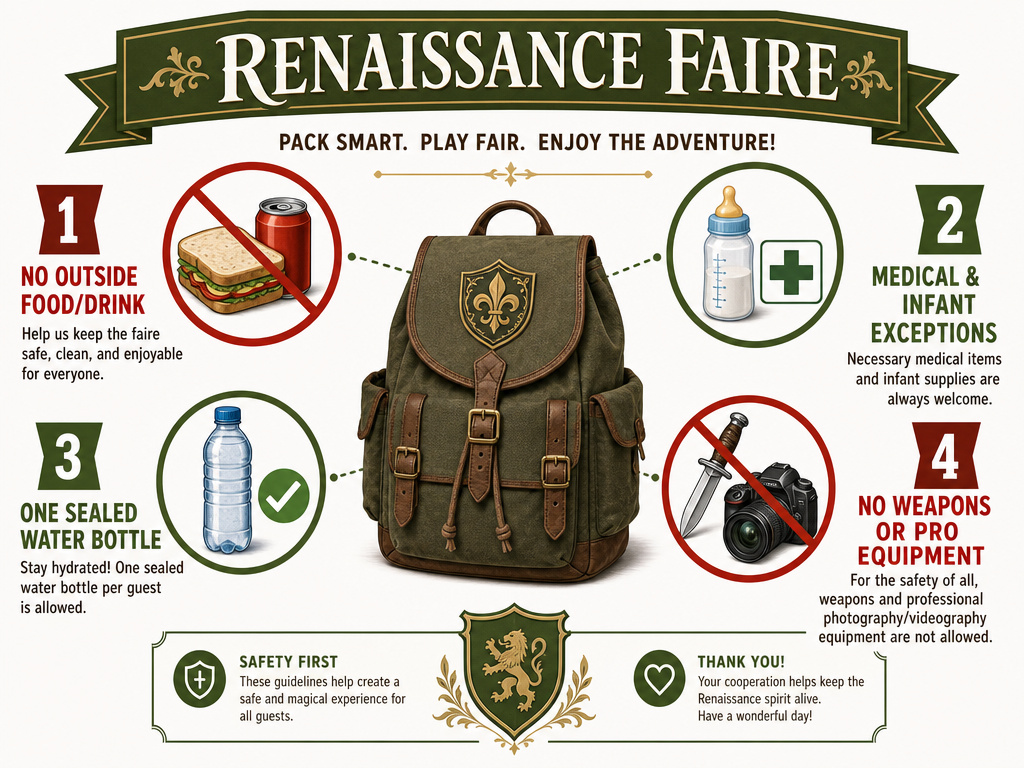
Your backpack’s contents are far more regulated than the pack itself. This is where policies get strict and specific.
Outside Food and Drink
The rule is simple: don’t bring it. Every festival sells food and drink inside, and outside items are prohibited to support those vendors. The Bay Area Renaissance Festival is typical: “The Bay Area Renaissance Festival does NOT allow outside food or beverages through our gates.”
There are three universal exceptions:
1. Infant formula and baby food.
2. Food required for documented medical conditions or severe allergies.
3. A single factory-sealed water bottle.
That water bottle exception has nuances. The Michigan Renaissance Festival allows “one (1) unopened (factory sealed) 16.9 oz bottle of water per person.” The Bay Area festival allows a 20 oz bottle. The Bristol Faire is more generous: “One water bottle per guest, any size. The bottle must either be factory sealed, or empty.”
The Georgia Renaissance Festival offers a hybrid approach: “Each guest may bring one sealed plastic water bottle and one refillable water bottle. Refillable bottles must be empty or contain ice only upon arrival.”
Notice the pattern? Refillable bottles are often banned unless empty. The Michigan festival explicitly says “No re-useable/re-fillable bottles are allowed.” Always check your specific festival’s FAQ the week before you go.
Medical and Allergy Exceptions
This is a critical non-commodity insight. You can bring outside food if you have a medical need, but you must be prepared to verify it. The Michigan Renaissance Festival’s policy is the clearest: “You must be able to verify the allergies with a note from your physician; medical back up goes a long way to help you get what you need.”
The Georgia festival advises: “If you have a medical dietary need or are bringing baby food/formula, exceptions may be allowed. Please check in with gate staff on arrival so items can be reviewed/approved as needed.”
Don’t just show up with a lunchbox and claim an allergy. Have the note. Speak to the gate staff before they search your bag. This proactive step turns a potential confrontation into a smooth approval.
| Festival | Water Bottle Policy | Refillable Bottle Allowed? | Medical Food Exception |
|---|---|---|---|
| Michigan Renaissance Festival | One 16.9 oz sealed bottle | No | Yes, with doctor’s note |
| Bay Area Renaissance Festival | One 20 oz sealed bottle | No | Yes, for infant/formula |
| Bristol Renaissance Faire | One bottle, any size, sealed or empty | Yes, if empty | Yes, for medical needs |
| Georgia Renaissance Festival | One sealed bottle + one empty refillable | Yes, if empty/ice only | Yes, check with gate staff |
| Kansas City Renaissance Festival | Not explicitly stated; outside drink prohibited | Not stated | Yes, for severe allergies |
Prohibited Items
Beyond food, standard security prohibitions apply. The Bay Area festival lists “sharp objects (including pocket knives and metal chains), firearms, or other items that could be considered a weapon.” These should be left in your car. Most festivals also prohibit alcohol, drones, and professional photography equipment without a permit.
The Backpack vs. Cooler vs. Stroller Distinction
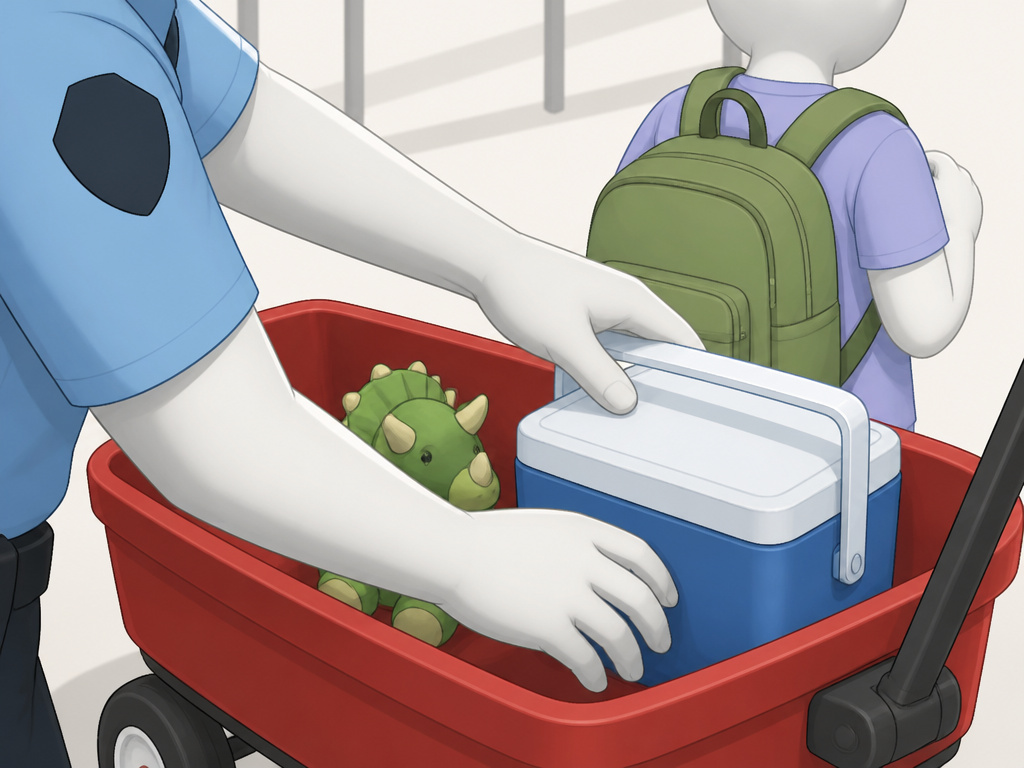
This is where many first-time visitors get tripped up. Festivals treat these three categories very differently.
Backpacks are for carrying your daily essentials: wallet, phone, sunscreen, a light layer, and that approved water bottle. They are personal carry-ons.
Strollers and Wagons are almost always permitted for transporting small children and their associated gear. The Michigan festival explicitly allows “strollers (including those for pets).” The Minnesota festival welcomes “single strollers, double-seat strollers, wagons, wheelchairs, and electric convenience vehicles (ECVs).” These are considered mobility aids, not cargo vehicles.
Coolers are a hard no for entering the grounds. They are seen as explicit food-smuggling devices. The Georgia festival is blunt: “No. Coolers are not allowed under any circumstances.” The Bristol Faire lists “Coolers” right on its prohibited items list.
Where this goes sideways: Trying to use a wagon to sneak in a cooler. Security teams see this daily. Your wagon will be searched, the cooler will be found, and you’ll be walking back to your car before the first joust.
The universal workaround? Leave the cooler in your car. Both the Michigan and Bay Area festivals state: “You may bring a cooler to leave in your car if you wish. If you choose to do so it must remain in your car.” This pairs perfectly with re-entry policies.
Re-Entry and the “Car Trunk Strategy”
You are not trapped inside the festival grounds. Re-entry policies are standard, which fundamentally changes your packing strategy.
The Michigan Renaissance Festival explains: “the festival has a standing policy allowing exit and re-entry. Don’t forget to get your hand stamped as you exit.” The Bay Area festival confirms: “Patrons are welcome to leave through our gates, receive a hand stamp, return to their car and reenter through our gates later during the same day.”
This means your car becomes your base camp. You can arrive, go through security with a minimal daypack, enjoy the festivities, and return to your vehicle for a tailgate lunch from your cooler. This is perfectly within the rules and is the most comfortable way to manage food, diaper changes, or costume adjustments.
It also simplifies security. Walking in with a small, nearly empty backpack makes for the fastest gate check. You can then shuttle heavier items as needed.
Festival-Specific Deep Dives: The Devil’s in the Details
While the broad rules are similar, key differences exist. Your packing list should be tailored to your specific destination.
For the Kansas City Renaissance Festival:
Backpacks are allowed without size or clarity rules. They explicitly encourage those with severe allergies to bring safe food, noting their kitchens can’t guarantee against cross-contamination. Re-entry is allowed with a hand stamp.
For the Michigan Renaissance Festival:
Bring only a 16.9 oz sealed water bottle. No refillables. Have a doctor’s note for any allergy food. Coolers can wait in the car, and pet strollers are a unique permitted item here.
For the Bristol Renaissance Faire:
Their water policy is the most flexible: one bottle, any size, sealed or empty. They have a detailed list of permitted medical food and supplements. However, they have no in-and-out privileges for parking—once you leave the lot, you pay again. Re-entry to the festival grounds is only from within the parking area.
For the Georgia Renaissance Festival:
They support refillable bottles, with three water stations on site. Bring one sealed bottle and one empty/ice-filled refillable. They are firm on no coolers but allow re-entry to visit your car.
Navigating Security Screening
The process is straightforward. Have your bag open or unzipped before you reach the security team. If you have an approved medical food item, declare it immediately and present your documentation. The search is visual and quick; they’re looking for prohibited items, not judging your snack choices. A smile and a “good morrow” go a long way.
What to Pack in Your Festival Backpack
With the rules clear, here’s a practical, efficient packing list. The goal is to carry the minimum that maximizes your day.
- Your Approved Water Bottle. Check the size and type against your festival’s FAQ.
- Small Wallet. Cash is still king at many vendor stalls, though ATMs are usually on site.
- Phone and Portable Charger. You’ll take photos, use the festival map, and need a way to call your party.
- Sunscreen and Bug Spray. You’re outdoors all day.
- A Light Layer. Evenings can get chilly.
- Hand Sanitizer and Tissues. Portable restrooms are a fact of festival life.
- Any Critical Medication. Keep it in its original container if possible.
- Doctor’s Note. If you require outside food, this is non-negotiable.
What to leave at home or in the car: large knives, alcohol, drones, any weapon-like props (check prop weapon policies separately), and any food you aren’t medically required to have.
Frequently Asked Questions
Are clear backpacks required at Renaissance Festivals?
No. None of the six major festivals studied require clear backpacks. Standard daypacks and bags are perfectly acceptable. All bags are subject to search at the gate, regardless of material.
Can I bring outside alcohol?
Absolutely not. Outside alcohol is prohibited at every Renaissance Festival. Alcohol is sold inside the grounds by licensed vendors, and bringing your own violates their policy and local law. You will be turned away at the gate if found with it.
What about costume weapons or props?
Prop weapons are often allowed but are strictly regulated. The Kansas City festival allows “plastic, cardboard, foam and wood replica weapons” if they have no sharp edges and aren’t used to strike anyone. Real weapons, functional bows, and firearms are banned. Purchased weapon props are usually held at the gate for pickup when you leave. Always check your specific festival’s weapon policy.
Can I bring an umbrella or folding chair?
Yes, in most cases. The Michigan festival lists “umbrellas” and “folding chairs” as permitted items. Chairs are great for securing a spot for a parade or show. Just be mindful of not blocking pathways or vendor stalls.
Is there a place to store my backpack if I don’t want to carry it?
Most Renaissance Festivals do not offer bag check or storage lockers. You are responsible for carrying your belongings throughout the day. This is why packing light and using a comfortable backpack is crucial. Some festivals, like Universal Studios or Six Flags, have locker systems, but that is not the norm for Renaissance Faires.
Before You Go
The Renaissance Festival is about fun, not friction. The rules around backpacks exist for safety and to support the vendors who make the event possible. Your day will be smoothest if you follow a simple plan: pack a light bag with essentials, leave prohibited items (especially food and coolers) in your car, and use the re-entry policy to your advantage.
Know your specific festival’s stance on water bottles. Have your documentation ready if you need it. Then, stop worrying about the gate and start planning which turkey leg stand you’re hitting first. The real challenge isn’t getting your backpack in—it’s finding the willpower to not buy a giant pewter mug before you leave.