Carry-On Luggage Fees: Does United Airlines Charge for It?
This post contains affiliate links. As an Amazon Associate, we earn from qualifying purchases.
Yes, United Airlines charges for carry-on luggage in one specific scenario: if you have a Basic Economy ticket for a domestic flight and you bring a full-size carry-on bag to the gate. You’ll pay the standard checked bag fee plus a $25 gate handling charge. All other standard economy tickets and above include one free carry-on bag and one personal item.
That gate fee is the trap. It’s not just the checked bag cost; it’s a penalty for not following the Basic Economy rules at the airport. For everyone else, the standard United carry-on policy applies: one bag for the overhead bin and one smaller item under the seat, no extra charge.
What follows: the exact dimensions that define a carry-on versus a personal item, the full breakdown of the Basic Economy fee and its exceptions, and the quirks of flying on smaller United Express planes where your roller bag might not fit at all.
Key Takeaways
- Basic Economy tickets for U.S. Domestic flights only allow a free personal item. A carry-on brought to the gate costs the checked bag fee plus a $25 gate handling charge.
- Standard United economy tickets (not Basic) include one free carry-on (9″x14″x22″) and one personal item (9″x10″x17″).
- Exemptions to the Basic Economy carry-on ban include international routes, MileagePlus Premier members, Star Alliance Gold members, and primary holders of certain United credit cards.
- United Express regional flights have less overhead space; on CommutAir-operated flights, only a personal item is allowed in the cabin—all other carry-ons are gate-checked.
- Items like jackets, umbrellas, diaper bags, and assistive devices do not count toward your carry-on allowance.
The Basic Economy Carry-On Fee Breakdown
The core of United’s carry-on fee structure hinges on your fare class. Ignoring this is how people get surprised at the gate.
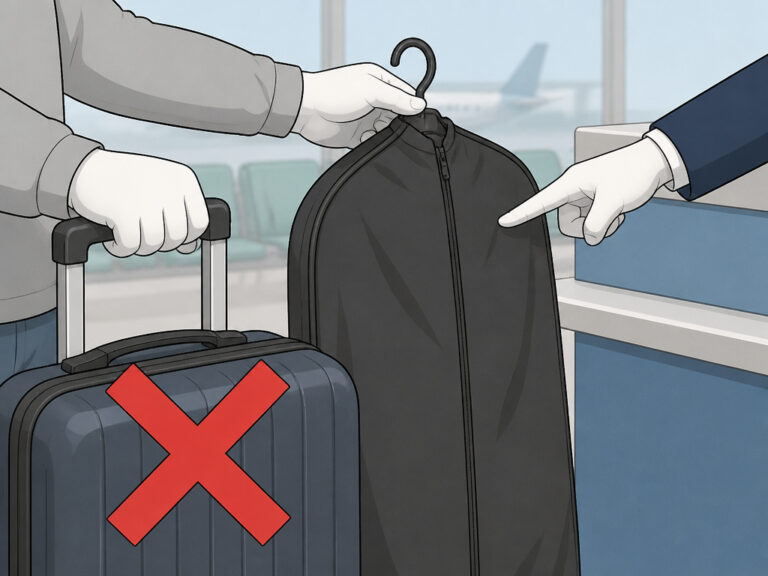
If you’re holding a Basic Economy ticket for travel within the United States, your allowance is one personal item that fits under the seat. That’s it. If you roll up with a standard spinner or roller bag expecting to use the overhead bin, the agent will stop you. You cannot pay a simple carry-on fee to bring it onboard.
Instead, they will check your bag to your final destination. The cost is twofold: you’ll pay the applicable checked bag fee for your route and fare, and you’ll pay an additional $25 gate handling charge. This is per the airline’s archived policy. You can’t prepay this; it’s a card-only transaction at the gate.
Where this goes sideways: Assuming you can just pay a fee at the gate. The $25 is a penalty on top of the bag check cost. For a domestic flight where the first checked bag is $35, showing up with a carry-on turns into a $60 mistake.
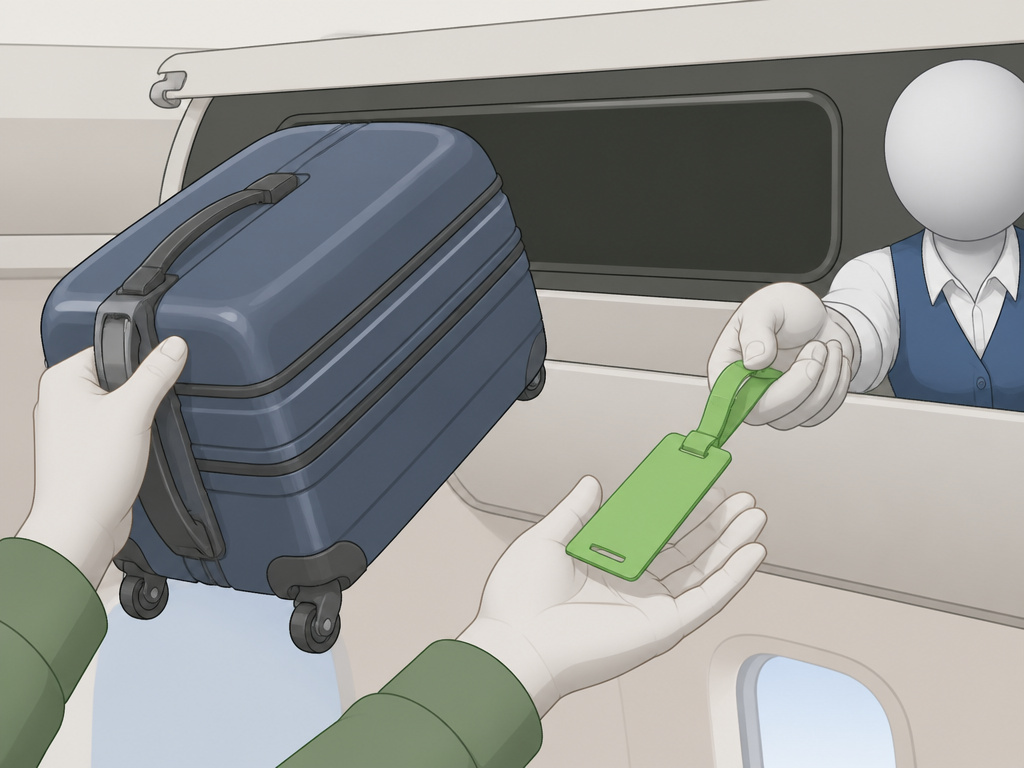
The system is designed to keep Basic Economy boarding fast and overhead bins free for higher-fare customers. Your bag gets a green tag, is taken planeside, and goes into the cargo hold. You’ll pick it up at baggage claim, not at the gate upon arrival.
Who Avoids the Basic Economy Carry-On Ban?
Your Basic Economy ticket doesn’t automatically mean you’re stuck with just a personal item. United carves out several explicit exceptions where normal carry-on rules apply. If you fall into one of these groups, you can bring a full-size carry-on and a personal item at no extra charge:
- You’re flying internationally: This includes trans-Atlantic flights (to/from the U.S., Mexico, Central America, El Salvador, Panama, South America) and trans-Pacific flights to or from the U.S.
- You have elite status: MileagePlus Premier members (any level) or Star Alliance Gold members.
- You’re traveling with an elite member: Companions on the same reservation as a Premier member also get the benefit.
- You hold the right credit card: Primary cardmembers of a qualifying United MileagePlus credit card (like the United Explorer Card) who purchased the ticket with that card.
If you qualify under an exception, you follow the standard United carry-on policy. No gate fees, no surprises.
What Counts as Your Free Carry-On?
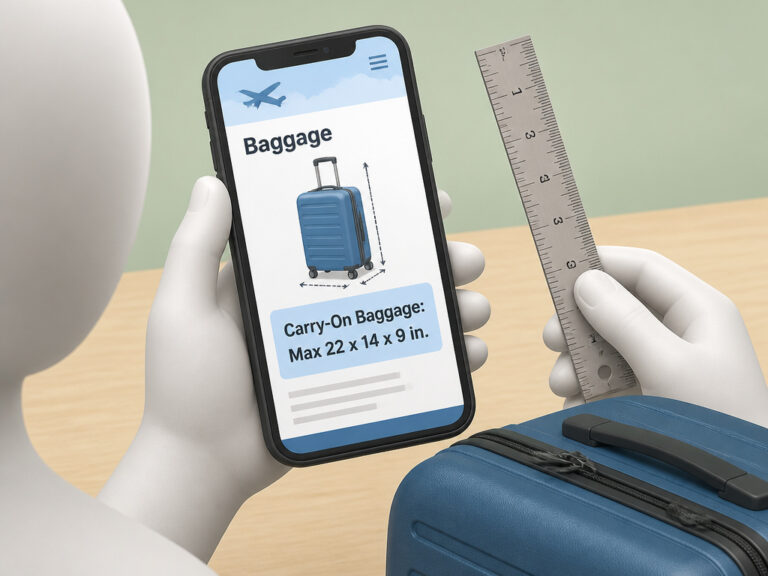
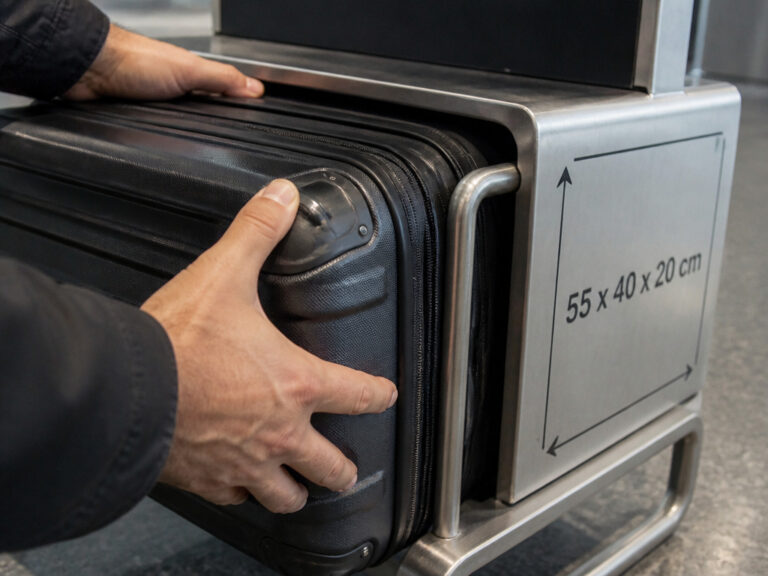
For non-Basic Economy tickets, your free carry-on is defined by hard dimensions. The maximum size is 9 inches x 14 inches x 22 inches (22 cm x 35 cm x 56 cm). This includes the wheels and the handle. It’s not a suggestion; it’s the literal size of the baggage sizer at the gate.
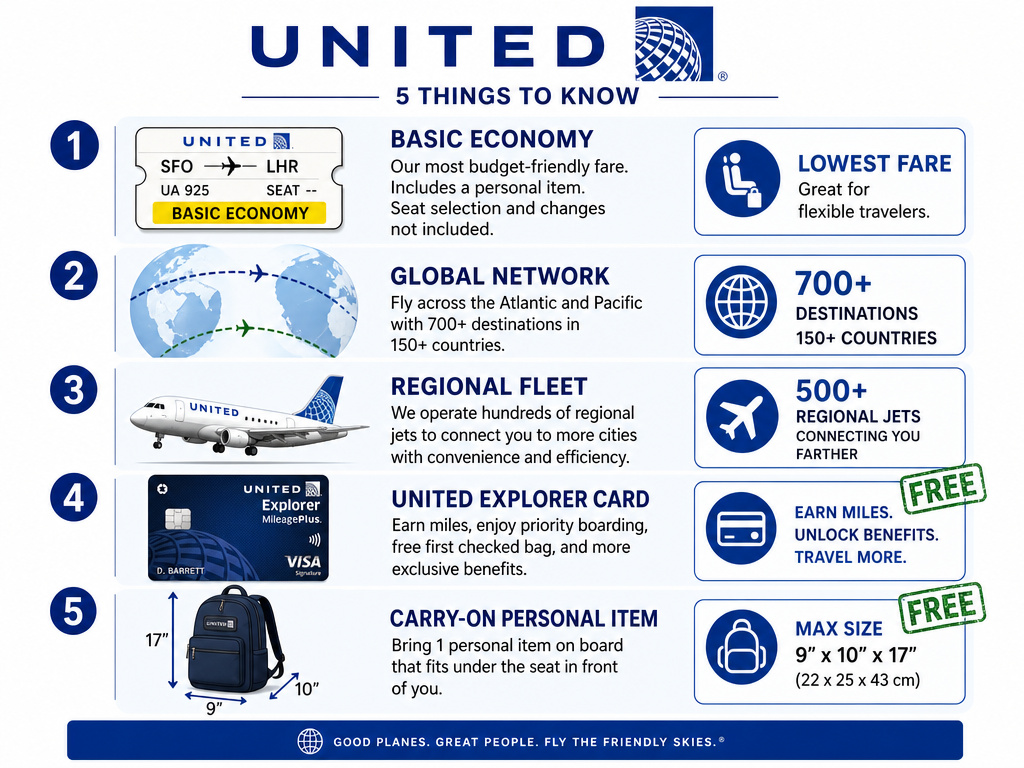
The companion piece is your personal item. It must fit under the seat in front of you, with a maximum size of 9 inches x 10 inches x 17 inches (22 cm x 25 cm x 43 cm). This is where a medium backpack or a large handbag comes in.
| Item Type | Maximum Dimensions (Inches) | Maximum Dimensions (Centimeters) | Where It Stows |
|---|---|---|---|
| Carry-On Bag | 9″ x 14″ x 22″ | 22 cm x 35 cm x 56 cm | Overhead bin |
| Personal Item | 9″ x 10″ x 17″ | sample text cm x 25 cm x 43 cm | Under the seat in front |
These numbers come straight from the United Airlines official baggage guide. A bag that’s 23 inches long won’t fit the sizer, even if it’s “close.” That’s when gate-checking becomes mandatory, regardless of your fare type.
What Doesn’t Count Toward Your Allowance
United, like most airlines, lets you bring a handful of extra items without them counting as your one carry-on or personal item. This list is specific and helpful:
- A jacket or coat you’re wearing.
- An umbrella.
- Reading material for the flight.
- Food or drinks bought after security.
- Assistive devices (collapsible wheelchair, crutches, CPAP machine).
- A diaper bag for a traveling child.
- A breast pump.
- A camera bag.
- An FAA-approved child safety seat.
- A pet carrier (though this has its own separate fee).
This means you can have your roller bag in the overhead, your backpack as a personal item under the seat, and still carry a coat, a book, and a bag of snacks. The diaper bag exception is a notable one for families, as it functions as a second personal item.
United Express Flights: The Regional Jet Wild Card
 Your carry-on plan can fall apart before you even reach the Basic Economy rules if you’re on a United Express flight. These are the regional jets and turboprops operated by partner airlines like CommutAir, Air Wisconsin, and Republic Airways.
The aircraft are smaller. The overhead bins are tiny. Sometimes, they’re practically non-existent.
Common mistake: Assuming your standard 22-inch roller will fit on any United flight. On a 50-seat regional jet, it almost certainly will not. You’ll be gate-checking it before you even board.
The policy isn’t even uniform across all United Express carriers:
- CommutAir-operated flights: These are “no carry-on carrier” flights. You are allowed only one personal item in the cabin. Any carry-on bag will be collected at the gate, green-tagged, and put in the cargo hold. You pick it up on the jetbridge after landing.
- Air Wisconsin & Republic Airways-operated flights: The standard rule applies: one carry-on and one personal item, space permitting.
This is why checking your itinerary details matters. If you see “Operated by CommutAir,” pack knowing your main bag will be gate-checked. This isn’t a fee—it’s a space constraint. It also means if you were counting on your carry-on backpack to hold everything, you need to make sure your true essentials are in your personal item.
How to Avoid Carry-On Fees on United
 The strategy is straightforward: know your ticket type and pack for the worst-case scenario.
- Identify your fare class immediately. When you book, it will say “Basic Economy” very clearly. It’s a cheaper, restricted fare. If you need a carry-on, book standard economy.
- For Basic Economy, exploit the exceptions. Are you flying over the Atlantic or Pacific? Do you have a United credit card? If so, you get a carry-on. If not, you must fit everything into a personal-sized bag.
- Check your aircraft for regional flights. If it’s a United Express route, look up the operator. If it’s CommutAir, plan for a gate-checked carry-on.
- Use a credit card perk. The United Explorer Card’s most tangible benefit is the free checked bag for you and a companion on your reservation. This can make checking a bag cheaper than risking the Basic Economy gate penalty. If you must add a carry-on to a restrictive fare, your only real option is to upgrade your fare class before travel.
- Pack to the personal item limits. A 9″x10″x17″ backpack is surprisingly capacious. Mastering this size lets you skip the Basic Economy problem entirely. Compare this to the often-stricter Spirit backpack policy or Frontier backpack policy, where every inch counts.
The goal is to never be in a position where a gate agent is explaining a $25 charge to you. That comes from reading the rules that come with your ticket, not the generic ones on the website.
Frequently Asked Questions
Does United weigh carry-on bags?
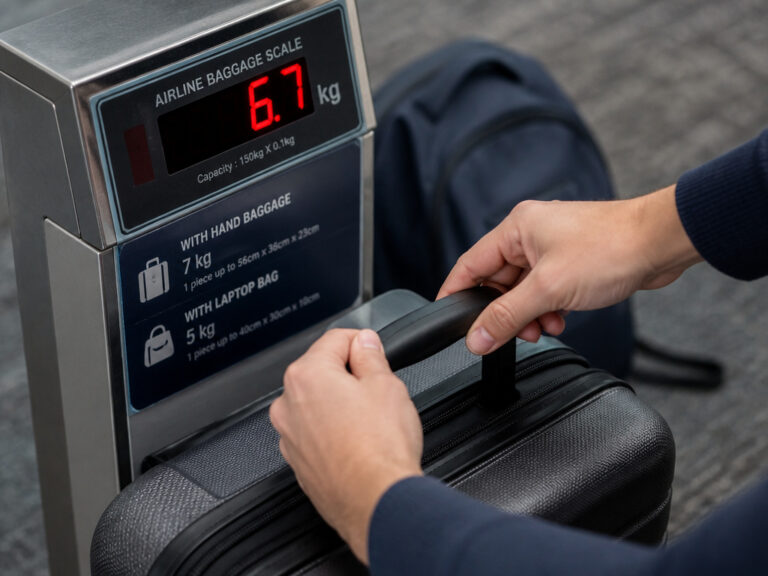
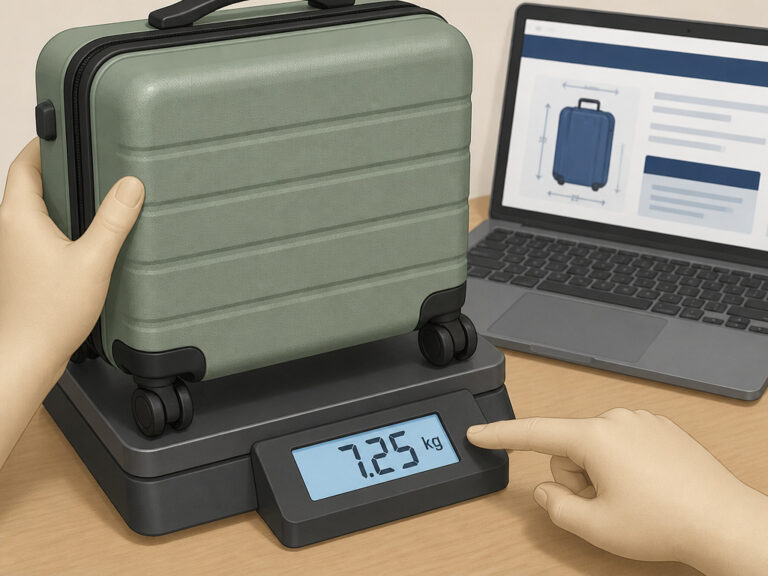
Generally, no. United’s focus is on the size dimensions and whether you can lift your bag into the overhead bin yourself. The 9″x14″x22″ size limit is the strict gatekeeper, not a scale. However, if your bag looks excessively heavy and you struggle to lift it, an agent can ask you to weigh it.
Can I bring a backpack and a carry-on on United?
Yes, on standard tickets, that’s the standard allowance: one carry-on (like a roller bag) for the overhead bin and one personal item (like a backpack) for under the seat. This is similar to the Delta carry-on policy. On Basic Economy domestic tickets, you are only allowed the backpack as your personal item.
What if the overhead bins are full?
If the overhead bins fill up on your flight, the gate agents will begin gate-checking carry-on bags for free. Your bag will be tagged and placed in the cargo hold, and you’ll pick it up at your destination’s baggage claim or sometimes right on the jetbridge. This is a service, not a penalty, so no fee is charged.
Do musical instruments count as a carry-on?
Yes. A musical instrument in its case counts as your carry-on bag if it’s stored in the overhead bin. If it’s small enough to fit under the seat, it can count as your personal item. United classifies instruments as fragile items, meaning they assume less liability for damage, so special insurance is a good idea.
Can I bring a purse as well as a backpack and carry-on?
It depends. A small purse or laptop bag is typically considered part of your personal item if you’re already carrying a backpack. To be safe, stow the purse inside your backpack until you’re on the plane. The official rule is one personal item, so agents can technically ask you to consolidate.
The Bottom Line
United Airlines charges for carry-on luggage only when you break the Basic Economy rules. For most travelers, a carry-on and a personal item fly free. The real cost comes from not understanding your ticket’s restrictions: a $25 gate fee on top of a checked bag charge.
Pack to the published dimensions. Know if you’re flying on a cramped regional jet. Use a qualifying credit card if you have one. That’s how you walk past the gate agent without a second look, your bag rolling smoothly behind you.