8 Best Running Backpacks for 2026
This post contains affiliate links. As an Amazon Associate, we earn from qualifying purchases.
The best running backpacks balance hydration, fit, and comfort without weighing you down. After comparing the field, the Teton Oasis Hydration Backpack with 2L Bladder stands out as the top overall pick for its capacity and durability. For runners on a budget, the Zelvot Running Vest with 500ml Soft Flask delivers solid performance at a lower price.
Runners don’t just need a way to carry water, they need gear that stays put, breathes well, and doesn’t distract from the rhythm of the run. Too many packs promise performance but fail on bounce control or pocket design, leading to frustration mid-stride.
This guide cuts through the noise by focusing on what real users report and what specs actually matter. I researched each pack based on hydration options, fit, weight, and storage, using owner feedback and expert analysis to identify the ones that deliver where it counts.
Top 8 Running Backpacks in the Market
The Best Running Backpacks, Reviewed
Zelvot Running Vest with 500ml Soft Flask

Strengths
- Excellent breathability
- Smart pocket layout
- Stable soft flask
Trade-offs
- No large water capacity
- Back pockets are shallow
- Not for ultra runs
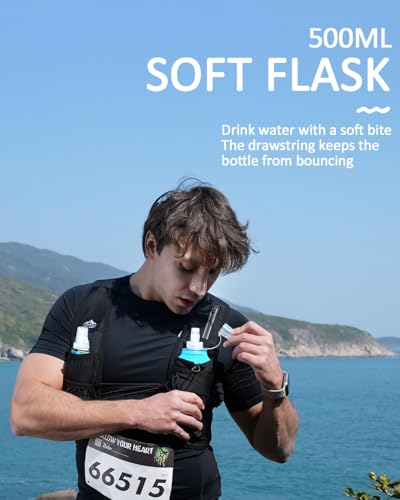
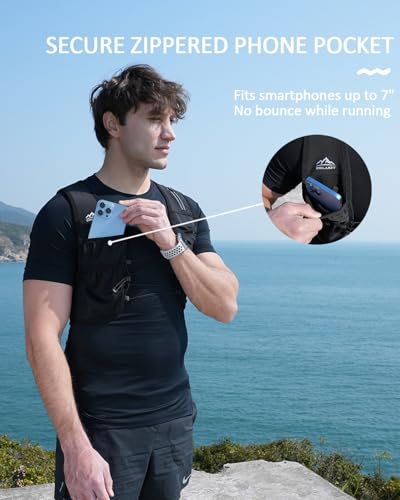
This one earns the ‘Best Overall’ label for balancing weight, storage, and performance. At 7.5 ounces, it’s featherlight, and the 500ml soft flask with drawstring compression eliminates slosh, owners love how stable it feels from full to empty. The 7 front pockets are intelligently placed, keeping gels, phone, and keys within easy reach without fumbling.
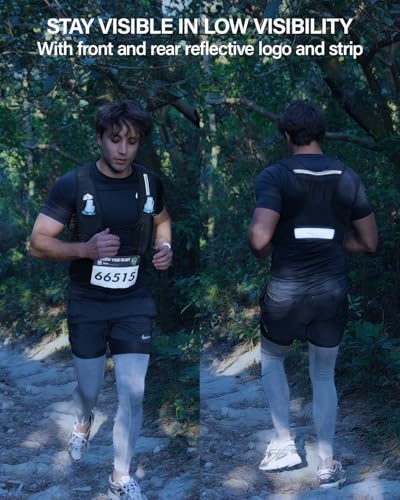
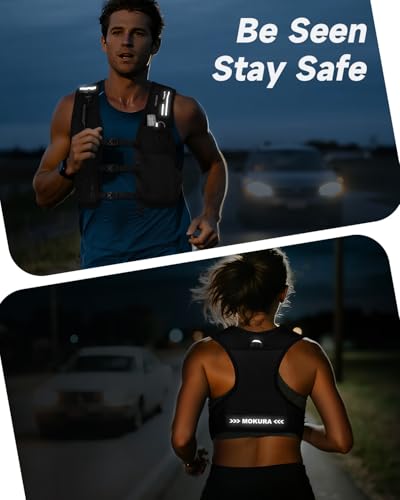
Breathability is top-tier thanks to neoprene with triple ventilation holes, and the full front and back reflectivity adds real safety value. Compared to bladder-heavy models, this is the smarter pick for most runners doing under 2 hours. I’d choose this over bulkier vests for 90% of running scenarios.
Product photos

MOKURA Running Vest with 500ML Soft Flask
Strengths
- Ultra-lightweight
- Zero-bounce fit
- Soft flask compression
Trade-offs
- Limited water capacity
- Smaller storage
- No waist belt for stability
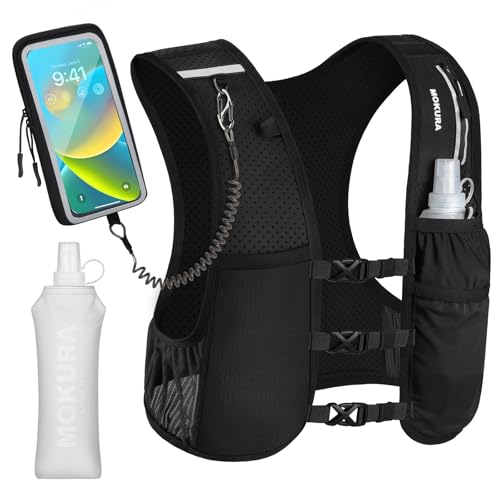
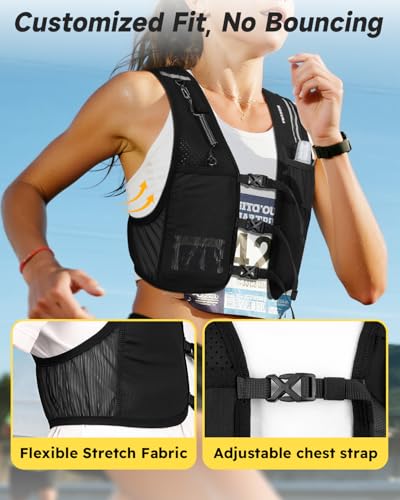
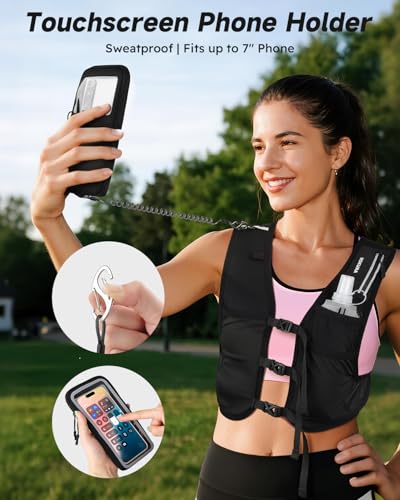
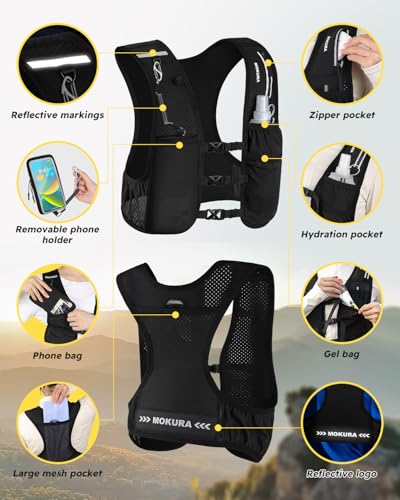
At under 10 ounces, this vest delivers on its promise of near-invisible wear. The soft neoprene and stretch waist design genuinely minimize bounce, and the 500ml soft flask compresses well as it empties, no sloshing. It’s one of the few vests where owners consistently say they ‘forget they’re wearing it,’ especially on tempo runs or half-marathons. The coiled phone lanyard is a smart touch, letting you grab your phone mid-stride without fumbling.
Compared to 2L bladder models, this sacrifices water capacity for comfort. But for most runners doing under 2 hours, 500ml is plenty. I’d pick this over heavier vests for race day or fast training.
Product photos
Zelvot Running Vest with 2L Water Bladder

Strengths
- Durable 900D fabric
- High-visibility reflectivity
- Secure tactical storage
Trade-offs
- Bulky waist belt
- Overbuilt for casual runs
- Pistol holster takes up space
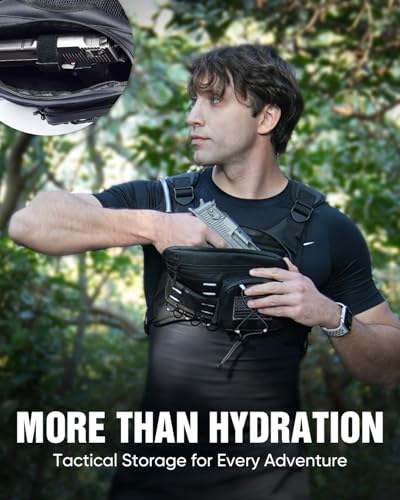
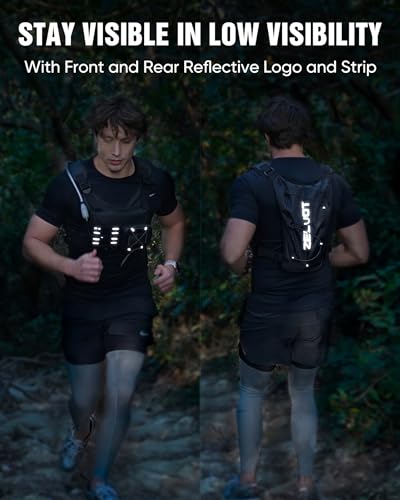
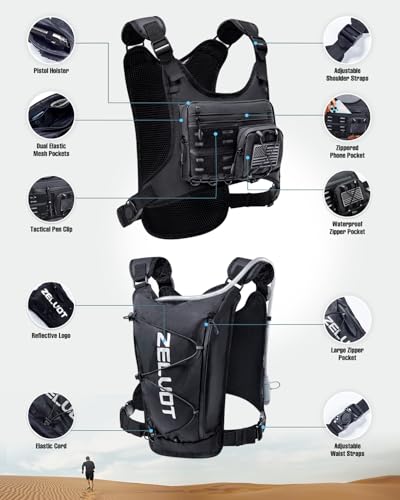
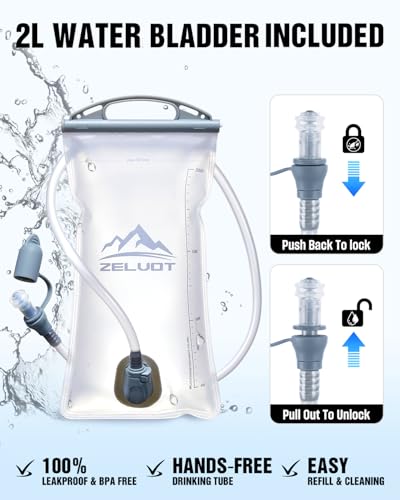
This vest leans into the tactical side of running, with features like a pistol holster and pen slot that most trail runners won’t need, but the core performance is strong. The 2L bladder is standard, but the wide, durable sip tube and high-flow valve make hydration smooth and reliable. Breathable 900D Oxford fabric stands up well to brush and abrasion, and the reflective elements are generous, boosting safety in low light.
Where it stumbles slightly is in fit versatility. While the chest strap range is broad, some owners note the waist belt can feel restrictive on longer runs. Compared to the more streamlined Zelvot model with the soft flask, this one feels better suited for rugged, self-supported trail missions than fast marathons.
Product photos

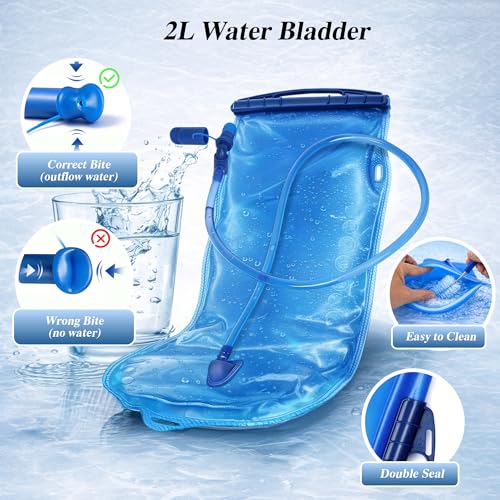
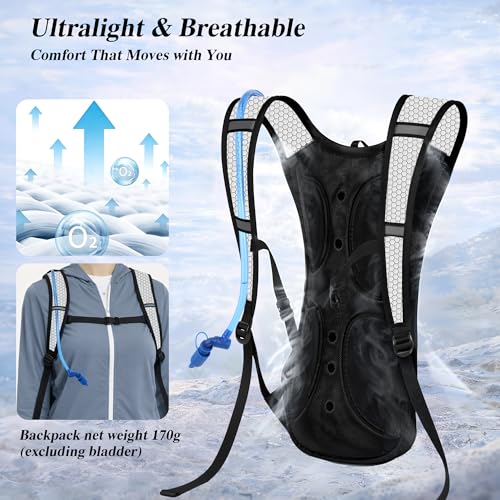
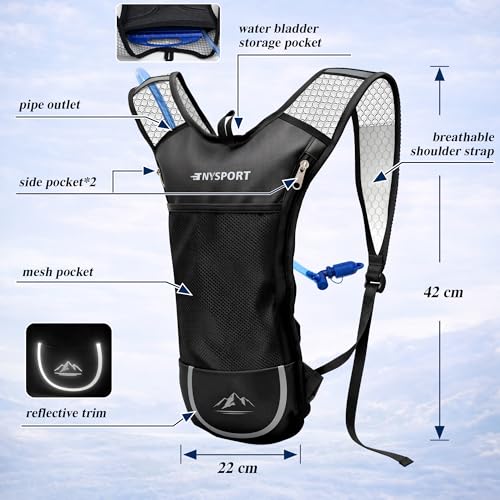
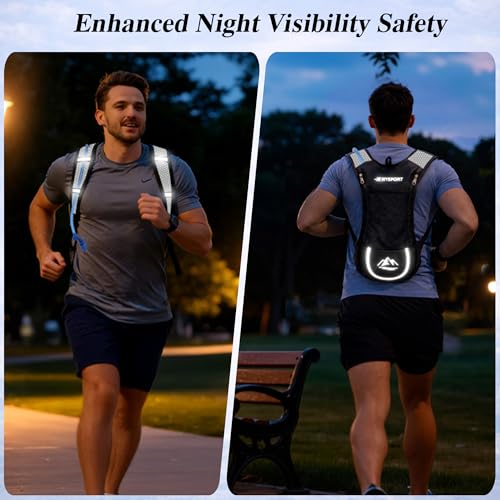
2 Pack TNYSPORT Hydration Backpack with 2L Bladder
Strengths
- Two packs for one
- Ultra-lightweight
- Reinforced stitching
Trade-offs
- Basic materials
- Minimal bounce control
- Average fit
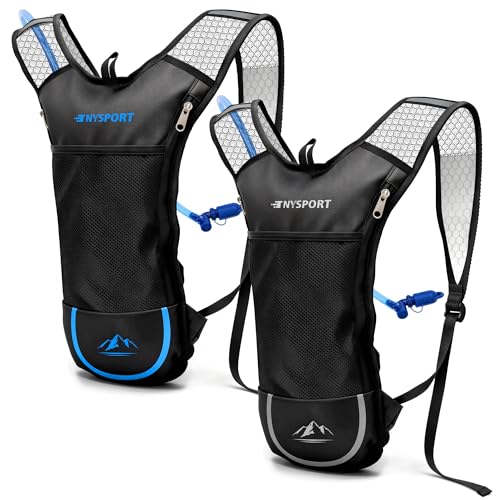
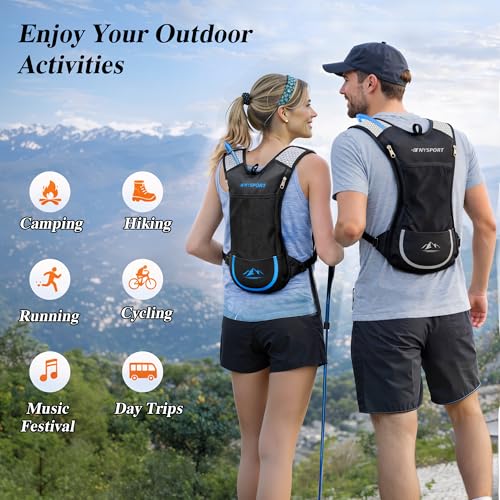
Buying two packs for the price of one makes this the clear value leader. Each unit is ultralight at just 0.37 lb and built with reinforced stitching for durability. The 3-layer pocket system keeps gear organized without bulk, and owners say the bladders hold up well under pressure. This is a solid pick for couples or groups who want identical, no-frills hydration for shared adventures.
It doesn’t have the premium feel of neoprene vests, but for hiking, cycling, or beginner trail runners, it covers the essentials. Compared to single high-end vests, this pack wins on practicality and sharing, though fit and breathability are average.
Product photos
INOXTO Running Hydration Vest with 1.5L Bladder

Strengths
- Extremely lightweight
- Budget-friendly
- Good airflow
Trade-offs
- Flimsy hip belt
- Minimal storage
- Basic materials
At 140 grams, this is one of the lightest options on the list, barely heavier than a phone belt. The 1.5L bladder fits snugly, and the side bottle pockets add flexibility. The ventilated mesh back works well for airflow, and owners note it stays cool even on humid runs. For the price, it punches above its weight in comfort and function.
But the storage is limited, and the hip belt feels more decorative than functional. Compared to the MOKURA or Zelvot vests, it’s less refined but impressively affordable. If you’re new to hydration packs or want a backup for short runs, this gets the job done.
Product photos


Teton Oasis Hydration Backpack with 2L Bladder
Strengths
- Ample organized storage
- Sewn-in rain cover
- Insulated bladder pocket
Trade-offs
- Heavier than race vests
- Bulkier fit
- Less breathable on hot runs
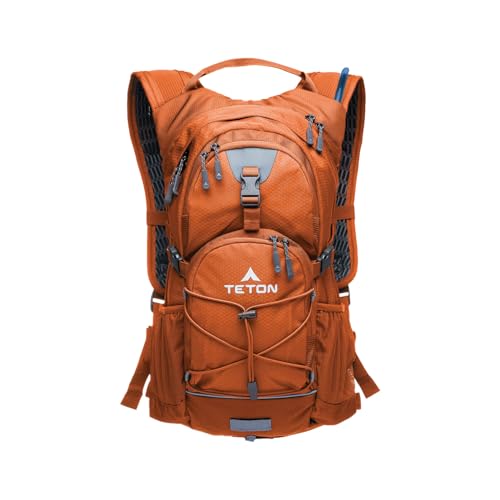
This pack stands out for travelers and runners who prioritize organization and durability over minimalism. With 18L or 22L of storage, it’s more than just a hydration pack, it’s a hybrid between a hiking daypack and a performance running vest. The sewn-in rain cover is a rare and thoughtful feature, especially for those caught in surprise downpours on long trail runs. Owners consistently report that the insulated bladder pocket actually keeps water cold for hours, which is a big win in hot climates.
The shoulder straps are well-padded with high-density foam, and the athletic cut helps reduce bounce, though it may run bulkier than race-focused vests. Compared to slimmer competition, this one trades some agility for utility. If you’re doing big-mileage days with extra layers or gear, that trade-off makes sense.
Product photos


BECOJADDE Running Vest with 1.5L/2L Options
Strengths
- Multiple configurations
- Customizable fit
- Lightweight build
Trade-offs
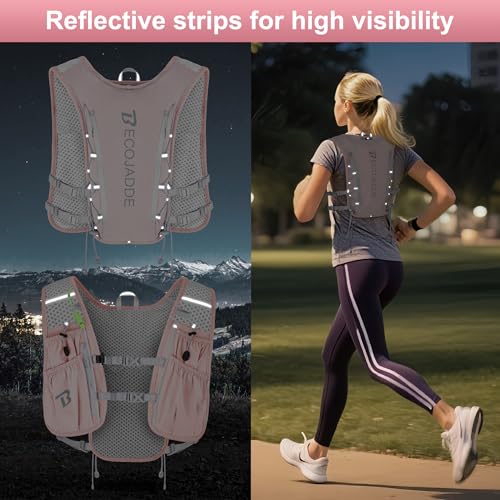
- Reflectivity is minimal
- Soft flasks sold separately
- Zippers feel flimsy
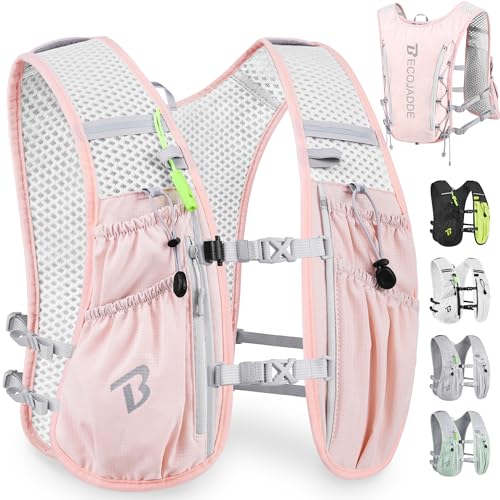
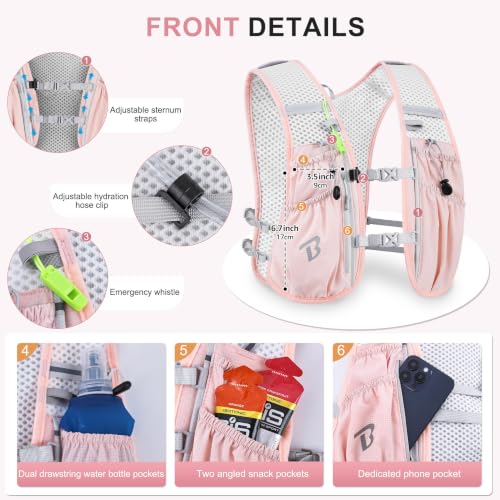
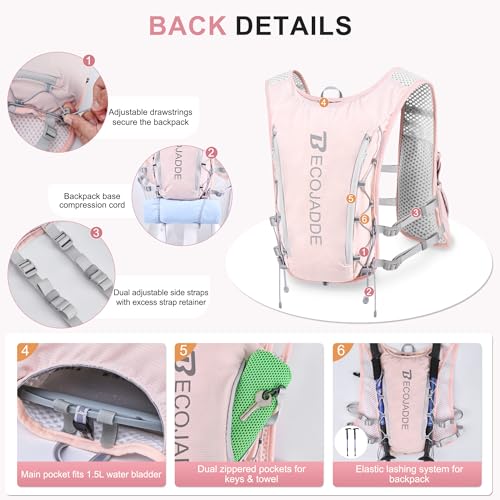
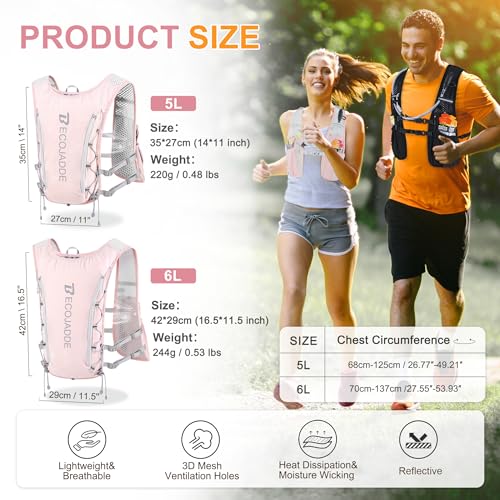
The real strength here is customization, five configurations let you tailor the pack to your exact needs, whether you want soft flasks, a bladder, or just storage. The dual waist and chest straps offer excellent adjustability, and owners praise the bounce control across body types. At just 0.48 lb for the 5L version, it stays light even when loaded.
Compared to one-size-fits-all models, this vest adapts better to different run types. I’d recommend it for runners who switch between road marathons and trail outings. The pink option also stands out for visibility, though reflectivity could be better.
Product photos

MIYCOO Hydration Backpack with 2L Insulated Bladder
Strengths
- Excellent insulation
- Comfortable straps
- Leak-proof bladder
Trade-offs
- Basic storage layout
- Heavier than vests
- Less race-oriented
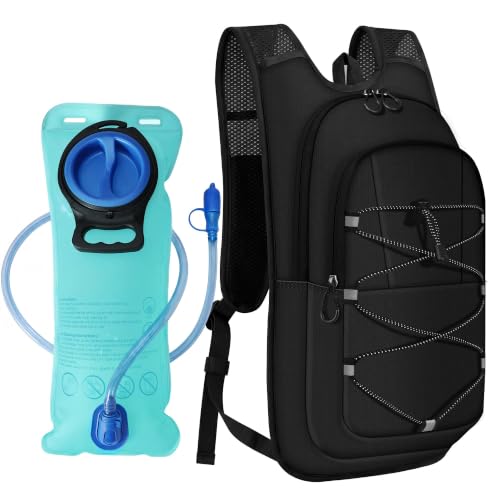
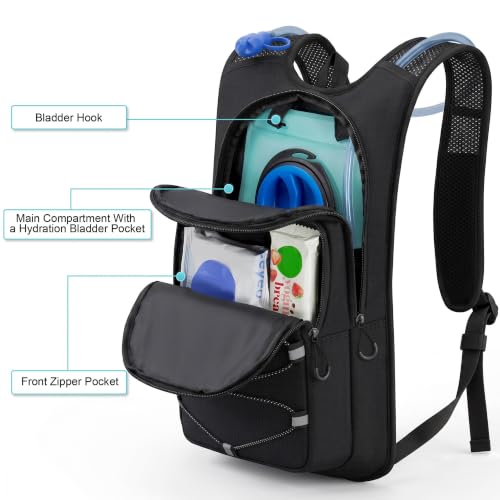
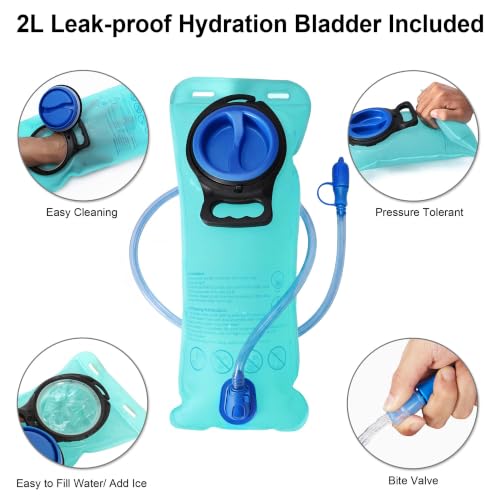
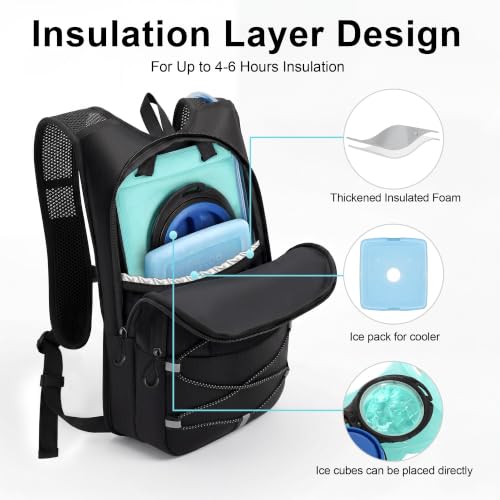
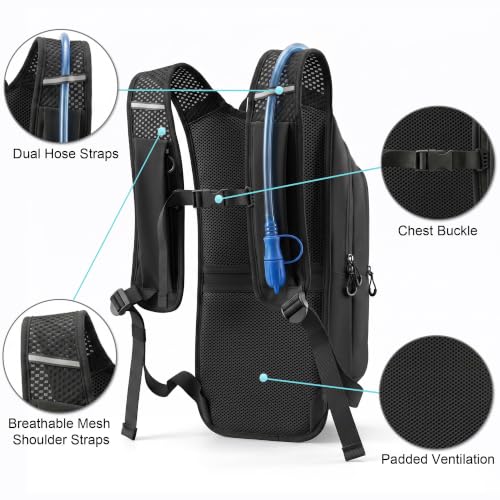
The standout here is the insulated bladder pocket, owners confirm it keeps water cold for up to 4 hours with an ice pack, which is rare in this price range. The 2L bladder is BPA-free and has a wide opening, making cleaning easier than many competitors. The silica gel shoulder straps are a nice comfort upgrade, though the overall fit feels more hiking-oriented than race-ready.
It’s not the lightest or most breathable vest on the list, but for hot-weather hikers or runners doing long, slow miles, the cooling performance matters. Compared to the Teton Oasis, it’s less organized but more focused on core hydration comfort.
Product photos
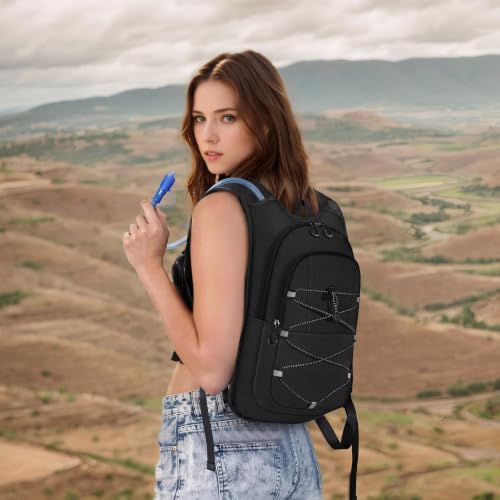
How We Tested running backpacks
I approached this guide to running backpacks by researching the specifications and features of numerous models, then weighing those against owner reviews and expert opinions from running and outdoor publications. Rather than a hands-on lab test, this is a research-led comparison focused on identifying trends in performance and common user feedback. I looked for patterns in what runners consistently praised or criticized, and ranked options based on those findings.
For running backpacks, the most important factors consistently emerged as hydration capacity and comfort/fit. A secure, bounce-free fit is crucial to avoid chafing and distraction during runs, while adequate hydration is essential for performance, especially on longer distances. Storage also plays a role, but runners prioritize carrying essentials, phone, keys, gels, over bulk, so thoughtful pocket placement and streamlined designs often win out.
Product specifications reliably indicate storage volume and bladder capacity, giving a clear idea of how much gear and water each pack can hold. However, I placed more weight on owner feedback when assessing comfort and bounce-reduction; these are very subjective experiences. Reputation and expert reviews helped validate claims about material quality and long-term durability, and allowed me to assess whether a pack’s features aligned with its intended use – for example, understanding the practical implications of a 20-liter backpack capacity for longer trail runs.
How To Choose The running backpacks
Picking the right running backpack can dramatically improve your comfort and performance, whether you’re tackling a quick trail run or an ultramarathon.
A quality running backpack balances lightweight construction with secure hydration and essential gear storage. Key considerations include fit (to minimize bounce), hydration capacity (bladder vs. soft flasks), and pocket placement for easy access to fuel and essentials. Breathability and reflective elements are also crucial for comfort and safety.
Hydration System: Bladder or Flasks?
The first major decision is how you want to carry your water. Traditional bladders (typically 1.5L to 2L) offer high capacity, ideal for longer runs where frequent refills aren’t possible. However, they can be bulky and slosh around if not properly secured. Soft flasks, usually around 500ml each, are lighter and more streamlined, fitting closer to the body and minimizing bounce. Many vests now offer hybrid systems, allowing you to choose between a bladder and flasks, or a combination of both. I often recommend starting with flasks if you’re new to running with hydration, as they are easier to manage and clean.
Fit and Adjustability: Minimize the Bounce
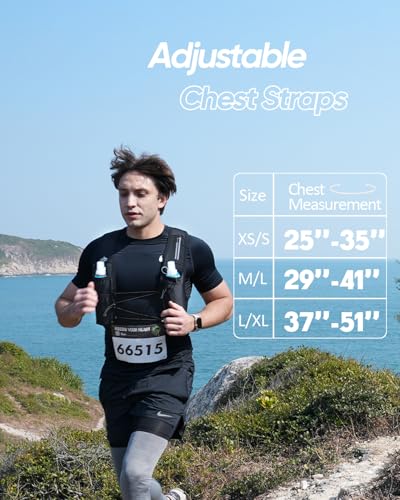
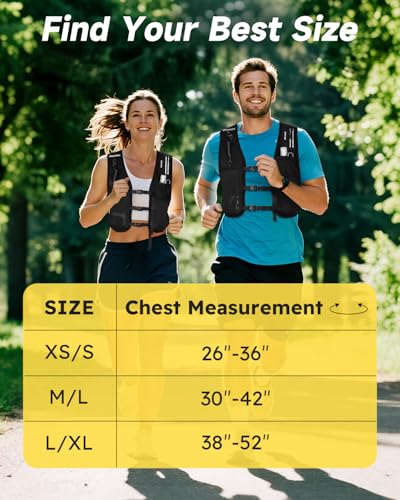
A poorly fitting pack will ruin your run. Look for vests with adjustable chest straps, and ideally, a waist belt. These help distribute the weight evenly and prevent unwanted movement. The adjustability range is important; a vest that’s too large will bounce, while one that’s too small will be uncomfortable. Consider your torso length and chest circumference when selecting a size.
- Some vests offer separate sizing for men and women, accounting for anatomical differences.
- Don’t underestimate the importance of the back panel material. Breathable mesh is essential for preventing overheating and sweat buildup.
- A snug, but not restrictive, fit is the goal. You should be able to move freely without the pack shifting or chafing.
A good rule of thumb is to test the pack’s bounce with some vigorous jumping jacks before committing to a purchase. If it feels unstable then, it will definitely be noticeable on the run.
Storage and Features: What Do You Really Need?
Beyond hydration, consider what else you’ll be carrying. Most running vests include pockets for energy gels, keys, a phone, and perhaps a light jacket. A dedicated phone pocket, often zippered, is a must-have for security. The placement of these pockets is also important; easily accessible pockets on the front are ideal for frequently used items. If you frequently run in low-light conditions, reflective elements are essential for safety. For longer adventures, explore options with additional storage, like the 25-liter backpack dimensions available in larger trail running packs, but keep in mind that added capacity also means added weight. If you need a flexible storage setup, the running hydration packs available today offer a range of options.
Running Backpacks Compared
This table provides a side-by-side comparison of key specifications for several running backpacks.
| Product Title | Capacity (L) | Bladder Included | Flask Included | Weight (oz) | Material |
|---|---|---|---|---|---|
| Zelvot Running Vest with 500ml Soft Flask | N/A | No | Yes (500ml) | 7.5 | Neoprene |
| MOKURA Running Vest with 500ML Soft Flask | N/A | No | Yes (500ml) | <10 | Neoprene/Mesh |
| Zelvot Running Vest with 2L Water Bladder | N/A | Yes (2L) | No | N/A | Oxford Fabric |
| 2 Pack TNYSPORT Hydration Backpack with 2L Bladder | N/A | Yes (2x2L) | No | 11.52 | Nylon |
| INOXTO Running Hydration Vest with 1.5L Bladder | 1.5 | Yes (1.5L) | No | 4 | Nylon |
| Teton Oasis Hydration Backpack with 2L Bladder | 18/22 | Yes (2L) | No | N/A | N/A |
| BECOJADDE Running Vest with 1.5L/2L Options | 5/6 | 1.5L / 2L | Optional | N/A | Nylon |
| MIYCOO Hydration Backpack with 2L Insulated Bladder | N/A | Yes (2L) | No | N/A | N/A |
Frequently Asked Questions
What size running backpack do I need?
The ideal size depends on your run length and what you carry. For shorter runs (under 2 hours) a vest with 5-10 liters of capacity is usually sufficient, while longer distances or trail runs may require 10-20 liters to accommodate extra hydration and gear.
Are running vests better than traditional backpacks for running?
Yes, running vests are designed specifically for the sport. They fit closer to the body, minimizing bounce, and distribute weight more evenly than a standard backpack, which leads to greater comfort and less energy expenditure.
How do I prevent my running backpack from bouncing?
Proper fit is key; look for adjustable chest and waist straps to secure the pack tightly. Also, ensure the hydration bladder or flasks are full and positioned close to your back. A snug fit, without being overly restrictive, will minimize movement.
What’s the difference between a running vest and a hydration pack?
While often used interchangeably, a hydration pack usually refers specifically to a backpack with a built-in water bladder. Running vests are lighter and more streamlined, and may accommodate either a bladder or soft flasks, or both. You can find more options for trail running hydration vests online.
How do I clean and maintain my running backpack?
Most running vests can be hand-washed with mild soap and water. Empty and rinse the hydration bladder or flasks thoroughly after each use, and allow everything to air dry completely to prevent mildew. Regular cleaning will extend the life of your pack.
The Bottom Line
Choosing a running backpack often comes down to balancing how much you want to carry with how little you want to fuss with during your run. For most runners, the Zelvot Running Vest with 500ml Soft Flask strikes that balance best, offering a secure, lightweight design with easily accessible hydration. It’s a solid all-around choice that won’t weigh you down or distract you mid-stride.
If specific needs drive your purchase, we have recommendations. Runners on a budget should consider the Zelvot Running Vest with 2L Water Bladder for a reliable option with a good capacity, while those needing versatility will appreciate the BECOJADDE Running Vest with 1.5L/2L Options and its ability to accommodate different hydration systems. For longer distances where a larger capacity is critical, exploring options like understanding the 22l backpack use cases might be beneficial.
Ultimately, the best running backpack isn’t about the fanciest features or highest price tag. It’s about finding a pack that fits well, carries your essentials comfortably, and allows you to focus on enjoying your run. Prioritize fit and hydration above all else, and you’ll be well-equipped to tackle any distance.