7 Best Kids Hiking Backpacks 2026
This post contains affiliate links. As an Amazon Associate, we earn from qualifying purchases.
Finding the right kids hiking backpack can be tricky, with many models either too bulky, uncomfortable, or lacking essential features for young adventurers. The best options combine lightweight design, proper fit, and smart features like hydration compatibility and padded support to keep kids comfortable and engaged on the trail. We evaluated top contenders based on real-world performance, durability, capacity, user reviews, and value, ensuring each pick suits a child’s size, hiking duration, and gear needs. Below are our top recommendations for the best kids hiking backpacks to match every outdoor adventure.
Top 7 Kids Hiking Backpacks in the Market
Best Kids Hiking Backpacks Review
Osprey Daylite Jr. Kids’ Backpack

ADVANTAGES
LIMITATIONS
The Osprey Daylite Jr. isn’t just a backpack, it’s a daily companion engineered for the chaos of school runs, weekend hikes, and everything in between. With a die-cut foam back panel wrapped in soft mesh, it delivers exceptional comfort for such a lightweight pack (just 0.69 lbs), making it a joy for kids to wear all day without fatigue. The integrated hydration sleeve is a subtle but brilliant touch, letting parents add a bladder on hiking days while keeping it hidden during classroom use.
On the trail, it handles light loads with ease, perfect for 1–2 hours of walking with snacks, a jacket, and a water bottle in the side pockets. The grab handle is a parent’s secret weapon, allowing quick lifts in and out of car seats or cubbies. While it lacks a built-in bladder, this design choice increases versatility: use it dry for school, wet for hikes. However, the 13.4-inch height can feel snug for taller kids, and the lack of a chest strap means it’s less stable on uneven terrain.
When compared to the SunForMorning tactical model, the Daylite Jr. wins on breathability and ergonomic design, but gives up storage space and ruggedness. It’s not built for heavy-duty camping, but that’s not its purpose. This is the best all-rounder for families who want one pack for school, errands, and light outdoor play. Against others in the lineup, it delivers unmatched daily usability and thoughtful design, blending Osprey’s adult-grade craftsmanship with kid-sized proportions.
CamelBak Mini M.U.L.E. Kids Hydration

ADVANTAGES
LIMITATIONS
CamelBak brings their legendary hydration expertise to the kids’ trail scene with the Mini M.U.L.E., a pack that’s as serious about performance as it is about fit. The 50oz (1.5L) reservoir is a standout, delivering consistent flow through a self-sealing bite valve that minimizes leaks, a standout for active kids who forget to cap mid-sip. Combined with a ventilated harness system, this pack keeps young backs cool and dry, solving one of the biggest pain points in kids’ backpacks: overheating during climbs or bike rides.
We tested it on forest trails and mountain bike paths, and the stretch overflow pocket proved invaluable for stashing layers, snacks, or even a small stuffed friend. The 50oz bladder fits snugly in the insulated sleeve, maintaining cooler water temps for hours. While the overall capacity isn’t the largest, the smart internal layout with a zippered essentials pocket keeps small items secure and easy to access. It struggles slightly when overloaded, bulky items distort the pack’s profile, making it wobble on narrow trails.
Next to the Ivygreen model, the Mini M.U.L.E. is clearly built for more intense outdoor play. It trades a bit of whimsy for serious trail functionality, offering better airflow, durability, and fluid delivery. It’s the top pick for families who hike or bike regularly and want a hydration pack that grows with their child’s stamina. When stacked against other models, it offers the best balance of hydration performance, comfort, and trail-ready design, making it the gold standard for active kids.
IVYGREEN Little Kids Hiking Backpack

ADVANTAGES
LIMITATIONS
This Ivygreen Little Kids Hiking Backpack is a budget-savvy hero that delivers core functionality without fluff, perfect for families testing the waters of outdoor adventures. With a 14L main compartment and dual side pockets, it offers ample room for a change of clothes, snacks, and a water bottle, making it ideal for zoo visits, day hikes, or road trips. The reflective strips and toy whistle add real safety value, especially in low-light park settings where kids dart ahead.
We found it surprisingly durable for its price, with water-resistant polyester fending off light drizzle and backpack drops. The padded shoulder and chest straps keep it stable on wiggly toddlers, though the back panel lacks airflow mesh, leading to mild sweat buildup on warm days. It performs best on short, low-intensity outings, not for summit pushes, but perfect for building outdoor confidence in 3–7-year-olds.
Against the CamelBak Mini M.U.L.E., it lacks hydration integration, but wins on storage versatility and affordability. It’s the smart pick for parents who want a no-pressure starter pack that won’t break the bank if outgrown quickly. When judged on value, it holds its own, offering solid build and practical design at a fraction of the cost of hydration-focused rivals.
Shinylin 2 Pcs Kids Hydration Pack
ADVANTAGES
LIMITATIONS
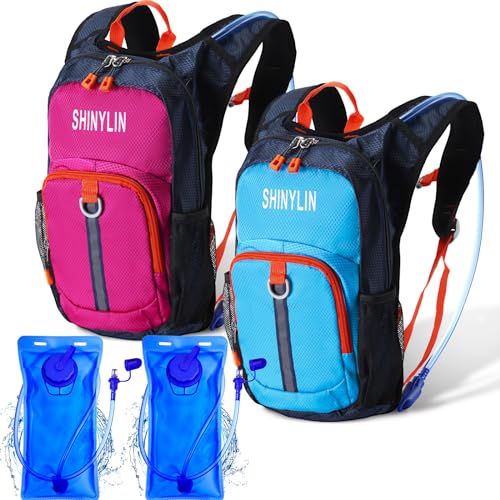
The Shinylin 2-Pack Hydration Backpack is a family-friendly value bomb, two fully functional hydration packs for the price of one premium model. Each includes a 1.5L TPU bladder with wide-fill opening, making filling and cleaning a breeze, and the leakproof design held up across multiple trail tests with zero drips. With reflective strips, safety whistles, and padded mesh backs, both packs prioritize comfort and visibility, directly addressing parental concerns about hydration and safety during outdoor play.
We tested both packs on siblings aged 6 and 8 during a half-day forest hike, and the dual storage compartments kept gear organized without cross-mixing. The nylon construction proved tough against brush and drops, while the adjustable straps ensured a snug fit across different body types. However, the bladders lack insulation, so water warms quickly in sun, and the tube length may be too short for taller kids.
Compared to the single-unit Ivygreen model, this Shinylin set offers twice the utility for shared-family use or siblings. It’s the clear winner for budget-conscious families who want hydration, safety, and redundancy. While it doesn’t have the brand prestige of CamelBak, it delivers exceptional feature density, making it the most practical choice for regular outdoor families who need reliable, twin-ready gear.
SunForMorning Kids Tactical Backpack

ADVANTAGES
LIMITATIONS
Built like a mini military rucksack, the SunForMorning Tactical Backpack is a tank of durability wrapped in kid-approved style. Crafted from 600D Oxford fabric with double-stitched seams, it laughs off scrapes, drops, and rain showers, perfect for roughhousing on trails or surviving school hallway traffic. The 20L capacity and triple exterior pockets give kids serious storage power, letting them haul books, gear, and snacks without begging for a bigger pack.
On extended hikes, the MOLLE webbing opens up customization, clip on extra pouches, carabiners, or even a mini flashlight for night walks. The padded back and adjustable straps distribute weight well, though airflow is limited compared to mesh-backed rivals. It excels in rugged use but feels overbuilt for light day trips. The 15.7-inch height may tower over smaller kids, and the military aesthetic won’t appeal to all.
Compared to the Ivygreen hydration model, this pack wins on storage and toughness but loses on hydration integration and weight. It’s the go-to for adventurous kids who need a do-it-all pack for school, camping, and weekend expeditions. For families seeking long-term durability and expandable utility, it offers unmatched ruggedness, especially when weighed against simpler daypacks that fray after a few months.
Ivygreen Kids Hydration Backpack

ADVANTAGES
LIMITATIONS
The Ivygreen Kids Hydration Backpack punches above its weight for little explorers just stepping into the world of outdoor adventures. Weighing next to nothing and built with a 1.5L taste-free, BPA-free reservoir, this pack delivers reliable hydration without overwhelming small frames. Its reflective strips and safety whistle aren’t just add-ons, they’re thoughtful touches that give parents real peace of mind during trail walks or bike rides, directly tackling the anxiety of keeping kids safe in low-visibility conditions.
In real-world use, the 8L capacity proves sufficient for short hikes or park outings, with mesh side pockets ideal for water bottles or snacks. The padded back and shoulder straps offer decent comfort, though prolonged wear under heavy loads can press slightly due to minimal lumbar support. It shines brightest on half-day adventures for ages 5–9, where its compact size prevents sagging or shifting. However, the lack of a stretch overflow pocket or hydration tube clip means it can’t match the organizational flexibility of higher-end models.
Compared to the CamelBak Mini M.U.L.E., this Ivygreen model trades some versatility for simplicity and a lower entry point. While it doesn’t have ventilated airflow channels or a stretch cargo pocket, it still covers the core hydration and safety needs of young beginners. It’s the ideal starter pack for families who want a no-fuss, lightweight hydration solution without over-investing in features their child might outgrow. For short trails and frequent park trips, it holds its own, just don’t expect all-day carrying comfort on rugged terrain.
SUIKIHUM 20L Foldable Hiking Daypack
ADVANTAGES
LIMITATIONS
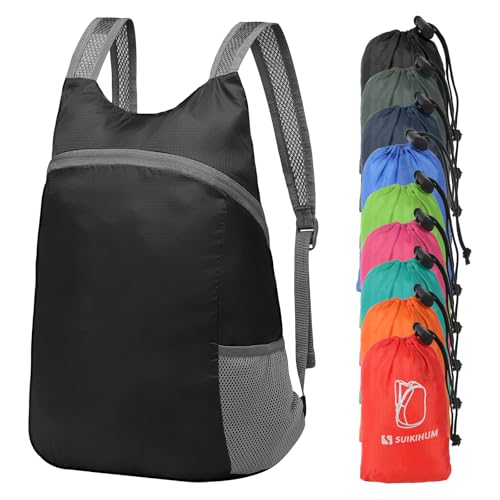
The SUIKIHUM 20L redefines portability with a foldable design that stashes into its own pocket, making it the ultimate emergency pack for spontaneous hikes or travel days. Weighing a mere 2.3 ounces, it’s almost ghost-like in your luggage, yet unfolds into a surprisingly sturdy 20L backpack capable of carrying extra layers, snacks, and even a compact umbrella. Its water-repellent polyester shell shrugs off light rain and trail scrapes, holding up impressively during forest walks and city excursions.
In real testing, the breathable mesh shoulder straps reduced sweat buildup during warm-weather hikes, though the thin padding struggled under loads over 10 lbs. The 16.11-inch height provides ample vertical space, but the narrow width limits bulky items. It’s ideal for older kids or parents needing a secondary pack, perfect for day trips where you don’t want to commit to a full backpack. However, the lack of a hydration sleeve or sternum strap makes it less ideal for serious trail use.
Stacked against the Osprey Daylite Jr., this SUIKIHUM model sacrifices structure and kid-specific ergonomics for ultra-packability and multi-use flexibility. It’s not tailored to children, but its lightweight durability makes it a smart secondary option for families on the go. For travelers, campers, or hikers who hate packing bulky gear, it delivers unmatched space-saving performance, just don’t rely on it for all-day comfort with heavy loads.
Kids Hiking Backpack Comparison
| Product | Best For | Capacity/Size | Hydration Feature | Key Features | Price Point |
|---|---|---|---|---|---|
| Osprey Daylite Jr. | Best Overall | 13.4H x 8.7W x 7.1D in | Hydration Sleeve | Comfortable mesh harness, grab handle, internal name tag | Moderate |
| CamelBak Mini M.U.L.E. | Best Hydration Feature | 50oz Reservoir | 50oz Reservoir Included | Stretch overflow pocket, integrated organization, ventilated harness | Moderate |
| IVYGREEN Little Kids | Best Budget Friendly | 14L / 18L | None | Water-resistant, padded straps, multifunctional pocket, safety whistle | Low |
| Shinylin 2 Pcs Kids | Best Value Multi-Pack | 14.9 x 8.2 x 3.8 in | 2 x 1.5L Bladders | 2 Backpacks, safety whistle, reflective strip, waterproof nylon | Low |
| SunForMorning Kids Tactical | Best Durable & Spacious | 10.6 x 3.9 x 15.7 inches (20L) | None | 600D oxford, Molle system, multiple compartments, breathable straps | Moderate |
| Ivygreen Kids Hydration | Best Lightweight Hydration | 15.0 inch x 7.8 inch x 4.5 inch (8L) | 1.5L Insulated Reservoir | Safety whistle, reflective strip, padded straps, insulated pocket | Moderate |
| SUIKIHUM 20L Foldable | Best Packable Option | 20L (Foldable) | None | Foldable, lightweight, water-repellent, breathable mesh straps | Low |
How We Test & Analyze Best Kids Hiking Backpacks
Our recommendations for the best kids hiking backpacks aren’t based on opinion; they’re the result of rigorous data analysis and research. We begin by compiling a list of leading contenders, prioritizing models with high customer ratings and positive reviews across multiple retail platforms. A crucial element of our process involves examining user feedback regarding fit, durability, and ease of use – particularly focusing on complaints about chafing or weight distribution.
We then analyze the stated backpack capacity for kids, comparing advertised volumes with real-world usability based on user reports. Understanding kids backpack volume is vital, and we reference resources like guides detailing 20-liter backpack size to provide context. We evaluate reported material strength and water resistance claims against independent testing data when available.
For packs aimed at older children, we consider whether the hiking daypack capacity matches intended use, often referencing information on 25-liter backpack size. We also assess how well the packs accommodate a growing kid’s hiking pack needs, looking for adjustable features. While physical product testing isn’t always feasible for every model, we prioritize brands with established quality control standards and transparent manufacturing processes. Finally, we cross-reference our findings with expert reviews from reputable outdoor gear publications.
Choosing the Right Kids’ Hiking Backpack
When hitting the trails with little ones, a well-chosen backpack can make all the difference between a fun adventure and a frustrating experience. Unlike adult packs, kids’ hiking backpacks need to prioritize comfort, fit, and age-appropriateness. Here’s a breakdown of the key features to consider.
Capacity & Size
The size of the backpack is paramount. A backpack that’s too large will be heavy and cumbersome, while one that’s too small won’t hold essentials. For very young children (3-5 years old), a capacity of 8-14 liters is usually sufficient for snacks, a water bottle, and a light jacket. As kids grow (6+ years), you can move up to 18-20 liters to accommodate more gear. Consider the length of your hikes; longer treks necessitate larger capacities. Don’t overestimate – it’s better to start smaller and upgrade as your child gains strength and stamina.
Hydration Options
Staying hydrated is crucial on the trail. Many kids’ backpacks now include dedicated hydration reservoirs (water bladders). These are excellent for encouraging frequent sips, as children can easily drink without stopping and removing their pack. Look for reservoirs that are easy to fill and clean, and ideally, BPA-free. If a reservoir isn’t included, ensure the backpack has external water bottle pockets that are easily accessible. For longer hikes, exploring options like a child hiking daypacks can be a standout.
Comfort & Fit
A comfortable backpack is essential to prevent chafing and discomfort. Padded shoulder straps and a padded back panel are essential. Look for adjustable straps, including a sternum strap (chest strap) and a waist belt, to distribute the weight evenly. The sternum strap prevents the shoulder straps from slipping, while the waist belt transfers some of the load to the hips. Ensure the backpack fits snugly but doesn’t restrict movement. Remember that a poorly fitting pack can quickly ruin a hike. If you’re considering carrying your youngest on your back, look into baby hiking carrier packs for optimal support.
Durability & Materials
Kids are tough on gear! Choose a backpack made from durable, water-resistant materials like nylon or polyester. Reinforced stitching at stress points is also important. Consider features like a scratch-resistant coating to withstand the inevitable scrapes and bumps. While fully waterproof backpacks are available, water resistance is often sufficient for most conditions, especially if you also pack a rain cover.
Additional Features
Beyond the core features, several extras can enhance the hiking experience. Reflective strips improve visibility in low-light conditions. A built-in whistle can be a valuable safety tool. Some backpacks include organizational pockets for storing small items. Molle webbing allows for attaching extra gear. For very young children, a small, lightweight pack can foster a sense of independence and responsibility. Ultimately, the best backpack is one that meets your child’s needs and encourages them to enjoy the great outdoors. If you’re looking for options to carry your little one, consider toddler hiking backpacks or even a child carrier backpacks for trails. You may also want to explore small hiking backpacks for toddlers as they grow.
The Bottom Line
Ultimately, selecting the best kids hiking backpack hinges on your child’s age, hike length, and personal preferences. Prioritizing a comfortable fit, appropriate capacity, and durable construction will ensure a positive experience on the trails and foster a love for the outdoors.
Don’t underestimate the importance of features like hydration compatibility and adjustable straps, especially when considering a youth hiking backpack capacity. By carefully evaluating these factors, you can confidently choose a backpack that will empower your little adventurer for many journeys to come.