Carry-On Bag Size: The Complete Guide to Airline Dimensions
This post contains affiliate links. As an Amazon Associate, we earn from qualifying purchases.
A standard carry-on bag measures 22 inches tall, 14 inches wide, and 9 inches deep (56 x 36 x 23 cm). This dimension includes wheels, handles, and any external pockets. Most major U.S. airlines use this size, but you must always check your specific carrier’s rules, as budget airlines and international carriers enforce smaller sizes and strict weight limits.
Most people get this wrong by buying a bag labeled “carry-on” and assuming it’s universal. They forget to measure the wheels, or they pack it so full the expanded zipper adds two inches. That mistake costs $60 at the Spirit Airlines gate.
This guide walks through the real numbers for every major airline, explains the difference between linear inches and dimensional limits, and shows you how to pack a bag that actually fits. We’ll cover the 2025 rule changes, including the TSA’s liquid limits and new fees from carriers like Air Canada.
Key Takeaways
- The 22″ x 14″ x 9″ carry-on size is a soft ceiling, not a guarantee. Always verify your airline’s published dimensions.
- Budget airlines (Spirit, Frontier) sell carry-on as a separate, paid privilege. Their sizers are often 1-2 inches smaller in each dimension.
- A personal item must fit under the seat. Dimensions around 18″ x 14″ x 8″ are safe, but some airlines just require a visual fit test.
- Major U.S. carriers (Delta, American, United, Southwest) rarely weigh domestic carry-ons. International flights and budget carriers always do, with limits as low as 15 lbs.
- The TSA 3-1-1 rule for liquids is still in full effect. As of early 2025, EU airports have reverted to the 100ml limit due to scanner issues.
What is the Standard Carry-On Bag Size?
The 22 x 14 x 9 inch measurement is the industry benchmark for a reason. It’s the maximum dimension that reliably fits in the overhead bins of Boeing 737 and Airbus A320 aircraft, which form the backbone of domestic U.S. fleets. Manufacturers build bags to this spec, and airlines build their policies around it.
The standard carry-on bag size is 22 inches in height, 14 inches in width, and 9 inches in depth (56 x 36 x 23 cm). This measurement includes all external components such as wheels, telescopic handles, and side pockets. Most major U.S. airlines, including American Airlines, Delta Air Lines, and United Airlines, adhere to this dimensional limit for overhead bin storage.
But here’s the catch. That’s the external dimension. A soft-sided suitcase compressed by an overhead bin door might pass. A hard-shell spinner with rigid wheels and a fixed handle will not compress. If your bag’s stated size is 22 x 14 x 9, it is already at the absolute limit. Any overpacking pushes it over.
TL;DR: Your bag must be 22″ x 14″ x 9″ or smaller, wheels and handles included. This is the maximum, not a target.
Linear Inches vs. Dimensional Limits: What Actually Gets Measured?
You’ll see two measurement systems: dimensional limits and linear inches. They are not the same, and using the wrong one is a common mistake.
Dimensional limits are the three numbers (H x W x D). Your bag must be under each number. This is what most U.S. airlines use.
Linear inches is the sum of height, width, and depth. A common limit is 45 linear inches. For example, a bag measuring 22 + 14 + 9 = 45 linear inches hits the limit exactly. Airlines like Delta use this system for international carry-ons.
The difference matters for bag shape. A dimensional limit bans a bag that is 23 inches tall, even if it’s very thin. A linear inch limit might allow that tall, thin bag if the total sum is under 45. Always check which system your airline uses.
| Airline | Measurement System | Carry-On Size Limit | Key Exception |
|---|---|---|---|
| Delta Air Lines | Linear Inches | 45 linear inches (22″ x 14″ x 9″ typical) | International flights may have lower weight limits. |
| United Airlines | Dimensional | 22″ x 14″ x 9″ | Basic Economy tickets include only a personal item. |
| Spirit Airlines | Dimensional | 22″ x 18″ x 10″ (but sizer is smaller) | Carry-on is a paid add-on, not included in base fare. |
| Frontier Airlines | Dimensional | 24″ x 16″ x 10″ (published) / 22″ x 18″ x 10″ (sizer) | Sizer at gate is more restrictive than website states. |
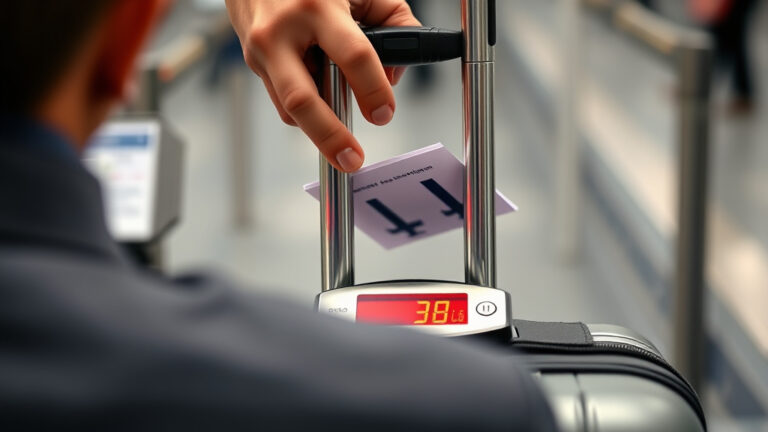
I learned this the hard way on a Delta connection to Montreal. My standard 22″ roller was fine on the domestic leg. The gate agent for the international segment pulled out a tape and insisted on weighing it. It was 28 pounds. Delta’s limit was 22. I had to scramble, wearing three layers and stuffing my coat pockets, to avoid a $100 checked-bag fee. Now I use a luggage scale before every trip, international or not.
Personal Item vs. Carry-On: The Two-Bag Rule
Almost every airline allows one carry-on for the overhead bin and one personal item for under the seat. This is the two-bag rule. The personal item is not an afterthought. Its size determines whether you keep your backpack at your feet or watch it get tagged and taken away.
A typical personal item size is 18 x 14 x 8 inches. That fits under most domestic airline seats. However, airlines like JetBlue and Southwest don’t publish exact dimensions. They use a fit test: if it fits under the seat without blocking your legroom or protruding into the aisle, it’s fine.
Common mistake: Using a large backpack as both a personal item and a carry-on – the gate agent will classify it as your carry-on, forcing you to check your roller bag and pay a fee.
Your personal item should be soft and compressible. A structured laptop bag or a stuffed backpack will fail the fit test. I use a simple nylon backpack and never fill the top compartment. It squishes down an inch when shoved under the seat. That inch is the difference between compliance and a argument at the jet bridge.
Airline-by-Airline Carry-On Size Guide for 2025
Policies change. The 2024 guide is already wrong for several carriers. Here are the current, verified rules for the airlines you’re most likely to fly.
Delta Air Lines & American Airlines
Both use the 22″ x 14″ x 9″ dimensional limit or 45 linear inches. No weight limit for domestic carry-ons. Their policies are straightforward, which is why they’re a common pick for business travelers. You can review the official FAA carry-on baggage guide for foundational rules that shape these policies.
United Airlines
Same 22″ x 14″ x 9″ size. The twist is Basic Economy. That ticket class includes only a personal item. If you bring a roller bag, you’ll pay the gate-check fee plus a $25 handling surcharge. Don’t assume your old United ticket includes a carry-on.
Southwest Airlines
The most generous major carrier. Two checked bags fly free, and the carry-on policy is the standard 24″ x 16″ x 10″. In practice, their bins are the same size as everyone else’s, so sticking to 22″ x 14″ x 9″ is safer. Their friendly Southwest’s carry-on policy is a rare holdout in an era of fees.
Spirit Airlines & Frontier Airlines
These are fee-based systems. Your ticket includes only a personal item that must fit in their smaller sizer (typically around 18″ x 14″ x 8″). A carry-on is a paid add-on, and their sizers at the gate are notoriously tight. Spirit’s published size is 22″ x 18″ x 10″, but the metal bin is smaller. If it doesn’t drop in freely, they charge you. Knowing Spirit Airlines carry-on policy before you pack is the only way to avoid surprise costs.
International Carriers
Weight limits are universal. British Airways: 51 lbs. Lufthansa: 17.6 lbs. Air Canada: 22 lbs. They will weigh your bag at check-in. If you’re over, you’re checking it and paying. Size limits are also often smaller—think 21.5″ x 15.5″ x 9″ for many European airlines.
The Tools and Tricks for Guaranteed Compliance
You need two tools: a tape measure and a luggage scale. The tape measure proves your bag’s empty dimensions. The luggage scale proves you didn’t overpack it.
- Measure Your Bag Empty. Include the wheels and handle fully extended. Write the numbers on a tag inside the bag.
- Check Your Airline’s Website. Do this 24 hours before your flight. Policies update quietly.
- Use Packing Cubes. They compress clothing and keep your bag’s shape rectangular, not bulging.
- Wear Your Heavy Items. Boots, jackets, thick jeans—wear them on the plane.
- Know the Gate Check Drill. If you’re called for a gate check, quickly remove your laptop, medications, and a change of clothes. Your bag will be out of your custody.
A final trick. If you’re borderline, board early. Overhead bin space fills from the front of the plane to the back. If you board late and the bins are full, your carry-on gets checked for free—but you risk it going to a different destination. Not worth the gamble.
Navigating TSA Rules: Liquids, Electronics, and Security
The TSA doesn’t set your bag’s size. That’s the airline’s job. But the TSA decides what’s inside it. Their rules are non-negotiable.
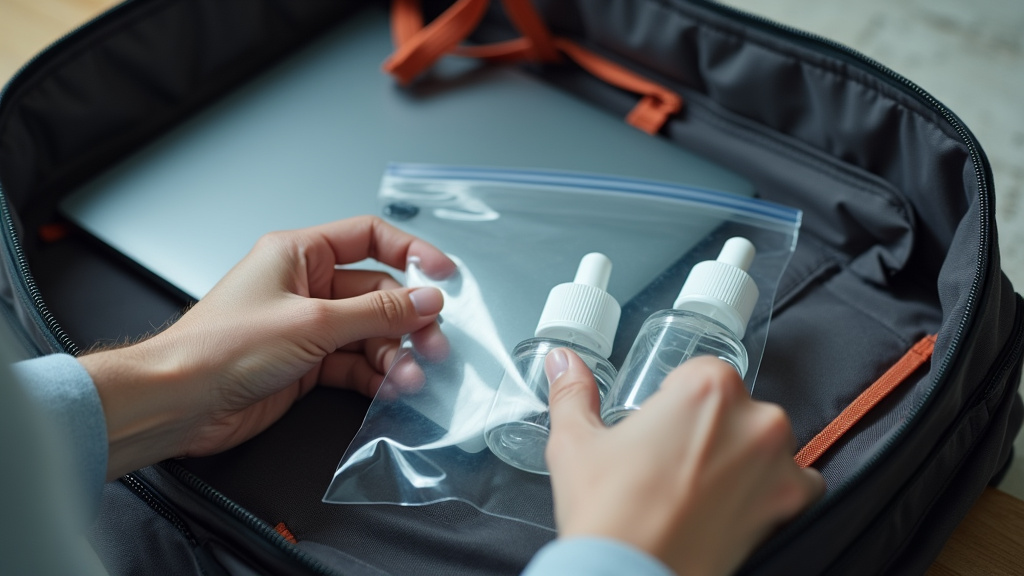
The 3-1-1 rule is back in full force. As of early 2025, European airports have abandoned the planned rollout of larger liquid allowances due to technical issues with new scanners. Assume every airport enforces the old rule:
* 3.4 ounce (100ml) container limit.
* 1 quart-sized clear plastic bag.
* 1 bag per passenger.
Before you start: Prohibited items like tools, sharp objects, and certain batteries can be confiscated. A multitool in your carry-on will be found and taken, delaying you and everyone behind you. Check the TSA carry-on size restrictions for the complete list before you pack.
Electronics larger than a cell phone must come out of your bag for screening. That means laptops, tablets, and large cameras. Pack them in an easy-to-access sleeve or at the top of your bag. The TSA line is not the place to unpack your entire suitcase.
Frequently Asked Questions
Can I bring a backpack and a carry-on suitcase?
Yes, under the two-bag rule. Your backpack is your personal item if it fits under the seat. Your suitcase is your carry-on if it fits the overhead bin dimensions. This backpack and carry-on combo is standard on most airlines.
What happens if my carry-on is one inch too big?
The gate agent has discretion. They might let it slide if the flight isn’t full. More likely, they’ll ask you to gate-check it, which is often free but sometimes carries a fee (especially on budget airlines). If you must check it at the ticket counter because it’s too large, you’ll pay the standard checked-bag fee.
Do carry-on bags get weighed?
On domestic flights with major U.S. carriers, almost never. On international flights and with budget carriers like Frontier and Spirit, almost always. Their limits are strict and enforced. When in doubt, assume it will be weighed.
Is a duffel bag okay as a carry-on?
Yes, if it meets the size limits. Soft duffels have an advantage because they can be squeezed into a full overhead bin. However, if it’s overstuffed and can’t be compressed, it will be rejected. Measure it when fully packed.
What are the new rules for 2025?
Key updates include Air Canada introducing carry-on fees for Basic Economy fares on North American routes, and the EU reinstating the 100ml liquid limit. Always check your airline’s website a week before travel for the most current airline carry-on size regulations.
The Bottom Line
A carry-on bag’s size is a simple number with complex consequences. The standard 22″ x 14″ x 9″ is your starting point, not your finish line. Your airline’s specific policy is the final word. Budget carriers build their business model on bag fees, so their rules are stricter and their sizers are smaller.
Weigh your bag at home. Measure it with wheels extended. Your goal is to walk past the gate agent without a second glance. That takes preparation, not luck. Pack light, pack smart, and always have a plan B for your essentials if your bag has to go below.