Can You Bring A Backpack On Delta
This post contains affiliate links. As an Amazon Associate, we earn from qualifying purchases.
Yes, you can bring a backpack on Delta. It qualifies as your one free personal item if it fits under the seat (max 17″ x 13″ x 9″). It can be your carry-on bag if it fits in the overhead bin (max 22″ x 14″ x 9″). You cannot use the same backpack for both allowances on the same flight.
Delta’s carry-on policy allows each passenger one carry-on bag and one personal item free of charge. Your backpack can serve as either, but the size rules are strict and non-negotiable. The distinction decides whether it flies in the overhead bin or under the seat in front of you.
Here’s the part people miss. Every time you assume your backpack automatically qualifies as a personal item, you risk gate-check fees and boarding delays. The real answer isn’t just Delta’s official dimensions—it’s about how you measure, pack, and plan your approach to the gate.
Key Takeaways
- A backpack counts as your carry-on if it’s larger than 22 x 14 x 9 inches (56 x 35 x 23 cm), including handles and wheels. It must fit in the overhead bin.
- A backpack counts as your personal item if it fits comfortably under the seat. Delta doesn’t publish a strict size limit for personal items, but common practice targets bags under 18 x 14 x 8 inches (45 x 35 x 20 cm).
- You can only bring one of each. You cannot bring a backpack as your carry-on AND another backpack as your personal item.
- Always measure including all external parts. Handles, wheels, and any packed-out pockets count toward the size. A bag that’s technically the right dimensions when empty can exceed limits when fully packed.
- Gate-checking is the real risk. If overhead bins fill up or your bag is flagged as too large, it will be gate-checked, potentially incurring fees and separation from your essentials.
Delta’s Official Carry-On Bag Size Limits
Delta’s policy is clear but requires careful reading. The airline differentiates between your “carry-on bag” (for the overhead bin) and your “personal item” (for under the seat).
Carry-On Bag Dimensions:** 22 inches x 14 inches x 9 inches (56 cm x 35 cm x 23 cm).
This includes every part of the bag—handles, wheels, and any external pockets. The combined length + width + height must not exceed 45 linear inches (114 cm). You calculate this by adding L+W+H.**
The carry-on must fit in the overhead bin space on your specific aircraft. While most mainline Delta jets can accommodate this size, smaller regional jets (like those operated by Delta Connection carriers) have significantly smaller bins.
Personal Item Dimensions: Delta’s website states a personal item must fit under the seat in front of you. They do not provide exact maximum dimensions. This is where most travelers get tripped up.
Industry standard and observed practice on thousands of flights shows that bags under 18 x 14 x 8 inches (45 x 35 x 20 cm) almost always fit without issue. Flight attendants are looking for a bag that slides in easily without blocking your legroom or protruding into the aisle.
Common mistake: Assuming any backpack under the 22″ carry-on limit automatically qualifies as a personal item. A backpack that’s 21 x 13 x 8 inches is still too large for the under-seat space on many aircraft. It’s a carry-on.
The One Bag Rule: Carry-On vs. Personal Item
Your backpack must be designated as either your one carry-on bag or your one personal item. You cannot have two backpacks.
- If your backpack is your carry-on, your personal item must be something smaller like a purse, laptop bag, or small tote.
- If your backpack is your personal item, your carry-on should be a rolling suitcase or a weekender bag.
Attempting to board with two backpacks is the single fastest way to get flagged by the gate agent.
What Counts as a Personal Item Backpack?
The goal is a bag that truly fits under the seat without force. Think compact, soft-sided, and not overstuffed.
Reliable Examples of Backpacks That Work:
- Standard Laptop Backpacks: Most 15-17 inch laptop bags from brands like JanSport, SwissGear, or The North Face.
- Daypacks & Hiking Packs (Under 20L): Small hiking daypacks used without a full frame. A packed-out 30-liter hiking pack will not fit.
- Minimalist Travel Packs: Packs specifically designed for “one-bag” under-seat travel, like those from Patagonia Black Hole 32L (when not overfilled) or the Osprey Daylite 26+6.
TL;DR: If your backpack has a rigid frame, protrudes far from your back when worn, or looks like you’re packed for a week-long trip, it’s likely a carry-on.
How to Ensure Your Backpack Complies (Before You Get to the Gate)

1. Measure Correctly, Including Everything.
Use a tape measure. Measure the height from the bottom of the bag (including wheels if present) to the top of the extended handle. Measure the width at its widest packed-out point. Measure the depth including any front pockets stuffed with items.
2. Use the “Sizer Bin Test.
Most Delta gate areas have the metal sizer bins. If you’re cutting it close, test your bag before you get in the boarding line. If it doesn’t slide in and out without force, it’s too big. Don’t rely on the “I can squeeze it” method—overhead bin space is rigid.
3. Pack with the “Under-Seat Goal in Mind.
If you intend to use your backpack as a personal item:
* Don’t overfill. Leave some give in the main compartment.
* Use packing cubes. They compress clothing and create a more regular-shaped bag.
* Wear your bulkiest items. A jacket or boots can be worn on the plane.
* Keep the profile slim. Avoid packing hard items in the front-facing pocket that will make the bag protrude.
4. Understand Your Aircraft & Route.
- Delta Connection Flights: These are operated by regional partners (like Endeavor Air or Republic Airways). The Embraer 175 and CRJ-900 jets have tiny overhead bins. On these flights, even a compliant 22″ carry-on will often be gate-checked at the boarding door for free. Your personal item backpack becomes critical.
- Basic Economy vs. Main Cabin: While both allow a carry-on and personal item, Basic Economy boards last. By the time you board, overhead space is often full. Your carry-on backpack will likely be gate-checked. Plan to use your backpack as your personal item on these fares.
What Happens If Your Backpack Is Too Big? (Gate-Checking)
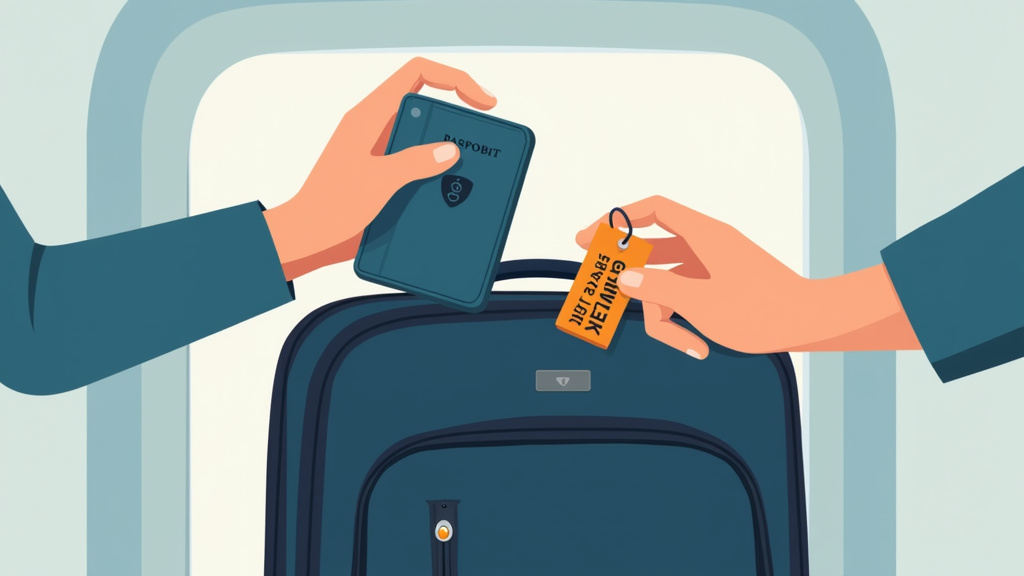
If your bag exceeds carry-on size limits or if overhead space runs out, you will be required to gate-check your bag.
The Process:
- You’ll receive a special tag at the gate.
- You’ll leave your bag just outside the aircraft door.
- It will be placed in the cargo hold.
- You pick it up at baggage claim, not at the jet bridge upon arrival.
The Risks:
- Fees: If your bag was flagged as too large and you did not pay a checked bag fee, Delta may charge you the standard checked bag fee plus a $25 gate service charge. That’s $35 – $60 for domestic flights.
- Loss of Access: Your medications, valuables, electronics, and travel documents should never be in a gate-checked bag.
- Delays: You must wait at baggage claim, cannot make a quick exit.
Pro Tip: If you’re forced to gate-check a bag you intended as carry-on, quickly pull out your essential items and put them in your personal item. Keep that small bag with you.
Prohibited Items & Special Rules for Backpacks
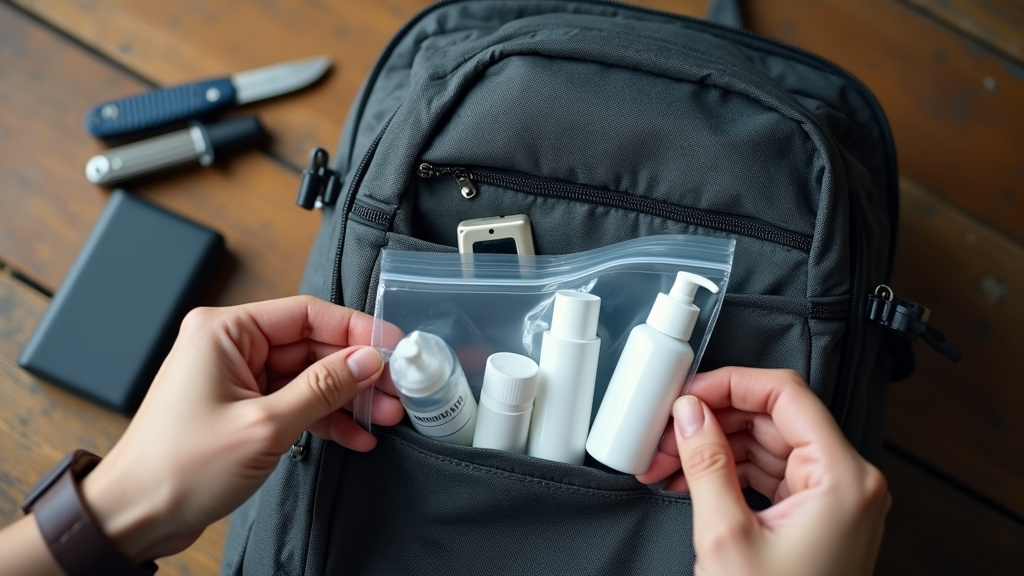
The standard TSA rules apply. Remember these critical points for items in your backpack:
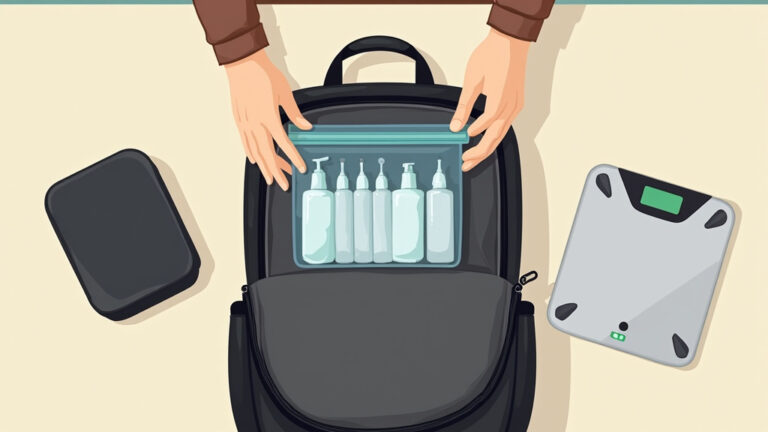
- Liquids, Gels, Aerosols: All must be in containers of 3.4 ounces (100ml) or less. All containers must fit inside one single quart-sized, clear plastic bag. One bag per passenger.
- Sharp Objects: Tools, knives (including pocket knives), scissors with blades over 4 inches, and any sharp tools must be in checked baggage.
- Batteries & Power Banks: Spare lithium-ion batteries (like those in power banks and laptops) must be in carry-on baggage. They are prohibited in checked bags.
Frequently Asked Questions
Can I bring a backpack and a carry-on suitcase on Delta?
Yes. That is the standard allowance: one carry-on (suitcase) and one personal item (backpack). The backpack must fit under the seat.
Does Delta weigh carry-on backpacks?
Typically, no, for domestic flights. Delta’s focus is on size. However, for international flights or if a bag appears excessively heavy, agents may weigh it. You must be able to lift it into the overhead bin unassisted.
What if my backpack is slightly over the size limit?
Delta’s sizer bins are the final judge. “Slightly” over often means it doesn’t fit. If it doesn’t fit in the bin, it’s too big. The gate agent’s discretion is final.
Can I use a packing cube system in my backpack personal item?
Absolutely. Packing cubes are one of the best ways to organize and compress your under-seat bag, ensure it stays within a compliant shape.
Are there different rules for Delta One, First Class, or Medallion Members?
No. The size limits are the same. The key advantage is earlier boarding, which guarantees overhead bin space for your carry-on bag.
The Bottom Line
You can definitely bring a backpack on Delta. The outcome depends entirely on your choice and preparation. Designate it clearly: Is it your overhead carry-on or your under-seat personal item? Measure it accurately including all protrusions. Pack with its designated space in mind.
When in doubt, err on the side of caution. Use a smaller, compliant backpack as your personal item and check a larger bag or use a rolling carry-on. The certainty of avoiding gate-check fees and keeping your essentials with you is worth more than squeezing in that extra pair of shoes. Safe travels.