Can I Bring a Backpack to Jury Duty? The Definitive Guide
This post contains affiliate links. As an Amazon Associate, we earn from qualifying purchases.
Yes, you can bring a backpack to jury duty in most courthouses. The real answer is about what you put in it. You need a photo ID, your summons, quiet entertainment, and layers for a cold room. You must leave behind all weapons, tools, and any item that could slow down security or disrupt the courtroom.
People get this wrong by assuming every courthouse has the same rules. They pack a pocket knife they always carry, or they bring a laptop without checking if it’s allowed. The result is a confiscated item, a delayed entry, and starting the day frustrated before you even find a seat.
This guide walks through exactly what to pack, what will get turned away at security, and how to navigate the specific rules for federal, state, and local courts. You’ll learn how to pack a bag that gets you through the checkpoint fast and keeps you comfortable during hours of waiting.
Key Takeaways
- Always verify with your local court. Your jury summons or the court’s .gov website holds the definitive list of what’s allowed and banned. Federal courts often have stricter rules than county ones.
- Security is non-negotiable. Every bag goes through an X-ray, and officers can manually search it. Prohibited items like knives or pepper spray will be confiscated, and you likely won’t get them back.
- Electronics are a conditional privilege. Phones are usually okay in the assembly area but must be off and silenced in courtrooms. Using them to research the case is a serious violation.
- Pack for a long, cold, boring day. Essential items include a photo ID, summons, book or e-reader, charger, sweater, quiet snacks, and an empty reusable water bottle.
- Dress and act with respect. Business casual attire is the standard. Avoid strong scents, and never bring children or others who require care.
The One Rule That Overrides Everything Else
Your local court’s specific instructions are the final word. The U.S. District Court what to bring guide for Nebraska looks different from the Baltimore City Circuit Court prohibited items list. A rule in a county courthouse may not apply to a federal building across the street.
Finding these rules is straightforward. Check the paperwork that came with your summons. Look for a section titled “Juror Information” or “What to Bring.” The second step is to visit the official website of the court you’re summoned to. Search for “jury service” or “juror information.” These .gov or .courts.state.xx.us domains are the authoritative source.
Court security protocols are designed for the safety of judges, staff, and the public. All persons entering a courthouse, including jurors, must pass through a security screening station. Bags are subject to X-ray examination and manual search. Prohibited items discovered during screening will not be stored by court security and may be confiscated.
TL;DR: Your jury summons and the court’s official website are your packing bible. Ignoring them is the fastest way to have your day start with a problem.
What Can I Bring in My Backpack? (The Smart Packing List)
Think of jury duty as preparing for a long flight with no guaranteed Wi-Fi and a very serious final destination. Your backpack should serve two purposes: getting you through security quickly and making a potentially long, tedious day bearable.
The following table breaks down the essentials, the smart adds, and what to consider for special situations.
| Category | What to Pack | Why It’s Important |
|---|---|---|
| Absolute Essentials | Photo ID, Jury Summons | You cannot enter the courthouse or get paid without these. No exceptions. |
| Entertainment | Book, magazine, e-reader (download books first), puzzle book | There will be hours of waiting. Electronics may have to be powered off. |
| Comfort & Sustenance | Reusable water bottle (empty is safer), quiet snacks (granola bars, nuts), sweater/jacket | Courtrooms are notoriously cold. Vending options may be limited or expensive. |
| Electronics | Phone, portable battery pack, headphones | A power bank is a lifesaver. Headphones are required for any audio. Silence phones in courtrooms. |
| Health & Necessities | Prescription medication in original container, small personal care items | Inform security of medications. Courts do not provide these items. |
A medium-sized backpack or a soft-sided tote bag is ideal. It’s large enough to hold your gear but small enough to not look like you’re moving in. Pack it neatly. When every bag looks like a chaotic jumble on the X-ray screen, the officer is more likely to pull it for a manual search. A neatly packed bag with distinct, separate items speeds everything up.
The arena security procedures at major venues share this principle: a cluttered bag invites scrutiny. Same logic applies here.
Portable chargers are arguably more important than your phone. Outlets in jury assembly rooms are fought over like treasure. I learned this the hard way during a two-day selection process years ago. My phone died by noon on the first day, and I spent the afternoon staring at the wall. I now own two high-capacity power banks that live in my go-bag.
As for food, think texture and sound. An apple is healthy, but the loud crunch will draw stares in a silent room. A bag of chips is a nightmare. Go for soft, unwrapped items or things in reusable containers.
What Can I NOT Bring to Jury Duty? (The Absolute No-Go List)
This is where most people trip up. You’re not walking into a coffee shop; you’re entering a secured government facility. The list of banned items is extensive for a reason.
Common mistake: Bringing a small pocket knife or multi-tool “just in case.” — Security will spot it on the X-ray every time. It will be confiscated, and you will not get it back that day. In some jurisdictions, attempting to bring a weapon into a courthouse is itself a crime.
The prohibited items list is exhaustive, but it clusters into a few clear categories:
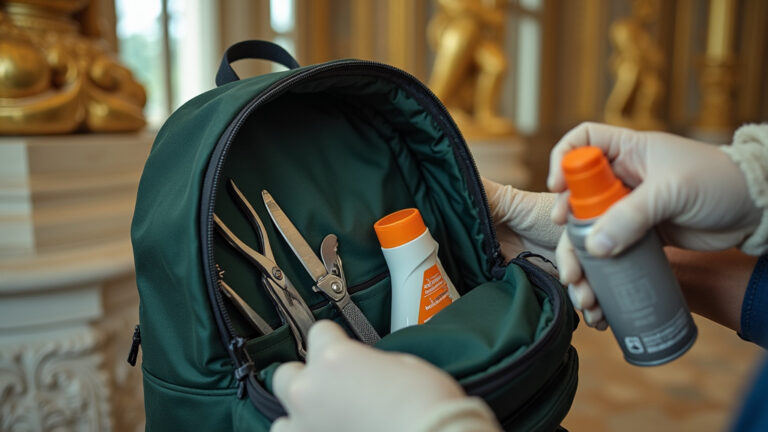
- Weapons and Weapon-like Items: This includes the obvious (guns, ammunition) and the often-overlooked. Pepper spray, mace, brass knuckles, and any item intended for self-defense are banned. This also covers all knives. That means your Swiss Army knife, your Leatherman multi-tool, and even that tiny keychain blade.
- Tools: Screwdrivers, wrenches, pliers, hammers, box cutters, and any tool that could be used as a weapon or to compromise security.
- Sharp Objects: Scissors, knitting needles, crochet hooks, metal nail files, and large metal hairpins. The concert hall bag rules at performance venues are similarly strict on these points.
- Disruptive or Suspicious Items: Cameras, recording devices of any kind, alcohol, illegal substances, and any chemical or aerosol spray (like spray sunscreen or deodorant).
Federal courts tend to be the strictest. Some, like the U.S. District Court for the District of Oregon, explicitly prohibit items like knitting needles and crochet hooks. The underlying principle is uniform: nothing that can be used to harm, record, or disrupt the judicial process gets past the door.
If you accidentally bring a banned item, you have three bad options. You can return it to your car if you parked nearby. You can throw it in a trash can outside. Or, it will be taken by security and likely not returned. They do not have a storage locker for your contraband.
TL;DR: Empty your everyday carry of all tools and weapons. If it’s sharp, could be used as a blunt object, or looks suspicious on an X-ray, leave it at home.
How Do Courthouse Security and Bag Checks Work?

You will go through a security checkpoint almost identical to an airport’s. The process is designed to be thorough, not fast. Factor this into your arrival time.
The standard procedure is a familiar dance:
1. You approach the checkpoint, often manned by deputy sheriffs or federal marshals.
2. You place your backpack, purse, or any bag onto the conveyor belt of an X-ray machine.
3. You empty your pockets of phones, keys, coins, and belts into a plastic bin.
4. You walk through a metal detector.
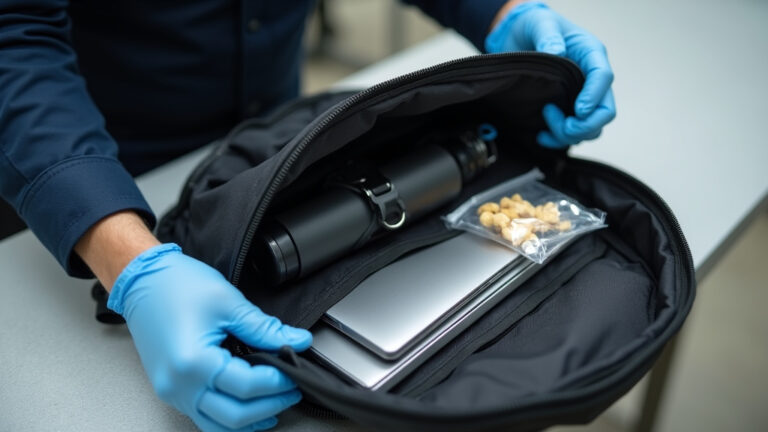
5. If the X-ray operator sees something unclear or suspicious, your bag will be pulled for a manual search. An officer will open it and inspect the contents with your supervision.
I watched a juror ahead of me get pulled aside because a tangled mess of charging cables and a dense battery pack looked like a single ominous block on the screen. The officer had to unravel every cord. The juror missed the first roll call because of it.
The manual search isn’t personal. It’s a precaution. Packing with the X-ray in mind means keeping items separate and avoiding dense clumps. Don’t stuff your charger deep inside a balled-up jacket. The stadium bag policies for efficient entry use the same logic: a clean bag is a fast bag.
Your behavior matters, too. Be polite, have your ID and summons ready, and follow instructions. This is not the time for debates about your rights. The officers have a job to do, and arguing will only delay you and everyone behind you.
The entire security apparatus, from the metal detectors to the prohibited list, exists because courthouses are high-stakes environments. Emotions run high, and the presence of justice itself can make them a target. Your compliance is part of what keeps the place safe.
Electronics, Food, and Attire: The Nuanced Rules

Even after your backpack clears security, rules govern how you use what’s inside. These aren’t about safety; they’re about decorum, confidentiality, and respect for the court.
Electronic Device Policies
Your phone is likely allowed, but its use is severely restricted.
– In the Jury Assembly Room: You can generally use it. Keep volume low or use headphones.
– In the Courtroom: It must be turned completely off or set to silent (not vibrate). Using it to text, browse, or take pictures is a fast track to a contempt citation from the judge.
– In the Deliberation Room: This is a gray area that varies wildly. Many courts prohibit phones and electronics in the deliberation room entirely to prevent outside communication or recording. Assume you cannot use it there.
– The Cardinal Sin: Never, under any circumstances, use any electronic device to research the case, look up parties or witnesses, or communicate about your jury service. This is grounds for a mistrial and could lead to legal penalties.
Laptops and tablets are trickier. Some courts allow them in the assembly room; many prohibit them outright. If you need one for work, your only safe move is to contact the jury office in advance for permission.
Food, Drink, and Comfort
Many courthouses allow food in the jury assembly area but prohibit it in courtrooms. Your water bottle is your best friend. Some security checkpoints will ask you to empty it before entering, but you can usually refill it inside. Quiet snacks are a morale-saver during long waits.
As for comfort, a sweater is non-negotiable. The air conditioning is often set to “meat locker” to keep people awake. A small travel pillow or a light wrap can be a genius move for comfort, but avoid anything oversized or bed-like.
The Unwritten Dress Code
There’s rarely a formal dress code, but there is a powerful expectation. You are participating in a formal branch of government. Your attire should reflect that.
- Do: Wear business casual. Think slacks or khakis, a collared shirt, a blouse, a skirt or dress of reasonable length, and closed-toe shoes.
- Don’t: Wear shorts, tank tops, crop tops, ripped jeans, graphic tees with offensive slogans, beachwear, or athletic gear. Hats should be removed (except for religious attire). Strong perfumes or colognes should be avoided.
The public facility bag policies for a baseball game are about safety. Courthouse attire rules are about respect. Dressing appropriately shows the judge, the attorneys, and your fellow citizens that you take the duty seriously.
Federal vs. State vs. Local Court: Does It Matter?
Yes, it matters significantly. The level of government operating the court dictates the rules. Think of it as a hierarchy of strictness.
| Court Type | Typical Backpack Policy | Electronic Device Strictness | Prohibited Item Examples |
|---|---|---|---|
| Federal District Court | Often more restrictive. Large bags may be discouraged. | Very high. Often prohibited in courtrooms & deliberation rooms. | Knitting needles, cameras, recording devices, ALL knives. |
| State Circuit Court | Generally allows standard backpacks. | Moderate. Phones okay in assembly areas, strictly off in court. | Standard weapon/tool bans. Some restrict aerosols. |
| Local County Court | Usually the most lenient on bag type, but security is still full. | Variable. Some may be more relaxed, but courtroom rules apply. | Follows state prohibitions, but local sheriffs may add items. |
Federal courts operate under the U.S. Marshals Service, which sets stringent national security standards. The official federal court packing list from a district court is your best guide for that environment.
State and local courts are governed by county sheriffs or state court officers. Their rules can be similar but often have slight variations. The local court security restrictions guide for Baltimore City is a perfect example of a specific municipal rule set.
The security protocols for public spaces like stadiums are standardized by the venue owner. Courthouse rules, however, are a patchwork of overlapping jurisdictions. Your summons letter will clearly state which court has called you. Let that be your guide for which set of rules to research most carefully.
What If I Have Medical Needs or Require Special Accommodations?
The courts must provide reasonable accommodations. The key is communication and preparation.
If you require medication that needs refrigeration (like insulin), contact the jury office before your report date. They can often make arrangements to store it securely. Always bring medication in its original pharmacy-labeled container. Declare it to security before screening.
For medical devices like CPAP machines or glucose monitors, the same rule applies: contact the jury office in advance. These items will need to be scanned and possibly inspected, but they cannot be denied if medically necessary.
The courts do not provide childcare or elder care. You cannot bring dependents who require supervision. If this is an issue, you must contact the jury office immediately upon receiving your summons to discuss a deferral or excuse. Showing up with a child will result in you being turned away.
Frequently Asked Questions
Can I bring a backpack into the actual courtroom?
Usually, yes, but it will stay under your seat. However, some judges or specific courtrooms (especially high-security federal ones) may require you to leave bags in the jury assembly area. Always follow the instructions of the bailiff or court clerk.
What happens if my backpack is too big?
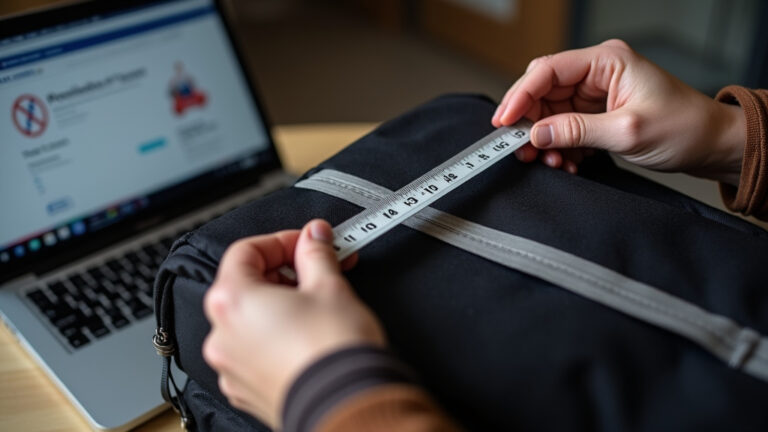
There’s no universal size limit published, but use common sense. A massive hiking backpack or a rolling suitcase will raise eyebrows and likely be denied. A standard student backpack or daypack is the expected size. If in doubt, call the jury office.
Are there charging stations for phones?
Sometimes, but never count on it. Jury assembly rooms may have a few outlets, but they are scarce and in high demand. This is why a fully charged power bank is the single smartest electronic item you can pack.
Can I bring a coffee or water bottle through security?
Water bottles are generally okay but may need to be empty. Coffee in a travel mug will almost certainly need to be discarded before you go through the metal detector. Plan to buy coffee inside if it’s available, or be prepared to part with it at the checkpoint.
What’s the best way to carry my things if not a backpack?
soft-sided tote bag, messenger bag, or even a large purse works perfectly. The principle is the same: it must go through the X-ray machine. Avoid bags with excessive metal hardware or complex compartments that look confusing on the scanner.
Before You Go
Packing for jury duty is a simple exercise in preparedness and respect. The core formula is easy: bring your ID, your summons, quiet things to do, and a layer for the cold. The critical step is checking your local court’s specific rules to avoid the headache of a confiscated item.
Remember, the security officers aren’t trying to ruin your day. They’re ensuring the safety of a vital public institution. Your neatly packed, thoughtfully loaded backpack shows you understand the gravity of the duty you’re about to perform. It gets you through the door smoothly and lets you focus on the important work ahead.