Duffel Bag as Checked Bag: 3 Rules to Avoid Oversized Fees
This post contains affiliate links. As an Amazon Associate, we earn from qualifying purchases.
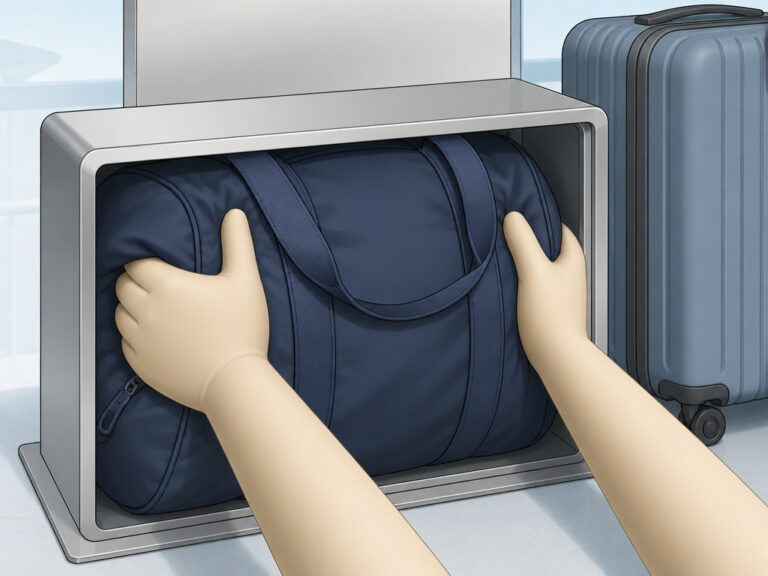
Yes, a duffel bag can be a checked bag. The universal rule is three things: total outside dimensions under 62 linear inches, weight under 50 pounds for economy, and a construction that can survive conveyor belts and stacking. Fail any one, and you face fees or a torn bag.
The gap between “fits” and “flies” is measured in packed inches. A duffel’s flexibility is its biggest advantage for odd-shaped gear and its biggest risk for oversize fees. A bag that measures 30 x 14 x 13 inches empty can balloon to 34 x174 x 15 when stuffed, pushing it over the 62-inch limit at the check-in counter.
What follows: the three non-negotiable specs, how to match your duffel to your trip, and the prep steps that keep your gear safe from the curb to baggage claim.
Key Takeaways
- Measure your duffel after it’s fully packed. Soft sides can bulge 2-4 extra inches in each dimension, turning a legal bag into an oversize fee.
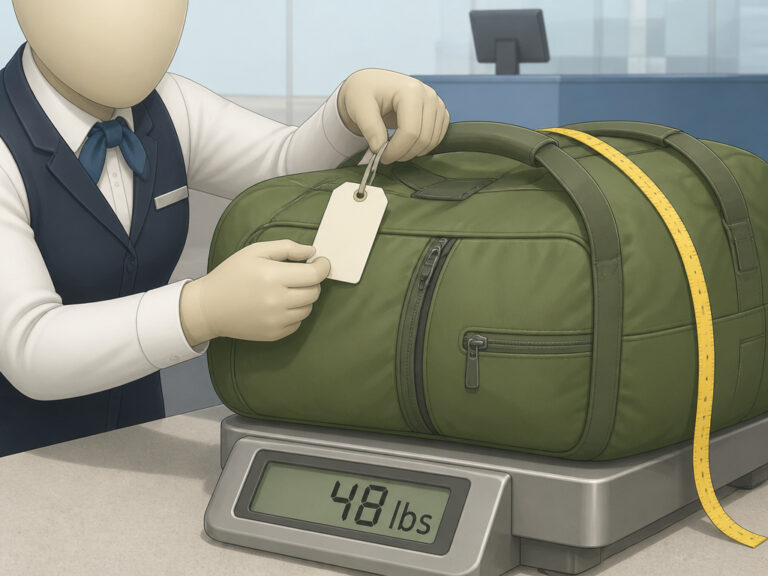
- The standard economy weight limit is 50 lbs (23 kg). A luggage scale tipping from 49.9 to 50.1 pounds can trigger a $100+ overweight charge.
- For checked use, look for #10 YKK zippers, double-stitched seams, and removable straps. Thin gym duffels split at the handles under 40 pounds.
- Interline itineraries (flights on multiple airlines) use the Most Significant Carrier rule. Your duffel must meet the strictest airline’s policy on the ticket.
- Gate-checking is likely on full flights, even if overhead bins are empty. Assume any duffel brought to the gate might end up in the hold.
The Universal Rule: Size, Weight, and Durability
Airlines don’t care if your bag has wheels or a hard shell. Their baggage system cares about three measurable thresholds. Miss one, and your duffel becomes a problem.
Technical Specification: The International Air Transport Association (IATA) defines standard checked baggage dimensions using the piece concept, where a common maximum is 158 cm (62 linear inches). IATA guidelines recommend individual bags not exceed 23 kg (50 lbs) for handler safety, though many airlines permit up to 32 kg (70 lbs) in premium cabins.
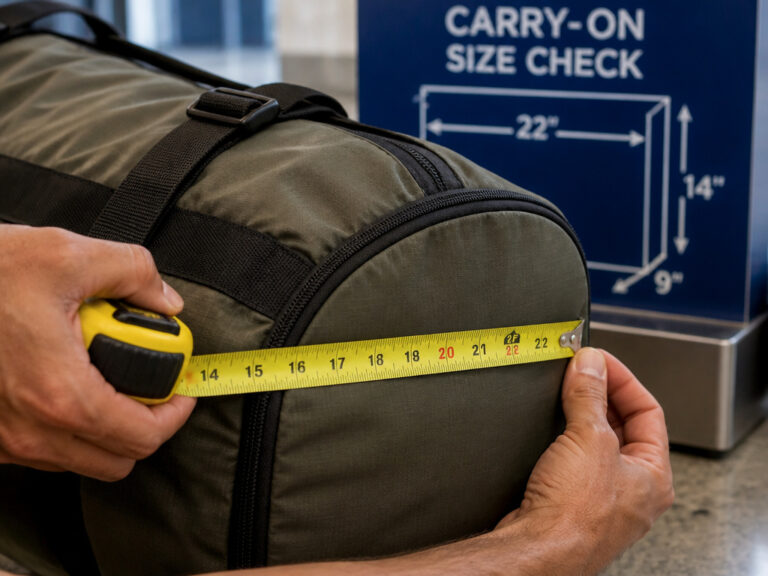
Size is about linear inches, not liters. You add the length, width, and height at their furthest points, including wheels, handles, and bulging pockets. The magic number for most U.S. Domestic and international economy fares is 62.
The catch is soft-sided bags. A manufacturer may list a duffel as 30L or 60L, but the linear inches are what the agent measures. A Patagonia Black Hole 60L duffel’s listed dimensions are 25 x 14 x 13 inches (52 linear inches). Pack it tight with a winter jacket and boots, and the width can push to 18 inches. That new total of 57 inches still fits, but it shows how the margin disappears.
Weight is a hard ceiling, not a suggestion. The 50-pound limit for standard economy is enforced at check-in. Weight distribution matters less to the airline than the number on their scale. A dense, overstuffed duffel is the usual culprit.
Common mistake: Guessing your bag’s weight at home. A luggage scale costs less than a single overweight fee. Weigh it after your final pack.
Durability is what happens after you walk away. Checked baggage gets tossed, stacked, and dragged on conveyor belts. The IATA passenger baggage rules note airlines may refuse bags “inadequately packed or unsuitable for air carriage.” Your duffel’s job is to prove it’s suitable.
| Durability Feature | Minimum Spec for Checked Use | What Breaks If Missing |
|---|---|---|
| Zippers | #8 or #10 YKK, double sliders | Zipper tape separates from fabric under pressure; bag spills open |
| Seams | Double- or triple-stitched with bonded nylon thread | Seams rip at stress points (handle anchors, base corners) |
| Handles/Straps | Padded, attached at multiple anchor points, removable | Handles tear off; loose straps snag on conveyor mechanisms |
| Fabric | 600D polyester or higher, 1000D ballistic nylon ideal | Abrasion from belts wears holes; seams cut through thin material |
The Osprey Transporter 65L hits these marks with its burly 1200D nylon and clean, stowable harness. A cheap promotional gym bag does not. The difference shows up at baggage claim.
How Airlines Actually See Your Duffel
Baggage systems are automated, and policies are algorithmic. Your duffel is data.
The piece concept versus weight concept. In the U.S., Canada, and on many transatlantic routes, you get a number of bags (pieces) each with its own size and weight limit. Elsewhere, you might get a total weight allowance to split across multiple bags. Your ticket coupon shows which system applies.
For a single checked duffel on a U.S. Carrier, you’re in piece concept territory: 1 bag ≤ 62 linear inches and ≤ 50 pounds. It’s simple until you add a second bag or fly internationally.
Interline travel scrambles the rules. If your ticket includes segments on different airlines, the IATA passenger baggage rules dictate the “Most Significant Carrier” (MSC) rule often applies. Your duffel must comply with the MSC’s policy for the entire journey. An agent at check-in won’t calculate this for you, they’ll apply the first airline’s rules. If your bag violates a later carrier’s stricter policy, you could be repacking at a connection.
Oversize and overweight fees are layered. Delta’s policy is explicit: a bag that is both oversize and overweight incurs both fees, plus any extra-piece charge. That’s three penalties on one bag. The takeaway is to fix the problem before you get to the airport, not at the counter.
Duffel Bag vs. Suitcase: Which to Check?
The choice isn’t about airline permission. It’s about what’s inside and how much airport you have to cross.
A structured travel duffel, like the Topo Designs Global Travel Bag, excels for soft, packable items: clothing, shoes, sleeping bags, jackets. Its flexibility lets you cram in that last souvenir. It’s also lighter empty than a hard-shell spinner, giving you a few more pounds for your stuff.
A hard-side suitcase wins for organization, fragility, and rolling. It protects rigid items, keeps formal wear presentable, and rolls smoothly for long terminal walks. A duffel with 40 pounds on one shoulder does not.
Where this goes sideways: Checking a duffel full of hiking boots and climbing gear, then having to carry it a mile through a sprawling airport like DFW. What saved weight in the air costs you in sweat on the ground.
Here’s the decision matrix:
| Trip Profile | Winning Bag Type | Why |
|---|---|---|
| Outdoor adventure (gear, dirty clothes, bulky layers) | Durable Duffel (e.g., Patagonia Black Hole) | Fits odd shapes, handles abrasion, often lighter. |
| Business/Formal travel (suits, electronics, bottles) | Hard-Shell Suitcase | Crush protection, organization, professional appearance. |
| Budget airline travel (strict fees, no frills) | Lightweight Duffel (e.g., Osprey Ozone) | Maximizes weight allowance for contents, lower base weight. |
| Multi-modal travel (plane, train, bus, walk) | Wheeled Duffel (e.g., The North Face Rolling Thunder) | Hybrid: packs soft, rolls when needed. |
The best duffel bags for checked luggage are built for this abuse. The best rolling duffel bags split the difference. Pick the tool for the job, not the one you already own.
How to Prep Your Duffel for Check-In
 Packing is only half the battle. The other half is surviving the journey.
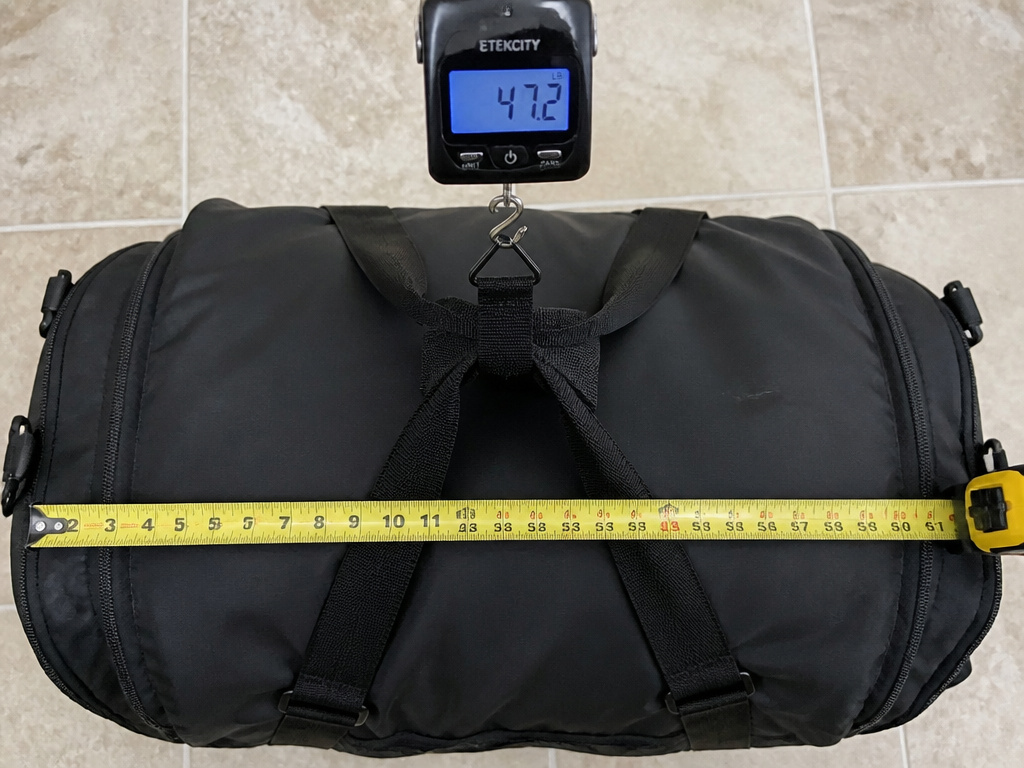
- Measure packed, not empty. Use a tape measure on the fully stuffed bag. Include every bulge. If it’s over 60 linear inches, remove something. That 2-inch buffer is for measuring error.
- Weigh with a dedicated luggage scale. Bathroom scales are inaccurate for this. Hook the scale to the duffel’s carry handles (not shoulder straps) for the weight the agent will see.
- Secure all loose straps. Remove detachable shoulder straps or tuck them completely. Strap ends are conveyor-belt magnets. Cinch down any compression straps tight.
- Lock it with a TSA-recognized lock. It won’t stop theft, but it prevents zippers from vibrating open. Use it on every zipper pair.
- Line the interior with a trash bag or packing cube bundle. This keeps clothes dry if the bag sits on a wet tarmac and makes repacking after a search easier.
- Place a copy of your itinerary and contact info inside. Exterior tags rip off. An internal sheet is the last-chance ID.
What to never put in a checked duffel. The TSA prohibited items list is your guide, but common sense extends it. Never check: lithium power banks, prescription medications, critical documents, laptops, jewelry, or a single key you need at your destination. The checked bag weight limit is a financial concern; losing your diabetes medication is a trip-ending crisis.
The Gate-Check Scenario (And How to Avoid It)
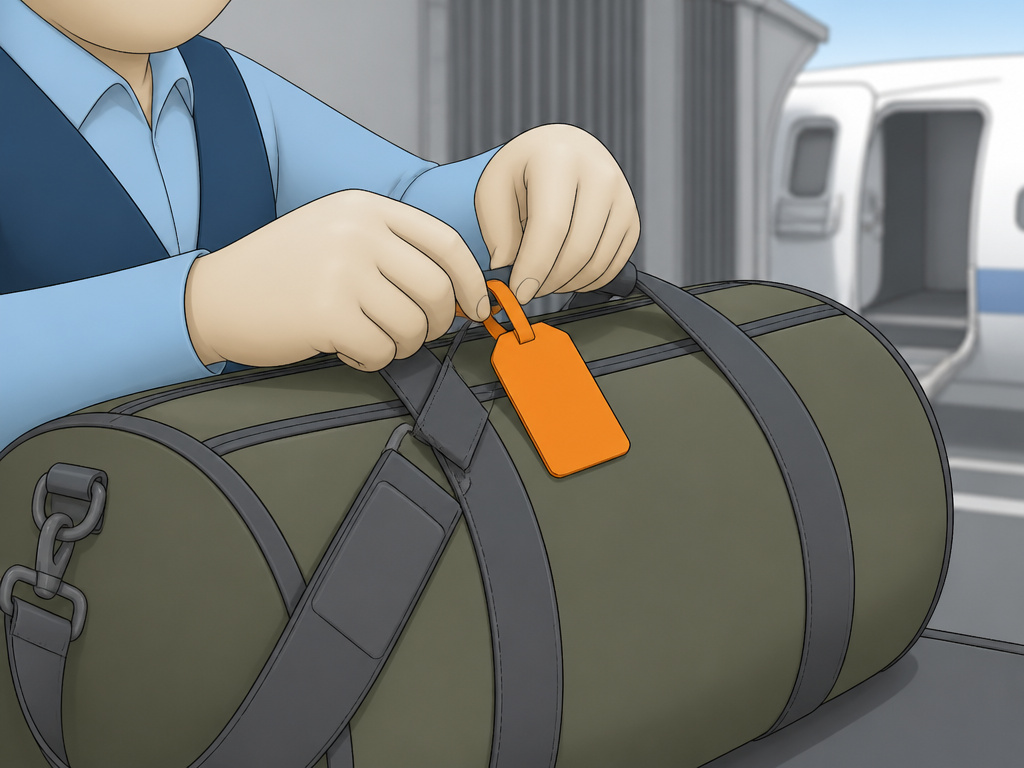 You board with your duffel, planning to stash it overhead. The gate agent stops you. “We’re checking all roll-aboards today.” This is a gate-check, and it’s mandatory.
Your duffel gets a tag, and you leave it at the jet bridge. It travels in the hold but is usually returned planeside at your destination. The risk? Your bag is now handled without the protective infrastructure of the main baggage system. It’s thrown into a cargo hold with less care.
The part nobody mentions: Gate agents are measured on on-time departures, not customer satisfaction. If bin space is tight, or even if it’s not, they will gate-check bags to speed boarding. A bulky duffel is a prime target.
To reduce the odds, make your duffel look small. Wear the shoulder strap so it sits snug against your back. Don’t overstuff it until it’s cylindrical. If you must gate-check, remove any truly fragile items and carry them on. Your duffel bag as carry-on backup plan just became your primary bag.
Frequently Asked Questions
Do airlines charge more for a duffel bag?
No. Airlines charge based on size, weight, and quantity, not bag type. A duffel that meets the standard 62-inch/50-pound limit pays the standard checked bag fee. An oversize or overweight duffel pays the same fee as an oversize suitcase.
Can a soft duffel bag be damaged when checked?
Yes, more easily than a hard-case. The main risks are torn straps or handles from conveyor snags, burst seams from overpacking, and zipper failure. Choosing a duffel bag built with checked luggage in mind, like those with reinforced ends and robust zippers, mitigates this.
How do I know if my duffel is 62 linear inches?
Use a tape measure. Length (longest side) + Width (side perpendicular to length) + Height (remaining side) = Total Linear Inches. Measure the packed bag, including all pockets and bulges. If the total is 62 or less, you’re likely within the standard checked bag limit.
Is a 70L duffel too big for checked luggage?
It depends on its packed dimensions, not its liter capacity. Many 70L hiking duffels are tall and narrow and may still fit under 62 linear inches. Measure it. If it exceeds 62 linear inches, it is oversize and will incur a fee, regardless of its liter rating.
Should I put a lock on my checked duffel?
Yes, use a TSA-recognized lock. Its primary function is to keep the zippers closed during handling, preventing spills. It is a minor deterrent to theft but a major help in keeping your bag intact. Always follow how to pack a duffel bag advice to use packing cubes, which also helps if a TSA agent needs to inspect it.
Before You Go
A duffel bag is a perfectly legal checked bag. Its success hinges on your discipline with a tape measure and a luggage scale. The system doesn’t forgive a bulging side or a half-pound overage.
Invest in a duffel built for the job, thick fabric, serious zippers, clean seams. Know that its flexibility is a double-edged sword. And always, always pack as if your bag will be gate-checked, because sometimes it will be.
Measure packed. Weigh accurately. Secure everything. Then hand it over.