7 Best Dry Backpacks for 2026
This post contains affiliate links. As an Amazon Associate, we earn from qualifying purchases.
The best dry backpack for most people is the Pelican ExoDry 30L Drybag, thanks to its rugged 500D PVC build and reliable roll-top seal. If you need more space, the STOVER 55L Waterproof Dry Backpack is a solid, feature-rich budget pick with a handy wet/dry compartment. For smaller needs, the Osprey Ultralight 20L Dry Pack offers excellent packability and trusted branding.
Finding a dry backpack that actually keeps your gear dry, and doesn’t fall apart after a few trips, is harder than it should be. Too many bags promise waterproof performance but fail at the seams, straps, or closure system when you need them most.
As someone who’s evaluated gear across countless travel and outdoor scenarios, I focused this guide on models that deliver real-world protection based on material quality, owner-reported durability, and thoughtful design. These picks balance waterproof integrity, comfort, and value, so you can trust them when the trail gets wet.
Top 7 Dry Backpacks in the Market
The Best Dry Backpacks, Reviewed
Pelican ExoDry 30L Drybag

Strengths
- 500D PVC durability
- Translucent body
- Padded shoulder straps
Trade-offs
- No floating capability
- Exterior pocket not fully waterproof
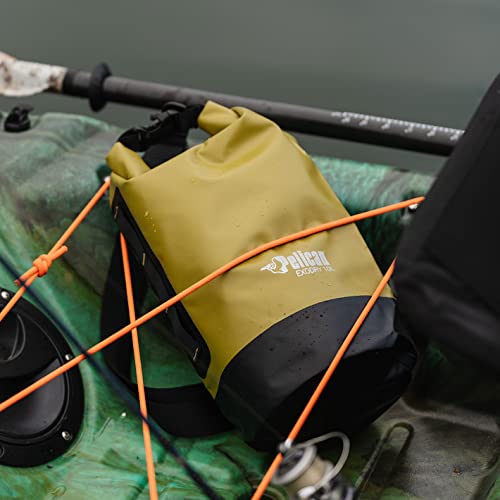
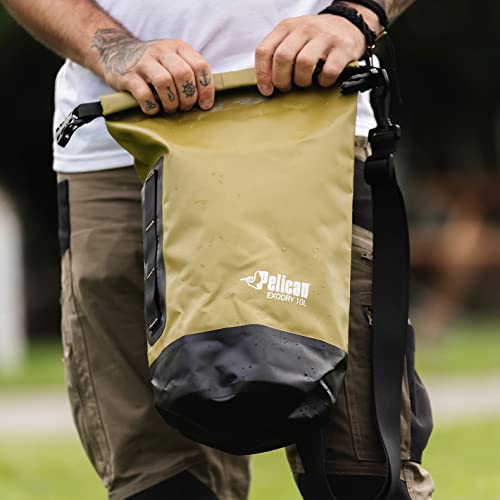
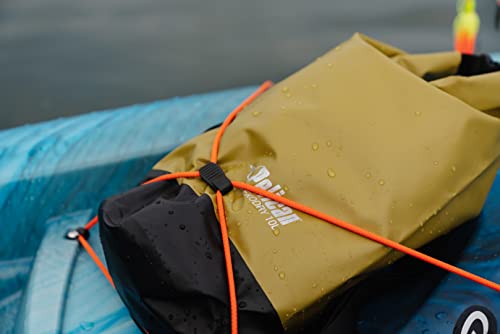
The Pelican ExoDry 30L stands out as a serious contender for the best overall dry backpack, and for good reason. On paper, it’s built like a tank with 500D PVC that owners consistently report shrugs off rocks, riverbeds, and rough handling. The backpack straps are padded and breathable, which makes a real difference on longer hikes to the put-in point, something reviewers highlight when comparing it to more basic roll-top sacks.
What really sets it apart is the translucent main compartment. Being able to see your gear without unrolling the top is a small but meaningful upgrade, especially when you’re in a hurry or in the rain. The exterior zippered pocket is water-resistant, not fully waterproof, so I’d still keep critical electronics in the main chamber. Compared to lighter options like the Osprey, this one trades some portability for ruggedness and visibility.
Product photos

STOVER 55L Waterproof Dry Backpack
Strengths
- Includes waterproof phone case
- Floats on water
- Affordable pricing
Trade-offs
- Straps lack advanced padding
- Build quality inconsistent in larger sizes
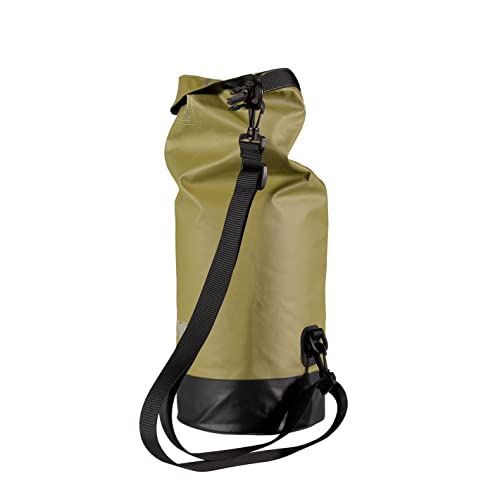
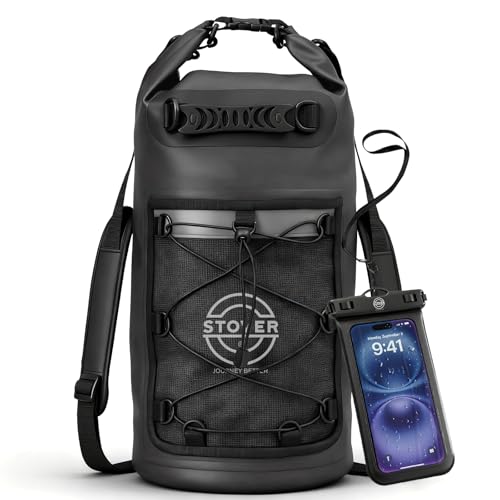
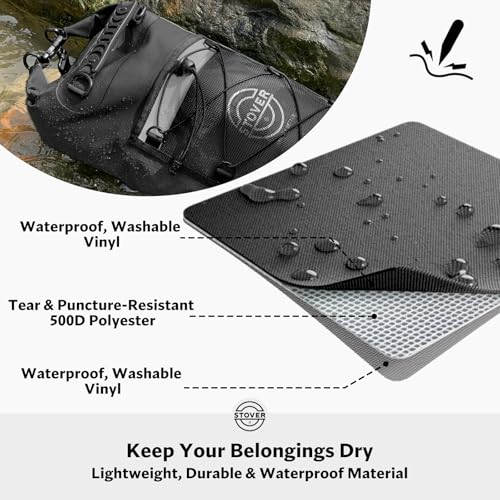
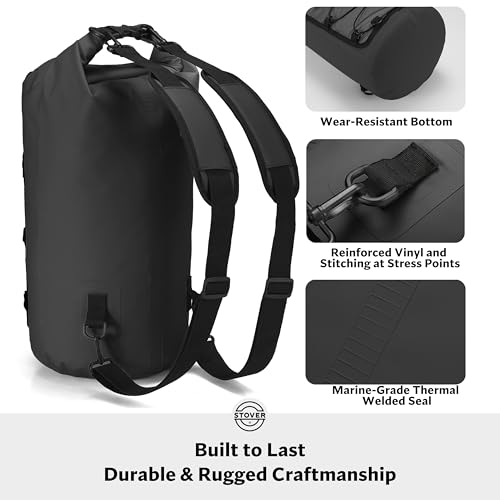
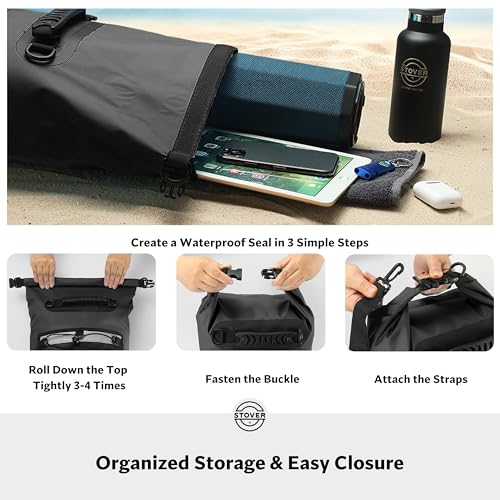
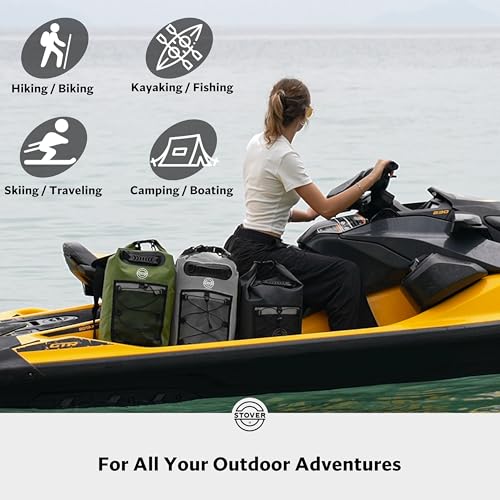
For budget-conscious buyers who don’t want to sacrifice core features, the STOVER dry backpack delivers. It’s available in a wide range of sizes and comes with an IP58-rated waterproof phone case, something not all competitors include. Owners praise its floatability and the high-frequency bonded seams, which hold up well in real-world river and kayak use. The roll-top closure is simple and effective, and the padded straps make it comfortable enough for moderate hikes.
It doesn’t have the premium feel of Pelican or Osprey, but for the price, it covers the essentials: waterproofing, floatability, and decent carry comfort. The front wet/dry mesh pocket is a smart touch for separating damp gear, though it’s not sealed like the Sunnylon’s wet compartment. I’d say this is the smarter buy over the MORXPLOR if you want included value without stepping up to premium pricing.
Product photos

OSAH DRYPAK 55L Waterproof Backpack
Strengths
- High capacity options
- Multiple storage zones
- Chest strap with whistle
Trade-offs
- Heavier than packable models
- Bulkier when empty
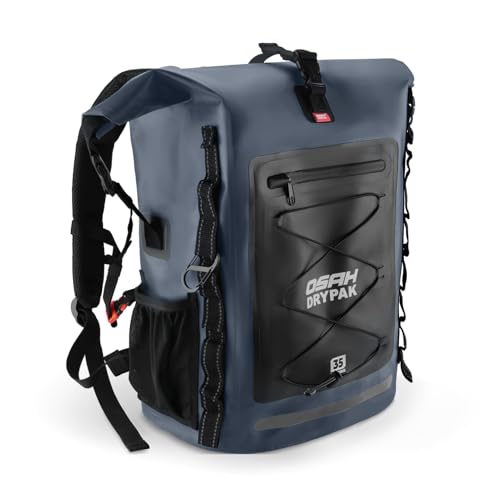
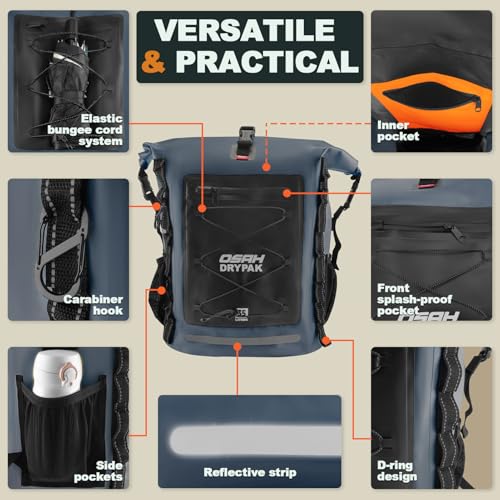
If you need serious capacity without sacrificing organization, the OSAH DRYPAK is the one to beat. With options up to 85L, it’s built for multi-day trips, expeditions, or hauling gear for a whole family. The 500D PVC and welded seams deliver the same waterproof confidence as the Pelican, but with more smart features: zip pockets inside, side bottle holders, bungee cords, and even D-rings for gear attachment.
Owners appreciate the ergonomic design, the breathable back panel and chest strap with whistle are small touches that add up on long hikes. Compared to the Sunnylon or MORXPLOR, this one feels more like a true hiking backpack that happens to be waterproof. It’s heavier, yes, but that’s the trade for structure and space. For anyone planning extended off-grid adventures, this is the logical upgrade.
Product photos


Sunnylon 20L Dry Bag Backpack

Strengths
- Wet/dry compartment separation
- Floating design
- Includes waist pouch
Trade-offs
- Limited capacity
- Waist pouch not waterproof
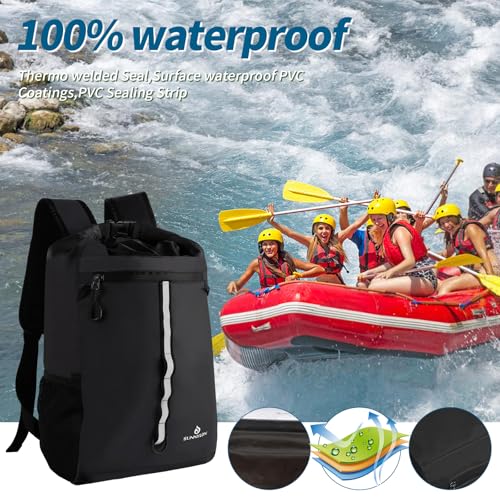
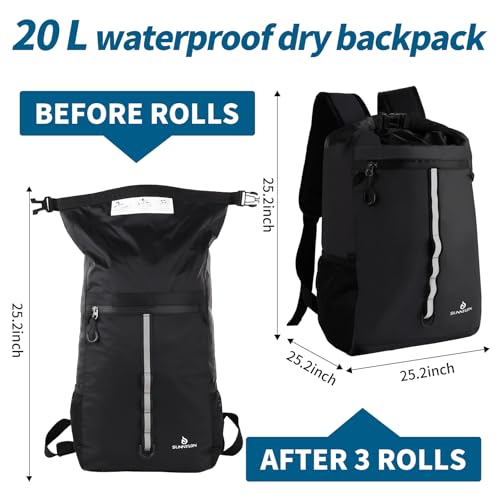
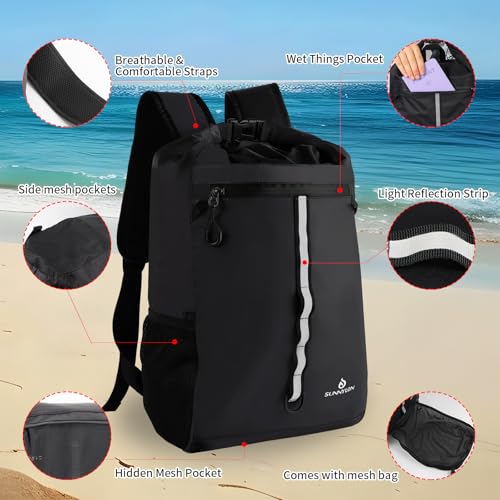
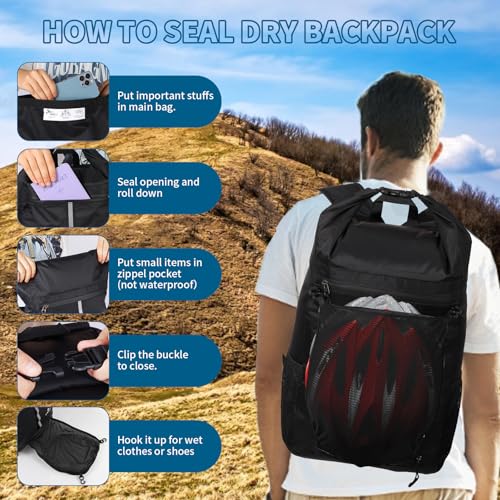
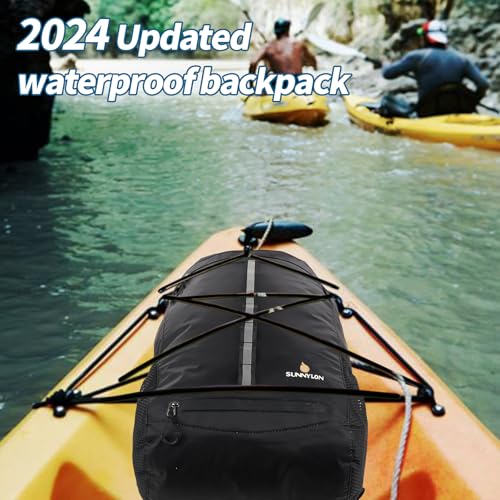
The Sunnylon 20L earns its title as best for wet/dry separation with a thoughtful dual-compartment design. The main chamber is fully waterproof, but the front zippered pocket is intentionally non-waterproof, ideal for tossing in wet towels or swimsuits. Even better, the hidden mesh bottom pocket is perfect for shoes or soggy gear, keeping the rest of your pack clean. Owners love this feature after beach days or river swims.
It also floats, includes an IPX8 phone case, and comes with a bonus waist pouch, adding real value. But at 20L, it’s not for heavy packers, and the waist pouch is small. Compared to the STOVER or Piscifun, it’s less about capacity and more about smart storage. I’d recommend this for families or beachgoers who constantly juggle wet and dry items.
Product photos
Osprey Ultralight 20L Dry Pack

Strengths
- Extremely lightweight
- Packable design
- Comfortable mesh straps
Trade-offs
- Not submersible
- No external pockets
- Limited durability for heavy use
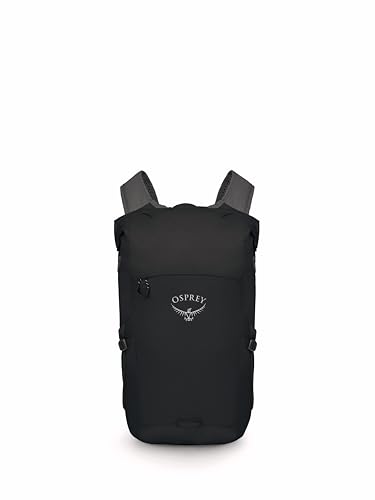
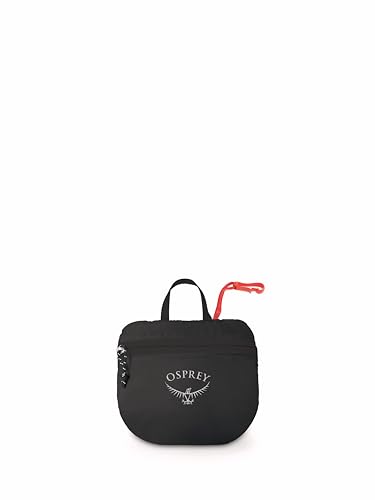
If you’re looking to stash a spare layer or carry souvenirs home without weighing down your pack, the Osprey Ultralight 20L is hard to beat. At just 0.43 pounds, it’s one of the lightest waterproof backpacks in its class, and the mesh shoulder straps with sternum strap make it surprisingly comfortable for short hauls. The IPX5 roll-top closure won’t survive full submersion, but for rain, splashes, or a kayak capsize, owners say it delivers.
Compared to more rugged models like the Pelican or STOVER, this one isn’t built for whitewater or long-term abuse. But that’s not its job. It’s a compact, packable dry bag that disappears in your luggage when not in use. I’d pick this over bulkier options for travelers who want an emergency dry pack that doesn’t eat up space.
Product photos


Piscifun Floating Waterproof Backpack
Strengths
- Floats reliably
- IPX8 phone case
- Stable shoulder straps
Trade-offs
- Mesh pocket not waterproof
- Minimal back padding
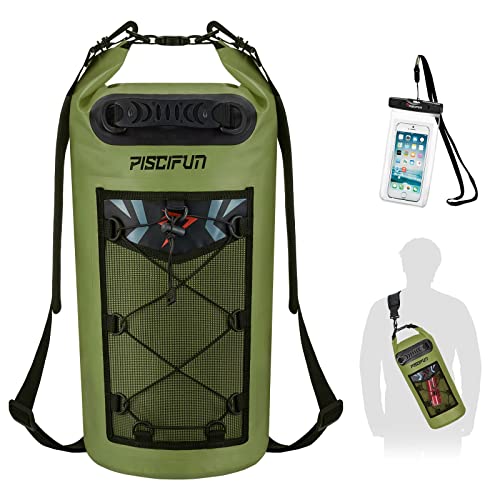
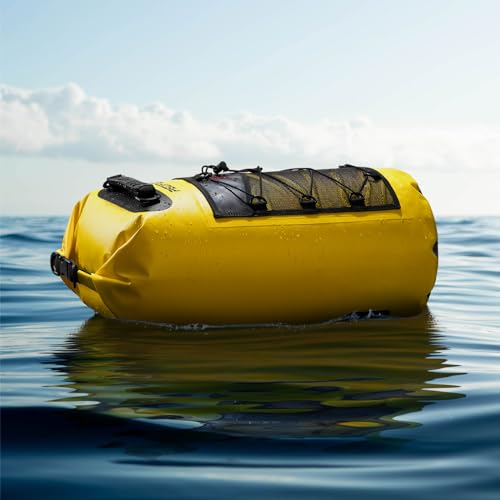
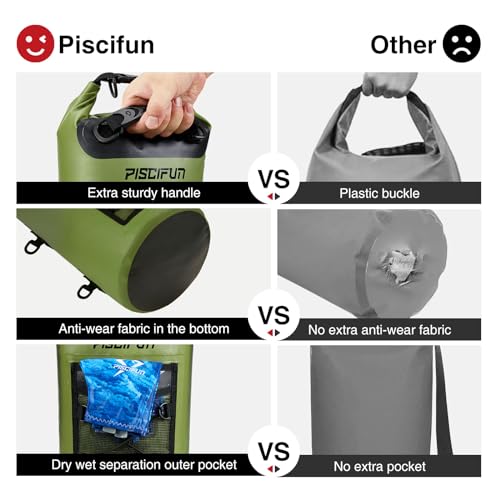
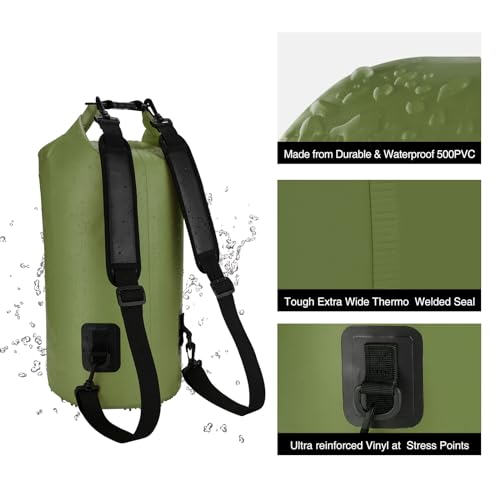
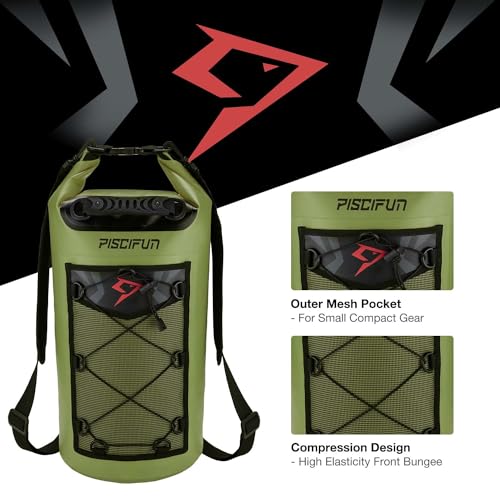
When it comes to water sports, the Piscifun backpack hits the sweet spot of durability, floatability, and function. The fully welded seams and IPX8 phone case suggest serious water protection, and owners confirm it survives repeated dunkings during kayaking and rafting. The outer mesh pocket is a practical addition for holding water bottles or wet gear, though it’s not sealed, so don’t expect dry contents.
What really makes this one shine is how it floats. In real-world feedback, users appreciate being able to spot it in the current after a spill. Compared to the Osprey or STOVER, it’s more specialized, less about travel, more about staying afloat. The shoulder straps are sturdy and resist slipping, a key detail during active use. I’d pick this over others if you’re regularly on or near moving water.
Product photos

MORXPLOR Roll Top Dry Bag
Strengths
- Front zippered pockets
- Multiple sizes and colors
- Reflective straps
Trade-offs
- No internal organization
- Basic back support
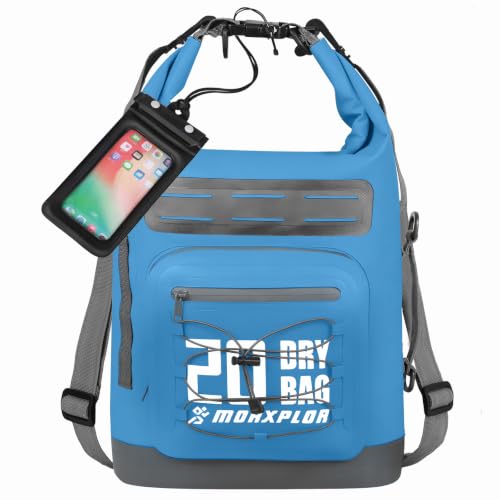
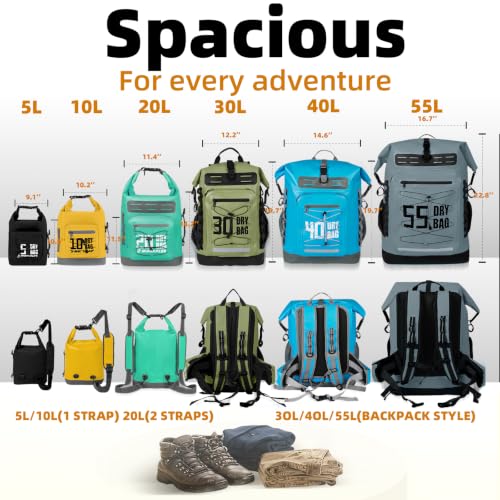
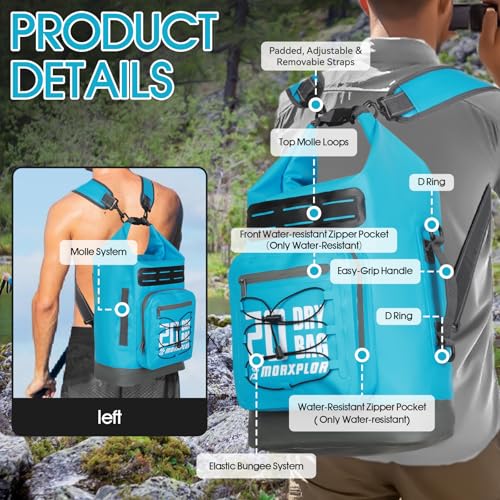
The MORXPLOR stands out for organization, and that’s where it earns its keep. The two splash-proof zippered pockets on the front are a real win, owners consistently mention how handy it is to access keys, snacks, or a map without unrolling the main chamber. That’s a small detail, but it makes a big difference in daily use. With six sizes and nine colors, it’s also one of the most versatile options for families or gift-giving.
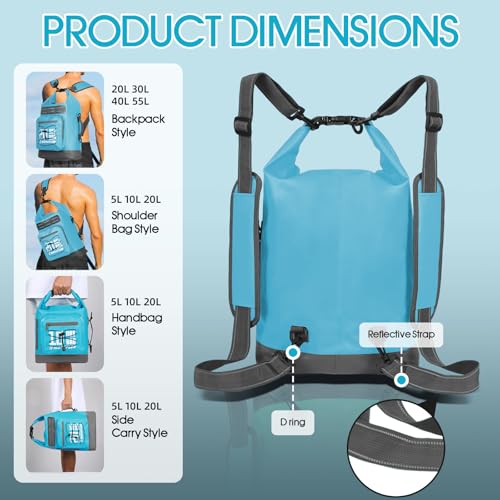
The 500D PVC is durable enough for most adventures, and the reflective straps add visibility at night. But compared to the OSAH DRYPAK, it lacks interior pockets and a chest stabilizer, which matters on longer hikes. While it’s solid for general use, it doesn’t excel in capacity or load support. I’d recommend this for campers and casual hikers who value quick access and color choice over expedition-level features.
Product photos
How We Picked These dry backpacks
Rather than a hands-on lab test, this is a research-led comparison of specs and owner feedback. I researched dry backpacks based on published features – primarily material durability, stated waterproof ratings, and capacity – alongside extensive analysis of owner reviews from sites like Amazon and retailer feedback. We then weighed these against expert opinions from outdoor gear review websites, focusing on real-world usability and build quality. My goal was to identify the backpacks offering the best balance of protection, practicality, and value.
For dry backpacks, the most important factors are reliably waterproof construction and overall durability. A compromised seal or flimsy material defeats the entire purpose of a dry bag. Capacity is also key, but less so – it’s easier to upsize than to make a small bag truly waterproof. I prioritized bags using heavier-gauge PVC and well-regarded sealing mechanisms (like roll-top closures with multiple buckles).
Specifications reliably indicate capacity and materials. However, owner feedback proved essential for assessing long-term durability and the effectiveness of waterproofing in practical use. Reports of leaks, strap failures, or material tears significantly impacted rankings. Understanding how to properly maintain your pack, including backpack care after water exposure, is also critical for longevity.
How To Choose The dry backpacks
Choosing the right dry backpack depends heavily on how and where you plan to use it.
A good dry backpack balances waterproof integrity with comfortable carry and useful features. Look for robust materials (500D PVC is a common standard), reliably sealed seams (high-frequency welding is preferable), and a closure system that genuinely prevents water ingress. Consider capacity needs, carry comfort, and the addition of organizational features like pockets.
Capacity & Intended Use
The size of the dry backpack you choose should match your typical adventures. Don’t overbuy; a 20L bag is great for day trips and watersports, while longer expeditions might demand 55L or even larger. Think about what you regularly carry – camera gear, extra layers, food, water – and select a capacity that accommodates it without being excessively bulky. It’s better to have a slightly smaller bag that’s fully used than a massive one that’s half-empty and unwieldy.
Waterproofing & Construction
While many bags claim to be waterproof, the details matter. Seam sealing is key, and high-frequency welding is superior to simple stitching. A roll-top closure is standard, but ensure the buckles are durable and easy to operate, even with gloves. If you’re planning on truly submerging the bag – for example, during whitewater rafting – you’ll want to investigate fully submersible backpacks designed for that level of abuse. Just remember that even with a good bag, prolonged or deep submersion can still compromise waterproofing.
Comfort & Features
Don’t sacrifice comfort for waterproofing. Padded shoulder straps and a breathable back panel make a huge difference, especially on longer hauls. Look for features that enhance usability, like external attachment points for trekking poles or a dedicated pocket for a water bottle.
- A simple side mesh pocket is convenient for quick access to items you want to keep separate from the waterproof main compartment.
- Reflective accents can significantly improve visibility in low-light conditions, a valuable safety feature.
- An included waterproof phone case is a nice bonus (like the STOVER 55L offers), but ensure it’s genuinely waterproof and compatible with your phone model, or consider buying a separate, high-quality case.
A properly fitted dry backpack distributes weight evenly and comfortably, making your adventure more enjoyable. Prioritize adjustable straps and a supportive back panel.
For serious hikers or those needing to carry heavier loads in wet conditions, exploring waterproof hiking daypacks might be the best route.
Dry Backpacks Compared
Here’s a comparison of key specifications for several dry backpacks to help you make an informed decision.
| Product Title | Capacity | Waterproof Rating | Material | Shoulder Straps | Features |
|---|---|---|---|---|---|
| Pelican ExoDry 30L Drybag | 30L | N/A | 500D PVC | Yes | Zippered Pocket, Translucent |
| STOVER 55L Waterproof Dry Backpack | 55L | 100% Waterproof | N/A | Yes | Wet/Dry Pocket, Phone Case |
| OSAH DRYPAK 55L Waterproof Backpack | 55L | N/A | 500D PVC | Yes | Multiple Pockets, Reflective |
| Sunnylon 20L Dry Bag Backpack | 20L | 100% Waterproof | N/A | Yes | Wet/Dry Separation |
| Osprey Ultralight 20L Dry Pack | 20L | IPX5 | N/A | Yes | Side Stretch Pockets |
| Piscifun Floating Waterproof Backpack | N/A | IPX8 | 500D PVC | Yes | Phone Case, Floating |
| MORXPLOR Roll Top Dry Bag | 5L-55L | N/A | 500D PVC | Yes | Zippered Pockets, Reflective |
Frequently Asked Questions
What waterproof rating should I look for in a dry backpack?
IPX6 is generally sufficient for protection against heavy rain and splashes, but for full submersion, aim for IPX8 – this rating indicates the backpack can withstand prolonged immersion in water. However, even with an IPX8 rating, consistently submerging the bag isn’t recommended for extended periods.
Are roll-top closures truly waterproof?
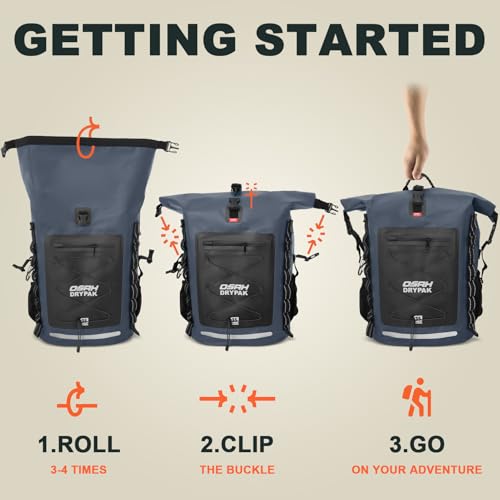
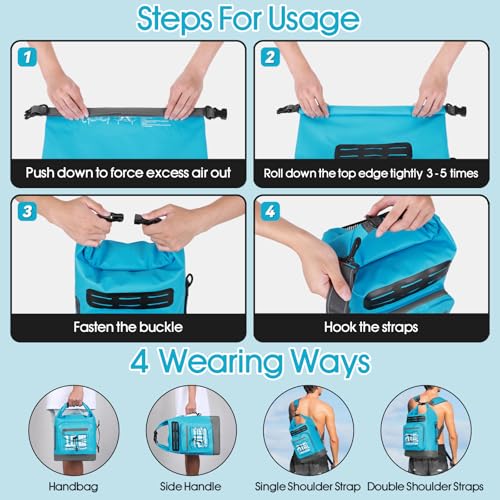
Yes, roll-top closures are very effective when properly secured, but the quality of the buckle system matters. Look for durable, easy-to-operate buckles that create a tight seal, and always roll the top down at least three times to maximize water resistance.
How important is the material’s denier (D) rating?
A higher denier (like 500D PVC) generally means a more durable and abrasion-resistant material. Lower denier materials are lighter but more susceptible to tears and punctures, so consider your intended use and the terrain you’ll encounter.
Can I put a dry backpack in the washing machine?
Generally, no. Most manufacturers recommend hand-washing with mild soap and air-drying to preserve the waterproof coating and seams. Machine washing can damage the material and compromise the bag’s waterproof integrity.
What’s the difference between waterproof and water-resistant?
Waterproof means the backpack is designed to prevent water from entering, even during submersion, while water-resistant only offers protection from light rain and splashes. If you anticipate significant exposure to water, choosing one of the fully waterproof backpacks is essential.
The Bottom Line
Choosing a dry backpack always involves a trade-off between absolute waterproof security and everyday usability. If you prioritize keeping your gear completely dry above all else, I recommend the STOVER 55L Waterproof Dry Backpack. It consistently receives high marks for its robust construction and truly waterproof design, making it ideal for serious watersports or unpredictable conditions.
For those seeking a more specific solution, the Pelican ExoDry 30L Drybag is an excellent choice for shorter trips where visibility is key, and the Osprey Ultralight 20L Dry Pack shines as one of the best compact dry backpacks for day trips and minimalist packing. If you need something even smaller, consider exploring options among the best 25L roll-top dry backpacks.
Ultimately, the most important factors aren’t the specific waterproof rating or the number of pockets – it’s the quality of the materials, the integrity of the seals, and how well the backpack fits you. A well-made bag, properly maintained and appropriately sized for your adventures, will offer far more peace of mind than chasing the latest features or highest-sounding specs.