7 Best Dry Bag Backpacks for 2026
This post contains affiliate links. As an Amazon Associate, we earn from qualifying purchases.
The STOVER 40L Waterproof Dry Backpack is the best overall dry bag backpack, combining rugged PVC construction with a reliable roll-top seal and thoughtful features like a wet/dry compartment. For a budget-friendly option, the CRESSI Ocelot Dry Bag 20L delivers solid performance and convenient storage. If you need maximum capacity for longer trips, the OSAH DRYPAK 55L is a strong contender.
Packing gear that can’t get wet shouldn’t mean lugging around an uncomfortable, flimsy bag that fails when submerged. Too many dry backpacks sacrifice comfort or organization for the sake of waterproofing, leaving travelers frustrated mid-adventure.
This guide cuts through the hype by focusing on real-world durability, effective closures, and carry comfort, based on specs, owner feedback, and my years evaluating travel and outdoor gear. I’ll show you what actually works, whether you’re kayaking, hiking, or just caught in a downpour.
Top 7 Dry Bag Backpacks in the Market
The Best Dry Bag Backpacks, Reviewed
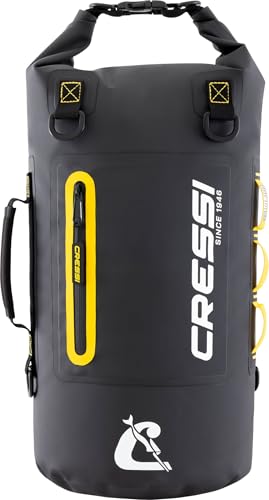
CRESSI Ocelot Dry Bag 20L
Strengths
- Front zip pocket
- Durable tarpaulin
- D-ring attachments
Trade-offs
- No internal organization
- Roll-top not fully submersible
- Slightly stiffer material
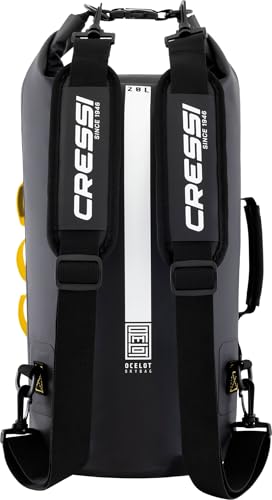
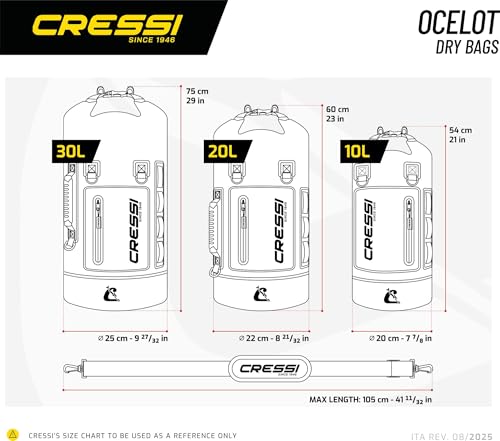
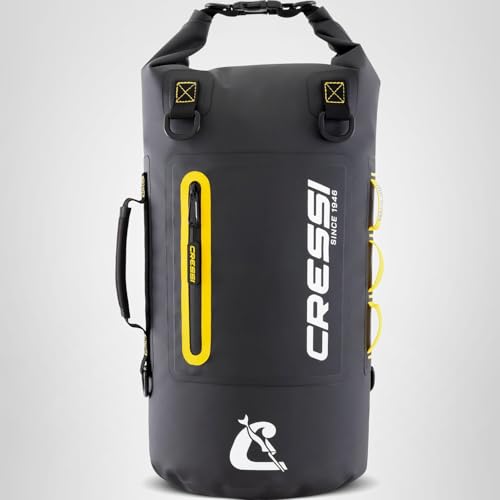
CRESSI has a solid reputation in diving gear, and the Ocelot 20L feels like a natural extension of that expertise. The premium tarpaulin build is tough enough for paddleboarding or beach days, and the roll-top with a plastic clip is proven to resist splashes and light rain, exactly what you expect from a true marine-grade bag. Reviewers note it holds up well after repeated exposure to sand and saltwater, which speaks to its resilience.
What really sets it apart is the front zip pocket, a rare and welcome feature in dry bags. No more digging through a soggy main compartment for your keys or sunscreen. Paired with D-rings for attaching fins or a mesh bag, this is clearly designed by people who actually use gear in real conditions. I’d pick this over the HEETA or STOVER for its smarter layout and trusted brand pedigree.
Product photos
STOVER 40L Waterproof Dry Backpack
Strengths
- Floats reliably
- Reflective safety strip
- Multiple carry options
Trade-offs
- Thin shoulder padding
- No internal pockets
- Basic organization
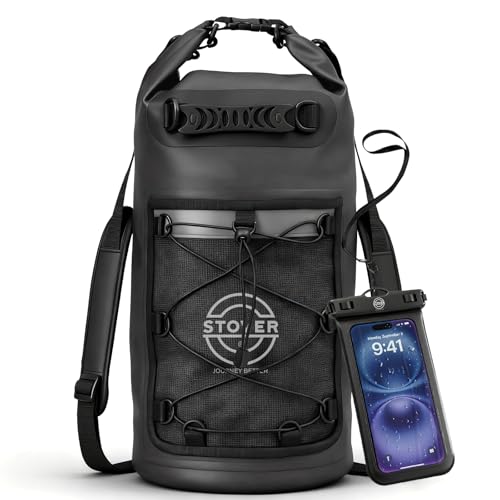
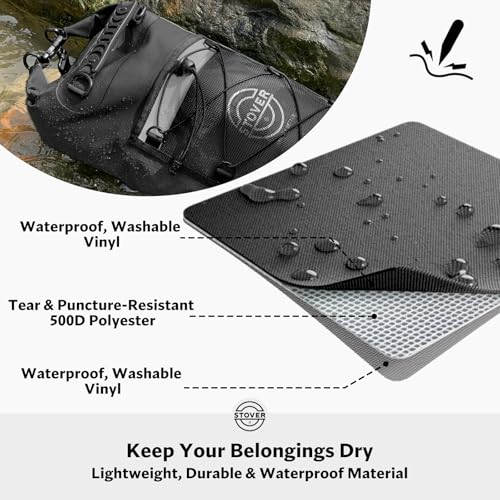
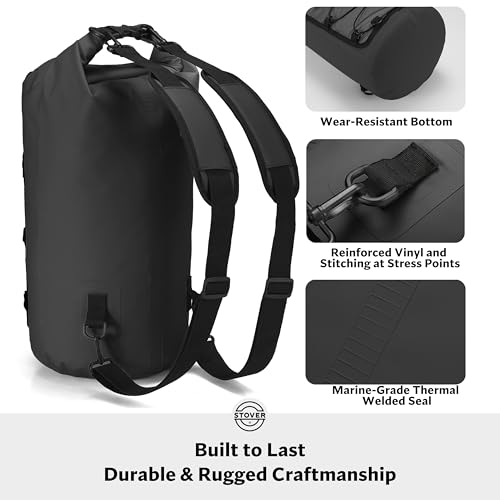
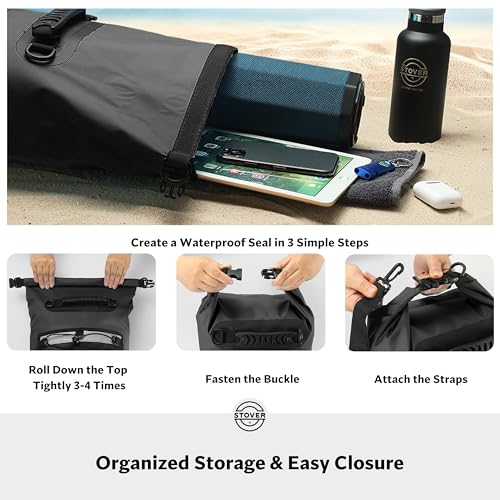
The STOVER dry backpack is a solid budget play that doesn’t skimp on key features. It’s 100% waterproof with high-frequency bonded seams, floats reliably, and includes an IP58-rated phone case that supports FaceID, rare at this price tier. The reflective front strip adds safety for early rides or low-light conditions, and the ability to carry it as a backpack, cross-body, or by hand gives real versatility.
Still, it’s clearly cost-optimized. Owners report the shoulder padding is thinner than Earth Pak or OSAH, and the main compartment lacks internal pockets, making organization harder. But for the price, you get a dependable, floating, highly portable bag. I’d pick this over the HEETA for safety and durability, and recommend it as a smart entry-level pick for casual adventurers.
Product photos

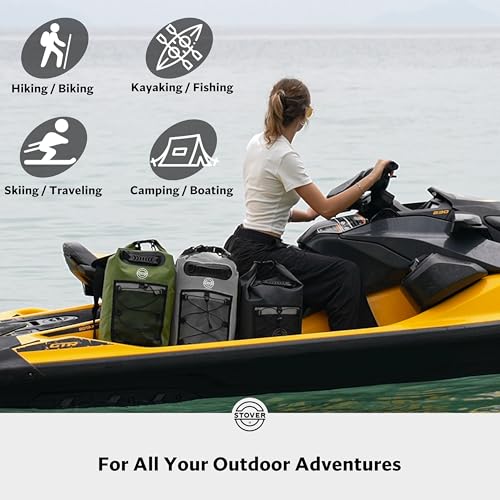
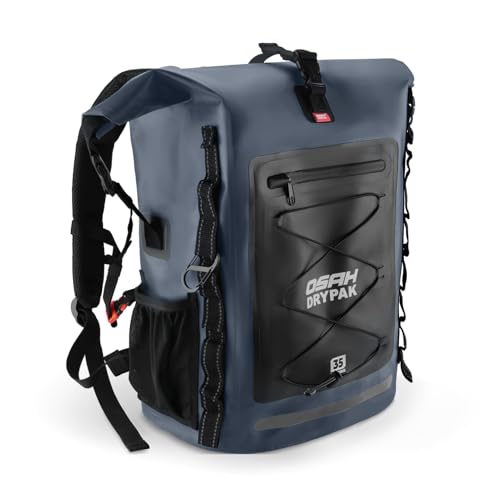
OSAH DRYPAK 55L Waterproof Backpack
Strengths
- Huge capacity options
- Adventure-ready features
- Reinforced safety details
Trade-offs
- Too bulky for small loads
- Heavier than smaller bags
- No floating guarantee
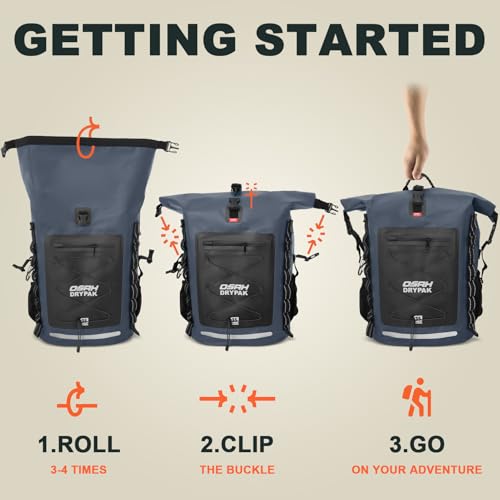
When you need serious space, the OSAH DRYPAK is the clear leader. With options up to 85L, it’s built for multi-day expeditions or family camping trips where you’re hauling sleeping bags, clothes, and cooking gear. The 500D PVC material matches Piscifun’s toughness, and the high-frequency welded seams ensure the bag won’t fail at the worst moment.
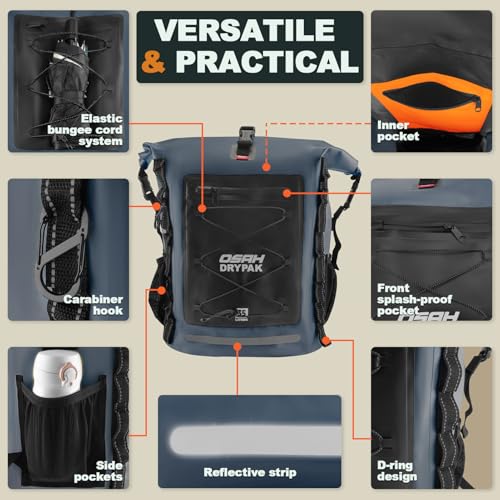
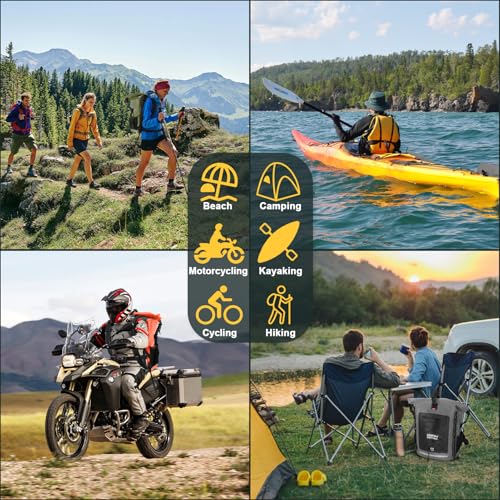
It’s also surprisingly well-equipped: reflective strip, D-rings, carabiner hook, and a safety whistle on the chest strap, all details that matter when you’re off-grid. Owners using it for rafting or motorcycle touring say it handles abuse without leaking. While it’s overkill for a day at the beach, I’d pick this over the Miramrax or Earth Pak for extended trips where capacity and durability are essential.
Product photos


Earth Pak Waterproof Backpack 40L

Strengths
- Ergonomic padding
- Multiple internal pockets
- MOLLE attachment points
Trade-offs
- No floating feature
- Phone case runs small
- Outer fabric scuffs easily
If comfort is your top priority, the Earth Pak backpack delivers where others cut corners. The padded backpanel and contoured shoulder straps are legit, owners with longer hikes or bike commutes consistently praise how well it distributes weight. The waist belt is a standout for load support, and the sternum strap actually stays in place, which isn’t always the case in this category.
It also wins on organization, with an outer splash-proof zipper and multiple internal pockets, including a mesh compartment and key clip, small details that make packing smarter. The roll-top seal is reliable, and the MOLLE system adds versatility for attaching extra gear. While it lacks floating capability, its all-around balance of comfort, storage, and build quality makes it my top recommendation for hikers or urban commuters who face rain often.
Product photos


Piscifun Floating Waterproof Backpack
Strengths
- Floats on water
- 500D PVC durability
- Touchscreen phone case
Trade-offs
- Mesh pocket not waterproof
- Straps can feel stiff
- Minimal back padding
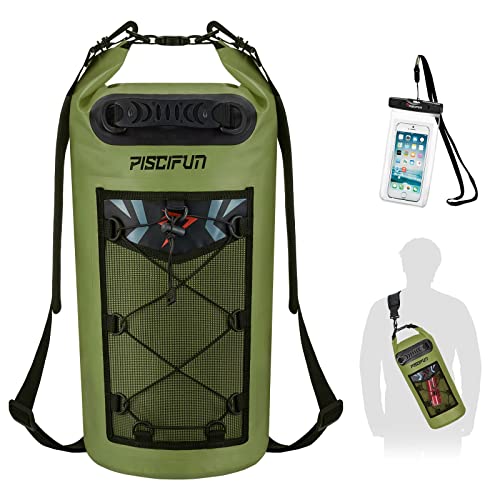
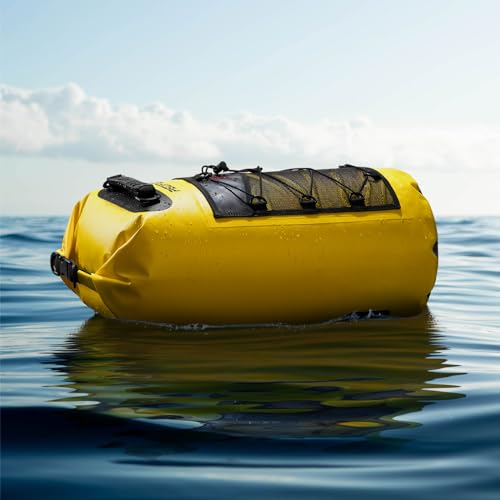
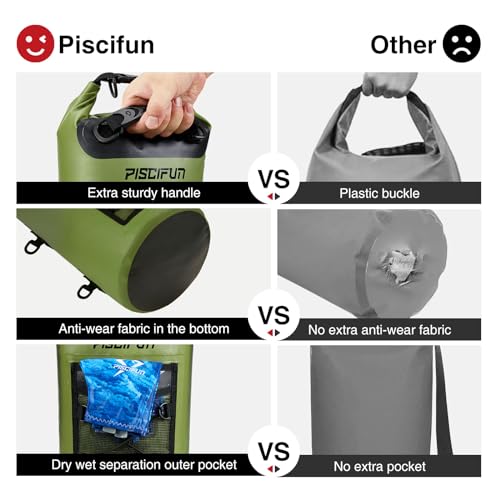
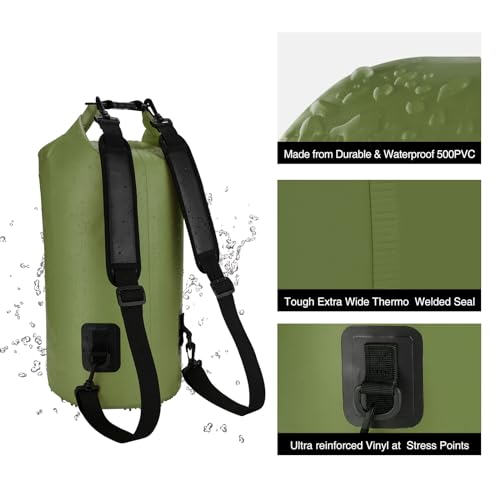
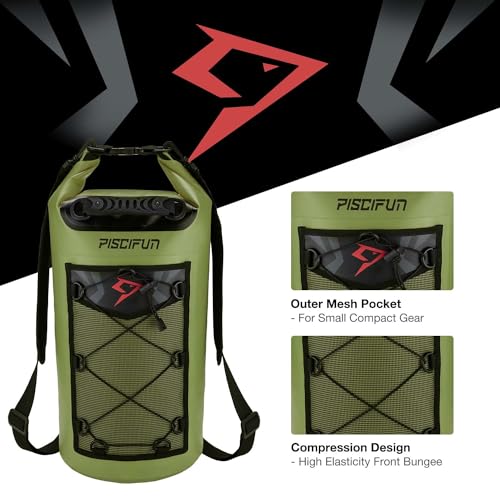
The Piscifun backpack is built for one thing: staying afloat and surviving hard use. Made from 500D PVC, it’s among the most rugged in this lineup, and the fully welded seams boost confidence in its IPX8 rating. Owners using it for fishing or whitewater rafting say it survives drops, scrapes, and full capsizes, plus, it floats, so you won’t lose it if it slips overboard.
The touch-friendly phone case is a standout for water sports fans who want to take photos or answer calls mid-activity. I’d recommend this over the HEETA or STOVER for serious water use, though the mesh outer pocket isn’t waterproof, so don’t stash anything sensitive there. It’s not the most comfortable for long hikes, but for pure water resilience, it’s hard to beat.
Product photos

HEETA Transparent Dry Bag 20L
Strengths
- Transparent body
- Lightweight design
- Phone case included
Trade-offs
- DEHP material concern
- Less durable sides
- Roll-top can leak if not secured
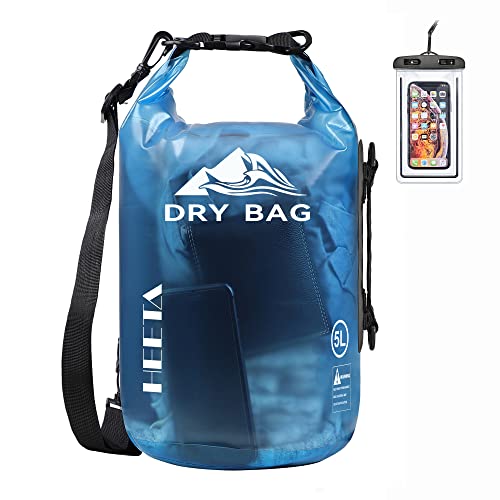
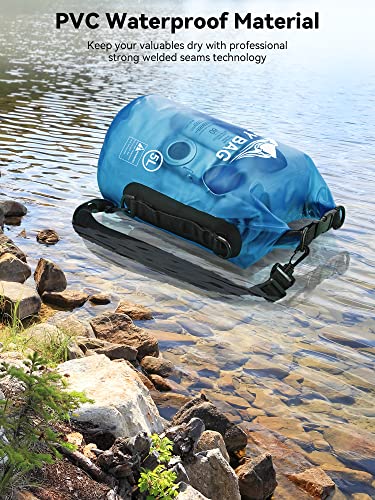
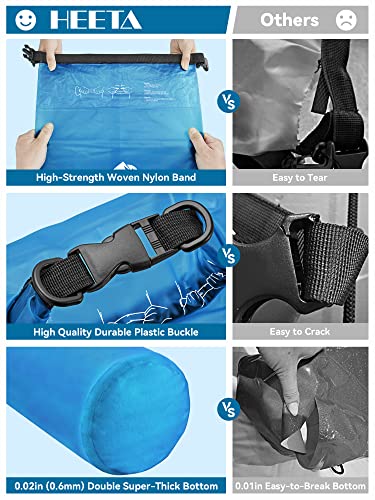
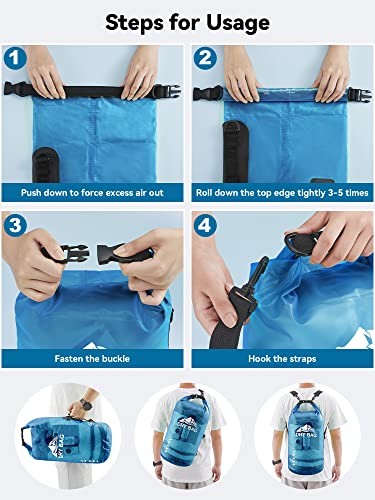
The HEETA 20L dry bag stands out immediately for its transparent design, which genuinely helps with quick visibility, owners consistently report being able to spot their phone or towel at a glance, even mid-adventure. On paper, the 0.6 mm PVC base adds durability where it matters most, and the included waterproof phone case is a thoughtful touch, especially since it’s touch-screen compatible.
Still, the material raises concerns. Multiple reviewers mention the plastic smell and point to California’s Prop 65 warning on DEHP exposure, a known reproductive hazard. While it’s likely safe for occasional use, I’d hesitate to recommend this for daily travelers or families with kids. It’s functional for short trips where you need to find items fast, but not the cleanest or safest long-term pick.
Product photos
Miramrax Tactical Dry Bag 30L
Strengths
- Multiple zip pockets
- Breathable back panel
- Side bottle holders
Trade-offs
- No floating feature
- No phone case included
- Slightly bulky when empty
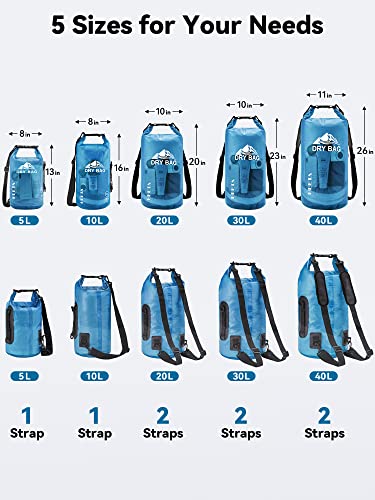
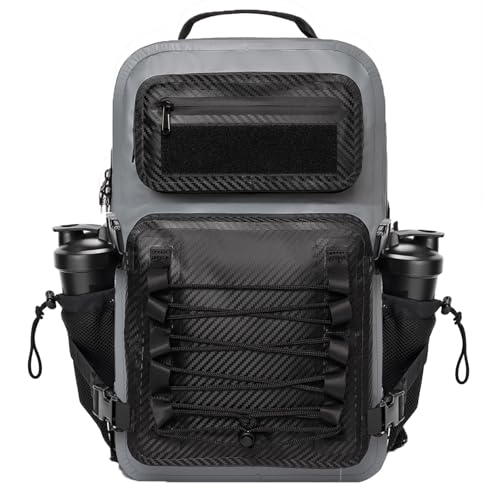
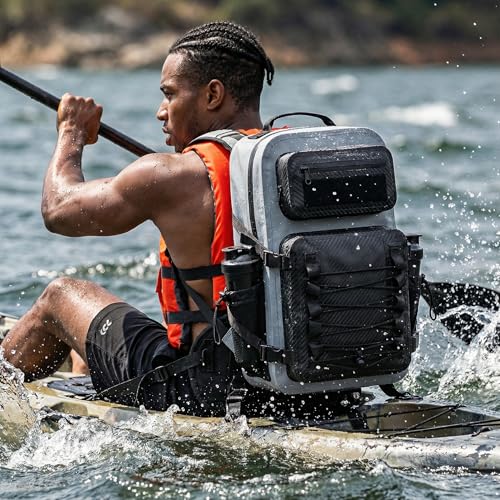
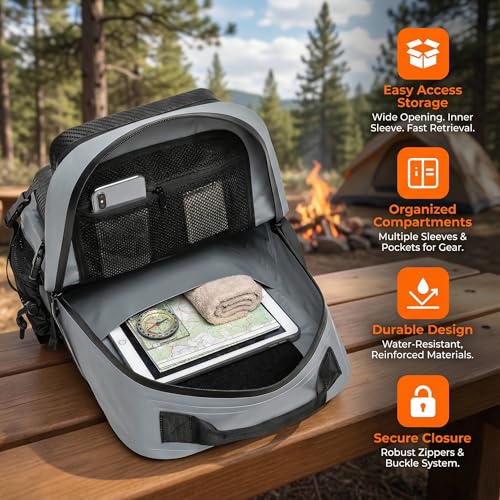
The Miramrax 30L backpack is one of the most thoughtfully organized dry bags available. With multiple front zip pockets, an inner document sleeve, and side bottle holders, it feels more like a tactical hiking pack than a basic dry sack. Owners who use it for mixed terrain, say, hiking to a kayaking spot, appreciate how quickly they can grab a snack or map without unrolling the top.
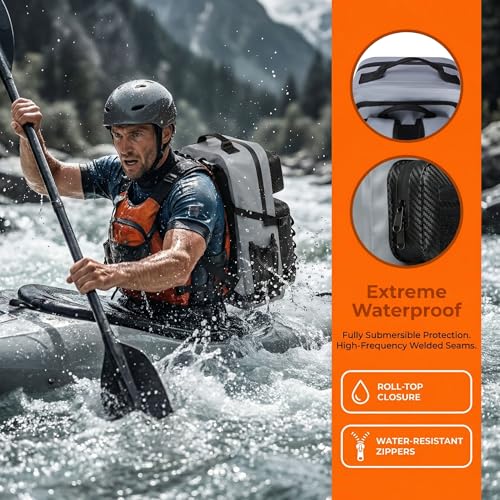
It’s also built to last, using heavy-duty PVC with high-frequency welded seams. The breathable mesh back and waist support boost comfort on longer treks, though it doesn’t float like the Piscifun or STOVER. If you’re tired of digging through a black hole of a dry bag, this is the fix. I’d choose it over the Earth Pak for better external access, even if the phone case is missing.
Product photos
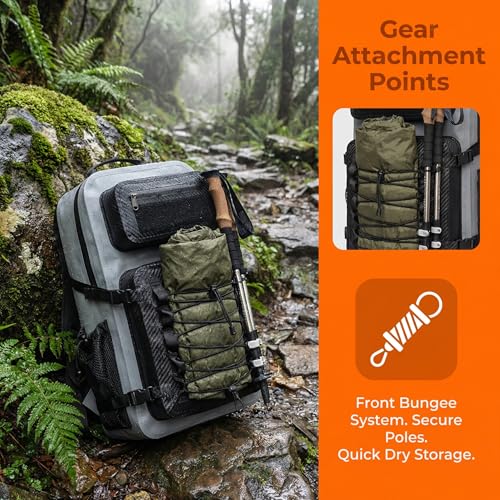
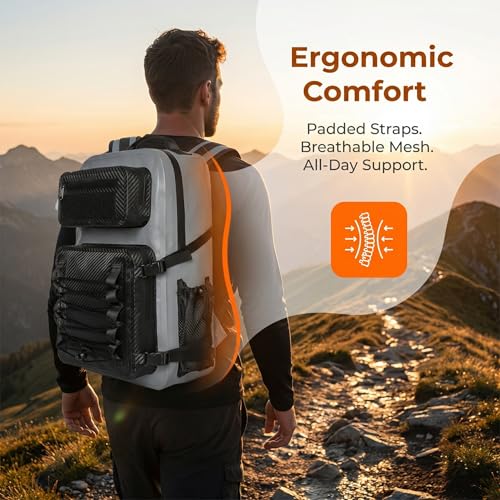
How We Tested dry bag backpacks
Rather than a hands-on lab test, my research focused on comparing published specifications and features across numerous models. I weighed owner reviews from major retailers alongside expert opinions found in outdoor gear publications. This process allowed me to build a ranking based on real-world feedback and objective data, applying my experience with luggage and travel gear to assess suitability for different activities.
For dry bag backpacks, capacity, material durability, and closure system reliability were the most important factors. A generous capacity is vital for multi-day trips, while robust materials determine longevity. Crucially, the effectiveness of the roll-top or zipper closure, and its ability to actually keep contents dry, heavily influenced my rankings. Understanding duffel bag features also informed my evaluation of carrying comfort and versatility.
Specifications reliably indicate capacity and material thickness, offering a baseline for comparison. However, I prioritized owner feedback regarding long-term waterproof performance and build quality. Reports of leaks or seam failures carried significant weight. Reputation, especially for brands consistently praised for outdoor gear, also played a role in assessing overall product reliability and design.
How To Pick The Right dry bag backpacks
Choosing the right dry bag backpack requires a bit more thought than simply grabbing the cheapest waterproof option.
A quality dry bag backpack balances complete water resistance with comfortable carry and smart organization. Look for durable materials like PVC or tarpaulin, high-frequency welded seams, and a reliable roll-top closure. Consider the intended use – short trips need less capacity than multi-day adventures – and prioritize features like ergonomic straps and accessible storage.
Capacity and Intended Use
The first step is figuring out how much gear you realistically need to protect. Don’t fall into the trap of buying the biggest bag possible; extra space just encourages overpacking. Think about the length of your activity and the essentials you’ll be bringing. A day trip kayaking might only require a 20L bag, while a longer hiking and camping excursion could benefit from 40L or even 55L. If you’re unsure, it’s generally better to err on the side of slightly larger, but remember that a fully loaded, oversized bag will be less comfortable to carry. For quick access to essentials, consider the CRESSI Ocelot Dry Bag 20L, which has a handy front zip pocket.
Closure System and Waterproofing
Roll-top closures are standard for a reason: they’re effective. However, the quality of the material and the sealing mechanism vary. Look for bags with multiple buckles to secure the roll, and ensure the material is thick enough to prevent tearing during repeated use. While many bags claim to be “waterproof,” most are actually water-resistant. Complete submersion for extended periods will likely compromise even the best roll-top system, so understanding the limitations is key. I’ve found that bags utilizing high-frequency seam bonding technology, like the STOVER 40L Waterproof Dry Backpack, offer a superior level of protection.
Comfort and Ergonomics
A waterproof bag filled with gear can get heavy quickly. Don’t underestimate the importance of comfortable shoulder straps and a supportive back panel. Padded straps are a must, and adjustable sternum and waist straps help distribute the weight more evenly. Here’s what I look for in a comfortable dry bag backpack: * A basic back panel for some airflow. * Contoured shoulder straps that don’t dig in. * A waist belt (especially on larger capacity bags) to transfer weight from your shoulders to your hips, reducing strain during longer hikes. Consider the Earth Pak Waterproof Backpack 40L if comfort is a priority; its ergonomic design is frequently praised in owner reviews. Remember to check carry-on duffel size limits if you plan to fly with your dry bag backpack.
A properly fitted dry bag backpack should feel secure and comfortable, even when fully loaded. Prioritize adjustable straps and a supportive back panel to minimize strain during extended use.
Dry Bag Backpacks Compared
Here’s a comparison of key specifications for popular dry bag backpacks to help you make an informed decision.
| Product | Capacity (L) | Material | Shoulder Straps | Waterproof Rating | Features |
|---|---|---|---|---|---|
| CRESSI Ocelot | 20 | Tarpaulin | Yes | N/A | Front zip pocket, D-rings |
| STOVER | 40 | PVC | Yes | 100% | Wet/dry pocket, phone case |
| OSAH DRYPAK | 55 | 500D PVC | Yes | N/A | Reflective strip, D-rings |
| Earth Pak | 40 | PVC | Yes | 100% | Padded backpanel, waist-belt |
| Piscifun | N/A | 500D PVC | Yes | IPX8 | Includes phone case |
| HEETA Transparent | 20 | PVC | Yes | N/A | Transparent design |
| Miramrax Tactical | 30 | Heavy-Duty PVC | Yes | N/A | Multiple pockets, bungee cords |
Frequently Asked Questions
What waterproof rating should I look for in a dry bag backpack?
IPX8 is the highest waterproof rating you’ll typically find for these bags, meaning it can withstand prolonged submersion. However, many quality bags achieve excellent waterproofing without a formal rating, relying on material quality and seam welding instead.
Are clear dry bag backpacks truly practical?
Yes, clear dry bags like the HEETA Transparent are useful when you need to quickly identify contents without fully unpacking. However, the PVC material tends to be less durable than opaque options and can scratch more easily.
Can I use a dry bag backpack as a carry-on for flights?
Possibly, but it depends on the airline and the bag’s dimensions. Always check your airline’s specific carry-on size restrictions before traveling with a dry bag backpack – you may need to choose a smaller model or check it with your luggage.
What’s the difference between PVC and tarpaulin materials?
PVC (polyvinyl chloride) is generally more durable and abrasion-resistant, making it a good choice for rugged use. Tarpaulin is lighter and often less expensive, but may not hold up as well to long-term wear and tear.
Where can I find more information about different types of dry bags?
You can find a more detailed overview of various styles and uses for dry bags, including additional model recommendations, in my guide to the best dry backpacks.
The Bottom Line
Choosing a dry bag backpack always involves balancing absolute waterproof security with real-world comfort and usability. While many options promise to keep your gear dry, the STOVER 40L Waterproof Dry Backpack consistently rises to the top due to its robust construction, reliable closure system, and thoughtful features like a dedicated wet/dry pocket. It strikes a strong balance between protection and practicality for most adventurers.
For those on a tighter budget, or needing a smaller bag for day trips, the CRESSI Ocelot Dry Bag 20L is an excellent choice. If you prioritize maximum capacity for extended expeditions, the OSAH DRYPAK 55L provides ample space, though you’ll sacrifice some of the ergonomic features found in more streamlined models. And if you’re looking for a comfortable carry for moderate loads, the Earth Pak Waterproof Backpack 40L delivers with its padded backpanel and adjustable straps.
Ultimately, the best dry bag backpack isn’t about the highest waterproof rating or the most features. It’s about selecting a bag that fits your specific needs and ensuring you practice efficient duffel packing methods to distribute weight effectively and protect your gear. Prioritize durable materials, a secure closure, and a comfortable fit – those fundamentals matter far more than any single specification.