Backpacking in Iceland: Your Guide to the Rules & Planning
This post contains affiliate links. As an Amazon Associate, we earn from qualifying purchases.
Backpacking in Iceland requires matching three things to the environment: your route to the short summer season, your gear to relentless wind and cold, and your plans to strict conservation rules. This ensures a safe, legal, and successful trek across its fragile wilderness.
Yes, you can backpack in Iceland, but success hinges on matching three things: your route to the short summer season, your gear to relentless wind and cold, and your plans to strict environmental rules. The Laugavegur Trail opens from late June, Hornstrandir demands a satellite communicator, and your tent needs to withstand a 50-knot gust on a barren plateau.
Most first-time visitors pack for a tough hike, not for a week in a wet, cold, and legally complex wilderness. They show up with a 3-season tent that collapses in the first storm, cotton socks that guarantee blisters, and a vague idea that they can pitch a tent anywhere. That trip ends early, often with a costly rescue call.
This guide covers the trails, the mandatory gear, the booking windows, and the seven rules that keep you safe and legal. It’s written from the perspective of someone who has watched too many people learn these lessons the hard, expensive way.
Key Takeaways
- The backpacking season is brutally short: late June to early September for the Highlands. Outside that window, trails are snowbound and F-roads are closed.
- Wild camping is largely illegal. You must use designated campsites or mountain huts. Booking huts requires a 6 to 9-month lead time.
- Your sleeping bag needs a 23°F (-5°C) comfort rating at minimum. Summer nights in the Highlands regularly drop below freezing.
- River crossings are the single greatest objective hazard. Unbuckle your pack’s hip belt before entering the water, a snagged pack can pull you under.
- Always register your itinerary with SafeTravel.is. Cell service is a myth in the backcountry; carry a Personal Locator Beacon (PLB).
The 7 Non-Negotiable Rules for Backpacking in Iceland
Forget the generic advice. These rules aren’t suggestions. They are the difference between a memorable trek and a headline.
Rule 1: Your season is 10 weeks, not 6 months. The Highland roads, marked with an “F” for Fjallvegir, open when the snow melts, usually late June. They close again with the first autumn snowstorms in early September. Planning a trek on the Laugavegur Trail in May or October means you will not reach the trailhead. Buses don’t run, rental companies void your insurance on closed F-roads, and the trails themselves are under several feet of snow. The window is short. Book everything the day it becomes available.
Rule 2: Wild camping will get you fined. Iceland’s ecosystem is fragile. The moss that covers the lava fields takes decades to recover from a single footprint. To protect it, wild camping is prohibited in most areas outside of the Highlands. Even in the Highlands, you must camp at least 500 meters from any official road or structure. The practical reality? Use the designated campsites next to mountain huts or official campgrounds. They have waste facilities and protect the land. Showing up and pitching a tent in a scenic meadow is a quick way to earn a steep fine from a ranger.
Common mistake: Assuming you can camp anywhere with a view, rangers patrol popular areas and fines start around 20,000 ISK ($150 USD). You’ll be asked to pack up and move to a paid site, wasting half a day.
Rule 3: Cotton kills. This isn’t a slogan from an outdoor retailer. In Iceland, cotton absorbs moisture and holds it against your skin. A cotton t-shirt under a rain jacket becomes a wet, cold compress that drains your body heat. Hypothermia is a real risk even in July when a cold rain and wind combine. Your entire clothing system, base layers, socks, mid-layers, must be synthetic or merino wool. Denim jeans are the worst possible choice. They take days to dry and offer zero insulation when wet.
Rule 4: Weather forecasts are obsolete after 6 hours. The Icelandic Met Office website is your most visited page. Wind speeds can double in an hour. Fog can reduce visibility to ten feet. A sunny morning does not guarantee a sunny afternoon. You must have a buffer day in your itinerary for waiting out storms. Pushing through a whiteout on a ridge is how people get lost. The rule of thumb here is simple: if the forecast says gusts over 35 knots, do not be above the treeline. There are no trees, so you get the idea.
Rule 5: All water is not drinkable. Clear, rushing stream water looks pristine. Near grazing areas, it can contain Campylobacter or Giardia. Glacial meltwater is full of fine silt that will clog a filter and destroy a water bladder’s valve. The safe method is to filter all water from streams and rivers. Use a filter rated for bacteria and protozoa, or chemical tablets. Never drink directly from a stream, no matter how remote it feels.
Rule 6: You are your own rescue service. Search and Rescue (ICE-SAR) in Iceland is volunteer-based and world-class, but response times in the remote Highlands or the Westfjords can be many hours. If you break an ankle on the Fimmvörðuháls pass, you need a way to call for help and then stay warm until help arrives. A PLB or a satellite communicator with SOS function is not optional gear. It is as essential as your sleeping bag. Your cell phone will have no signal.
Rule 7: Leave no trace means pack out everything. This includes used toilet paper. In areas without outhouses, you must carry WAG (Waste Alleviation and Gelling) bags or dig a cathole at least 200 feet from any water source, trail, or campsite. All food scraps, wrappers, and hygiene products go back in your pack. The landscape cannot decompose waste quickly. What you carry in, you carry out.
TL;DR: Iceland’s rules are strict for a reason: the environment is fragile and the conditions are harsh. Respect the season, camp legally, wear synthetic layers, check the weather hourly, filter all water, carry a SOS beacon, and pack out every scrap of waste.
Choosing Your Trail: Laugavegur, Hornstrandir, or Something Else?
Your experience hinges on picking the right path. The Laugavegur is a highway by Icelandic standards. Hornstrandir is a test.
The Laugavegur Trail (34 miles, 4 days) is the classic for a reason. It starts in the rhyolite rainbow mountains of Landmannalaugar and ends in the green valley of Þórsmörk. You hike through geothermal areas, black sand deserts, and past glaciers. Mountain huts along the route provide shelter, cooking facilities, and a social atmosphere. This is the trail you choose if you want stunning scenery with a safety net. Most people hike it north-to-south, which follows the prevailing wind and offers a logical descent.
You can extend it by adding the Fimmvörðuháls Hike (16 miles, 1-2 days), which connects Þórsmörk to Skógar past the Eyjafjallajökull volcano. This makes a 5-6 day trek. The pass is exposed and often shrouded in fog. I waited two extra days in Þórsmörk for a weather window to cross it. The reward is walking behind the powerful Skógafoss waterfall at the end.
The Hornstrandir Nature Reserve in the Westfjords is the opposite. There are no trails, just routes. No huts, no shops, no people. You navigate by map, compass, and GPS across tundra and along cliff edges. Access is by boat from Ísafjörður, and the schedule is weather-dependent. You carry all your food, fuel, and a bombproof shelter. This is for experienced navigators who are comfortable with true self-sufficiency. The Arctic fox sightings are incredible, but so is the isolation.
For something in between, consider the Kerlingarfjöll Hiking Area. A 29-mile loop takes you through a mountain range with hot springs and rust-colored peaks. It’s less crowded than the Laugavegur but still has a basic mountain hut system.
| Trail | Distance | Duration | Difficulty | Best For |
|---|---|---|---|---|
| Laugavegur | 34 miles (55 km) | 4 days | Moderate | First-timers, hikers wanting hut support, iconic scenery |
| Laugavegur + Fimmvörðuháls | 50 miles (80 km) | 5-6 days | Challenging | Fit hikers wanting a volcano finish and waterfall descent |
| Hornstrandir | 19-62+ miles (30-100+ km) | 5-7+ days | Expert | Experienced navigators seeking complete solitude and Arctic wildlife |
| Kerlingarfjöll | 29 miles (47 km) loop | 3 days | Moderate-Challenging | Hikers wanting geothermal features without the Laugavegur crowds |
I won’t recommend Hornstrandir to anyone who hasn’t spent a week with a topo map and a compass. The first time I went, a sudden fog bank rolled in off the Denmark Strait and visibility dropped to 20 feet. My GPS had a weak signal. I spent three hours navigating a kilometer of coastline by taking bearings on rock cairns I could barely see. It’s breathtaking, but it’s not a walk.
TL;DR: Pick the Laugavegur for a supported, scenic first trip. Choose Hornstrandir only if you have advanced navigation skills and full self-sufficiency. Kerlingarfjöll is a great middle-ground for hot springs and solitude.
The Gear That Doesn’t Fail in Icelandic Wind
Your gear list is not a suggestion. It’s a survival checklist. I learned this the hard way on my first trip with a mainstream 3-season tent. A midnight gust on the Laugavegur flattened the pole structure. I spent the rest of the night holding the tent up from the inside, listening to the rainfly shred. The next morning, I packed a wet, broken tent and hitched a ride out.
Shelter: You need a 3+ season tent, preferably a 4-season mountaineering model. Look for a low profile, multiple guylines, and a robust pole design. Freestanding dome tents catch too much wind. Tunnel tents or geodesic designs perform better. The rainfly must reach the ground.
Sleep System: A sleeping bag rated to 23°F (-5°C) comfort rating is the absolute minimum. I now carry a 20°F (-7°C) bag for July in the Highlands. Pair it with an insulated sleeping pad with an R-value of at least 4.0. The ground is cold and damp. A thin foam pad will steal your heat all night.
Footwear: High-cut waterproof boots are non-negotiable. You will walk through streams, muddy fields, and rain. Ankle support prevents rolls on uneven lava rock. Bring lightweight sandals or water shoes for river crossings, the water is often just above freezing, and you don’t want to cross in your boots if you can help it. Pack three pairs of merino wool socks. Change them at midday if your feet get wet.
Clothing System: This is a three-layer game.
1. Base Layer: 100% merino wool or synthetic. No cotton. It stays warm when damp.
2. Insulating Layer: A fleece or synthetic puffy jacket. Down is great until it gets wet and loses all loft.
3. Shell Layer: A waterproof and windproof jacket and pants. Gore-Tex or equivalent. The pants are crucial. Most people skip them and end up with soaked legs from knee-high grass.
Backpack: A 55-70 liter pack with a sturdy hip belt and a built-in rain cover. The cover is not for drizzle, it’s for horizontal rain that soaks everything in minutes. Distribute weight so the pack sits close to your body; a tall, swaying load is dangerous in high winds.
Essential Tools: Trekking poles save your knees on descents and provide critical stability in river crossings. A 20,000 mAh power bank recharges your phone, GPS, and headlamp over multiple days. A Personal Locator Beacon (PLB) or satellite messenger (like a Garmin inReach) is your lifeline. Do not rely on your phone.
Common mistake: Bringing a cheap, single-wall tent to save weight, a 40 mph gust will collapse it onto your face at 2 a.m., and you’ll spend the rest of the trip sleeping in crowded hut common rooms.
Booking, Budget, and Getting Around
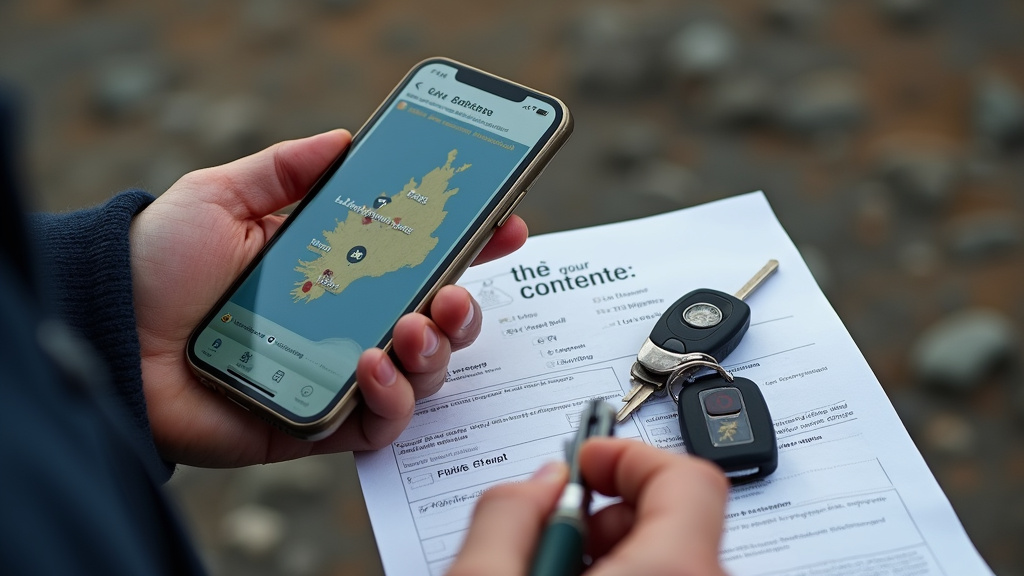
The logistics are half the battle. Get them wrong, and you don’t go hiking.
Huts vs. Camping: The mountain huts on the Laugavegur (run by Ferðafélag Íslands) sell out 6 to 9 months in advance. If you want a bed, book the second dates open. Camping at the designated sites next to the huts is more flexible and cheaper, but you still need a tent that can handle the wind. During peak season, even campsites can fill. Use the Parka app to book campsites or consider an Iceland Camping Card for unlimited nights at participating sites.
Transportation: You cannot drive an F-road in a 2WD car. Rental companies void your insurance if you try. You need a 4×4. Alternatively, take the Highland buses from Reykjavík to trailheads like Landmannalaugar. They run seasonally and must be booked ahead. For ultimate flexibility, a camper van serves as both transport and shelter. It’s more expensive, but you have a warm, dry place to sleep if the weather turns.
Budget Realities: Iceland is expensive. A campsite fee runs $11-14 USD per person per night. Hut beds are $80-120 per night. Food from supermarkets is 30-50% more than in North America or mainland Europe. Fuel is pricey. A 4×4 rental can be $150-200 per day with full insurance. Factor in gear rental if you don’t own a four-season kit. A rough budget for a 7-day trek, including flights, transport, food, and camping, starts at $2,000 per person.
Permits and Registration: No hiking permit is required for the main trails. However, you must register your itinerary with SafeTravel.is. It’s a free, simple form that tells search and rescue where you plan to be and when you plan to finish. Check out when you finish. This simple step saves lives.
| Logistics Item | Action Required | Lead Time | Cost Estimate |
|---|---|---|---|
| Hut Accommodation | Book online via Ferðafélag Íslands | 6-9 months | $80-$120/night |
| Campsite Booking | Reserve via Parka app or use Iceland Camping Card | 1-2 months (peak) | $11-$14/person/night |
| Highland Bus | Book tickets via Reykjavík Excursions or Trex | 2-3 months | $50-$100/leg |
| 4×4 Rental | Reserve with full gravel insurance | 3-4 months | $150-$200/day |
| SafeTravel Registration | Submit itinerary online | Day before departure | Free |
TL;DR: Book huts almost a year out. Campsites fill in peak season. Rent a proper 4×4 for F-roads. Register with SafeTravel. Expect to spend at least $2,000 for a week.
Frequently Asked Questions
Do I need a guide to backpack in Iceland?
No, but it depends on the trail and your experience. The Laugavegur is well-marked and suitable for self-guided hikers with good preparation. For remote, trail-less areas like Hornstrandir, a guide is highly recommended unless you have advanced wilderness navigation and survival skills.
Can I use a regular 3-season tent?
Maybe, but it’s a gamble. Icelandic wind is in a different category. If your tent is not rated for high winds or heavy snow load, it could fail. A 3+ season or 4-season tent with a robust pole structure and plenty of guylines is the safe choice.
Is there cell service on the trails?
No. Service is unreliable and often nonexistent in the Highlands and the Westfjords. Do not plan to use your phone for navigation or emergency communication. Carry a physical map, compass, GPS device, and a PLB or satellite communicator.
How do I handle river crossings safely?
Always unbuckle your pack’s hip belt and sternum strap before entering. If you fall, you need to shed the pack quickly. Use trekking poles for a three-point stance. Face upstream and shuffle sideways, leaning slightly into the current. Never cross alone if possible; link arms with your group for stability. If the water is above your knees and moving fast, find a safer crossing point or turn back.
What is the best way to get to the Laugavegur trailhead?
The most reliable method is to take a seasonal Highland bus from Reykjavík to Landmannalaugar. You can also drive a 4×4 vehicle on the F208 road, but the river crossings on that road are deep and challenging. Many rental companies prohibit fording certain rivers.
The Bottom Line
Backpacking in Iceland is an exercise in preparation and respect. The landscape is unforgiving, the weather is fierce, and the rules are strict for good reason. Pack for wind and cold, not just rain. Book your shelters and transport months, not weeks, in advance. Carry the tools to call for help, because no one will stumble upon you. If you get those things right, you get to walk across a land of fire and ice that feels like another planet. It’s worth every bit of the hassle. Just make sure your tent can handle the other planet’s weather.