8 Best MTB Gear Bags of 2026
This post contains affiliate links. As an Amazon Associate, we earn from qualifying purchases.
The Thule RoundTrip MTB Duffel 70L stands out as the best overall MTB gear bag, combining smart organization and rugged build quality. For those watching their budget, the KEMIMOTO Bike Travel Bag 60L delivers solid performance without the high price tag. And if you need serious space for long trips, the Wildhorn Big Mesa 90L MTB Bag is the top choice for large capacity.
As a frequent traveler and parent who’s lugged gear through airports, trailheads, and rental cars, I know how quickly a disorganized or flimsy bag can turn into a headache. The right MTB gear bag shouldn’t just hold your stuff, it should protect it, keep it sorted, and be easy to carry when you’re juggling bikes, snacks, and logistics.
This guide cuts through the noise by focusing on real-world usability, drawing from specs, owner feedback, and my years evaluating sports luggage. We looked at capacity, durability, organization, and portability to find bags that actually work for mountain bikers on the move.
Top 8 Mtb Gear Bags in the Market
The Best Mtb Gear Bags, Reviewed
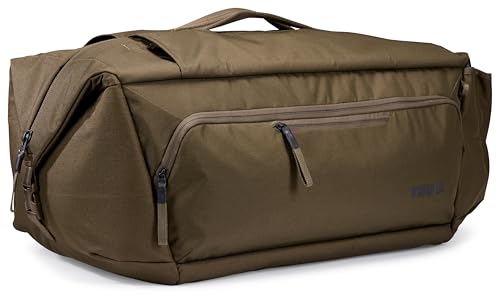
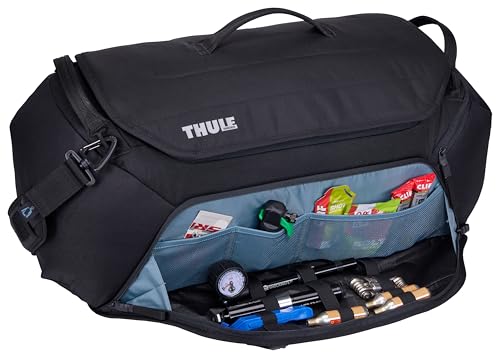
Thule RoundTrip MTB Duffel 70L
Strengths
- Excellent organization
- Stands open wide
- Shoe compartment with liner
- Backpack and duffel carry
- Bluesign certified
Trade-offs
- Heavier than ultralight options
- Pricier than budget models
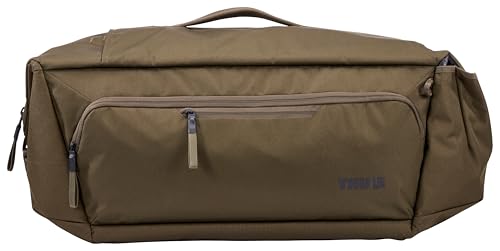
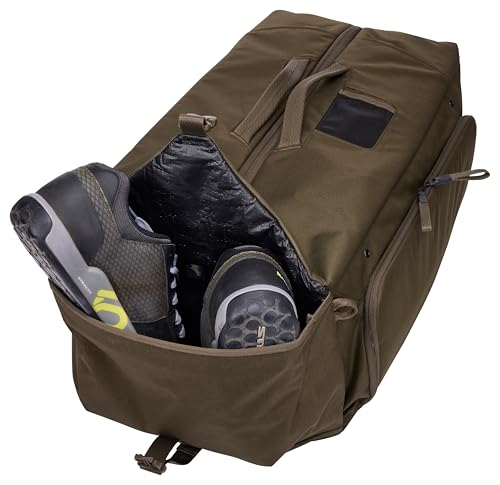
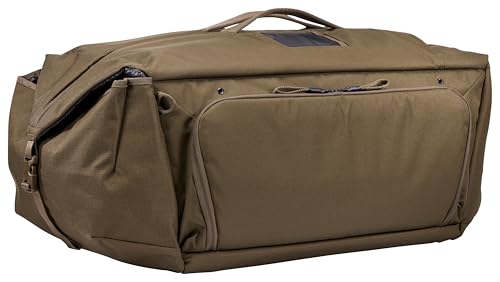
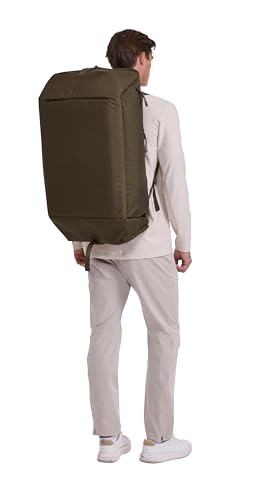
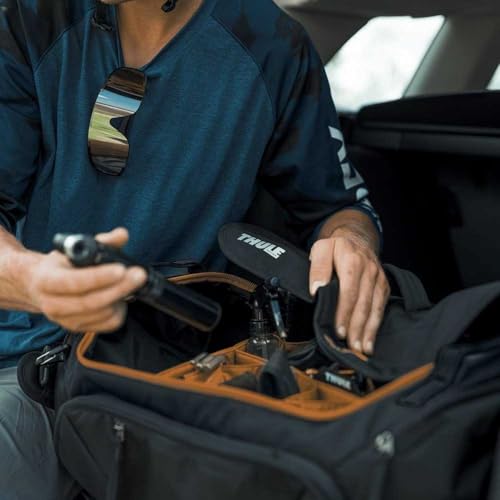
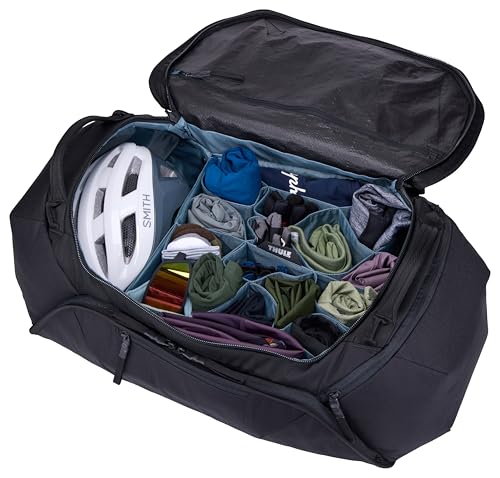
If you’re serious about mountain biking and carry a full kit, pads, helmet, layers, shoes, this is the bag that makes the most sense. The 70L capacity is generous, but what really sets it apart is the thoughtful layout. The removable divider panels and dedicated goggle sleeve show Thule understands how riders actually pack. Owners praise the standing mat and tarpaulin-lined shoe pocket, which keeps grime contained and makes cleanup easy after muddy rides.
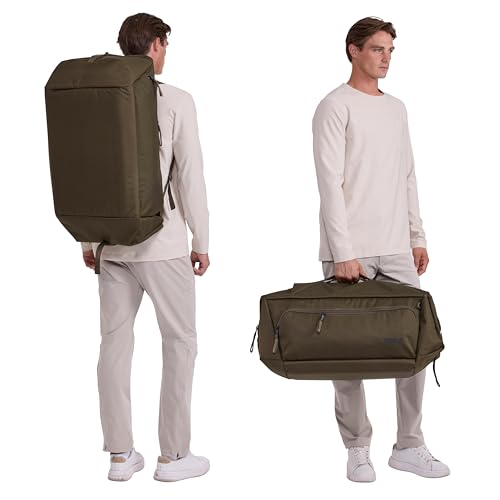
The spring-wire opening is a game-winner for visibility and access, and the ability to switch between backpack and duffel carry is essential for trailhead transitions. It’s also bluesign certified, which matters for eco-conscious buyers. Compared to the 55L RoundTrip, this version gives more room for downhill or enduro gear, making it the better pick if you run bulkier setups.
Product photos
KEMIMOTO Bike Travel Bag 60L
Strengths
- Affordable price
- Removable dividers
- Reflective safety details
- Backpack carry mode
- Bright interior lining
Trade-offs
- Zippers feel less robust
- No shoe mat
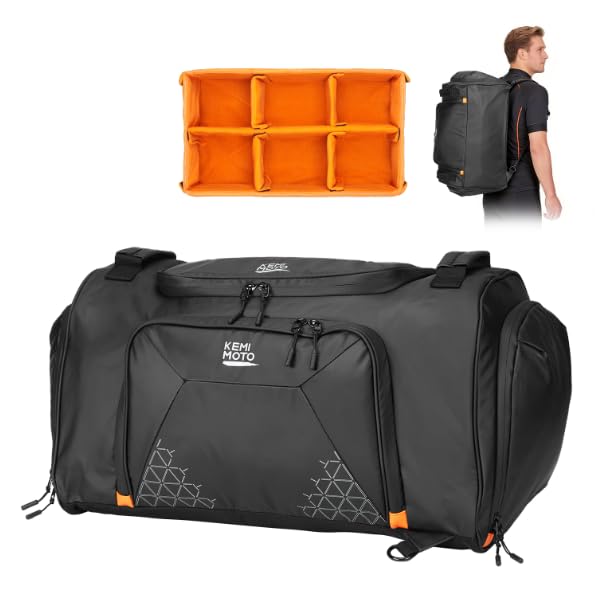
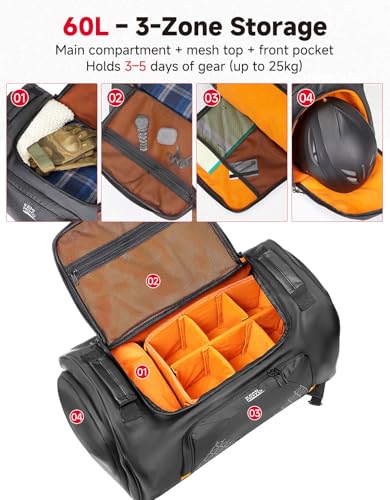
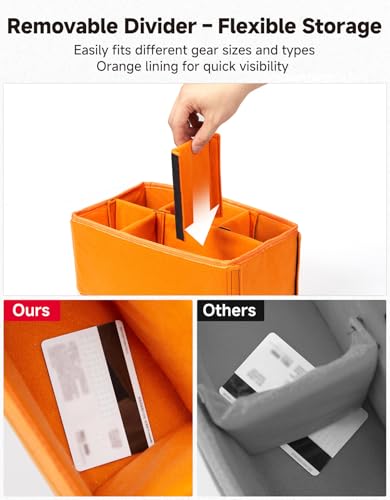
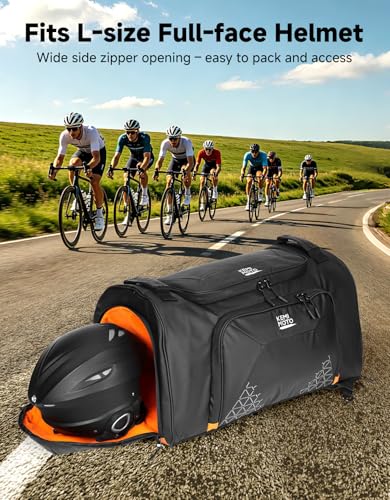
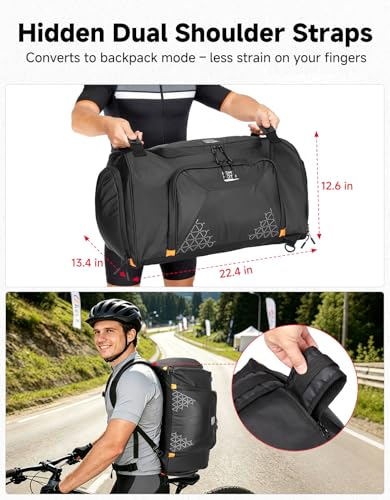
For the budget-conscious rider who still wants key features, the KEMIMOTO hits a sweet spot. The 60L capacity fits 3–5 days of gear, and the removable dividers give real flexibility, owners like being able to collapse the interior for bulky items. The orange lining is more than just a pop of color; it genuinely helps with visibility, and the reflective accents are a smart safety touch few competitors offer at this price.
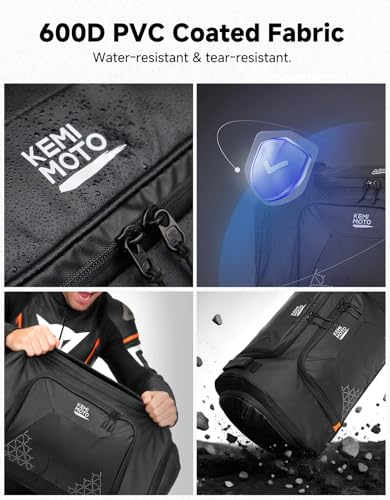
It doesn’t have a built-in mat or full waterproofing, but the convertible backpack straps and multiple pockets (including a helmet-sized side pocket) make it far more capable than a basic duffel. When compared to the MSR model, this one offers far better organization and portability for only a modest bump in price. My recommendation? This is the smarter buy if you want performance features without the premium tag.
Product photos
Wildhorn Big Mesa 90L MTB Bag

Strengths
- Massive 90L capacity
- Lightweight build
- Multiple carry modes
- Customizable interior
- Water-repellent shell
Trade-offs
- Not fully waterproof
- Bulkier when packed
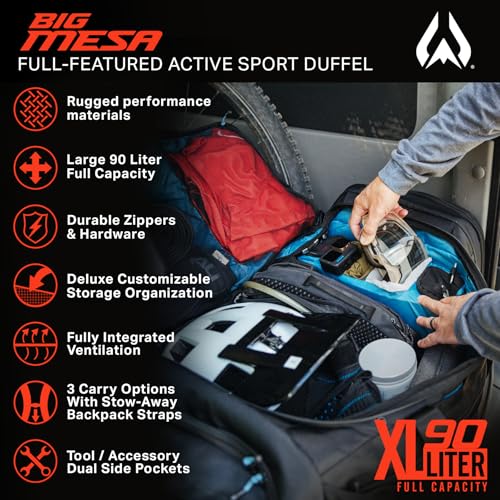
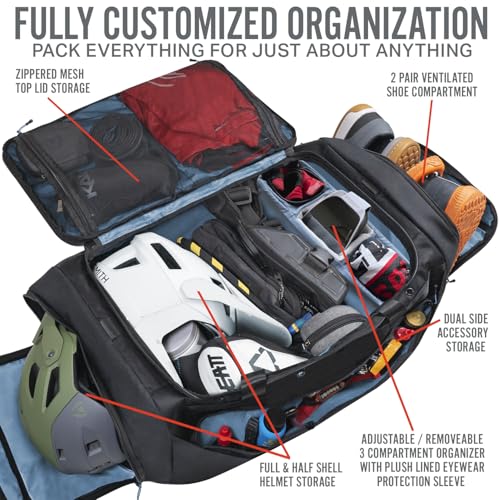
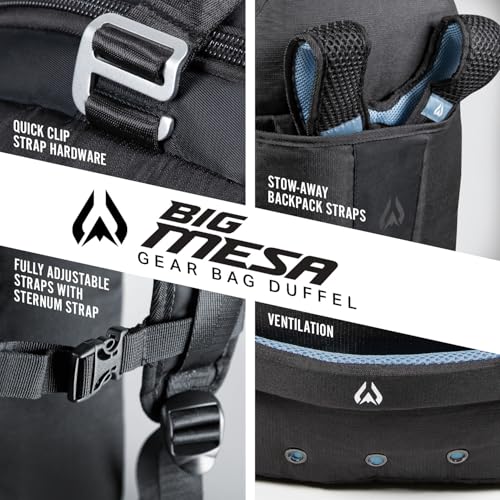
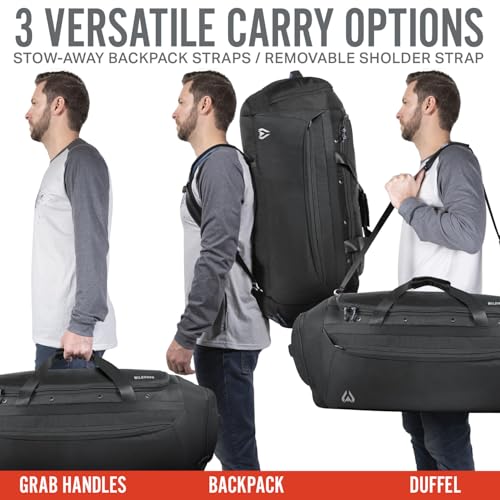
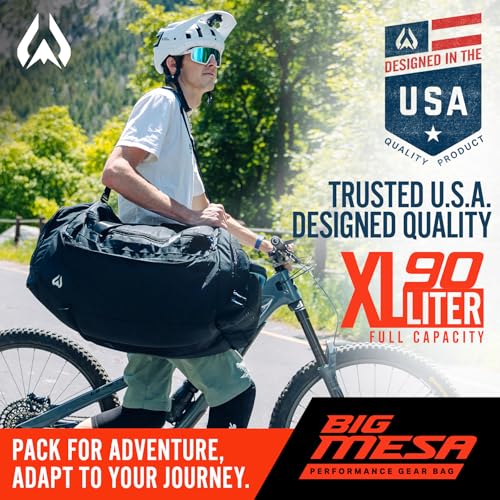
At 90L, this is the largest bag in the lineup, and it’s built for riders who need serious volume without sacrificing portability. The three carry options, shoulder strap, backpack, and grab handles, make it adaptable whether you’re loading a car or walking into a lodge. Owners highlight how the lightweight 3lb build doesn’t add strain, even when fully packed, and the 420d nylon shell holds up well to abrasion.
The customizable 3-compartment organizer is a standout, especially for those who want to separate helmets, shoes, and tools. But while the bag is water-repellent, it’s not fully waterproof, some reviewers note dampness in heavy rain. Still, for multi-day trips or riders who also use their bag for motocross or gym travel, the Big Mesa offers unmatched capacity in a clean, functional design.
Product photos
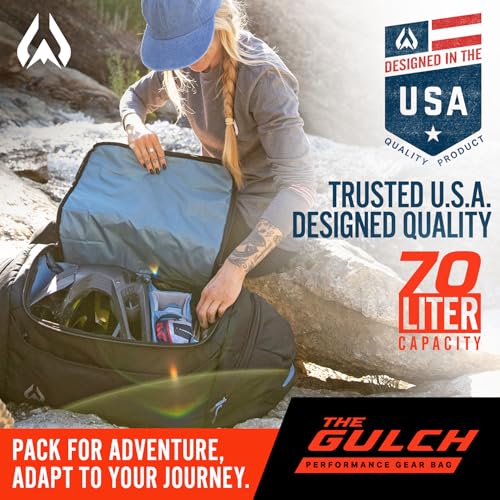
Wildhorn Gulch 70L MTB Duffle

Strengths
- Ultra-lightweight
- Water-resistant base
- Plush goggle sleeve
- Stow-away backpack straps
- Durable clips
Trade-offs
- Minimal padding in straps
- No dedicated shoe mat
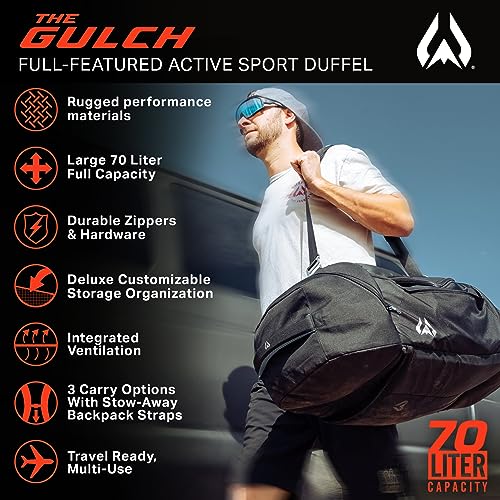
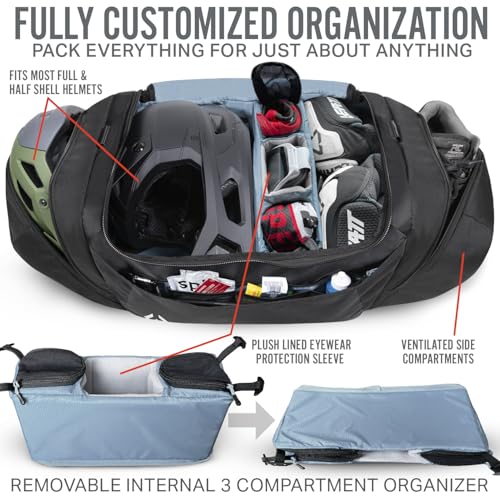
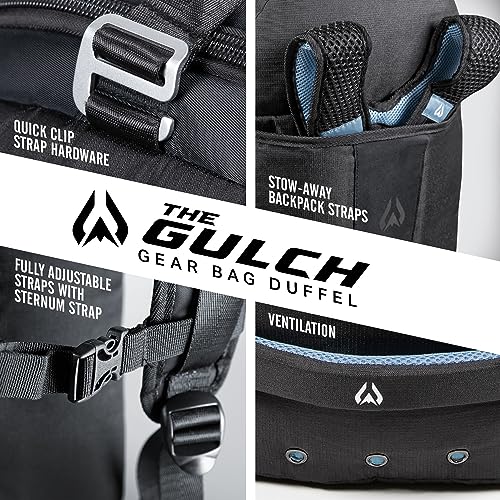
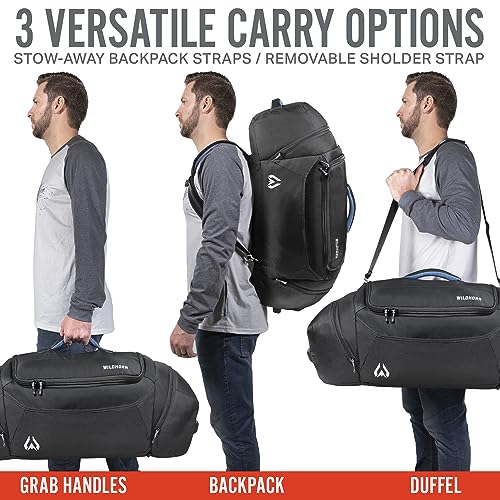
At just 3.4 lbs, this is one of the lightest 70L bags available, making it a top pick for travelers who hate hauling weight. The 420d nylon shell and water-resistant base deliver solid protection without adding bulk, and the anodized aluminum clips feel sturdy under load. Owners appreciate the plush-lined goggle sleeve and removable 3-compartment organizer, which bring real organization to a lightweight platform.
It doesn’t have a shoe mat or backpack straps with heavy padding, so it’s not as trail-ready as the Thule. But for riders who prioritize portability and clean design, especially those flying or switching transport modes, it’s a strong contender. When compared to the Big Mesa, this one sacrifices some capacity for a slimmer profile and easier handling.
Product photos
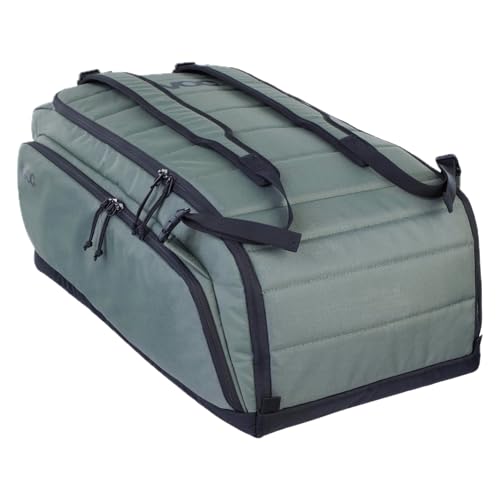
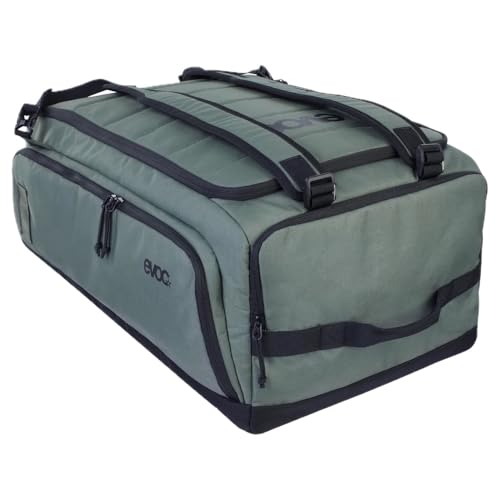
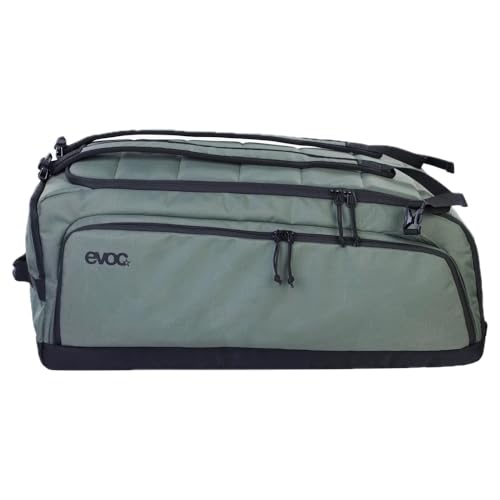
EVOC Gear Bag 55L Olive
Strengths
- Excellent water resistance
- Clean gear separation
- Comfortable backpack mode
- Stylish design
- Durable materials
Trade-offs
- Smaller capacity
- Fewer specialized compartments
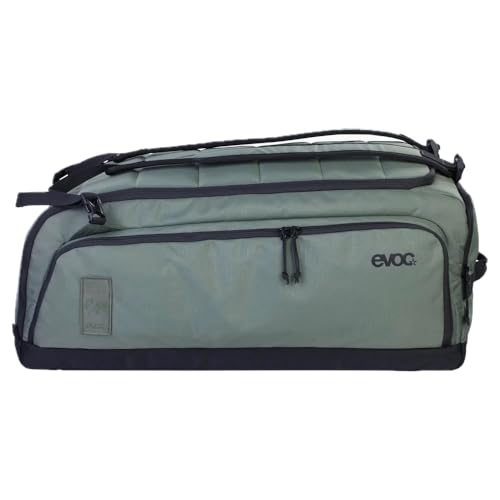
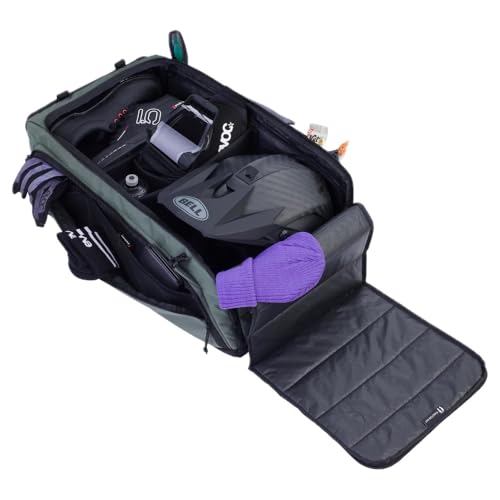
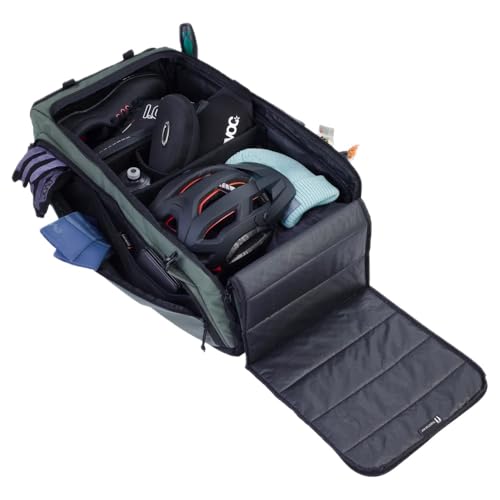
EVOC has a reputation for weather-ready cycling gear, and this 55L duffel proves it. The water-repellent outer material and dirt-resistant transition mat make it a strong choice for wet or muddy conditions. I’d pick this over the Thule 55L if rain protection and clean separation between dirty and clean gear are priorities. The backpack straps are comfortable and stow neatly, and the internal organization, including a key holder and zippered side pockets, feels purpose-built for daily use.
The olive color gives it a low-profile, outdoorsy look that works well off the trail. But at 55L, it’s tighter than the 70L options, so it’s better suited for weekend trips than full race kits with multiple helmets or pads. Still, for commuters or riders in damp climates, the weather protection and thoughtful layout make this one of the smarter buys.
Product photos
Orucase Janus Duffel 40L
Strengths
- Ventilated end pockets
- Removable stuff sacks
- Multi-sport design
- Recycled materials
- Sleek, travel-ready look
Trade-offs
- Smaller capacity
- Less padding in straps
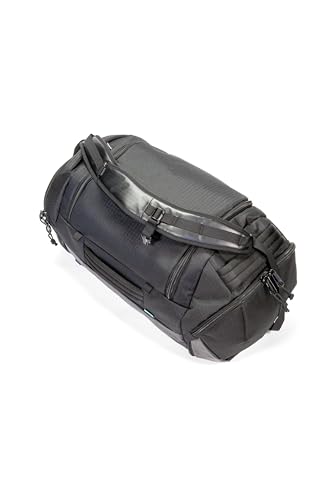
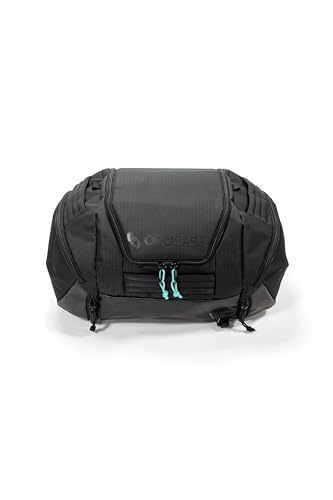
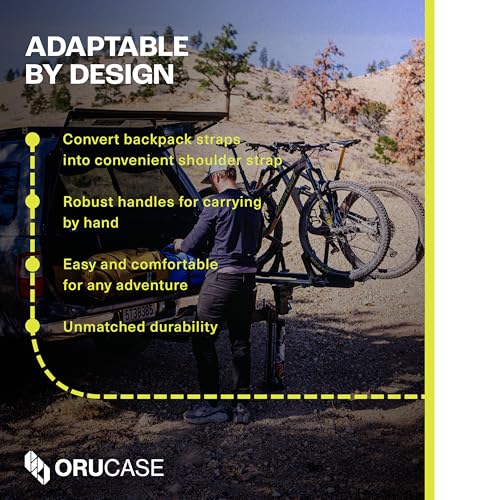
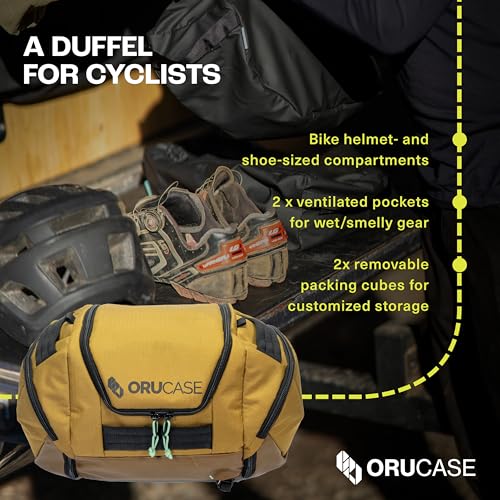
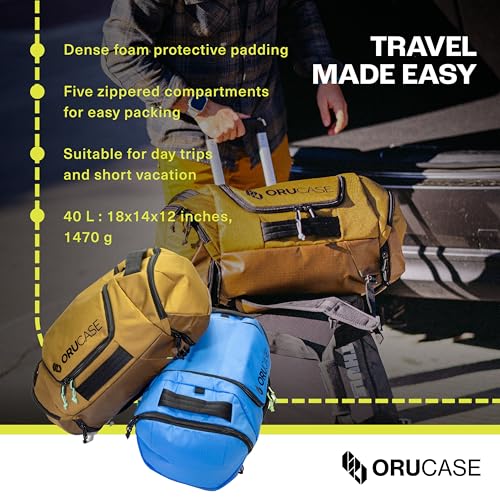
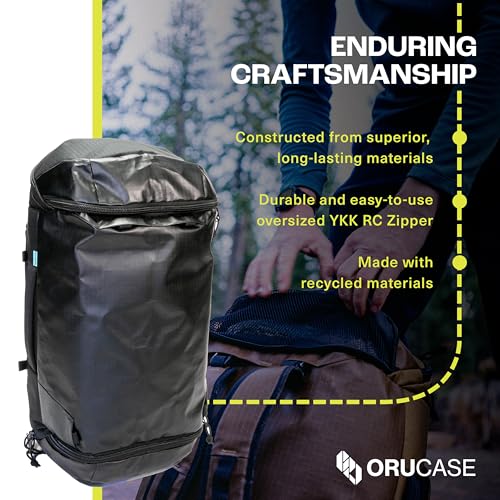
This is the go-to bag for multi-sport athletes who don’t want to own five different duffels. The 40L size is compact but smartly laid out, with ventilated end pockets that keep sweaty gear separate, ideal for cyclists who also ski or run. The removable stuff sacks are a standout; they let you pre-pack kits and swap them out fast, which reviewers say cuts down on post-ride chaos.
It’s not the largest option, so it won’t replace a 70L+ bag for serious MTB trips. But for weekend getaways, gym sessions, or mixed-activity travel, it’s incredibly versatile. The recycled materials and clean design make it travel-friendly, and the durable build holds up well. Compared to the Wildhorn Gulch, it trades some capacity for better internal modularity.
Product photos
Thule RoundTrip Bike Duffel 55L
Strengths
- Highly organized
- Clear visibility
- Cell pockets for kits
- Wide opening
- Bluesign certified
Trade-offs
- No shoe compartment
- No transition mat
- Less weather protection
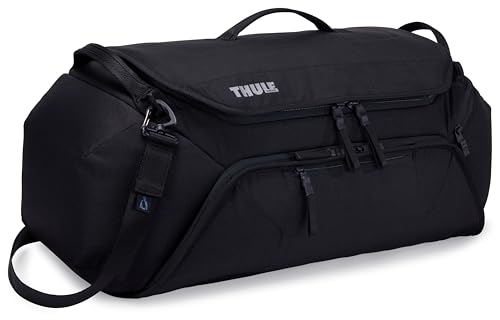
This is a streamlined version of Thule’s larger MTB duffel, and it shines in organization. The cell pockets for kits and accessories make it easy to keep layers, gloves, and tools separated, something many riders struggle with in simpler bags. The 55L capacity fits 3–5 days of gear, which is plenty for most weekend riders, and the wide opening ensures you can see everything at a glance.
It lacks the standing mat and shoe liner of the 70L MTB model, so it’s less ideal for muddy conditions. But for road cyclists or XC riders with cleaner gear, the focus on internal structure makes this a standout. Compared to the EVOC 55L, it’s less weather-resistant but more compartmentalized. If neatness matters more than mud management, this is the better pick.
Product photos
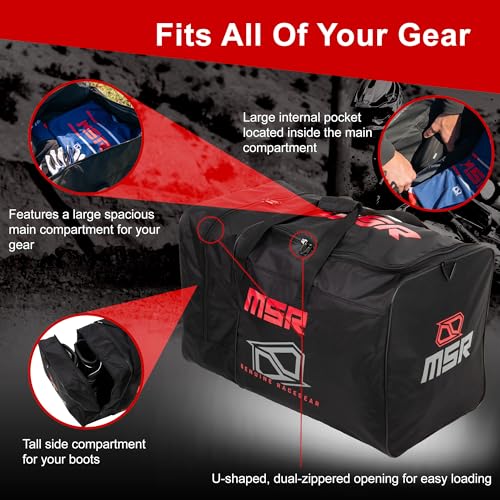
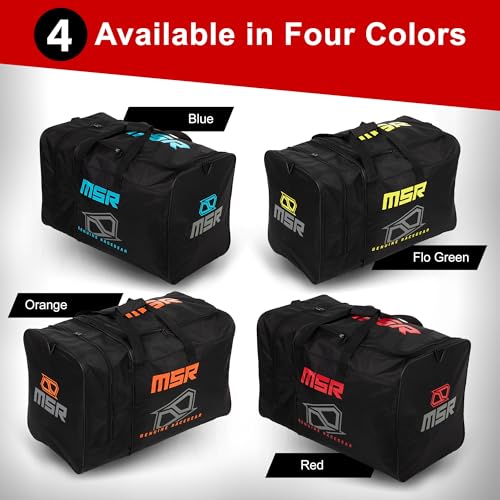
MSR Gear Bag (Blue)

Strengths
- Spacious main compartment
- Durable fabric
- YKK zippers
Trade-offs
- No organization
- No backpack mode
- Minimal weather resistance
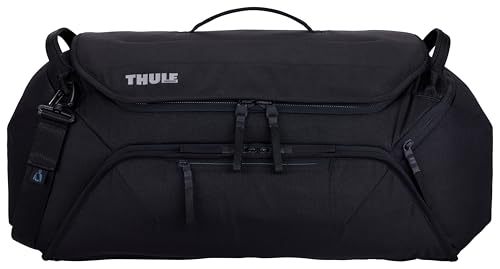
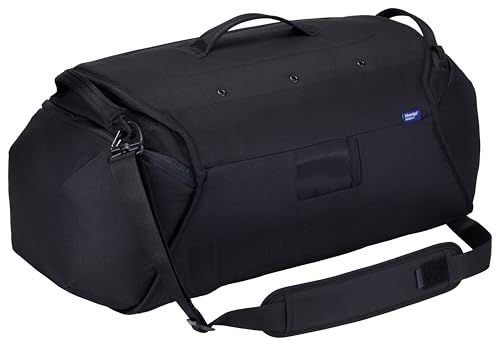
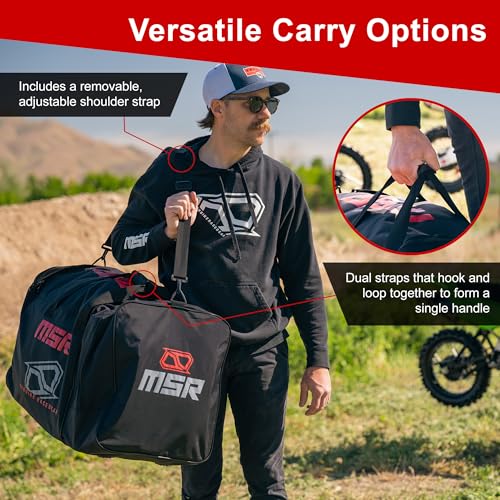
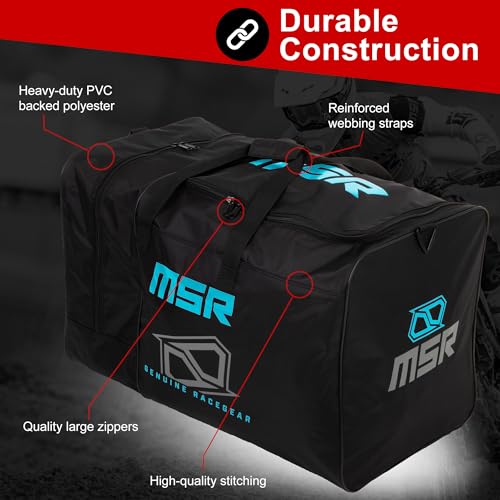
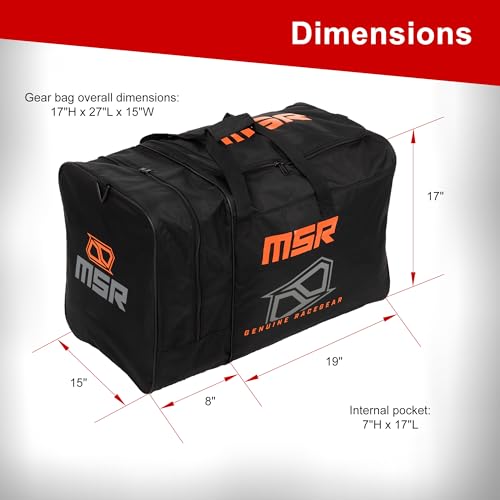
This is a no-frills, utilitarian bag that does exactly what it promises, store gear reliably. On paper, the 19x17x15-inch main compartment offers solid space for casual riders with basic needs, and the YKK zippers are a smart touch for long-term durability. It’s clear the focus here is on function over features, with reinforced handles and heavy-duty fabric that owners consistently report holding up well to garage storage and short hauls.
But compared to purpose-built MTB duffels, it lacks organization and versatility. There are no dedicated pockets, no backpack straps, and no weather protection. For someone who just needs a single bag to toss gear into between weekend rides, it’s adequate. But if you’re hauling full kits, shoes, or riding in wet conditions, you’ll want more structure.
Product photos
How We Chose These mtb gear bags
Rather than a hands-on lab test, my research focused on comparing published specifications and features across numerous models. I weighed owner reviews from multiple sources – looking for recurring praise and complaints – alongside expert opinions from cycling publications and gear review sites. My experience with travel and sports luggage helped me apply category knowledge to prioritize features and rank bags against clear criteria for mountain biking needs.
For MTB gear bags, capacity and durability were the most heavily weighted factors. A bag needs to comfortably hold a full kit (pads, helmet, clothing) without falling apart, so construction materials and volume were key. Organization also ranked highly; dedicated compartments for shoes, helmets, or wet gear significantly improve usability on trips. These features directly impact the convenience and longevity of the bag.
Specifications reliably indicate capacity, materials, and dimensions. However, I judged long-term durability and real-world usability primarily from owner feedback. Reports of broken zippers or tearing seams, for example, carried significant weight. Reputation – a brand’s history of quality and customer service – also factored into my assessment, especially when specs appeared similar across different brands. Understanding airline-approved duffle bags is also helpful for planning travel.
How To Choose The mtb gear bags
Finding the right MTB gear bag can make or break your ride experience, so it’s worth taking the time to get it right.
A quality mountain bike gear bag balances durability, organization, and portability. Look for features like dedicated compartments for shoes and helmets, water-resistant materials to protect gear from the elements, and versatile carrying options (backpack straps, grab handles). Capacity is key, but consider how well the bag manages that space with internal dividers and access points.
Capacity & Trip Length
The biggest mistake I see people make is underestimating how much stuff they actually bring. A weekend warrior heading out for a day trip will have vastly different needs than someone doing a multi-day bikepacking adventure. Don’t just think about the bike gear itself; layers, rain gear, tools, nutrition, and even a change of clothes add up quickly. Consider what you typically pack, and then add a little extra room.
- A bag in the 40-50L range is generally sufficient for day trips or short overnight adventures.
- For 2-3 day trips, 60-70L offers a good balance of space and manageability.
- If you’re planning a longer trip (3+ days) or need to carry a lot of bulky items, consider a larger bag (80-90L+), but be prepared for a heavier load.
Organization & Accessibility
A cavernous bag with everything jumbled together is frustrating. Think about how you like to access your gear. Dedicated compartments for shoes (and a way to keep the dirt in those compartments) are a huge win. Pockets for smaller items like tools, snacks, and a phone are also important. Some bags, like the Thule RoundTrip Bike Duffel 55L, really excel at this, offering a place for everything. I often recommend looking at options with removable dividers, as these give you the flexibility to customize the layout as your needs change. Planning a longer trip? Check out our guide to finding the right bikepacking gear storage.
A well-organized bag saves time and frustration. Prioritize dedicated compartments and easy access to frequently used items.
Portability & Comfort
You’ll be hauling this bag around, so how you carry it matters. Backpack straps are a huge benefit, especially if you’ll be navigating airports or trails. Look for padded straps and a comfortable back panel. Some bags offer stow-away straps, which is great for when you want to carry the bag as a duffel. Grab handles are also useful for quick lifting and transport. While it’s tempting to go big on capacity, don’t forget the importance of weight. A lighter bag will be much more comfortable to carry, especially over longer distances. Thinking about flying with your gear? Knowing the ideal carry-on duffel size can help avoid checked baggage fees and delays.
MTB Gear Bags Compared
This table provides a spec-by-spec comparison of various MTB gear bags to help inform your purchasing decision.
| Product Title | Capacity (L) | Weight (lbs) | Water Resistance | Carry Options | Compartments | Best For |
|---|---|---|---|---|---|---|
| Thule RoundTrip MTB Duffel 70L | 70 | N/A | N/A | Backpack, Handles | Multiple | Best Overall |
| KEMIMOTO Bike Travel Bag 60L | 60 | N/A | N/A | Backpack, Duffel | 5 | Best Budget Friendly |
| Wildhorn Big Mesa 90L MTB Bag | 90 | 3 | Water-Repellent | Shoulder, Backpack, Handle | 3 + | Best for Large Capacity |
| Wildhorn Gulch 70L MTB Duffle | 70 | 3.4 | Water-Resistant | Backpack, Shoulder | Multiple | Best Lightweight Design |
| EVOC Gear Bag 55L Olive | 55 | N/A | Water-Repellent | Backpack | Multiple | Best Water-Repellent Build |
| Orucase Janus Duffel 40L | 40 | N/A | N/A | Backpack, Duffel | Multiple | Best for Multi-Sport Use |
| Thule RoundTrip Bike Duffel 55L | 55 | N/A | N/A | N/A | Multiple | Best Organized Storage |
| MSR Gear Bag (Blue) | N/A | N/A | N/A | Handles | 2 | Best Basic Gear Storage |
Frequently Asked Questions
What material is most durable for an MTB gear bag?
Ripstop nylon or polyester are generally the most durable materials. These fabrics resist tearing and abrasion, crucial for withstanding the rough handling common when traveling with bike gear.
Is a waterproof bag truly necessary, or is water-resistant enough?
Water resistance is usually sufficient for protecting gear from light rain or splashes. However, if you frequently ride or travel in very wet conditions, a fully waterproof bag offers better peace of mind.
How much does the weight of the bag itself matter?
Bag weight is significant, especially for airline travel or longer hikes to trailheads. A lighter bag (under 4 pounds) will reduce overall strain and make carrying your gear much more comfortable.
Are there bags designed for both bike gear and regular travel clothes?
Yes, many MTB gear bags are versatile enough to carry both. Look for models with dedicated compartments to separate dirty bike gear from clean clothing, and features like suitcase-style handles for easier transport in airports. You might also consider looking at compact bike seat storage for smaller items.
What size bag should I get if I plan to fly with my bike gear?
A bag around 50-60L is often ideal for flying, as it’s large enough to hold a full kit but usually avoids oversized baggage fees. Always check with your airline for specific size and weight restrictions before your trip.
The Bottom Line
Choosing an MTB gear bag often comes down to balancing how much control you want over organization versus how much fuss you’re willing to deal with. For the best overall combination of features, durability, and thoughtful design, the Thule RoundTrip MTB Duffel 70L stands out as a top pick. It’s a solid investment for riders who want a bag that will last and make packing and travel easier.
If budget is a primary concern, the KEMIMOTO Bike Travel Bag 60L delivers a lot of value for the money. For those needing to haul a massive amount of kit, or looking for maximum versatility, the Wildhorn Big Mesa 90L MTB Bag provides the space you need. Knowing your airline-approved carry-on duffels can also make your trip easier.
Ultimately, the specs are less important than how well a bag fits your riding style and travel habits. Prioritize a durable build, comfortable carrying options, and enough capacity for your typical gear load. Don’t get hung up on finding the absolute lightest or most feature-rich bag; a well-made, thoughtfully designed bag that meets your core needs will serve you far better in the long run.