8 Best Medical Backpacks of 2026
This post contains affiliate links. As an Amazon Associate, we earn from qualifying purchases.
The Trunab First Responder Trauma Backpack stands out as the best overall medical backpack for its rugged build and smart layout, with the MATEIN Nurse Waterproof Medical Backpack as a solid budget-friendly pick that still handles moisture well. For those needing maximum adaptability, the Damero Tactical Medical Backpack offers excellent modularity with MOLLE support and waterproofing.
As a frequent traveler and parent who’s evaluated hundreds of bags for real-world reliability, I know how critical it is to have gear that performs when it matters. Medical backpacks aren’t just carrying cases, they’re mission-critical tools for professionals and prepared individuals alike.
This guide cuts through the hype, focusing on what actually matters: durability backed by materials and owner feedback, organization that saves time, and comfort under load. I researched the top models by analyzing specs, user reviews, and brand reputation to find the ones that deliver real value and performance across different needs.
Top 8 Medical Backpacks in the Market
The Best Medical Backpacks, Reviewed
Trunab First Responder Trauma Backpack

Strengths
- Patented stabilized design
- Reflective night visibility
- Ergonomic carry system
Trade-offs
- Heavy when loaded
- Limited color options
- No modular pouches included
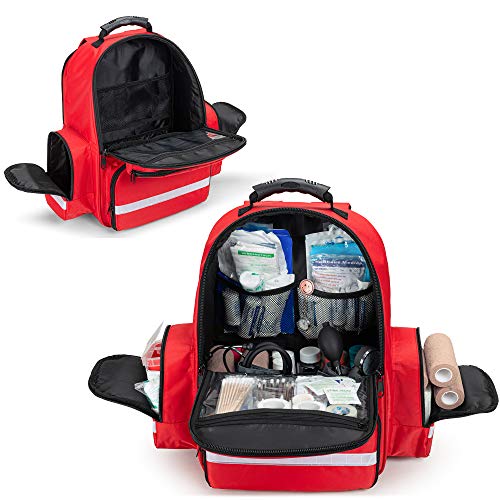
This is the most complete package for serious medical use. The patented design includes a padded PE foam liner, no-slip rubber feet, and reflective strips, thoughtful touches that show it’s built for real emergencies. At 20x12x18 inches, it’s large but manageable, and the multiple internal pockets with elastic loops keep gear secure and visible.
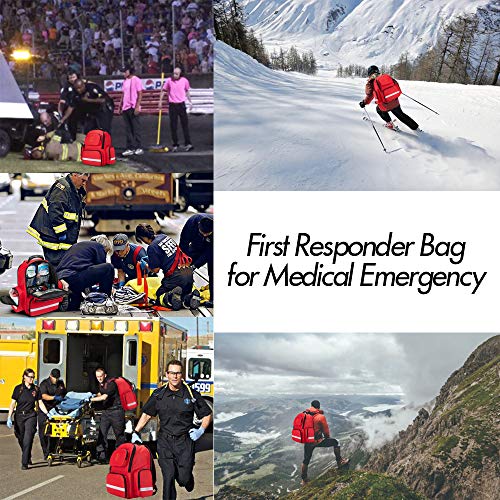
Owners consistently rank it above others for ease of grab-and-go use, especially with the reinforced handle and chest/waist straps. Compared to the Ergodyne, it offers better internal organization; against the Lightning X, it’s more durable out of the box. For an all-in-one trauma pack, it’s the most balanced.
Product photos



MATEIN Nurse Waterproof Medical Backpack

Strengths
- Removable organizer
- Laptop compartment
- Comfortable straps
Trade-offs
- Not tactical grade
- No MOLLE system
- Limited external attachment points
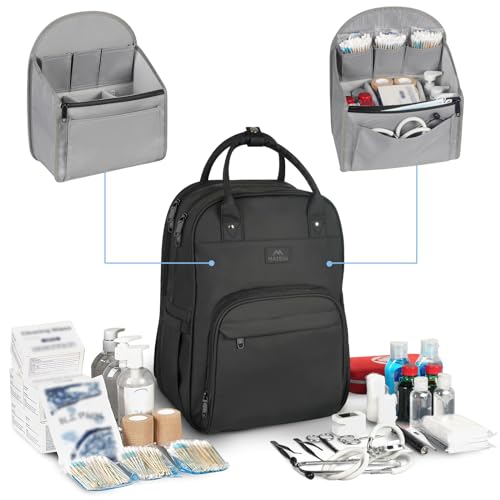
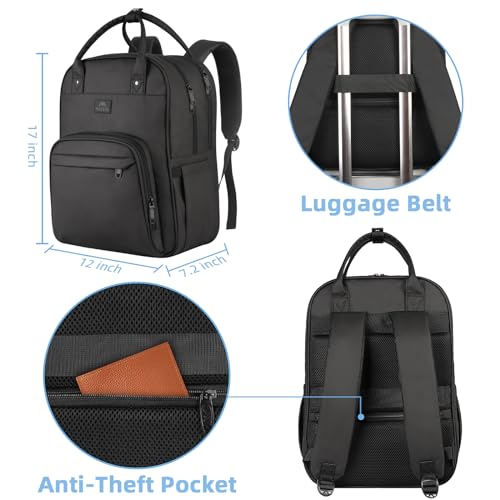
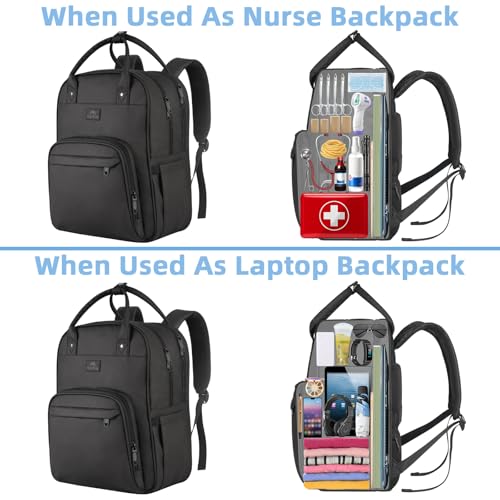
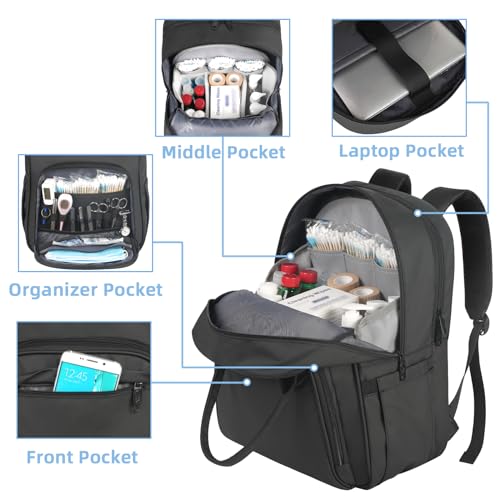
This is clearly designed with nurses in mind, and the removable medical organizer is the standout feature. The ability to pull it out and convert the bag into a general laptop or commuter pack adds real-world flexibility. Owners appreciate the padded 15.6-inch laptop sleeve and anti-theft pocket, which boost its appeal for clinical staff who move between home visits and office settings.
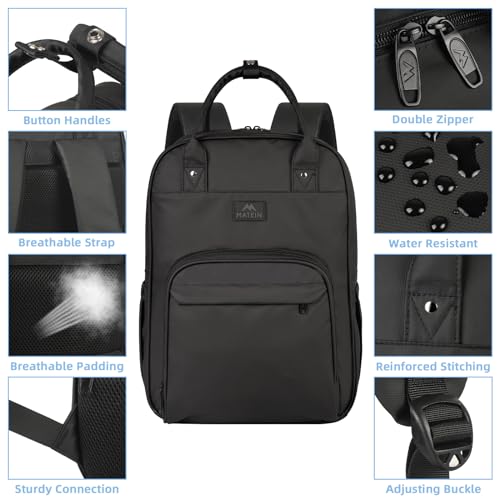
It’s not tactical, but it doesn’t need to be. Compared to rugged EMS packs, this one prioritizes comfort and daily wearability. The breathable mesh straps and trolley sleeve make it travel-friendly, and the waterproof fabric holds up well in daily use.
Product photos
Damero Tactical Medical Backpack

Strengths
- MOLLE compatible
- Y-strap stabilization
- Durable nylon fabric
Trade-offs
- No color options
- Straps lack lumbar support
- Minimal reflective detailing
With its Y-strap design and full MOLLE webbing, this backpack leans into its tactical roots. The 19.5x13x12.5 inch frame offers solid capacity, and owners consistently praise the Y-strap for stabilizing contents during movement, a detail many overlook but appreciate on rough terrain. The padded tablet sleeve and internal pockets help keep essentials sorted.
It’s not the most modular on the list, but it strikes a good balance between outdoor readiness and medical function. Compared to the Gatycallaty or MATEIN models, this one feels more suited for field use. The black finish keeps it low-profile, despite the cross emblem.
Product photos


Lightning X TacMed ALS Backpack
Strengths
- Modular color-coded pouches
- Hydration bladder compatible
- Laser-cut MOLLE
Trade-offs
- Expensive setup
- Pouches sold separately
- Bulkier profile
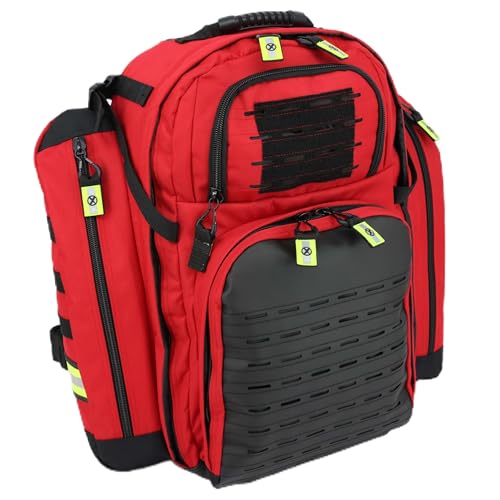
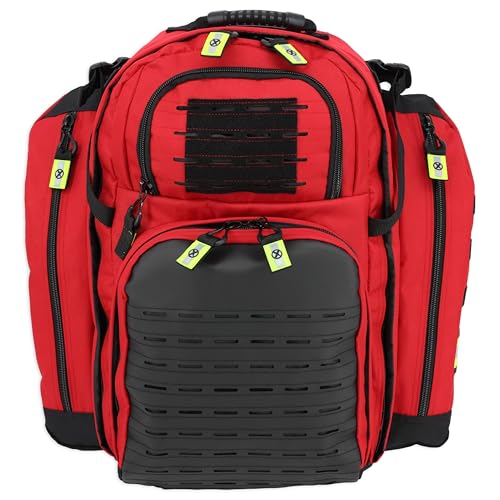
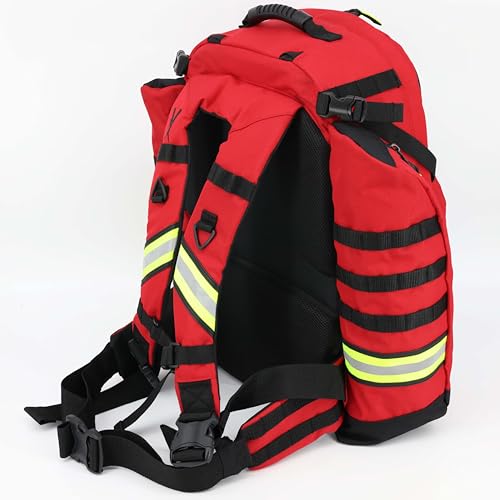
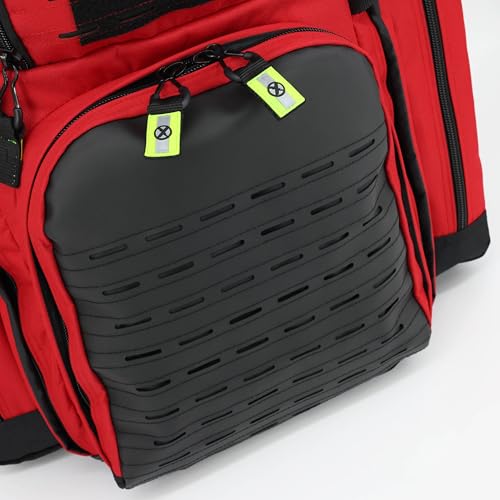
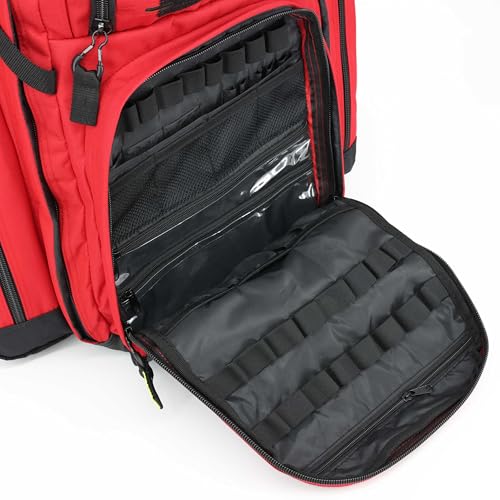
The modular system here is the reason to consider this pack. The six color-coded, removable pouches let you pre-stage gear for specific scenarios, a standout for ALS providers managing complex calls. The ability to reconfigure or remove pouches entirely means you can tailor the loadout precisely.
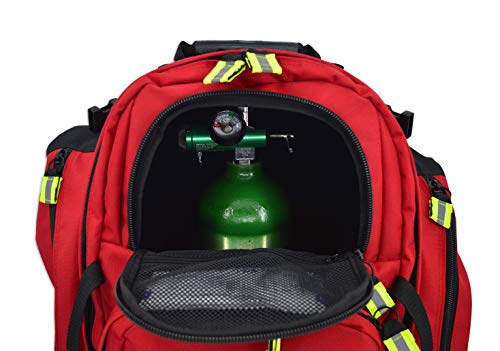
Owners love the reach-through front pocket for oxygen regulators and the hydration bladder compartment, which adds versatility. Compared to the Ergodyne or Damero models, this one offers the most customization. The laser-cut MOLLE is a premium touch for attaching additional gear.
Product photos
Thuram 40L Waterproof Tactical Backpack
Strengths
- High 40L capacity
- Waterproof nylon
- Breathable back panel
Trade-offs
- Bulky when full
- Minimal internal dividers
- Heavy empty weight
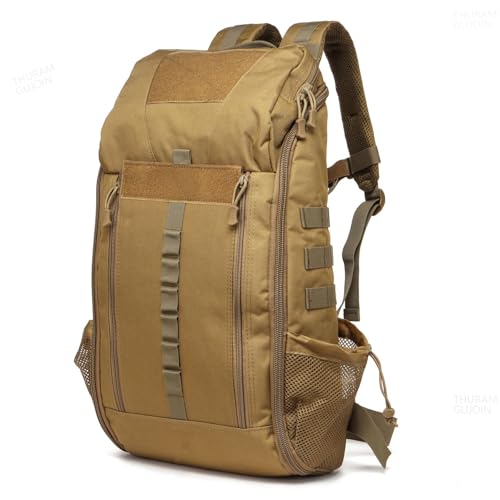
At 40L, this is one of the largest packs here, clearly built for extended outdoor missions. The khaki finish and red cross strike a balance between visibility and discretion. Owners using it for hunting or backcountry trips appreciate the waterproof nylon and breathable back panel, which reduce fatigue on long hikes.
The MOLLE system and multiple compartments support serious gear loading, but the organization isn’t as refined as the Lightning X. Still, for pure capacity and weather resistance, it’s hard to beat. Compared to the Damero, it offers more volume but slightly less structural rigidity.
Product photos

Ergodyne Arsenal Medic Trauma Backpack

Strengths
- Extreme durability
- ID slot organization
- Reinforced bottom
Trade-offs
- No modular pouches
- Limited color options
- Heavier than average
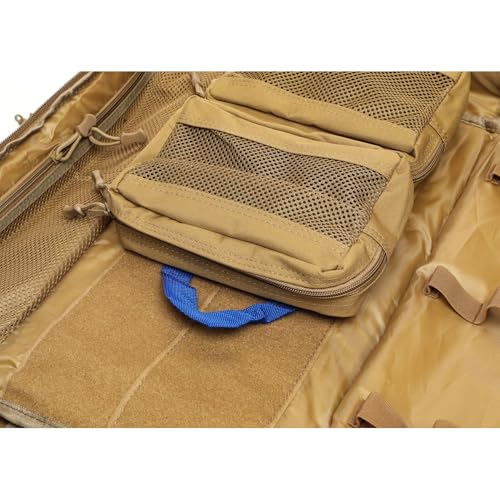
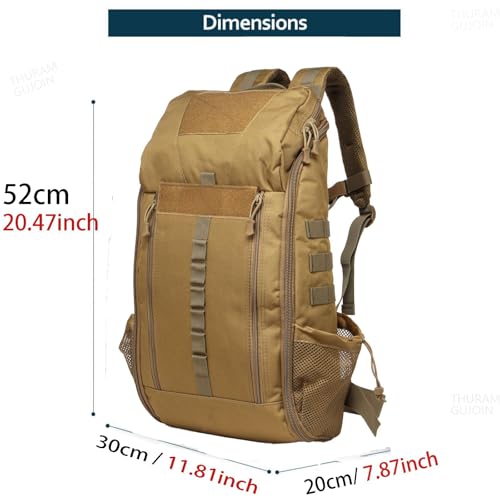
When durability is essential, this bag earns its reputation. The 600D polyester and tarpaulin-reinforced bottom are built to survive daily abuse, and the molded feet keep the base clean and dry. Owners in EMS and firefighting roles highlight the internal mesh dividers with ID slots, a small feature that makes a big difference in high-stress situations.
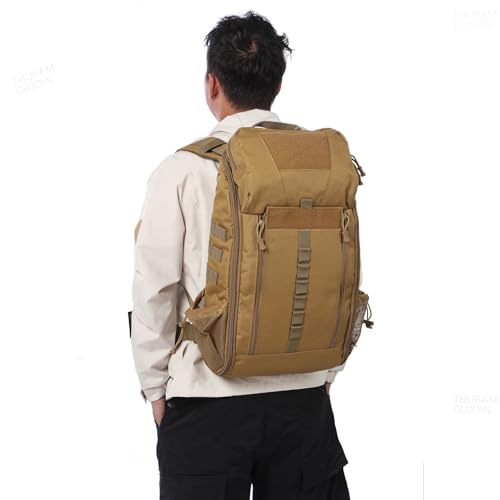
It’s not the most spacious, but it’s designed for efficiency, not volume. Compared to the Lightning X or Trunab, it lacks modularity, but it wins on toughness. The PALS webbing lets you attach critical gear externally, which field responders value.
Product photos


Gatycallaty First Aid Backpack

Strengths
- Lightweight
- Waterproof material
- Eye-catching design
Trade-offs
- Minimal internal structure
- Not for heavy use
- Few organizational pockets
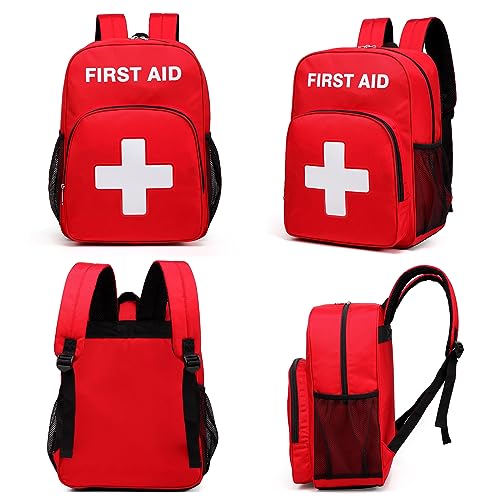
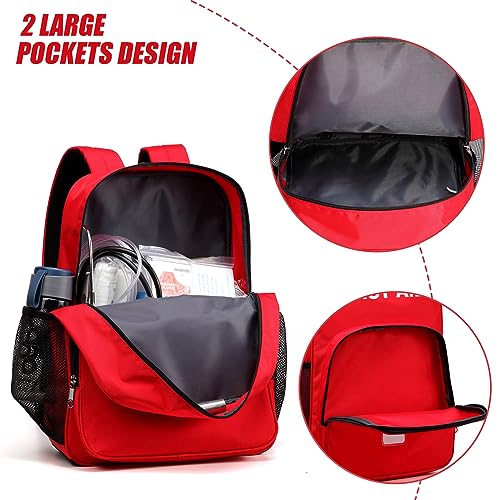
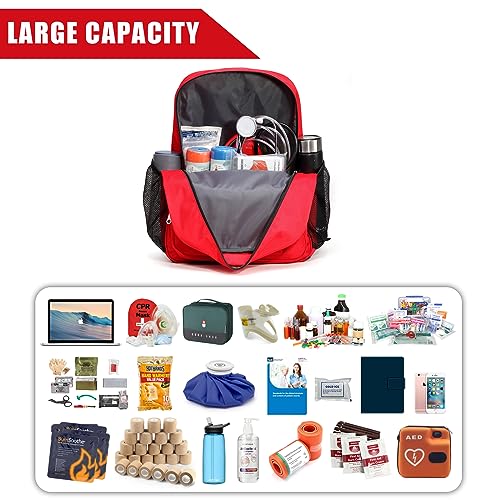
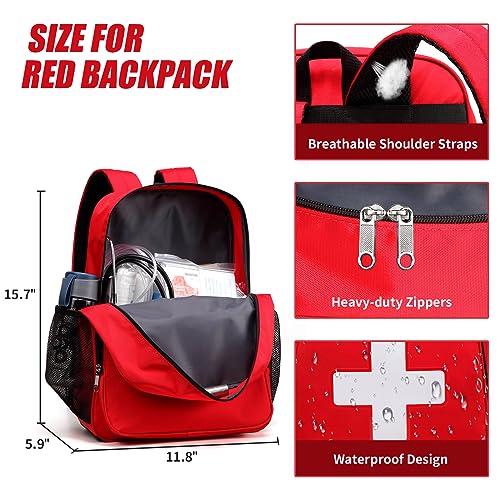
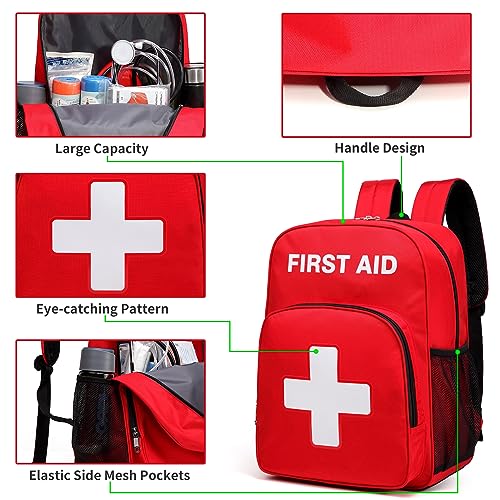
This backpack hits the basics for casual use, with its bright red finish and white cross making it easy to spot in a pinch. On paper, the 16x12x8 inch size is compact enough for travel or classroom use, and owners consistently report it handles small medical kits without issue. The waterproof polyester is a plus, but the lightweight 300g build suggests it’s not meant for heavy loads or rugged duty.
For students or families wanting an affordable, simple bag to carry basic supplies, it makes sense. But it lacks serious organization or durability for professional responders. Compared to tactical models, this is more of a general-purpose bag with a medical theme.
Product photos
First Aid Sling Shoulder Backpack
Strengths
- Multi-carry design
- Compact and portable
- Durable stitching
Trade-offs
- Limited capacity
- No laptop sleeve
- Minimal padding
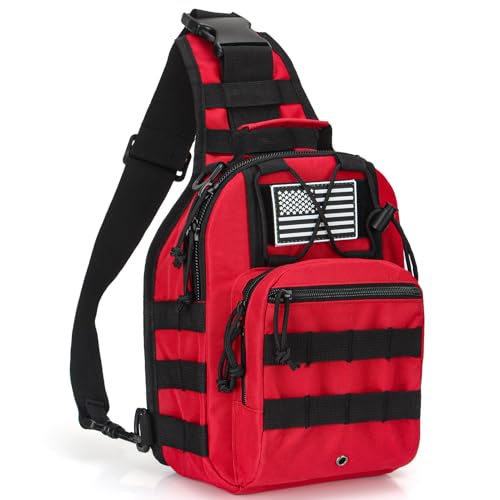
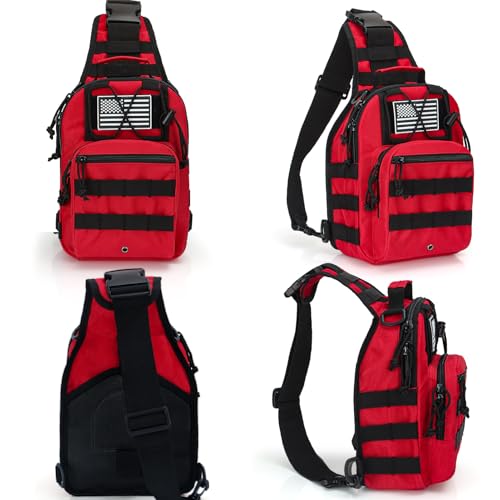
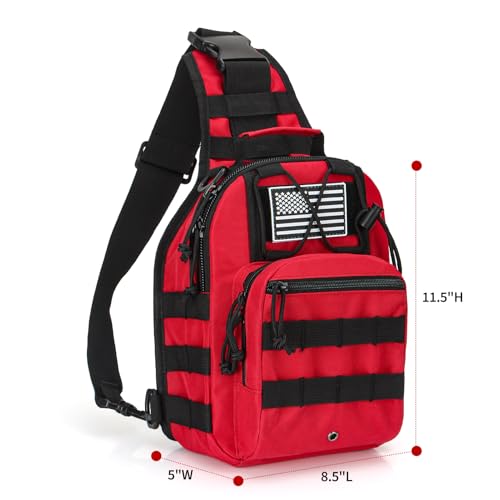
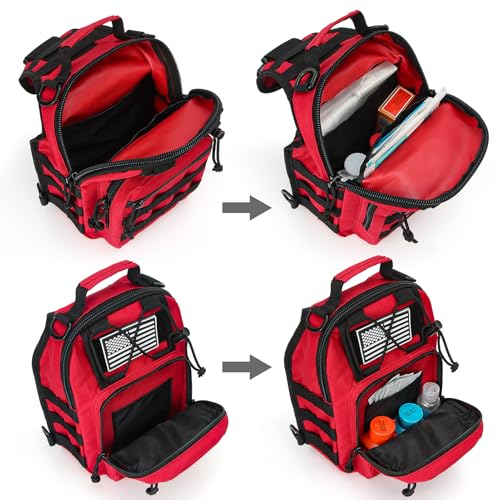
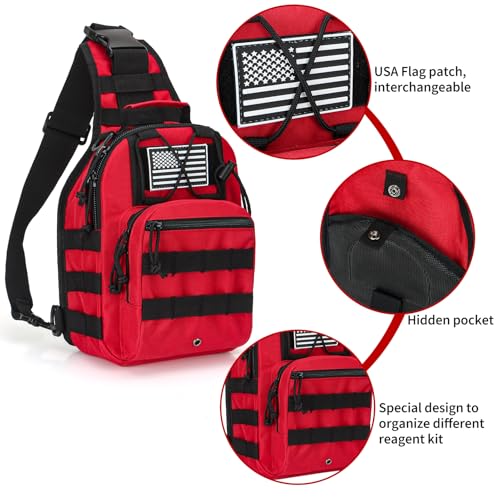
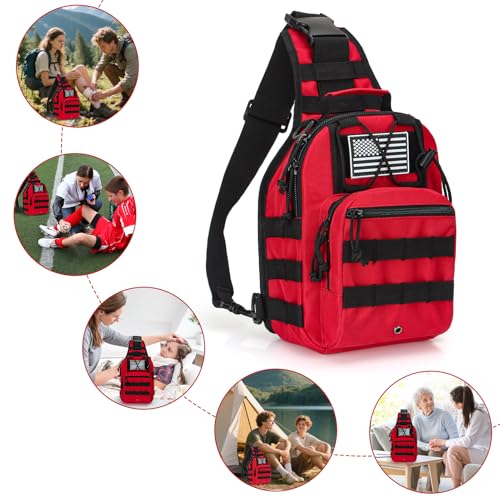
This compact sling-style pack stands out for its versatility in carry modes, shoulder, chest, backpack, or hand carry. At 12x9x5 inches, it’s small, but the multiple internal and external pockets make efficient use of space. Reviewers note it’s surprisingly functional for quick access to essential medical tools during outdoor activities.
It’s clearly built for mobility over capacity. While it won’t replace a full trauma bag, it’s a smart pick for someone who wants a low-profile, easy-to-wear option for hiking or range use. Compared to larger backpacks, this one trades storage for convenience.
Product photos
How We Chose These medical backpacks
Rather than a hands-on lab test, my research for these medical backpacks focused on a detailed comparison of published specifications and features. I weighed owner reviews from multiple sources – Amazon, specialist retailers, and forums – alongside assessments from reputable outdoor and medical gear review sites. My analysis considered factors crucial for reliable performance and practical use, ranking each backpack against a set of established criteria.
For medical backpacks, capacity, durability, and organization were the most heavily weighted factors. A sufficient capacity is essential for carrying necessary supplies, and understanding a backpack size for medical gear is critical. Durability, assessed through material quality and construction details, directly impacts the longevity of the pack, especially in demanding situations. Finally, thoughtful organization – pockets, modularity, and internal dividers – determines how effectively a user can access critical supplies.
Specifications reliably indicate dimensions, material types, and weight. However, I placed more emphasis on owner feedback regarding real-world usability, particularly concerning comfort during extended carry and the effectiveness of organizational features. Reputation – brands consistently praised for quality and customer service – also factored into my assessments, offering insight beyond simple feature lists.
Choosing The Right medical backpacks
Finding the right medical backpack is about more than just capacity; it’s about organization, durability, and how well it suits your specific needs.
A quality medical backpack prioritizes durable, water-resistant materials, intelligent compartment design for rapid access to supplies, and comfortable carry systems even when fully loaded. Consider the intended use – emergency response, nursing, or outdoor adventures – as this dictates necessary features like MOLLE webbing, dedicated laptop sleeves, or hydration compatibility. Prioritize build quality and ergonomics to avoid strain during prolonged use.
Capacity and Organization
Too many pockets can be as frustrating as too few. Look for a backpack that balances ample storage with a logical layout. Medical professionals, for example, will need quick access to frequently used items, while someone prepping for outdoor emergencies might prioritize space for bulkier supplies. Often, the best backpacks include modular components; this lets you customize the internal organization to match the specific tools you carry. A well-designed backpack won’t just hold your gear, it will present it in a way that saves critical seconds in a stressful situation. Consider if you’ll also be carrying a laptop – if so, a dedicated, padded sleeve is essential.
Material and Durability
The conditions a medical backpack will face are often demanding. Cheap nylon will quickly tear, and flimsy zippers will fail. I recommend prioritizing backpacks constructed from high-denier nylon or polyester, ideally with reinforced stitching and water-resistant coatings. The base of the pack is a particularly vulnerable area. Look for models with a tarpaulin-reinforced bottom, like the Ergodyne Arsenal Medic Trauma Backpack, or heavy-duty molded feet. If you’re frequently in wet environments, a fully waterproof backpack is a worthwhile investment, though these often come at a premium.
- Consider the denier of the nylon: 600D is a good starting point for general durability.
- YKK zippers are a universally recognized sign of quality and reliability – don’t settle for off-brand closures.
- MOLLE webbing is a fantastic feature, allowing you to attach additional pouches and accessories, expanding the backpack’s capabilities. This is especially useful if you need to carry specialized equipment or want to customize your setup.
Comfort and Ergonomics
A fully loaded medical backpack can get heavy. A poorly designed one can leave you with aching shoulders and a sore back. I’ve found that padded shoulder straps are essential, but equally important is a supportive back panel with adequate ventilation. Look for designs with contoured shoulder straps and an integrated waist belt to distribute the weight more evenly. And if you anticipate long carries, explore models with adjustable torso lengths to fine-tune the fit. If you are a student, finding the right fit is especially crucial; read our guide to ergonomic med school bags for more details.
A properly fitted backpack should transfer 80% of the weight to your hips, not your shoulders. Adjust the shoulder straps, waist belt, and sternum strap to achieve a snug, comfortable fit.
Medical Backpacks Compared
Here’s a comparison of key specifications for several medical backpacks to help you find the right fit.
| Product Title | Capacity | Waterproof | MOLLE System | Laptop Sleeve | Dimensions (L x W x H) |
|---|---|---|---|---|---|
| Trunab First Responder Trauma Backpack | N/A | N/A | N/A | Yes | 20″ x 12″ x 18″ |
| MATEIN Nurse Waterproof Medical Backpack | 17x12x7.2″ | Yes | N/A | 15.6″ | 17″ x 12″ x 7.2″ |
| Damero Tactical Medical Backpack | N/A | Yes | Yes | Yes | 19.5″ x 13″ x 12.5″ |
| Lightning X TacMed ALS Backpack | N/A | N/A | Yes | N/A | N/A |
| Thuram 40L Waterproof Tactical Backpack | 40L | Yes | Yes | N/A | N/A |
| Ergodyne Arsenal Medic Trauma Backpack | N/A | N/A | Yes | N/A | 14.5″ x 5″ x 20″ |
| Gatycallaty First Aid Backpack | N/A | Yes | N/A | N/A | 16″ x 12″ x 8″ |
| First Aid Sling Shoulder Backpack | N/A | N/A | N/A | N/A | 12″ x 9″ x 5″ |
Frequently Asked Questions
What capacity medical backpack is best for a first responder?
A 30-40 liter capacity is generally ideal for a first responder, providing enough space for essential medical supplies without becoming excessively bulky or heavy to carry during rapid deployment. This range balances functionality with portability.
Are MOLLE systems on medical backpacks truly useful?
Yes, MOLLE webbing offers significant versatility. It allows you to attach additional pouches, tools, or even hydration reservoirs, customizing the pack to your specific needs and expanding its carrying capacity beyond the main compartment.
How important is a waterproof medical backpack?
A waterproof backpack is highly recommended, especially if you work in environments where exposure to rain or moisture is likely. While water-resistant coatings offer some protection, a fully waterproof pack ensures your supplies remain dry and functional in all conditions.
Will a medical backpack replace a dedicated trauma bag?
Not necessarily. While some medical backpacks are designed with trauma applications in mind, a dedicated trauma bag often provides more specialized organization and quicker access to critical life-saving equipment. Consider your primary use case when deciding.
What should I look for in a backpack if I’m a medical student?
Medical students require durable and organized packs to carry textbooks, laptops, and clinical supplies; look for comfortable medical school bags with a dedicated laptop compartment and ergonomic design to minimize strain during long days on campus.
The Bottom Line
Choosing a medical backpack often comes down to balancing how much control you want over organization versus how much fuss you’re willing to deal with. While many options exist, the Trunab First Responder Trauma Backpack strikes the best overall balance of durability, thoughtful design, and readily available space for a wide range of medical supplies. It’s a solid choice for professionals and serious preppers alike.
For those on a tighter budget, the Gatycallaty First Aid Backpack provides surprisingly good features and water resistance at a very accessible price point. If versatility is key – if you need a pack that can transition from medical duties to everyday carry – the Damero Tactical Medical Backpack’s MOLLE webbing and dedicated laptop sleeve make it a standout performer. Considering a medical backpack capacity is essential when making this decision.
Ultimately, the specific features matter less than finding a backpack that fits you well and encourages consistent organization. Prioritize a comfortable carry system, durable materials, and a layout that matches your workflow. Don’t get too caught up in chasing the latest specs – a well-thought-out, reliable pack used consistently will always be more valuable than the most technically advanced one left sitting in a closet.