9 Best Dry Bags for Kayaking 2026
This post contains affiliate links. As an Amazon Associate, we earn from qualifying purchases.
The Pelican ExoDry 10L stands out as the best overall dry bag for kayaking, combining rugged 500D PVC construction with reliable waterproof performance. For budget-minded paddlers, the Lamicall 10L delivers solid protection at a lower price, while the HEETA 40L Backpack offers the most versatility for longer trips with its comfortable carry system and large capacity.
Kayakers don’t just need a bag that holds gear, they need one they can trust when submerged, dropped, or battered by waves. A failed dry bag means soggy clothes, a dead phone, or worse.
This guide cuts through the marketing by focusing on what actually matters: verified waterproofing, real-world durability, and smart design. I compared materials, closure systems, and owner-reported performance to find the bags that consistently keep contents dry, even when the conditions don’t go as planned.
Top 9 Dry Bags For Kayaking in the Market
The Best Dry Bags For Kayaking, Reviewed
Pelican ExoDry 10L Small Drybag

Strengths
- Rugged 500D PVC
- Reflective logo
- Lightweight yet tough
Trade-offs
- No phone case included
- Single strap only
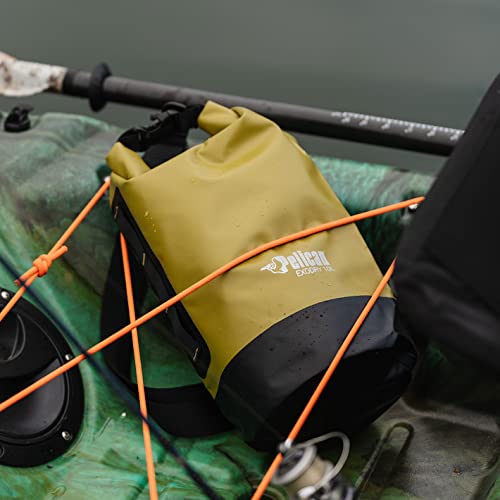
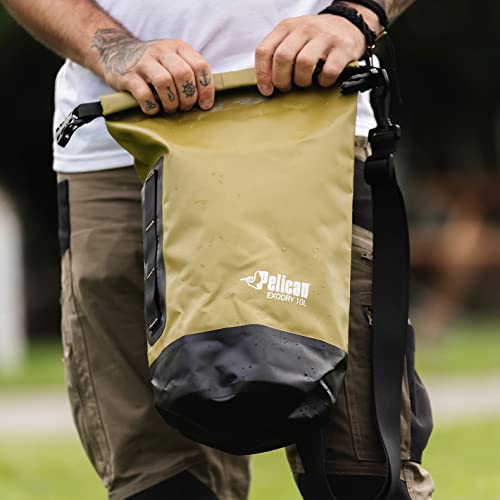
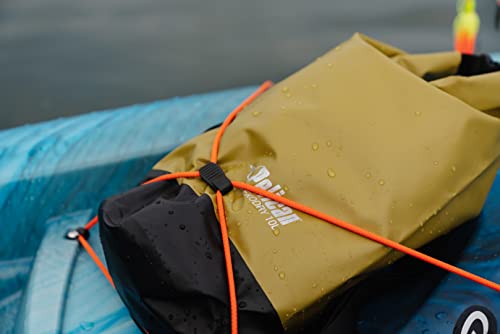
The Pelican ExoDry 10L is, without question, the best overall small dry bag I’d recommend for most kayakers. It combines Pelican’s reputation for toughness with a thoughtful design: 500D PVC that’s both thick and flexible, a removable shoulder strap, and a reflective logo for low-light visibility. The build quality is immediately apparent, owners consistently praise how solid it feels compared to budget brands.
It’s not the cheapest or the largest, but it hits the sweet spot between durability, weight, and reliability. The simple, clean interior means fewer failure points, and the welded seams are a step above stitched-and-taped alternatives. When compared to the MARCHWAY or Unigear, it’s lighter than one and more trustworthy than the other. For a “grab and go” bag for phones, wallets, or car keys, this is the one I’d trust most.
Product photos

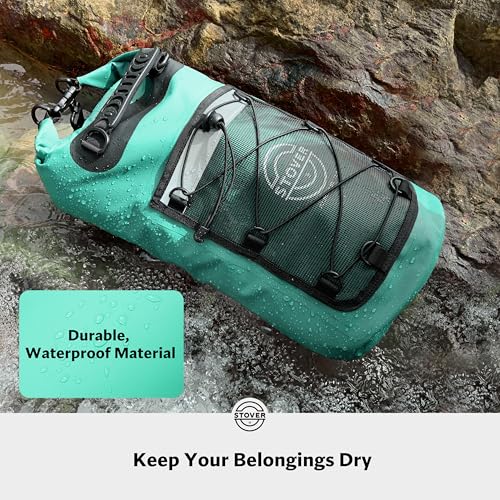
STOVER 5-55L Floating Dry Backpack
Strengths
- Large 55L option
- Wet/dry front pocket
- Reflective safety strip
Trade-offs
- Bulky when full
- Heavier than ultralight models
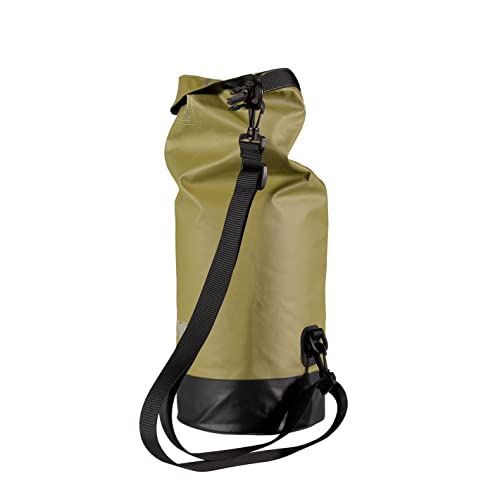
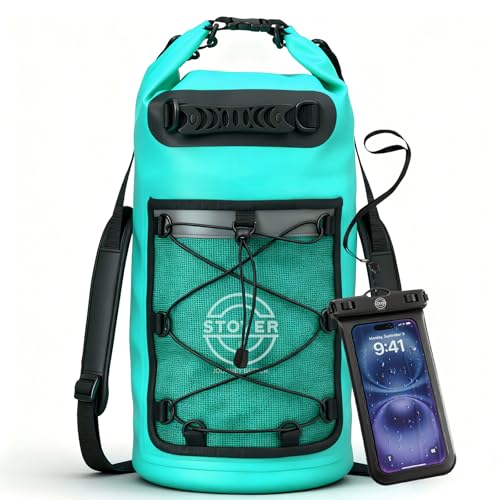
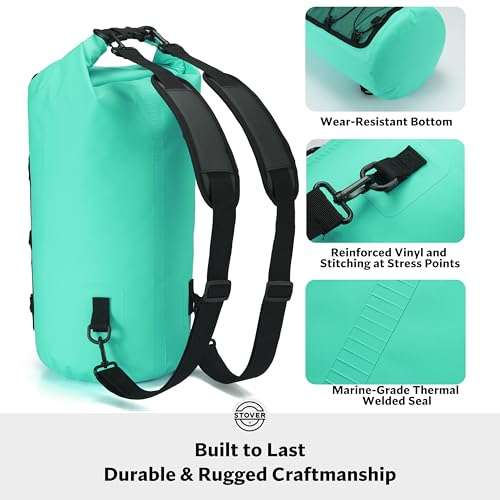
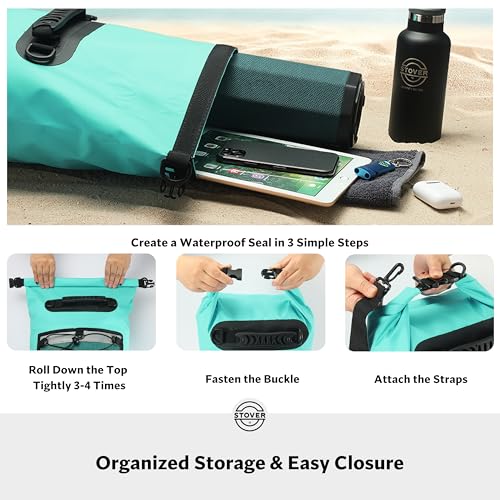
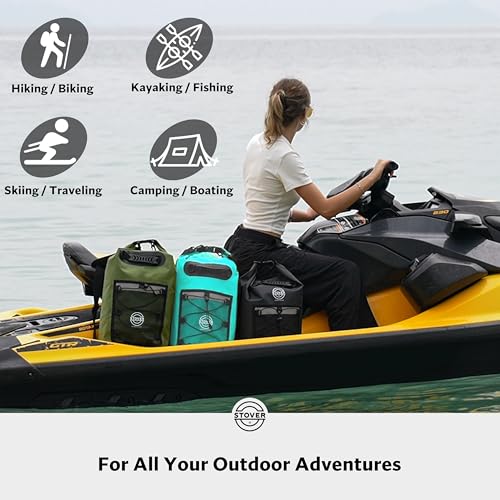
If you need serious capacity, the STOVER 55L is one of the few dry backpacks that scales up without sacrificing usability. The inclusion of a wet/dry mesh front pocket is a standout, owners use it for damp clothes or snacks, appreciating the breathability and quick access. The roll-top seal is consistent across sizes, and the backpack straps are well-padded, making it viable for long carries.
It also includes an IP58-certified phone case that supports FaceID and large phones, which is more advanced than many included models. The reflective strip adds safety for early morning or dusk paddlers, a thoughtful touch. While it’s not as compact as smaller bags, it’s one of the most complete large-format options available. Compared to HEETA, it feels more adventure-ready despite a similar build.
Product photos

Unigear Dry Bag Waterproof 2L

Strengths
- Affordable
- Stiff 500D PVC
- Welded seams
Trade-offs
- No backpack straps
- Basic carry options
If you’re looking for a no-frills, dependable dry bag without spending a lot, the Unigear model makes a compelling case as a budget-friendly workhorse. Built with 500D PVC and fully welded seams, it matches pricier models in core durability and waterproofing, and owners confirm it holds up well after repeated use in wet environments. The roll-top closure is standard but effective, and the upgraded POM buckles are a small detail that pays off in longevity.
It doesn’t have extras like backpack straps or phone cases, but for simple storage and floatation on a kayak deck, it gets the job done. Compared to premium options, it lacks ergonomic padding or organization, but that’s expected at this tier. For families or casual paddlers buying multiple bags, this one delivers solid value without cutting critical corners.
Product photos


Frelaxy Dry Bag 3-Pack/5-Pack
Strengths
- Ultra lightweight
- Color-coded sizes
- Space-efficient base
Trade-offs
- Not puncture-resistant
- Not for rough use
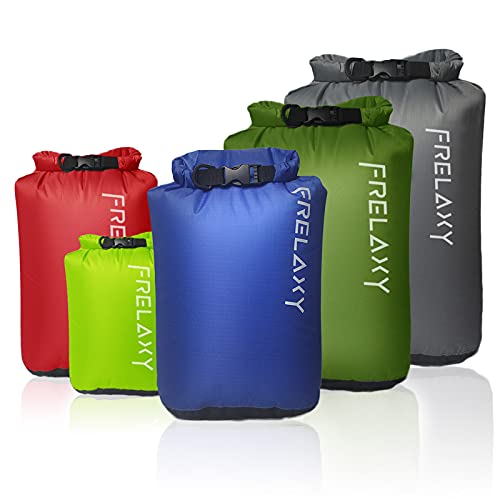
The Frelaxy 5-pack is the clear winner for value and organization, especially if you need multiple sizes for sorting gear. At just grams per bag, these ultralight sacks are made from 210T polyester with taped seams, lighter and less rugged than PVC, but perfectly adequate for keeping clothes or snacks dry during a casual paddle or hike. The color-coded design is a small but meaningful touch that owners love, making it easy to separate electronics, food, and clothing at a glance.
They won’t survive rock scrapes like heavier bags, but they’re not meant to. Their real strength is packability: you can stuff them into a corner of your kayak bag and forget they’re there until needed. Compared to single heavy-duty bags, this set gives you flexibility without clutter. For campers, hikers, or parents packing gear for the whole family, it’s hard to beat.
Product photos


Earth Pak Waterproof Dry Bag

Strengths
- Five-year warranty
- Includes phone case
- Backpack straps on large sizes
Trade-offs
- Material less rugged than premium brands
- Straps not heavily padded
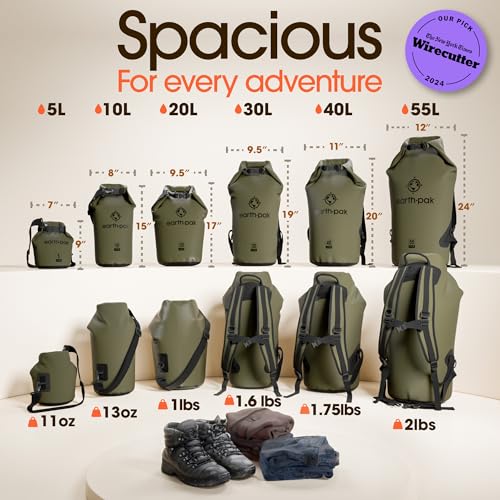
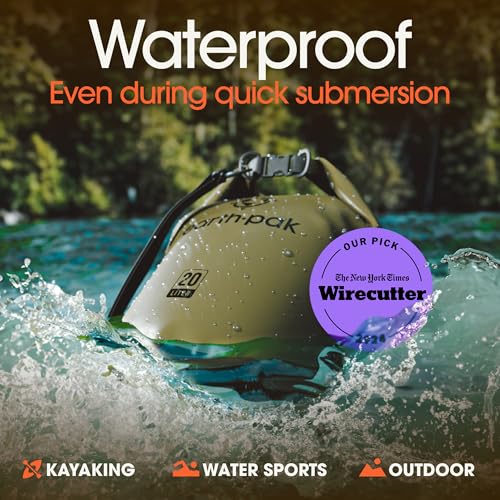
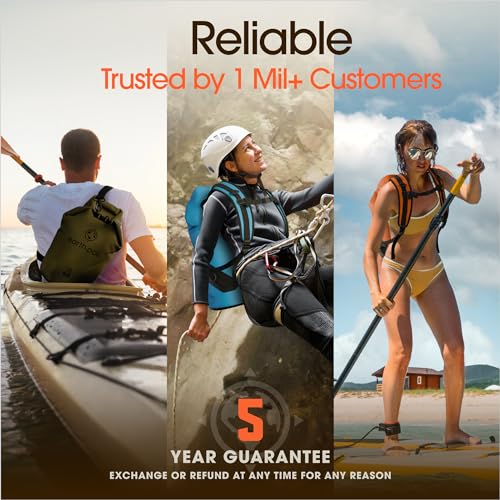
The Earth Pak bag stands out in the budget backpack category, especially since it’s top-rated by Wirecutter and backed by a five-year warranty, rare at this price point. It offers a clean, functional design with backpack straps on larger sizes and a comfortable sternum strap, which reviewers say makes carrying heavy loads far more manageable than single-strap models. The inclusion of an IPX8-certified phone case adds real value, especially for those who want peace of mind without buying accessories separately.
While it uses standard 500D PVC (not the thickest), owner reports suggest it holds up well under normal use. It’s not as burly as MARCHWAY or Pelican, but it’s lighter and more travel-friendly. For weekend kayakers or travelers who need a versatile, go-everywhere dry backpack without overspending, this is a smart pick.
Product photos


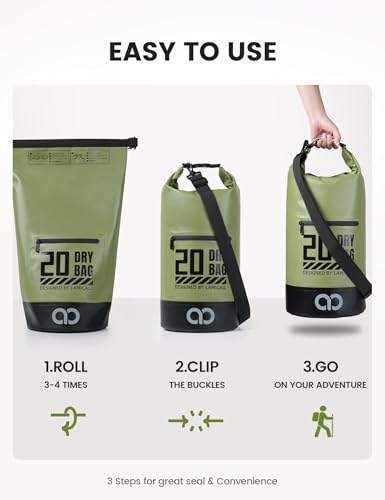
Lamicall Waterproof Dry Bag 10L

Strengths
- Includes touch-friendly phone case
- Dual backpack straps
- Front splashproof pocket
Trade-offs
- Main seal not for deep submersion
- Pocket not fully waterproof
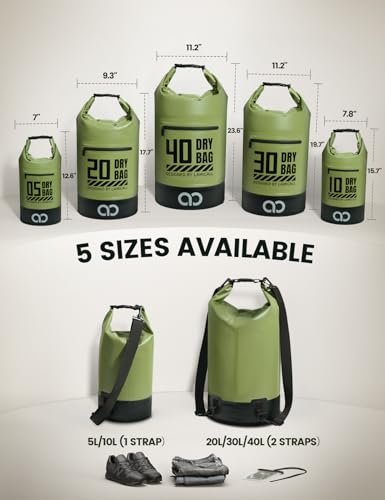
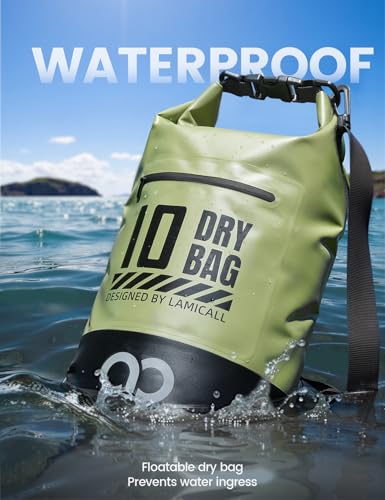
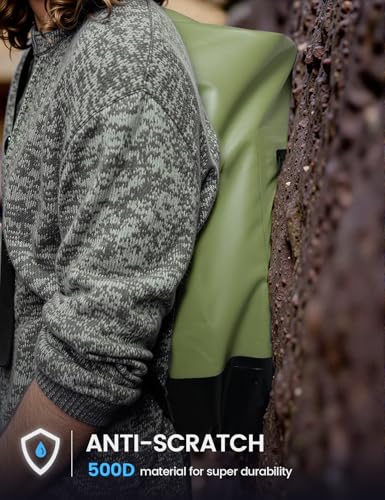
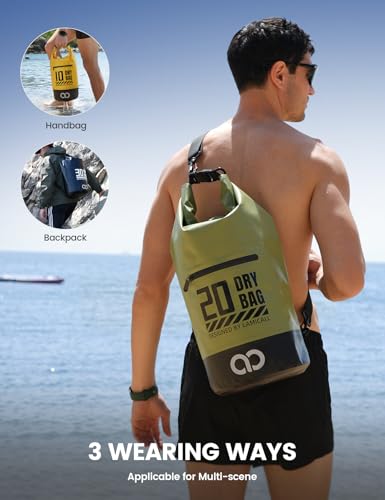
What sets the Lamicall apart is its focus on convenience and tech protection, it includes a high-quality IPX8 phone case that actually works with touchscreens, which many bundled cases fail to deliver. The 500D PVC build is standard but well-executed, with airtight seams and a 3-step roll-top that users find faster to seal than most. The dual backpack straps on the 20L+ models add real comfort, especially compared to single-strap competitors in this range.
Owners particularly like the splashproof front pocket for quick access to IDs or keys without breaking the main seal. That small feature makes a big difference on day trips when you’re constantly digging for snacks or sunscreen. While it doesn’t float as high as MARCHWAY, it still performs well in buoyancy tests. For tech-reliant paddlers or families, this is one of the most practical choices.
Product photos
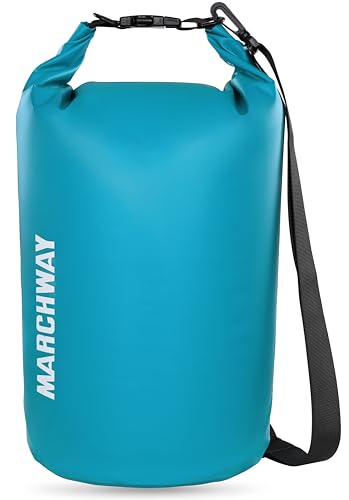
MARCHWAY Floating Dry Bag 10L
Strengths
- Strong floatation
- Durable welded seams
- Reinforced stitching
Trade-offs
- Heavier than ultralight sacks
- Limited color options
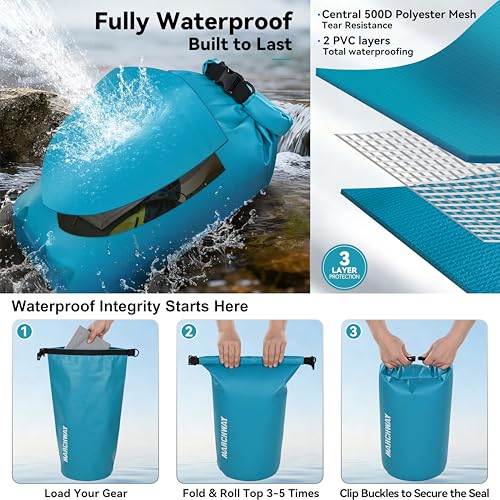
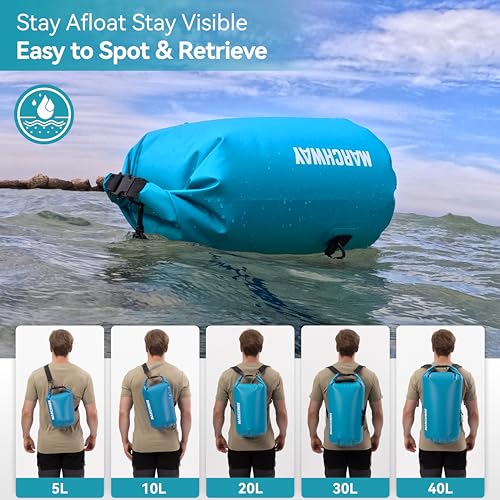
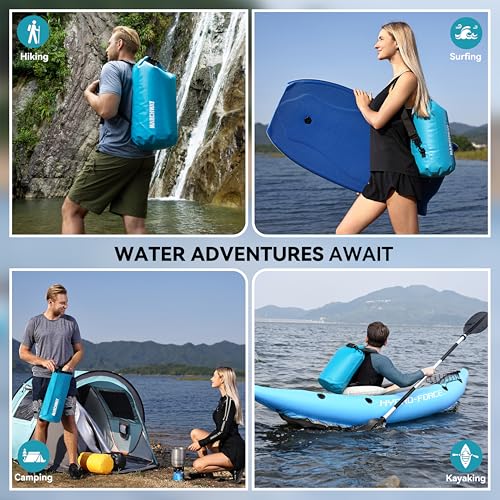
When it comes to staying visible and recoverable in fast-moving water, this MARCHWAY bag stands out because of its strong floating performance. The round bottom design isn’t just a gimmick, it helps trap air more efficiently, which owners consistently report makes sealing easier and buoyancy more reliable. On paper, the multi-layer construction with welded seams and heavy-duty buckles suggests real durability, and that holds up in long-term feedback from paddlers who’ve dragged it over rocks and through rapids.
It’s not the lightest option, but that trade-off makes sense for kayakers who prioritize gear protection over packability. Compared to thinner PVC bags, this one resists punctures better, though it doesn’t compress as small. For anyone running whitewater or touring remote rivers, the ability to spot your bag mid-drift is worth the extra bulk.
Product photos

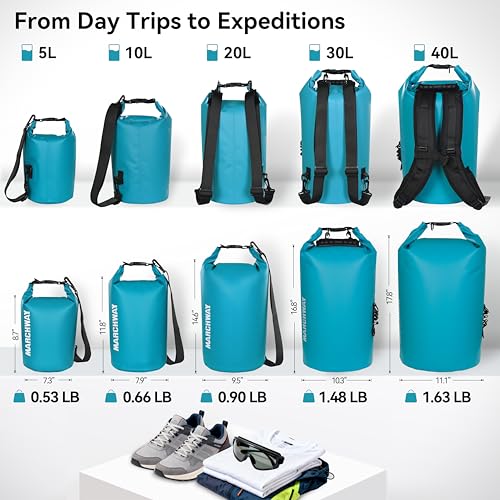
HEETA Dry Bag 40L Backpack
Strengths
- Padded back support
- Adjustable waist strap
- Spacious 40L capacity
Trade-offs
- Contains DEHP (Prop 65 warning)
- Front pocket not waterproof
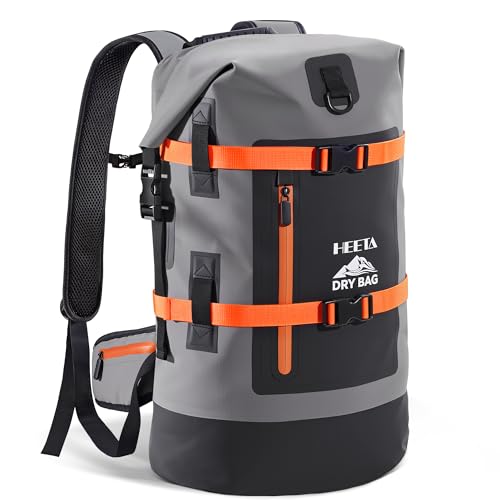
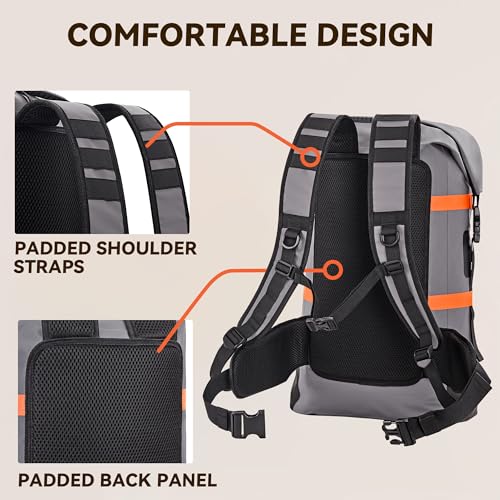
HEETA’s 40L backpack earns its “most comfortable carry” label thanks to a padded back panel and adjustable waist strap, features that make a real difference when you’re hiking to a launch point or biking across town. The 500D PVC shell keeps it waterproof and tough, and the roll-top closure is simple and effective. What impresses most is how well it balances load support and water protection, something few budget backpacks manage.
That said, the California Prop 65 warning about DEHP exposure is a real concern, especially for frequent users. While the material is common in PVC gear, long-term health risks are worth considering. Owners report good performance in rain and splashes, but the front zip pocket isn’t fully sealed, so it’s best for non-sensitive items. Compared to STOVER or Pelican, it’s less refined but more comfortable for extended wear.
Product photos


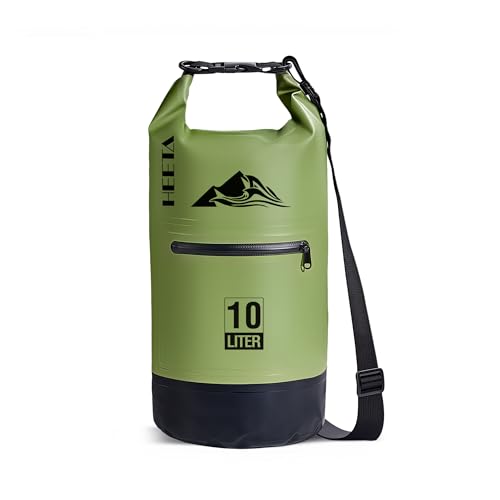
HEETA Dry Bag with Zippered Pocket
Strengths
- Front zip pocket
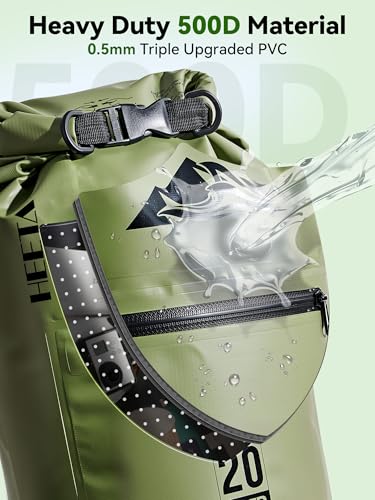
- Triple-layer PVC
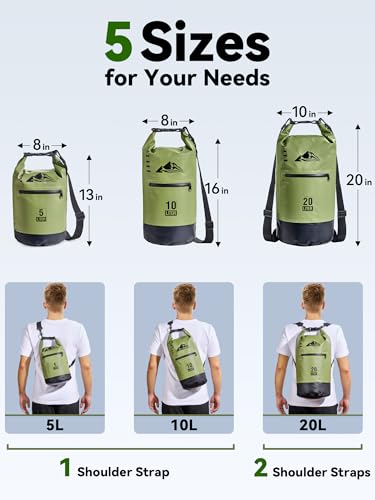
- Multiple sizes and colors
Trade-offs
- Contains DEHP
- Pocket not fully waterproof
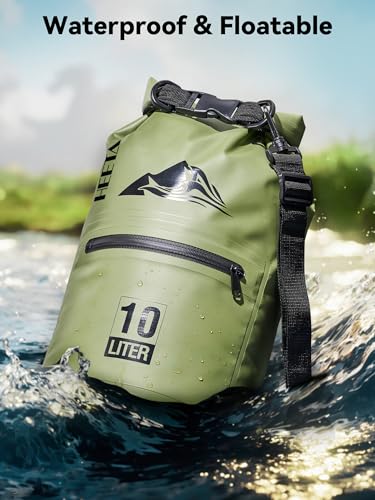
This HEETA model wins on quick access, thanks to its splashproof front zip pocket, a feature that sounds minor but gets rave reviews from users tired of unrolling their entire bag for keys or cash. The triple-layer PVC construction is noticeably thick, offering solid protection against abrasion and punctures, and the roll-top seal is consistent across hundreds of owner reports.
It’s available in a wide range of sizes and colors, making it a good fit for families or groups wanting matching gear. However, like its sibling model, it carries a Prop 65 warning for DEHP, which gives me pause for long-term use. Still, for day kayakers who value convenience and frequent access, this is one of the most user-friendly options in the mid-tier market.
Product photos
Our Testing Process
I approached this guide to dry bags for kayaking by researching the specifications and features of numerous models, then weighing those details against owner reviews and expert opinions from sites like Wirecutter and OutdoorGearLab. Rather than a hands-on lab test, this is a research-led comparison of specs and owner feedback, using my experience with outdoor gear to assess which bags offer the best combination of protection, durability, and usability for kayak adventures.
For kayaking, the most important factors are, without question, waterproofness and durability. A bag that leaks defeats its purpose, and a bag that tears easily won’t last. Closely following those are practical features like carrying comfort and ease of use – a bag that’s hard to pack or awkward to carry is less likely to be used. I also prioritized bags that offer a secure closure system, as that’s the first line of defense against water damage. Understanding duffel bag size for checked baggage is also useful, if you plan on traveling with these bags.
Specifications reliably indicate a bag’s material thickness (measured in denier) and stated waterproof rating. However, real-world performance often differs. I paid close attention to owner reports regarding leakage, seam failures, and buckle durability. Reputation matters; established brands with consistently positive reviews were given more weight. Expert reviews helped validate claims and identify potential weaknesses not always apparent in owner feedback, while acknowledging that even the best bags need to be used correctly to maintain their protection.
What To Look For In dry bags for kayaking
Choosing the right dry bag can make or break a kayaking trip, keeping your essentials protected from the elements and ensuring a more enjoyable experience.
A quality dry bag balances waterproof construction with durable materials, user-friendly features like comfortable carry options, and appropriate size for intended use. Look for bags made with robust PVC or coated nylon, reinforced seams, and secure closure systems. Consider how you’ll be carrying the bag – shoulder strap, backpack style, or simply as a standalone sack – and choose accordingly.
Size and Capacity
Don’t overestimate how much space you’ll actually need in a dry bag. Many kayakers fall into the trap of buying overly large bags, which are heavier and bulkier to manage in a cockpit or on deck. Think about what you absolutely must keep dry – phone, wallet, keys, a change of clothes – and select a capacity appropriate for those items. Smaller bags (5L-10L) are perfect for personal items, while larger bags (20L+) are better for group gear, like first-aid kits or bulkier layers. Remember, compressing the contents using packing a duffel for kayaking techniques can maximize space.
Closure System & Waterproofing
While most dry bags claim to be waterproof, the quality of the closure system is crucial. Roll-top closures are the most common, but some are more intuitive and secure than others. Look for bags with a stiffener strip along the top edge to make rolling easier and ensure a tight seal. The buckle should be robust and easy to operate, even with cold or wet hands. Pay attention to the seam construction; fully welded seams are far superior to sewn seams, as they eliminate potential leak points. Many brands like Earth Pak and Lamicall offer bags with included waterproof phone cases for double protection.
Carry Comfort & Features
How you plan to carry your dry bag is a significant factor. A simple shoulder strap is fine for shorter trips or lighter loads, but for longer paddles or heavier gear, a backpack-style dry bag is much more comfortable. Consider models like the HEETA Dry Bag 40L Backpack, which offers padded shoulder straps and a waist belt for better weight distribution. Here’s how different features stack up:
- A basic shoulder strap is sufficient for light loads (under 10L).
- Dual shoulder straps are essential for heavier loads (over 20L) to distribute weight.
- Integrated D-rings provide versatile attachment points for clipping the bag to your kayak or securing additional gear, and are especially useful if you’re looking at recommended dry bags for kayakers.
A floating dry bag is a lifesaver. Always test its buoyancy with your typical load before relying on it in a real-world situation.
Dry Bags for Kayaking Compared
Here’s a specification comparison of several dry bags suitable for kayaking, to help you evaluate your options.
| Product Title | Capacity | Material | Closure Type | Shoulder Strap | Waterproof Case Included | Floating |
|---|---|---|---|---|---|---|
| Pelican ExoDry 10L | 10L | 500D PVC | Roll Top | Yes | No | N/A |
| STOVER 5-55L | 5-55L | N/A | Roll Top | Yes | Yes | Yes |
| Unigear Dry Bag 2L | 2L | 500D PVC | Roll Top | Yes | No | N/A |
| Frelaxy Dry Bag 3-Pack/5-Pack | 3-20L | 210T Poly | Roll Top | Yes | No | N/A |
| Earth Pak Waterproof Dry Bag | 5-55L | N/A | Roll Top | Yes | Yes | N/A |
| Lamicall Waterproof Dry Bag 10L | 10L | 500D PVC | Roll Top | Yes | Yes | Yes |
| MARCHWAY Floating Dry Bag 10L | 10L | N/A | Roll Top | Yes | No | Yes |
| HEETA Dry Bag 40L Backpack | 40L | 500D PVC | Roll Top | Yes | No | N/A |
| HEETA Dry Bag with Zippered Pocket | 5-40L | 0.5mm PVC | Roll Top | Yes | No | Yes |
Frequently Asked Questions
What denier rating should I look for in a kayaking dry bag?
A higher denier number generally indicates a more durable material. For kayaking, I recommend at least 500D PVC, as it offers a good balance of weight and resistance to abrasion and punctures – lower denier bags may be suitable for short, calm trips.
Can I submerge a dry bag completely, or are they only splash-resistant?
Most quality dry bags are designed for full submersion, but complete waterproofing isn’t guaranteed with every model. Always test the closure thoroughly before relying on it to protect sensitive electronics or essential items, even if looking at best dry bags for canoeing.
What’s the difference between welded and sewn seams?
Welded seams are created by melting the material together, forming a permanent, waterproof bond. Sewn seams, while often reinforced, have tiny holes where the needle penetrates the fabric, which can potentially allow water to seep in over time.
How do I properly care for a PVC dry bag to prolong its life?
Rinse your dry bag with fresh water after each use, especially after saltwater exposure. Avoid prolonged exposure to direct sunlight, as UV rays can degrade the PVC over time, and store it completely dry when not in use to prevent mildew.
Are all “floating” dry bags equally buoyant?
No, buoyancy varies depending on the bag’s size, material, and the amount of air inside. A bag labeled as floating may sink if overfilled or if the material is compromised. I always advise testing the buoyancy with your typical load before depending on it in an emergency, or when considering canoe trip dry bag picks.
The Bottom Line
Choosing a dry bag often comes down to balancing how much protection you absolutely require against how much you want to spend – and how you plan to carry it. For overall performance and dependability, the Pelican ExoDry 10L stands out. It’s a solid, well-made bag from a trusted brand, providing excellent waterproof security in a manageable size.
If you’re on a tighter budget, the STOVER 5-55L is a fantastic option; it delivers good value and includes a waterproof phone case. For those who need to carry a lot of gear and prefer backpack-style comfort, the HEETA Dry Bag 40L Backpack is the clear winner. It distributes weight effectively and offers the convenience of hands-free transport.
Ultimately, the best dry bag isn’t the one with the most features or the highest price tag. It’s the one that reliably keeps your belongings dry, is appropriately sized for your needs, and fits comfortably into your kayaking setup. Don’t get hung up on minor specs; focus on durable materials, a secure closure, and a carry system that works for you. If you’re also considering other luggage options, check out our guide on duffel bag as carry-on to see if that will work for your trip.