7 Best Carry On Strollers of 2026
This post contains affiliate links. As an Amazon Associate, we earn from qualifying purchases.
The gb Pockit Air All Terrain Stroller is the best overall carry on stroller for its unbeatable compact fold and ultra-light weight, while the Mompush Nexis Carbon offers a strong balance of durability and portability. If you’re watching your budget, the Dream On Me Aero gets the job done at a lower price.
Traveling with a young child means carrying enough gear already. A bulky or heavy stroller only adds to the load. Too many parents learn the hard way that not all “carry on” strollers actually fit overhead bins or survive repeated travel.
This guide cuts through the marketing to focus on what really matters: verified dimensions, real-world usability, and features that make airport navigation easier. I researched these models based on specs, owner feedback, and my experience assessing travel gear for families.
Top 7 Carry On Stroller in the Market
The Best Carry On Stroller, Reviewed
Ingenuity 3D Mini Convenience Stroller

Strengths
- Multi-position recline
- 5-point harness
- Dual cup holders
Trade-offs
- Not airplane carry-on sized
- Heavier than ultralights
- Fold not self-standing
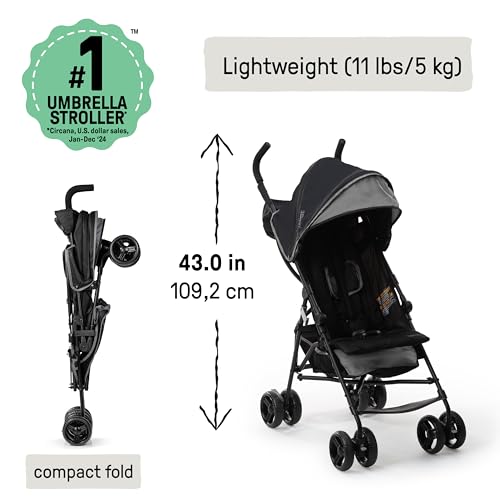
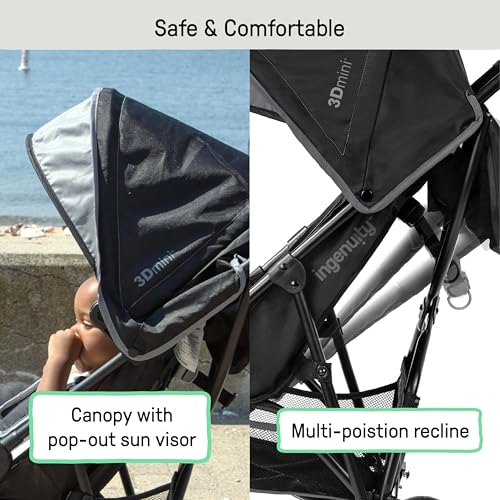
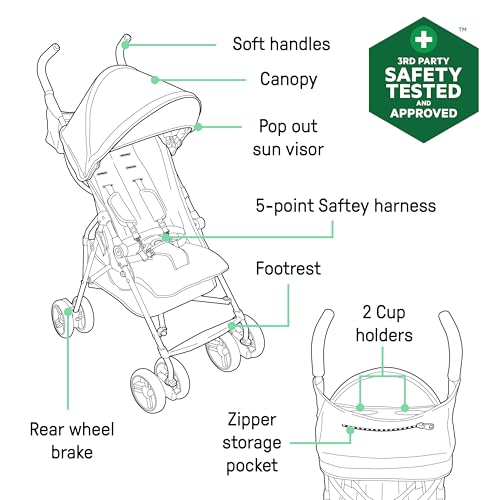
This is the balanced all-rounder, not the lightest, not the tiniest, but one of the most complete packages for daily use and travel. At 11 pounds, it’s manageable, and the multi-position recline is a major upgrade over fixed-back models. The 5-point harness and padded seat add safety and comfort, while the flip-out sun visor gives real UV protection on bright days.
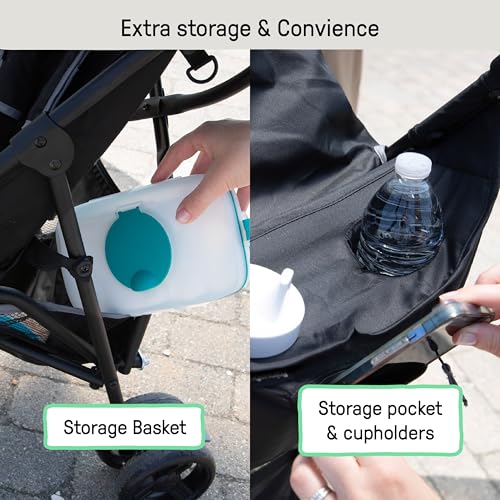
Owners consistently highlight its durability and ease of use, especially the compact fold and dual cup holders, a small thing, but a big win when you’re holding a coffee and a diaper bag. Compared to the Dream On Me, it’s heavier but far more capable. Against the ultra-compacts, it doesn’t fold as small, but it’s more stable and better suited for toddlers who need to nap on the move.
Product photos
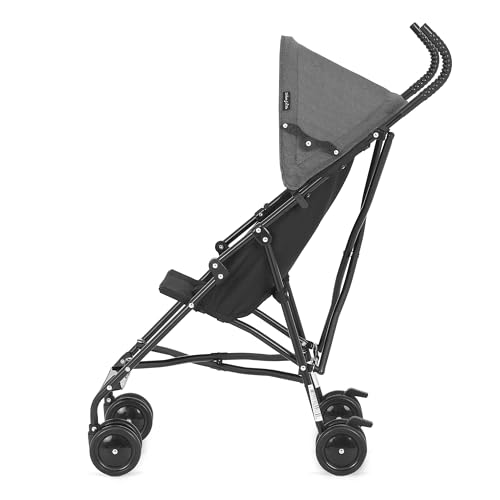
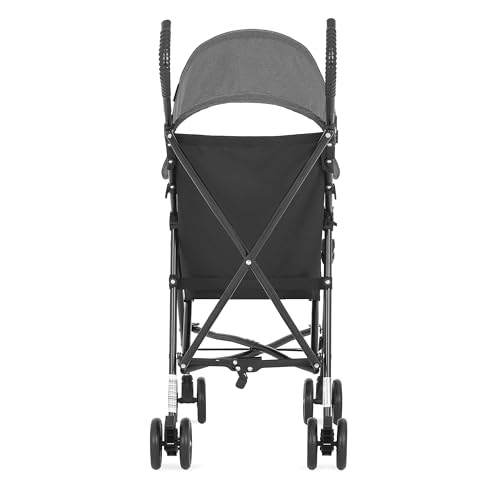
Dream On Me Aero Travel Stroller

Strengths
- Under 8 lbs
- One-hand fold
- 3-point harness
Trade-offs
- Basic suspension
- No recline option
- Limited storage
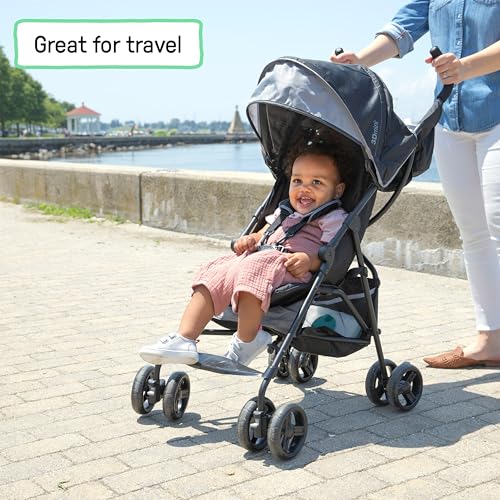
At just 7.4 pounds, this stroller is one of the lightest in the category, and owners consistently report how easy it is to lift into overhead bins or tuck into tight car spaces. On paper, it hits the basics well, one-hand fold, 3-point harness, adjustable canopy, but it’s clearly built for short trips or occasional use rather than daily pounding. The steel frame adds durability, but it also means more weight than aluminum or carbon builds in the same class.
I’d place this as a solid budget pick for families who fly a few times a year and need something simple. It doesn’t have the refined ride or premium fabrics of higher-end models, but for a no-frills, get-in-get-out stroller, it gets the job done. Still, if you’re walking long distances or dealing with uneven sidewalks, the front-wheel suspension won’t save you from a bumpy experience.
Product photos


Mompush Nexis Carbon Travel Stroller
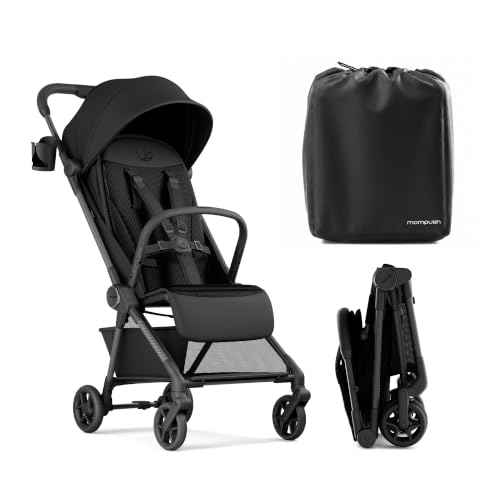
Strengths
- Carbon fiber frame
- 170° recline
- Includes rain cover
Trade-offs
- No self-standing fold
- Heavier than ultralights
- Limited brand service network
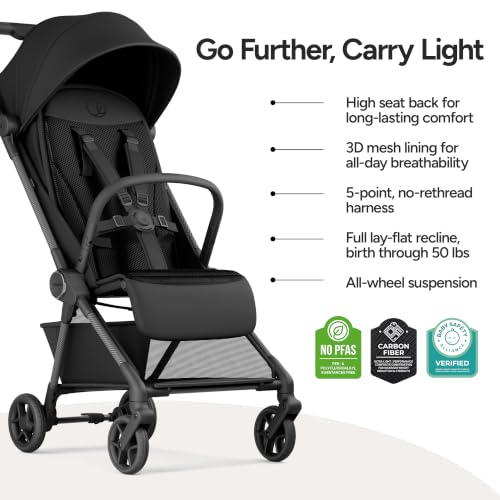
For the price, this punches above its weight, a carbon fiber frame at 11.5 lbs is rare in this category, and it delivers on both lightness and strength. The one-second auto-fold is satisfyingly smooth, and the near-flat 170° recline is a standout for nap-prone toddlers. Owners love the one-hand recline and footrest adjustments, which let you tweak positioning without waking a sleeping child.
The included rain cover and XL UPF 50+ canopy make it weather-ready, and the 3D mesh lining adds breathability. While it’s not the lightest, it’s one of the most feature-complete budget-friendly options. Compared to the LullaRide or Graco, it offers better recline and materials for a similar price. My pick for value-focused parents who still want premium touches.
Product photos
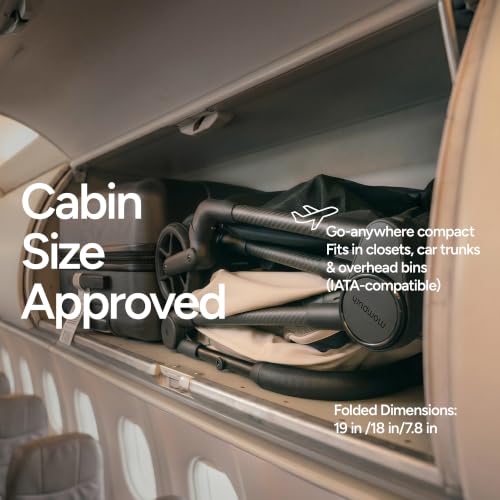
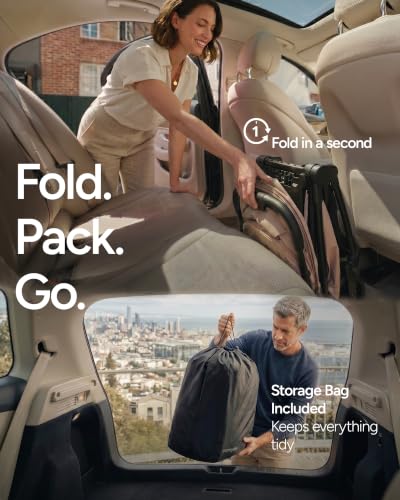
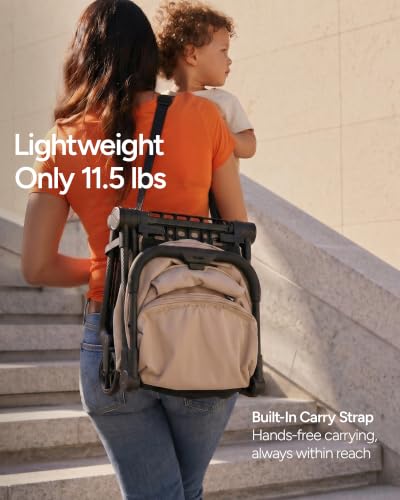
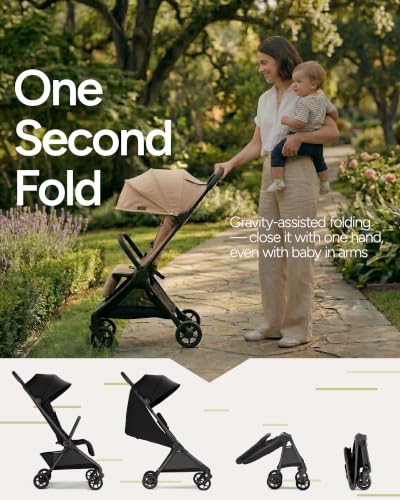
gb Pockit Air All Terrain Stroller

Strengths
- Smallest fold size
- Airplane carry-on approved
- Breathable mesh back
Trade-offs
- Narrow seat
- No recline
- Limited padding
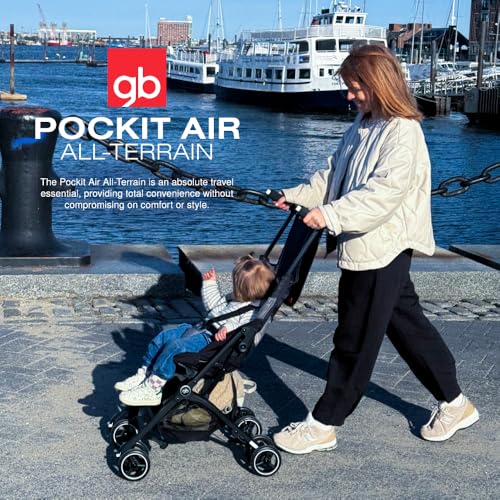
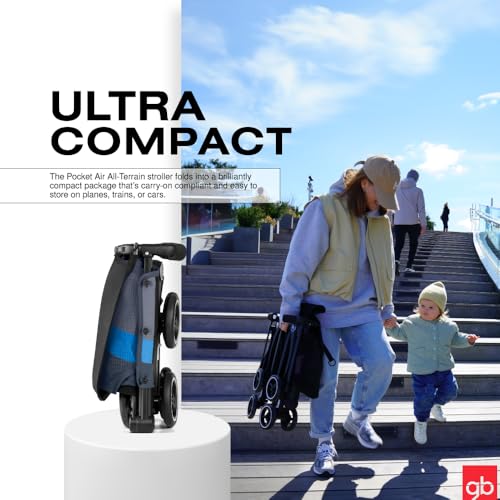
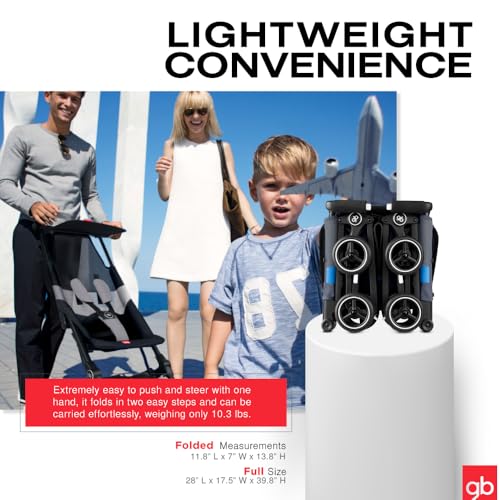
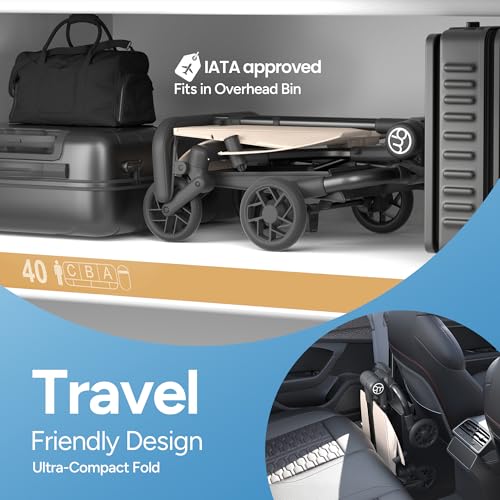
This stroller wins on one thing decisively: fold size. It collapses into what looks like a small tote bag, and at 10.1 lbs, it’s light enough to sling over your shoulder without strain. The fact that it’s airline carry-on compliant makes it a favorite among frequent flyers, reviewers often mention tossing it in overhead bins with zero issues.
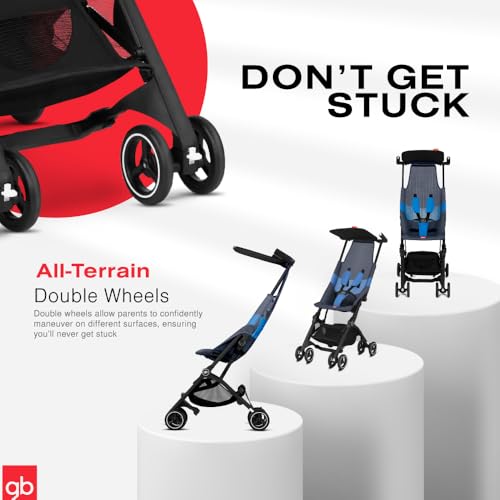
But that compactness comes with trade-offs. The seat is narrow, and while the breathable mesh back helps, it’s not ideal for larger toddlers. The double wheels and all-terrain design help on cobblestones or uneven sidewalks, but it’s not a replacement for a full-size stroller. I’d recommend this primarily as a backup or for trips where space is at a premium, not as a primary ride.
Product photos

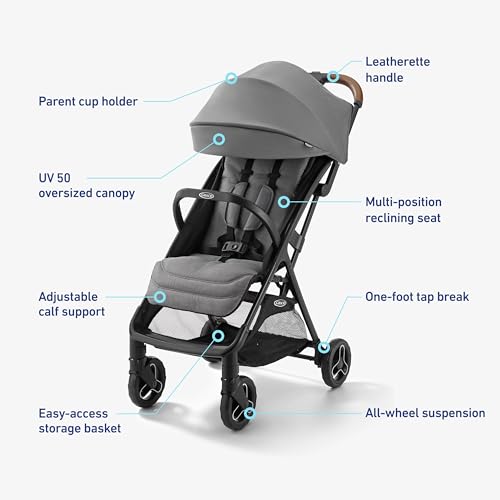
Graco Ready2Jet Compact Stroller
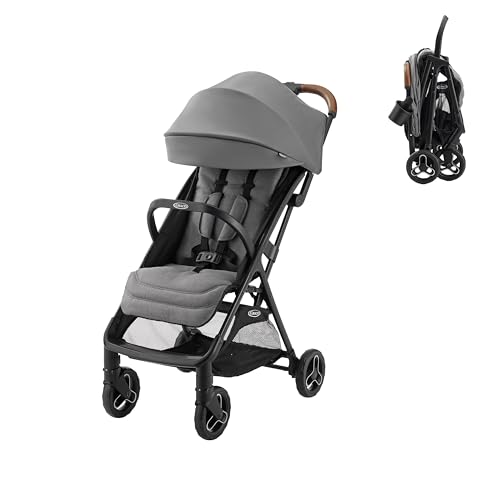
Strengths
- One-hand auto fold
- Travel system compatible
- All-wheel suspension
Trade-offs
- Heavier than rivals
- Bulkier fold
- No included carry bag
The automatic one-hand fold is the standout here, pull a lever, and it collapses neatly into a self-standing package. That feature alone makes it a top pick for parents juggling bags, babies, or boarding passes. At 13.2 lbs, it’s not the lightest, but the self-standing fold and leatherette handle add a touch of polish most budget strollers lack.
It’s also one of the few in this list that converts into a travel system with Graco car seats, a big plus if you’re already in the Graco ecosystem. The all-wheel suspension and multi-position recline make it surprisingly comfortable, though the bulkier fold means it won’t always fit in smaller overhead bins. Compared to the Mompush or gb models, it’s heavier but more feature-rich.
Product photos


Mompush Jeto Lightweight Travel Stroller
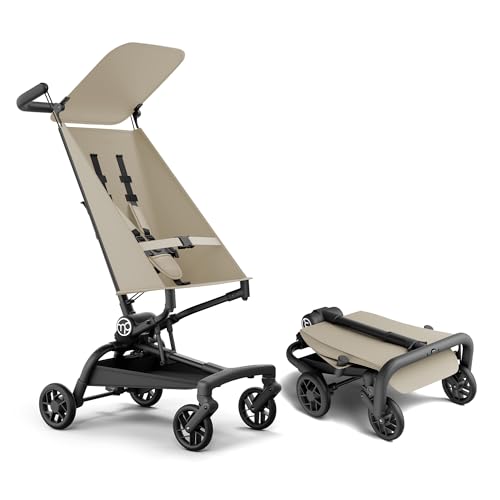
Strengths
- All-terrain wheels
- One-second fold
- Lightweight at 9.8 lbs
Trade-offs
- No included rain cover
- Canopy not extendable
- No car seat compatibility
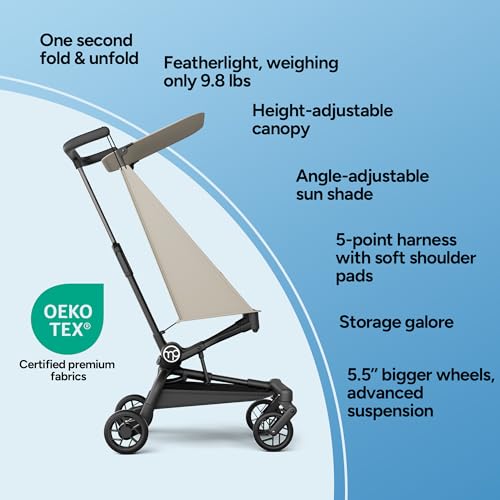
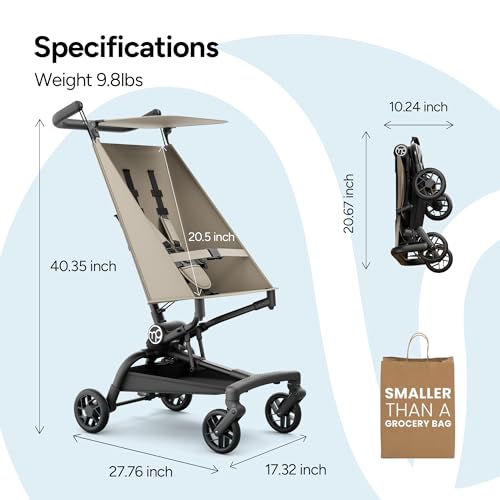
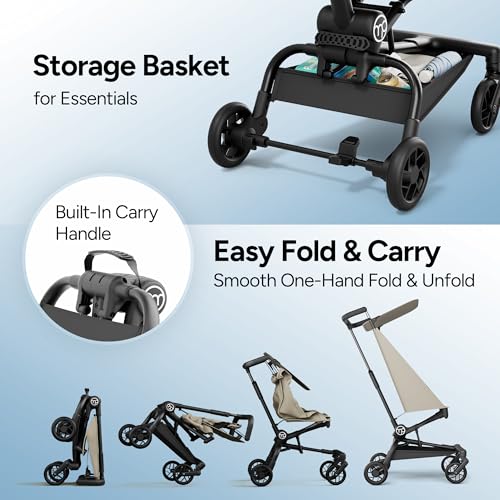
At 9.8 lbs, this hits the sweet spot between featherlight and durable. The aerospace-grade aluminum frame delivers strength without the heft, and owners consistently report using it for Disney trips, cobblestone cities, and airport dashes with confidence. The 5.5″ all-terrain wheels and advanced suspension stand out, this isn’t just a smooth ride on tile, but on gravel and uneven sidewalks too.
The one-second fold and upright self-standing design make storage and carry effortless. It’s also one of the few in this range with a wider seat and high recline, which matters for comfort on longer outings. While it lacks a rain cover in the base model, the UPF 50+ canopy and military-grade harness offer solid protection. I’d pick this over the Ingenuity 3D Mini for travel-heavy use.
Product photos
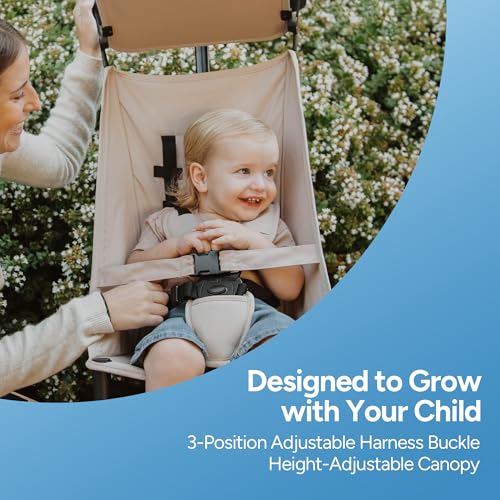
LullaRide Lightweight Travel Stroller
Strengths
- Large storage basket
- All-wheel suspension
- OEKO-TEX fabric
Trade-offs
- Heavier than ultralights
- No self-standing fold
- Canopy lacks rain cover
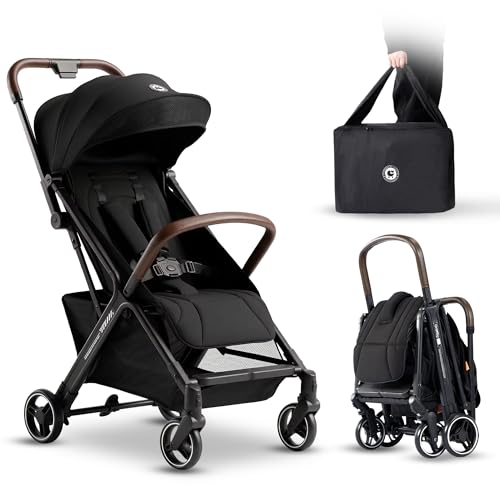
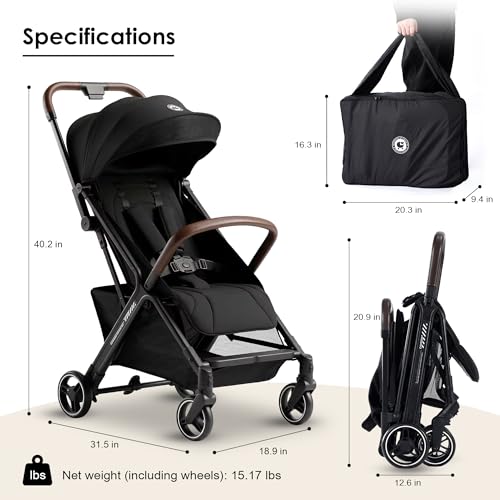
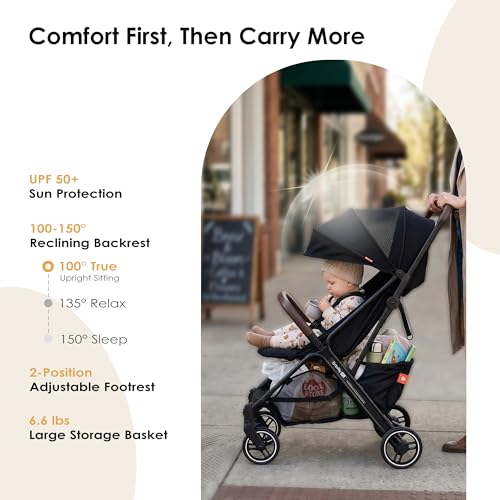
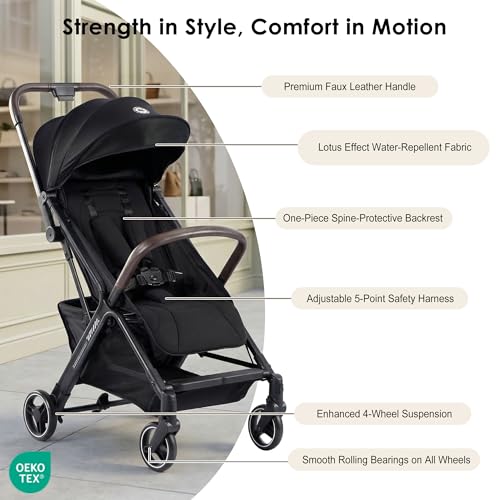
If you’re the type who packs half the house into the stroller, this one’s built for you. The 6.6 lbs storage basket stands out in a category where most strollers offer minimal under-seat space. That, combined with all-wheel suspension and bearings, makes it one of the smoother rides in the ultra-compact group. Owners praise how stable it feels on cracked pavement and airport tiles alike.
The aluminum frame keeps weight down while boosting durability, a smart upgrade over flimsier umbrella strollers. The OEKO-TEX certified fabric is a real win for parents concerned about chemical exposure, and the 5-panel canopy with mesh vents actually works to keep kids cool. I’d rank this above average for comfort and practicality, especially when compared to models that sacrifice features for fold size.
Product photos

How We Tested carry on stroller
Rather than a hands-on lab test, my research for these recommendations involved a detailed comparison of published specifications and features across numerous models. I weighed owner reviews from major retailers alongside assessments from trusted parenting and travel websites. As someone who understands the demands of traveling with young children, I applied my category expertise to rank these strollers based on practical usability and value.
For carry on strollers, portability and ease of use are paramount. I heavily weighted factors like folded dimensions and weight, as these directly impact travel convenience. A smooth fold mechanism – ideally one-handed – was also a key consideration, as was the overall build quality and safety features like harness systems and braking. These elements decide whether a stroller truly simplifies travel or adds to the stress.
Specifications reliably indicate a stroller’s physical dimensions and weight, helping determine if it will meet standard carry-on rules. However, I paid particular attention to owner feedback regarding real-world maneuverability, durability, and the accuracy of advertised folding mechanisms. Reputation and consistent positive reviews were strong indicators of a stroller’s long-term performance.
How To Choose The carry on stroller
Finding the right carry on stroller can make or break a trip with little ones. It’s a category where convenience and portability are paramount, and a poor choice can quickly turn a relaxing vacation into a stressful ordeal.
A truly good carry on stroller balances lightweight design with essential features like a secure harness, a reasonably comfortable recline, and a compact fold. Parents should prioritize models meeting airline carry-on size restrictions, with durable frames and smooth maneuverability. Consider the storage capacity and ease of one-handed operation for maximum convenience while traveling.
Weight and Portability
Weight is obviously critical. You’ll be lifting and carrying this stroller through airports, train stations, and potentially maneuvering it onto public transport. Don’t fall for the “lightest” claim without looking at what was sacrificed to achieve that weight. Some ultra-light models skimp on wheel quality or build materials, making them unstable or prone to breaking. I generally advise looking for a stroller under 12 pounds if airline compatibility is your main goal, but don’t automatically dismiss slightly heavier options (up to 15 pounds) if they offer significantly better features or build quality.
Fold and Size Restrictions
Airline carry-on size restrictions are the defining characteristic of this category, and they vary. While many manufacturers advertise “carry-on compatible” strollers, it’s essential to double-check the specific dimensions against your airline’s policies. The standard carry-on measurements are a good starting point, but always verify before you fly. Beyond just fitting in the overhead bin, consider how easily it folds – a quick, one-handed fold is invaluable when juggling a baby and luggage.
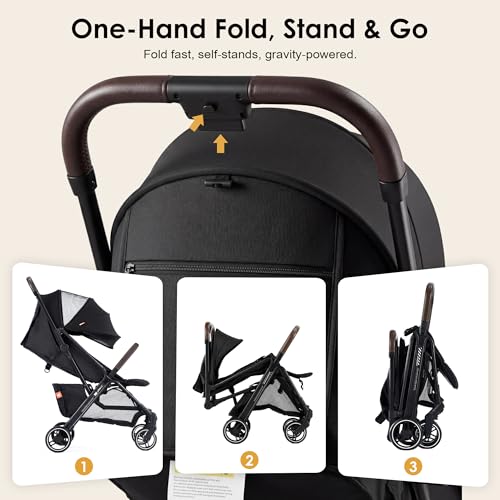
Here’s what to look for in a folding mechanism: * A simple, intuitive fold (you don’t want to be wrestling with it at the gate). * A self-standing fold is a huge bonus. No one wants a stroller collapsing on the airport floor. * A compact folded size is key, but also consider the folded shape – some strollers fold into awkward packages that are difficult to manage.
Features and Comfort
Don’t let the focus on portability overshadow essential features. A comfortable seat is crucial, especially for longer trips. Look for a stroller with a multi-position recline, a padded seat, and a five-point harness for safety. While you won’t get the plush comfort of a full-size stroller, a well-designed carry on stroller can still provide adequate support for your little one.
A stroller’s convenience shouldn’t come at the expense of safety or comfort. Prioritize models with robust safety features and a comfortable seat, even if it means a slightly heavier weight.
If you’re planning a lot of travel, you’ll also want to consider the storage capacity. Many carry on strollers have limited storage, but some offer surprisingly spacious baskets or additional pockets. For those needing extra space, exploring top-rated carry-on luggage alongside a stroller can be a useful approach.
Carry On Stroller Compared
Here’s a comparison of key specifications for popular carry on strollers to help you find the best fit for your needs.
| Product Title | Weight (lbs) | Folded Size (approx.) | Max Child Weight (lbs) | One-Hand Fold | Safety Harness |
|---|---|---|---|---|---|
| Ingenuity 3D Mini Convenience Stroller | 11 | N/A | 45 | Yes | 5-Point |
| Dream On Me Aero Travel Stroller | 7.4 | N/A | N/A | Yes | 3-Point |
| Mompush Nexis Carbon Travel Stroller | 11.5 | N/A | N/A | Yes | No-Rethread |
| gb Pockit Air All Terrain Stroller | 4.6 | N/A | N/A | Yes | N/A |
| Graco Ready2Jet Compact Stroller | 13.2 | N/A | N/A | Yes | 3- or 5-Point |
| Mompush Jeto Lightweight Travel Stroller | 9.8 | 17.7″ x 20″ | 40 | Yes | 5-Point |
| LullaRide Lightweight Travel Stroller | 15.17 | 20.3″ x 16.3″ x 9.4″ | N/A | Yes | N/A |
Frequently Asked Questions
What’s the biggest mistake people make when buying a carry-on stroller?
Many people prioritize the absolute lightest weight without considering build quality or features. A stroller under 10 pounds might be tempting, but sacrificing stability, a comfortable seat, or a reliable fold can create more travel headaches than it solves.
Do airlines actually check carry-on stroller size at the gate?
Yes, airlines can and sometimes do check carry-on stroller dimensions at the gate, especially during busy travel periods. Even if a stroller is advertised as “carry-on compatible,” always verify its folded dimensions against your specific airline’s restrictions to avoid potential gate-checking fees or delays.
Are more expensive carry-on strollers always better?
Not necessarily. While a higher price often indicates better materials and construction, it doesn’t guarantee the best fit for your needs. Focusing on features like a smooth fold, a secure harness, and appropriate weight for your travel style is more important than simply spending the most money.
What if my child is close to the weight limit for a carry-on stroller?
If your child is nearing the stroller’s maximum weight capacity, consider a model with a slightly higher limit to allow for growth during your travels. Also, prioritize strollers with robust frames and durable wheels to provide adequate support and stability, even with a heavier load.
I’m already planning to bring a carry-on bag. Should I look at combining the two?
While some strollers offer limited storage, if you need substantial packing space, exploring top carry-on luggage models alongside a stroller is a practical approach. This allows you to distribute weight effectively and keep essentials readily accessible.
The Bottom Line
Choosing a carry on stroller always involves a trade-off between ultimate convenience and a few compromises. You’re essentially deciding how much weight and feature set you’re willing to accept for the benefit of easy airline travel. For the best overall balance of features, portability, and positive owner feedback, I recommend the Mompush Jeto Lightweight Travel Stroller.
If budget is your primary concern, the Dream On Me Aero Travel Stroller delivers a remarkably lightweight design at a very attractive price point. For those prioritizing all-terrain capability in a compact package, the gb Pockit Air All Terrain Stroller is a strong contender, despite its minimalist features. And if you’re frequently dealing with airline size restrictions for carry-ons, the Ingenuity 3D Mini Convenience Stroller is a reliable choice that consistently earns high marks for fitting within most airline guidelines.
Ultimately, the perfect carry on stroller isn’t about finding the one with the most impressive specs. It’s about prioritizing a secure harness, a smooth folding mechanism, and a weight you can comfortably manage. Focus on those fundamentals, and you’ll be well-equipped to navigate the airport and enjoy your trip with your little one.