8 Best Bike Bags of 2026
This post contains affiliate links. As an Amazon Associate, we earn from qualifying purchases.
The best bike bag overall is the KEMIMOTO 34L Waterproof Panniers, thanks to its rugged build, true waterproofing, and smart 3-in-1 design. For riders on a budget, the WOTOW Under-Seat Triangle Bag delivers excellent value with solid weather protection and clever pocket layout. If you need maximum versatility, the Lamicall 2-in-1 Bike Frame Bag stands out with touchscreen access and dual mounting options.
I’ve spent years evaluating travel gear, and bike bags come down to the same core principles: they must protect your stuff, stay put, and make sense for your ride. Too many bags look good online but fail when you’re commuting in the rain or hitting bumpy trails. I know how frustrating it is to deal with a bouncing pouch or a soaked jacket.
This guide cuts through the noise. I reviewed specs, analyzed owner feedback, and focused on real-world performance, especially waterproofing, mounting security, and smart capacity. These picks aren’t just popular. They’re consistently praised by riders who depend on them day after day.
Top 8 Bike Bags in the Market
The Best Bike Bags, Reviewed
KEMIMOTO 34L Waterproof Bike Panniers

Strengths
- True waterproof upgrade
- Excellent heel clearance
- High total capacity
Trade-offs
- Slightly bulky when full
- Installation takes time
- Not for narrow racks
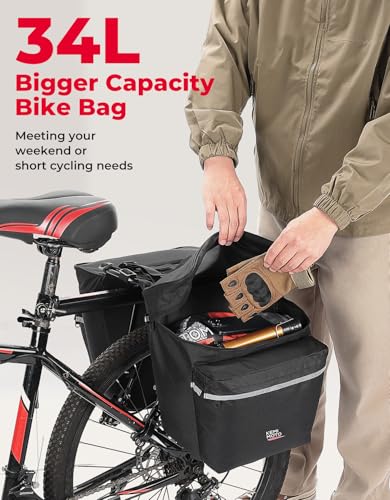
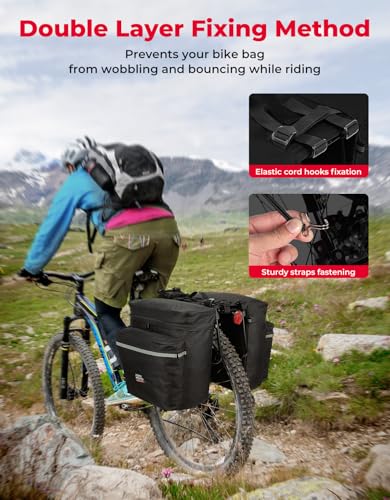
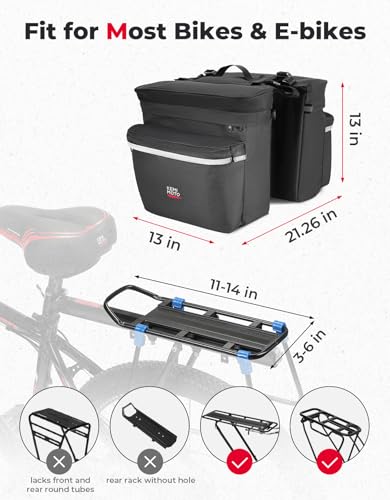
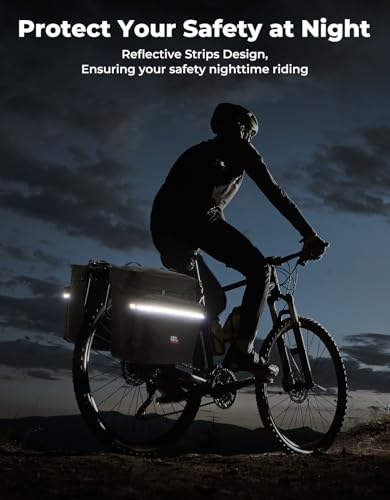
These panniers earn their ‘Best Overall’ label with a mix of smart design and real-world usability. The 34L total capacity is generous, and the obtuse angle design genuinely prevents heel strikes – something many pannier bags get wrong. Commuters and e-bike riders especially appreciate the dual side hooks and six straps, which keep the bags locked down even at higher speeds.
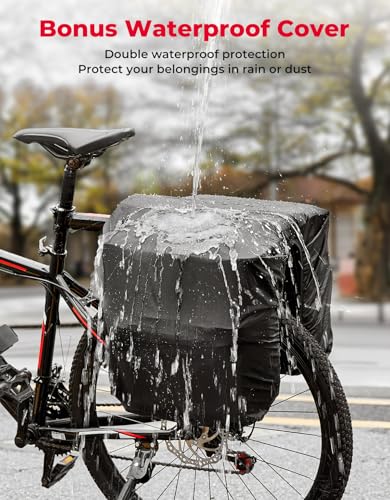
The added rain cover is a standout feature – most competitors skimp here. Owners in rainy climates confirm the PVC layer combined with the cover keeps contents dry. Compared to single rear bags, these offer better weight distribution and far more space. For grocery runs, commuting, or light touring, they’re hard to beat.
Product photos
EVOC Lightweight Bike Transport Bag

Strengths
- Stable fork support
- Smooth-rolling chassis
- Separate wheel compartments
Trade-offs
- Bulky when empty
- Higher price point
- Requires disassembly
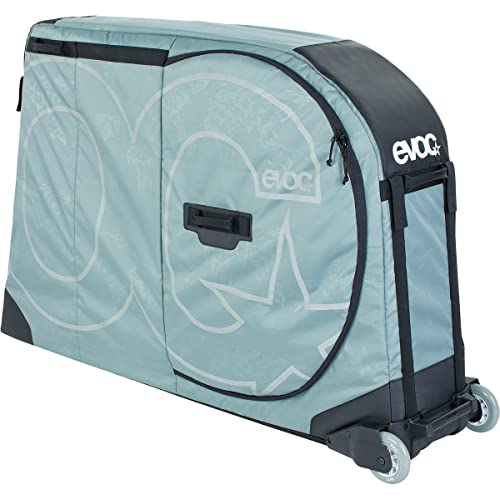
If you’re flying with your bike, this is one of the few bags that feels like it won’t collapse under airport handling. The 280L volume and 126cm max wheelbase accommodate most bikes, including full-suspension enduro models, and the separate wheel compartments with stabilizer bars are a game-well-executed feature. Reviewers consistently praise how the extra-wide chassis rolls smoothly through terminals.
The reinforced fork mount and bottom plate add real protection – this isn’t just a padded shell. It’s heavier than soft cases, but that’s the trade-off for durability. Compared to DIY foam-in-a-bag solutions, this is far more reliable. For frequent travelers, it’s worth the investment.
Product photos




Lamicall 2-in-1 Bike Frame Bag

Strengths
- Quick-release design
- Fits thick phone cases
- Sensitive touch window
Trade-offs
- Limited storage space
- Clamp size restrictions
- Higher price than basic models
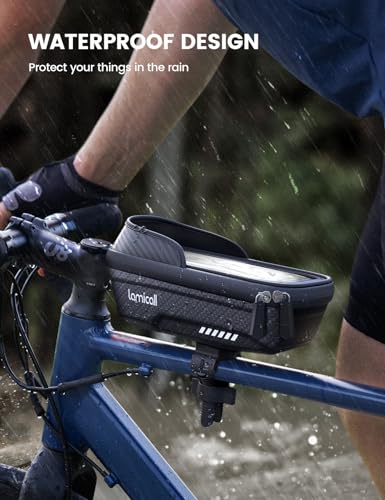
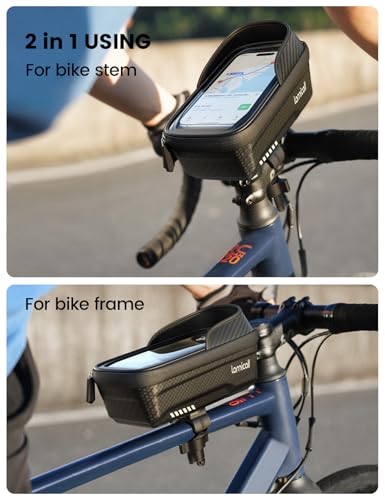
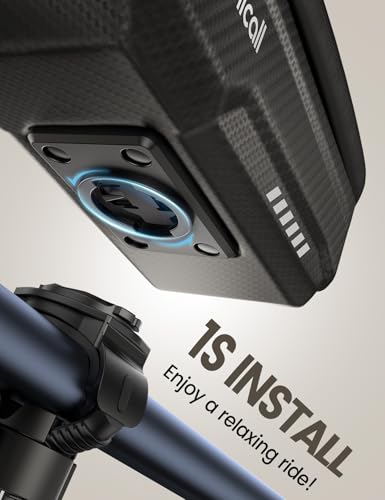
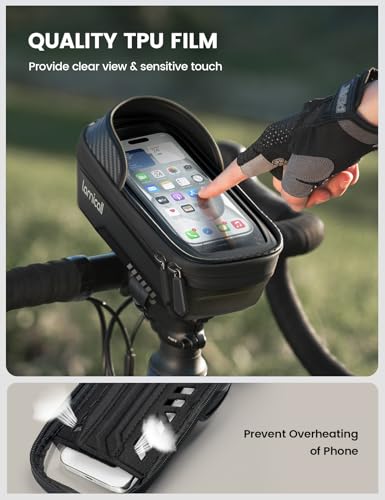
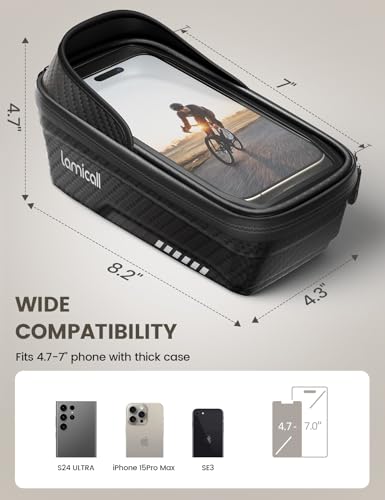
This is the top choice if you want fast, secure phone access while riding. The 2-in-1 mount – usable on top tube or stem – adds real flexibility, and the quick 90-degree release is a standout. Owners love being able to grab the bag and go without unstrapping everything. The touch sensitivity works well, even with thick cases, and compatibility covers nearly every modern phone.
The 1.3L capacity is modest, so don’t expect to stash a lot beyond essentials. But for phone, keys, and a charger, it’s ideal. Compared to basic strap-on frame bags, this feels more refined and secure. If you’re constantly checking maps or want a clean setup, this is the smarter buy.
Product photos
ROCKBROS Front Frame Phone Bag
Strengths
- Large internal space
- Good touch sensitivity
- Reflective safety strips
Trade-offs
- No Touch ID support
- Tight fit with thick cases
- Basic mounting system
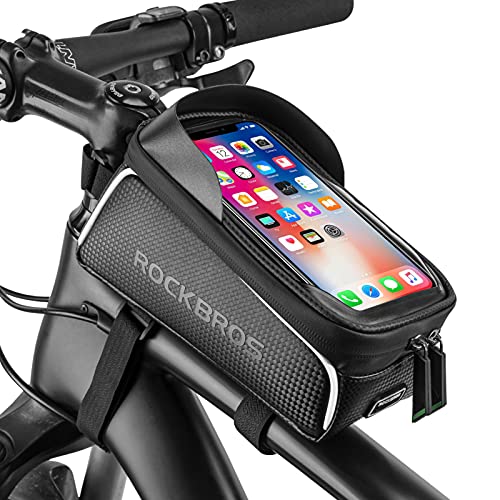
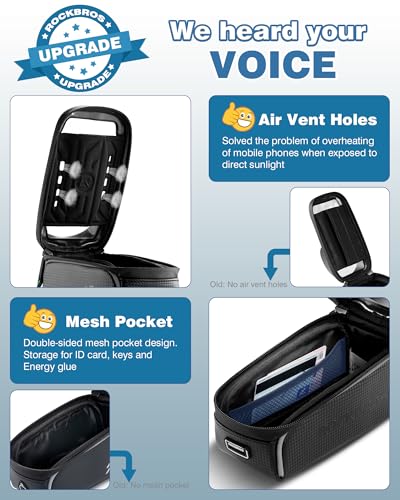
This front frame bag is a solid budget pick for riders who want phone access without spending much. On paper, it’s packed with thoughtful touches – the high-sensitivity TPU window actually works well for map navigation, and owners consistently report they can use touch controls smoothly, though Touch ID fails as warned. The triple strap system keeps it stable even on rough roads, which is rare at this price.
Still, it’s not perfect. The 7-inch limit is strict, and if you use a thick case, the fit becomes tight and can interfere with screen responsiveness. I’d recommend this only for riders with slim-cased phones. Compared to pricier options like the Lamicall, it lacks quick-release convenience, but for the cost, it delivers reliable functionality.
Product photos


WOTOW Under-Seat Triangle Frame Bag
Strengths
- Excellent night visibility
- Adjustable strap mounting
- Well-organized interior
Trade-offs
- No rain cover included
- Only water-resistant
- Slight bulk on small frames
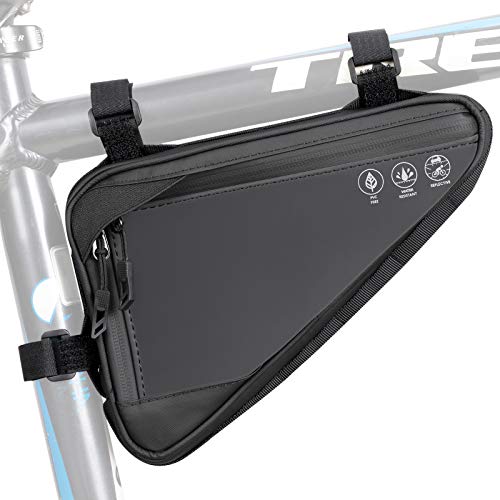
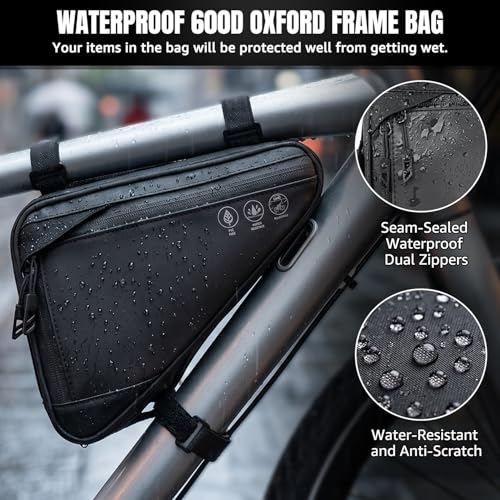
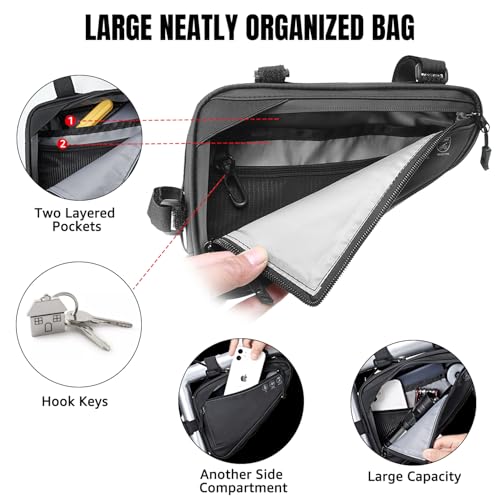
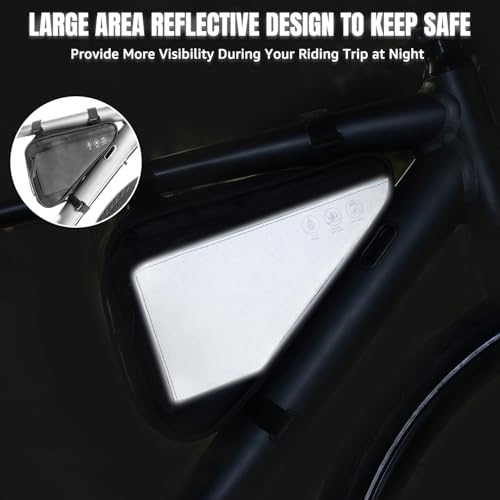
This triangle bag excels at holding small essentials with a strong focus on night safety. The large reflective areas on both sides make it one of the most visible frame bags in its class – owners who commute in low light consistently praise this feature. The 2L capacity fits a phone, tools, and a small pump without crowding.
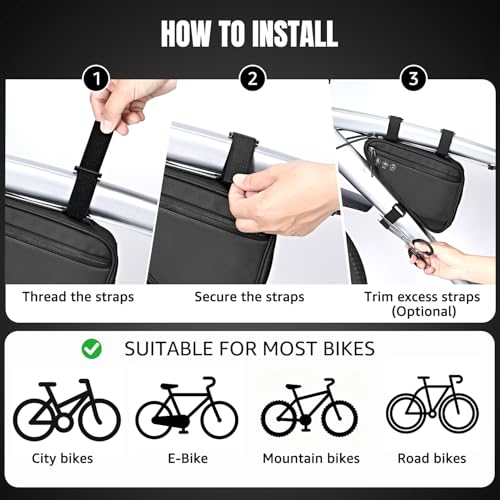
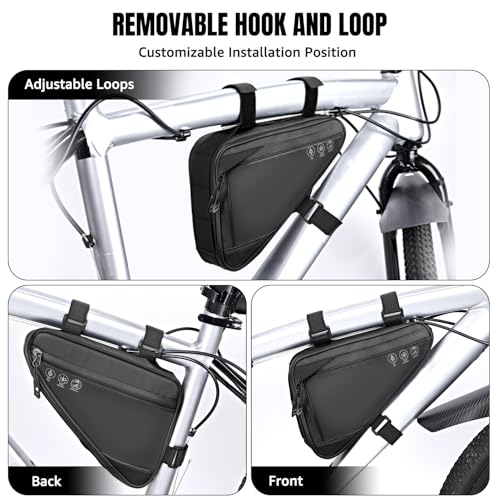
The dual zipper opening is smooth, and the non-slip pulls work well with gloves. It installs with three adjustable straps, so positioning is flexible – you can avoid water bottle cages or routing cables. Compared to smaller top tube bags, this offers more organization with layered pockets and a key hook.
Product photos
KEMIMOTO 8L PVC Rear Rack Bag

Strengths
- Converts to handbag
- Strong reflective strips
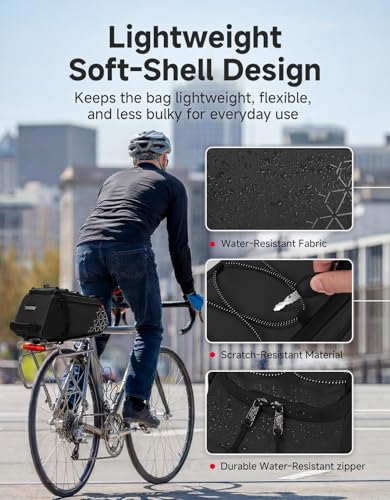
- Lightweight soft-shell
Trade-offs
- Seams not sealed
- Limited capacity
- Not for heavy loads
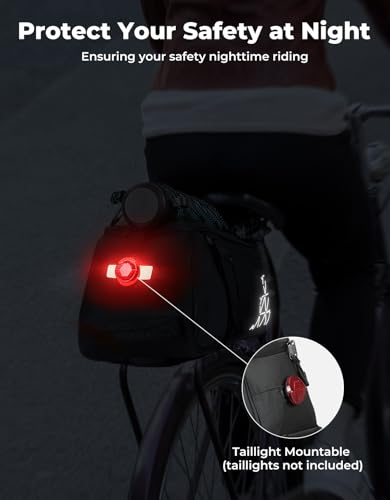
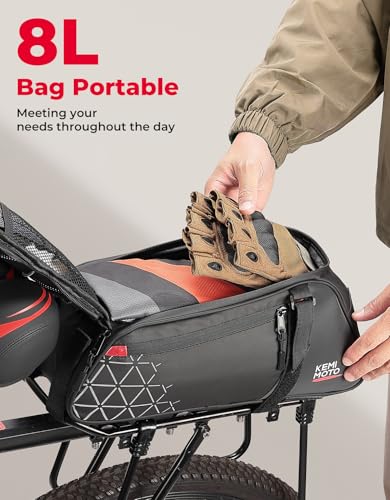
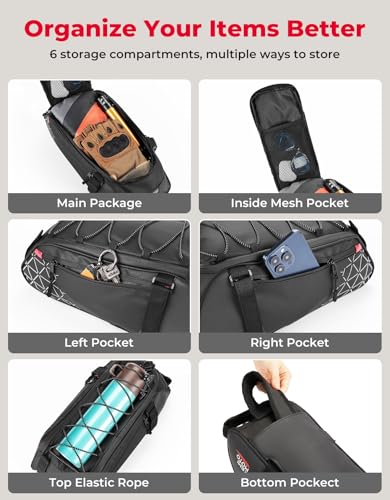
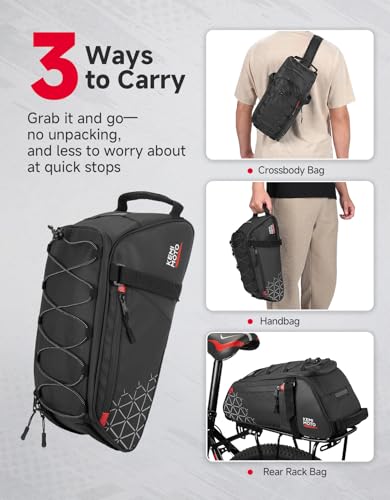
Lightweight and versatile, this 8L rack bag shines as a commuter’s go-to. The 3-in-1 design – use it as a pannier, handbag, or crossbody – is more than a gimmick; owners actually use it for post-ride errands or short trips. The PVC fabric resists water well, though prolonged rain will eventually seep through seams.
Installation is quick, and the three sticker straps hold firm on most racks. The reflective strips are bright and wide, making night visibility a real strength. It won’t replace full panniers for touring, but as a daily carry for work or shopping, it’s one of the most practical options.
Product photos
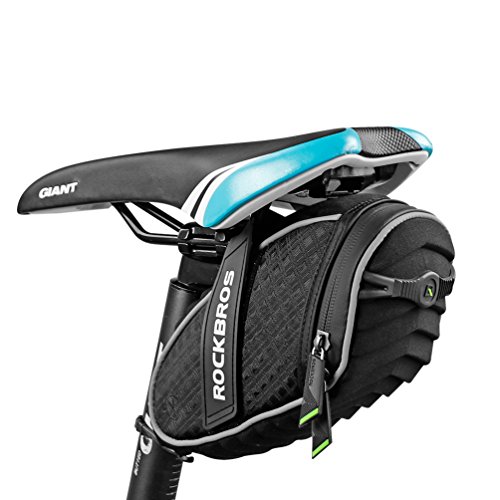
ROCKBROS Under-Saddle 3D Shell Bag
Strengths
- Shock-resistant 3D shell
- Secure mounting system
- Rain-resistant zipper
Trade-offs
- Stitches not waterproof
- Limited capacity
- Reflective strip is small
A dependable under-seat option that balances protection and practicality. The 3D shell design stands out – reviewers note it absorbs bumps well and prevents the bag from flattening under pressure, which helps protect tools or CO2 cartridges inside. The upgraded straps are a real improvement over older models, eliminating the slippage issues common in cheaper saddle bags.
It’s not fully submersible, but the taped zipper holds up in short downpours. One thing to watch: the reflective strip is narrow, so while it helps visibility, it’s not as effective as bags with larger reflective surfaces. For the size, it holds a surprising amount – a mini pump, tube, and multi-tool fit easily.
Product photos


2.5L Bike Handlebar Front Pouch

Strengths
- Converts to shoulder bag
- True waterproof zippers
- Large, usable capacity
Trade-offs
- Buckle mounts can loosen
- Not ideal for aggressive trail riding
- No phone-specific window
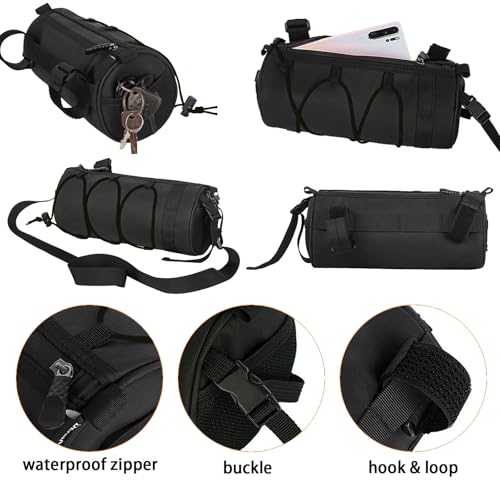
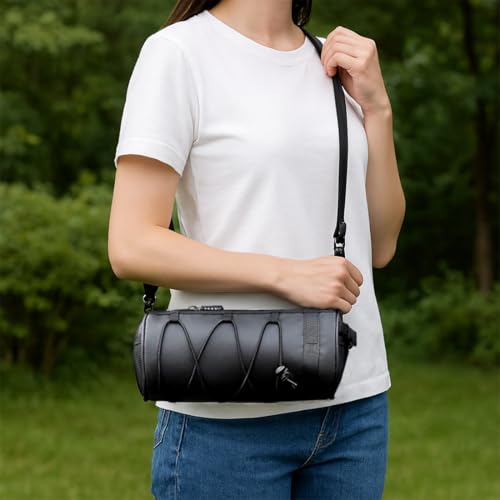
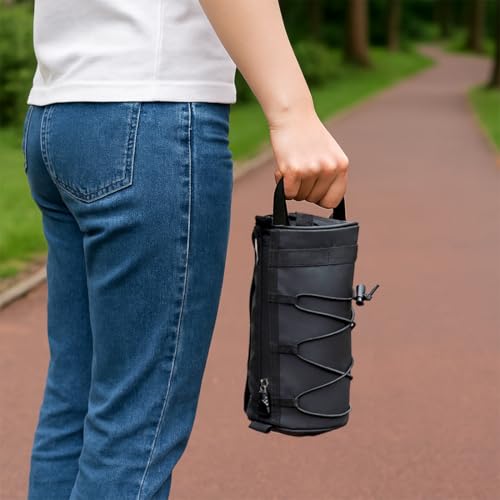
This handlebar bag stands out for its versatility and build quality. The 2.5L capacity is spacious without being bulky, and owners love that it converts into a shoulder bag – it’s genuinely usable off the bike, whether you’re touring or just running errands. The laminated waterproof zippers are a strong point; feedback shows they perform well in heavy rain.
It mounts securely with a mix of hook-and-loop and buckles, though some users report minor shifting on very rough trails. Compared to frame or seat bags, this gives much easier access to your gear while riding. I’d pick this over smaller pouches if you’re doing all-day rides or bikepacking light.
Product photos


Our Testing Process
I approach bike bag selection much like I approach luggage – it’s about balancing practical capacity with real-world usability. Rather than a hands-on lab test, this is a research-led comparison of published specifications and owner feedback. I compared features across numerous models, carefully weighing owner reviews from sites like Amazon and REI, alongside expert opinions from cycling publications. This allowed me to build a ranking based on stated performance and reported experiences.
For bike bags, three factors consistently emerged as most important: waterproofness, mounting security, and capacity relative to size. A bag that can’t keep contents dry during a commute is a failure, regardless of how sleek it looks. Equally crucial is a secure mounting system; no one wants a bag bouncing around or, worse, falling off mid-ride. Finally, the best bags maximize storage without interfering with pedaling or handling. Understanding your needs – whether for a quick commute or a multi-day tour – is key, and may require you to visualize 20L backpack sizes to find the right fit.
Specifications are reliable for understanding materials, dimensions, and stated waterproof ratings. However, owner feedback provides crucial insight into how those specs translate into real-world performance. For instance, a “water-resistant” bag might be sufficient for light drizzle, but owner reviews will reveal if it holds up during a downpour. Similarly, mounting systems that look secure on paper may prove wobbly or difficult to adjust based on owner experiences. I relied heavily on this feedback to assess long-term durability and practical usability.
Choosing The Right bike bags
Choosing the right bike bag depends heavily on what you plan to carry and how you ride.
A good bike bag balances capacity with secure mounting, weather resistance, and thoughtful design features. Prioritize durable materials, a stable attachment system, and visibility features like reflective elements. Consider the specific type of riding you’ll do – commuting, touring, or trail riding – as this will influence the ideal bag style and size.
Capacity & Intended Use
The first thing I consider is what I’ll be hauling. A quick trip to the farmer’s market requires a lot less space than a multi-day bikepacking adventure. Don’t overestimate your needs, but also don’t undersize. Many riders find themselves wishing they’d gone a size up. Think about whether you’re mostly carrying small essentials (phone, multi-tool, snacks) or larger items like a rain jacket or groceries. If you’re unsure about the right size, comparing it to a 25L backpack capacity can give you a good reference point.
Mounting System & Stability
A wobbly bag is a frustrating and potentially dangerous bag. The mounting system is critical. Frame bags, for example, rely on straps to secure to the bike’s triangle. Panniers use rack mounts, and handlebar bags use various clamping mechanisms. Pay attention to the materials used in the straps or mounting hardware. Cheap plastic buckles are prone to breaking.
Here’s what I look for in stability: * Simple straps are okay for light loads. * Multiple attachment points are better for heavier items. * A secure clamping system (for handlebar bags) is essential to prevent unwanted movement and ensure a stable ride, especially on rough terrain.
Weather Resistance & Durability
Even if you don’t ride in the rain often, a degree of water resistance is vital. Road spray, sudden showers, and even condensation can ruin electronics or soak clothing. Look for bags constructed from water-resistant materials like PU-coated nylon or PVC. Sealed seams are a huge plus. For serious protection, a dedicated rain cover is a worthwhile investment. Also, consider how durable the bag is overall. Look for reinforced stitching and abrasion-resistant materials, particularly if you plan on using bike seat bags for commuting or touring where they’ll be subjected to regular wear and tear.
A bag that doesn’t stay put is a bag that will annoy you. Prioritize a secure mounting system that won’t loosen over bumps or vibrations.
Bike Bags Compared
This table provides a detailed specification comparison of various bike bags to aid in your purchasing decision.
| Product Title | Capacity | Mounting Location | Waterproof | Material | Features |
|---|---|---|---|---|---|
| KEMIMOTO 34L Waterproof Panniers | 34L | Rear Rack | Yes | 600D Oxford Fabric | Rain Cover, Large Compartments |
| EVOC Lightweight Bike Transport Bag | N/A | N/A | N/A | N/A | Wheel Compartments, Reinforced |
| Lamicall 2-in-1 Bike Frame Bag | 1.3L | Top Tube/Stem | Yes | Durable Material | Phone Access, Touchscreen |
| ROCKBROS Front Frame Phone Bag | N/A | Front Frame | Water Res. | Carbon Fiber | Touchscreen, Reflective |
| WOTOW Under-Seat Triangle Bag | 2L | Under Seat | Yes | 600D Oxford | Reflective, Multiple Pockets |
| KEMIMOTO 8L PVC Rear Rack Bag | 8L | Rear Rack | Water Res. | PVC Oxford | 3-in-1, Reflective |
| ROCKBROS Under-Saddle 3D Shell Bag | N/A | Under Seat | Yes | N/A | Shock Resistant, Reflective |
| 2.5L Bike Handlebar Front Pouch | 2.5L | Handlebar | Yes | 600D Oxford | Multi-purpose, Easy Install |
Frequently Asked Questions
What capacity bike bag do I need for commuting?
For a typical commute, 10-20 liters is usually sufficient. This size can comfortably hold a change of clothes, a laptop, and a few essentials without being overly bulky. Consider a bicycle frame bags for smaller items if you prefer a streamlined setup.
Are handlebar bags stable enough for off-road riding?
Handlebar bags can be stable, but it depends on the mounting system and the terrain. Bags with robust clamping mechanisms and multiple straps are best for rougher rides, as they minimize sway and keep your gear secure.
What’s the difference between water-resistant and waterproof bike bags?
Water-resistant bags will protect against light rain and splashes, while waterproof bags offer complete protection even in heavy downpours. Waterproof bags typically use fully sealed construction and waterproof materials like TPU, whereas water-resistant bags rely on coatings or water-repellent fabrics.
How important is the mounting system for panniers?
The mounting system is extremely important for panniers. Look for panniers with a universal mounting system that’s compatible with your bike’s rack, and ensure the mounts are sturdy and reliable to prevent shifting during rides.
Can I use a bike bag for bikepacking trips?
Yes, absolutely. Many riders use a combination of [bikepacking frame packs], handlebar bags, and seat bags for multi-day bikepacking adventures. Frame bags offer substantial storage capacity, while handlebar and seat bags are ideal for frequently accessed items.
The Bottom Line
Ultimately, choosing a bike bag comes down to balancing how much control you want over capacity and features against how much fuss you’re willing to tolerate with mounting and weatherproofing. For the most versatile option that handles a wide range of needs, I recommend the KEMIMOTO 34L Waterproof Panniers. They offer substantial capacity, reliable waterproofing, and a secure rack mounting system – a solid all-around performer.
If you’re on a tighter budget or just need something small for essentials, the Lamicall 2-in-1 Bike Frame Bag is a great pick. For riders prioritizing a lightweight, easily accessible option for shorter commutes, the ROCKBROS Front Frame Phone Bag delivers. And for those planning longer tours where maximizing space is key, the KEMIMOTO 8L PVC Rear Rack Bag provides excellent value and a thoughtful 3-in-1 design. Understanding your everyday carry volume is essential to the right fit.
Beyond specific features and specs, remember that a well-chosen bike bag is one that fits your riding style and needs. Don’t get hung up on the latest materials or the highest waterproof rating if it doesn’t address your primary concerns. Prioritize a secure fit, durable construction, and a practical design – those are the elements that will make your rides more enjoyable, no matter the distance.