Can I Have a Backpack and a Carry On Southwest? 2-Bag Rule
This post contains affiliate links. As an Amazon Associate, we earn from qualifying purchases.
Yes. Southwest Airlines allows every passenger one carry-on bag for the overhead bin and one personal item, like a backpack, to stow under the seat in front of you. Both are free on every fare type, including Basic. The carry-on must not exceed 24 x 16 x 10 inches. Your backpack just has to fit under the seat without blocking the aisle or your legroom.
That permission is the foundation, but the 2026 checked bag fee changes shifted the ground underneath it. When Southwest ended its “Bags Fly Free” era, a predictable thing happened: more people started trying to carry everything on. The overhead bins fill faster now, and gate agents are quicker to tag and check bags at the jet bridge.
What follows is how to use your two-bag allowance without getting caught in that overflow. We’ll cover the official dimensions, the unwritten rules for what fits under a seat, and the specific items that can break the standard count.
Key Takeaways
- Southwest’s carry-on size limit is 24 x 16 x 10 inches, including wheels and handles. There is no published weight limit.
- Your backpack or other personal item must fit under the seat in front of you; Southwest does not publish specific dimensions for it.
- Both items are free on all fare types, with no overhead bin restrictions for Basic fare, a key difference from other major airlines.
- After checked bag fees were introduced, full flights often trigger early gate-checking of carry-ons to prevent boarding delays.
- Pet carriers, certain fragile oversized items, and assistive devices have specific rules that can alter your two-item count.
The Short Answer (And Why It’s a Big Deal)
You get two bags. One goes up, one goes down. That’s the rule.
Southwest allows all ticketed Passengers to carry on for free: (a) one carryon bag (e.g., roller bag, garment bag, tote bag) that does not exceed external dimensions of 10 x 16 x 24 ; and (b) one smaller, personal type item (e.g., purse, briefcase, laptop computer case, backpack, small camera), provided that such items can be stowed under a seat or in an overhead compartment.
This official text from Southwest’s Optional Travel Charges page is your guarantee. The airline’s Contract of Carriage reinforces it, stating the carrier can restrict items but that this two-piece baseline applies to everyone.
The “big deal” part isn’t the rule itself, it’s how the 2026 fee landscape changed behavior. When checking a bag started costing $45, the economic incentive shifted heavily toward carry-ons. On a full flight, that means the overhead bin space is a contested resource by the time the B boarding group steps on. Southwest knows this. Their response, noted in airline observer reports and YouTube travel summaries, is proactive gate-checking. Agents will often announce at the gate that they need volunteers to check roller bags, and if they don’t get enough, they’ll start tagging them.
Your backpack-under-the-seat is your life raft in that scenario. It stays with you.
Your Carry-On: The 24x16x10 Box Rule
For your overhead bag, the numbers are absolute. The 24 x 16 x 10 inch limit includes every protrusion: wheels, telescoping handles, side pockets, and reinforced corners. If your bag has a frame, the frame counts.
Most standard 20-inch carry-on suitcases are built to this specification. Popular models like the Travelpro Maxlite 5 21” and the Samsonite Winfield 2 20” are designed with these dimensions in mind. The Away Bigger Carry-On is a famous test case, it’s built right to the edge of the limit, and user tests confirm it fits in Southwest’s sizer, but with no room to spare.
Where this goes sideways: Assuming a “22-inch” suitcase label matches airline specs. Manufacturer sizing is not standardized. A “22-inch” bag often measures the internal cavity, not the external dimensions with wheels. It can easily overshoot the 24-inch length limit. Always check the manufacturer’s external dimensions.
Is There a Weight Limit?
Southwest does not publish a weight limit for carry-on bags. The practical limit is your own ability to lift it safely into the overhead bin without assistance. Flight attendants are not required to help you, and if your bag is too heavy for you to manage, it will be gate-checked.
This differs from the strict 50-pound weight limit for checked bags. For carry-ons, the restriction is about safety and self-sufficiency, not a number on a scale. This is a key point many international travelers miss, as carriers like British Airways or Emirates have strict kilogram limits.
Your Backpack’s Real Job: The Under-Seat Fit Test
This is where most online guides get fuzzy. Southwest does not publish maximum dimensions for personal items. The only official rule is that it must be stowed under the seat in front of you. This lack of a hard number is a feature, not a bug, it allows flexibility.
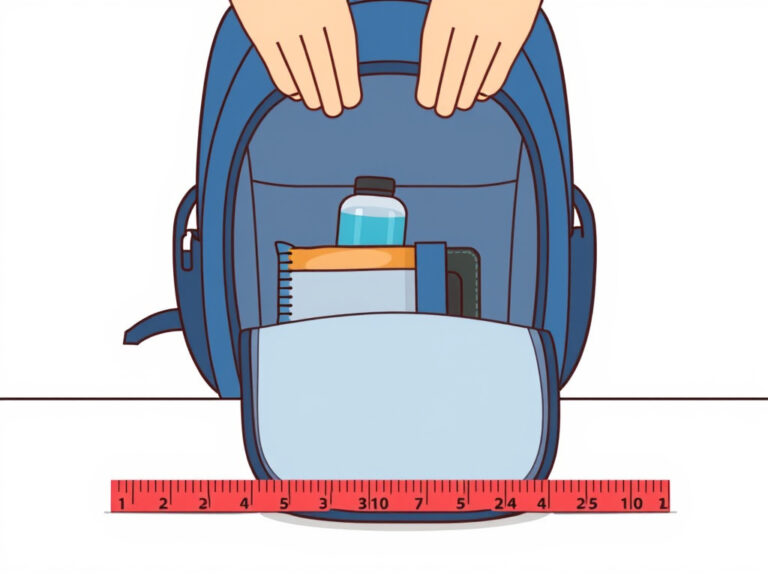
The space under a typical Southwest seat (like on a Boeing 737) is roughly 17 inches wide, 13 inches deep, and 9 inches high at the leading edge, tapering lower toward the back. Your backpack needs to fit within that envelope without blocking the aisle, protruding into your foot area, or obstructing the underseat life vest container.
| Backpack Type | Best For | Risk If Too Large |
|---|---|---|
| Slim Laptop Backpack (e.g., Aer Flight Pack 2) | Business travel, minimalists | Slides under easily, leaves footroom. |
| Standard Daypack (18-22L) | Weekend trips, general travel | May bulge, reducing legroom. |
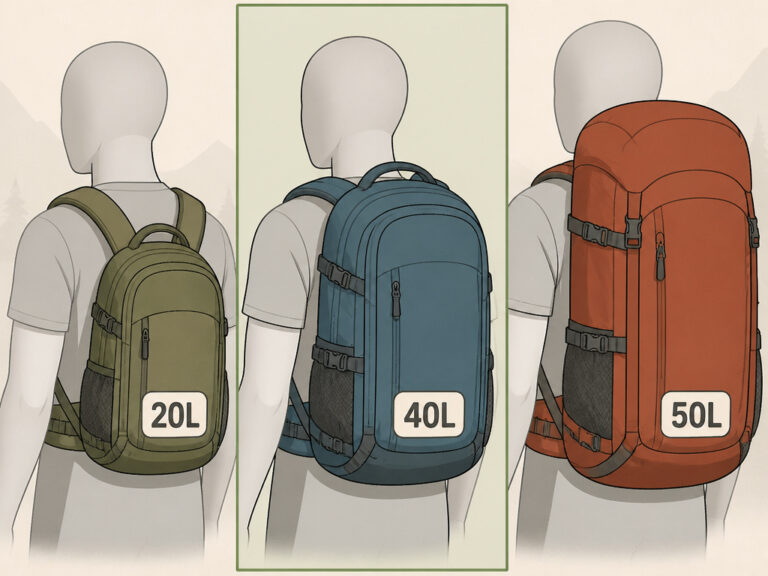
| Hiking Backpack (30L+) | Trying to avoid a carry-on | Will not fit; forced into overhead, consuming your carry-on slot. |
Common mistake: Choosing a backpack with a rigid frame or a boxy shape. Even if its dimensions seem small on paper, a hard-sided bag won’t compress into the tapered underseat space. A soft-sided, flexible backpack like the Patagonia Black Hole 25L or the Osprey Daylite Plus adapts far better.
The YouTube trend of “personal item only” challenges proves the point. Travelers pack for three-day trips into bags like the Cotopaxi Allpa 28L, but they rely on the bag’s soft construction to squeeze it under the seat. It works until a flight attendant decides it’s obstructing the aisle.
How Checked Bag Fees Changed the Carry-On Game
In May 2025, Southwest began charging for checked bags on most fares. By April 2026, those fees increased to $45 for the first bag and $55 for the second. This single change is the most important context for your backpack-and-carry-on question.
The economic calculation is simple. If checking a bag costs $45, but you can fit everything into your two free cabin items, you save money. Millions of passengers made that same calculation. The result is what airline analysts call “carry-on overflow.”
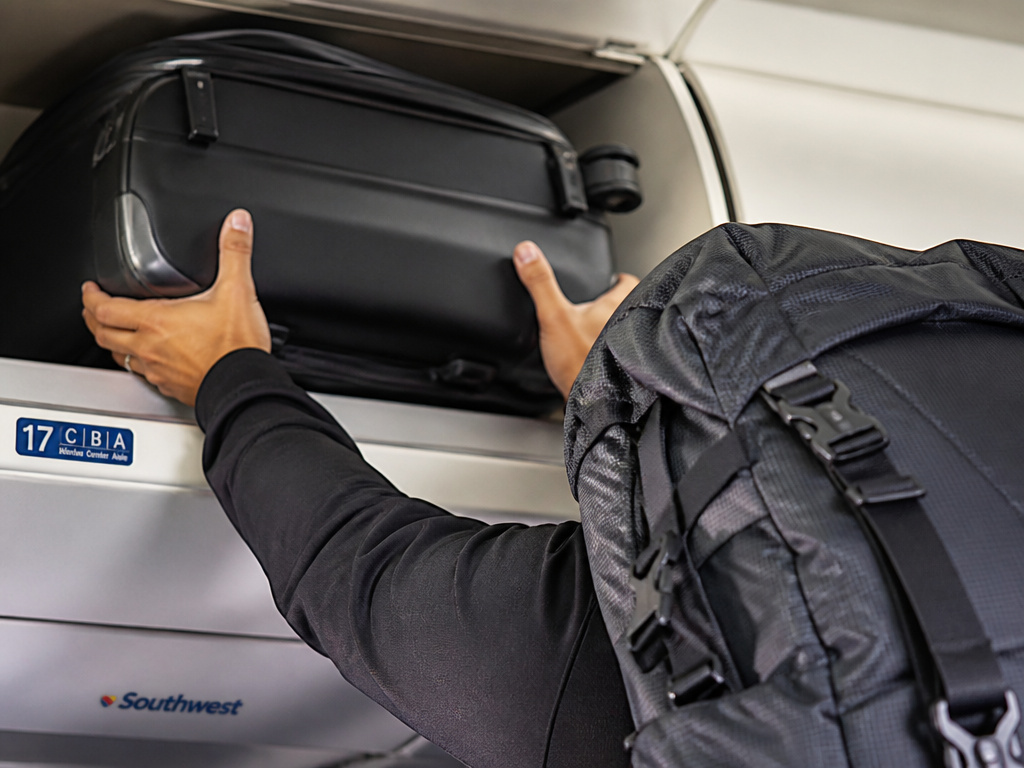
The consequence isn’t a policy change, it’s an enforcement shift. Gate agents are now more likely to monitor the size of roller bags and to call for gate-checking earlier in the boarding process. If you board late (in the B or C group) on a full flight, the overhead space above your seat may already be full. Your carry-on will be tagged and sent to the cargo hold, leaving you with just your backpack.
This makes your choice of backpack more critical than ever. It must be capable of holding your true essentials, medications, laptop, critical documents, in case your overhead bag gets gate-checked.
Exceptions and Edge Cases That Break the Mold
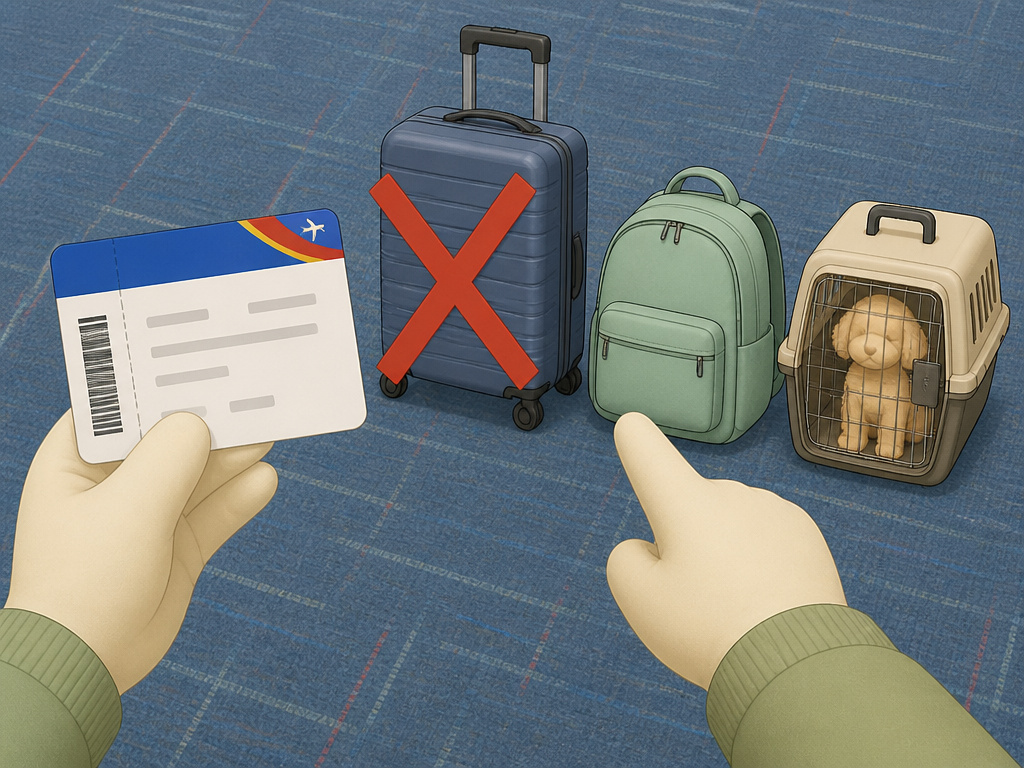
The standard two-bag rule has official carve-outs. Knowing them can save you from a last-minute gate argument.
Pet Carriers: A pet in an approved carrier counts as either your carry-on or your personal item. You cannot bring a pet carrier, a roller bag, and a backpack. You choose: pet carrier plus backpack, or pet carrier plus roller bag.
Fragile Oversized Items: The Southwest Contract of Carriage has a specific clause for items like blueprints, fishing poles, or musical instruments. If the item is fragile and protrudes from only one side of the sizing box, it may be allowed as a personal item if space permits. This is a discretionary exception, not a right. You must speak to the gate agent.
Assistive Devices: Mobility aids like canes, crutches, or CPAP machines do not count toward your two-bag limit. This is a federal regulation under the Air Carrier Access Act.
Infant Items: A diaper bag for a child traveling on your lap does not count as a personal item. Strollers and car seats can be checked for free at the gate.
Easy to miss: Partner airline itineraries. If your Southwest ticket includes a segment operated by another airline (like WestJet on an international connection), that carrier’s baggage rules apply for their segment. Your perfect Southwest-compliant backpack might be too large for a strict basic economy fare on the partner.
Packing Strategy: Making Two Bags Work Harder
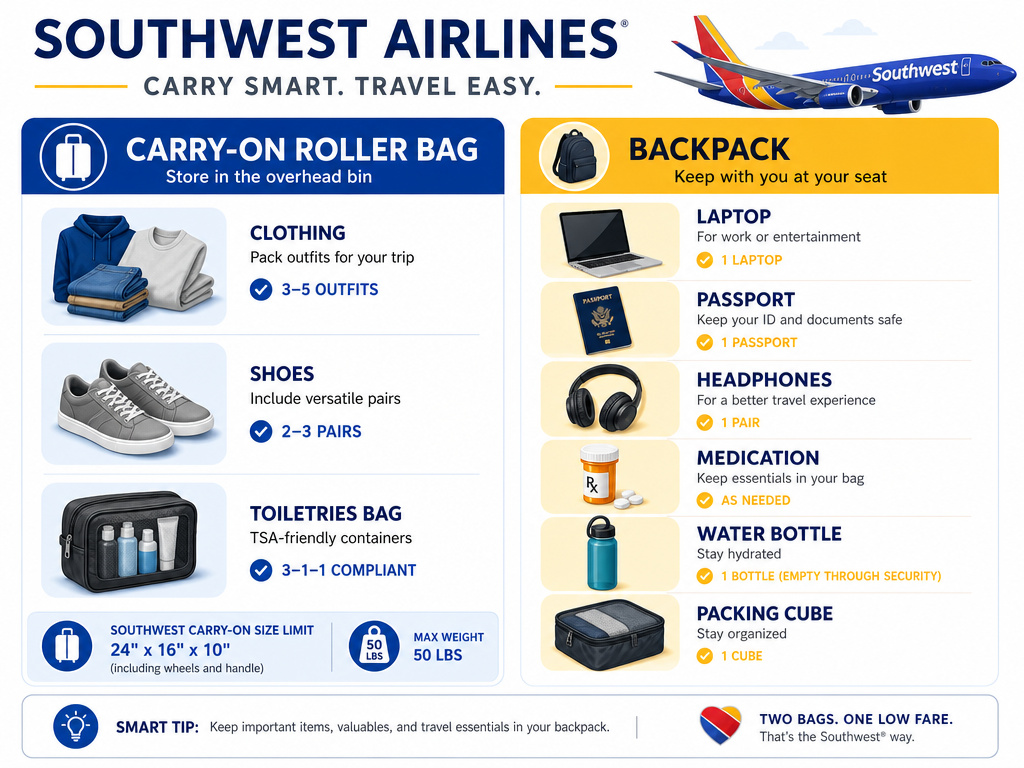
With the right approach, a carry-on and a backpack can handle a week-long trip. The key is understanding the role of each bag.
Your carry-on roller bag is for bulk: clothing, shoes, toiletries. Use packing cubes to compress and organize. Your backpack is for high-value, high-need items: technology, travel documents, medications, a change of clothes, and any items you’d absolutely need if your checked bag were lost.
Here’s a breakdown:
-
In the Carry-On:
- All clothing (rolled or cubed).
- Shoes.
- Toiletries bag (remember TSA 3-1-1 liquids rule).
- Bulkier, less valuable items.
-
In the Backpack:
- Laptop, tablet, chargers, cables.
- Passport, boarding passes, wallet.
- Prescription medications.
- Noise-canceling headphones.
- Light jacket or sweater.
- Reusable water bottle (empty until past security).
- A single packing cube with a spare shirt and underwear (gate-check insurance).
This split serves two purposes. First, it balances weight. Second, it ensures your most important assets are always at your feet, not five rows away in a full overhead bin.
Frequently Asked Questions
Does Southwest measure backpacks?
Southwest does not routinely measure backpacks at the gate if they appear reasonably sized. The test is visual and functional: does it fit under the seat? If a backpack is clearly oversized and you already have a roller bag, an agent may ask you to consolidate or gate-check one.
Can I use a duffel bag as my personal item?
Yes, if it fits under the seat. A soft-sided duffel bag is often a better choice than a structured backpack because it can be compressed into the underseat space. A 40-liter duffel will be too big; aim for a 30-liter or smaller bag.
What if my backpack is too big for under the seat?
If your backpack doesn’t fit under the seat, the flight attendant will instruct you to place it in the overhead bin. This consumes the space for your designated carry-on bag. Your roller bag would then need to be gate-checked.
Do Southwest Basic fares allow a carry-on and a backpack?
Yes. This is a major advantage of Southwest over other airlines. United, American, and Delta Basic Economy fares restrict overhead bin access. Southwest’s Basic fare includes the full carry-on and personal item allowance.
Can I bring a purse in addition to a backpack and carry-on?
No. A purse is considered a personal item. You are allowed one personal item total. You could bring a backpack or a purse, not both, unless you consolidate the purse inside the backpack before boarding.
Before You Go
The answer to “can I have a backpack and a carry-on on Southwest” is a definitive yes. That two-bag freedom is one of the airline’s last remaining differentiators. But the game has changed around that rule.
Your backpack is no longer just an extra bag. It’s your primary bag if the overhead bins run out of space, which happens more often now. Choose a soft, flexible backpack that genuinely fits under the seat. Pack it as if your roller bag might not make it to the cabin.
Know the exceptions, for pets, for fragile items, for medical devices. And always check your boarding position. If you’re in the C group, be mentally prepared to hand over your roller bag at the jet bridge. Your well-packed backpack will see you through.