7 Best Waterproof Boat Bags of 2026
This post contains affiliate links. As an Amazon Associate, we earn from qualifying purchases.
The HEETA 60L Waterproof Duffel Bag is the overall best choice for most boaters, combining reliable IPX7 waterproofing with versatile carry options and smart design. For those on a budget, the Unigear Floating Waterproof Dry Bag delivers solid performance and even floats, while the Haimont IPX7 60L Roll-Top Backpack offers excellent durability for rugged use.
Boat bags take a beating, spray, sun, sand, and constant loading and unloading. A bag that leaks or fails mid-trip can ruin gear fast, and sorting through marketing claims doesn’t help. I’ve researched the field, comparing specs and owner feedback to find models that actually hold up.
This guide cuts through the noise, focusing on real waterproof performance, durability, and practical features. I looked at materials, seam construction, closure systems, and how easy they are to carry, so you can pick one that fits your boating life.
Top 7 Waterproof Boat Bags in the Market
The Best Waterproof Boat Bags, Reviewed
HEETA 60L Waterproof Duffel Bag

Strengths
- 500D PVC durability
- Roll-top with air valve
- Converts to backpack
Trade-offs
- Contains DEHP
- Not for full submersion
- Mesh pocket not waterproof
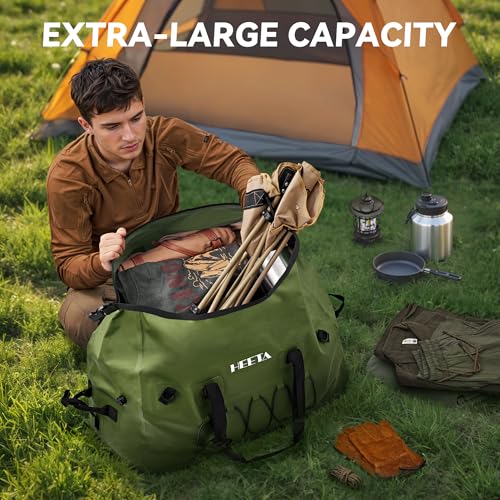
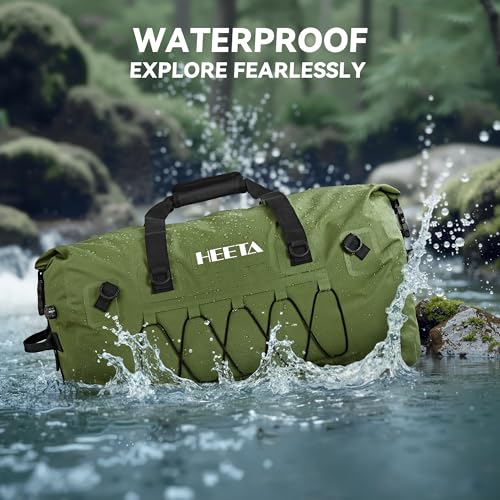
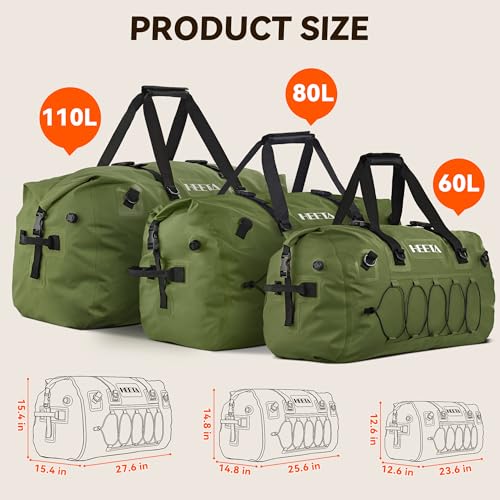
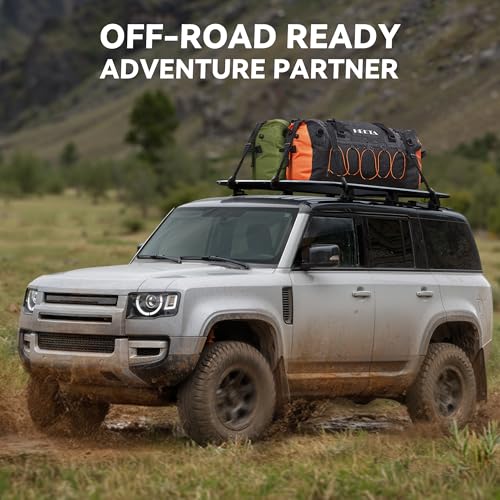
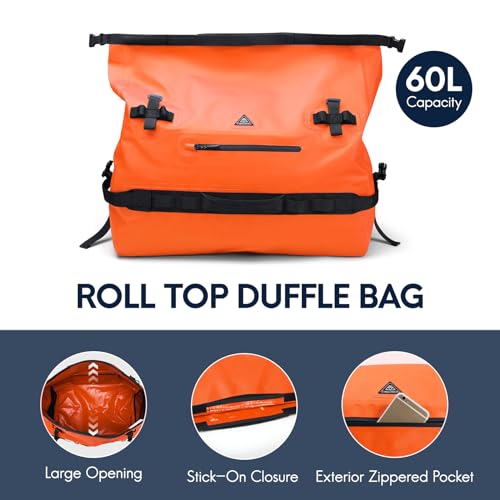
This 60L HEETA duffel hits a sweet spot between rugged build and real-world versatility. The 500D PVC stands up to scrapes from boats and pavement, and owners consistently report it keeping gear dry even during rainy kayaking trips and muddy off-road rides. The roll-top closure is reliable when done right, three tight folds and a secure buckle, and the quick-squeeze air valve is a smart touch for compressing bulky items like sleeping bags.
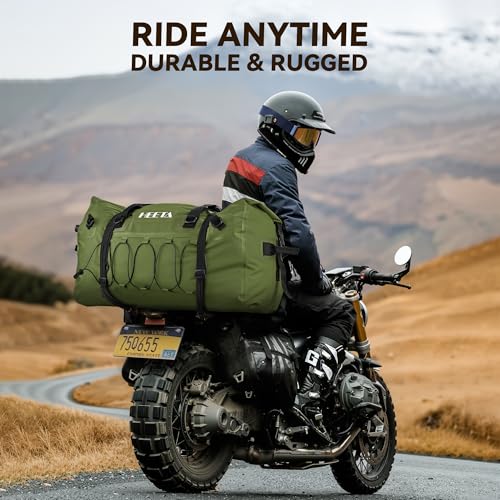
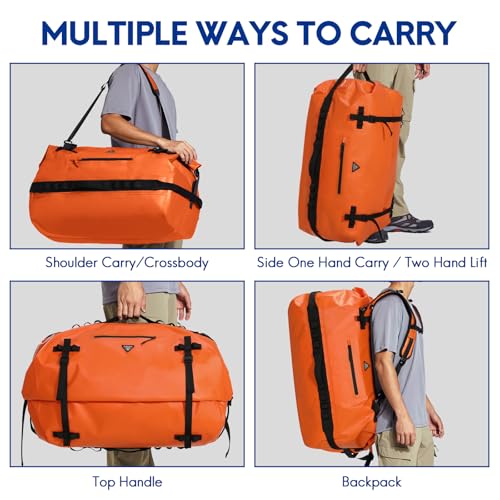
What sets it apart is the flexibility: it converts from duffel to backpack with removable padded straps, and those eight D-rings make it easy to lash down on canoes or motorcycles. The side mesh pocket is useful for wet gear, though it’s not fully sealed. Be aware: it carries a Prop 65 warning due to DEHP, a common plasticizer in PVC, fine for occasional use, but not ideal for long-term food or kid-contact storage.
Product photos
Lanedo 80L Heavy Duty Dry Bag

Strengths
- 80L high capacity
- Drainage outlets
- External zip pocket
Trade-offs
- Zip pocket not waterproof
- Velcro can trap sand
- Bulky when full
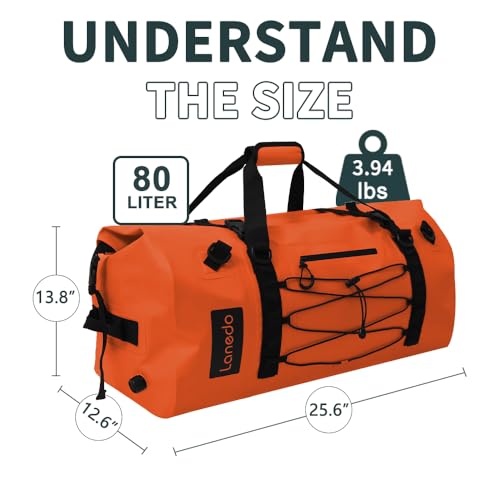
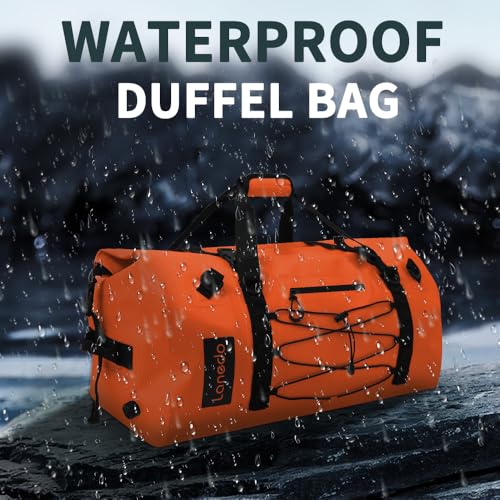
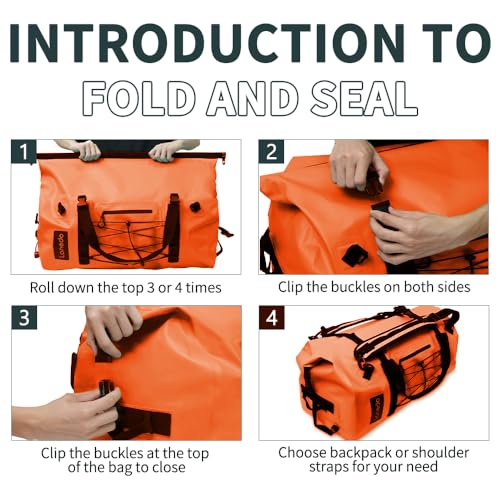
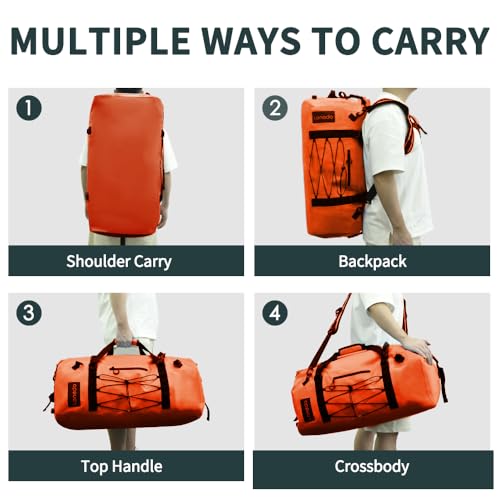
If you need to haul a lot, the Lanedo 80L is one of the few dry bags that delivers massive capacity without sacrificing structure. It’s built for wet gear, think soaked wetsuits, muddy boots, and post-swim towels, and the internal drainage outlets are a smart touch for letting water escape without opening the bag. The Velcro + roll-top combo speeds up access compared to triple-folding alone, though owners stress the need to seal it properly to maintain waterproofing.
The external zip pocket is convenient for keys or sunscreen, but it’s not fully waterproof, don’t rely on it in heavy rain. Compared to the HEETA 60L, this one trades a bit of ruggedness for volume and organization. It’s ideal when you’re packing for a family or multi-day trip and need one bag to hold it all.
Product photos

Haimont IPX7 60L Roll-Top Backpack

Strengths
- IPX7 submersion rated
- No DEHP in materials
- Interior mesh pockets
Trade-offs
- Stiff and bulky
- Minimal padding
- Heavier carry
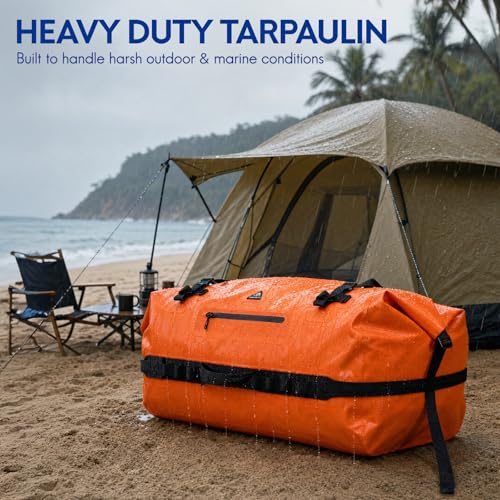
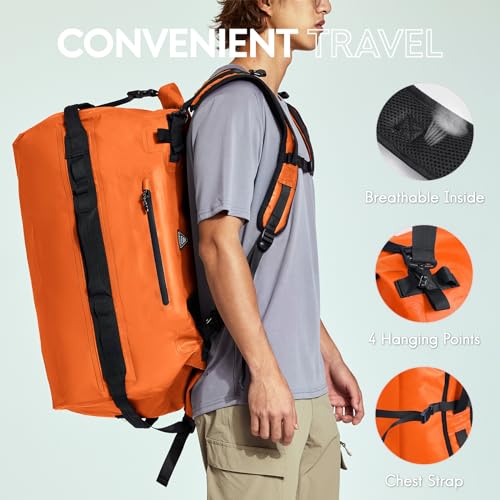
When waterproofing is essential, the Haimont stands out with its IPX7 rating, meaning it can survive 30 minutes submerged in 1 meter of water. That’s rare in this category and backed by high-frequency welded seams and 500D tarpaulin. For boaters or rafters who regularly flip or capsize, that level of protection matters. The 60L size is roomy, and the interior mesh pockets add organization most roll-tops lack.
It’s not the most comfortable to carry, padded straps help, but it’s still a stiff duffel, but it’s built for survival, not comfort. Compared to HEETA’s PVC bags, this one avoids DEHP, making it a cleaner choice for long-term or family use. Owners report confidence using it in downpours and whitewater, where staying dry isn’t just convenient, it’s critical.
Product photos

HEETA 40L Waterproof Backpack
Strengths
- Padded back and waist strap
- Front zip for quick access
- Durable 500D PVC
Trade-offs
- Contains DEHP
- Heavier than fabric packs
- Zip not waterproof
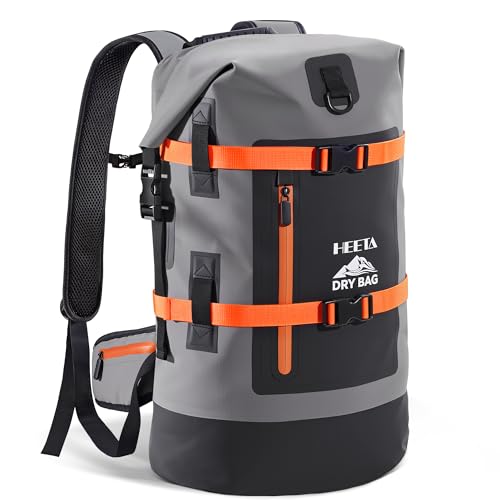
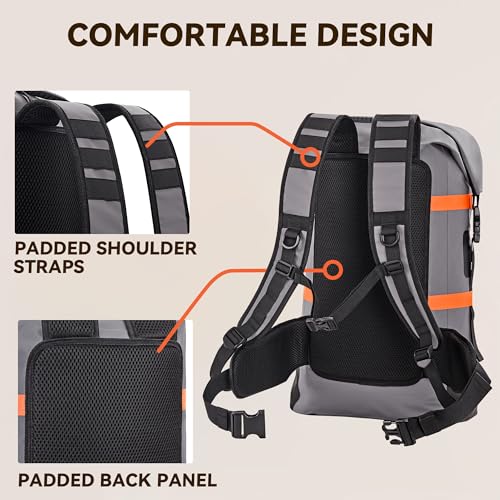
This 40L roll-top backpack stands out for comfort and daily usability. The padded back panel and waist strap make it feel more like a hiking pack than a typical dry bag, which matters when you’re carrying it through an airport or hiking to a remote launch point. The 500D PVC keeps gear dry in heavy rain, and the front zip pocket is a rare convenience, easy access to keys or a phone without breaking the main seal.
It’s not the lightest option, but the trade-off is durability and ergonomics. Compared to the larger 60L duffel, this one strikes a better balance for day trips or minimalist travelers. Owners note the waist pockets are small but handy for lip balm or earbuds. Again, the DEHP warning applies, so it’s not ideal for food storage.
Product photos


Unigear Floating Waterproof Dry Bag

Strengths
- Floats on water
- Welded seams
- Bright color
Trade-offs
- Small capacity
- Stiff when packed
- Strap not adjustable
The Unigear 2L dry bag earns its spot as the best floating option thanks to stiff 500D PVC and welded seams that keep it buoyant and leak-free. Toss it in the river during a paddle session and it stays afloat, making recovery easy, something heavier or denser bags can’t guarantee. The roll-top seal is simple and effective for small items, and the included waterproof phone case adds value for swimmers or kayakers who need hands-free access.
It’s not spacious, but that’s not the point. At 2L, it’s meant for phones, keys, and snacks, not full gear sets. Owners like the bright yellow color for visibility, and the single strap is comfortable enough for short carries. Compared to non-floating dry bags, this one’s a specialist, ideal when water retrieval is a real concern.
Product photos


Frelaxy Ultralight Dry Sack Pack
Strengths
- Color-coded sizing
- Ultralight construction
- Space-efficient base
Trade-offs
- Not submersible
- Less durable than PVC
- Small straps
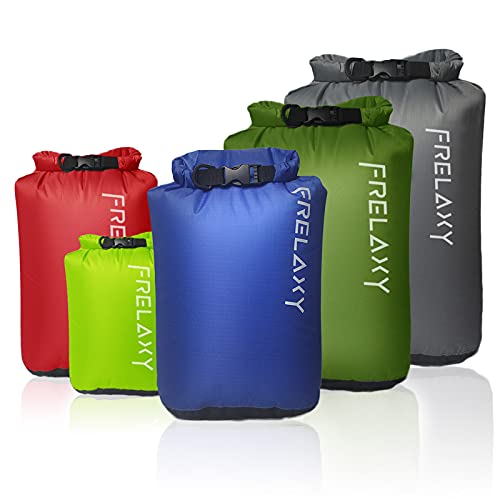
If you’re serious about organization on the water, this Frelaxy 5-pack is a no-brainer. The color-coded sizes, from 3L to 20L, make sorting gear fast: phone in the red 3L, snacks in yellow 10L, extra clothes in blue 20L. Made from 210T polyester with taped seams, these sacks strike a rare balance: ultralight (the 20L weighs just 60g) yet tough enough to resist tears during rough handling on kayaks or in backpacks.
Owners praise how compact they roll when empty, and the rectangular base helps them stack efficiently in larger bags. The roll-top seal holds up well in splashes and downpours, but like most dry sacks, they’re not meant for full submersion. Compared to bulkier PVC options, these are the smarter pick when weight and packability matter most.
Product photos


HEETA 5-Pack Clear Waterproof Pouches

Strengths
- Clear for visibility
- Touchscreen compatible
- Multiple seal layers
Trade-offs
- Contains DEHP
- Requires careful sealing
- Not for long submersion
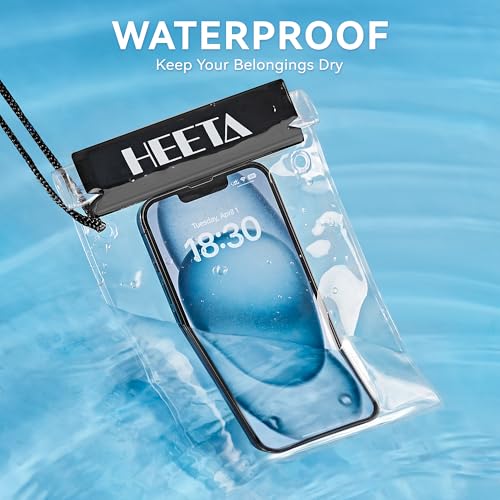
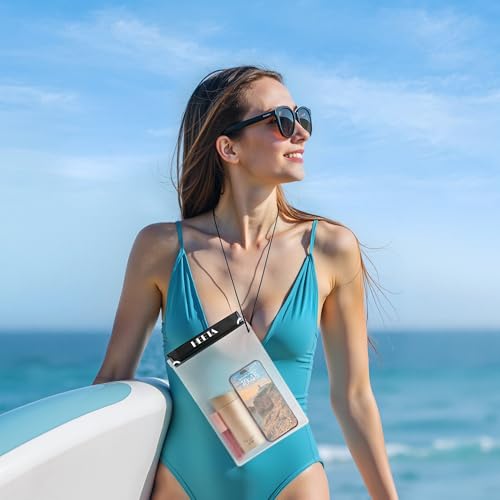
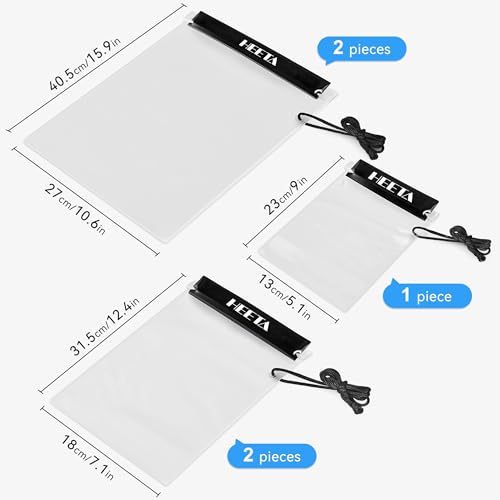
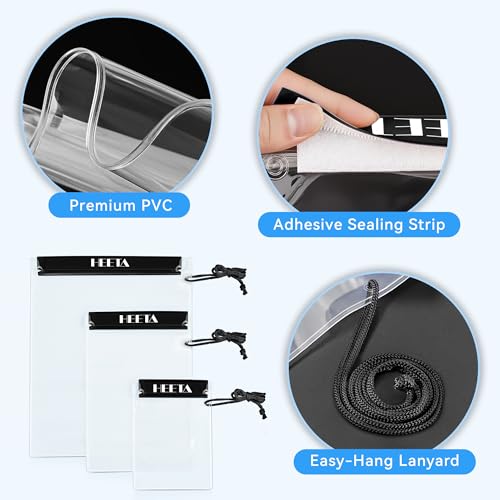
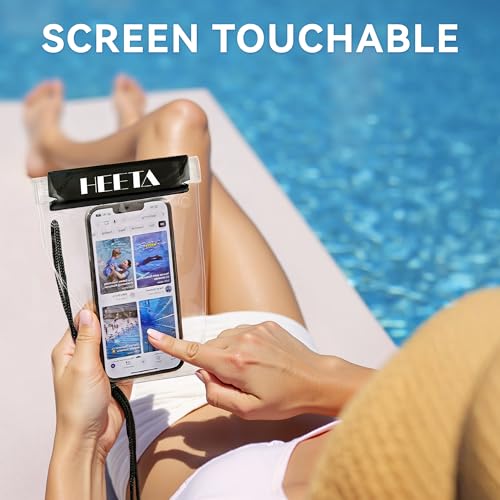
These clear PVC pouches are perfect for protecting small, critical items, phones, wallets, maps, passports, without guessing what’s inside. The matte transparency lets you use touchscreens without opening the bag, a real win on the water. With three sizes and a lanyard for each, you can keep essentials visible and accessible on a life vest, backpack, or boat console.
Owners confirm the triple-seal system, fold, strip, and Velcro, keeps contents dry in rain and splashes, though the warning about DEHP in PVC is worth noting. The need to test them first (as advised) is smart: some users report minor seal inconsistencies if not folded carefully. Still, for the price and function, they outperform generic zip-lock-style bags.
Product photos
How We Picked These waterproof boat bags
Rather than a hands-on lab test, my research focused on a detailed comparison of published specifications and features across numerous waterproof boat bags. I weighed owner reviews from major retailers alongside expert opinions found in boating and outdoor recreation publications. This allowed me to rank options against criteria important to boaters, like actual waterproof performance, durability, and practical carrying features.
For this category, the most heavily weighted factors were waterproof integrity and long-term durability. A bag can have many features, but if it doesn’t reliably keep contents dry – especially in challenging conditions – it fails the primary test. Equally important is construction quality; boat environments are tough on gear, so robust materials and reinforced stress points are essential for longevity.
Published specs reliably indicate bag capacity and material thickness. However, genuine waterproof performance and real-world durability are best assessed through owner feedback. I paid close attention to comments regarding seam failures, zipper issues, and how well the bags held up after repeated use. Knowing how to properly clean a duffel bag, and generally taking good care for fabric duffels will also improve longevity.
How To Pick The Right waterproof boat bags
Choosing the right waterproof boat bag depends heavily on how you plan to use it, but generally, prioritizing durable materials and a reliable closure system will pay off.
A quality waterproof boat bag should feature robust, waterproof materials like PVC or tarpaulin, with welded or taped seams to prevent leaks. Capacity is important, but consider how the bag is carried (backpack, shoulder strap, handles) and whether it needs to float. Look for reinforced stress points and a closure that’s easy to operate even with cold or wet hands.
Capacity and Trip Length
The size of the bag you choose should directly correlate with the length of your trips and the amount of gear you typically bring. Don’t overestimate – a half-empty 80L bag is just as cumbersome as a fully packed one. I often see people buying excessively large bags “just in case,” and then struggling to manage them. For day trips or short overnight excursions, a 40L to 60L bag is often sufficient. However, if you’re planning extended voyages or need to carry bulky items like fishing waders or water skis, an 80L or larger option is more practical. Consider if you’ll be traveling with others and could consolidate gear into fewer, larger bags.
Closure System & Waterproofing
A roll-top closure is the most common and effective way to achieve a waterproof seal. However, not all roll-tops are created equal. Look for bags with multiple buckles or a robust Velcro system to secure the closure. Beyond the closure, pay attention to the materials. 500D PVC is a good baseline, but heavier-duty tarpaulin offers better abrasion resistance. Seam construction is critical; welded seams are superior to stitched seams, even if those stitched seams are taped. It’s also good practice to test the bag’s waterproofing before relying on it for valuable electronics.
- A simple test involves filling the bag with paper towels, sealing it, and submerging it in water for several hours.
- Check for any signs of moisture penetration.
- If you’re concerned about complete submersion, look for bags specifically designed to float, like the Unigear Floating Waterproof Dry Bag, which offers added peace of mind.
Comfort and Carrying Options
Don’t underestimate the importance of how comfortably you can carry the bag. A large, fully loaded waterproof bag can quickly become a burden if it’s not designed with ergonomics in mind. Backpack-style straps are ideal for longer distances, distributing the weight more evenly. Padded shoulder straps and a waist belt add significant comfort. Detachable straps offer versatility, allowing you to switch between backpack, shoulder bag, or grab-and-go carry. If you’re already invested in a good tote, remember that proper LL Bean Boat and Tote care will extend its lifespan.
A well-designed waterproof boat bag should feel secure and comfortable, even when fully loaded. Don’t sacrifice comfort for capacity.
Ultimately, the best waterproof boat bag is the one that best suits your individual needs and activities. If you’re looking for a variety of options, check out our guide to the best marine-grade dry bags for more details.
Waterproof Boat Bags Compared
Here’s a comparison of key specifications for popular waterproof boat bags to help you choose the right one for your needs.
| Product Name | Capacity | Material | Waterproof Level | Carry Options | Features |
|---|---|---|---|---|---|
| HEETA 60L Waterproof Duffel Bag | 60L/80L | 500D PVC | IPX7 | Backpack, Handheld | Mesh Pocket, Air Valve |
| Lanedo 80L Heavy Duty Dry Bag | 80L | High-Strength PVC | IPX7 | Shoulder, Crossbody | Pockets, Drainage |
| Haimont IPX7 60L Roll-Top Backpack | 60L/90L | 500D Tarpaulin | IPX7 | Backpack, Handheld | Mesh Pockets |
| HEETA 40L Waterproof Backpack | 40L | 500D PVC | IPX7 | Backpack | Front Zip Pocket |
| Unigear Floating Dry Bag | 2L-40L | 500D PVC | IPX7 | Shoulder | Floating, D-rings |
| Frelaxy Ultralight Dry Sack Pack | 3L-20L | 210T Polyester | Water-Resistant | N/A | Color-Coded, D-ring |
| HEETA 5-Pack Clear Pouches | Varies | PVC | Water-Resistant | Lanyard | Multiple Seals |
Frequently Asked Questions
What waterproof rating should I look for in a boat bag?
IPX7 is the standard you should aim for. This rating means the bag can withstand immersion in water up to one meter for 30 minutes without allowing water to enter, offering reliable protection for your gear. Lower ratings may only offer splash resistance.
Are roll-top closures truly waterproof, or are they prone to leaking?
Roll-top closures are generally very effective, but proper sealing is essential. Ensure the bag has multiple buckles or a strong Velcro closure to maintain a tight seal and prevent water from entering during use.
What material is the most durable for a waterproof boat bag?
While 500D PVC is a good starting point, heavier-duty tarpaulin offers superior abrasion resistance and longevity. Boat environments are harsh, so investing in a bag made with robust materials will pay off in the long run.
How can I test a waterproof bag’s seal before taking it on a trip?
A simple submersion test is effective. Fill the bag with paper towels, seal it according to the manufacturer’s instructions, and submerge it in water for several hours to check for any signs of moisture penetration.
Are there waterproof boat bags that can float if dropped overboard?
Yes, some bags are specifically designed to float. The Unigear Floating Dry Bag is a popular option that provides added security and peace of mind, especially if you’re prone to accidental drops. For more options, explore our guide to best durable boat bags.
The Bottom Line
Buying a waterproof boat bag often comes down to balancing how much protection you absolutely require against how much you want to spend – and how you’ll be carrying it. For the best overall combination of durability, waterproof performance, and practical features, I recommend the HEETA 60L Waterproof Duffel Bag. It hits a sweet spot in terms of capacity and price, making it a solid choice for a wide range of boating activities.
If you’re on a tighter budget, the Unigear Floating Dry Bag is an excellent option, particularly in the smaller sizes. For those who prioritize carrying comfort and versatility, the Haimont IPX7 60L Roll-Top Backpack offers the benefits of a backpack-style design without sacrificing waterproof protection. And for short trips or organizing smaller items, the HEETA 5-Pack Clear Pouches are a handy addition, especially when you need to quickly identify contents.
Ultimately, the most important thing isn’t a specific feature or price point, but ensuring the bag is made from robust materials and has a reliably waterproof closure. Taking the time to learn about proper Vera Bradley duffel cleaning will also contribute to the long-term performance of your boat bag. A well-maintained, quality bag will protect your gear for years to come.