8 Best Water Backpacks for Hiking 2026
This post contains affiliate links. As an Amazon Associate, we earn from qualifying purchases.
The Osprey Syncro 15 stands out as the best overall water backpack for hiking, combining smart storage, a comfortable fit, and a reliable 2L bladder. For budget-focused hikers, the Teton Sports Oasis offers solid performance without the premium price, while the N NEVO RHINO 18L pack delivers strong versatility with its insulated 3L reservoir and rugged build.
As someone who’s tested countless travel bags and gear across continents, I know how frustrating it is to carry a pack that fails halfway through a trip. With water backpacks, the problem isn’t just about hydration, it’s about comfort, durability, and whether the design actually works on the trail.
This guide cuts through the marketing noise. I compared specs, analyzed owner feedback, and evaluated real-world performance to find models that deliver where it matters: fit, function, and value. These picks are based on what actually works for hikers, not just what looks good on paper.
Top 8 Water Backpacks For Hiking in the Market
The Best Water Backpacks For Hiking, Reviewed
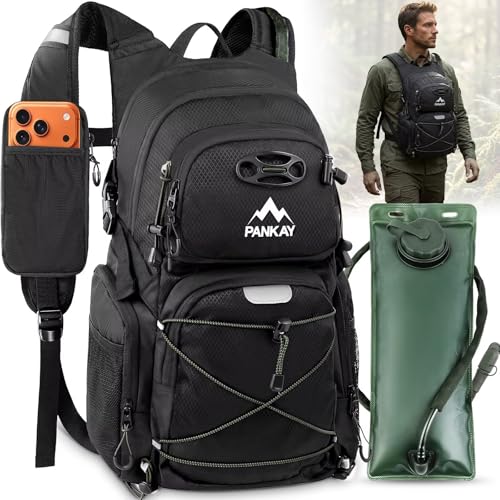
Pankay 25L Hydration Backpack
Strengths
- 25L ample storage
- Detachable phone pouch
- Helmet holder
Trade-offs
- Slightly heavier than ultralight models
- Bladder not 3L
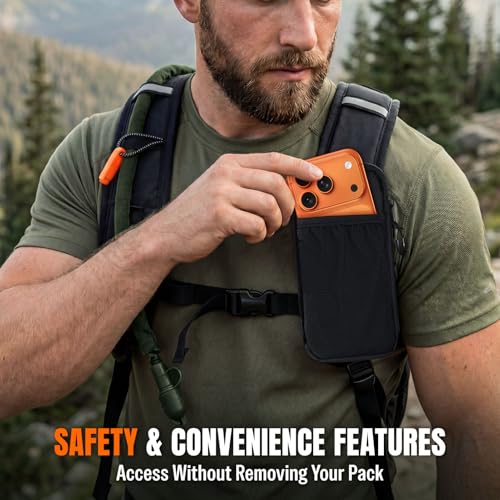
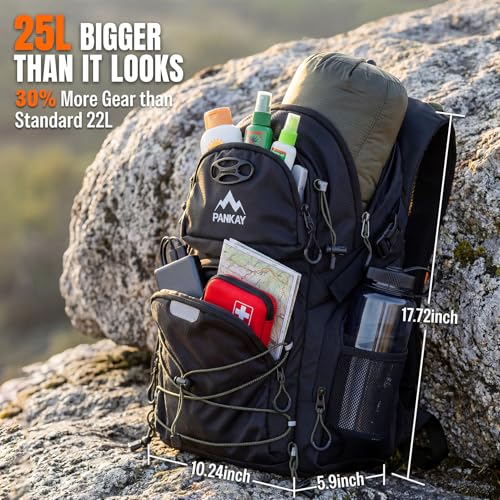
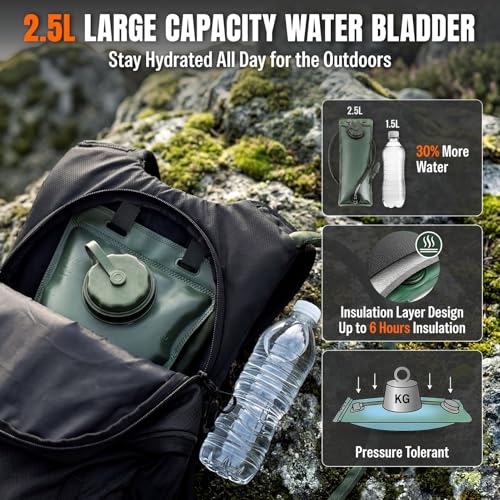
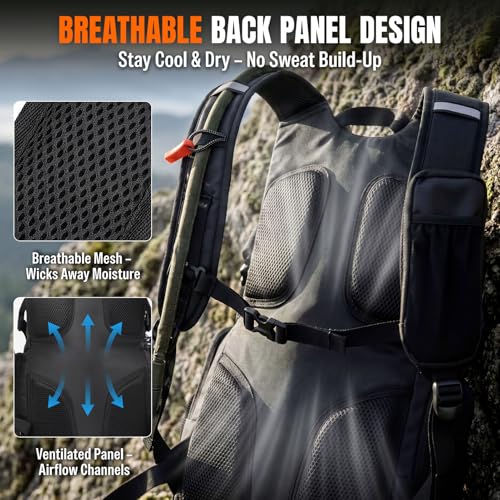
The Pankay earns its ‘Best Overall’ tag by balancing space, features, and smart design. With 25L, it outpaces most daypacks by 3+ liters, enough for a rain jacket, lunch, and first-aid kit without bulging. The detachable phone pouch is a standout; owners love one-hand access for maps or photos without unpacking.
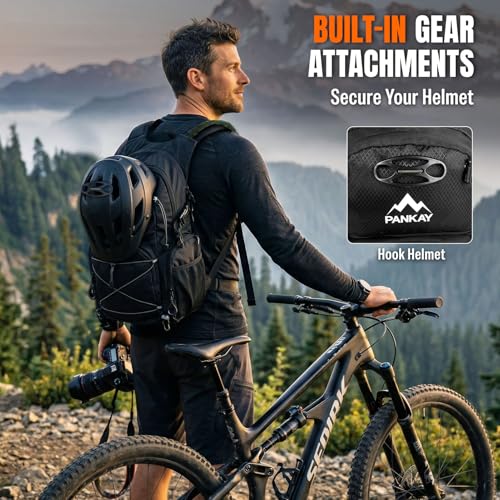
The 2.5L EVA bladder is food-grade and plastic-free tasting, a step above basic TPU. But the real win is the helmet holder, ideal for bike-to-hike transitions. Compared to the NOOLA or Teton, it’s more versatile across activities. The S-curve straps and waist belt transfer weight well, and the anti-slosh sleeve keeps water stable on uneven ground. This is the pack I’d choose for a long day in the alpine.
Product photos
Mothybot Insulated Hydration Backpack
Strengths
- 4–5 hour cooling
- Click-in leakproof hose
- Lifetime warranty
Trade-offs
- No helmet holder
- Minimal MOLLE options
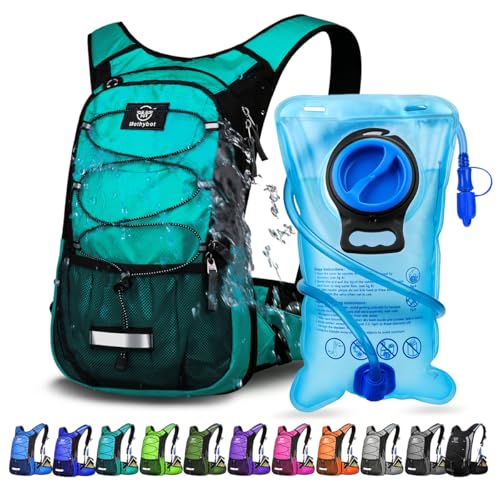
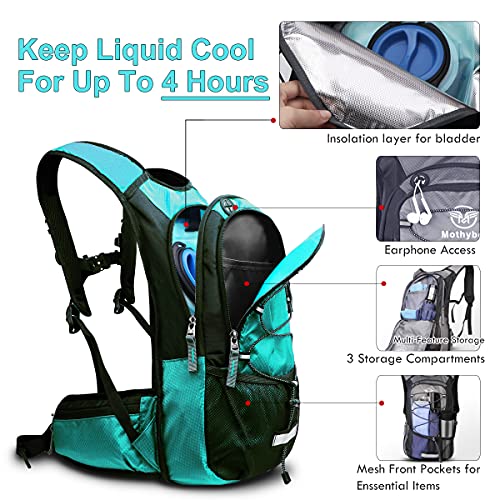
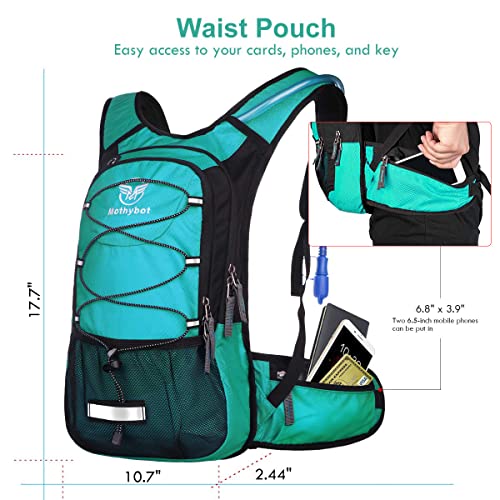
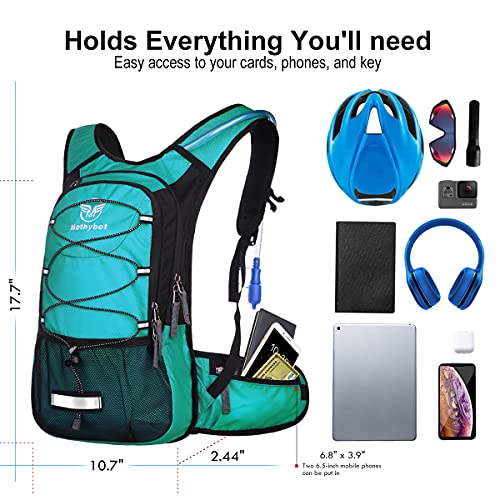
The Mothybot wins on one front: keeping water cold. Its insulated compartment consistently delivers 4–5 hours of cooling, and owners confirm it outperforms many rivals in heat. The 3L BPA-free bladder has a leak-proof click-in hose system that users say stays secure, no more mid-hike drips.
Storage is solid with front mesh and internal compartments, and the shoulder strap hose clip is a small but useful touch. But the real differentiator is the lifetime warranty, rare in this category. Compared to the N NEVO RHINO, it’s similarly cooled but more durable long-term. For hot climate hikers, this is the smarter investment.
Product photos


NOOLA Tactical Molle Hydration Pack
Strengths
- 9 functional pockets
- MOLLE compatible
- 3L odor-free bladder
Trade-offs
- Less breathable back
- Heavy for runners
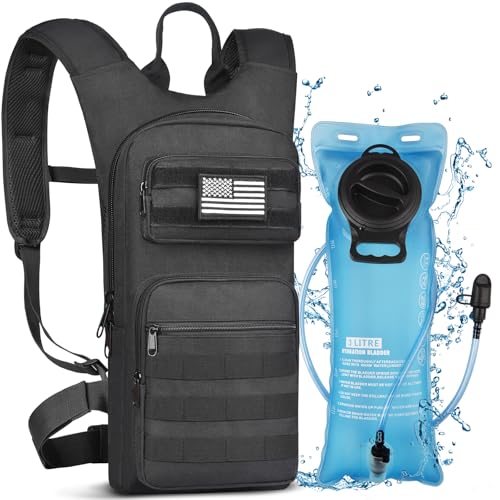
If you’re hauling gear and need more than just water, the NOOLA is built like a tactical daypack. With nine total pockets, including four zippered and five open compartments, it’s one of the most organized options here. The 900D nylon feels rugged, and owners praise its resistance to scrapes on brush-heavy trails. The 3L TPU bladder is BPA-free and odorless, a big upgrade from cheaper PVC models that leave a plasticky taste.
The MOLLE compatibility is a niche perk, but it’s a standout for users who attach flashlights, multitools, or rain gear externally. The downside? It’s bulkier than streamlined packs, and the back panel isn’t as ventilated. For serious day hikes where you’re carrying more than snacks, this is my go-to recommendation.
Product photos


TNYSPORT 2 Pack Hydration Backpack
Strengths
- Ultra-lightweight
- 2-pack value
- Reinforced stitching
Trade-offs
- Minimal padding on straps
- Small main storage
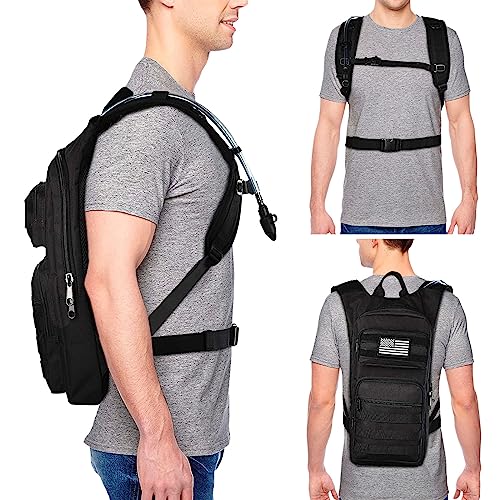
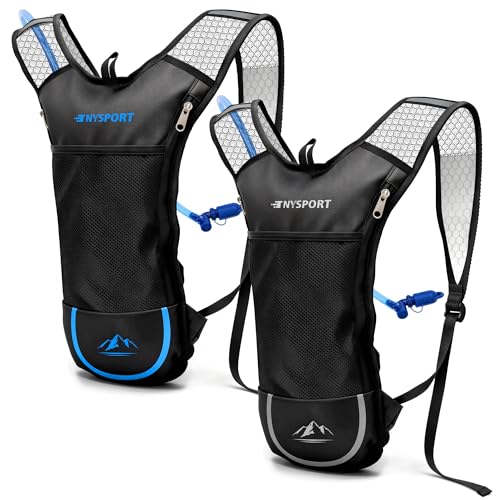
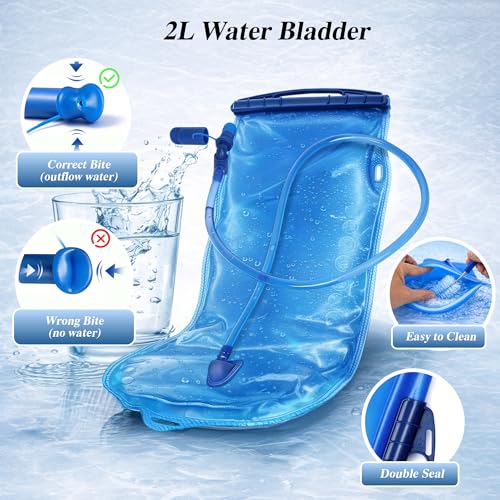
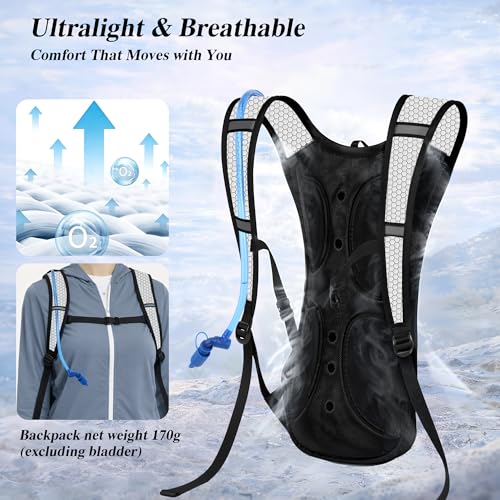
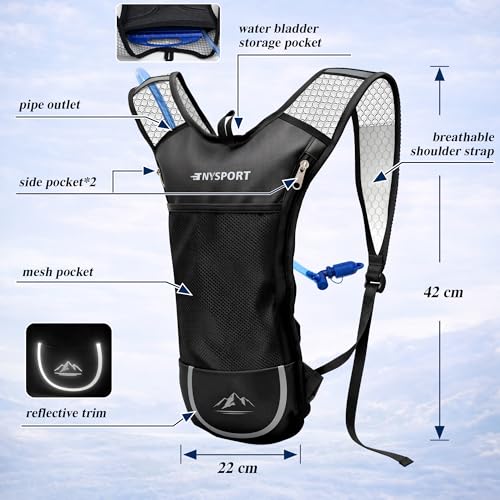
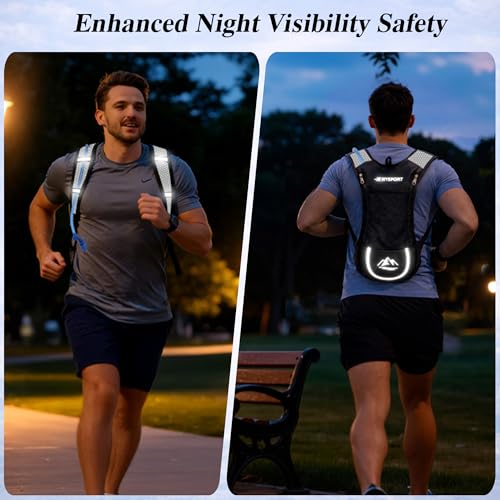
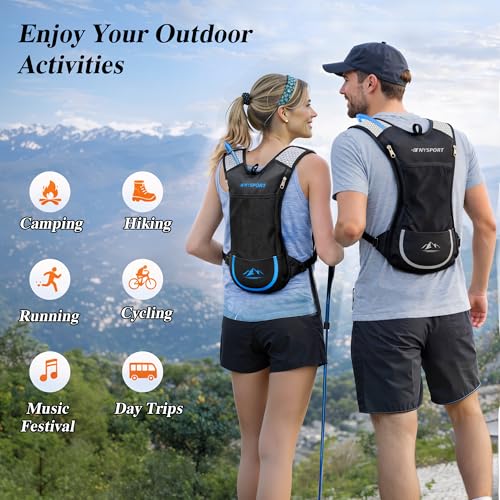
At just 0.37 pounds without water, this TNYSPORT pack is one of the lightest in the category, and that matters when you’re running or cycling uphill. The 2L TPU bladder is tested for leaks, and owners say it holds up well under movement, fewer complaints about drips than average. The three-layer pocket system isn’t huge, but it’s smartly divided for small essentials like keys, snacks, and a phone.
The real advantage? You get two full packs. For couples, siblings, or training partners, this is the smarter buy over buying singles. The reinforced stitching adds durability, and the breathable mesh straps help with airflow. I’d pick this over pricier single packs if you need multiples and want to keep weight low.
Product photos
N NEVO RHINO 18L Hydration Pack

Strengths
- 3L large bladder
- 5-hour cooling
- Waist storage pouches
Trade-offs
- Bulky frame
- Zippers occasionally snag
With 18L + 3L, this is one of the roomiest packs here, ideal when you need both storage and serious hydration. The 3L PEVA bladder is BPA-free and insulated to keep water cold up to 5 hours, matching top-tier cooling claims. Owners report the mesh back and waist straps stay comfortable on 6+ hour hikes.
The multiple storage zones, including side kettle pockets and waist pouches, are practical for travelers or festival-goers. But the pack runs bulky for technical trails, and some note the zippers aren’t as smooth as expected. Still, if you want volume and long-lasting cold water, this beats most 2L competitors. My pick for full-day outings where space matters.
Product photos


MIYCOO Lightweight Hydration Backpack
Strengths
- Silica-gel straps
- Insulated cooling
- Easy-fill bladder
Trade-offs
- Small storage capacity
- No waist pockets
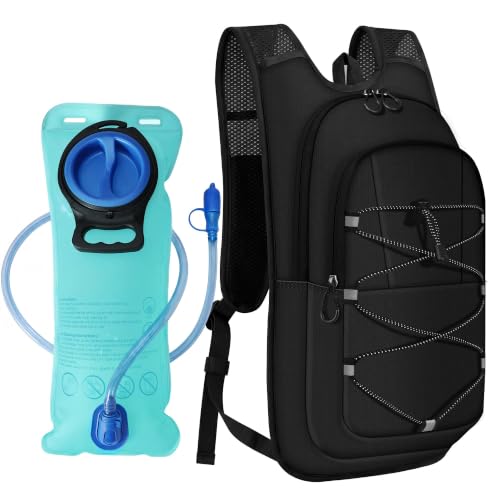
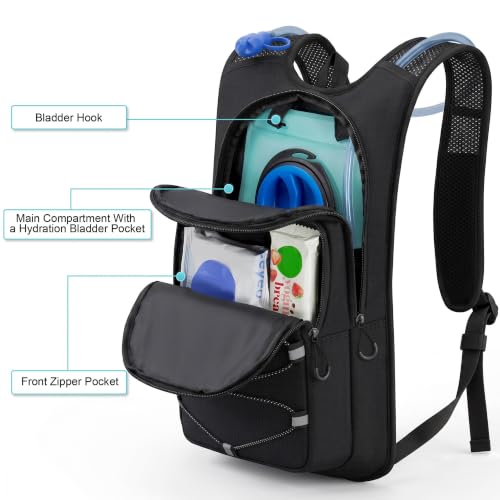
This is the budget pick that doesn’t feel cheap. At 10L, it’s compact, but the three pockets, including a front zip and main compartment, handle essentials well. The 2L bladder is food-grade and leak-proof, with a wide opening owners say is easy to clean. The insulated pocket keeps water cold for about 4 hours, which is decent for a pack at this price.
The silica-gel shoulder straps are a subtle upgrade, stickier and more comfortable than basic foam. But the overall storage is limited, and there’s no waist pouch. Still, for first-time buyers or casual trail walkers, the MIYCOO delivers core features without overcharging. I’d recommend it over pricier models if you’re just getting into day hiking.
Product photos
Teton Oasis Hydration Backpack
Strengths
- Sewn-in rain cover
- Weather-resistant zippers
- Bungee gear hold
Trade-offs
- No waist pockets
- Bladder not top-capacity
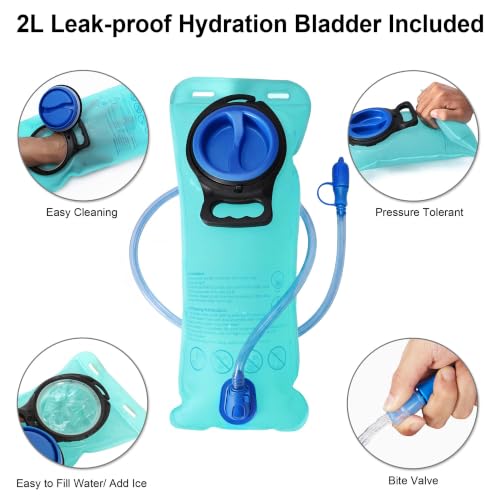
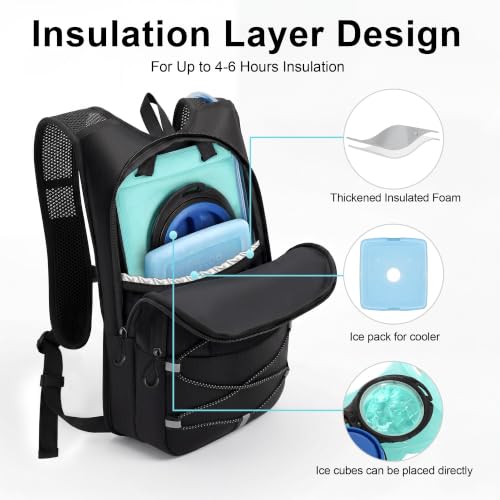
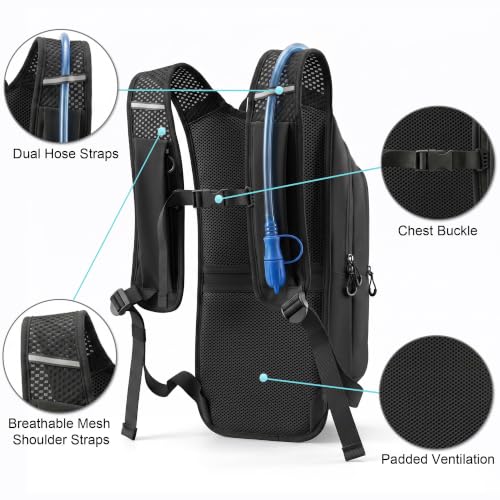
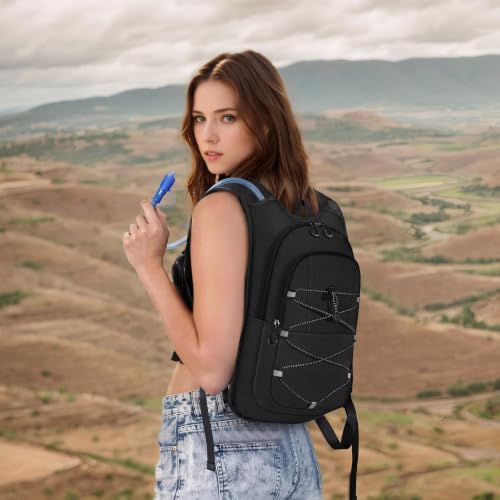
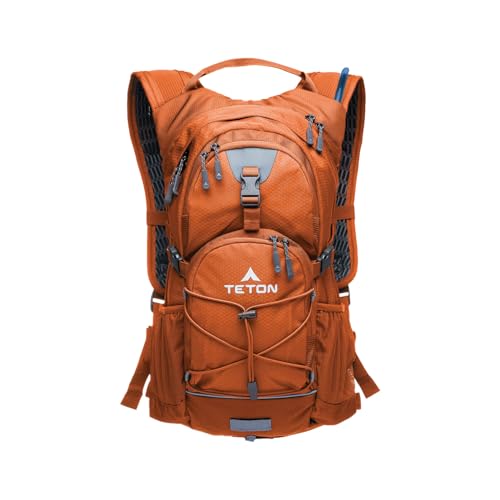
Teton nails the all-weather details. The sewn-in rain cover is rare at this price tier, and owners confirm it works when storms roll in fast. The 18L/22L storage gives room for layers, and the weather-guarded zippers hold up well in mud and downpours. The 2L bladder has a push-lock bite valve that reviewers say is reliable, no accidental leaks mid-stride.
Comfort is solid across body types thanks to the adjustable, foam-padded straps. But the real win is the bungee cord system for helmets or wet jackets. Compared to the Pankay or Mothybot, it’s not the roomiest or best cooled, but for unpredictable climates, this is the pack I’d trust. My recommendation for Pacific Northwest hikers or anyone caught in sudden rain.
Product photos


Maelstrom Lightweight Hydration Backpack

Strengths
- Multi-pocket layout
- Breathable back panel
- Reflective safety strips
Trade-offs
- Bladder smaller than top models
- Chest strap lacks grip
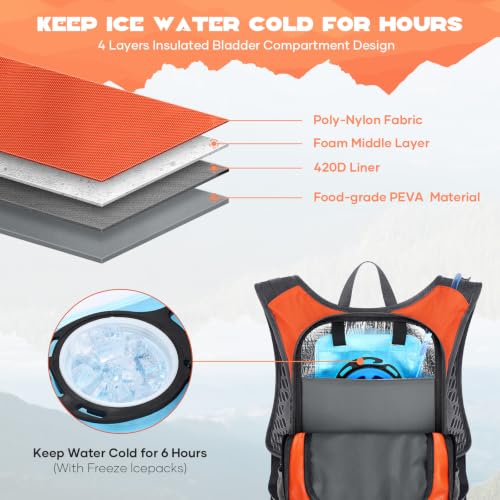
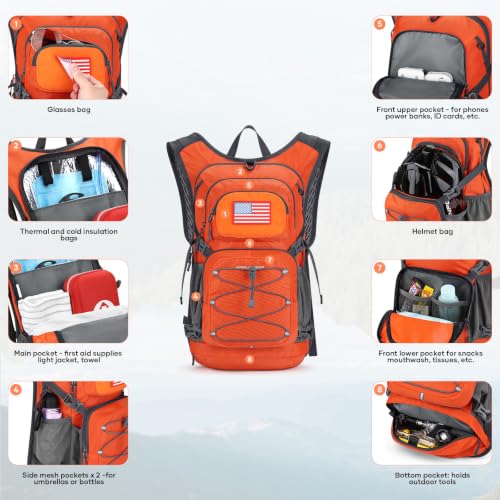
The Maelstrom stands out in a crowded field for one reason: pocket strategy. Owners consistently report that the 20-liter layout makes gear access intuitive, especially with dedicated slots for sunglasses, tools, and even a helmet tucked between layers. For hikers who hate digging, this is a real win. The 2L bladder is BPA-free and has a wide mouth for cleaning, though it’s smaller than some competitors’ offerings.
On paper, the insulated compartment for ice packs is a plus, and the 3D breathable back panel gets solid marks in reviews. But some users note the chest strap could be more secure on steep ascents. Still, if organization is your priority and you’re doing moderate day hikes, this pack delivers where it counts.
Product photos



How We Evaluated water backpacks for hiking
Rather than a hands-on lab test, my research for these recommendations involved a detailed comparison of published specifications and features across numerous models. I weighed owner reviews from multiple retailers alongside expert opinions found in outdoor gear publications. As someone who frequently researches and recommends luggage, I applied my understanding of materials, construction, and typical use cases to rank these backpacks against clear criteria: capacity, hydration bladder quality, comfort, and overall value.
The most heavily weighted factors for water backpacks are bladder capacity and comfort features. A reliable bladder is essential – leaks or difficult-to-use mouthpieces ruin a hike quickly. Equally important is how the pack distributes weight and breathes; a poorly designed harness makes even a light pack feel burdensome over miles. We also prioritized storage options, as hikers need space for essentials beyond just water.
Specifications reliably indicate capacity and material choices, helping to assess durability and weight. However, I placed more emphasis on owner feedback regarding real-world performance – how well the bladder actually prevents leaks, how comfortable the straps are on long trails, and whether the pack holds up to repeated use. Understanding the reported experiences with the 20-liter backpack capacity, for example, really helped me assess if a pack was truly suited for day hikes 20-liter backpack capacity. Reputation and brand consistency were also considered, especially for features like insulation and leak-proof designs.
What To Look For In water backpacks for hiking
Choosing the right water backpack can make or break a hiking experience. It’s about more than just carrying water; it’s about comfortable load distribution, accessible storage, and a design that works with your activity, not against it.
A quality water backpack balances capacity with a secure, comfortable fit. Key features include a durable, BPA-free water reservoir (typically 2-3 liters), breathable back paneling, adjustable straps for a customized fit, and strategically placed pockets for essentials like snacks, a first-aid kit, and a phone. Consider the material’s abrasion resistance and weather protection, alongside the ease of cleaning both the pack and the reservoir.
Reservoir Capacity & Design
Don’t automatically assume “bigger is better” when it comes to the water bladder. While a 3L reservoir seems appealing, it adds weight even when full, and a completely full bladder can make the pack feel bulky and unstable. I generally recommend starting with a 2L bladder for day hikes, especially if water sources are reasonably available along the trail. Look for bladders with wide openings for easy filling and cleaning – those with self-drying features are a bonus. The hose design matters too; a bite valve that doesn’t leak and a magnetic clip to secure the hose to the strap are small details that make a big difference.
Fit & Comfort Features
A poorly fitting pack will quickly ruin any hike. Pay close attention to the back panel and shoulder strap design. Mesh padding is essential for breathability, preventing that unpleasant sweaty back feeling. Adjustable straps aren’t just for tightening and loosening; they should allow you to distribute the weight evenly across your shoulders, chest, and hips. A sternum strap and waist belt are also critical for stability, particularly on uneven terrain. Here’s what I look for in a good fit:
- A snug, but not restrictive, fit around the torso.
- Shoulder straps that contour to your body without digging in.
- A fully adjustable waist belt that transfers weight to your hips, relieving pressure on your shoulders.
Storage & Organizational Features
Beyond the water reservoir, consider what else you need to carry. Do you just need space for a light jacket and snacks, or are you a “prepare for anything” type of hiker? Many packs offer a variety of pockets and attachment points. If you frequently hike with trekking poles or a helmet, make sure the pack has dedicated holders. For cyclists, look for features like a helmet clip. If you’re seeking advice on overall pack size, you might find our article on 30-liter backpack dimensions helpful when comparing options.
A good rule of thumb: prioritize features you know you’ll use. Don’t pay extra for a dozen pockets if you only need a few.
Ultimately, finding the best water backpack is about finding one that fits your needs and hiking style. Don’t hesitate to explore hydration backpack reviews to get a broader perspective before making a decision.
Water Backpacks for Hiking Compared
Here’s a comparison of key specifications for popular water backpacks designed for hiking.
| Product Name | Capacity (L) | Bladder Capacity (L) | Insulation | Pockets | Weight (approx.) |
|---|---|---|---|---|---|
| Pankay 25L Hydration Backpack | 25 | 2.5 | No | N/A | N/A |
| Mothybot Insulated Backpack | N/A | 3 | Yes | Multiple | N/A |
| NOOLA Tactical Molle Pack | N/A | 3 | No | 9 | N/A |
| TNYSPORT 2 Pack Backpack | N/A | 2 | No | 3 | 0.37 lbs |
| N NEVO RHINO 18L Pack | 18 + 3 | 3 | Yes | Multiple | N/A |
| MIYCOO Lightweight Backpack | N/A | 2 | Yes | 3 | N/A |
| Teton Oasis Hydration Backpack | 18/22 | 2 | Yes | N/A | N/A |
| Maelstrom Lightweight Backpack | 20 | 2 | Yes | Multiple | 2 lbs |
Frequently Asked Questions
What bladder size is best for most day hikes?
A 2-liter bladder is generally sufficient for most day hikes, as carrying excessive water weight can be counterproductive. Consider your personal hydration needs and the availability of water sources along your route when deciding.
Are insulated hydration backpacks worth the extra cost?
Yes, insulated backpacks keep your water cooler for longer, which is especially beneficial in hot weather. While not essential, the added comfort of cool water can significantly improve your hiking experience.
How important is the back panel’s ventilation?
The back panel’s ventilation is very important, as it minimizes sweat and improves comfort. Mesh padding is the most effective design for allowing airflow and preventing a hot, sticky back during strenuous activity.
What features should I look for in a hiking hydration pack if I also carry a lot of gear?
Look for packs with multiple pockets, compression straps, and external attachment points for trekking poles or other gear. A larger capacity (20-25 liters) will also be necessary to accommodate everything you need. You can find more information on top hiking hydration packs.
How do I properly clean and maintain the hydration bladder?
Most bladders require regular cleaning with mild soap and warm water, followed by thorough rinsing and air drying. Many now have wide openings and self-drying features to make this process easier, preventing mold and bacteria growth.
The Bottom Line
Choosing a water backpack often comes down to balancing how much control you want over features versus how much fuss you’re willing to deal with. For most hikers, the Pankay 25L Hydration Backpack strikes the best balance – it offers a generous capacity, a decent-sized bladder, and a reasonable price point without sacrificing essential comfort features. It’s a solid all-around choice that won’t leave you wishing you’d spent more.
If you’re specifically looking for a budget-friendly option, the TNYSPORT 2 Pack Backpack is hard to beat. For those prioritizing versatility and temperature control, the Mothybot Insulated Backpack stands out with its insulated design. And for hikers who need maximum organizational capacity, the NOOLA Tactical Molle Pack’s nine pockets provide ample space for everything you might need on the trail. Knowing your 25-liter backpack size is also a great place to start.
Ultimately, the best water backpack isn’t about the highest capacity or the most features. It’s about a comfortable fit, a reliable water reservoir, and a design that allows you to focus on enjoying your hike. Don’t get lost in the details; prioritize those fundamentals, and you’ll be well-equipped for any adventure.