9 Best Travel Photography Backpacks for 2026
This post contains affiliate links. As an Amazon Associate, we earn from qualifying purchases.
The K&F CONCEPT Hardshell Camera Backpack stands out as the best overall pick for serious travelers who need rugged protection and smart organization. For those on a tighter budget, the BAGSMART 2-in-1 Camera Backpack delivers solid features and versatility without the high price tag.
Traveling with camera gear means balancing safety, access, and comfort, three things that are easy to overlook until you’re stuck lugging a poorly designed bag through an airport or missing shots because your gear is buried. As someone who’s evaluated hundreds of travel bags and heard the frustrations of photographers firsthand, I know how critical it is to get this right.
This guide cuts through the noise by focusing on what actually matters: real protection, usable space, and long-term comfort. We compared top models based on specs, owner feedback, and build quality so you can choose with confidence.
Top 9 Travel Photography Backpacks in the Market
The Best Travel Photography Backpacks, Reviewed
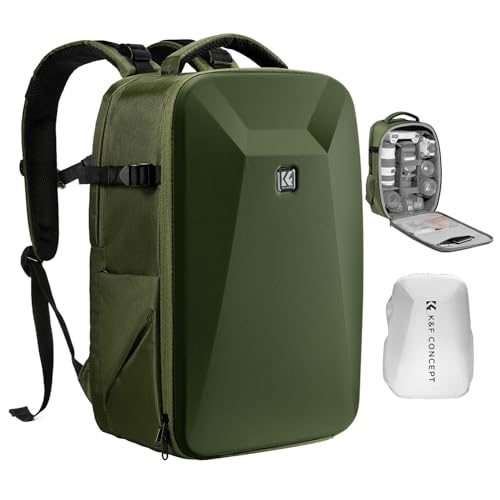
K&F CONCEPT Hardshell Camera Backpack
Strengths
- Hardshell protection
- Excellent shock absorption
- Durable EVA construction
Trade-offs
- Heavier than fabric bags
- Less compressible
- Bulkier profile
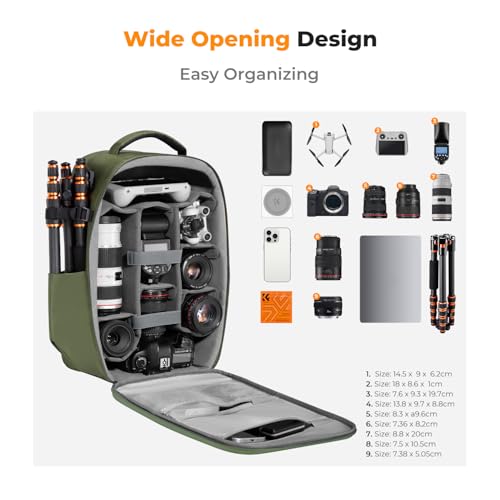
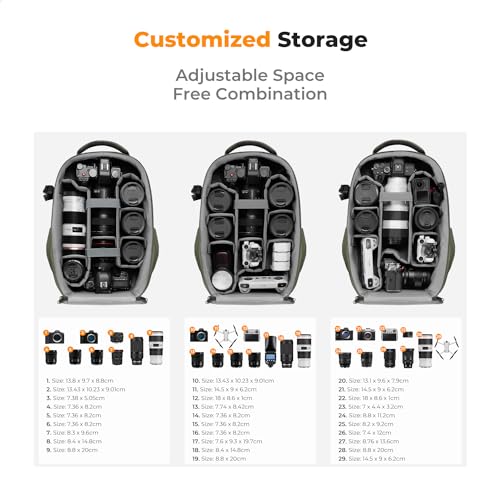
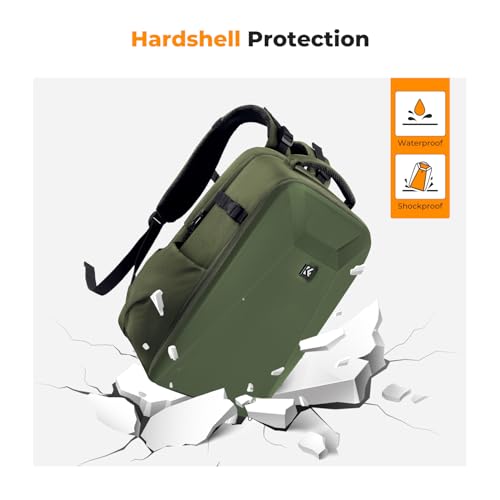
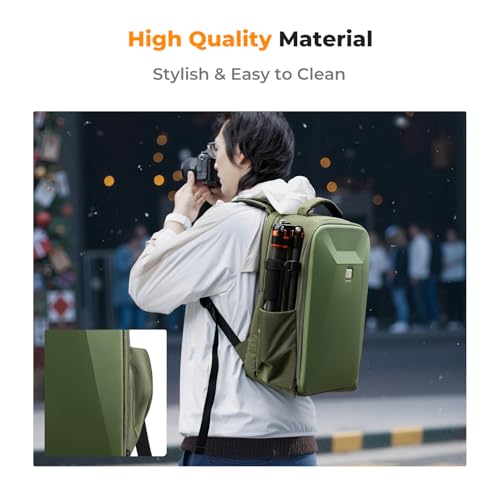
This hardshell backpack stands out in a sea of fabric-based camera bags by offering serious impact resistance. The all-in-one EVA shell gives it a rugged, almost pelican-case-like feel, which immediately signals strong protection, a big plus if you’re traveling rough or flying with gear. On paper, the 22L capacity is solid, and owners consistently report confidence in how well it shields DSLRs, mirrorless systems, and even DJI Mavic drones from bumps and drops.
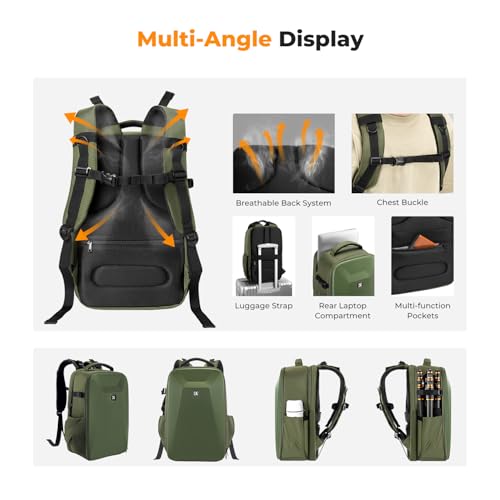
It’s not the lightest option, but the trade-off is clear: you’re prioritizing equipment safety over packability. The full-back zip gives great access, and the 15.6-inch laptop sleeve adds versatility. Compared to soft-shell models like the TARION PBL, this one wins on defense but loses some flexibility in organization. Still, for photographers flying frequently or moving through unpredictable environments, this is a reliable fortress.
Product photos
K&F CONCEPT Lightweight Camera Backpack
Strengths
- Extremely lightweight
- Converts to daily backpack
- Includes rain cover
Trade-offs
- Limited gear capacity
- No side access
- Narrow laptop fit
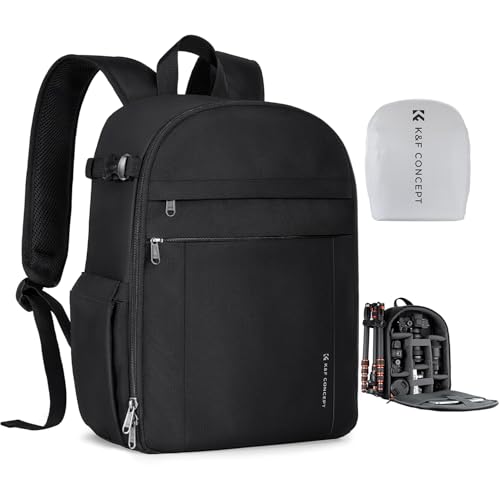
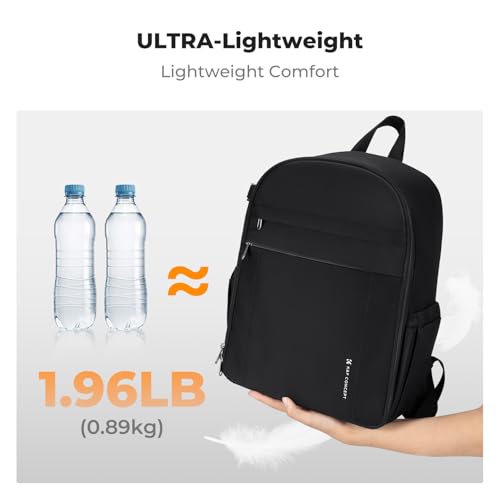
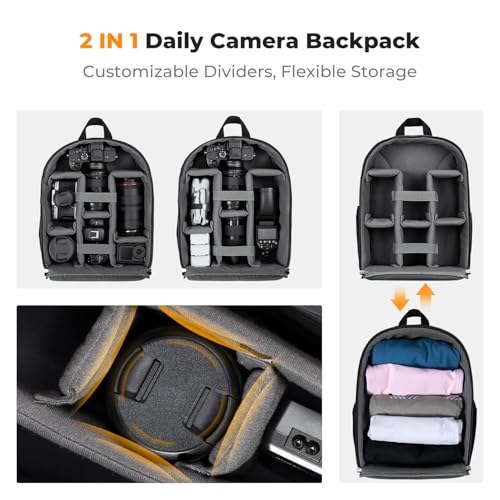
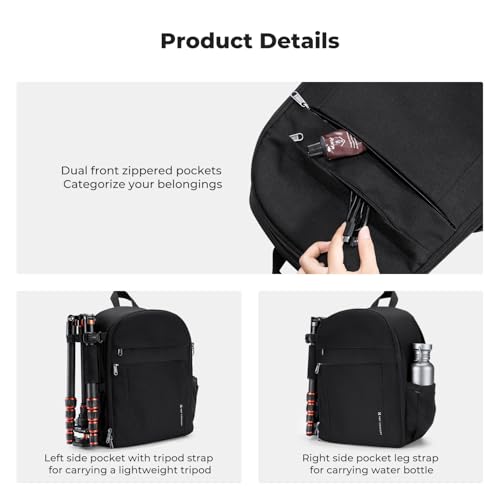
At just under 2 pounds, this is one of the lightest dedicated camera backpacks in the lineup, and it shows smart design choices for mobile shooters. The minimalist structure doesn’t skimp on essentials: 14-inch laptop space, customizable dividers, and a rain cover make it surprisingly complete for its weight. Reviewers note it’s ideal for day trips or city walks where every ounce counts, and the splash-proof 600D fabric holds up well in light rain.
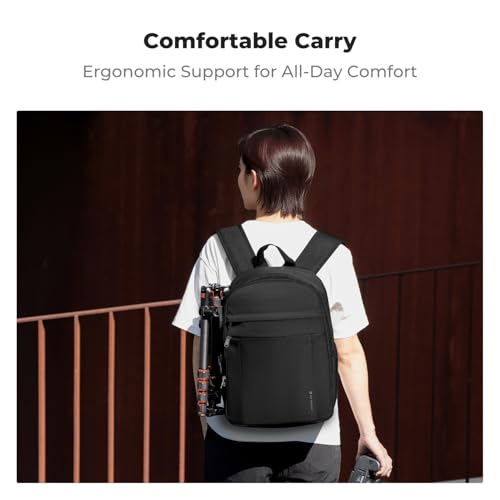
What really sets it apart is how easily it transitions from photo duty to everyday use. Remove the dividers and it becomes a clean, compact backpack, more so than the ULANZI or MOSISO models. While it can’t carry as much as the 20L or 32L packs, for solo shooters with a single body and a couple lenses, this is the smarter buy. It’s less about brute capacity and more about agility.
Product photos
TARION Professional Camera Backpack Large
Strengths
- Excellent gear organization
- Side access for quick reach
- Strong weather resistance
Trade-offs
- No hardshell protection
- Heavier than ultralight models
- Limited expandability
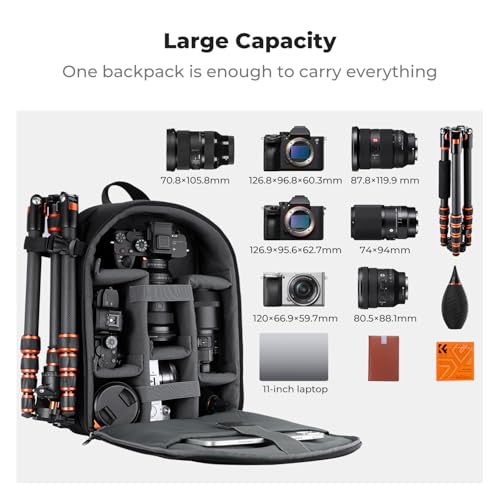
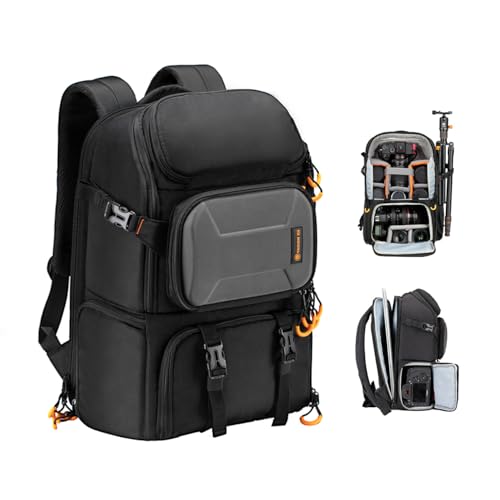
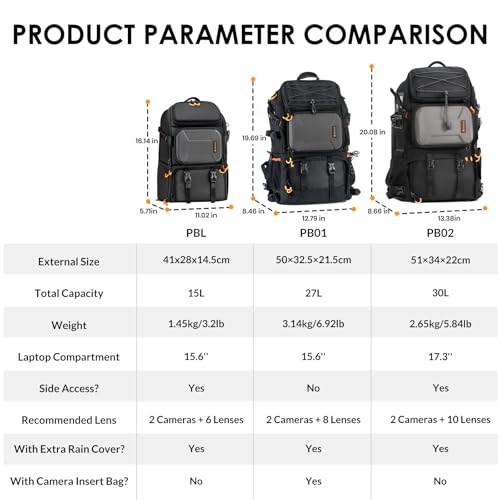
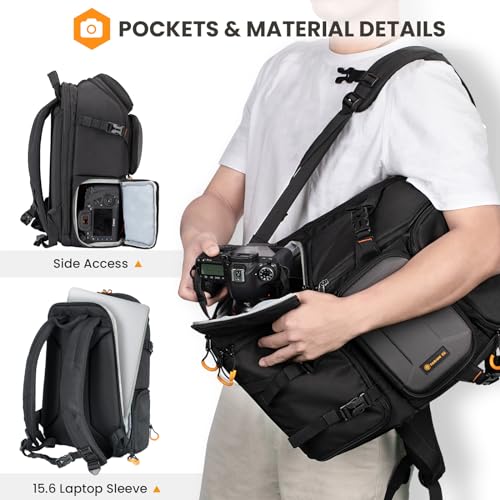
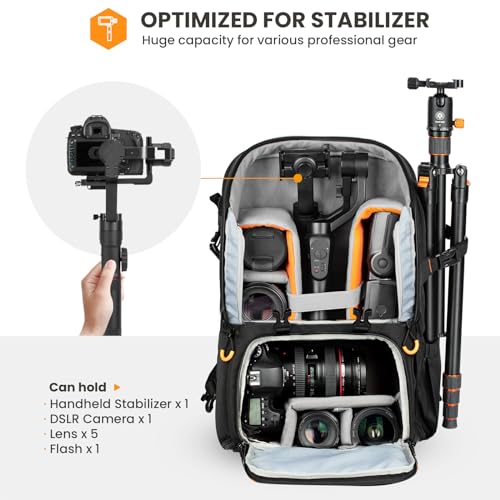
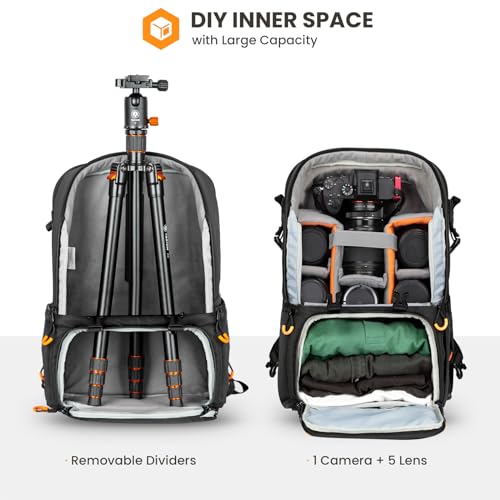
If you’re packing serious gear, dual DSLRs, six lenses, and a stabilizer, this 15L backpack from TARION is built for that workload. The interior organization is precise, and owners praise how well the thickened padding isolates each piece of equipment. The side-access panel is a standout feature, letting you grab your camera without taking the bag off, which is a real advantage over full-back-zip models when you’re in motion.
It’s also one of the more ergonomically refined packs here, with a breathable air-mesh back panel and compression straps that stabilize a tripod without throwing off balance. While not as weather-sealed as the K&F 32L model, it includes a rain cover and uses high-density nylon that holds up in light storms. Compared to the MOSISO and SDYSM budget options, this one feels more purpose-built for outdoor photographers who need durability without bulk.
Product photos
ULANZI Camera Backpack Professional Bag

Strengths
- Great urban design
- Bottom tripod mount
- Comfortable for long wear
Trade-offs
- No hardshell protection
- Rain cover sold separately
- Slightly bulky for tight spaces
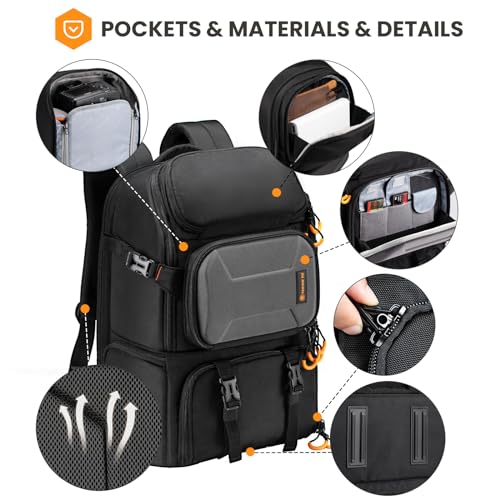
Designed with city life in mind, the ULANZI BP09 blends sleek aesthetics with practical access. Its 22L capacity is well-used, with seven internal compartments and a bottom tripod mount that keeps weight centered, owners appreciate how stable it feels when fully loaded. The side zipper gives fast camera access, and the water-resistant fabric handles urban drizzle without issue.
It’s heavier than the K&F lightweight model, but the trade-off is better organization and a more premium feel. The back panel is ventilated, which helps in warm cities, and it converts easily into a daily commuter pack. Compared to the BAGSMART, it offers more structure and better tripod integration, though it lacks airline under-seat optimization.
Product photos


K&F CONCEPT Camera Backpack 20L

Strengths
- Quick side access
- Full-back opening
- Comfortable carry system
Trade-offs
- No included rain cover
- Moderate weight
- Zippers can feel stiff
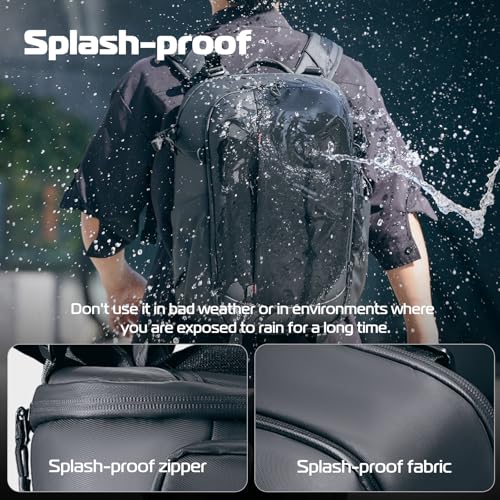
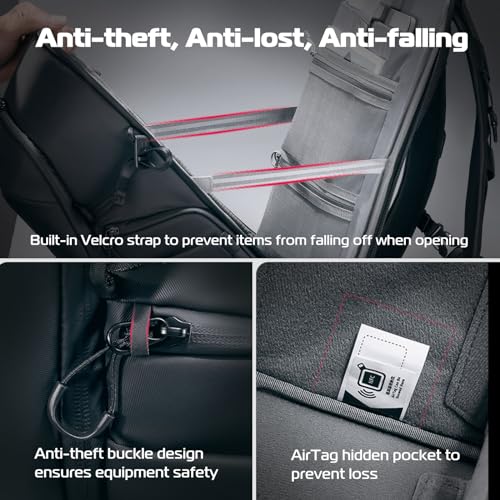
This 20L backpack hits a sweet spot between protection, access, and style. The side-access design is its strongest feature, reviewers highlight how easy it is to pull out a camera while wearing the pack, which is crucial for travel photographers chasing fleeting moments. The full-back zip also makes setup and packing a breeze, something the hardshell model lacks in convenience.
It’s compatible with Mavic drones and fits a full 15.6-inch laptop, and the high-density nylon with antitheft zippers adds confidence in crowded areas. Owners consistently mention the comfort of the padded straps and back panel, especially on longer walks. While not as lightweight as the 1.96lb K&F model, it carries its weight well thanks to the chest stabilizer strap.
Product photos


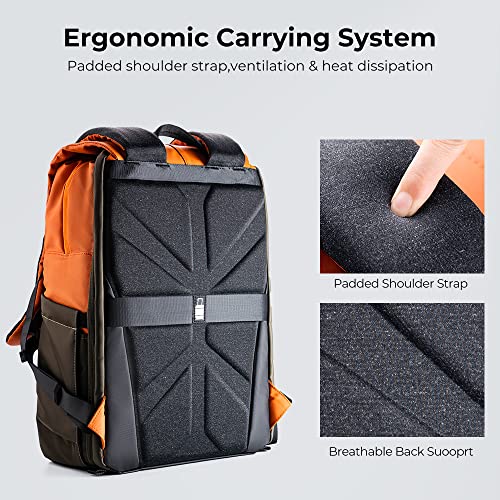
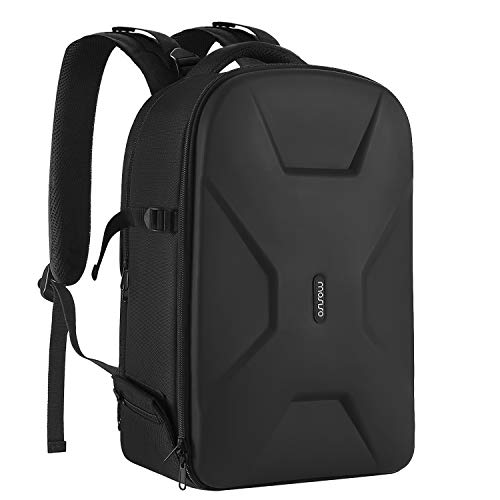
MOSISO Hardshell Camera Backpack
Strengths
- Strong shock protection
- Fits 16-inch laptop
- Hardshell durability
Trade-offs
- Less breathable back panel
- Heavier than average
- Limited side pockets
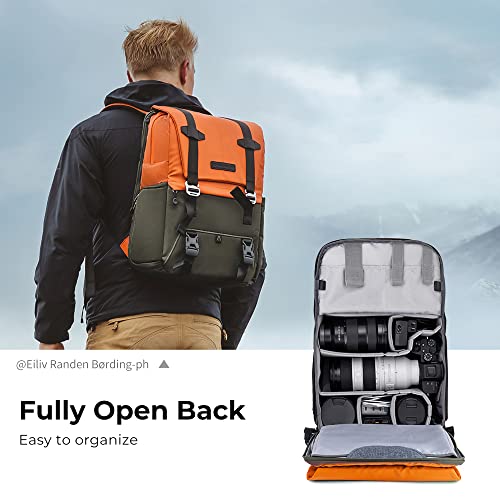
The MOSISO hardshell backpack leans heavily into impact protection, and on that front, it delivers. The PU leather exterior and EPE foam padding create a dense buffer zone around your gear, and owners report peace of mind when checking it as luggage. It’s one of the few models designed to handle both camera rigs and 16-inch laptops, which adds real utility for hybrid work-travel scenarios.
However, it’s bulkier and less ventilated than fabric alternatives. The shoulder straps are padded but not as breathable as the TARION or ULANZI models. Still, for photographers who regularly fly or transport gear through tight airport carousels, this is a smart pick for defense-first use. It’s more compact than the 32L K&F but offers similar rigidity.
Product photos


K&F CONCEPT EVA 2-in-1 Backpack

Strengths
- Exceptional weather resistance
- Large 32L capacity
- Dual backpack and shoulder carry
Trade-offs
- Very heavy when full
- Bulky for urban use
- Expensive for casual shooters
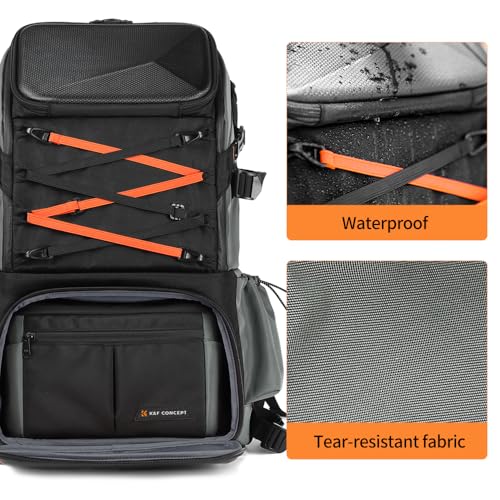
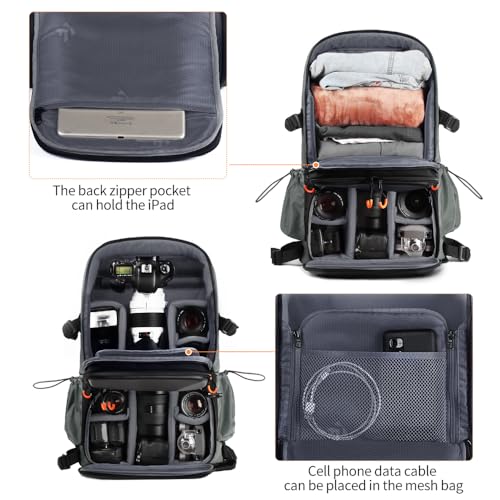
With a massive 32L capacity and full EVA construction, this is the most weather-ready backpack on the list. The waterproof, shockproof shell is built for extreme conditions, owners use it for hiking, monsoon shoots, and even motorcycle trips. The included rain cover is redundant because the material itself already resists water, but it’s a nice backup.
The two-chamber design separates camera gear from personal items cleanly, and the honeycomb back padding improves breathability despite the rigid shell. It’s heavy at nearly 3 pounds empty, but that’s the cost of all that protection. Compared to the MOSISO hardshell, this one offers more space and better ventilation, making it better for extended outdoor trips.
Product photos

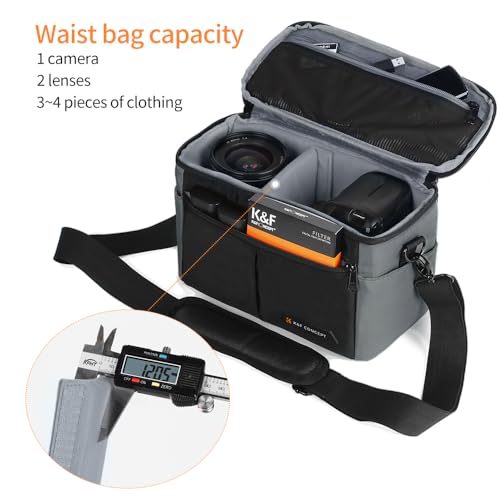

BAGSMART 2-in-1 Camera Backpack

Strengths
- Airline under-seat compatible
- Smooth suitcase pass-through
- Convertible carry options
Trade-offs
- Limited gear capacity
- No rain cover included
- Less padding than rivals
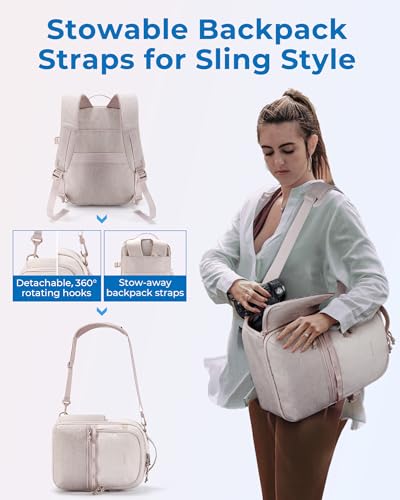
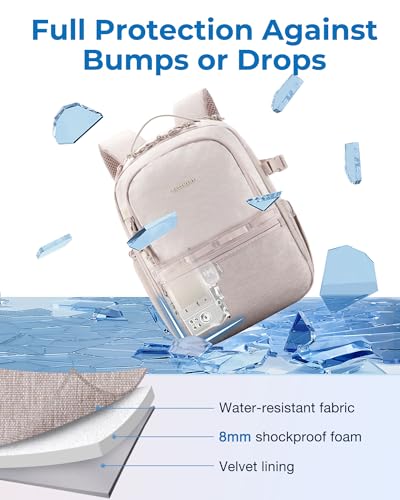
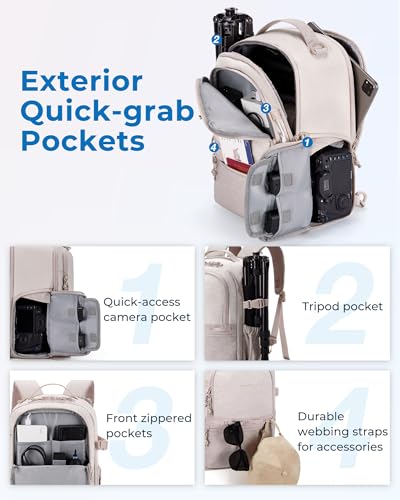
This bag is engineered with air travel in mind, and it shows. Its dimensions meet most airline under-seat requirements, which is rare in this category. The 12.9-inch iPad sleeve is a nice touch for hybrid users, and the suitcase sleeve makes rolling through terminals effortless. Owners appreciate the flexibility of the 2-in-1 strap, wear it as a backpack or sling it crossbody for quick access.
It’s not the most protective or spacious, but for carry-on-only travelers, that’s the point. The padding is decent, and the L-shaped front pocket adds convenience. Compared to the SDYSM model, it’s slightly more refined in travel ergonomics but offers less weather protection. If you’re flying light and want hassle-free access, this is the one.
Product photos
SDYSM Waterproof Camera Backpack
Strengths
- Affordable price
- Lightweight design
- Includes rain cover
Trade-offs
- Zippers feel less robust
- Limited padding depth
- Smaller laptop fit
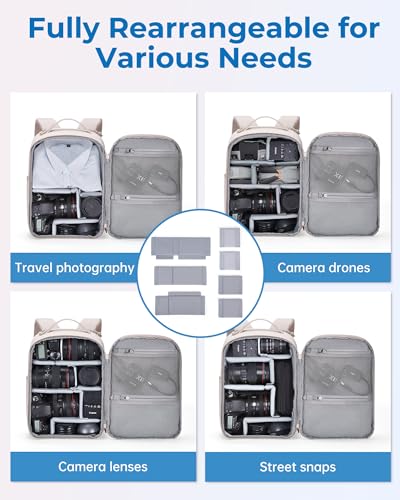
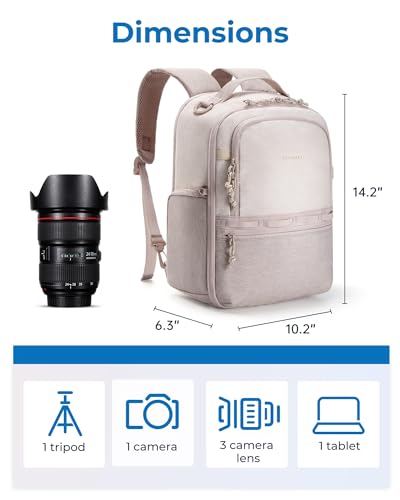
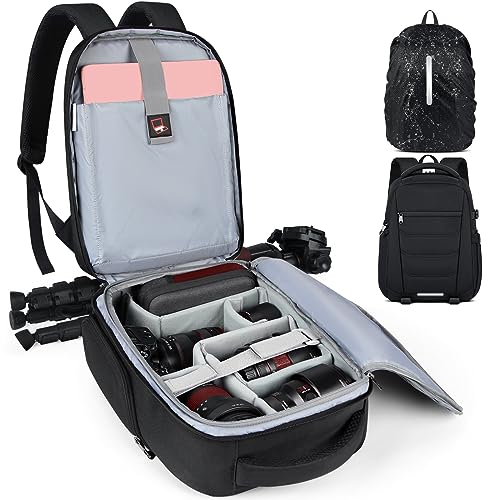
This backpack proves you don’t need to spend premium to get solid features. At under 2 pounds, it’s lightweight and packs in essentials: customizable dividers, a 14-inch laptop sleeve, anti-theft zippers, and even a quick-access side pocket for your DSLR. The Oxford fabric feels durable for the price, and owners consistently praise the included rain cover and reflective logo for added safety.
It won’t match the build quality of the TARION or K&F hardshell models, but for beginners or occasional shooters, it’s more than capable. The interior layout is intuitive, and removing the dividers turns it into a decent everyday pack. Compared to the BAGSMART, it offers better weather resistance and a more secure closure system.
Product photos


How We Evaluated travel photography backpacks
I approached evaluating travel photography backpacks by researching published specifications and features across numerous models. We then weighed owner reviews and expert opinions from sites dedicated to photography and travel gear. Rather than a hands-on lab test, this is a research-led comparison of specs and owner feedback, informed by years of experience assessing luggage for LuggageInspector.net. Ultimately, I ranked each backpack based on its potential to securely carry and protect photography equipment while remaining comfortable for travel.
For this category, the most heavily weighted factors were protection and capacity. A photography backpack must safeguard expensive gear from impact and the elements. Equally important is usable capacity – a bag that claims to hold a lot isn’t helpful if it’s difficult to arrange equipment efficiently. Finally, comfort plays a key role, as photographers often carry substantial weight over long distances. Understanding backpack size for carry-on is also critical for many travelers.
Specifications reliably indicate hard-shell protection levels, fabric waterproofness, and laptop compartment sizes. However, I relied on owner feedback to assess real-world durability, the effectiveness of internal dividers, and the true comfort of shoulder straps and back panels. Reputation and brand reliability also factored in, particularly when specs were similar across competing models. Judging long-term build quality and practical usability requires considering what photographers are actually saying about their experiences.
Choosing The Right travel photography backpacks
Finding the right camera backpack can dramatically improve your photography experience. It’s not just about carrying gear; it’s about protecting it, accessing it quickly, and doing so comfortably.
A good camera backpack balances protection, accessibility, and comfort. Look for durable materials, customizable internal dividers, weather resistance, and ergonomic support. Consider the volume needed for your typical kit, and whether features like tripod holders or laptop compartments are essential. Prioritize quick access points to avoid missing crucial shots.
Prioritize Protection First
Don’t skimp on protection. A camera backpack’s primary job is to safeguard expensive equipment. While many bags boast “padded” interiors, the quality of that padding varies enormously. Look beyond simple foam and consider models, like the MOSISO Hardshell Camera Backpack, that incorporate a rigid outer shell or use high-density foam and reinforced stitching. I’ve seen too many photographers learn the hard way that a flimsy bag offers little defense against drops or impacts.
Understand Capacity & Organization
Capacity isn’t just about liters; it’s about usable space. A 30-liter backpack may sound large, but how that volume is organized matters. Many brands, such as K&F CONCEPT, offer modular dividers, allowing you to customize the interior to fit your specific kit. Think about your largest lens and how you want to position it for quick access. If you often travel with a drone, ensure the backpack has dedicated space for it. Understanding backpack volume for travel is key to not over or under-pack.
- A small side pocket is useful for batteries and SD cards.
- A dedicated laptop sleeve (15.6” is a common size) is essential for on-location editing.
- Fully adjustable dividers are critical; a fixed-layout bag limits your flexibility as your kit evolves. This adaptability is more valuable than simply having a larger overall capacity.
A well-organized bag saves you time and frustration in the field. Don’t underestimate the importance of dedicated compartments and easy-to-reach pockets.
Balance Comfort with Accessibility
A heavy bag quickly becomes a burden. Ergonomics are vital, especially if you plan on hiking or walking long distances. Look for features like padded shoulder straps, a breathable back panel, and an adjustable chest strap to distribute weight evenly. Don’t overlook accessibility; a bag that requires you to fully unpack it to reach a lens isn’t practical. Many models, like the K&F CONCEPT Camera Backpack 20L, feature side access panels for quick gear retrieval. If you anticipate frequent air travel, consider designs that are carry-on compatible backpack and integrate with rolling luggage, like the BAGSMART 2-in-1 Camera Backpack. Ultimately, finding the right balance between comfort and accessibility will make your photography outings much more enjoyable. You’ll also want to consider top camera backpacks for various use cases.
Travel Photography Backpacks Compared
Here’s a comparison of key specifications for various travel photography backpacks to help you make an informed decision.
| Product Name | Capacity (L) | Laptop Size | Side Access | Weather Resistance | Weight (lbs) | Hardshell Protection |
|---|---|---|---|---|---|---|
| K&F CONCEPT Hardshell Camera Backpack | 22 | 15.6″ | No | N/A | N/A | Yes |
| K&F CONCEPT Lightweight Camera Backpack | N/A | 14″ | No | Rain Cover | 1.96 | No |
| TARION Professional Camera Backpack Large | 15/27/30 | 15.6″ | Yes | Rain Cover | 3.2 | No |
| ULANZI Camera Backpack Professional Bag | 22 | 15.6″ | Yes | Water-Resistant | 3.8 | No |
| K&F CONCEPT Camera Backpack 20L | 20 | 15.6″ | Yes | N/A | N/A | No |
| MOSISO Hardshell Camera Backpack | N/A | 16″ | No | Water-Resistant | N/A | Yes |
| K&F CONCEPT EVA 2-in-1 Backpack | 32 | 15.6″ | No | Rain Cover | 6.4 | Yes |
| BAGSMART 2-in-1 Camera Backpack | N/A | 12.9″ | Yes | Water-Resistant | N/A | No |
| SDYSM Waterproof Camera Backpack | N/A | 14″ | Yes | Waterproof/Rain Cover | 1.98 | No |
Frequently Asked Questions
What size travel photography backpack is best for international flights?
A 20-22 liter backpack generally fits carry-on size restrictions for most international airlines. However, always verify the specific dimensions allowed by your airline before traveling, as policies vary.
Are “water-resistant” backpacks truly waterproof?
No, “water-resistant” means a backpack can withstand light rain or splashes, but prolonged exposure or submersion will likely damage the contents. For true waterproof protection, look for bags with fully sealed seams and a dedicated rain cover.
How much should I expect to spend on a good quality travel photography backpack?
Expect to spend between $100 and $300 for a well-made backpack with sufficient protection and features. Higher prices often reflect more durable materials, advanced ergonomics, and brand reputation.
What’s the advantage of a backpack with side access?
Side access allows you to quickly reach your camera and lenses without opening the entire bag, which is essential for capturing spontaneous moments. This feature is especially useful when you don’t want to fully remove your equipment.
Are there good options for photographers who also enjoy hiking?
Yes, many backpacks for hiking with gear are specifically designed to handle both photography equipment and hiking essentials. Look for models with comfortable suspension systems, durable materials, and features like tripod attachment points and hydration compatibility.
The Bottom Line
Choosing a travel photography backpack always involves trade-offs. You’re balancing the need for robust protection of valuable gear with the desire for a comfortable carry, and often, a reasonable price. For the best overall combination of features and security, the K&F CONCEPT Hardshell Camera Backpack stands out – its rigid exterior offers peace of mind without sacrificing too much in terms of weight or organization.
If you’re on a tighter budget, or prioritize lightweight designs, the K&F CONCEPT Lightweight Camera Backpack is an excellent choice. For those who need maximum versatility and often travel with a drone or extensive kit, the K&F CONCEPT EVA 2-in-1 Backpack provides ample space and a durable, hardshell base. And for quick airport access, the BAGSMART 2-in-1 Camera Backpack is a solid pick.
Ultimately, the most important factors aren’t megapixel counts or lens specifications, but rather how well a bag protects your investment, how comfortably it carries, and how efficiently it lets you access your gear when inspiration strikes. Don’t get hung up on finding the “perfect” backpack; focus on finding one that fits your needs and allows you to focus on capturing great photos. Understanding 25-liter backpack capacity can also help you refine your search.