7 Best Osprey Backpacking Packs of 2026
This post contains affiliate links. As an Amazon Associate, we earn from qualifying purchases.
The Osprey Atmos AG 65 stands out as the best overall backpacking pack for its exceptional suspension and comfort on long hauls, while the Renn 65L is a top choice for women seeking a well-fitted, ventilated design. If you’re watching your budget, the Rook 65L delivers solid performance with AirSpeed ventilation at a lower price.
Picking the wrong backpack can turn an epic trail adventure into a miserable slog. I’ve seen too many travelers struggle with ill-fitting packs, sore shoulders, and gear crammed into awkward spaces. After researching the full Osprey lineup, comparing specs, and reviewing owner feedback across thousands of real-world trips, I focused on what actually matters: fit, load management, and durability.
This guide breaks down the top models based on torso adjustability, suspension type, and capacity so you can match the pack to your body and trip style. These picks aren’t just popular, they’re proven performers that consistently earn praise from backpackers who log serious miles.
Top 7 Osprey Backpacking Packs in the Market
The Best Osprey Backpacking Packs, Reviewed
Osprey Atmos AG 65L Men’s

Strengths
- Anti-Gravity suspension
- Dual side access zips
- Integrated raincover
Trade-offs
- Heavier than lightweight models
- Higher price point
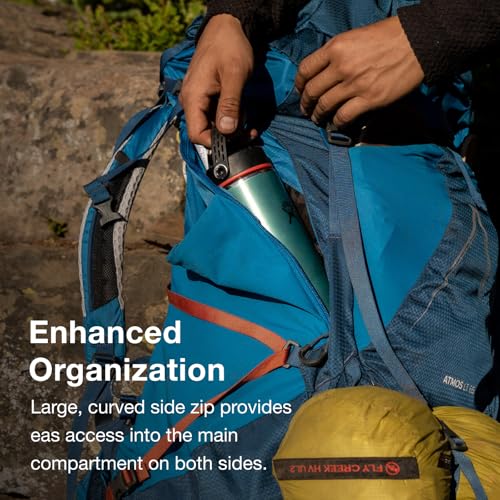
The Atmos AG 65 is where Osprey’s Anti-Gravity suspension really shines, and it’s no surprise this model consistently lands at the top of ‘best overall’ lists. The Fit-on-the-Fly harness and hipbelt let you dial in comfort on the trail, which is rare and valuable. Owners routinely praise how the weight disappears once loaded, even on multi-day treks with uneven terrain. The dual side zips into the main compartment are a standout, no more digging from the top.
Ventilation is solid thanks to the suspended mesh panel, though it doesn’t quite match the airflow of the Stratos’ AirSpeed system. Still, for the balance of load support, access, and comfort, this pack sets the bar. It’s heavier than some ultralight contenders, but that trade-off buys you durability and structure.
Product photos


Osprey Aether 65L Men’s

Strengths
- Excellent load stability
- Customizable fit
- Durable build
Trade-offs
- Heaviest in the lineup
- Less ventilation than AG models
When you’re loading up for alpine routes or carrying heavy winter gear, the Aether 65 is built for that kind of punishment. Its AirScape foam backpanel and Fit-on-the-Fly adjustments let you fine-tune fit across body types, and owners say it handles bulky, dense loads with authority. It’s the most structured of Osprey’s 65L models, which helps distribute weight efficiently when the pack is full.
It’s also the heaviest at nearly 5 lbs, so it’s overkill for light trips. Compared to the Atmos AG, it lacks the suspended mesh comfort but offers more rigidity. For technical terrain where stability trumps breathability, this is the smarter pick.
Product photos
Osprey Atmos AG LT 65L

Strengths
- Lightweight with AG suspension
- Dual side access
- Integrated raincover
Trade-offs
- Premium price
- Less padding than standard AG
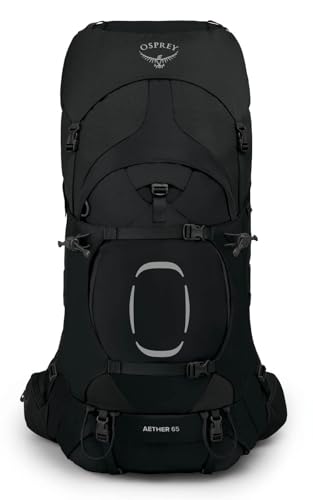
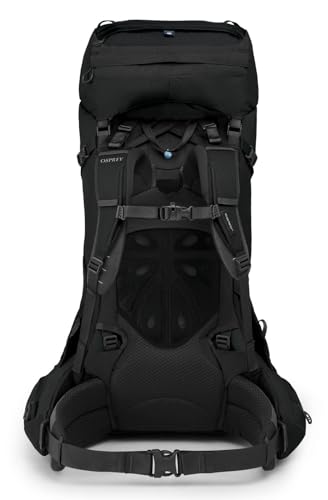
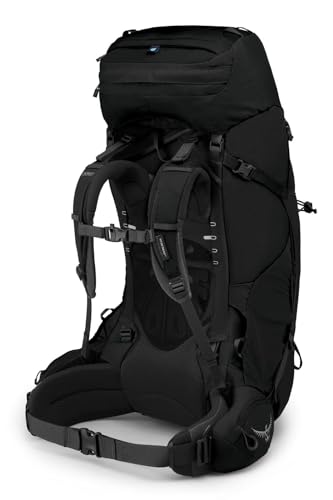
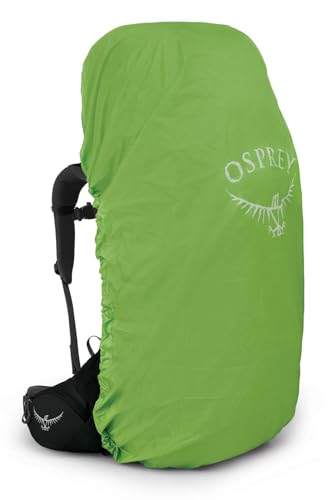
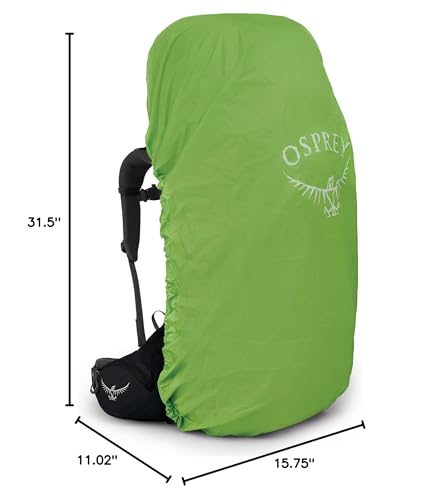
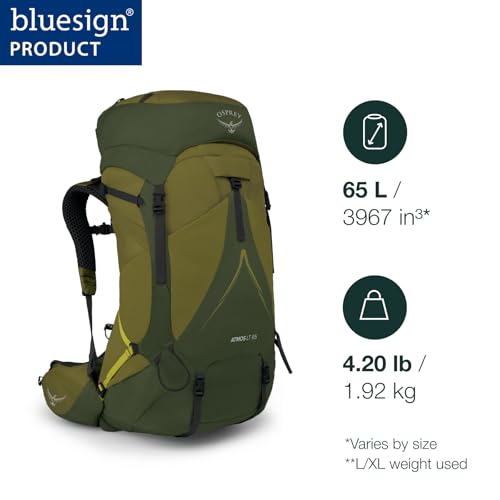
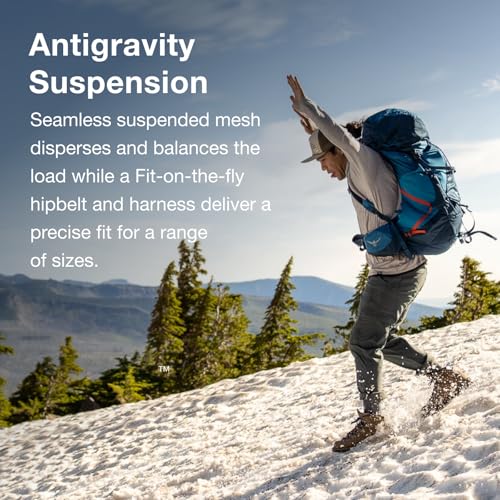
The Atmos AG LT is essentially the lightweight evolution of the classic Atmos, same legendary Anti-Gravity suspension, but stripped down to 4.07 lbs. The ladder adjustment system makes torso tuning easier than ever, and the Fit-on-the-Fly hipbelt ensures a secure fit across body types. It keeps the dual side zips, which is rare in lightweight models, so you don’t sacrifice access for weight savings.
Owners report it feels almost as supportive as the full-weight Atmos, but with less bulk. Compared to the Kestrel LT, it’s more ventilated and easier to load. It’s not the cheapest, but for those wanting AG comfort without the heft, it’s the only real option in the Osprey lineup.
Product photos
Osprey Rook 65L Men’s

Strengths
- Great value
- Lightweight
- Solid suspension
Trade-offs
- Minimal organization
- Fewer pockets
- Basic materials
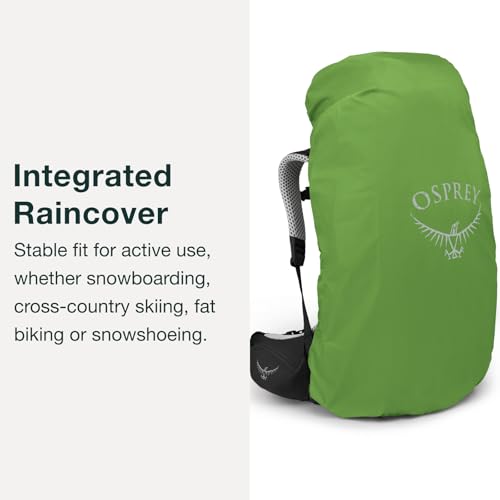
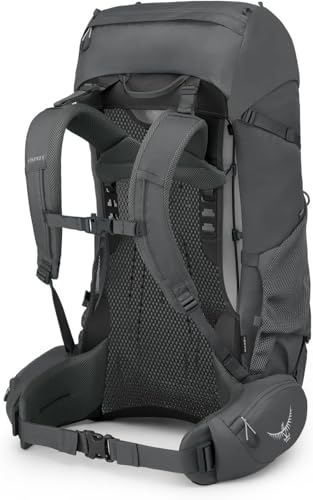
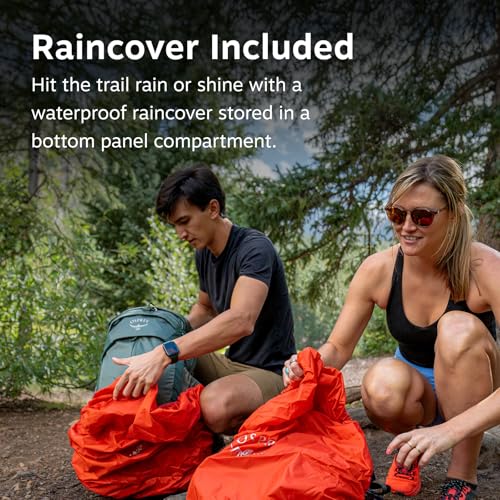
The Rook 65 is Osprey’s most affordable entry into the 65L category, and it delivers impressive value. It shares the Adjustable AirSpeed suspension with the Stratos and Renn, meaning you still get excellent ventilation and a customizable fit. At 3.7 lbs, it’s lightweight, and the integrated raincover and sleeping bag compartment show Osprey didn’t cut too many corners.
Where it skimps is in features, no side zips, no hipbelt pockets, minimal organization. But for beginners or occasional backpackers, that simplicity keeps things manageable. Compared to the Atmos, it’s less refined, but for the price, it’s hard to beat. This is the pack I’d recommend to someone dipping into backpacking without wanting to overcommit.
Product photos


Osprey Renn 65L Women’s

Strengths
- Women-specific fit
- Lightweight for capacity
- Good ventilation
Trade-offs
- No side access zips
- Less padding than AG models
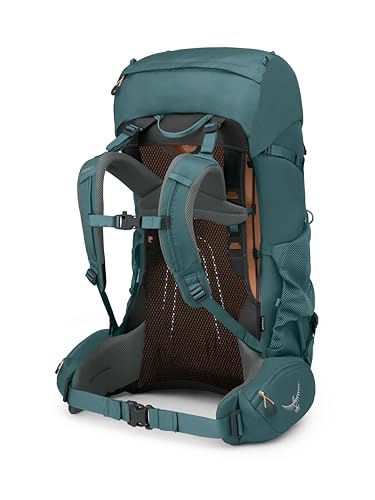
Designed specifically for women, the Renn 65 gets the fit right, shorter torso, contoured shoulder straps, and a hipbelt that follows female anatomy better than unisex cuts. The Adjustable AirSpeed suspension delivers strong ventilation and solid load transfer, and at just 3.6 lbs, it’s one of the lightest 65L packs here. Owners note it feels balanced even when fully loaded, and the integrated raincover is a thoughtful touch.
It lacks side zips, which the Atmos AG has, but makes up for it with simplicity and weight savings. Compared to the men’s Stratos, it’s similar in features but better tailored. If you’re a woman looking for a pack that doesn’t just shrink-and-pink, this is it.
Product photos


Osprey Kestrel LT 45L

Strengths
- Durable construction
- Stable load carry
- Adjustable torso
Trade-offs
- No side access zips
- Heavier than expected
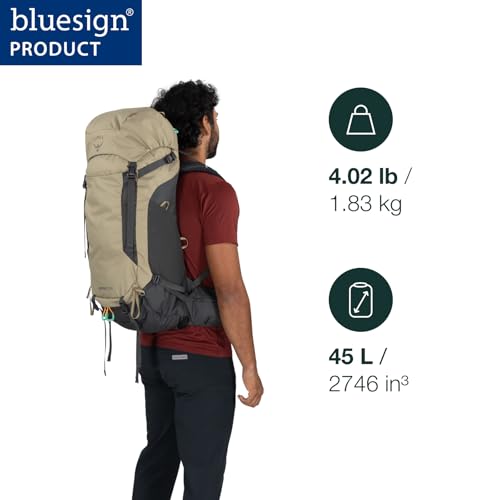
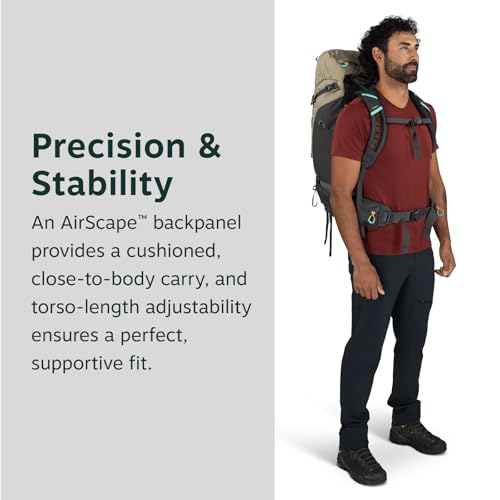
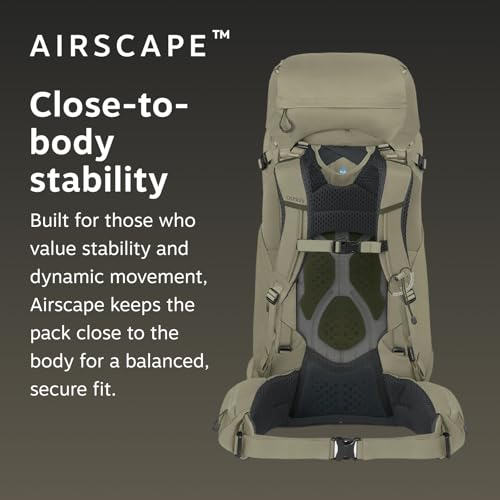
The Kestrel LT feels like Osprey’s answer to hikers who want durability without bells and whistles. It uses rugged fabrics and a straightforward design, and owners appreciate its no-nonsense reliability. The Airscape backpanel offers decent ventilation and support, though it’s not as airy as AirSpeed. What stands out is the stability, thanks to the LightWire frame and dual compression straps, it carries surprisingly well for its weight.
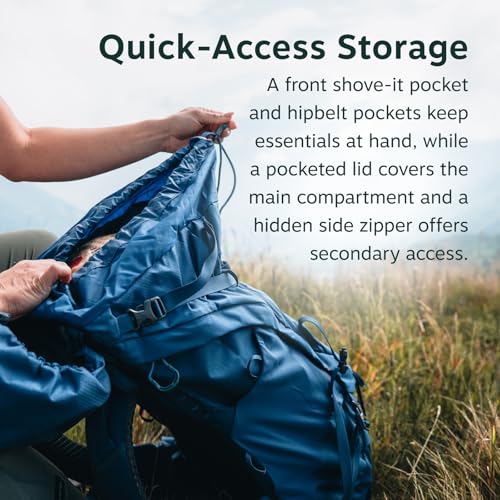
At 4.02 lbs, it’s not the lightest, but it’s built to last. Compared to the Stratos, it’s less ventilated but more durable. It lacks side zips, so accessing the main compartment means opening the top roll closure, fine for purists, frustrating for others.
Product photos
Osprey Stratos 44L Men’s

Strengths
- Excellent ventilation
- Lightweight for its class
- Full-featured layout
Trade-offs
- Limited capacity for long trips
- Less stable with heavy loads
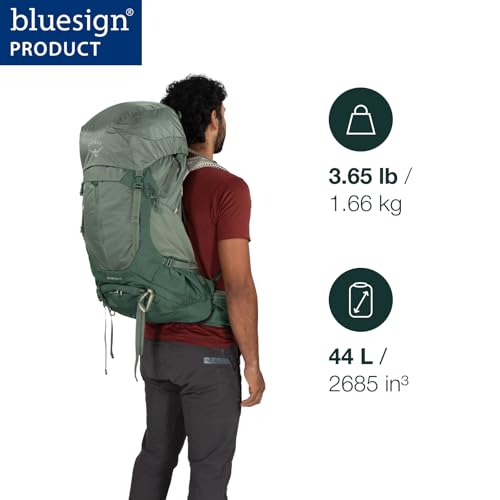
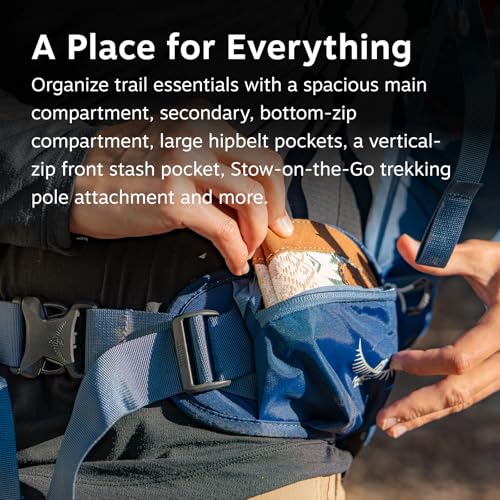
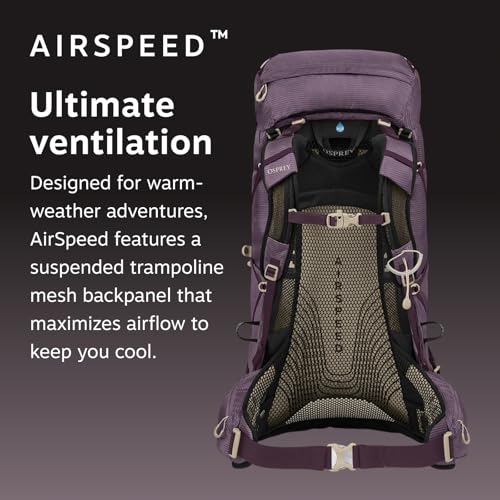
If you run hot or tackle long days in humid climates, the Stratos 44 stands out for one reason: the Airspeed suspension. That trampoline-style mesh backpanel creates serious airflow, and owners consistently report staying drier and cooler compared to foam-backed packs. At 3.65 lbs, it’s light but doesn’t sacrifice features, trekking pole attachments, hipbelt pockets, and a zippered bottom compartment add real utility.
The 44L capacity works best for weekend trips or fast-and-light thru-hikers, but it’s not ideal if you need to carry winter gear or extended food supplies. Compared to the Atmos, it trades some load stability for breathability, but for summer trips, that’s a trade I’d make every time.
Product photos

How We Chose These osprey backpacking packs
Rather than a hands-on lab test, my research for these recommendations focused on a detailed comparison of published specifications and features across numerous Osprey models. I then weighed owner reviews from major retailers alongside expert opinions from established outdoor gear reviewers. As someone who’s spent years evaluating travel gear, I applied my understanding of backpacking needs to rank packs against clear criteria – comfort, durability, capacity, and features relevant to different trip types.
For Osprey packs, fit and suspension are paramount. I heavily weighted packs with adjustable torso lengths and hip belts, as a proper fit directly impacts comfort on the trail. Load capacity also played a key role; heavier loads demand more robust suspension systems, while lighter, faster trips benefit from streamlined designs. These two factors largely determined how I ranked the packs, influencing which model suited which “Best For” category.
Specifications reliably indicate capacity, weight, and materials. However, I turned to owner feedback to gauge real-world durability and comfort assessments. Reports about long-term wear, strap design, and ventilation were crucial. Understanding whether a pack truly lives up to its advertised features, and how it feels after a full day on the trail, requires insights beyond just the stated specs – for instance, learning more about backpack size for day trips.
How To Choose The osprey backpacking packs
Finding the right backpacking pack is crucial for any trip, and it’s a surprisingly personal decision. It’s about more than just liters; it’s about how that space is distributed and how comfortably it carries against your body.
A quality backpacking pack balances durability with weight, offering a supportive suspension system and adjustable features to accommodate varying torso lengths and load weights. Key considerations include frame type, material construction (particularly denier ratings), hipbelt design, and accessibility of compartments. Prioritize a fit that distributes weight effectively to minimize strain and maximize comfort on the trail.
Prioritize Torso Length and Fit
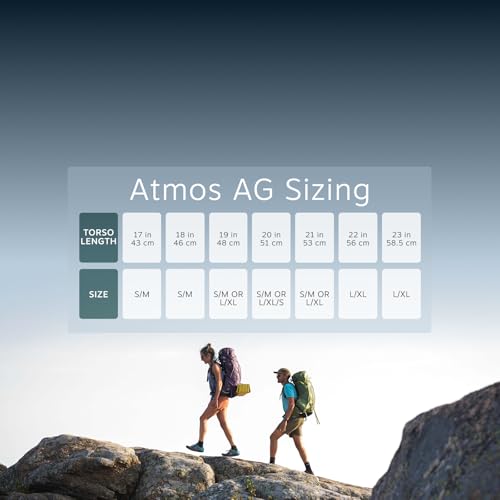
Forget capacity for a moment; the single most important factor is fit. A pack that doesn’t match your torso length will cause discomfort, chafing, and ultimately ruin your experience. Most brands, like Osprey, offer adjustable torso lengths, but knowing your measurement is essential. Don’t guess! Measure from your C7 vertebra (the bony bump at the base of your neck) to the iliac crest (the top of your hipbones). Many retailers can help with this, or you can find guides online. Don’t be afraid to try on packs with weight in them (ask the store to add ballast) to simulate real-world conditions.
Understand Suspension Systems
Suspension is where packs truly differentiate themselves. Internal frame packs (the most common type) use a frame – often aluminum stays – to transfer weight to your hips. AirSpeed and AirScape suspensions are common in Osprey packs, both aiming for ventilation and comfort. AirScape uses a die-cut foam backpanel, while AirSpeed employs a suspended mesh trampoline. The right choice depends on how much you sweat and whether you prefer a closer or more ventilated fit. For heavier loads, a more robust frame and a wider, well-padded hipbelt are vital. If you’re looking at a variety of top Osprey backpack models, pay close attention to how the hipbelt wraps your hips and how securely the shoulder straps connect.
Balance Capacity with Trip Length and Style
Capacity (measured in liters) is often the first thing people consider, but it’s not the only factor. A 65L pack might seem ideal, but do you really need that much space? Consider your typical trip length and packing style. Here’s a quick guide:
- Weekend Trips (1-3 nights): 40-50L is often sufficient.
- Multi-Day Trips (3-5 nights): 50-70L provides more flexibility.
- Extended Trips (5+ nights): 70L+ is necessary, especially for colder weather gear.
Remember that a well-packed 50L pack is always better than a poorly-packed 70L pack. And, if you’re aiming for a carry-on compatible 40L backpack for air travel, double-check airline size restrictions.
Don’t overbuy capacity. A pack that’s too large encourages overpacking, which defeats the purpose of lightweight backpacking.
Osprey Backpacking Packs Compared
Here’s a reference table comparing the specifications of various Osprey backpacking packs.
| Pack Model | Capacity (L) | Weight (lb) | Torso Adjustability | Raincover | Sleeping Bag Compartment | Airspeed Suspension |
|---|---|---|---|---|---|---|
| Atmos AG 65L Men’s | 65 | 4.61 | Yes | Yes | Yes | No |
| Aether 65L Men’s | 65 | 4.96 | Yes | Yes | Yes | No |
| Atmos AG LT 65L | 65 | 4.07 | Yes | Yes | No | No |
| Rook 65L Men’s | 65 | 3.7 | Yes | Yes | Yes | Yes |
| Renn 65L Women’s | 65 | 3.6 | Yes | Yes | Yes | Yes |
| Kestrel LT 45L | 45 | 4.02 | Yes | Yes | N/A | No |
| Stratos 44L Men’s | 44 | 3.65 | Yes | Yes | N/A | Yes |
Frequently Asked Questions
What’s the difference between Osprey’s AirSpeed and AirScape suspensions?
AirSpeed uses a suspended mesh backpanel for maximum ventilation, keeping your back cooler, while AirScape uses a die-cut foam backpanel offering a closer fit and good airflow. AirScape is generally preferred for lighter loads, and AirSpeed for those who sweat heavily or carry heavier weights.
How do I know if an Osprey pack will fit me properly without trying it on?
Osprey packs offer adjustable torso lengths, so knowing your torso measurement (from C7 vertebra to iliac crest) is key. Comparing your measurement to the pack’s adjustable range is a good start, but reading owner reviews regarding fit can also provide valuable insights.
Are Osprey backpacks durable enough for frequent, rugged use?
Osprey backpacks are generally known for their durability, constructed with high-denier nylon materials. However, the specific denier (fabric thickness) varies between models, with higher denier fabrics offering greater resistance to abrasion and tears.
What capacity pack should I choose if I’m new to backpacking?
For beginners, a 50-60L pack is a good starting point, offering enough space for essential gear without being overwhelmingly large. You can find more information about Osprey hiking backpack reviews to narrow down options.
Do Osprey packs come with a rain cover, and if not, is one necessary?
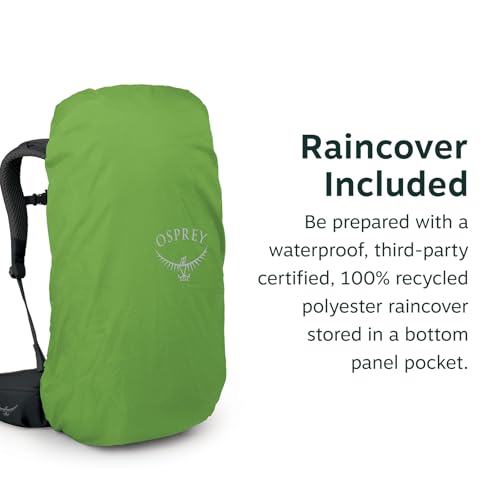
Many Osprey packs include an integrated rain cover, but not all. A rain cover is highly recommended, even if one is included, as it protects your gear from moisture and can extend the life of your pack.
The Bottom Line
Choosing a backpacking pack always involves a trade-off between carrying capacity and overall weight, or prioritizing features against price. Ultimately, for most backpackers seeking a blend of comfort, durability, and features, the Osprey Atmos AG 65L Men’s stands out as the strongest overall pick. Its Anti-Gravity suspension system really does minimize strain, and the adjustable fit options make it suitable for a wide range of body types.
If you’re on a tighter budget, or value a more ventilated design, the Osprey Rook 65L Men’s provides excellent value without sacrificing essential features. For those needing a lighter, more streamlined option for fastpacking or shorter trips, the Osprey Stratos 44L Men’s delivers impressive versatility. Knowing your backpack size for hiking trips is a good place to start narrowing your search.
Don’t get too caught up in chasing the latest materials or the highest liter count. The most expensive pack won’t magically make you a better backpacker. Focus on finding a pack that fits your torso length, distributes weight effectively, and encourages smart packing – those fundamentals matter far more than any single specification.