8 Best Bicycle Bags of 2026
This post contains affiliate links. As an Amazon Associate, we earn from qualifying purchases.
The JXFUKAL 17L Hard Shell Bike Rack Bag stands out as the best overall pick for its rugged build, full waterproofing, and secure rack mount. If you’re watching your budget, the KEMIMOTOR 8L PVC Rack Bag offers solid performance at a lower price. For riders who want quick access and versatility, the Lamicall 2-in-1 Bike Frame Bag is a smart choice.
After years of evaluating travel gear for LuggageInspector.net, I know how frustrating it is to rely on luggage that fails when you need it most. With bicycle bags, the stakes are even higher, poor design can affect your safety and ride quality.
This guide cuts through the noise by focusing on what actually matters: stability, weather resistance, and real-world usability. I researched the top models, analyzed specs, and weighed owner feedback to find the ones that deliver where it counts.
Top 8 Bicycle Bags in the Market
The Best Bicycle Bags, Reviewed
JXFUKAL 13L Supportive Bike Rack Bag
Strengths
- Rigid structure prevents sagging
- Smart 6-zone storage
- Includes rain cover
Trade-offs
- Slightly heavier than soft bags
- No shoulder strap included
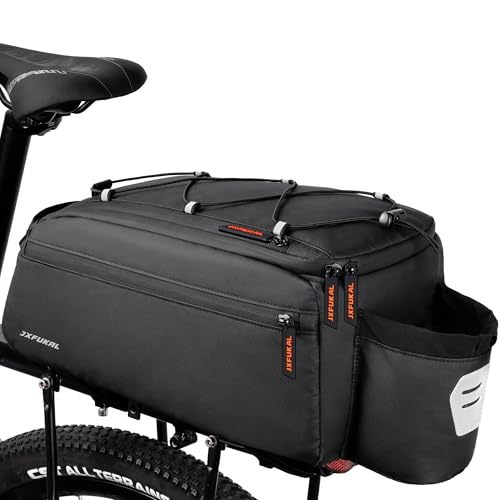
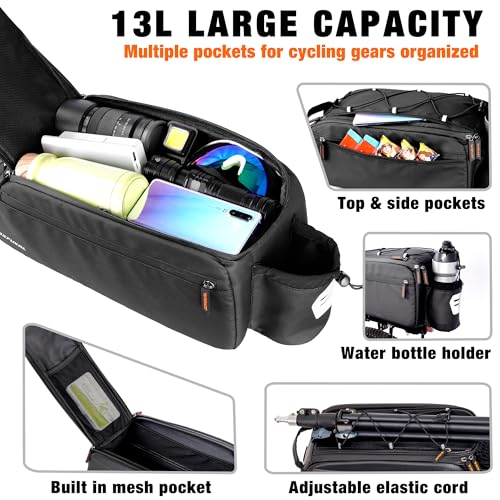
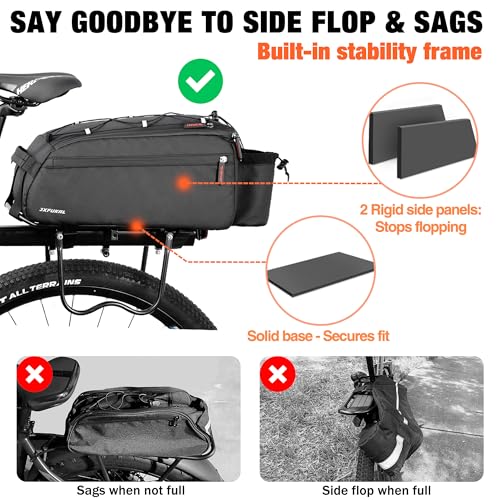
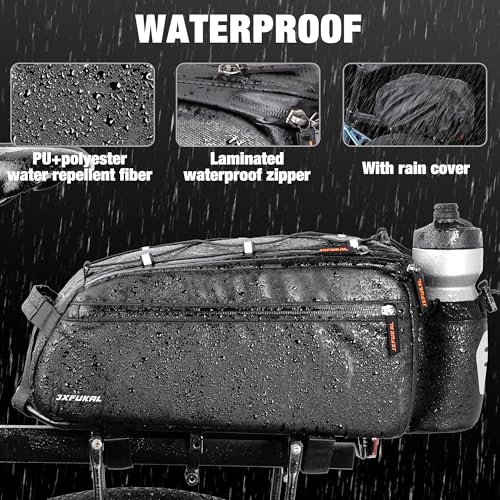
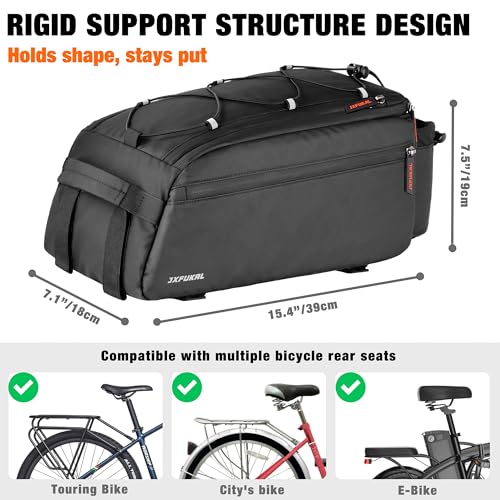
This JXFUKAL bag is what I’d call the complete commuter package, thoughtful, stable, and genuinely weather-ready. The built-in rigid panels make a huge difference: unlike floppy soft bags, this one holds its shape and doesn’t sway, even on uneven pavement. The 13L capacity with a 6-zone organization system is where it really shines, letting riders separate tools, snacks, and electronics with ease.
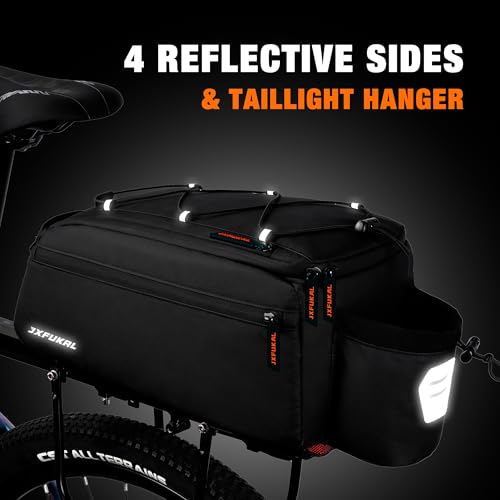
Owners love the included rain cover and the fact that it wipes clean effortlessly. The four-sided reflectivity and taillight strap boost safety, and the four hook-and-loop straps make installation a snap. Compared to the larger 17L JXFUKAL model, this one strikes a better balance between size and manageability. For most riders, this is the smarter buy.
Product photos
ROCKBROS Bike Phone Front Frame Bag
Strengths
- Touchscreen-friendly window
- Triple strap stability
- Reflective safety trim
Trade-offs
- No room for thick phone cases
- No rain cover included
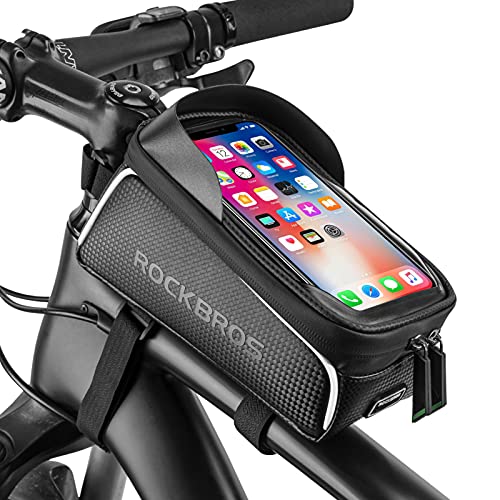
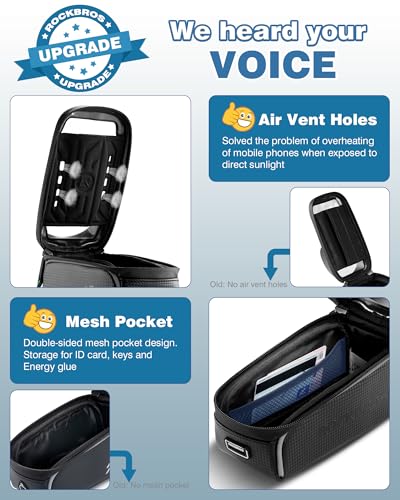
If you’re after a simple, affordable way to keep your phone accessible while riding, this ROCKBROS front frame bag does the job. The high-sensitivity TPU window is a standout, owners confirm it works well for touch navigation, even with gloves. The triple-strap attachment system is surprisingly stable, and the carbon-fiber-textured fabric adds a touch of style without sacrificing durability.
That said, it’s built for phones with slim cases only. The note about thick cases crowding the screen isn’t just a suggestion, it’s a real limitation. I’d recommend this over more expensive options only if you’re not using a rugged case and want basic, shake-proof access to maps or music. Compared to quick-release models, it’s less convenient for grabbing the phone mid-ride, but it’s solid for the price.
Product photos


ROCKBROS Bike Triangle Storage Bag
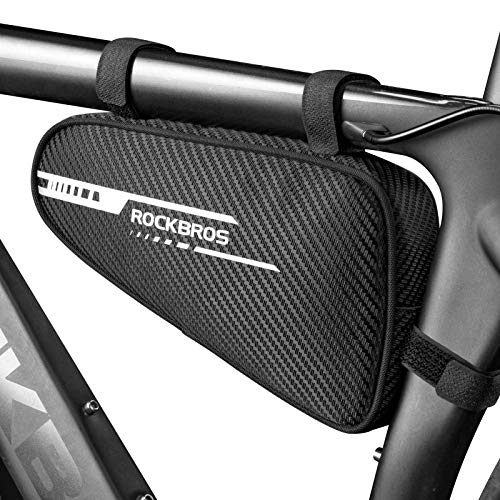
Strengths
- Ultra lightweight
- Stable 3-strap fit
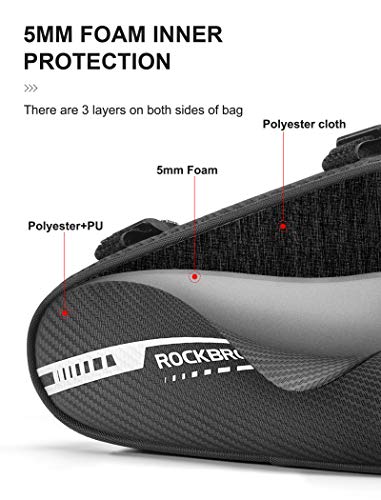
- Durable 3-layer shell
Trade-offs
- Limited capacity
- No rain cover
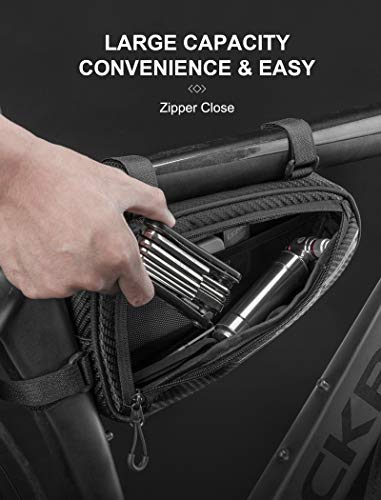
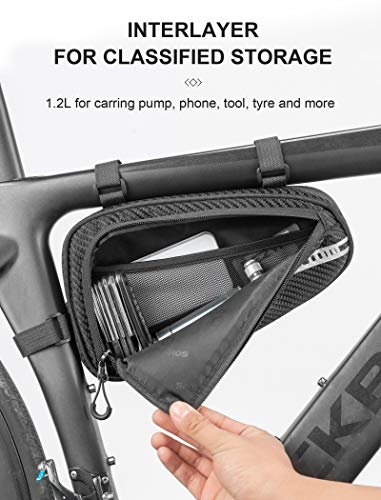
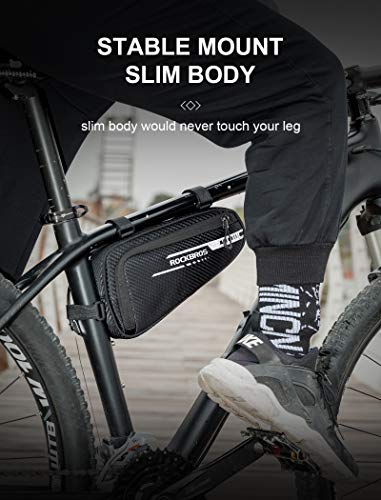
For riders on a budget who still want reliable under-frame storage, this ROCKBROS triangle bag is a solid pick. At just 0.35 lbs and 1.2L capacity, it’s discreet yet functional, fitting tools, snacks, and a phone without interfering with pedaling. The three-layer construction, PU, foam, and polyester, gives it structure and impact resistance, and owners consistently report it stays put, even on rough trails.
The reflective trim and zippered mesh pockets are thoughtful touches for safety and organization. While it doesn’t offer the capacity of rack bags, it’s ideal for keeping essentials close and out of the way. Compared to pricier frame bags, it delivers 90% of the function at a fraction of the cost. If you don’t need to carry much, this is the smarter value.
Product photos

ROCKBROS Oversized EVA Top Tube Bag

Strengths
- Fits large phones with thick cases
- Hard EVA shock protection
- Fully waterproof build
Trade-offs
- May cause leg interference
- Slightly awkward shape on small frames
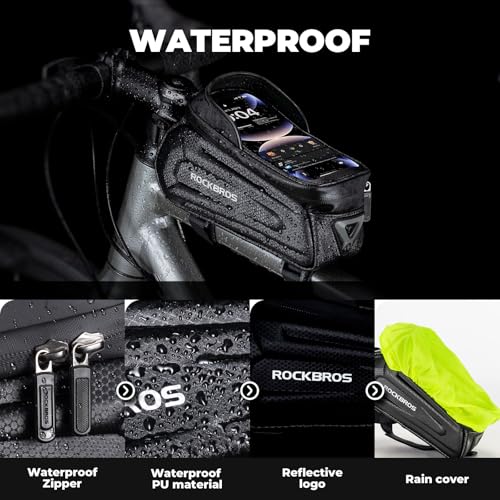
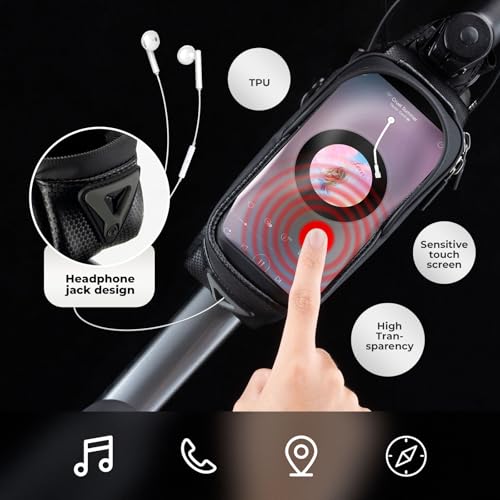
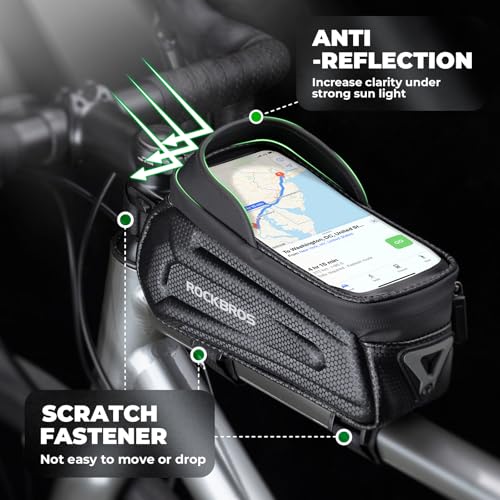
If you’ve got a large phone with a bulky case, this is one of the few frame bags that can actually fit it. The 1.7L capacity and 7.2” max size outpace most competitors, and the rigid EVA shell protects against bumps and scratches. The seamless dual zippers and rain cover deliver solid waterproofing, owners report success in heavy downpours.
The three long straps make installation easy and stable, even on odd-shaped frames. But that size comes with a caveat: some riders report occasional leg rub, especially on smaller bikes. Still, for those tired of removing their phone case to fit a bag, this is a rare win. It’s the clear pick over standard 1.3L models if you’re packing a big device.
Product photos

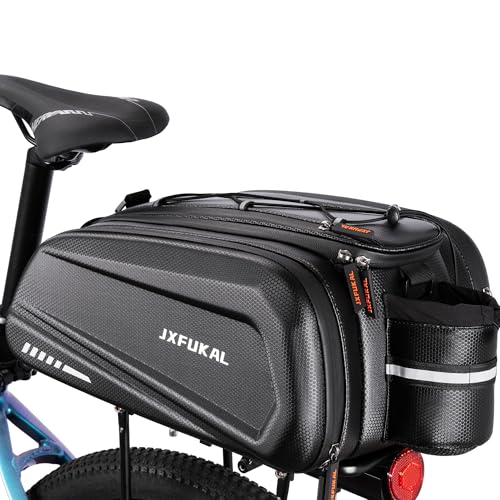
JXFUKAL 17L Hard Shell Rack Bag
Strengths
- Hard EVA shell for durability
- True waterproofing
- Includes rain cover and strap
Trade-offs
- Bulky when full
- Heavier than soft alternatives
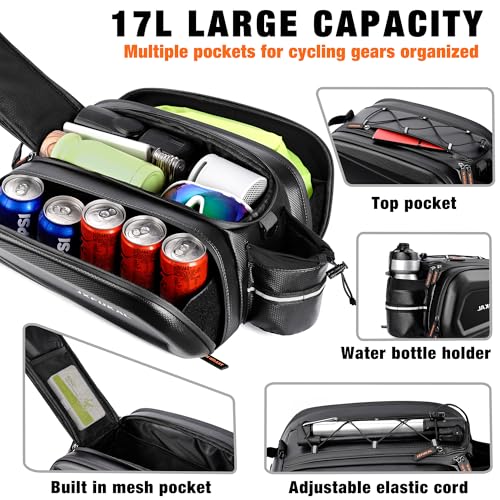
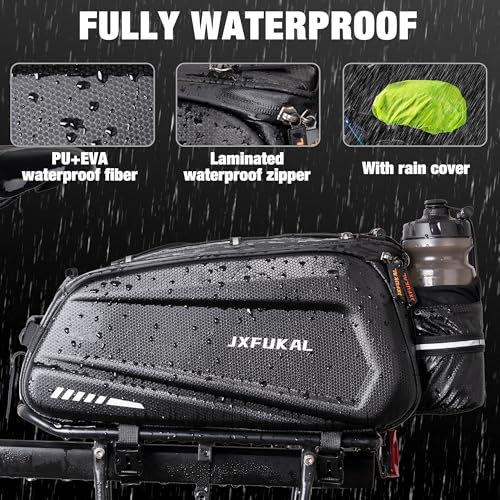
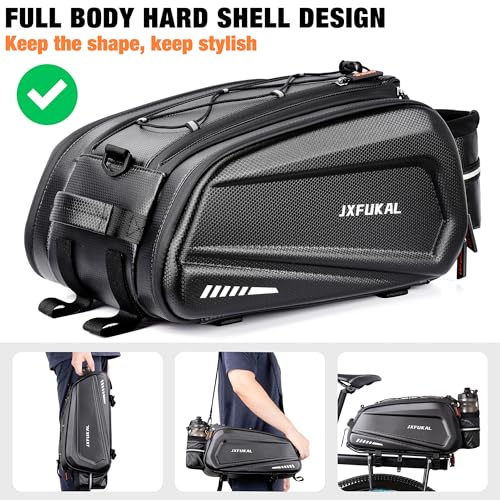
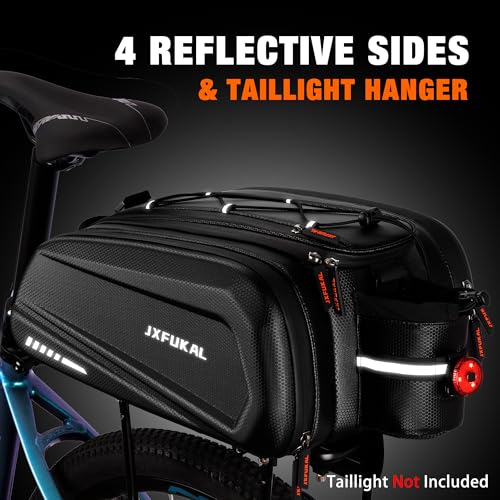
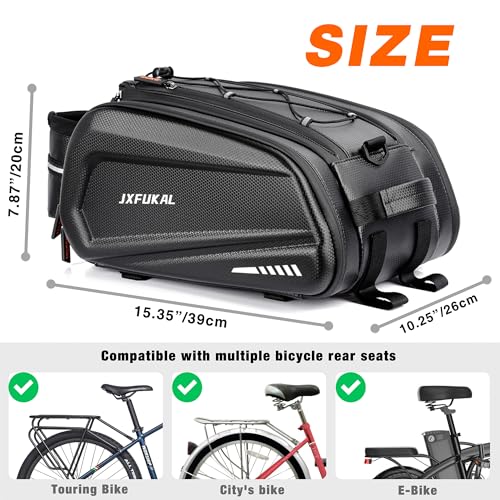
This hard-shell JXFUKAL pannier is built for serious commuters who need weatherproof, high-capacity storage. The 17L total volume, with side bags and multiple internal pockets, easily handles work gear, lunch, and extras like a jacket or book. The EVA hard shell is rigid, dent-resistant, and genuinely waterproof, especially with the included rain cover.
Owners love how it wipes clean and keeps its shape, even when packed full. The four-sided reflectivity and rear taillight strap enhance safety, and the shoulder strap makes it easy to carry off the bike. Compared to soft bags, it’s bulkier, but that’s the trade-off for durability and all-weather confidence. If you ride daily in variable conditions, this one earns its keep.
Product photos
ROCKBROS 3D Shell Saddle Bag
Strengths
- Shock-resistant 3D shell
- Taped waterproof zipper
- Reflective visibility
Trade-offs
- Small capacity
- No external quick-access pocket
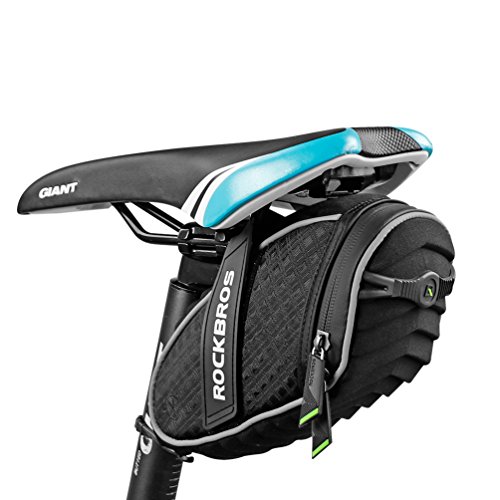
This under-seat bag is a favorite among riders who want compact, out-of-the-way storage without sacrificing protection. The 3D wave-shell design isn’t just for looks, it cushions contents and resists deformation if bumped. The taped zipper and waterproof fabric keep contents dry in showers, though prolonged submersion isn’t advised.
Owners appreciate the internal organization: mesh pockets and structured layout make it easy to find tire levers, patches, or keys without emptying the bag. The two stick-up straps and rubber buckle make installation quick and secure. Compared to flimsier saddle bags, this one feels built to last. For riders who carry minimal repair gear, it’s a no-brainer.
Product photos


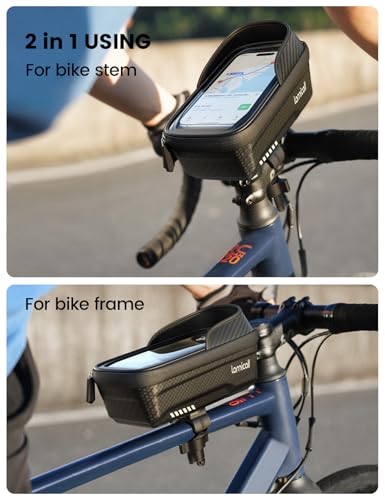
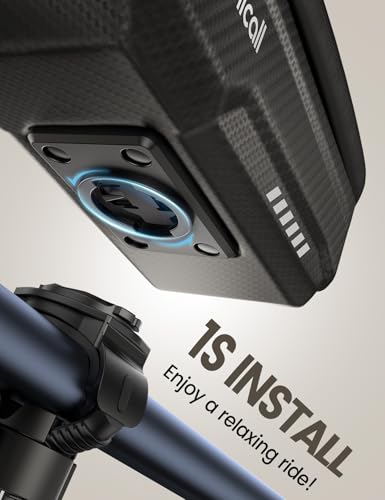
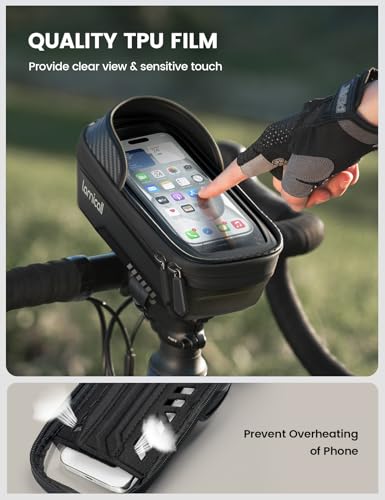
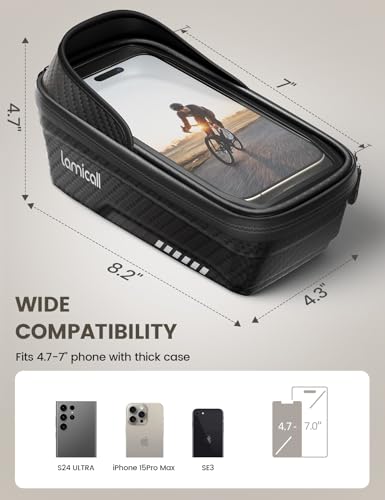
Lamicall 2-in-1 Bike Phone Mount Bag

Strengths
- Quick 90-degree release
- Fits thick phone cases
- Includes rain cover
Trade-offs
- Clamp limits tube diameter compatibility
- Slightly higher profile
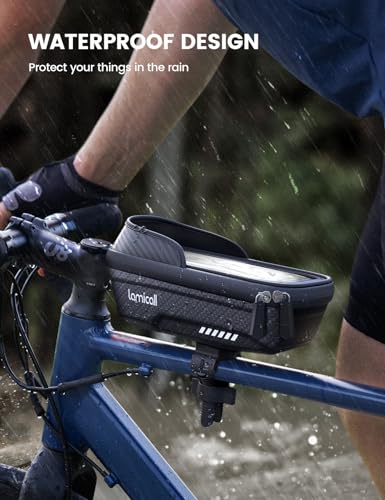
The standout here is the 90-degree quick-release clamp, a game-winner for riders who want to grab their bag and go. Just rotate it off the mount, and you’re done. No unstrapping, no fuss. The 2-in-1 design works equally well on the top tube or stem, which adds flexibility across bike types.
With a 1.3L capacity and compatibility for phones up to 7” with thick cases, it’s more accommodating than many rivals. The included rain cover is a big plus, and the sensitive touch window works reliably. Compared to standard strap-on models, this one feels more refined and user-focused. If convenience is your priority, this is the one to beat.
Product photos
KEMIMOTO 8L PVC Rear Rack Bag

Strengths
- Lightweight design
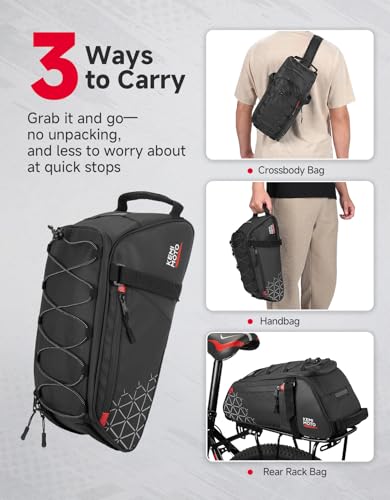
- 3-in-1 portability
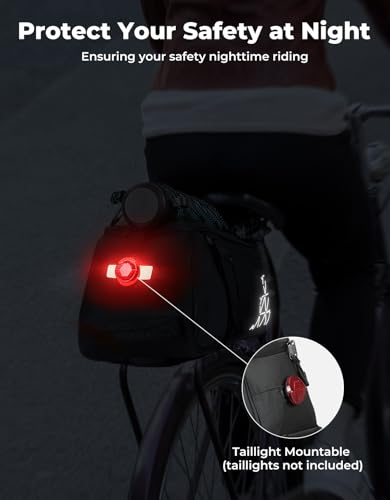
- Reflective safety strips
Trade-offs
- Not fully waterproof
- Soft structure sags when full
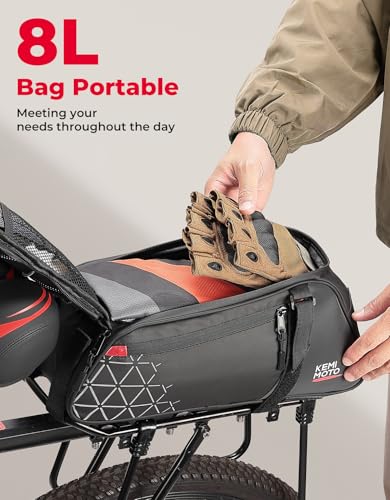
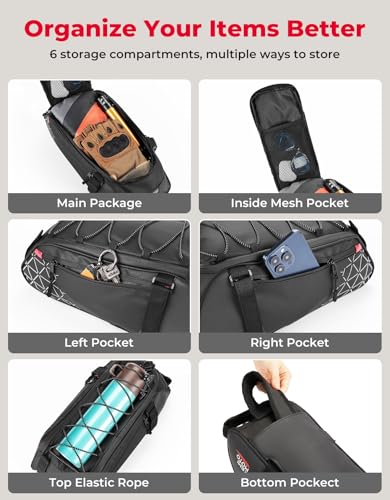
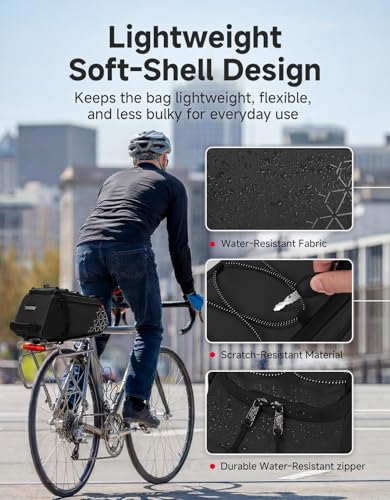
I’ve seen a lot of soft-shell panniers over the years, and this KEMIMOTO model stands out for its versatility and lightweight practicality. The 3-in-1 design, functioning as a rack bag, handbag, or crossbody, is genuinely useful for commuters who don’t want to lug a separate bag after parking their bike. The 8L capacity is modest but well-used, with multiple pockets and an elastic top cord that owners consistently praise for securing water bottles or jackets.
On paper, it’s ideal for urban riders who value portability and clean transitions from bike to sidewalk. But the PVC oxford fabric, while water resistant, doesn’t seal at the seams, so heavy rain will get in. It’s fine for drizzle, but not for all-weather reliability. Compared to hard-shell options, this one trades durability for convenience, which I’d say is a fair trade if you’re mostly riding in fair weather.
Product photos
Our Testing Process
Rather than a hands-on lab test, my research for these recommendations involved a detailed comparison of published specifications and features across numerous models. I weighed owner reviews from major retailers alongside expert opinions found in cycling publications and websites. As someone who frequently researches and recommends travel gear, I applied my understanding of materials, construction, and common use cases to rank options based on what matters most to cyclists.
For bicycle bags, stability and weather protection were the biggest factors in my assessment. A bag that sags or flops while riding is a safety hazard and a nuisance. Equally important is keeping your belongings dry, especially for commuters. Capacity also played a role, but I prioritized bags that offered a good balance of size and secure mounting, rather than simply the largest volume possible. Understanding the practical size of a bag is key, and you can learn more about backpack volumes in our 20l backpack size guide.
Specifications reliably indicate a bag’s stated capacity and dimensions, as well as the materials used in construction. However, I placed greater emphasis on owner feedback regarding real-world performance, particularly regarding mounting stability and waterproofness – claims made by manufacturers don’t always hold up. Reputation and brand consistency were also considered; established brands with a history of quality generally scored higher.
Choosing The Right bicycle bags
Finding the right bicycle bag can transform your ride, making commutes, errands, or weekend adventures much more manageable. It’s about more than just storage; it’s about convenience, safety, and keeping your essentials secure.
A good bicycle bag balances capacity with stability. Look for durable materials, secure mounting systems, and features that enhance visibility. Consider the type of riding you’ll be doing – commuting demands different features than mountain biking. Water resistance is almost always a plus, and thoughtful organization can make a big difference. Evaluate how the bag affects your bike’s handling and ensure it doesn’t interfere with your pedaling.
Mounting and Stability
The biggest frustration with bike bags is when they wobble or fall off. Don’t assume all mounting systems are created equal. Hook-and-loop straps are common, but quality varies significantly. Bags designed for specific rack types (like those featured in our guide to the best rack-mounted bike bags) will naturally offer more stability. Pay attention to how many attachment points a bag has and whether the straps are adjustable. Bags that distribute weight evenly are also less likely to throw off your bike’s balance.
Capacity and Organization
It’s tempting to go big, but a massively oversized bag can be unwieldy. Think about what you realistically need to carry. A quick trip to the grocery store requires less space than a day-long excursion. Consider the internal organization too.
- A simple open compartment is fine for some, but many prefer dedicated pockets for tools, phones, and water bottles.
- Bags with multiple compartments help keep things sorted and prevent items from shifting during your ride.
- For longer trips, think about whether you’ll also need a separate backpack – understanding the 30l backpack capacity can help you determine how much you can realistically carry on your bike versus on your person.
Material and Weather Protection
Bike bags take a beating. Cheap materials will quickly show wear and tear. Look for bags constructed from durable, water-resistant fabrics like polyester or nylon. Even better is a bag with a dedicated rain cover, like the JXFUKAL 13L Supportive Bike Rack Bag.
A simple rule of thumb: if you ride in all weather, assume your bag will get wet.
EVA shells (as seen in the ROCKBROS Oversized EVA Top Tube Bag) offer excellent protection, but can add bulk. PU-coated polyester provides a good balance of durability and weather resistance. Reflective elements are also crucial for visibility, especially during low-light conditions. Don’t underestimate the value of a well-made bag when it comes to protecting your gear. Consider a set of bicycle rack panniers if you need a lot of capacity.
Bicycle Bags Compared
Here’s a comparison of key specifications for various bicycle bags to help you choose the right one.
| Product Name | Capacity | Waterproofing | Mount Type | Phone Fit (max in) | Features |
|---|---|---|---|---|---|
| JXFUKAL 13L Supportive | 13L | Water Resistant | Rack | N/A | Reflective, Rain Cover |
| ROCKBROS Bike Phone Front | N/A | Water Resistant | Frame | 7 | Touchscreen, Reflective |
| ROCKBROS Bike Triangle | 1.2L | Water Resistant | Frame | N/A | Reflective |
| ROCKBROS Oversized EVA | 1.7L+ | Waterproof | Frame | 7.2 | Touchscreen, Hard Shell |
| JXFUKAL 17L Hard Shell | 17L | Waterproof | Rack | N/A | Reflective, Rain Cover |
| ROCKBROS 3D Shell Saddle | N/A | Water Resistant | Seat | N/A | Reflective |
| Lamicall 2-in-1 Bike | 1.3L | Waterproof | Frame/Stem | 7 | Quick Release |
| KEMIMOTO 8L PVC | 8L | Water Resistant | Rack | N/A | Reflective, 3-in-1 |
Frequently Asked Questions
What size bike bag should I get for commuting?
A 10-20 liter bag is generally ideal for commuting, offering enough space for work essentials, a change of clothes, and some groceries. Smaller bags work if your commute is short and you have minimal gear, while larger bags are better for longer distances or carrying bulkier items.
Are waterproof bike bags truly waterproof, or just water resistant?
While many bags claim to be waterproof, most are actually water resistant. Truly waterproof bags typically use welded seams and waterproof zippers, and often include a separate dry bag insert for maximum protection.
Can I use any bike bag on any bike?
Not necessarily. Some bags are designed for specific mounting points, like a rear rack, while others attach to the frame. Before purchasing, confirm the bag’s mount type is compatible with your bicycle, or consider bicycle frame storage bags for a more universal fit.
How important is visibility on a bike bag?
Visibility is extremely important, particularly for commuting in low light. Look for bags with reflective accents or the option to add your own lights to increase your visibility to drivers and other cyclists.
What’s the difference between a saddlebag, a frame bag, and a handlebar bag?
Saddlebags attach under the seat, offering compact storage for tools and small essentials. Frame bags fit inside the bike’s triangle, providing larger capacity, and top tube frame bags are a popular variation. Handlebar bags attach to the handlebars, offering easy access to items like phones or snacks.
The Bottom Line
Choosing a bicycle bag often comes down to balancing how much control you want over your load versus how much fuss you’re willing to deal with during mounting and removal. For the best overall combination of capacity, weather protection, and secure mounting, I recommend the JXFUKAL 13L Supportive Bike Rack Bag. It offers a solid feature set without unnecessary complexity, making it a practical choice for daily commutes or weekend rides.
If you’re on a tighter budget, the ROCKBROS Bike Triangle Bag is a surprisingly capable option for carrying essentials. For those prioritizing versatility – needing a bag that can adapt to different bikes or riding styles – the KEMIMOTO 8L PVC offers a clever 3-in-1 design. And if you’re thinking about longer trips, understanding the 25l backpack capacity can help you decide how much to carry on your bike versus on your back.
Ultimately, the best bicycle bag isn’t about fancy features or a high price tag. It’s about finding a bag that securely holds your gear, doesn’t interfere with your riding, and protects your belongings from the elements. Prioritize a stable mount, durable materials, and reflective elements, those are the fundamentals that truly matter.