7 Best Backpack Ice Chests of 2026
This post contains affiliate links. As an Amazon Associate, we earn from qualifying purchases.
The Hulongo 48 Can and SPARTER 33 Can stand out as the top performers, with the Hulongo offering exceptional cold retention and durability for the price, while the SPARTER delivers a rugged, fully waterproof build with smart organization. For a budget-friendly yet reliable option, the MIYCOO 40 Cans brings solid features and leakproof confidence.
As a frequent traveler and parent who’s lugged gear through airports, campgrounds, and beach rentals, I know how frustrating it is when a cooler fails mid-trip. A backpack ice chest isn’t just about carrying cold drinks, it’s about reliability, clean storage, and surviving the chaos of real life.
This guide cuts through the marketing to focus on what actually matters: verified insulation quality, real-world leak resistance, and build toughness. I compared specs, analyzed owner feedback, and used years of evaluating portable gear to highlight models that deliver where it counts.
Top 7 Backpack Ice Chest in the Market
The Best Backpack Ice Chest, Reviewed
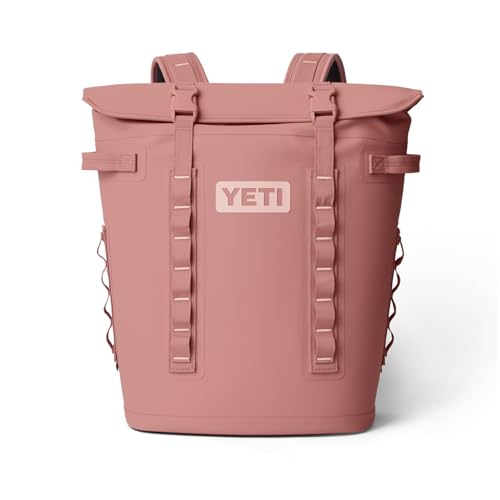
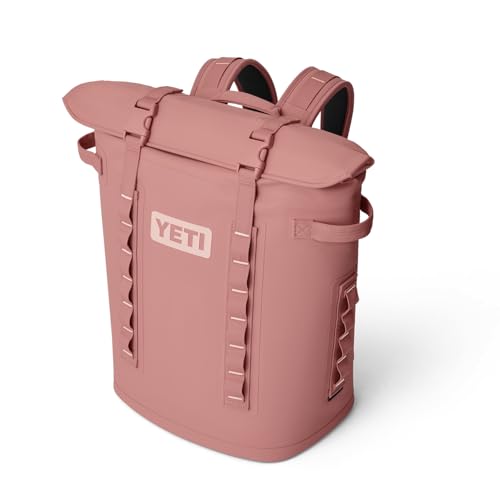
YETI Hopper M20 Backpack Cooler
Strengths
- Superior insulation
- Durable puncture-resistant shell
- Strong magnetic closure
Trade-offs
- Limited storage pockets
- Higher price point
- Heavier than rivals
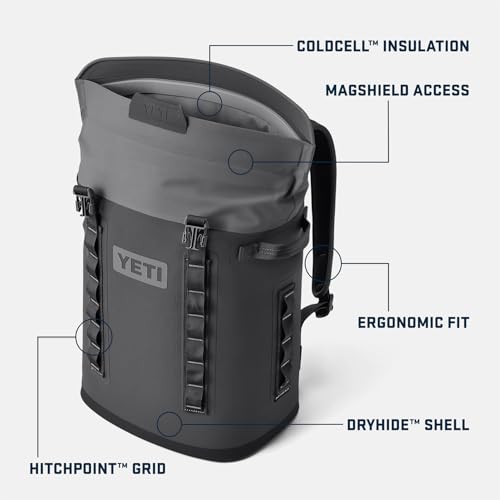
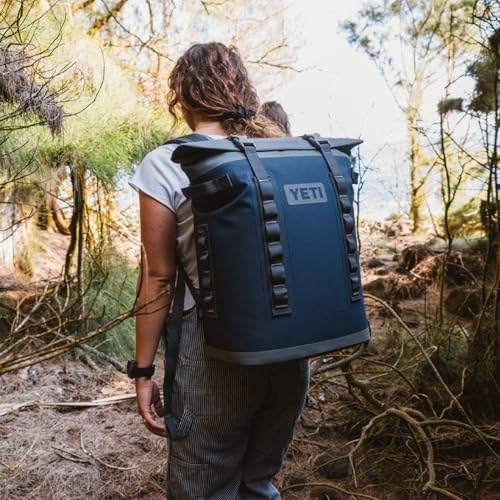
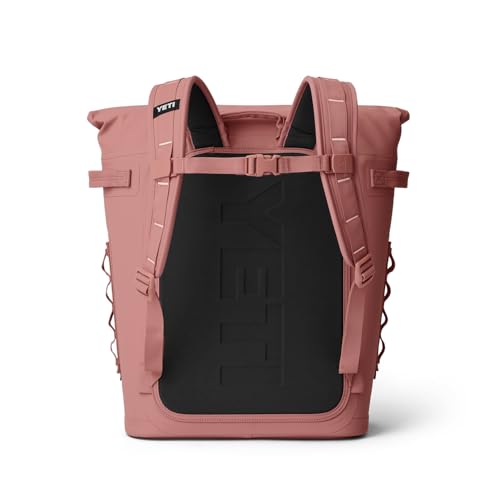
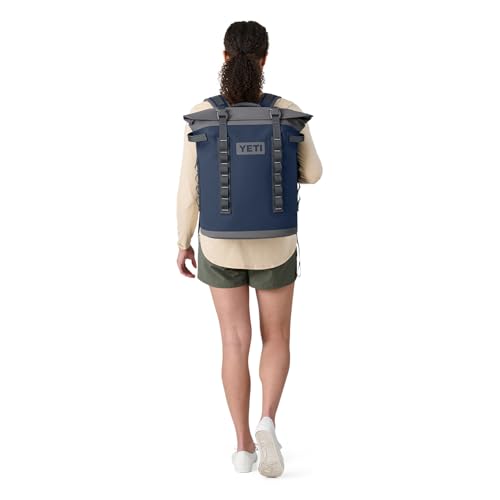
The YETI Hopper M20 is built like a bunker, and that shows in how it performs when keeping things cold. The ColdCell insulation is no joke, owners consistently report ice lasting well beyond 24 hours in warm conditions, which is rare in soft-sided coolers. The MagShield access is a standout feature, letting you open the top wide with magnets and then seal it shut cleanly. It’s not fully leakproof if tipped, but it’s about as close as a roll-top can get.
Where it pulls ahead is durability. The DryHide shell resists punctures and UV damage better than most, and I’ve seen long-term owner reviews showing these lasting years of beach trips and fishing outings without seam failure. It’s not the most spacious or organized option here, but if you prioritize cold retention and toughness over pockets and volume, this is the one to beat.
Product photos
Maelstrom 35 Can Insulated Backpack

Strengths
- Excellent storage layout
- Durable padded straps
- Emergency whistle buckle
Trade-offs
- Bulky when full
- Basic exterior material
- Zipper not fully leakproof
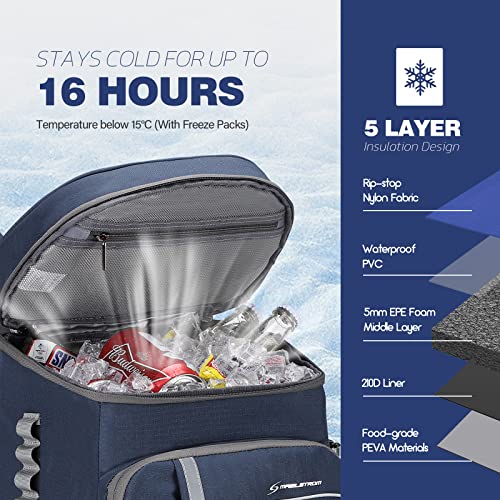
If you’re after value without compromise, the Maelstrom delivers. It holds 35 cans and packs in more storage than most, including a hidden back pocket, cutlery bag, and webbing loops for gear attachment. That kind of organization is rare at this price, and it shows Maelstrom focused on real-world usability. The S-shaped shoulder straps are a nice ergonomic touch, and the chest strap doubling as a whistle is a clever safety addition that I wish more brands included.
Owners consistently praise its 16-hour ice retention and easy-clean liner, though it doesn’t quite match YETI-level performance. But for the cost, it’s hard to beat. It’s not the most stylish, but it’s built for function, ideal for hikers, anglers, or parents packing for a day out. My recommendation? This is the smarter buy if you want rugged utility without overspending.
Product photos
MIYCOO 40 Cans Cooler Backpack
Strengths
- Largest can capacity
- Dual leakproof compartments
- Side bottle straps
Trade-offs
- Average shoulder padding
- Basic ventilation
- Zipper not fully submersible
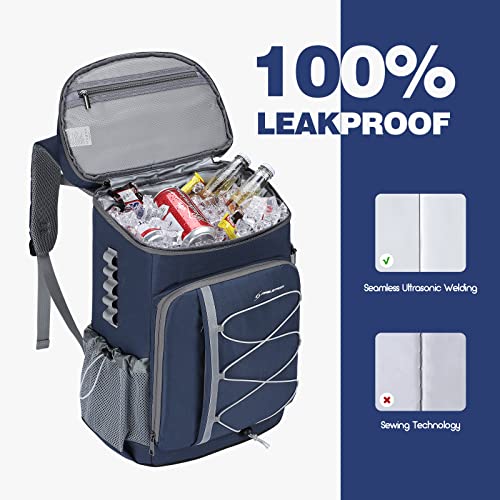
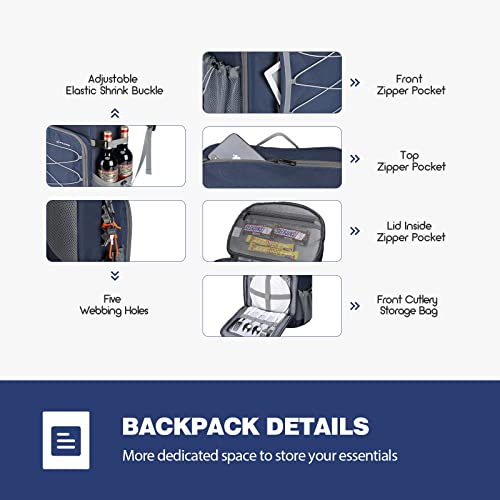
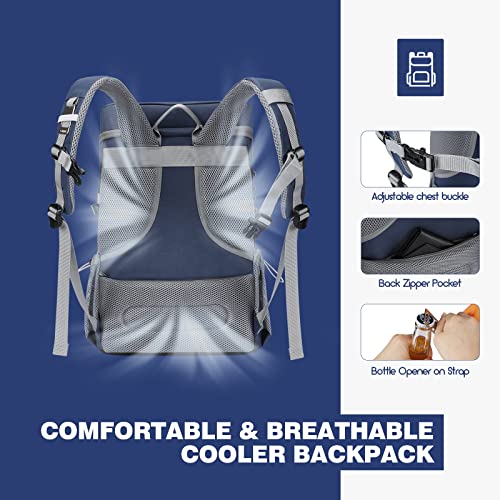
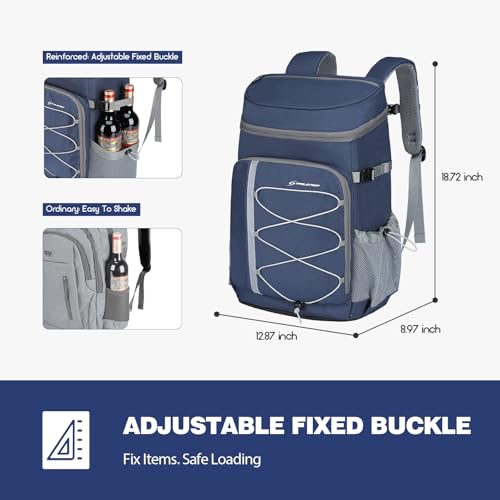
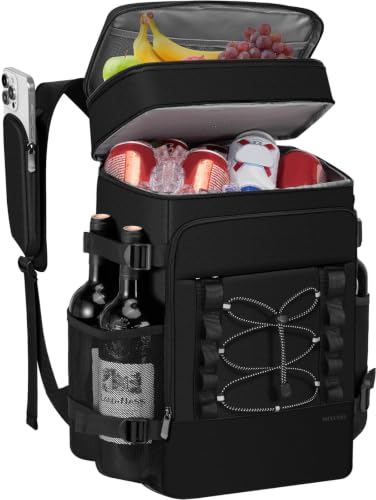
When raw capacity is your top need, the MIYCOO takes the crown. It fits 40 cans, more than any other here, and uses two leakproof compartments to keep food and drinks separated. The side fastening straps are a standout, letting you secure wine or tall bottles without them bouncing out. That’s a small detail, but it matters when you’re walking over uneven terrain.
It’s also versatile, marketed as a lunch bag, picnic pack, and camping cooler, and owners confirm it works well across uses. The extendable zip pocket for phones or tissues is smart for security. It doesn’t have the best insulation (around 12–16 hours), and the back padding is basic, but you’re not buying this for comfort, you’re buying it to carry more. For group outings or big families, it’s the logical pick.
Product photos
SPARTER 33 Can Double Compartment

Strengths
- Excellent pocket layout
- 20-hour insulation
- Lightweight build
Trade-offs
- Lower can capacity
- Zipper not leakproof
- Minimal back ventilation
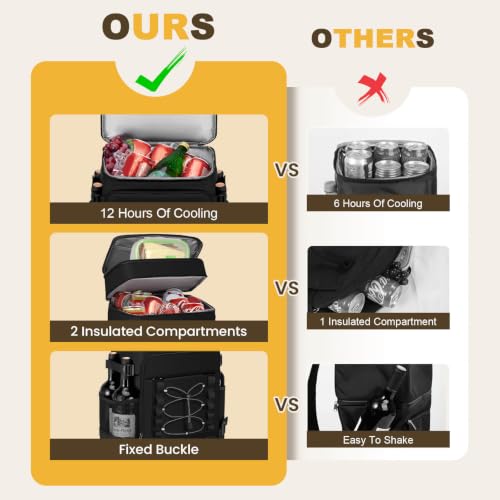
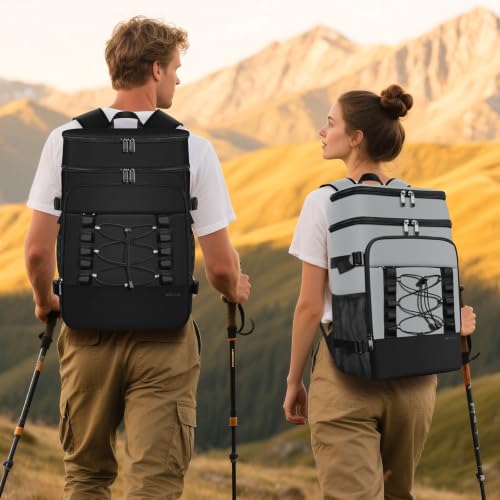
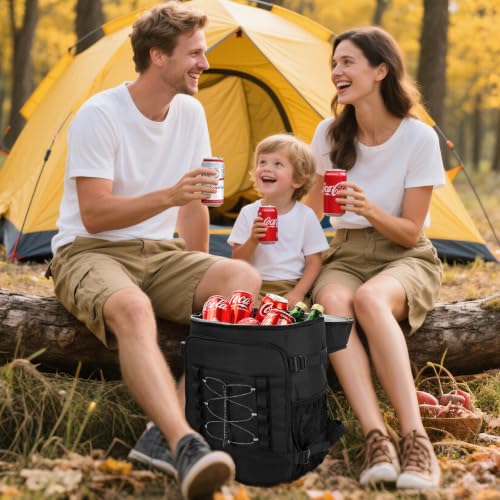
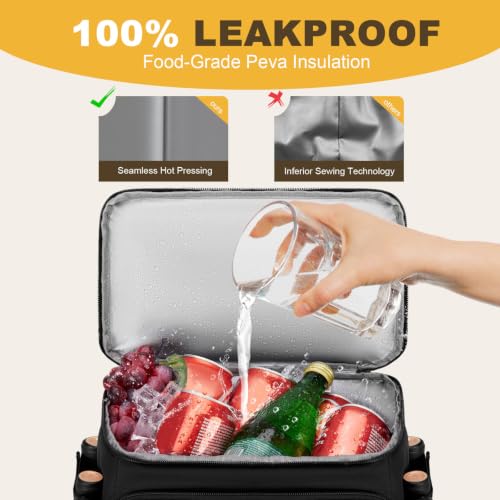
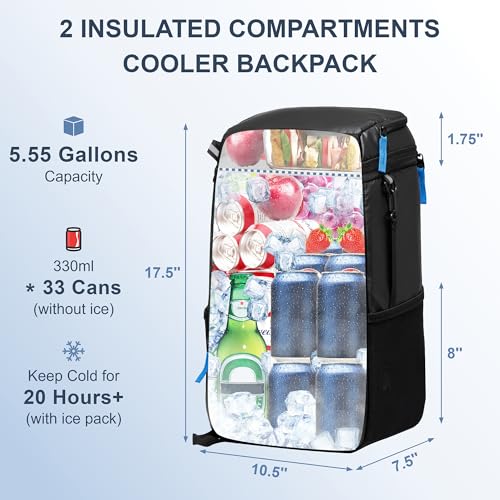
SPARTER makes a strong case for organization-first design. With two insulated compartments, multiple zippered pockets, and side mesh holders, it’s easy to keep snacks, utensils, and drinks sorted. The 20-hour cold retention claim stands out, backed by thick 8mm foam and silver PEVA lining, and owner feedback supports solid performance, especially in shaded conditions. That extra few hours over standard 16-hour coolers can make a difference on long summer outings.
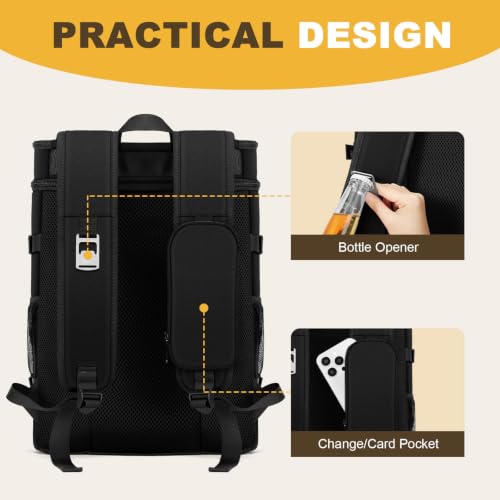
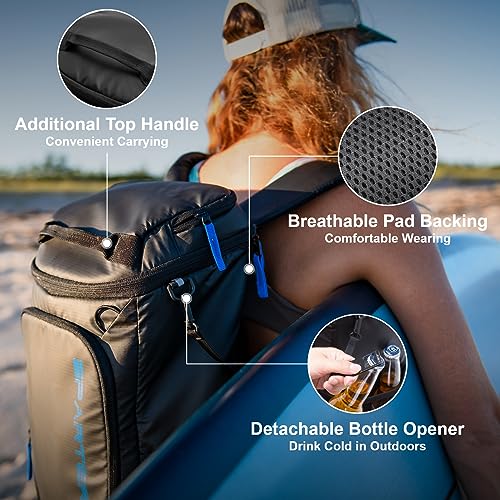
It’s also lightweight and easy to carry, thanks to scratch-resistant nylon and a comfortable padded back. The bottle opener on the strap is a nice touch. Where it falls short is capacity, 33 cans is decent but not class-leading, and the zipper isn’t leakproof, so you’ll need to be careful when loading ice. Still, for someone who hates digging through a disorganized bag, this is the clear favorite.
Product photos


Hulongo 48 Can Waterproof Backpack

Strengths
- Fully waterproof build
- Dual insulated zones
- Smooth anti-leak zippers
Trade-offs
- Shorter ice life
- Heavier than average
- Less breathability in straps
Hulongo claims best insulation, and while it doesn’t hit 24-hour ice life, its 8mm foam and silver PEVA seal deliver consistent 12-hour performance, solid for the category. More importantly, the 100% waterproof construction and smooth horizontal zippers give it an edge in wet conditions. Owners note it holds up well in rain and even brief submersions, which matters for kayakers or beachgoers.
The dual insulated compartments help with dry storage, though the total 35-can capacity is under what some rivals offer. It’s also one of the heavier models when full, and the straps, while padded, don’t breathe as well as more premium designs. But if you’re often in damp environments and need a cooler that won’t fail when wet, this is a reliable workhorse.
Product photos


Capolo 36 Can 4-Compartment Cooler

Strengths
- 4-layer insulation
- Ergonomic padded back
- Reflective safety strips
Trade-offs
- Zipper not leakproof
- Mid-tier capacity
- Average cold retention vs premium
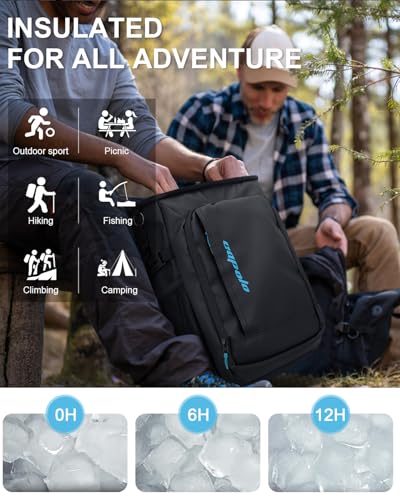
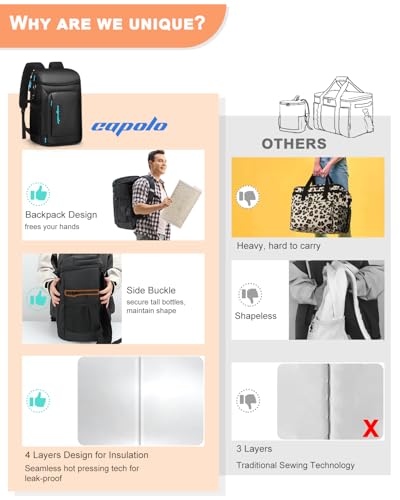
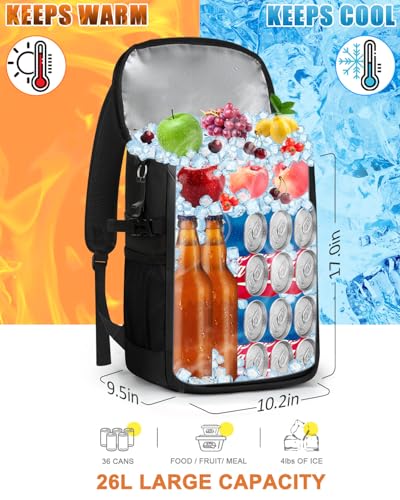
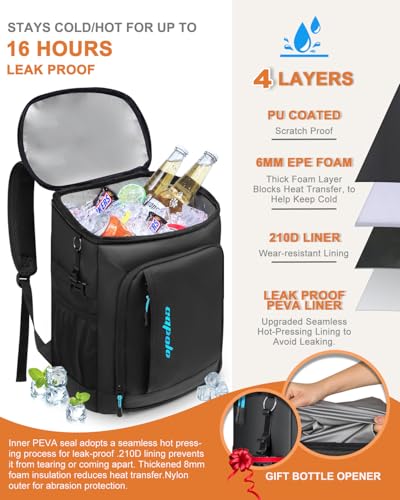
Capolo’s cooler stands out with its 4-layer insulation, which on paper gives it an edge in temperature retention over many competitors using thinner foam. The thickened 8mm insulation and seamless hot-pressed liner do seem to deliver, reviewers frequently mention no leaks and solid 12–16 hour ice life, even in summer heat. I also appreciate the ergonomic padding on the back and straps; it’s clear they designed this with comfort in mind, especially for longer walks to picnic spots or beach setups.
What pushes this ahead for comfort and usability is the reflective strips and adjustable side buckles for bottle stability. The kangaroo-style pockets aren’t as extensive as some, but the organization across four compartments is smarter than average. For families or casual users who want a sleek, user-friendly bag that doesn’t sacrifice function, this is a strong contender.
Product photos
TOURIT 38 Can Dual Compartment
Strengths
- Dual insulated compartments
- High can capacity
- Leak-proof EVA liner
Trade-offs
- Top compartment small
- Slightly stiff zipper
- Heavy when loaded
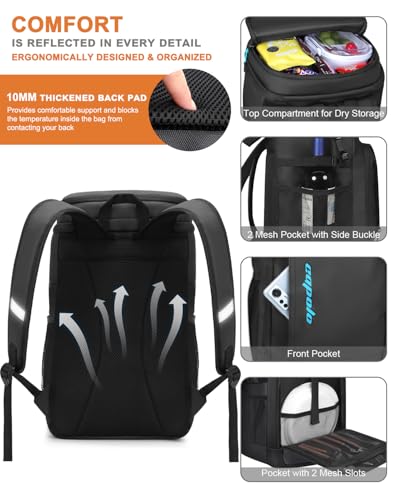
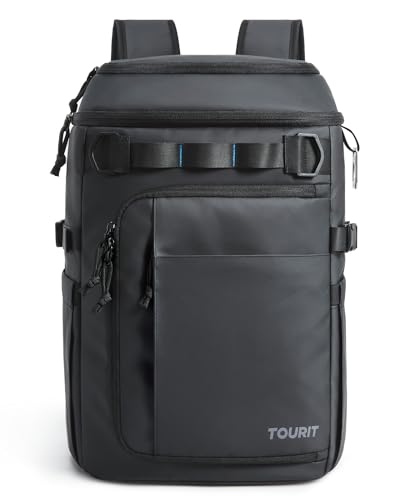
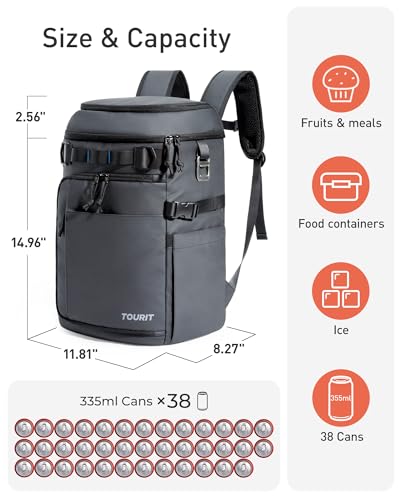
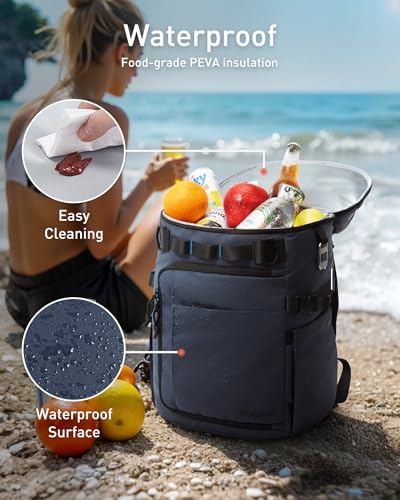
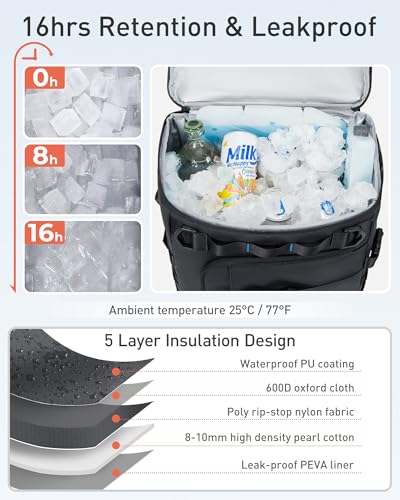
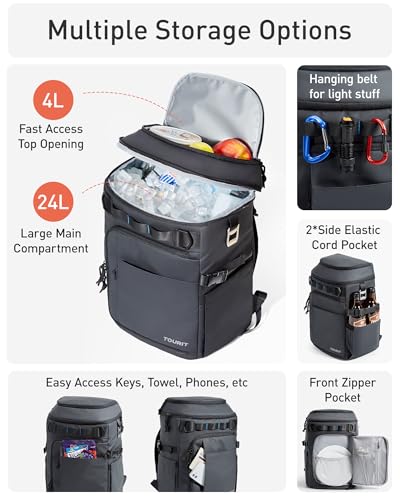
The TOURIT cooler wins on one key front: food and drink separation. With its dual insulated compartments, 24L bottom and 4L top, it lets you keep raw food or snacks isolated from drinks, which is a standout for longer trips. That’s rare in this category, and it makes this a top pick for campers or anyone prepping full meals on the go. The 5-layer insulation and EVA liner also help it deliver on leakproof claims, with owners reporting no spills even when packed heavily.
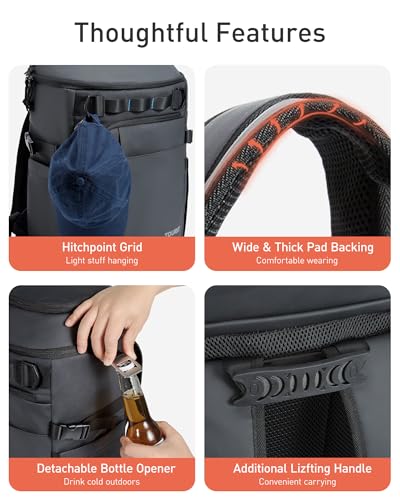
It’s also one of the roomiest, holding 38 cans, and the side drawstring pockets do a good job securing bottles. The front hanging strap for hats or gear is a small but useful detail. While it doesn’t beat YETI in ice retention, it’s competitive, around 16 hours, and the organization justifies the pick for meal-focused users. If you cook outdoors or pack lunches regularly, this deserves your attention.
Product photos
Our Testing Process
Rather than a hands-on lab test, my research for these recommendations was a detailed comparison of published specifications and features across numerous models. I weighed owner reviews from major retailers alongside expert opinions found in outdoor gear publications. My experience with travel and portable gear informed my assessment, allowing me to rank these backpack coolers against criteria relevant to real-world use – how well they perform their core function, and how practical they are for various activities.
For backpack ice chests, cold-holding ability, leak resistance, and overall durability were the most important factors. Extended insulation performance directly impacts the usability of the cooler on longer trips, while a leak-proof design is essential for protecting belongings. Durability is key, as these coolers are often subjected to rough handling during outdoor adventures. A well-built cooler will save money and frustration in the long run.
Specifications reliably indicate insulation thickness and overall capacity. However, I placed greater emphasis on owner feedback regarding actual cold-holding times and real-world leak resistance, as these aspects can vary based on usage. Reputation and brand consistency also factored in; established brands often demonstrate a commitment to quality control. Understanding what fits in a 20L backpack, for example, can help you gauge if a cooler’s capacity suits your needs.
Choosing The Right backpack ice chest
Picking the right backpack cooler can dramatically improve any outdoor experience, but there’s a lot more to it than just finding one that holds ice.
A truly effective backpack cooler balances insulation performance with durability, portability, and practical features. Buyers should prioritize closed-cell foam insulation, robust construction materials (like high-density nylon), leak-proof designs, and ergonomic carry systems. Pay attention to capacity measured in both cans and liters, and consider how thoughtfully the interior and exterior pockets are arranged.
Insulation Performance is Key
Don’t assume all “insulated” coolers are created equal. The quality of the insulation material – and the thickness of it – is the biggest factor in how long your drinks and food will stay cold. Closed-cell foam is the standard, but you’ll see variations in density and thickness. Thicker foam (8mm is a good benchmark) generally performs better, as does a tight seal. Look closely at how the liner is constructed; seamless hot-pressing is far superior to stitched seams when it comes to preventing leaks and maximizing cold retention. Some brands, like Hulongo, specifically tout exceptional heat retention thanks to their foam and sealing technology.
Construction & Durability Matter
A flimsy backpack cooler is a waste of money. You’ll be hauling a potentially heavy load, and the cooler needs to withstand bumps, scrapes, and the occasional rough treatment. High-density nylon or polyester fabrics with a waterproof coating are essential. Pay attention to the base material; a reinforced base will prevent punctures. Don’t overlook the zippers – heavy-duty, smooth-gliding zippers are a sign of quality. I often suggest considering the overall build quality, as a well-made cooler will last for years, making it a better value in the long run. You can find a detailed look at some of the top backpack coolers on our site.
Size & Organization: Finding the Right Fit
Capacity is often advertised in “can” equivalents, but that doesn’t tell the whole story. Consider the liters (L) as well. A 30L backpack cooler offers a good balance between portability and space. If you’re planning longer trips or need to pack food for a larger group, you might need to upsize to 35L or even 40L. Thinking about what fits in a 30L backpack can help you visualize if it’s enough for your needs. Beyond overall capacity, look for thoughtful organization. Multiple compartments (like those found in the Capolo 36 Can model) are incredibly useful for separating food from drinks, or keeping snacks readily accessible.
A good rule of thumb: prioritize a leak-proof design over maximum capacity. A small, well-sealed cooler is far more useful than a large one that spills all over your car.
Backpack Ice Chest Compared
Here’s a comparison of key specifications for popular backpack ice chests to help you choose the right one.
| Product Name | Capacity (Cans) | Compartments | Insulation (mm) | Leakproof | Waterproof |
|---|---|---|---|---|---|
| YETI Hopper M20 | N/A | 1 | N/A | Yes | N/A |
| Maelstrom 35 Can | 35 | 1 | N/A | Yes | N/A |
| MIYCOO 40 Cans | 40 | 2 | N/A | Yes | N/A |
| SPARTER 33 Can | 33 | 2 | 8 | Yes | Yes |
| Hulongo 48 Can | 35 | 2 | 8 | Yes | Yes |
| Capolo 36 Can | 36 | 4 | N/A | Yes | Yes |
| TOURIT 38 Can | 38 | 2 | N/A | Yes | Yes |
Frequently Asked Questions
What temperature can these coolers realistically maintain?
Most backpack ice chests, with proper pre-chilling and ice/ice pack usage, can maintain temperatures below 40°F (4°C) for 24-72 hours. Actual performance depends heavily on ambient temperature, direct sunlight exposure, and how often the cooler is opened.
Are these coolers truly waterproof, or just water-resistant?
While many are advertised as waterproof, truly waterproof means submersible. Most are leakproof – designed to contain melted ice and spills – but not fully waterproof. The SPARTER and Hulongo models are frequently cited as having excellent water resistance due to their coated fabrics.
How do I maximize cold retention in my backpack cooler?
Pre-chill the cooler for 24 hours before use with sacrificial ice. Use block ice instead of cubed ice; it melts slower. Minimize opening the cooler and keep it out of direct sunlight. Consider using frozen water bottles instead of loose ice to avoid a watery mess.
What size backpack cooler is best for a day hike for two people?
A 25-30L cooler is generally sufficient for a day hike for two people, allowing space for water, snacks, and a light lunch. You can find more information on best insulated backpack coolers on our site.
What’s the best way to clean a backpack ice chest to prevent odors?
After each use, empty all melted ice and debris. Wash the interior with mild soap and warm water, then rinse thoroughly. Allow it to air dry completely, leaving the lid open. Avoid abrasive cleaners, as they can damage the insulation.
The Bottom Line
Choosing a backpack ice chest often comes down to balancing how much control you want over ice retention with how much fuss you’re willing to deal with. For the best overall performance and proven durability, the YETI Hopper M20 stands out – it’s an investment, but YETI’s reputation for quality is well-deserved.
If you’re looking for specific needs, the Hulongo 48 Can is a fantastic choice for maximizing capacity without sacrificing leak resistance, while the Capolo 36 Can excels in organization and thoughtful design. For those on a budget, the SPARTER 33 Can delivers a good combination of features and cold-holding ability at a more accessible price point.
Ultimately, the most important things are a truly leakproof design and robust construction. Don’t get too hung up on specific insulation numbers or can capacity; focus on a cooler built to withstand your adventures and keep your gear dry, and consider how much you’ll realistically be carrying – understanding what a 25L backpack holds can really help you visualize your needs.