7 Best Potato Growing Bags of 2026
This post contains affiliate links. As an Amazon Associate, we earn from qualifying purchases.
The best overall potato growing bag is the 4PCS 20-Gallon Potato Grow Bags, offering high capacity and dual harvest windows. For budget growers, the Jorvila 5 Pack 5 Gallon Bags deliver solid performance at a lower size and price point.
Choosing the right potato growing bag can make the difference between a frustrating harvest and a smooth, productive season. Too many gardeners end up with flimsy bags that tear, poor drainage that rots roots, or awkward designs that make harvesting a mess.
This guide cuts through the noise by focusing on what actually matters, based on fabric specs, capacity, and real owner feedback. I looked at durability, ease of harvest, and smart design to find bags that work well for home growers, whether you’re planting in a backyard or on a patio.
Top 7 Potato Growing Bags in the Market
The Best Potato Growing Bags, Reviewed
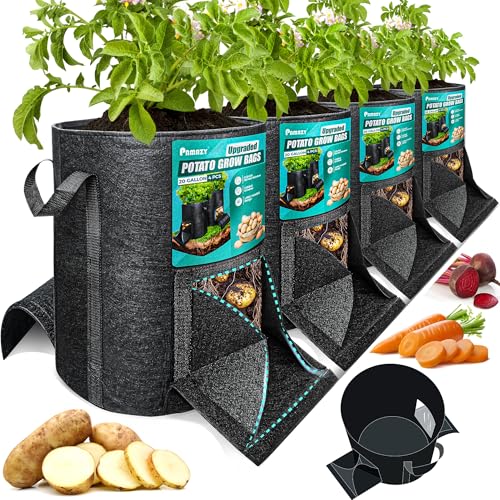
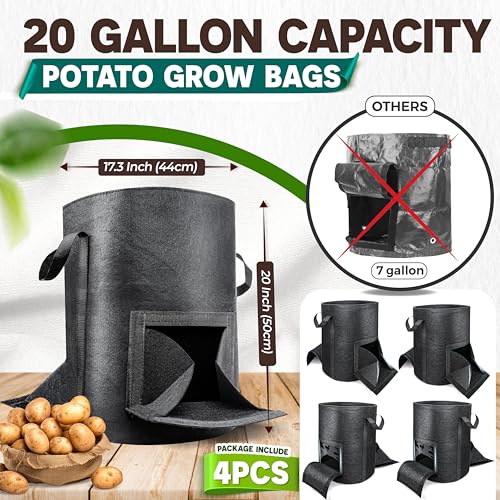
4PCS 20-Gallon Potato Grow Bags
Strengths
- 20-gallon high yield
- Hinged harvest window
- Large viewing panel
- Heavy-duty handles
- Excellent airflow
Trade-offs
- Bulky for small spaces
- Higher price per bag
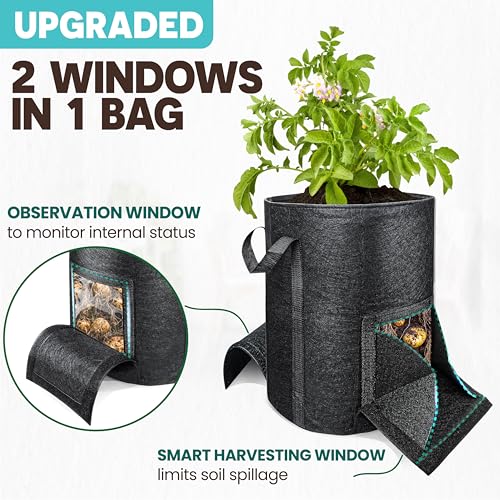
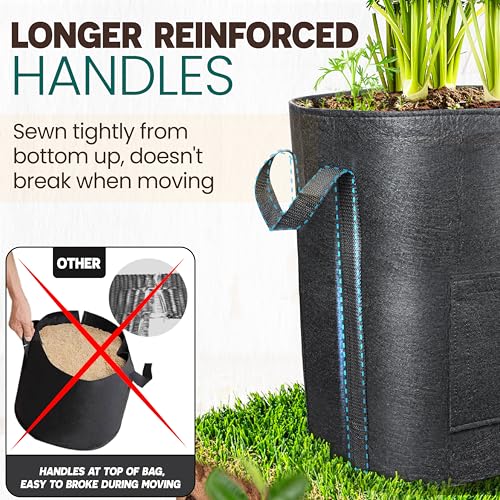
This is the best overall option for gardeners who want maximum yield and premium features in one package. The 20-gallon capacity gives potatoes ample room to develop fully, and owners report noticeably larger harvests compared to 10- and 15-gallon bags. The hinged harvest window works flawlessly, no soil spillage, easy access to mature tubers, and the large viewing panel makes monitoring moisture and root health simple. The reinforced handles are wide and securely stitched from the bottom, making them strong enough to move even when fully loaded.
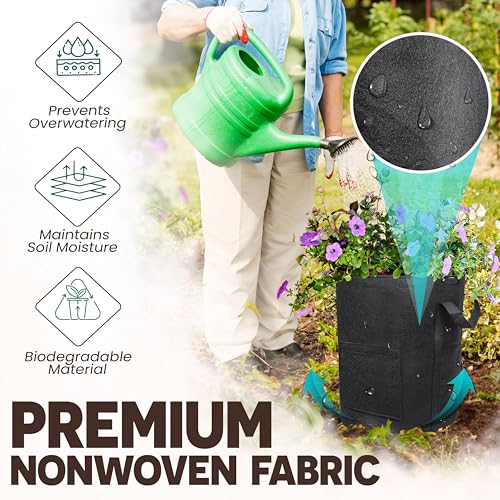
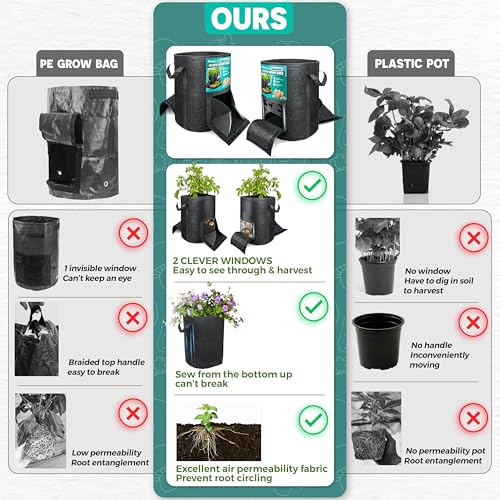
Built with the same breathable, reusable polypropylene nonwoven fabric as other upgraded models, these bags offer excellent drainage and aeration. They’re also versatile enough for tomatoes, carrots, and even small fruit trees. While the size may be overkill for small patios, for backyard growers or those with ample outdoor space, this set is worth the investment. It outperforms smaller models in both function and durability.
Product photos
Jorvila 5 Pack 5 Gallon Bags

Strengths
- Compact 5-gallon size
- 300G thick fabric
- X-stitched seams
- Good aeration
- Easy to store
Trade-offs
- Limited potato yield
- Too small for large plants
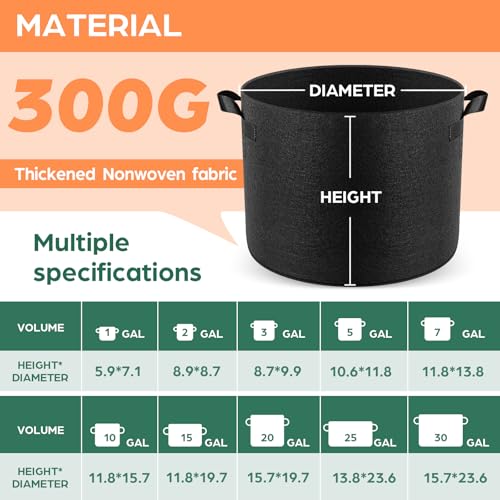
These 5-gallon bags are clearly designed for tight spaces and compact growing setups. The 300G thickened nonwoven fabric is a strong point, durable, washable, and reusable, which is rare at this size. The X-stitching on both handles and seams adds structural integrity, and owners report these surviving multiple seasons with proper care. The aeration and drainage are excellent, promoting healthy root pruning, which is crucial even in small containers.
But the 5-gallon limit means restricted root development, leading to smaller potato yields. These are better suited for herbs, peppers, or early-season greens than full potato crops. Still, for urban gardeners or those using railings, windowsills, or tiny patios, this pack offers quality in a compact form. Compared to larger bags, it’s not about yield, it’s about fit.
Product photos

Gardzen 10-Pack 10 Gallon Bags

Strengths
- 10-pack value
- 300G thick fabric
- X-stitched handles
- Excellent aeration
- Reusable for seasons
Trade-offs
- No harvest window
- No viewing panel
If you’re planning a serious growing season and need quantity without sacrificing quality, the Gardzen 10-pack is hard to beat. The 300G thickened fabric is a real upgrade over thinner bags, and owners consistently praise how well these hold up over multiple uses. The reinforced X-stitching on the handles adds real durability, which matters when you’re moving full bags season after season. These aren’t just for potatoes, they’re widely used for tomatoes, peppers, and eggplants, and the aeration performance supports strong root pruning, which is key for healthy growth.
The lack of a harvest window is the trade-off here. You’ll be tipping or digging to harvest, which can stress plants and make cleanup messier. But for the price per bag, especially if you’re growing a variety of crops across a deck or raised bed setup, this pack delivers long-term value. Compared to smaller packs, it’s the smarter buy if you’re scaling up.
Product photos


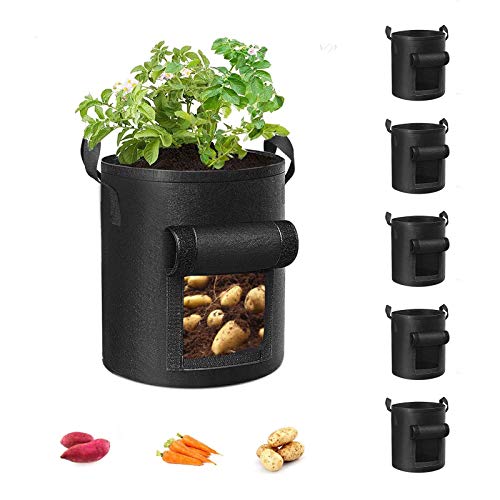
Cavisoo 5-Pack 10 Gallon Bags
Strengths
- Affordable per unit
- 300g thick fabric
- Visualization window
- Reinforced handle
- Good for beginners
Trade-offs
- No dedicated harvest window
- Smaller viewing area
This set is clearly aimed at budget-conscious gardeners who still want core functionality. The 300g non-woven fabric matches higher-end models in material spec, and the reinforced handle with X-stitching gives confidence in durability. Owners report these lasting at least two to three seasons with care, which is impressive at this price point. The inclusion of a visualization window is a nice touch for a budget bag, letting you monitor tuber growth without disturbing the soil.
That said, the window is smaller than on premium models, and the harvest process still requires tipping or partial emptying, no dedicated harvest flap. Drainage and breathability are solid, but the overall build feels a bit thinner than Gardzen or Jorvila. Still, for first-time growers or those testing container gardening, this set offers the essentials without overspending.
Product photos


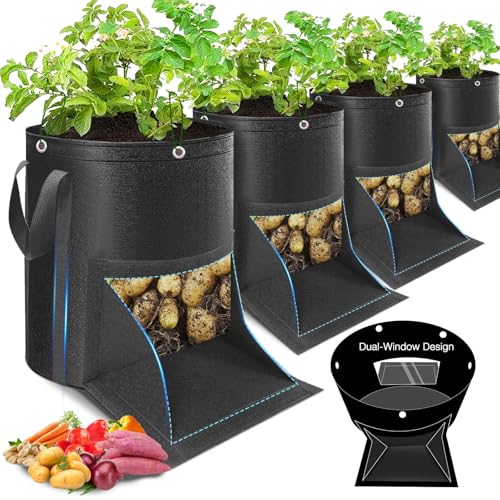
4 Pack 10 Gal LST Window Bags
Strengths
- Metal grommets for LST
- Dual windows
- Strong handles
- Good airflow
- Ideal for indoors
Trade-offs
- Smaller 10-gallon size
- Fewer tubers per harvest
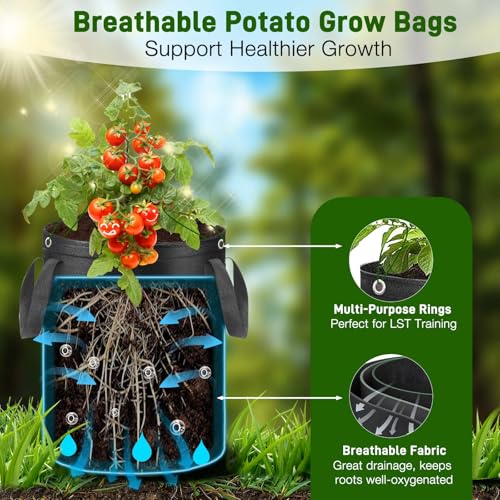
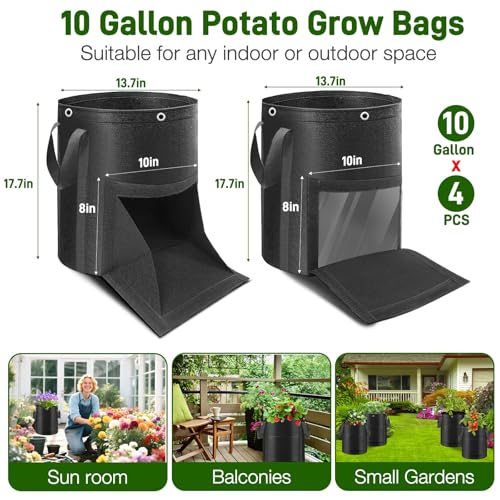
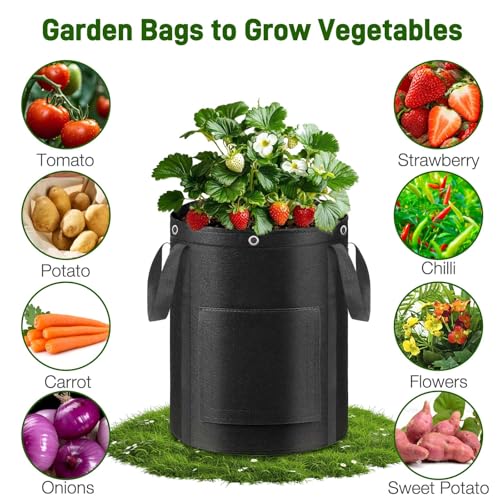
This set is built with indoor and controlled-environment growers in mind, especially those using LST (low-stress training) techniques. The metal grommets along the sides are a standout feature, allowing easy tie-downs for plant training, something most potato bags don’t offer. That makes these surprisingly versatile beyond just potatoes; owners are using them for tomatoes and peppers with good results. The 10-gallon size keeps things manageable indoors, and the dual-window design works as advertised: no soil mess during harvest, and the large viewing pane helps track root and tuber development.
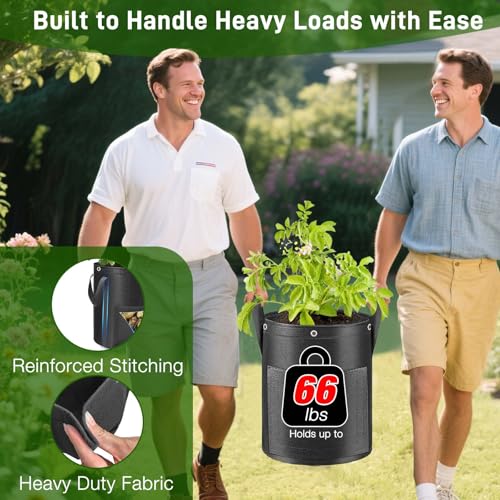
Drainage and airflow are solid thanks to the nonwoven fabric, and the extended handles are rated for 66 lbs, which is reassuring when moving full bags around a sunroom or greenhouse. That said, the smaller capacity means you’ll get fewer potatoes per bag than with 15- or 20-gallon models. If you’re tight on space but want control, this is a smart pick.
Product photos
4Pcs 15 Gallon Upgraded Window Bags

Strengths
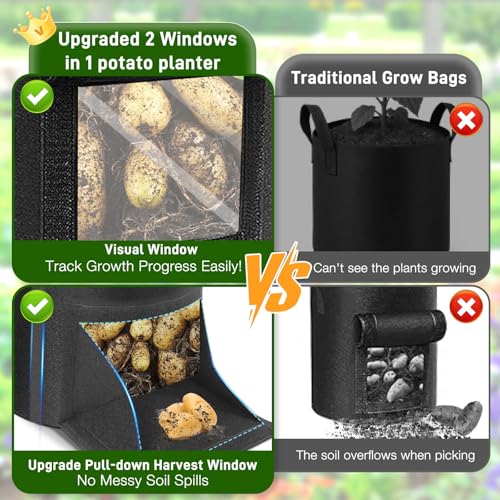
- Hinged harvest window
- Moisture visibility
- Sturdy stitched handles
- Good capacity
- Reusable fabric
Trade-offs
- Not the largest size
- Fabric not 300G
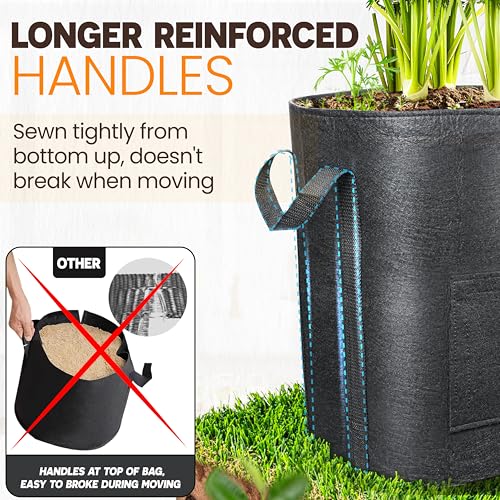
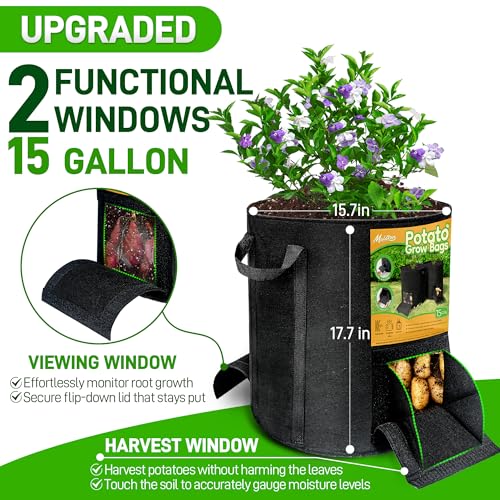
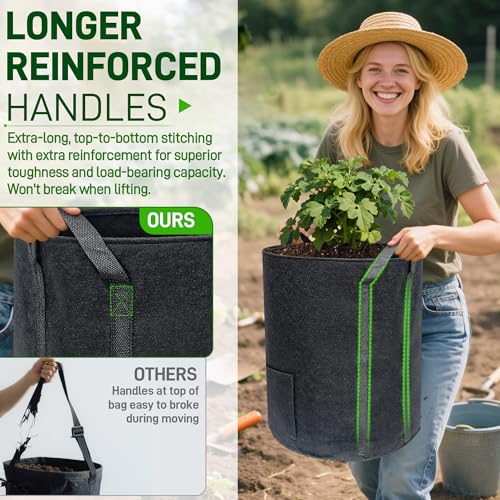
This 15-gallon set hits a sweet spot between innovation and practicality, earning its ‘Best Value’ label. The hinged harvest window is a standout, owners love that it opens downward without spilling soil, making mid-season harvesting clean and plant-friendly. The clear moisture window adds real utility, helping prevent both under- and overwatering, a common issue in container gardening. At 15 gallons, it gives enough room for strong tuber development, and the reinforced bottom-stitched handles make moving full bags less stressful.
The nonwoven fabric isn’t the thickest on the market, but it’s durable enough for annual reuse, and the eco-friendly material is a plus. Compared to the 10-gallon models, this gives better yield potential; against the 20-gallon, it’s more manageable for most patios. If you want smart design without paying premium prices, this pack delivers.
Product photos

4 Pcs 15 Gallon Dual-Window Bags
Strengths
- Dual harvest windows
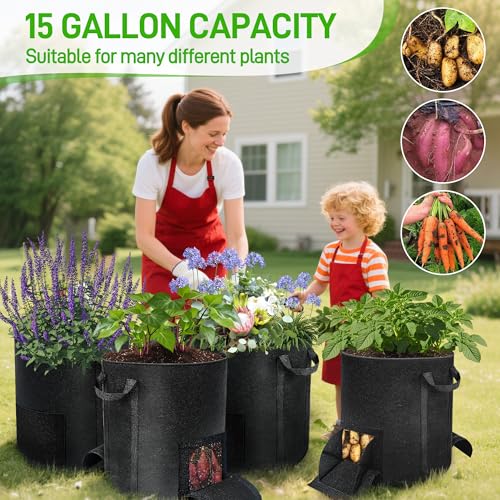
- 15-gallon capacity
- Reinforced handles
- Durable nonwoven fabric
- Easy monitoring
Trade-offs
- Handles could be longer
- Fabric not top-tier thickness
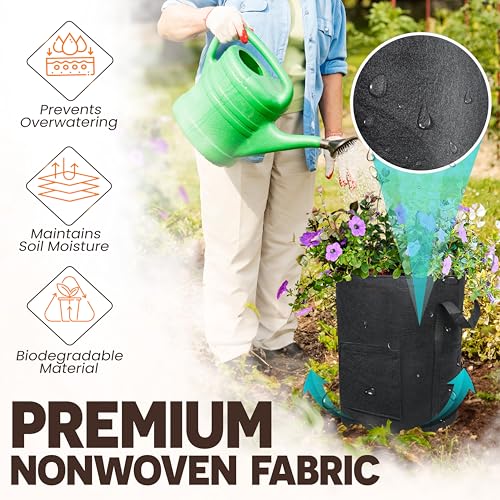
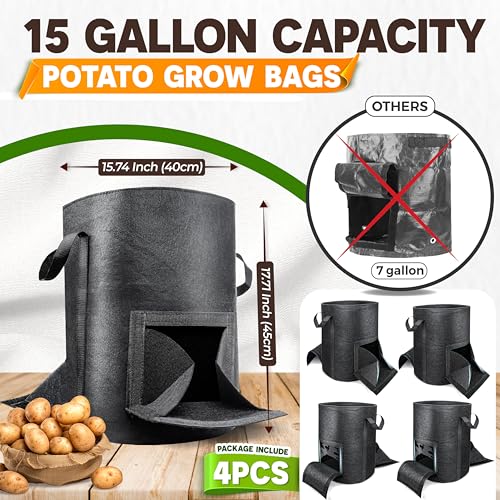
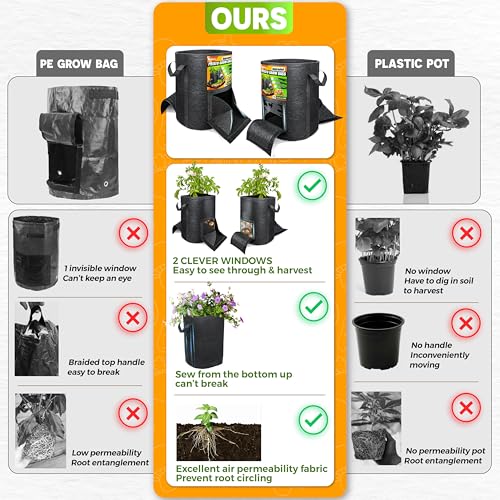
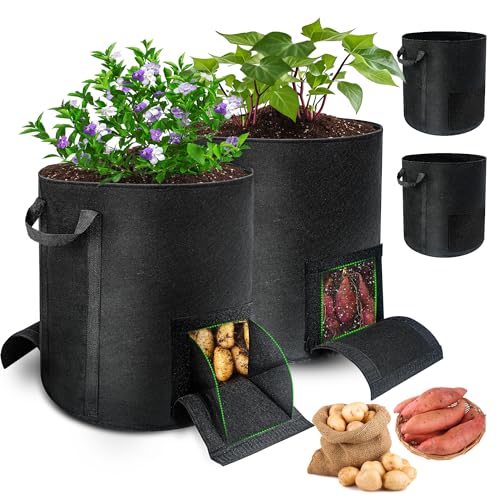
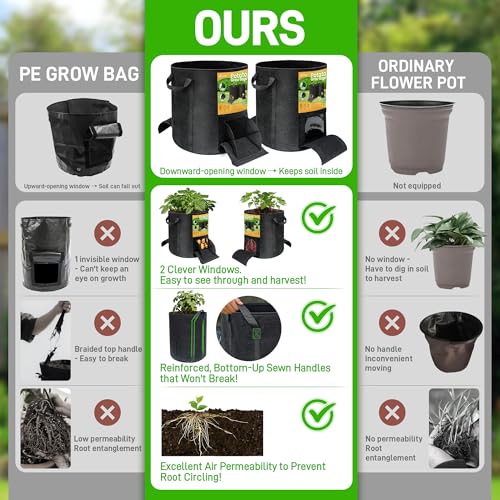
These 15-gallon grow bags stand out with their dual-window design, which owners consistently report makes harvesting potatoes cleaner and less disruptive to the plant. The downward-opening harvest flap keeps soil inside while letting you pull out mature spuds, and the clear moisture window helps avoid guesswork on watering, both smart upgrades for gardeners who hate digging. On paper, the 15-gallon size gives enough room for strong root spread, which aligns with what we see in feedback: better yields than smaller bags.
The thickened nonwoven fabric is a solid mid-tier choice, offering decent breathability and drainage to prevent root rot. While not the heaviest-duty material available, it holds up well over a single growing season for most users. The reinforced handles are a plus, though some reviewers note they could be slightly longer for heavier loads. Compared to budget models, this set strikes a good balance between function and cost.
Product photos

How We Evaluated potato growing bags
I approached this guide by first compiling specs and features from numerous potato growing bags available online. I then weighed owner reviews from major retailers alongside expert opinions from gardening websites and publications. Rather than a hands-on lab test, this is a research-led comparison of specifications and owner feedback, applying my experience with gardening and container growing to assess suitability for different needs.
For potato growing bags, capacity and fabric durability were the most important factors. Larger capacities (10-15 gallons) support bigger harvests, while strong, thicker non-woven fabric is crucial for repeated use and resisting tears when the bag is full of soil. Drainage also ranked highly; good airflow prevents root rot, a common issue with container gardening. Features like windows were considered a bonus, but secondary to core performance.
Specifications reliably indicate capacity and fabric weight (measured in GSM – grams per square meter). However, I relied heavily on owner feedback to gauge long-term durability, handle strength, and whether the bags truly deliver on claims of good drainage. Reputation and consistent positive feedback from experienced gardeners carried significant weight in my rankings.
How To Choose The potato growing bags
Finding the right potato growing bag can dramatically improve your harvest, and it’s not just about size.
A quality potato grow bag prioritizes breathability to prevent root rot, offers durable construction to withstand repeated use and movement, and includes features that simplify harvesting. Look for non-woven fabric, reinforced handles, and designs that allow for easy access to the mature produce. Consider the space available and the volume of potatoes you intend to grow.
Size and Capacity
The capacity of a potato growing bag is the first thing to consider, but don’t assume bigger is always better. A 10-gallon bag is excellent for smaller spaces or for growing a limited quantity of potatoes, while 15 or 20-gallon bags give plants more room to develop a larger root system (and therefore yield more). However, larger bags become very heavy when filled with soil and potatoes, making them harder to move around, especially if you need to bring them indoors during inclement weather. Think about your physical ability to manage the weight and the available space before committing to a large-capacity bag.
Material and Construction
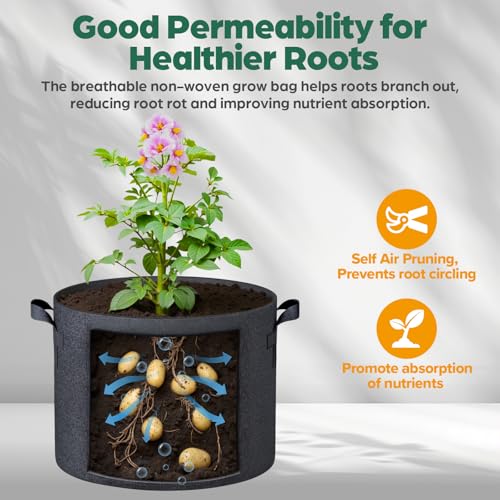
The material a potato growing bag is made from is crucial for plant health. Non-woven fabric is the standard; it allows for air pruning – where roots are encouraged to branch out rather than circling – and provides excellent drainage. Cheaper bags sometimes use thinner, less durable fabric that tears easily. Look for bags described as “thickened” or with a GSM (grams per square meter) of 300 or higher. Reinforcement is also key. Many bags boast reinforced handles, but examine how they’re reinforced. X-stitching at the handle attachment points is a good sign, indicating a more secure connection. I’ve found that investing in durable vegetable growing bags pays off in the long run.
Harvesting Features
Harvesting potatoes from a traditional garden can be labor-intensive. Many modern potato growing bags address this with clever design features. Bags with access windows are a huge convenience, allowing you to check on soil moisture and, more importantly, harvest mature potatoes without disturbing the entire plant. Some bags have hinged “doors” at the bottom, while others feature clear viewing windows.
- A simple viewing window lets you monitor growth without digging.
- Downward-opening harvest doors make extracting potatoes cleaner and easier than digging from the top.
- Larger access points are great for bigger harvests, but may compromise the bag’s structural integrity if not well-supported.
Remember this rule of thumb:
A potato bag with a harvest window is a convenience, but strong handles and breathable fabric are necessities.
Potato Growing Bags Compared
Here’s a comparison of key specifications for various potato growing bags to help you make an informed decision.
| Product Name | Capacity (Gallons) | Pack Size | Fabric Weight (G) | Window Design | Handle Reinforcement |
|---|---|---|---|---|---|
| 4PCS 20-Gallon Potato Grow Bags | 20 | 4 | N/A | Dual | Reinforced |
| Jorvila 5 Pack 5 Gallon Bags | 5 | 5 | 300 | N/A | X-Stitched |
| Gardzen 10-Pack 10 Gallon Bags | 10 | 10 | 300 | N/A | X-Shaped |
| Cavisoo 5-Pack 10 Gallon Bags | 10 | 5 | 300 | Visualization | X-Shaped |
| 4 Pack 10 Gal LST Window Bags | 10 | 4 | N/A | Dual | Extended |
| 4Pcs 15 Gallon Upgraded Window Bags | 15 | 4 | N/A | Dual | Reinforced |
| 4 Pcs 15 Gallon Dual-Window Bags | 15 | 4 | N/A | Dual | Reinforced |
Frequently Asked Questions
What fabric weight (GSM) should I look for in a potato growing bag?
A GSM of 300 or higher is ideal. This indicates a thicker, more durable fabric that will better withstand repeated use and the weight of the soil and potatoes, minimizing tearing.
Can potato growing bags be left outdoors year-round?
Generally, no. While the fabric is breathable and allows for drainage, most bags aren’t designed to withstand prolonged exposure to harsh winter conditions or intense UV rays. Bringing them indoors or storing them in a sheltered area will extend their lifespan.
What’s the best way to move a full potato growing bag?
Reinforced handles are essential, but even with those, a full bag will be heavy. Consider placing the bag on a plant dolly with wheels or asking someone to help you move it to avoid strain or damage to the bag.
Are potato bags suitable for other root vegetables besides potatoes?
Yes, they are. Potato bags work well for carrots, beets, parsnips, and even some smaller varieties of sweet potatoes. The breathable fabric benefits many root vegetables by preventing root rot and encouraging healthy growth.
How can I tell if a potato bag has good drainage?
Look for bags made of non-woven fabric, as this material inherently offers good airflow and drainage. Owner reviews often mention whether the bag stays overly soggy after watering, which can indicate poor drainage.
The Bottom Line
Growing potatoes in bags is a trade-off between convenience and control. You give up some of the expansive space of an in-ground garden, but gain the benefits of mobility, better drainage, and easier harvesting. For the best overall experience, I recommend the 4Pcs 15 Gallon Dual-Window Bags. They strike a great balance of capacity, durable construction, and user-friendly harvesting features, offering a solid return for the investment.
If you’re just starting out, or working with limited space, the Jorvila 5 Pack 5 Gallon Bags are an excellent budget-friendly choice. And for those who want maximum versatility and are willing to spend a bit more, the 4PCS 20-Gallon Potato Grow Bags offer a substantial growing volume, ideal for larger gardens or ambitious harvests.
Ultimately, the best potato growing bag isn’t about a particular feature or specification. It’s about choosing a durable bag with good drainage and a capacity that suits your space and needs. Prioritize quality fabric and strong handles – those are the elements that will truly impact your success and enjoyment.